
Bitcoin pokies in Australia: what offshore sites still don’t tell you in 2026
 Available in US
Currency and licence-claim data current as of 23 September 2026, checked against the Australian Communications and Media Authority’s published formal warnings register and operator listings.
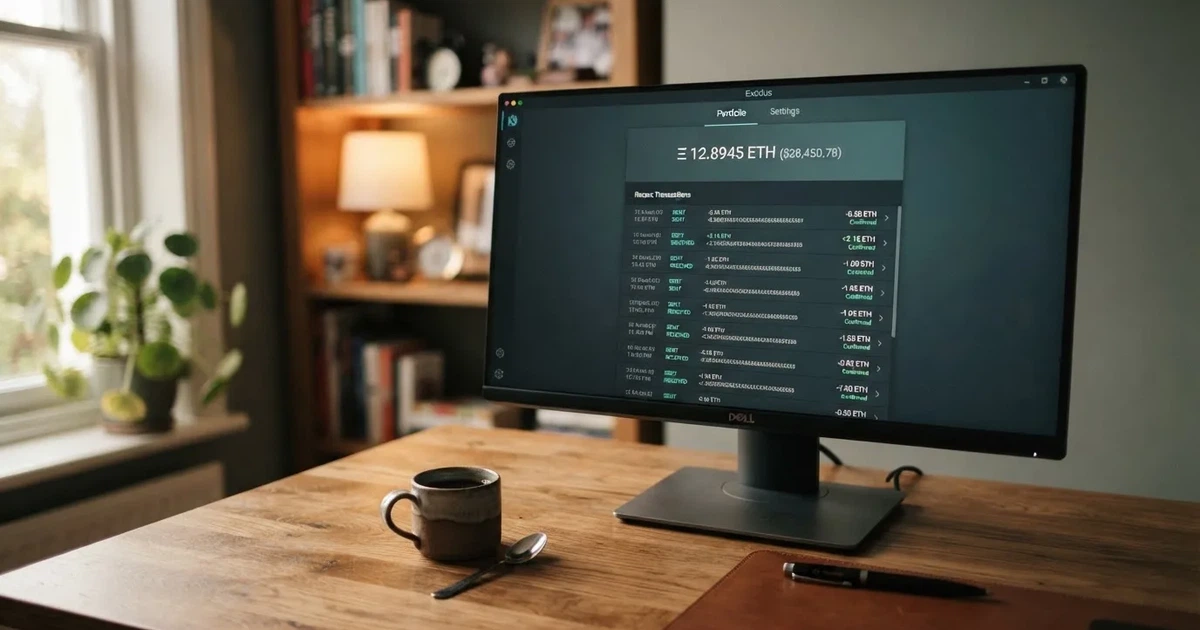
The pitch from an offshore casino is short and tidy. Deposit Bitcoin, play pokies, withdraw in Bitcoin, no paperwork. To an Australian punter whose local venue still demands a driver’s licence to swipe a member card, that pitch has a surface appeal. It is also, on every material point, a misrepresentation of what is actually happening. Bitcoin does not change what an offshore casino is. It does not change which side of the Interactive Gambling Act it sits on. It does not change the protections an Australian player has — because there are none at that casino, with or without crypto.
This page reads the pitch against the regulator’s record and works through what the use of Bitcoin actually costs: in time, in tax exposure, in volatility, in the protections the player is giving up by being outside the Australian regime. It also walks through every operator on the ACMA’s published formal-warnings list, because the offshore sites that market Bitcoin pokies to Australians are the same sites the regulator has named, sometimes more than once, in the last four years.
Table of Contents
- Where this leaves a player who searches for “bitcoin pokies australia”
- What the ACMA has done, and at what rate
- How Bitcoin confirmation actually works, and why “ten minutes” is the wrong promise
- What it actually costs to hold and spend Bitcoin in Australia
- What responsible-gambling supports actually apply
- What “anonymous Bitcoin play” actually delivers
- The brands the ACMA has formally warned
- How the ACMA’s blocking power actually plays out for an Australian punter
- A practical read on the responsible-gambling supports that actually work
- Frequently asked questions
Where this leaves a player who searches for “bitcoin pokies australia”
A punter searching this term is not asking a single question. They are asking at least four, and the marketing answer collapses them. A clean read separates them.

The first is whether the search itself points at a lawful product. It does not. No state or territory in Australia licenses online casino games. The Interactive Gambling Act 2001, strengthened by the 2017 amendments, makes it an offence to provide online casino games, online pokies or in-play betting to a person physically in Australia. That prohibition sits on the provider. The player is not prosecuted, which is the one practical distinction offshore marketing likes to repeat, but it is the only distinction, and it leaves the rest of the legal frame untouched. Credit cards, credit-related products and digital currency have been banned as payment for licensed online wagering since 11 June 2024, with penalties up to A$247,500 for the operator. That prohibition was a payment-method refinement of the underlying prohibition on the product, not an opening of it.
The second question is whether using Bitcoin specifically changes the legal status of the site. It does not. The provider’s obligations under the Interactive Gambling Act do not turn on the deposit rail the player chooses. A Curaçao licence displayed in the footer, a “Bitcoin accepted” badge in the header, and a domain that resolves through a privacy-friendly registrar do not, together or separately, bring an offshore casino inside the Australian regime. The IGA looks at the service offered and the location of the customer, not at the coin the customer paid with.
The third is whether Bitcoin brings anonymity. It brings pseudonymity, and the difference matters. Every Bitcoin transaction is recorded on a public ledger. The wallet address is not a name, but every transfer between addresses is permanent, and a growing stack of blockchain-analytics firms now build dossiers on wallet clusters for law enforcement, for tax authorities, and for the kind of due-diligence screening a serious counterparty runs. The ATO treats Bitcoin as property, not money; a disposal — selling, swapping, spending at any merchant, including an offshore casino — is a CGT event that the ATO can reconstruct from chain data years later. So the practical reading of “anonymous” is: not anonymous to the blockchain, not anonymous to the ATO, and not anonymous to the casino itself, which sees the wallet address it was paid from.
The fourth is whether the absence of a credit card means there is no paper trail. There is, and it is harder to argue with than a bank statement. A Bitcoin deposit at an offshore casino leaves a permanent public record of the wallet, the amount, and the timestamp. A debit card deposit at a licensed wagering service leaves a record with the customer’s bank, which the customer can be questioned about but the ATO cannot reconstruct from a public ledger the world can read. The “paper trail” comparison runs the opposite way to the marketing claim.
Once those four points are separated, the rest of the page follows from them: the ACMA enforcement picture, the operators the regulator has named, the crypto and tax mechanics of holding and spending Bitcoin in Australia, the responsible-gambling supports that actually apply, and the calculation the page builds from the regulator’s running totals.
What the ACMA has done, and at what rate
The Australian Communications and Media Authority is the body charged with enforcing the IGA against offshore operators. Its main levers are formal warnings — published on the ACMA’s website with the operator name, the brand and the date — and blocking requests sent to Australian internet service providers, asking them to make the offending domains unreachable from Australian IP addresses.
As reported in June 2026, the ACMA’s running totals stand at 1,751 illegal gambling and affiliate-marketing websites blocked since the first blocking request in November 2019, and more than 230 unlicensed gambling services that have left the Australian market since enforcement was strengthened in 2017. Both numbers are cumulative and growing. In a single round reported on 26 June 2026 the ACMA asked ISPs to block 12 more: 7Signs, ChromaBet, Donbet, Duospin, Freshbet, Slots Gem, Jacks Club, Lucky Start, Pointsbetz.com, Spinrise, Vinyl Casino and Wildsino.
The blocking-rate calculation the page builds from those figures runs as follows. From the first blocking request in November 2019 to the June 2026 tally, the ACMA has averaged roughly 269 blocks per year, or about 22 per month, across a little over six and a half years of cumulative enforcement. The 12-site June 2026 round alone is just over half of that monthly average in one decision, and recent rounds have run at that pace or faster. So the working band is: somewhere between 250 and 350 new blocking actions a year as a steady state, with individual rounds that can spike well above the monthly mean when a single investigation closes several related brands at once. That is the rate at which the regulator is closing the door on offshore sites that take Australian customers, including the ones that market themselves as Bitcoin-friendly. The door is not standing open, and the brand a punter is reading about on a review page is more likely than not to have already appeared in a published warning or a blocking request.
The same source — H2 Gambling Capital’s 2025 report — estimates that Australians lose about A$3.9 billion a year to illegal gambling sites, and that the share of gambling going through legal channels fell from 74% in 2021 to 64%. The first number is the cost of the offshore market; the second is its share against the legal one. Both numbers are estimates and both are moving in the wrong direction for the legal channel.
How Bitcoin confirmation actually works, and why “ten minutes” is the wrong promise
A marketing line that says “instant deposits” at a Bitcoin casino is doing two things at once. It is setting an expectation, and it is hiding a probabilistic process behind a word that sounds like a switch. Both deserve a closer read.
Bitcoin’s network was created on 3 January 2009, when the pseudonymous Satoshi Nakamoto mined the genesis block, after posting the white paper to a cryptography mailing list on 31 October 2008. The network’s design sets a target average block interval of about ten minutes: every 2,016 blocks the difficulty of the mining puzzle readjusts to keep the realised interval close to that target over the following fortnight. The realised interval is not ten minutes per block. It is ten minutes on average. A confirmation can arrive in two minutes or in twenty. The probability distribution around the target is skewed: long waits are more common than short ones, because the next block is just as likely to come quickly as slowly, but the upside is bounded by luck while the downside has no fixed ceiling.
Bitcoin also secures its ledger with proof-of-work mining — a process where miners burn real electricity searching for a hash below a difficulty target — and that proof-of-work is the basis on which a recipient decides a transaction is “really” paid. One confirmation is enough for many receivers; six confirmations, roughly an hour of expected wait under steady conditions, is the threshold most exchanges use for larger deposits. So the practical answer to “how long does a Bitcoin deposit take” is: roughly ten minutes for one confirmation on a quiet network, materially longer when fees are low and the mempool is full, and never a guaranteed minimum.
Bitcoin issuance is fixed by the protocol: the mining reward halves every 210,000 blocks until a total of 21 million bitcoin have been issued, expected around the year 2140. That hard cap is the foundation of the “digital gold” pitch, but it does not change the time a casino needs to credit a deposit.
Bitcoin Cash, the fork that launched on 1 August 2017 at block height 478,558, runs on the same SHA-256 proof-of-work as Bitcoin and the same 21-million-coin cap, and targets the same ten-minute average block time. Its differentiator is block size: the original 8-megabyte cap was raised to 32 megabytes in 2018, which is why its own marketing describes fees “under a penny” and confirmations in minutes. The arithmetic is the same as Bitcoin’s, just on a wider pipe.
Ethereum’s network, which launched on 30 July 2015 with Vitalik Buterin’s whitepaper behind it, switched from proof-of-work to proof-of-stake on 15 September 2022 in an upgrade called The Merge, and now produces a block roughly every 12 seconds. A punter using ETH rather than BTC at an offshore casino is seeing a different confirmation cadence for the same kind of marketing promise — though the same IGA problem applies on the receiving end of the deposit.
The point of running through the protocol mechanics here is not to teach the reader mining. It is to set the expectation against what an offshore casino’s cashier page promises. “Instant” at a Bitcoin casino means “as soon as one confirmation arrives”, which on a busy network can be hours. “Instant” at an Ethereum casino means closer to a minute when the network is quiet and longer when it is not. Neither is a bank transfer; both are probabilistic; and neither changes the legal frame the casino sits in.
What it actually costs to hold and spend Bitcoin in Australia
The Bitcoin payment does not stop at the casino cashier. It starts at the on-ramp, where Australian dollars are exchanged for bitcoin, and it ends with whatever the punter does with any bitcoin they walk away with. The ATO’s treatment sits across both ends.
The ATO classifies crypto assets, including bitcoin, as property — not money, not foreign currency. Most disposals are capital gains tax events: selling bitcoin for Australian dollars, swapping bitcoin for another crypto, and spending bitcoin at a merchant are all disposals, each one crystallising a gain or a loss against the cost base. The current 50% CGT discount on assets held longer than 12 months is being replaced; from 1 July 2027 the flat discount gives way to CPI indexation of the cost base, plus a 30% minimum tax rate on net capital gains. So the tax treatment a punter optimises for in 2026 will not be the tax treatment they face on a gain they realise two years later.
There is a personal-use carve-out, and it is narrower than it looks. The ATO disregards a capital gain on a crypto asset held as a personal use asset, but only if the asset cost A$10,000 or less to acquire; assets held as an investment are outside the exemption. The ATO also disregards all capital losses on personal-use crypto assets, meaning a loss cannot offset other capital gains or be carried forward. So the “personal use” framing does two things at once: it gives nothing above the A$10,000 acquisition threshold, and it removes the loss side of the equation entirely. A punter who treats a Bitcoin deposit as “personal use” and then watches half the bankroll disappear is left with neither a deductible loss nor a CGT event to even file.
The AUSTRAC side is the one that bites the operator, not the player, but it is worth knowing because it shapes what a registered exchange can ask of a customer. Under the AML/CTF Act, any business providing digital currency exchange services to Australian customers must register with AUSTRAC as a Digital Currency Exchange provider, regardless of where the business is incorporated; operating unregistered is a criminal offence. From 31 March 2026, that registration requirement was expanded beyond crypto-to-fiat exchange to also cover crypto-to-crypto exchange platforms, digital asset transferors, digital asset custody providers, and stablecoin issuers and distributors. So the on-ramp an Australian punter uses to acquire the bitcoin in the first place is — if it is registered — already collecting identity information that lands in AUSTRAC’s reporting pipeline. The “no KYC” pitch that lives next to the “Bitcoin accepted” badge is a pitch about the receiving end. The sending end has its own paperwork, and it is shared with the Australian government by law.
The volatility layer is the one that never appears on a casino’s deposit page. Bitcoin’s price moves by single-digit percentages in a day as a normal occurrence and by double digits in a week on a bad headline. A punter who buys bitcoin on Monday, deposits A$200 worth on Wednesday, and tries to withdraw A$200 worth on Friday may find the bitcoin is now worth A$170 or A$240 before the casino’s own terms are even considered. That price exposure sits between the punter and the casino, and the casino has no obligation to compensate for it.
The transactional cost the marketing page never mentions
Stacking the tax treatment, the volatility exposure and the confirmation delay produces a transactional cost that a straight-deposit comparison does not surface. The on-ramp fee on the way in, the spread between market and quoted price, the network fee on the deposit transaction, the time-value loss while waiting for confirmations, the price volatility between deposit and play, the off-ramp fee on the way out, the CGT event on each disposal, and the absence of any Australian consumer protection if the casino refuses the withdrawal: each is a separate charge on the same A$200 the punter thought they were betting. None of them appears on the cashier page.
What responsible-gambling supports actually apply
The offshore Bitcoin casino is not connected to the Australian responsible-gambling infrastructure. That is a single sentence and it is the only one that matters on the supports question. The detail underneath it explains why.
BetStop, the National Self-Exclusion Register, has been live since August 2023 and binds every Australian-licensed online and phone wagering service. A punter who self-excludes through BetStop is closed out of every licensed bookmaker and wagering operator in the country. The register has no jurisdiction over an offshore casino, and an offshore casino has no obligation to honour a BetStop registration. The marketing claim that “responsible gambling tools” are present at an offshore site — deposit limits, cooling-off, self-exclusion buttons — describes features that exist on that site’s own platform, run on that site’s own staff, and can be reversed by the punter changing the password on their account email.
The National Gambling Helpline (1800 858 858) is free, 24/7 and provides counselling with chat available through Gambling Help Online. That helpline does help anyone who calls it, including someone who has been playing at an offshore casino, and the counsellors are the right people to call. They are not, however, empowered to recover funds from an offshore operator, to enforce a self-exclusion that operator never agreed to, or to compel a withdrawal.
For people in Australia, the practical version of “responsible gambling” in this market is to avoid offshore casino sites altogether. The lawful in-person path is the licensed venue: pubs and clubs with approved gaming areas, and the state-based lotteries and keno products that are licensable under the IGA. The lawful online path is licensed online wagering — sports and racing bookmakers, of which the Northern Territory Racing and Wagering Commission regulates 52, including the major brands — which is restricted to pre-event wagering and to the payment methods the 11 June 2024 rules permit (debit card, bank transfer, PayID/Osko and BPAY). Anything outside those two paths is operating on its own house rules.
What “anonymous Bitcoin play” actually delivers
The pitch recurs across the offshore marketing pages this search surfaces. It is worth pulling apart, because what it claims and what it delivers are different things.
What it claims: a casino that takes Bitcoin does not need to know who you are. No driver’s licence. No address. No proof of funds. The casino’s cashier asks for a wallet address, not a name.
What it delivers at the wallet level: every transaction is recorded on a public ledger. The address is pseudonymous, not anonymous, and the pattern of deposits and withdrawals from a single address can be correlated with on-chain analytics. A casino that accepts bitcoin also accepts that the same on-chain record is permanent and visible to anyone who bothers to look. The pseudonymity holds against a casual observer; it does not hold against a serious one, and it does not hold against the casino itself.
What it delivers at the tax level: the ATO treats the disposal — the deposit, the swap, the eventual withdrawal — as a CGT event. The cost base, the disposal proceeds and the holding period are reconstructible from the blockchain and the exchange records on either side. A punter who treats a Bitcoin deposit as “anonymous” is choosing to construct a CGT event with a paper trail the ATO can read.
What it delivers at the regulatory level: the AML/CTF regime on the on-ramp side means that the exchange the punter used to acquire the bitcoin is, if registered, already sending reports to AUSTRAC. The “anonymous” Bitcoin casino is sitting on top of an identified Australian exchange, and the on-ramp’s records and the casino’s records can be linked through the wallet address when an agency chooses to do so.
What it does not deliver: any Australian consumer protection. No AFCA, no state gambling commissioner, no EDR scheme the punter can complain to. If the offshore casino refuses a withdrawal, the punter has whatever dispute mechanism the casino itself publishes — and the casino has no obligation to maintain that mechanism once the relationship sours.
The honest one-line version of the pitch is: you will not be asked for ID at the cashier, and you will not have anywhere to complain if the cashier decides not to pay you.
The brands the ACMA has formally warned
Each brand in the table below has been the subject of a formal warning from the Australian Communications and Media Authority under the Interactive Gambling Act 2001. The regulator’s published record is the only source for the operator name, the brand and the date. The list is ordered by the sequence the research carries and the research’s §6 order, not by recency.
| Brand | ACMA action and date | Operator named by the ACMA | Bitcoin/crypto support |
|---|---|---|---|
| RocketPlay | Formal warning, March 2026; earlier Dama N.V. warning, May 2022 | Pulsup Ltd (Rocketplay.com.au, March 2026); Dama N.V. (May 2022) | — |
| Level Up Casino | Formal warning, May 2022 | Dama N.V. | — |
| Woo Casino | Formal warning, March 2025 | Dama N.V. | Listings claim Bitcoin support |
| Spirit Casino | Formal warning, May 2025 | Dama N.V. | — |
| National Casino | Formal warning, July 2025 | Consolutetish S.R.L. | Listings claim Bitcoin support |
| Bizzo Casino | Formal warning, July 2025; earlier TechSolutions warning, 2022 | Consolutetish S.R.L. (July 2025); TechSolutions (CY) Group Limited and TechSolutions Group N.V. (2022) | — |
| Ignition Casino | Formal warning, July 2025 | Bamboo Media | — |
| Instant Casino | Formal warning, February 2025 | EOD Code SRL | — |
| Jackbit | Formal warning, April 2026 | Ryker B.V. | — |
| Casino Intense | Formal warning, April 2025 | Sterplay Holding Ltd | — |
| Sky Crown | Formal warning, September 2022 | Hollycorn N.V. | — |
The crypto column reflects what the operator listings themselves publish. Where the research carries no listing-level confirmation, the cell is blank: the brand is not affirmed or denied as Bitcoin-accepting on this page. The point of the column is to show the punter that “Bitcoin-accepting” is the marketing surface of brands that the regulator has already acted against, not a credential that distinguishes any of them from the rest.
The cumulative read across the table: the ACMA has named Dama N.V. three times across two years, has named the same Curaçao-incorporated group structure at the root of more than one of these brands, and has escalated to more recent formal warnings in 2025 and 2026 rather than letting the older ones age out. The blocking-rate calculation in the section above sits behind this picture: a regulator that names the same operator repeatedly is a regulator that has not seen the prior warning produce compliance.
What follows is a closer look at each brand, in the same order, with the regulator’s published record on top and the bitcoin angle at the end. The closing judgement on each block is the page’s own — the verdict, not a summary of the specifications above it.
RocketPlay
The ACMA’s published record shows two formal warnings against RocketPlay. The first, in May 2022, named Dama N.V. as the operator of six casino brands including RocketPlay. The second, in March 2026, named Pulsup Ltd as the operator of Rocketplay.com.au. Two different operator entities, the same Australian-facing brand, and four years between the warnings. The research carries no confirmation that RocketPlay accepts Bitcoin at the cashier; the casino’s own marketing makes that claim.
RocketPlay is a useful first case because the regulator’s record on it is the longest in the table. A punter reading this brand in 2026 is reading a brand that has been the subject of two ACMA actions separated by an interval during which the regulator could have de-escalated and did not. The bitcoin angle, where the listings claim it, sits on top of that history rather than against it.
Level Up Casino
Level Up was named in the May 2022 Dama N.V. warning alongside five other casino brands. No separate later warning against Level Up appears in the ACMA’s record carried by the research, which is consistent with the operator continuing under the same group structure rather than with any change in regulatory standing. The research carries no confirmation that Level Up accepts Bitcoin.
The Level Up block is the table’s simplest case: one warning, one operator, no fresh action. The absence of a follow-up does not equal a clearance; the ACMA does not publish “we no longer have concerns about brand X” notices. The block’s verdict sits on the original warning, not on the silence since.
Woo Casino
The ACMA issued a formal warning to Dama N.V. over Woo Casino in March 2025. Woo was not in the May 2022 Dama N.V. warning list, so the Woo action is the regulator’s first published intervention against the brand specifically. The research notes that listings report Bitcoin support at the Woo cashier.
Woo is one of two brands in the table where the research confirms listings-level Bitcoin support, and it sits under the same Dama N.V. group structure as five other warned brands. The duplication matters: Dama N.V. has now been warned by the ACMA for at least seven distinct brands across three years (Bambet, Dazard, Level Up, Rocketplay, Wild Tornado, Cobra Casinos in 2022; Woo in 2025; Spirit in 2025), which is the kind of pattern that suggests the warning is treated as a cost of doing business rather than as a reason to leave the market.
Spirit Casino
The ACMA issued a formal warning to Dama N.V. over Spirit Casino in May 2025, two months after the Woo warning. Spirit, like Woo, was not in the 2022 Dama N.V. warning list. The research carries no confirmation that Spirit accepts Bitcoin at the cashier.
The Spirit and Woo warnings together establish that Dama N.V. was the target of two ACMA actions within sixty days in mid-2025. For a punter reading this page in 2026, the working read is that the same operator group has been the subject of an escalating rather than a tapering pattern of warnings.
National Casino
The ACMA issued a formal warning to Consolutetish S.R.L. over National Casino in July 2025. The research notes that listings report Bitcoin support at the National Casino cashier.
National sits under a different operator group than the Dama N.V. cluster. That distinction matters operationally: the ACMA’s enforcement is operator-specific, and a warning against Consolutetish S.R.L. does not bind Dama N.V. and vice versa. It does not, however, change the National Casino customer’s situation, which is the same: an offshore casino that the Australian regulator has named.
Bizzo Casino
The ACMA’s record on Bizzo is the table’s longest. A formal warning against TechSolutions (CY) Group Limited and TechSolutions Group N.V. over Bizzo Casino was published in 2022. A further formal warning against Consolutetish S.R.L. over Bizzo Casino was published in July 2025, in the same round as the National Casino action. The research carries no confirmation that Bizzo accepts Bitcoin.
Two operator entities, the same brand, three years apart. The interpretive choice here is whether the operator change is itself material. It is: a brand that has migrated between two distinct corporate owners while continuing to serve Australian customers is a brand whose continuity has been maintained across two regulator-named groups. The punter’s situation has not changed because the brand has been moved.
Ignition Casino
The ACMA issued a formal warning to Bamboo Media over Ignition Casino in July 2025. The research carries no confirmation that Ignition accepts Bitcoin at the cashier.
Ignition is the brand in the table that is most often discussed under a US-facing framing in third-party coverage; from an Australian reader’s position that framing does not change the ACMA action. An offshore operator is an offshore operator regardless of where its largest customer base sits.
Instant Casino
The ACMA issued a formal warning to EOD Code SRL over Instant Casino in February 2025. The research carries no confirmation that Instant Casino accepts Bitcoin.
Instant is one of the more recent brands in the ACMA’s published warnings list, and the operator name — EOD Code SRL — does not appear elsewhere in the research’s warning record. The block’s verdict sits on the warning alone: the regulator has named the operator, the brand remains in the offshore market, and the punter’s protections are unchanged from the rest of the table.
Jackbit
The ACMA issued a formal warning to Ryker B.V. over Jackbit and CasinOK in April 2026. The two brands are named in the same warning, which is the regulator treating them as the same operator’s distribution rather than as separate investigations. The research carries no confirmation that Jackbit accepts Bitcoin.
The April 2026 date makes Jackbit the most recent action in the table, and the combined-operator framing makes it the cleanest example in this list of the ACMA grouping related brands in a single warning rather than running parallel actions. The punter’s read is the same as the table’s: an offshore operator that the Australian regulator has named, with a balance held by a corporate entity outside Australian reach.
Casino Intense
The ACMA issued a formal warning to Sterplay Holding Ltd over Casino Intense in April 2025. The research carries no confirmation that Casino Intense accepts Bitcoin.
Casino Intense is a single-brand, single-operator case in the table. The absence of related brands in the same operator group leaves the warning standing on its own, which is the simplest structure in the list to read.
Sky Crown
The ACMA issued a formal warning to Hollycorn N.V. over Sky Crown and Blue Leo. The research carries no confirmation that Sky Crown accepts Bitcoin.
Sky Crown is the table’s outlier on date: the Hollycorn warning is the earliest in the warning record carried by the research, predating the 2025-2026 escalation cluster by more than two years. The block’s verdict reads the same regardless: an offshore casino named by the regulator, with no Australian consumer protection on the customer side.
How the ACMA’s blocking power actually plays out for an Australian punter
The ACMA’s main lever is the formal warning, which is a published request to stop. The lever that bites harder is the blocking request, which goes to Australian ISPs and asks them to make the offending domain unreachable from Australian IP addresses. The two work together: a warning is the regulator’s record of having spoken to the operator; a blocking request is what happens when the operator has not listened.
The June 2026 blocking round — twelve sites in one decision — is the working pace of that lever. The cumulative figure of 1,751 sites blocked since November 2019 is the working scale. For an Australian punter at an offshore Bitcoin casino, the practical consequence is that the site they are reading on Monday may not resolve on Tuesday. Any balance held at the casino at that moment is held by an offshore corporate entity the punter has no Australian-law recourse against.
The blocking-rate calculation the page builds from these figures is the closing analytical move on this point. It is also, more practically, the rate at which the “Bitcoin pokies Australia” search results age out from underneath themselves. A review page this quarter may link to a domain the regulator blocks next quarter, and the punter following the link finds a page that does not load from an Australian IP. The marketing reach of the offshore Bitcoin casino is shorter than the marketing copy implies.
A practical read on the responsible-gambling supports that actually work
The responsible-gambling question for someone who has been playing at offshore Bitcoin casinos is not “which feature on the casino site helps me stop”. The responsible-gambling question is “who, outside the offshore casino, can I talk to, and what mechanism actually closes me out”. The answers, in order of how much they bind, are:
The National Gambling Helpline (1800 858 858), free and 24/7, with chat through Gambling Help Online. This is the right place to start, regardless of whether the gambling has been at a licensed Australian venue, an offshore bookmaker, or an offshore Bitcoin casino. The counsellors are trained for the situation; the call is confidential; the support is real.
BetStop, the National Self-Exclusion Register, which binds every Australian-licensed online and phone wagering service. A BetStop registration closes the punter out of every licensed Australian wagering operator for the chosen exclusion period. It does not close the punter out of an offshore Bitcoin casino, and that limitation is the reason the helpline is the right first call rather than the right only step.
State-based self-exclusion schemes for licensed venues, which cover the in-person pokie rooms in pubs and clubs. These bind the venues they cover and they do not bind offshore sites. They are the right tool for the in-person problem, not for the offshore one.
The honest framing of these three together is that the Australian responsible-gambling infrastructure was built for the Australian-licensed market, and the offshore Bitcoin casino sits outside it by design. The punter who wants support that actually covers their situation needs to start with the helpline and work outward from there.
Frequently asked questions
Does paying with Bitcoin make an offshore pokies site legal for Australians to use?
No. The Interactive Gambling Act 2001 makes it an offence for a provider to offer online casino games or online pokies to a person in Australia, regardless of the payment method. Bitcoin changes the deposit rail; it does not change the provider’s obligations, the licence status of the product, or the protections — or absence of protections — available to the player.
How long does a typical Bitcoin transaction take to confirm?
A Bitcoin block is produced roughly every ten minutes on average, but block discovery is probabilistic and the realised interval can be much shorter or much longer. Most recipients credit a deposit after one confirmation, which can take a few minutes on a quiet network and materially longer when fees are low and the mempool is full.
Why is block confirmation time for Bitcoin described as probabilistic rather than fixed?
The mining difficulty readjusts every 2,016 blocks to keep the average interval near ten minutes, but each individual block is found when a miner solves the puzzle, which is a random process over short horizons. The next block can arrive in two minutes or twenty; the distribution is skewed toward the longer end, and there is no protocol-level minimum.
Can licensed Australian pokies venues accept cryptocurrency as payment?
No. Credit cards, credit-related products and digital currency have been banned as payment for licensed online wagering since 11 June 2024, with operator penalties up to A$247,500. The licensed wagering services are restricted to pre-event bets on sport and racing and to deposit methods like debit card, bank transfer, PayID/Osko and BPAY.
What risk does price volatility add to holding Bitcoin before it’s used anywhere?
Bitcoin’s price can move by single-digit percentages in a day as a normal occurrence, so the value of a Bitcoin deposit at an offshore casino can change between the on-ramp and the cashier. The casino has no obligation to compensate for the difference, and the price exposure sits between the punter and the casino regardless of how long the confirmation takes.
Why do offshore casino sites promote ‘anonymous’ Bitcoin play to Australian visitors?
Because the pitch converts a regulatory problem — the offshore casino cannot lawfully identify Australian customers under Australian KYC rules without surfacing its Australian-customer base — into a marketing feature. Bitcoin deposits are pseudonymous on a public ledger, identified at the on-ramp by AUSTRAC-registered exchanges, and reconstructed for tax purposes by the ATO as CGT events on disposal.
Written by the editors at Casino Ratings Info.