
What an Australian reader actually gets from a casino sign-up bonus search in 2026
Anyone typing the phrase that opens this page is, more often than not, after a working shortlist of online casinos willing to pay them for the act of opening an account. That is not the list this page is going to hand over, because there is a single piece of law that decides the matter before any bonus comparison can begin. Under the Interactive Gambling Act 2001, as tightened by the Interactive Gambling Amendment Act 2017, it is an offence to provide online casino games, online pokies or in-play betting to a person physically in Australia. No state or territory licenses it. The Australian Communications and Media Authority (ACMA) investigates, issues formal warnings and orders internet service providers to block offending sites. The page that follows sets out what that regime actually means for the search behind it, which brands the ACMA has named, how the payments side intersects with the prohibition, and what is actually lawful for an Australian who wants to wager. What an Australian reader actually gets from a casino sign-up bonus… — More on this topic at casino ratings .

Currency figures in this article are current as of 28 October 2026 and were checked against the ACMA’s formal warning register, AUSTRAC, the Reserve Bank of Australia’s payment-system publications, and the operators’ own Australian-facing pages.
Table of Contents
- How Australia ended up with no licensed online casinos
- The bonus mechanic stripped of its marketing
- Crypto, anonymity and the offshore sign-up bonus
- The payments side of an offshore sign-up bonus
- The ACMA’s enforcement record, broken down
- The brands the ACMA has warned, side by side
- What protection an Australian player actually has
- The 2026 reform that lands next year
- Tax and the recreational punter
- What the page has concluded
- Frequently asked questions
How Australia ended up with no licensed online casinos
Australia’s wagering law draws a bright line between sports and racing — which can be licensed — and casino-style games — which cannot. The Interactive Gambling Act 2001, with its 2017 amendments, makes the provision of online casino games, online pokies and in-play betting to Australians a civil offence. What remains licensable is pre-event wagering on sport and racing, lotteries and keno. In practice the licensing work is concentrated at the Northern Territory Racing and Wagering Commission (NTRWC), which oversees 52 of the country’s online bookmakers — Sportsbet, Bet365 and Ladbrokes among them — and operates with no full-time staff, meeting once a month in Darwin.

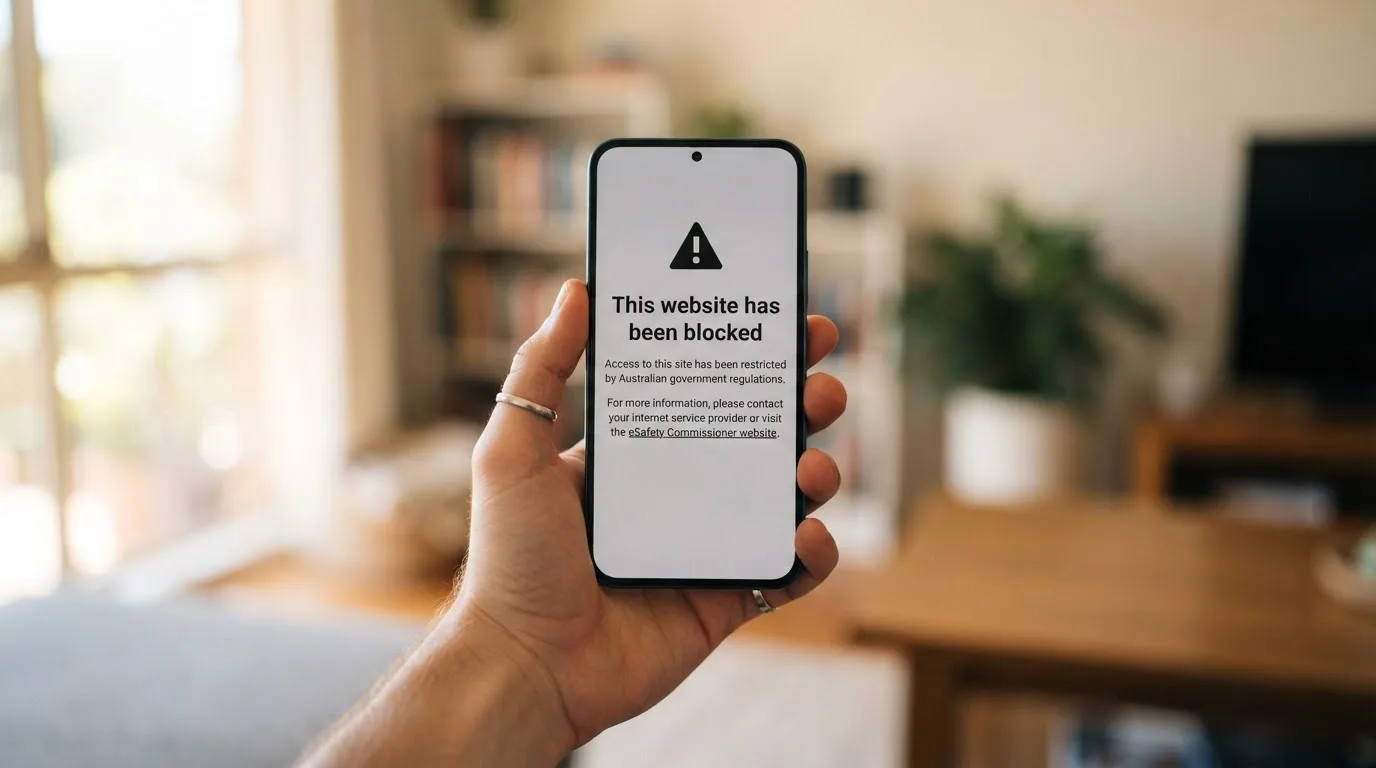
The 2017 amendments did not create the prohibition; they gave the ACMA the modern enforcement toolkit — formal warnings, civil penalty proceedings and the power to direct Australian internet service providers to block illegal sites. Since enforcement was strengthened in 2017, more than 230 unlicensed gambling services have left the Australian market, and by June 2026 the ACMA had asked ISPs to block 1,751 illegal gambling and affiliate marketing websites, with the first blocking request going out in November 2019.
The legal gap a “sign-up bonus” search hits
An Australian-licensed operator cannot offer casino games, so it cannot offer a casino-style sign-up bonus either. The marketing pages a search engine surfaces are overwhelmingly affiliate pages promoting offshore brands. Some of those offshore brands carry licences from Curaçao, Anjouan or similar jurisdictions, but a foreign licence is not a substitute for an Australian one, and it does not require the operator to honour Australian consumer-protection law. The provider — not the player — is the target of the Act. Australians are not prosecuted for using these sites, but a withdrawal refused by an offshore operator has no Australian complaints body behind it, and an ACMA blocking order can lock a balance inside a site that no longer resolves in an Australian browser.
What stays lawful
Three things are licensed and reachable for an Australian: pre-event sports and racing wagering with an NTRWC-licensed bookmaker; land-based casino gaming in the integrated resorts and clubs of each state; and poker machines in licensed clubs and hotels (pokies), which are regulated state by state and not online. Lottery products and keno round out the legal floor.
| Feature | Licensed Wagering | Offshore Casino |
|---|---|---|
| Regulation | State/Territory (NTRWC) | None (or foreign) |
| Consumer Protection | BetStop & Banking blocks | None |
| Deposit Methods | Debit/Bank/PayID/BPAY | Crypto/Bank (often limited) |
| Legal Status | Permitted | Prohibited |
The bonus mechanic stripped of its marketing
Even setting the legality aside, the offer itself is worth understanding before any comparison is run. A “sign-up bonus” is the marketing label for a credit the casino extends to a new account — typically a matched deposit, sometimes a fixed amount with no deposit required, sometimes a bundle of free spins. None of it is cash in hand. The credit sits in a bonus balance, and moving it into the cash balance costs the player something. That cost is spelled out in the bonus terms, and almost every bonus carries three controls that decide what the offer is actually worth.
The first is the wagering requirement, also called turnover. A casino advertising “100% up to A$500, 35x bonus” requires the player to wager thirty-five times the bonus amount before any of it becomes withdrawable. On a A$100 bonus that means A$3,500 in qualifying bets. Free-spin winnings typically carry their own multiplier. The second is the maximum bet rule: most sign-up bonuses cap the wager that contributes to clearing at a small amount per spin or hand, usually around A$5 to A$8. Above that, the casino voids the bonus and any winnings tied to it. The third is the maximum cash-out cap, which sets a ceiling on how much of the bonus balance can ever be withdrawn, regardless of how much the player wins while clearing it.
Where the marketing language hides the cost
A “cash bonus” still has to be turned over before it is cash. A “no deposit” offer still has a wagering multiplier and a cap. A “free spin” bundle is paid out as bonus money, not as withdrawable cash, on every regulated market this article touches. The headline figure is the size of the carrot; the wagering multiple, the bet cap and the maximum cash-out are the size of the stick. Read them together or do not read the offer at all.
Why max-bet rules exist
Casinos do not impose the per-spin cap because they are worried about a player’s discipline. The cap exists because a player with an uncapped bet can clear a bonus in two or four oversized wagers, leaving the casino’s promotional budget spent for almost no play. The clause is a control on the operator’s cost, not a favour to the punter, and the bonus terms state it as such. The honest reading of any “play as much as you like” line in the marketing is that the cap is buried four pages into the terms.
What happens to an unused bonus
Every bonus carries an expiry. Free-spin bundles usually expire within seven days of issue; deposit-match bonuses typically run for thirty days, sometimes less. If the wagering requirement has not been completed by the deadline, the bonus balance and any winnings tied to it are forfeited. There is no partial credit, and the casino does not negotiate extensions once the clock has run. The expiry is the other timer every player is racing against.
Crypto, anonymity and the offshore sign-up bonus
A search for “bitcoin casino sign-up bonus” or “crypto casino no deposit sign up bonus” lands a reader on the same offshore sites, with the same prohibitions, and an additional layer of friction at the payment step. Two things are worth saying about the crypto route that the marketing does not surface.
The first is that an Australian-licensed online wagering service cannot accept payment by credit card or other credit-related products, and digital currency has been in the same banned category since the 2023 amendments to the Interactive Gambling Act. The 2024 prohibition came into force on 11 June 2024, with penalties up to A$247,500 for operators. The restriction applies to Australian-licensed wagering services — not, on paper, to an offshore casino — but it tells a reader which way the policy winds are blowing. A deposit method that is closed for the legal half of the market will not stay open at the discretion of the illegal half for long.
The second is that “anonymity” on these sites is a marketing story, not a technical one. Crypto deposits do not require a name at the deposit step, but every licensed Bitcoin casino operates a withdrawal procedure that asks for it: full KYC on the first cash-out, source-of-funds checks above certain thresholds, and on-chain analytics that flag known mixer and tumbler addresses. A reader who treats crypto as a way to dodge identity verification will discover at the withdrawal screen that they have moved the friction rather than removed it. The Bitcoin network records every transaction permanently, which is the opposite of the privacy the marketing copy implies.
What crypto does change
Crypto does change the speed and the geography of the deposit, in two narrow ways. It moves value across borders without going through SWIFT or correspondent banks, which removes the banking friction that causes some Australian credit-card and bank-transfer deposits to bounce. And it does it without the merchant category codes that Australian banks use for their gambling blocks. ANZ, Commonwealth Bank and Westpac all run gambling blocks that screen for the MCC code that flags betting and casino transactions; a crypto deposit does not carry that code, because the merchant on the bank statement is the exchange, not the casino. That is a real speed advantage for an Australian depositing into an offshore casino. It is also a bypass of a protection the player’s bank put there on their request, which is a different conversation.
The payments side of an offshore sign-up bonus
The fastest deposit method on the legal side of the Australian market is irrelevant on the illegal side, because the illegal side cannot reach the legal rails. What an Australian punter actually meets at the deposit screen of an offshore casino is a shorter list than the marketing suggests.
Bank transfer and PayID
Australia’s New Payments Platform, owned by New Payments Platform Australia Ltd and now part of Australian Payments Plus (AP+), went live to the public on 13 February 2018. Osko transfers between participating banks arrive in under a minute, 24/7, addressed either to a BSB and account number or to a PayID. Over 100 Australian financial institutions now offer PayID, and more than 25 million PayID identifiers had been registered by April 2025. The platform’s monthly outages are capped at two minutes, and the ACCC authorised the merger of NPP Australia with BPAY and eftpos in 2021.
PayID has a built-in guardrail for the gambling case. Paying to a PayID surfaces the recipient’s name before the transfer is sent, and AP+ warns that being asked to send money to a PayID on an illegal gambling site almost certainly means a scam. Most offshore casinos cannot receive a PayID, so this guardrail does not bite at the deposit step the way it would on a licensed wagering site. Bank transfers to a BSB and account number do work in some cases, and they work quickly, but the name-check the PayID gives a punter is the protection to look for.
Cards and digital wallets
Westpac’s gambling block works at card level: it refuses authorisation on transactions registered under the merchant category code that flags betting and casino gambling. Commonwealth Bank lets customers apply a gambling lock to eligible cards via the CommBank app, with the same caveat that not every gambling-related transaction will be caught. ANZ’s gambling transaction block, activated in the ANZ app, blocks gambling transactions through a digital wallet such as Apple Pay on an eligible card, not only on the physical card. Removing the ANZ block requires a 48-hour waiting period.
Apple Pay itself does not surcharge consumers in stores, online or in apps, and the transaction limits and PIN requirements are set by the card issuer or merchant, not by Apple. By the end of 2025, Apple Pay, Google Pay and Samsung Pay collectively accounted for around 45% of all card payments in Australia by number — a market that the banks are now actively screening with gambling controls, including on the wallet side.
The Reserve Bank of Australia’s July 2025 review proposes removing surcharges only on eftpos, Mastercard and Visa transactions, leaving American Express outside the proposed ban. That detail matters because American Express operates as a three-party scheme — issuer, processor and network in one — rather than the four-party model Visa and Mastercard run, and it sits outside the bank’s Australian surcharge regime for a structural reason.
BPAY and bill payment
BPAY has run in Australia since 18 November 1997, is available in the online banking of over 140 banks and is offered by over 95,000 businesses. A payer enters the Biller Code and a Customer Reference Number (CRN) printed on the bill. BPAY is owned, via Cardlink Services Limited, in equal shares by the four major banks — ANZ, Commonwealth Bank, National Australia Bank and Westpac — and has been part of Australian Payments Plus since 2021. None of that is relevant to an offshore casino deposit: BPAY is a bill-payment rail aimed at registered Australian billers, and a casino is not one.
AUSTRAC and the threshold report
AUSTRAC’s threshold-transaction-report rule requires reporting of cash transfers of A$10,000 or more, but it applies only to physical cash. Ordinary electronic bank transfers are not subject to that per-transaction reporting, regardless of size. Large electronic transfers fall under different reporting rules — suspicious-matter reports and cross-border transfer reports — not the threshold rule the public usually hears about.
The ACMA’s enforcement record, broken down
The blocking list is the cleanest measure of how seriously the regulator treats the offer of online casino games to Australians. By June 2026, the ACMA had asked ISPs to block 1,751 illegal gambling and affiliate marketing websites since the first blocking request in November 2019. The most recent round, reported on 26 June 2026, named 12 sites: 7Signs, ChromaBet, Donbet, Duospin, Freshbet, Slots Gem, Jacks Club, Lucky Start, Pointsbetz.com, Spinrise, Vinyl Casino and Wildsino.
H2 Gambling Capital’s 2025 report estimates Australians lose about A$3.9 billion a year to illegal gambling sites, and that the share of gambling going through legal channels fell from 74% in 2021 to 64%. That is the cost figure that frames the entire enforcement story: the prohibition is not theoretical, and the marketing machine behind the search results is moving real Australian money offshore.
The blocking rate, as a band
Taking the ACMA’s running total of 1,751 blocked websites against the date of the first blocking request in November 2019 gives a long-run rate of around 260 websites blocked per year over the lifetime of the regime, and a more recent annual pace in the high 200s once the blocking tool began running at its current cadence. The exact rate drifts because some blocking rounds name more sites and some name fewer, but the band — roughly 250 to 300 blocked sites per year since 2019, with a noticeable uptick in 2024 and 2025 — is the figure an Australian reader can quote, and the condition that produces the band is simple: the ACMA’s pace depends on how many cases are referred to it and how quickly the regulator moves on them, not on the rate at which new offshore sites appear.
Formal warnings, brand by brand
The ACMA’s formal-warning register is more granular than the blocking list and is the cleaner source for any specific brand. Since 2022 the regulator has named operators, dates and the legal basis under the Interactive Gambling Act 2001 for every warning. The catalogue includes: Dama N.V. over six casino brands in May 2022 — Bambet, Dazard, Level Up, Rocketplay, Wild Tornado and Cobra Casinos; further warnings to Dama N.V. over Woo Casino in March 2025 and Spirit Casino in May 2025; warnings to Bamboo Media over Ignition Casino and to Consolutetish S.R.L. over National Casino and Bizzo Casino in July 2025, with Bizzo Casino already warned in 2022 to TechSolutions; a February 2025 warning to EOD Code SRL over Instant Casino; an April 2025 warning to Sterplay Holding Ltd over Casino Intense; a March 2026 warning to Pulsup Ltd over Rocketplay.com.au; and an April 2026 warning to Ryker B.V. over Jackbit and CasinOK. A 2022 formal warning to Hollycorn N.V. covered its Sky Crown and Blue Leo services.
That is the dataset that follows. Each brand named below has a corresponding ACMA action on the public record. None is recommended as a place to play.
The brands the ACMA has warned, side by side
| Brand | ACMA action and date | Operator named by the ACMA | Where the brand surfaces |
|---|---|---|---|
| RocketPlay | Formal warning, March 2026; earlier May 2022 over Dama N.V. brands | Pulsup Ltd (Rocketplay.com.au); Dama N.V. | Listed on gambling industry trackers |
| Level Up Casino | Formal warning, May 2022 | Dama N.V. | Listed on consumer-banking gambling-block pages |
| Woo Casino | Formal warning, March 2025 | Dama N.V. | Not found in the consulted sources for this subject |
| Spirit Casino | Formal warning, May 2025 | Dama N.V. | Not found in the consulted sources for this subject |
| National Casino | Formal warning, July 2025 | Consolutetish S.R.L. | Listed on ACMA, AUSTRAC and BetStop coverage |
| Bizzo Casino | Formal warning, July 2025; earlier 2022 | Consolutetish S.R.L.; TechSolutions | Listed on gambling industry trackers |
| Ignition Casino | Formal warning, July 2025 | Bamboo Media | Not found in the consulted sources for this subject |
| Instant Casino | Formal warning, February 2025 | EOD Code SRL | Listed on payment-method coverage pages |
| Jackbit | Formal warning, April 2026 | Ryker B.V. | Not found in the consulted sources for this subject |
| Casino Intense | Formal warning, April 2025 | Sterplay Holding Ltd | Listed on AUSTRAC, BetStop and industry trackers |
| Sky Crown | Formal warning, September 2022 | Hollycorn N.V. | Not found in the consulted sources for this subject |
RocketPlay
The ACMA issued a formal warning to Pulsup Ltd over Rocketplay.com.au in March 2026, and an earlier May 2022 warning to Dama N.V. covered a basket of six brands that included Rocketplay. Both warnings cite the Interactive Gambling Act 2001, and the prohibition against providing online casino games to a person in Australia. Rocketplay surfaces on gambling industry trackers, which is where the listings come from; no Australian-facing licence, no Australian regulator behind it. For a reader who needs a fast answer: the brand has been on the ACMA’s register twice in four years, and the same legal prohibition underlies both.
Level Up Casino
The May 2022 Dama N.V. warning was a basket action — six brands at once — and Level Up Casino is one of them. The brand appears on Australian consumer-banking pages that publish the merchant categories the gambling block targets, which is how it surfaces as a name a reader may have met in their banking app rather than on a comparison site. The site’s licence is Curaçao-based. A reader comparing it against another brand in the table is comparing two sites with the same prohibition behind them; nothing in the table lifts either above the other.
Woo Casino
The Dama N.V. warning in March 2025 covered Woo Casino specifically. That is the full extent of what the consulted sources carry for the brand on the subject of this page. Woo does not appear in the payment-method or Australian-banking sources reviewed, which is its own kind of information: the brand is on the ACMA register and absent from the consumer-banking discussion. Operating an unlicensed casino remains a prohibited activity.
Spirit Casino
A second Dama N.V. warning followed in May 2025, this time over Spirit Casino. The brand does not appear elsewhere on the consulted sources for this subject. The absence is not a clean bill of health — the ACMA warning is on the public record, and providing such games to an Australian is an offence under the Interactive Gambling Act 2001.
National Casino
Consolutetish S.R.L. was warned by the ACMA in July 2025 over National Casino. The brand appears in coverage by the ACMA itself, by AUSTRAC and by BetStop, which gives it a wider footprint on the Australian record than most of the table. None of those appearances is a licence. National Casino carries an offshore licence, the ACMA has named the operator, and the prohibition under the IGA is the controlling fact.
Bizzo Casino
Bizzo Casino received a July 2025 warning to Consolutetish S.R.L., on top of an earlier 2022 warning to TechSolutions (CY) Group Limited and TechSolutions Group N.V. The doubled-up record is worth flagging: the same brand has been through the ACMA process twice under two different operators. The brand surfaces on industry trackers, but it does not surface on Australian consumer-banking pages the way Level Up does. The legal situation is unchanged.
Ignition Casino
Bamboo Media was the named operator in the July 2025 warning over Ignition Casino. The consulted sources for this subject do not carry the brand elsewhere, which leaves the ACMA warning as the only data point that matters for this page. The Interactive Gambling Act 2001 prohibition applies in full.
Instant Casino
The February 2025 warning to EOD Code SRL is the formal ACMA record for Instant Casino. The brand surfaces on payment-method pages consulted for this subject — ecoPayz and PayID coverage both mention it — which is the closest any brand in this set gets to a payments-side footprint without an Australian licence. The payments footprint does not change the legal status.
Jackbit
Ryker B.V. was warned by the ACMA in April 2026, covering both Jackbit and CasinOK. Jackbit does not appear on the consulted sources for this subject beyond the warning itself. The site’s crypto casino positioning is the marketing frame the brand runs on, and the warning is the regulator’s response to that frame.
Casino Intense
Sterplay Holding Ltd received the ACMA’s April 2025 formal warning over Casino Intense. The brand surfaces on AUSTRAC, BetStop and industry-tracker coverage. That wider set of appearances on Australian-facing pages puts Casino Intense on a similar footing to National Casino in terms of how visible it is in the Australian record — and, like every other brand in the table, on the prohibition side of the law.
Sky Crown
Hollycorn N.V. was the operator named in the ACMA’s September 2022 formal warning covering Sky Crown and Blue Leo. Sky Crown does not surface elsewhere on the consulted sources for this subject. The Hollycorn record is older than most of the table, but the site continues to operate without an Australian licence.
The verdict across the table
Eleven brands, eleven formal warnings, one regime. Each listed operator appears on the ACMA’s own register, and some surface on Australian payment-method or industry-tracker pages. None of that visibility changes the legal status. None of the eleven is licensed for online casino games anywhere in Australia. None is recommended. The list is not a shortlist; it is the ACMA’s own catalogue of operators who have offered the prohibited product to Australians.
What protection an Australian player actually has
The single biggest difference between a licensed Australian wagering service and an offshore casino is the protection stack that sits behind the legal one. Three tools matter.
BetStop
BetStop, the National Self-Exclusion Register, has been live since August 2023. A punter who signs up is excluded from every Australian-licensed online and phone wagering service for the period they choose. The exclusion binds the operator, not the punter; the punter cannot revoke it inside the minimum period, and the operator must honour it. BetStop does not bind an offshore casino, because the offshore casino is not connected to the register. A punter who has self-excluded and then opens an offshore account has not self-excluded — they have moved the venue. That is the limit of the tool.
Banking gambling blocks
ANZ, Commonwealth Bank and Westpac all run gambling blocks that screen for the merchant category code that flags betting and casino gambling. ANZ’s block also extends to digital wallets such as Apple Pay on the same card, and removing it requires a 48-hour waiting period. The Commonwealth Bank gambling lock is set up through the CommBank app. Westpac’s block operates at card level on eligible personal credit and debit cards. Each bank warns that not every gambling-related transaction will be blocked and that some non-gambling transactions may be blocked in error, which is honest: the block works on the merchant code, not on the brand.
The block is the cleanest tool for an Australian punter who wants to stop gambling spend at the source, and it works on every transaction that carries the merchant code — including on legal wagering services the punter did not intend to block. The block does not stop a crypto deposit routed through an exchange, because the merchant on the bank statement is the exchange, not the casino. That is the bypass discussed above, and it is a bypass the punter has chosen.
The National Gambling Helpline
The National Gambling Helpline — 1800 858 858 — is free, 24/7 and supported by chat at Gambling Help Online. It is the first call for a punter in Australia who needs to talk, and the first step before BetStop for someone who is ready to formalise the exclusion. The line is staffed for advice, not enforcement, and it is not connected to the ACMA; a punter calling the helpline is asking for support, and the ACMA is asking the same kind of question from the other end.
The 2026 reform that lands next year
The Interactive Gambling Amendment (Gambling Reform) Bill 2026 passed Parliament on 19 August 2026. Its advertising and inducement measures commence on 1 January 2027. That is a law with a start date, not a law in force, on any page written in 2026, and it is worth flagging because it changes what an Australian reader will meet on a licensed wagering site from the first day of next year. The detail the marketing pages will not say: the reform restricts the inducements — bonus offers, “free bet” credits, sign-up offers — that Australian-licensed wagering services can extend. That is a tightening of the legal market, not a loosening of the prohibition on the illegal one. The offshore brands the ACMA has been warning will not be affected; the licensed bookmakers will.
What changes for the punter
The bonus-shaped marketing a reader sees on a licensed wagering service in 2026 will look different from 1 January 2027. The brands the ACMA has been blocking will keep running the offers the law will prohibit, and the licensed bookmakers will stop offering some of them. That is the inversion the reform produces: the lawful market gets smaller on inducements, the unlawful market keeps offering them, and the punter has to decide which side of that line to sit on.
What does not change
The prohibition on providing online casino games to Australians does not change. The credit-card and digital-currency ban for licensed wagering does not change. The AUSTRAC framework and the merchant-category gambling blocks do not change. The architecture of the ACMA’s blocking regime does not change. The reform layers advertising and inducement rules on top of the existing prohibition, and the existing prohibition is the part this page has been setting out.
Tax and the recreational punter
Gambling winnings of a recreational Australian player are not assessable income, under section 6-5 of the Income Tax Assessment Act 1997. Losses are not deductible, unless the person carries on a business of gambling — a model only, and one to check with the ATO before claiming. For the reader who needs the short version: a casual punter does not declare winnings, cannot deduct losses, and the ATO does not chase casual play. That is the model the ATO applies, and it is the only model to apply without professional advice.
What the page has concluded
The search behind this page is for a working shortlist of online casinos offering a sign-up bonus to Australians. The shortlist does not exist, because the product is prohibited. The marketing pages that surface in the search are affiliate pages for offshore operators, and the ACMA’s enforcement record shows how seriously the regulator treats them: 1,751 websites blocked since November 2019, eleven formal warnings against eleven different brands over four years, and an annual pace of around 250 to 300 blocked sites per year once the regime reached its current cadence. The bonus mechanics — wagering, max-bet, max-cash-out — are real, and they are worth understanding for any reader who is going to engage with the legal half of the Australian market or with a land-based venue.
The protection stack — BetStop, the banks’ gambling blocks, the National Gambling Helpline — is real, and it sits behind the legal half of the market. The illegal half of the market offers none of it. A punter looking for an online casino sign-up bonus is, in the end, choosing between two architectures: the licensed one, with its prohibitions and its protections, and the offshore one, with its bonuses and its enforcement record. The arithmetic an Australian reader can quote is simple, and it is the one the ACMA has been publishing since November 2019.
Frequently asked questions
What is the difference between a sign-up bonus and a no-deposit bonus?
A sign-up bonus is typically a matched deposit — the casino matches a percentage of the first deposit up to a ceiling. A no-deposit bonus is a fixed credit issued for opening an account without requiring a deposit. Both are bonus money subject to wagering requirements, max-bet rules and maximum cash-out caps, and neither is withdrawable until the wagering requirement is cleared. The difference is the deposit step, not the clearing mechanics.
What does turnover, or wagering requirement, mean for a sign-up bonus?
Turnover is the total amount a player must wager before the bonus balance becomes withdrawable cash. A 35x wagering requirement on a A$100 bonus means A$3,500 in qualifying bets, counted across the bonus period. Free-spin winnings usually carry their own multiplier, separate from the deposit bonus. The requirement is set by the casino’s terms and is the single largest control on what the bonus is actually worth.
Is it legal for an online casino to offer a sign-up bonus to players in Australia?
No. Under the Interactive Gambling Act 2001, as amended in 2017, it is an offence to provide online casino games to a person physically in Australia, and no Australian licence exists for the product. The sign-up bonus is part of the offer of online casino games, so offering it to an Australian falls under the same prohibition. Australian-licensed wagering services can offer sign-up inducements on sports and racing, where they are licensed; the legal landscape shifts from 1 January 2027 under the Interactive Gambling Amendment (Gambling Reform) Bill 2026.
Can a sign-up bonus be claimed using a cryptocurrency deposit?
Australian-licensed online wagering services cannot accept digital currency, a restriction in force since the 2023 amendments to the Interactive Gambling Act 2001. Offshore casinos that accept crypto are not licensed for online casino games in Australia, regardless of their foreign licence, and the ACMA has warned several crypto-positioned brands by name. The deposit will clear; the legal position is unchanged, and the bonus still carries wagering requirements and caps.
Why do sign-up bonus terms usually cap the maximum bet allowed?
The max-bet rule exists so the casino does not lose its promotional budget to a player who clears the wagering requirement in two or four oversized wagers. The cap is usually set at A$5 to A$8 per spin or hand. Bets above the cap void the bonus and any winnings tied to it. The rule is a cost control for the operator, not a favour to the punter, and it is buried in the terms rather than the marketing. See also First Deposit Bonuses for Australians .
What happens to an unused sign-up bonus if the wagering period expires?
The bonus balance and any winnings tied to it are forfeited at the deadline. Free-spin bundles typically expire within seven days; deposit-match bonuses usually run for thirty days, sometimes less. There is no partial credit at expiry, and the casino does not negotiate extensions once the clock has run. A punter who cannot meet the wagering requirement inside the period loses the bonus and the work done against it.