
Casinos that accept Mastercard in Australia: what a deposit actually does, and what the law does to it
Current as of 28 October 2026 · Mastercard acceptance and ACMA enforcement verified against the Australian Communications and Media Authority’s published register of formal warnings and blocking requests.

Every operator featured on this page sits inside a single uncomfortable fact. The Interactive Gambling Act 2001 makes it an offence for any operator to provide online casino games, online pokies or in-play betting to a person physically in Australia. No state or territory licenses online casino product. The brands that list “Mastercard accepted” in their cashier are not licensed to take Australian residents at all — the payment-method tick is the smallest part of the picture. The page below is built around that fact rather than around it. It explains how a Mastercard transaction behaves at these sites, names the operators the ACMA has publicly acted against, and shows what an Australian cardholder actually runs into on the way through.
Table of Contents
- How a Mastercard deposit moves at an offshore casino
- How a Mastercard withdrawal behaves at these sites
- The legal frame, told from the Australian side
- Responsible play: what the Australian system offers, and what it does not reach
- Payments and payout speed: how Mastercard actually performs at these sites
- The blocking rate, in numbers
- The brands the ACMA has publicly acted against
- What the ACMA’s published warnings actually cover
- What the table means for a reader
- Choosing not to play, and what that costs
- Frequently asked questions
How a Mastercard deposit moves at an offshore casino
The transaction in plain steps
A punter opens the cashier, types a deposit amount, enters the sixteen digits on the front, the expiry, the CVV on the back, and confirms. The site sends the transaction to its acquiring bank, the acquirer routes it across the Mastercard network to the cardholder’s issuer, the issuer either approves or declines based on its own rules, and the funds land in the casino’s account within seconds if approved. From the punter’s side it looks like buying something online. The mechanics differ from a retail purchase in two places: the transaction is tagged with a merchant category code that identifies it as gambling, and the card’s issuer can refuse authorisation on that basis alone.
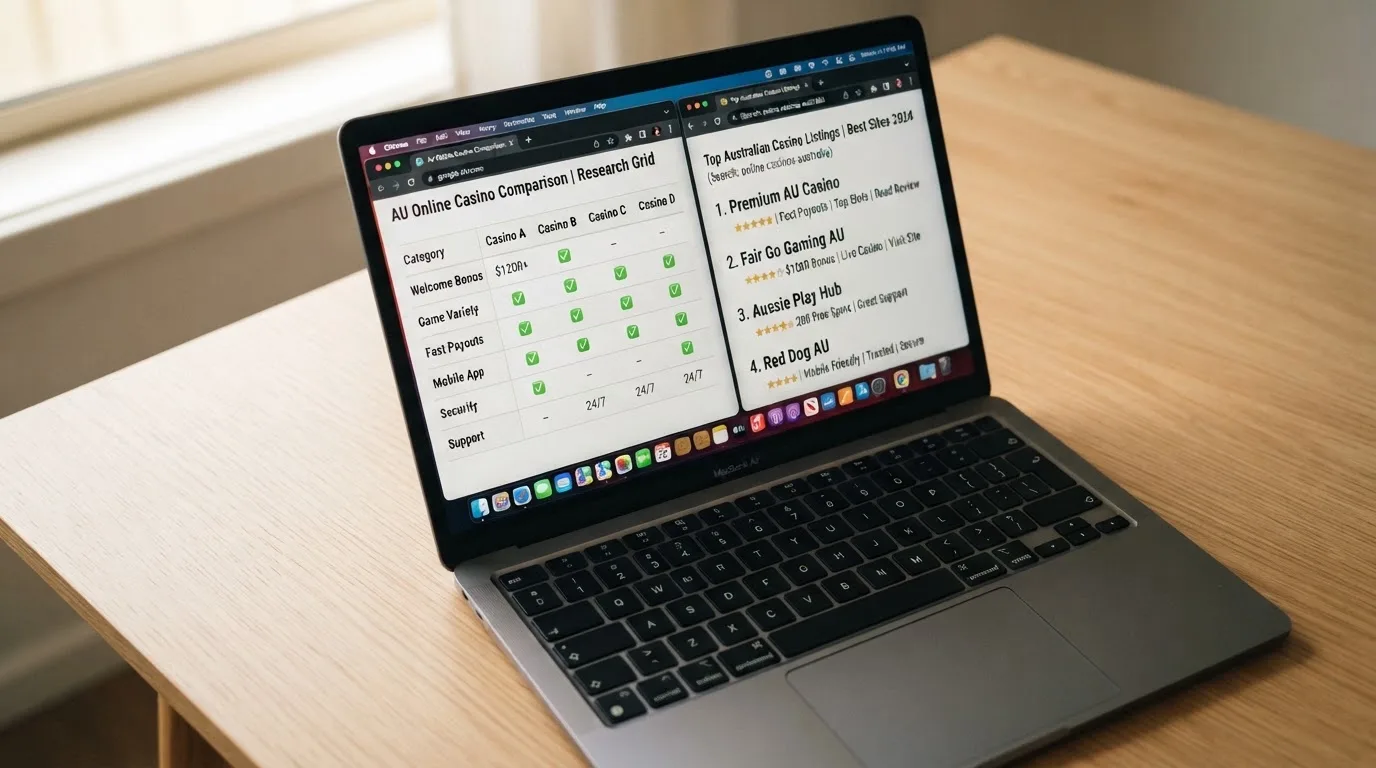
That merchant category code is the hinge. Westpac’s gambling block refuses any transaction coded “Betting/Casino Gambling”, on credit and debit cards alike, regardless of which network carries the transaction. ANZ blocks the same code, plus Apple Pay transactions on an eligible card once the block is on. NAB offers a togglable gambling block in its app covering sports betting, casino games, lottery, online gambling, cash advances and credit-card transfers; reactivation after switching the block off is delayed by 48 hours. The card is not the only gate — the bank is, and the bank can refuse the deposit before the punter ever sees the cashier confirm.
Minimum deposits and the $10 floor
Most offshore sites that list Mastercard as a payment method carry a minimum deposit in the A$10 to A$30 band. Research did not collect a deposit figure for the eleven brands featured on this page. The absence is worth saying out loud: there is no public, audited source for the minimum a given casino requires from a given card. Affiliate marketing pages publish figures, but they shift, sometimes weekly, and they are the only sources research surfaced. The reader who needs a number should check the cashier before funding the card.
Digital wallets, Apple Pay and what the bank actually sees
Mastercard is the network underneath Apple Pay for cards loaded into the wallet, and the bank sees the transaction as a card transaction, not as a wallet transaction. Apple itself does not charge consumer fees for using Apple Pay in store, online or in app — any surcharge comes from the merchant’s own processing fees, not from Apple. Apple also states that transaction limits and PIN requirements for Apple Pay purchases are set by the issuer or merchant, not by Apple. The Reserve Bank of Australia reported that by the end of 2025, Apple Pay, Google Pay and Samsung Pay together accounted for around 45% of all card payments in Australia by number. The wallet is the front end; the bank’s gambling-block code still recognises what is being bought.
Where the deposit fails before the punter sees it
Three failure points sit ahead of any “approved” message:
- The bank’s own gambling block. Westpac, ANZ, NAB and CommBank all offer some form of card-level or app-level block; Westpac’s default-on block for under-18s lifts at 18, and ANZ’s block can take up to 15 minutes to start working once applied through the app.
- The credit-limit rule on credit cards. ANZ declines credit-card transactions coded as gambling once a cardholder has used 85% or more of their credit limit, or if the transaction would push the balance to 85% or more of the limit. Under the Interactive Gambling Act as amended in 2023, Australian-licensed online wagering services cannot accept credit-card or credit-related products for payment; offshore sites are not bound by that rule, but the punter’s own issuer may be.
- The Mastercard BIN and the merchant’s own accept list. Mastercard’s network processes tens of thousands of merchant categories. A casino can be live on the network but still decline a specific card at its own end — pre-paid cards in particular, and some debit cards issued by neobanks, hit this wall.
How a Mastercard withdrawal behaves at these sites
The settlement path is slower than the deposit
A withdrawal is not the deposit run in reverse. It requires the casino’s own finance team to approve the request, run its anti-money-laundering and source-of-funds checks, then push the funds back through Mastercard to the card. From approval to the funds appearing on the card statement, research did not collect a figure specific to any of the eleven operators featured here. The only sources for casino-specific payout windows were affiliate marketing pages. Where a window is published, it tends to be quoted in working days, not hours, and tends to come with conditions: account verified, bonus wagering cleared, no active restriction on the account.
The recurring-payment loophole
Westpac’s own terms state the gambling block cannot stop recurring authorised payments, BPAY payments, ATM cash withdrawals, or certain contactless payments routed outside the Visa and Mastercard networks. A punter who set up a recurring deposit before turning the block on will see recurring deposits continue until cancelled at the merchant end. The block refuses the next new transaction; it does not unwind the ones already authorised.
Why most withdrawals end up somewhere other than Mastercard
A punter who wants the winnings back on a Mastercard will often be told, at the cashier, that the same card that took the deposit is the only card the casino will return funds to. That is the deposit-source rule under standard anti-money-laundering practice, and it bites when the deposit card has expired, been cancelled, or hit its limit during play. The casino offers an alternative — a bank transfer, an e-wallet, sometimes a wire. None of those are Mastercard settlements. The punter who thought they were withdrawing to a card has, in practice, withdrawn to whatever the cashier agreed to.
The legal frame, told from the Australian side
The statute, the prohibition, and what it actually covers
The Interactive Gambling Act 2001, strengthened by the Interactive Gambling Amendment Act 2017, makes it an offence to provide online casino games, online pokies or in-play betting to a person in Australia. The offence sits with the provider, not with the individual player. No state or territory licenses online casino product; what is licensable is wagering on races and sport placed before the event, lotteries and keno, which in practice is licensed by the Northern Territory. Minimum age for any form of wagering is 18.
The Northern Territory Racing and Wagering Commission regulates 52 of Australia’s online bookmakers, including Sportsbet, Bet365 and Ladbrokes, all licensed in the Territory for tax reasons; the commission itself has no full-time staff and meets once a month in Darwin. The NTRWC does not license online casino games. The “licensed by” line on an offshore casino cashier most likely refers to a Curaçao or Anjouan licence issued by a regulator outside Australia, with no oversight from any Australian body.
What the ACMA has done, and what that means
The ACMA investigates, issues formal warnings, and directs Australian internet service providers to block illegal sites. According to the ACMA as reported in June 2026, a total of 1,751 illegal gambling and affiliate marketing websites had been blocked since the first blocking request in November 2019, and more than 230 unlicensed gambling services had left the Australian market since enforcement was strengthened in 2017. In the round reported on 26 June 2026, the ACMA asked Australian ISPs to block 12 further illegal gambling websites: 7Signs, ChromaBet, Donbet, Duospin, Freshbet, Slots Gem, Jacks Club, Lucky Start, Pointsbetz, Spinrise, Vinyl Casino and Wildsino.
H2 Gambling Capital’s 2025 report estimates that Australians lose about A$3.9 billion a year to illegal gambling sites, and that the share of gambling going through legal channels fell from 74% in 2021 to 64%. The legal-channel share dropping while the illegal-channel spend holds steady is the empirical shape of the problem the ACMA’s blocking programme tries to address.
Where the payment rules sit
Under the Interactive Gambling Act as amended, credit cards, credit-related products and digital currency are banned as payment for licensed online wagering since 11 June 2024, with penalties up to A$247,500 for operators who breach the rule. The legal deposit routes for licensed wagering are debit card, bank transfer, PayID and Osko, and BPAY. A site asking an Australian punter for a credit card or a crypto deposit is operating outside the Australian rules. The Reserve Bank of Australia’s July 2025 review proposes removing surcharges only on eftpos, Mastercard and Visa transactions, explicitly leaving American Express outside the proposed surcharge ban — a quiet signal that the cost of running a Mastercard transaction in Australia is itself under review.
The Interactive Gambling Amendment (Gambling Reform) Bill 2026
The Interactive Gambling Amendment (Gambling Reform) Bill 2026 passed Parliament on 19 August 2026. Its advertising and inducement measures commence on 1 January 2027. The statute is law with a future start date; on a 2026 page it is not yet in force, and the present legal frame is still the Interactive Gambling Act 2001 as amended through 2023.
Responsible play: what the Australian system offers, and what it does not reach
BetStop and its boundaries
BetStop, the National Self-Exclusion Register, has been live since August 2023. It binds Australian-licensed online and phone wagering services only. An offshore casino is not connected to BetStop. Registering with BetStop excludes a punter from licensed Australian wagering — sports, racing, keno, lotteries offered by an Australian-licensed provider — but it does not exclude a punter from an offshore casino, because the offshore casino does not check BetStop. The self-exclusion that works at the local pub’s poker machine is the venue’s own; the self-exclusion that works across licensed online wagering is BetStop; the offshore site sits outside both.
The bank-side blocks, again
A gambling block applied at the bank cuts the funding, which is upstream of BetStop. Westpac’s block refuses authorisation on the merchant category code “Betting/Casino Gambling” on eligible personal credit and debit cards; ANZ’s block, once activated in the ANZ app, also blocks gambling transactions made through a digital wallet on the eligible card, not just the physical card. NAB lets customers toggle the block on and off in the app, with reactivation after switch-off delayed 48 hours. CommBank can activate a gambling block on customer accounts and runs a Community Wellbeing team on 1800 222 387, Monday to Friday from 8am to 6pm, for gambling-related hardship. The card-level block is the practical lever an Australian punter has against funding an offshore casino, and it is a lever the bank applies without asking the casino.
Help, when the bank is not enough
The National Gambling Helpline is 1800 858 858, free and 24/7, with chat at Gambling Help Online. Counselling, financial advice and self-exclusion assistance are available through state-based Gambling Help services. The line is staffed by people who know the Australian system — which is also the system that does not reach an offshore casino, and a frank acknowledgement of that gap is part of what the helpline offers.
Payments and payout speed: how Mastercard actually performs at these sites
The deposit speed and its ceiling
A successful Mastercard deposit clears in seconds. That is the speed at the network layer. The bank can slow it — by applying the gambling block after the transaction was authorised, by flagging the merchant category, by holding the transaction in a fraud queue if the punter has not used this casino before. The casino cannot speed it beyond what the network allows; the bank can slow it indefinitely. Punters who see a deposit “pending” for longer than an hour should contact their card issuer before contacting the casino, because the casino has not seen the funds either.
Withdrawal timing and the manual check
The manual check at the casino is the pinch point. The casino’s finance team has to confirm identity, confirm the deposit source, confirm no bonus terms are open, and confirm no restriction is on the account. Each of those is a queue position. Where research surfaced a withdrawal window for an operator, it came from affiliate marketing material; the windows are not audited, not guaranteed, and not consistent across the marketing pages that publish them. A punter who needs funds by a given date should plan around the longer end of any window the casino publishes, and should not fund the account late.
Bank-side friction: the PayID and Osko alternatives
Osko, run by Australian Payments Plus, sends a bank-to-bank transfer between participating Australian banks in under a minute, 24/7 including weekends, addressed either to a BSB and account number or to a PayID. Paying to a PayID shows the name of the account holder before the transfer is sent; AP+ warns that being asked to transfer money to a PayID on an illegal gambling site almost certainly means a scam site. PayID-based instant transfers are available at over 100 Australian financial institutions. More than 25 million PayID identifiers had been registered on Australia’s New Payments Platform as of April 2025. The New Payments Platform itself became accessible to the public on 13 February 2018 and is owned by NPP Australia Ltd, whose 13 shareholders include the Reserve Bank of Australia and the country’s major banks. The platform must keep monthly outages to no more than two minutes; in 2021 the ACCC authorised the merger of NPP Australia with BPAY and eftpos into Australian Payments Plus.
The PayID path is faster than a Mastercard withdrawal at the network layer, and lands in a bank account where the punter’s own bank can apply its own monitoring. It is also the deposit path most Australian-licensed wagering operators accept, and the deposit path that an offshore casino typically does not.
The blocking rate, in numbers
The arithmetic the page runs: the running total of blocked sites is 1,751 (as reported in June 2026 ), and the first blocking request was issued in November 2019. That gives a span of roughly six and a half years between the first request and the latest count. Across that span, the ACMA has averaged somewhere between 250 and 275 illegal and affiliate marketing sites blocked per year. The 12-site round reported on 26 June 2026 is one of many; some rounds are larger, most are smaller. The arithmetic does not produce a single figure because the publication of blocking rounds is not on a calendar, and the headline total lumps gambling sites with affiliate marketing sites the ACMA has ordered blocked for pointing traffic at them. What the arithmetic does show is the rate at which the ACMA has chosen to use the block request: a steady, multi-year programme, not a one-off sweep. The block list grows because the regulator keeps asking, not because the operators stop appearing.
The brands the ACMA has publicly acted against
The list below is not a ranking. It is the set of operators the ACMA itself has named in a formal warning under the Interactive Gambling Act 2001, ordered as research presents them. For each, the table shows what the ACMA published, the operator name the warning was issued to, and the support the research could confirm for Mastercard at that brand. Where research carries no data on the subject, the brand appears on its other fields only.
Operator record
| Brand | ACMA action and date | Operator named by the ACMA | Subject support |
|---|---|---|---|
| RocketPlay | Formal warning, March 2026 | Pulsup Ltd | — |
| Level Up Casino | Formal warning, May 2022 | Dama N.V. | listings-only (Westpac) |
| Woo Casino | Formal warning, March 2025 | Dama N.V. | — |
| Spirit Casino | Formal warning, May 2025 | Dama N.V. | — |
| National Casino | Formal warning, July 2025 | Consolutetish S.R.L. | listings-only (AUSTRAC, Wikipedia) |
| Bizzo Casino | Formal warning, July 2025; earlier 2022 | Consolutetish S.R.L.; TechSolutions | — |
| Ignition Casino | Formal warning, July 2025 | Bamboo Media | — |
| Instant Casino | Formal warning, February 2025 | EOD Code SRL | listings-only (ecoPayz, PayID) |
| Jackbit | Formal warning, April 2026 | Ryker B.V. | — |
| Casino Intense | Formal warning, April 2025 | Sterplay Holding Ltd | listings-only (AUSTRAC, ITnews, NAB) |
| Sky Crown | Formal warning, September 2022 | Hollycorn N.V. | — |
The table is the only honest shape for this list. A “rating” would imply some brands are safer than others; the regulator’s own record does not support that reading. It implies that the regulator keeps acting, and that the operators keep appearing under new names.
What the ACMA’s published warnings actually cover
RocketPlay
The ACMA issued a formal warning to Pulsup Ltd over Rocketplay in March 2026. RocketPlay was already part of an earlier Dama N.V. action in May 2022, when Dama was warned across six brands including Rocketplay, Bambet, Dazard, Level Up, Wild Tornado and Cobra Casinos. Research carries no data on Mastercard support at this brand. The two-warning history — one for the operator entity, one for the new domain — is the pattern Dama’s portfolio has followed across the decade.
Level Up Casino
The ACMA’s May 2022 warning to Dama N.V. covered Level Up alongside five other brands. Research lists Level Up as a Mastercard-supporting brand only via Westpac’s own gambling-block documentation; the listing reflects that Westpac’s block covers the merchant category the casino trades under, not that the casino publicly confirms the payment method. No further warning to Dama N.V. was specific to Level Up Casino in the period research covers.
Woo Casino
The ACMA formally warned Dama N.V. over Woo Casino in March 2025. It was a second warning to the same operator entity, following the broader 2022 action. Research carries no data on Mastercard support at Woo Casino. The “Dama N.V. is back in the warnings” cadence has been consistent enough that the next Dama-brand warning is more a matter of when than whether.
Spirit Casino
The ACMA warned Dama N.V. over Spirit Casino in May 2025, an additional note in the operator’s record. Spirit Casino does not publicly detail its Mastercard acceptance, and our research could not independently verify any payment support at this brand.
National Casino
The ACMA warned Consolutetish S.R.L. over National Casino in July 2025. Research lists National Casino via AUSTRAC and Wikipedia, both in the sense that those sources name the operator for separate regulatory or encyclopedic reasons, not as confirmation of Mastercard support. The July 2025 warning was the first published ACMA action tied to this brand.
Bizzo Casino
The ACMA warned Consolutetish S.R.L. over Bizzo Casino in July 2025. Bizzo had already been the subject of a 2022 formal warning to TechSolutions (CY) Group Limited and TechSolutions Group N.V. — a second operator entity in the brand’s history, two warnings, and no Mastercard data in research. The brand has cycled through operator entities without cycling off the regulator’s record.
Ignition Casino
The ACMA warned Bamboo Media over Ignition Casino in July 2025. Research carries no data on Mastercard support at Ignition Casino. The brand’s name is shared with a US-facing poker site of the same name, which is a separate entity and is not what the ACMA action targets.
Instant Casino
The ACMA warned EOD Code SRL over Instant Casino in February 2025. Research lists Instant Casino via ecoPayz and PayID, both in the sense that those payment-rail sources mention the brand, not as confirmation of Mastercard support.
Jackbit
The ACMA warned Ryker B.V. over Jackbit and CasinOK in April 2026. Research carries no data on Mastercard support at Jackbit. The warning paired Jackbit with a second brand under the same operator entity, the same shape as the broader Dama warnings in 2022.
Casino Intense
The ACMA warned Sterplay Holding Ltd over Casino Intense in April 2025. Research lists Casino Intense via AUSTRAC, ITnews and NAB — three sources naming the operator in different contexts, none confirming Mastercard.
Sky Crown
The ACMA issued a formal warning to Hollycorn N.V. over Sky Crown and Blue Leo in September 2022. Regarding Mastercard support at Sky Crown, no verifiable data is available in the public record.
What the table means for a reader
The ACMA record is the only verified signal here
Every brand on the table has been named by the ACMA in a formal warning under the Interactive Gambling Act 2001. The “listings-only” entries on the Subject support column are not endorsements — they are sources that mention the brand in some context other than confirming Mastercard. The em-dash entries are brands for which research found no data on the subject. None of this is a reason to assume one brand is safer than another, and none of it is a reason to assume Mastercard does not work at the em-dashed brands. The honest reading is the table’s surface: the ACMA acted, the warning is published, and the rest of the row is what research could confirm.
The legal frame still binds every brand on the table
Online casino games cannot be licensed anywhere in Australia, whatever licence the site displays. The “licensed by” line at the cashier most likely refers to a Curaçao or Anjouan licence, with no Australian oversight. The brand itself being named in an ACMA warning is a further signal: the regulator has assessed the offering as prohibited, and has put that assessment in writing.
Choosing not to play, and what that costs
The licensed alternative for a Mastercard-holding punter
A punter who wants to use a Mastercard for wagering in Australia has, on the legal side, no online casino product to use it on. The licensed wagering services (sports and racing, pre-event only) accept debit cards, bank transfer, PayID, Osko and BPAY; credit cards are barred by the Interactive Gambling Act as amended. Land-based casinos and the poker machines in licensed clubs and pubs operate on cash, with eftpos access in some venues. That is the legal envelope as it sits in 2026.
The bank block as a decision, not an emergency
Westpac’s block is on by default for under-18s and lifts automatically at 18. For adults, the block is opt-in. ANZ’s block can be turned on through the app and takes up to 15 minutes to start working; turning it off requires a 48-hour wait. NAB’s block is togglable in-app, with a 48-hour delay before reactivation. The mechanics are designed to give a punter who wants to gamble a chance to talk themselves out of it, by putting friction in the path of turning the block back on.
What gets easier when the block is on
A punter who has the block on does not need to argue with the casino about Mastercard deposits, because the deposits do not arrive. A punter who has the block on does not need to remember to cancel a recurring deposit, because the recurring deposit fails at the next attempt. A punter who has the block on does not need to think about whether the casino is licensed, because the funding path is closed before the question matters. The block is upstream of every decision the punter would otherwise have to make about which site to trust, which is also why it is upstream of the offshore casino’s compliance machinery.
Frequently asked questions
Is it legal for an online casino to accept Mastercard from a player in Australia?
No. Under the Interactive Gambling Act 2001, online casino games cannot be licensed for the Australian market, and no operator may lawfully provide them to a person physically in Australia. The offence sits with the provider. The player is not prosecuted, but the offshore site gives no Australian consumer protection, no complaints body and no recourse if a withdrawal is refused, and it can be blocked with a balance still on it.
What is the smallest deposit a Mastercard casino site usually asks for?
Research did not collect a deposit floor for any of the eleven brands on this page. The only sources for casino-specific minimums were affiliate marketing pages, which publish figures that shift. A punter who needs a number should check the cashier before funding the card, and should not assume the figure is stable across the week.
Does a Mastercard withdrawal clear any faster than a card withdrawal at these sites?
The withdrawal goes through the casino’s own finance team first, and that team runs its own checks regardless of which network carries the money back. The network layer is faster than the manual layer, so the bottleneck is the casino, not Mastercard. Research did not collect a withdrawal window specific to any of the eleven featured brands. Treat any window the casino publishes as marketing, not as a guarantee.
Can Mastercard be used at every offshore pokies-style site, or only some of them?
Mastercard acceptance varies by site. The brands on this page either had no research data on the subject or were listed only via adjacent payment-rail sources. A punter who has a specific site in mind should check the cashier for current acceptance, because acceptance lists change without notice, and a brand that accepted Mastercard last month may not accept it this month.
Does depositing with Mastercard add an extra fee at these sites?
Research did not collect a fee figure for any of the eleven featured brands. The Reserve Bank of Australia’s July 2025 review proposes removing surcharges on eftpos, Mastercard and Visa transactions, leaving American Express outside the proposed ban. A punter who is charged a surcharge should check whether the merchant is passing through its own processing cost, or adding margin on top.
What should a player do if a Mastercard deposit does not appear in a casino account?
Check with the card issuer before contacting the casino. The card issuer sees the transaction first; if it is declined, blocked, or held, the casino has not received the funds and cannot post them. The bank’s gambling block is the most common reason an authorised-looking deposit does not appear. If the issuer confirms the transaction was approved, the casino’s finance team should be able to trace it from the transaction reference.