
Pokies Parlour in Australia: what offshore pokies sites actually face in 2026
A search for a “pokies parlour” turns up several near-identical landing pages, each one promising a generous welcome package, each one registered somewhere the Australian regulator cannot reach. The pattern repeats itself because the pattern works: Australians spend roughly A$3.9 billion a year on illegal gambling sites, and an estimated 36% of every dollar wagered in this country has slid off the legal rails since 2021. That is the world the site styled as Pokies Parlour sits inside. This one walks through what the ACMA has actually done about it, what the public record shows about the operators behind similar brands, and where the practical block falls — at the payment rail, in most cases — for an Australian who tries to deposit.
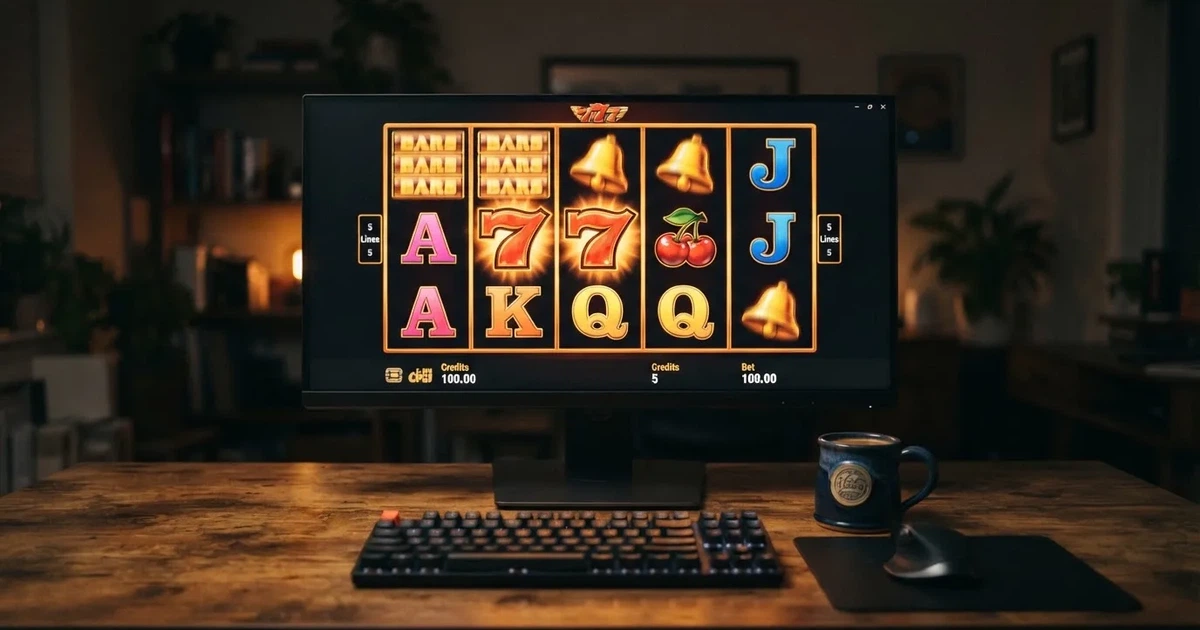
28 October 2026 · figures verified against the ACMA’s published enforcement notices and the H2 Gambling Capital 2025 dataset.
Table of Contents
- How Australians pay at offshore casino sites — and why the rails keep shifting
- The bonus shelf: what sites styled like Pokies Parlour advertise
- Pokies, providers and the table games that fill the lobby
- What the ACMA has actually done about Pokies Parlour and its peers
- The site styled as Pokies Parlour: what the brand is and is not
- The legality shelf: what the Interactive Gambling Act 2001 actually says
- Responsible gaming: where the support is and where it is not
- Frequently asked questions about Pokies Parlour and similar offshore sites
How Australians pay at offshore casino sites — and why the rails keep shifting
An offshore pokies site has to take deposits somehow, and the more visible that route is to an Australian bank, the more often it gets cut. The section below traces the methods that the site styled as Pokies Parlour and its look-alikes mention across review pages and affiliate copy, and what each one actually costs the punter who tries to use it. Nothing here is a recommendation to use any of these rails at an unlicensed site; the purpose is to show where the friction lands.

Visa and Mastercard debit
A standard debit card on a Visa or Mastercard network is the method most Australian-facing offshore sites still mention first. The transaction itself is unremarkable: it routes through the card scheme, the merchant pays a processing fee, and the punter’s statement shows the merchant descriptor of whatever offshore entity is on the other end. The friction comes from the bank side. Westpac’s gambling block refuses authorisation of any transaction tagged under the merchant category code “Betting/Casino Gambling” on eligible personal credit and debit cards, which means a punter who has switched the block on at the issuing bank will see the deposit declined at the point of sale rather than at the cashier. ANZ runs the same kind of switch through its app and explicitly extends the block to digital-wallet transactions on the eligible card — a tap with Apple Pay using the same ANZ card number falls under the block, not outside it.
Two practical notes. ANZ imposes a 48-hour cooling-off period once a customer turns the block on before it can be removed, and the bank itself warns that the filter is not exhaustive: not every gambling transaction is blocked, and some non-gambling transactions can be blocked in error. Both are reasons an Australian looking for a guaranteed block should not rely on the bank alone — it is a layer, not a wall. The merchant side is similarly uneven; the card scheme processes whatever the merchant presents, and the descriptor on the statement is whatever the offshore entity chose to put on it.
Credit cards on the IGA boundary
Credit cards are a different category for licensed Australian wagering. Under amendments to the Interactive Gambling Act 2001 that took effect on 11 June 2024, Australian-licensed online wagering services cannot accept payment by credit card or any other credit-related product, with penalties of up to A$247,500 for operators that breach the rule. The same logic reaches a digital wallet linked to a credit account, because the credit-product restriction constrains the use of linked wallets like Apple Pay as much as the underlying card. An offshore site does not have to follow this rule, but the customer’s own bank does — a Commonwealth Bank or NAB credit card presented to an offshore casino will generally be declined under the same network rules that govern the licensed side.

American Express sits outside this picture in a specific way. Amex traditionally operates as a three-party scheme: it issues cards and processes its own transactions, rather than running the four-party interchange model Visa and Mastercard use. The Reserve Bank of Australia’s July 2025 review of merchant card payment costs proposed removing surcharges only on eftpos, Mastercard and Visa transactions, explicitly leaving American Express outside the scope of the proposed surcharge ban. The practical effect at the cashier is that an Amex deposit to an offshore casino is more likely to attract a surcharge than a Visa deposit, on top of the bank’s own gambling-block filter. Punters who already carry an Amex should expect the path to be both slower and more expensive than the equivalent Visa transaction.
Apple Pay and the digital-wallet question
Digital wallets — Apple Pay, Google Pay, Samsung Pay — accounted for around 45% of all card payments in Australia by number by the end of 2025. None of the three wallets charges the consumer a fee for a transaction; any surcharge the punter sees at the cashier is the merchant’s own processing cost, not Apple, Google or Samsung’s. Transaction limits and PIN requirements are set by the card issuer or the merchant, not by the wallet provider, which means an Apple Pay deposit routed through a credit card on a licensed site is constrained by the same credit-card ban as the underlying card, and an Apple Pay deposit through a blocked debit card is declined for the same reason the physical card would be.
The wallet itself is not the decision point. The decision point is which card sits behind it. A Visa debit card loaded into Apple Pay that the punter’s issuer has not flagged for gambling transactions will sail through to most offshore cashiers; the same card with a bank-level gambling block will bounce, and the punter will see a generic decline at the wallet prompt. None of this changes the legal status of the destination site; it only changes whether the deposit arrives.
PayID and Osko instant bank transfers
PayID sits on top of Australia’s New Payments Platform, which went live to the public on 13 February 2018 and is owned by New Payments Platform Australia Ltd — a non-profit with thirteen shareholders including the Reserve Bank. Osko is the instant-transfer service that runs on the same rails; a transfer between participating Australian banks arrives in under a minute, around the clock, addressed either to a BSB and account number or to a PayID. By April 2025 more than 25 million PayID identifiers had been registered on the platform, and the platform’s own rules cap monthly outages at two minutes, which is why the service tends to feel like plumbing rather than a product.
PayID has two properties the punter should know about before using it at an offshore casino. First, paying to a PayID shows the account-holder name before the transfer is sent — a name that does not match the brand on the casino’s homepage is a strong signal of a mismatched entity behind the cashier. Second, the operator behind Australian Payments Plus, which runs PayID and Osko, warns that being asked to transfer money to a PayID on an illegal gambling site almost certainly means a scam site. Offshore casinos rarely offer PayID as a deposit method, because it would surface the mismatch; when an Australian-facing page does list PayID, that is the moment to read the merchant name twice.
BPAY and the long-form bill route
BPAY has been operating in Australia since 18 November 1997 and is now available through more than 140 banks and financial institutions, with over 95,000 businesses accepting payment through it. It is owned equally, through parent company Cardlink Services Limited, by Australia’s four major banks: ANZ, Commonwealth Bank, National Australia Bank and Westpac. The mechanics are familiar: the payer enters the Biller Code and the Customer Reference Number (CRN) printed on the bill, and the funds move from one bank account to another through the standard direct-debit rails.
BPAY is not a deposit method at offshore casinos in the usual sense. Where it does appear on an Australian-facing landing page, the biller is almost always an unrelated local entity acting as a payment intermediary, and the punter’s bank statement shows the intermediary rather than the casino. BPAY transactions clear in one to three business days, not instantly, which is the other reason offshore operators tend not to lead with it — slow deposits push players toward methods the operator controls end to end. For an Australian punter, the presence of BPAY at an offshore cashier is usually a sign of an intermediary layer, not a sign of regulatory legitimacy.
Cash, threshold reports and the AUSTRAC boundary
AUSTRAC’s threshold-transaction-report rule applies only to physical cash. The rule requires reporting of transfers of A$10,000 or more in cash; ordinary electronic bank transfers are not subject to that per-transaction reporting requirement, regardless of amount. The practical consequence is that a punter who deposits A$8,000 by PayID today and A$8,000 by PayID tomorrow has not crossed any AUSTRAC threshold, and the same holds for any other electronic method below the cash-reporting line. This is the difference between the cash economy and the digital one, and offshore casinos know it: the deposit rails they prefer are the ones that look like ordinary retail payments to the punter’s bank.
That is also why AUSTRAC’s role in this market looks different from ACMA’s. AUSTRAC tracks financial-crime risk — money laundering, terrorism financing, the cash threshold itself — not the legality of the underlying gambling product. An unlicensed casino is not, by itself, an AUSTRAC matter, and the punter is not the target. The agency matters in this picture only because the deposits the casino collects are exactly the kind of routine transfers the punter’s own transaction monitoring will not flag as suspicious — which is, of course, what makes the rails attractive to the operator in the first place.
The bonus shelf: what sites styled like Pokies Parlour advertise
The promotional language around a site styled as Pokies Parlour is uniform across its various domains, because the same affiliate template usually sits behind them. The section below sets out the categories of offer those templates describe and the structural shape each one takes. None of it is presented as an offer a reader should claim; the purpose is to show the pattern the marketing uses and where the cost actually sits.
The headline welcome package
One of the several domains styled as Pokies Parlour advertises a headline package worth up to A$2777 across the first seven deposits. The mechanics behind that number are the same across most multi-stage welcome offers in this category: a percentage match on each deposit, capped at a per-stage dollar figure, with the total carrying a marketing-friendly ceiling that no individual deposit hits. The punter who deposits the maximum seven times at the maximum stage amount reaches the A$2777 figure only by playing every step exactly as written; a punter who deposits less, or who skips a stage, lands on a smaller total.
The deeper question is what the number costs the punter before any of it converts to withdrawable cash. Every dollar of matched bonus at this kind of site carries a wagering requirement, usually in the range of 35x to 50x the bonus amount, before the bonus balance and any winnings from it become withdrawable. At 40x on the full A$2777, that is roughly A$111,080 of qualifying turnover before the bonus balance clears, on top of whatever the punter’s own deposits fund. Game-weighting rules typically restrict the contribution of table games and live casino to a small fraction of the wagering total, which means the clearing path runs almost entirely through the pokies — and at the house edge of every spin.
Free-spin tiers
Free-spin offers appear as a parallel track to the matched-deposit ladder. The structure usually attaches a fixed number of free spins to a specific deposit stage — “deposit A$20 or more, take 50 spins on Book of Dead” — and sometimes attaches them to the registration alone as a no-deposit hook. The cost of a free spin is whatever the wagering requirement attached to its winnings multiplies through; the spin itself is the marketing product, and the wagering is where the operator earns back the headline value.
Two practical details that the headline does not state. First, free-spin winnings are usually credited as bonus funds, not as real money, and they enter the same wagering requirement as the matched-deposit bonus if one is active. Second, the spin value is fixed by the site — typically A$0.10 to A$0.25 per spin — and any “win” is the product of that fixed stake and the game’s outcome distribution, which the punter has no way to verify from outside. The page never leads with either of these facts.
VIP and reload structures
A loyalty tier sits behind the welcome ladder on most sites in this category, and the operator’s marketing copy refers to it as a “VIP” or “comp” programme. The mechanics are simple: the punter accumulates points on real-money wagering, points translate into tier status, and tier status unlocks reload bonuses, cashback percentages and a named account manager at the upper levels. The cost to the punter is the rakeback rate the programme does not pay out; industry-standard cashback on a tier programme of this shape runs from 5% to 15% of net losses, while the house edge on the underlying pokies runs substantially higher. The gap between what the punter gets back and what the operator keeps is the long-run cost of the loyalty structure.
Reload bonuses work the same way as the welcome package on a smaller scale: a percentage match on a deposit, with a wagering requirement that converts bonus to cash at the rate the fine print specifies. The headline reload percentage is usually lower than the welcome — 50% reload versus a 100% first deposit is typical — and the maximum bonus cap is lower. The shape is the same because the cost to the operator is the same, and the conversion math does not change.
Why a sign-up bonus runs across seven deposits rather than one
A multi-deposit welcome ladder is structurally different from a single-deposit welcome, and the difference is not generosity. A single-deposit bonus puts the entire match — and the entire wagering requirement — on the first transaction, which means the punter either clears it quickly or loses the bonus on a fast run of bad luck. A seven-stage ladder spreads the match across the first seven deposits, which spreads the wagering requirement across seven sessions of play, which extends the time the punter’s bankroll sits on the operator’s platform.
The marketing reads this as generosity because the headline number is larger. The arithmetic reads it differently. The wagering requirement on a A$2777 seven-stage bonus is roughly the same total as the wagering requirement on a smaller single-stage bonus of equivalent percentage, because the requirement scales with the bonus amount, not with the number of stages. What the seven-stage structure buys the operator is time on device, time on platform, and the increased chance the punter re-deposits to chase a partially-cleared bonus rather than walking away. It is a structural lock-in dressed up as a larger headline.
Pokies, providers and the table games that fill the lobby
The site styled as Pokies Parlour does not develop its own games. The lobby is a wrapper around third-party providers, and the names that appear on the game tile — the providers themselves — are how an experienced punter judges whether a casino has anything new to offer or is just the same catalogue under a different brand. The section below runs through the provider presence the public listings report and what each one tends to bring to the lobby.
The provider stack
A site in this category typically aggregates content from a handful of large studios — Pragmatic Play, Betsoft, Evolution for live tables, and the BGaming / Endorphina / Boongo cluster for the lower-cost pokies — and pads the lobby with anything from twenty to fifty smaller providers that the platform’s aggregator brings in. The provider list is the single best public signal of how serious the operation is: a site with Evolution and Pragmatic Play has invested in a real aggregator relationship and pays the live-dealer studio’s hosting costs; a site without them is running on the cheapest tier of the catalogue.
The big-studio providers do not license their games to every operator that asks. Pragmatic Play and Evolution in particular run a compliance review on every new operator, and a brand that fails that review does not get the live-dealer or the premium-pokies feed. The presence of those studios on an offshore casino’s lobby is therefore an indication that someone, somewhere, has cleared the operator for content distribution — a much weaker signal than a licence, but not nothing.
Live dealer and the game-show segment
Live-dealer tables — roulette, blackjack, baccarat — run on a small number of studios, and Evolution is the dominant one in the Australian-facing offshore market. The game-show segment (Dream Catcher, Crazy Time, Monopoly Live and their successors) sits on the same provider infrastructure and carries the same RTP envelope as the table games, which is to say it sits on a house edge of 2% to 5% on most titles. The provider presence does not change the underlying odds; the same blackjack hand dealt by the same Evolution studio pays the same regardless of which offshore site the punter sits at.
The risk surface of live tables at an unlicensed casino is the studio’s own willingness to keep providing content. A formal warning from the ACMA does not by itself cut a studio’s feed to the operator — that is the ACMA’s job, not Evolution’s — but a pattern of formal warnings and blocks can eventually move the provider to act on its own compliance review. Several brands on this page have already been through one such cycle.
Pokies: RTP, volatility and what the paytable actually says
A typical pokies tile shows the title, the provider, a thumbnail of the bonus feature and — sometimes — the RTP and volatility classification. The RTP figure printed on the game tile is the return-to-player percentage over the long run, and it is the only number on the tile that quantifies the house edge. The volatility classification is a distribution statement, not an edge statement: a “high volatility” pokie pays out less often but in larger chunks, while a “low volatility” pokie pays more often in smaller chunks. Both can carry a 96% RTP; the difference is the texture of the session, not its long-run cost.
Punters who care about the underlying edge should read the paytable before they play. The same title — Book of Dead, for example, or Gates of Olympus — can sit on the lobby at multiple RTP configurations, depending on the regulator the game is configured for. A 96% RTP configuration and a 94% RTP configuration of the same title are the same game to the punter’s eye and a different game to the punter’s bankroll over time. The configuration in use at a particular offshore site is not something the punter can usually verify from outside.
Tournaments, jackpots and the marketing layer on top
Tournaments are the operator’s overlay on the underlying games: a leaderboard that ranks punter turnover on selected titles, with a prize pool attached to the top finishers. The mechanics are simple — the punter plays, the operator counts turnover on the named titles, the top finishers split the pool — and the cost to the punter is the same underlying house edge on the games the tournament names, with the prize pool coming out of marketing budget rather than from a separate fund. A punter who would play the game anyway loses nothing by entering; a punter who switches to a tournament title they would not otherwise play is paying the marketing budget’s prize out of their own edge.
Progressive jackpots work differently. A progressive pools a fraction of every spin across a network of casinos into a single jackpot, and the jackpot grows until a winning combination lands. The long-run cost to the punter is the underlying RTP minus the contribution to the jackpot pool, which can drop the effective RTP on a progressive title well below the 96% baseline of a non-progressive pokie. The headline jackpot is a marketing product; the underlying RTP is the cost.
What the ACMA has actually done about Pokies Parlour and its peers
The ACMA’s enforcement against offshore casino brands targeting Australians has produced a specific public record, and that record is the most useful thing on this page for a reader who wants to know what the regulator has actually done rather than what the marketing says. The section below walks through the formal warnings and the blocking requests that bear on the Pokies Parlour name and on the operators behind look-alike brands.
The Pokies Parlour warning and block
The ACMA issued a formal warning under section 64A of the Interactive Gambling Act 2001 to Deloraze Limited and Versus Odds (BV) as the operators of Pokies Parlour for providing a prohibited interactive gambling service to Australians. The same enforcement round saw the ACMA order Australian ISPs to block Pokies Parlour along with five other offshore sites — Ninja Spins, Pokies Online Casino, CasinoAus, Australian Casino Sites and AU Online Casino — after finding each of them had breached the Interactive Gambling Act. The block at the ISP layer means a punter on a mainstream Australian connection cannot reach the domain at all, which is the practical end of the formal warning.
The wider picture sits behind that single enforcement round. According to the ACMA, a total of 1,751 illegal gambling and affiliate marketing websites had been blocked since the first blocking request in November 2019, and more than 230 unlicensed gambling services had left the Australian market since enforcement was strengthened in 2017. The pace has not slowed: a round reported on 26 June 2026 asked Australian ISPs to block twelve more sites in one go — 7Signs, ChromaBet, Donbet, Duospin, Freshbet, Slots Gem, Jacks Club, Lucky Start, Pointsbetz, Spinrise, Vinyl Casino and Wildsino — and the Pokies Parlour block is one round among many, not a one-off.
The blocking rate, in context
Taking the ACMA’s published totals at face value — 1,751 sites blocked since November 2019, against the most recent blocking round reported on 26 June 2026 — the running total sits at roughly 1,751 blocked domains over roughly six and a half years of active enforcement. That works out to a long-run average of around 270 sites per year, or about 22 to 23 per month, though the rate is not even: the early years of the regime produced fewer blocks as the ACMA built the case law, and the recent rounds have been denser as the regulator scaled up. The most recent June 2026 round alone added twelve more sites to the blocked list in a single action.
That is the cost of doing business on the Australian-facing offshore side, and it is also the reason the same operator appears under multiple brand names. A blocked domain does not put the operator out of business; it forces the operator to redirect to a new domain, run the marketing again, and accept that the new domain will probably also be blocked within a year or two. The blocking rate tells a punter something specific: the site that surfaces today is almost certainly not the site the punter would have found two years ago, and the marketing copy has been written to be disposable.
Formal warnings over similar brands
The ACMA has issued formal warnings under section 64A of the Interactive Gambling Act 2001 to a long list of operators over brands that target Australian players in the same way Pokies Parlour does. The table below tracks the warnings the regulator has published for the operator set on this page, with the operator name the ACMA named at the time of the warning and the date the warning was issued.
| Brand | ACMA action and date | Operator named by the ACMA |
|---|---|---|
| RocketPlay | Formal warning, March 2026 | Pulsup Ltd (Rocketplay) |
| Level Up Casino | Formal warning, May 2022 | Dama N.V. |
| Woo Casino | Formal warning, March 2025 | Dama N.V. |
| Spirit Casino | Formal warning, May 2025 | Dama N.V. |
| National Casino | Formal warning, July 2025 | Consolutetish S.R.L. |
| Bizzo Casino | Formal warning, July 2025; prior warning 2022 | Consolutetish S.R.L. (2025); TechSolutions (2022) |
| Ignition Casino | Formal warning, July 2025 | Bamboo Media |
| Instant Casino | Formal warning, February 2025 | EOD Code SRL |
| Jackbit | Formal warning, April 2026 | Ryker B.V. |
| Casino Intense | Formal warning, April 2025 | Sterplay Holding Ltd |
| Sky Crown | Formal warning, September 2022 | Hollycorn N.V. |
Several patterns sit inside that record. Dama N.V. shows up three times across the table, and Consolutetish S.R.L. shows up twice — different brand names, same corporate parent. The ACMA names the operator, not just the brand, because the legal instrument attaches to the entity providing the service, and the same entity tends to run several brands at once. A punter who treats “different brand” as “different operator” is reading the marketing, not the enforcement record.
Where the marketing push is heading
The enforcement picture is not static. The Interactive Gambling Amendment (Gambling Reform) Bill 2026 passed Parliament on 19 August 2026, and its advertising and inducement measures commence on 1 January 2027. The bill is law now, with a commencement date that has not yet arrived on a 2026 page; the practical effect on affiliate marketing, inducement offers and bonus advertising kicks in at the start of next year. Until then, the ACMA’s enforcement tool kit is the same one it has been using through 2024 and 2025 — formal warnings, blocking requests, and the slow grind of removing sites from the Australian-facing pool.
That is also why this page is written the way it is. The Pokies Parlour brand is one entry in a longer list; the structure of the offshore market is the subject, and the brand is the lens. A punter who understands why a brand keeps reappearing under new names — and why the same operator shows up in the warning list three or four times — has the picture the marketing is designed to obscure.
The site styled as Pokies Parlour: what the brand is and is not
The “Pokies Parlour” name is not a single casino. It is a template that has appeared across several domains over the last few years, each one styled with the same vocabulary, the same colour palette and roughly the same welcome package. The section below sets out what is publicly known about the brand pattern and where its claims sit on the legal side.
Why the same brand surfaces under different domains
The domain rotation is a direct response to the blocking rate described above. When the ACMA asks Australian ISPs to block a domain, the operator registers a new one and reruns the marketing — the same affiliate template, the same welcome ladder, the same set of game providers, with the same underlying terms and conditions carried over to the new URL. The pattern is so common that affiliate aggregators publish “Pokies Parlour mirror” or “Pokies Parlour alternative link” lists, which exist precisely because the original link has stopped resolving on Australian connections.
A punter who lands on a domain styled as Pokies Parlour has therefore arrived at one instance of a recurring template, and the specific entity behind that instance may have changed since the last time the marketing was re-skinned. The legal instrument the ACMA used — section 64A of the Interactive Gambling Act 2001 — names Deloraze Limited and Versus Odds (BV) as the operators at the time of the warning; whether the same operators still run the domain the punter is looking at is not something the public record confirms.
What “licensed” means at an offshore site
An offshore casino typically displays a licence at the footer of its homepage — Curaçao, Malta, the Isle of Man, occasionally the Kahnawake Gaming Commission. The licence is real in the sense that the regulator issued it; it is also limited in the sense that the regulator’s jurisdiction does not extend to protecting an Australian player who has a dispute with the operator. The ACMA’s enforcement record on Pokies Parlour is the clearest statement of where the licence lands in practice: a formal warning and an ISP block, with the brand continuing to operate offshore and re-surface under new domains.
The Interactive Gambling Act 2001, strengthened by the Interactive Gambling Amendment Act 2017, makes it an offence to provide online casino games, online pokies or in-play betting to a person in Australia. No state or territory licenses online casino games. The licence displayed in the footer of an offshore casino is a licence to operate in Curaçao or Malta, not a licence to take Australian customers, and the ACMA’s blocking requests make the practical position clear. The minimum age to wager in Australia is 18, and that age applies to the punter regardless of where the site is licensed.
Where the support line sits
The practical support structure for Australian players is not the offshore casino’s customer service desk. BetStop, the National Self-Exclusion Register, has been live since August 2023 and binds every Australian-licensed online and phone wagering service — but it does not bind an offshore casino, which has no obligation to honour an Australian self-exclusion registration. A punter who registers with BetStop and then deposits at an offshore site is unprotected by the registration, because the offshore site is not connected to it.
The support line that does work is the National Gambling Helpline on 1800 858 858 — free, 24/7, with chat available at Gambling Help Online. The helpline is the right first call for a punter who has been playing at an unlicensed site and wants to talk the situation through, regardless of which offshore brand is involved. It is also the right call for anyone who has lost money to a site that has since been blocked, because the helpline staff have seen the pattern before and can point to the right next step.
The legality shelf: what the Interactive Gambling Act 2001 actually says
The legal frame around offshore casino play in Australia is shorter than it sounds, and the section below sets out what the Interactive Gambling Act 2001 actually prohibits, who the enforcement body is, and where the practical boundaries sit for the punter. The point is not to recite the statute; the point is to show what the prohibition reaches and what it does not.
What the IGA prohibits
The Interactive Gambling Act 2001, as amended by the Interactive Gambling Amendment Act 2017, makes it an offence for a corporation to provide certain interactive gambling services to a person in Australia. The prohibited services are online casino games, online pokies and in-play betting — that is, betting on a sporting event after the event has started. Online wagering on sports and races before the event is licensable, and so are lotteries and keno. The distinction is not about who the punter is; it is about what the punter is doing.
The minimum age for any of this is 18. The IGA targets the provider, not the individual punter, which is why no Australian player has been prosecuted for placing a bet at an offshore casino. The cost of the prohibition falls on the operator, not the customer, and the customer’s exposure is the absence of Australian consumer protection rather than a criminal charge.
Who enforces it
The Australian Communications and Media Authority — the ACMA — is the enforcement body. The ACMA investigates complaints, issues formal warnings under section 64A of the IGA, and can ask the Federal Court for an order directing Australian internet service providers to block access to an offending service. The blocking request is the practical enforcement tool: the ACMA does not have to chase the operator across jurisdictions if the ISP can simply stop resolving the domain. The block is enforced at the Australian end, which is why the same operator keeps re-registering new domains.
The Northern Territory Racing and Wagering Commission regulates the 52 Australian online bookmakers — including Sportsbet, Bet365 and Ladbrokes — that are licensed in the Territory for tax reasons. The commission has no full-time staff and meets once a month in Darwin, which is part of why the reform conversation in 2026 has focused on its structure. The NT licence is a licence to take bets on sports and racing, not a licence to run an online casino, and no bookmaker licensed in the Territory offers online pokies.
What enforcement looks like at the payment layer
The credit-card ban on Australian-licensed online wagering took effect on 11 June 2024, with penalties of up to A$247,500 for operators that breach it. The same logic reaches linked digital wallets, because the prohibition is on the credit product rather than the payment rail. Legal deposit routes for licensed online wagering in Australia are debit card, bank transfer, PayID and Osko instant transfers, and BPAY. An Australian-licensed operator that asks for a credit card or a crypto deposit is operating outside the rules, and that is a useful tell when a punter is reading a cashier page.
The offshore operator does not have to follow these rules, but the Australian bank does. A punter’s own bank will decline a credit-card transaction to a gambling merchant under the bank’s own policies, and a punter who has switched on the bank-level gambling block — Westpac’s card-level filter, ANZ’s app-level switch — will see the deposit declined at the point of sale. The offshore cashier cannot override the issuing bank’s filter; it can only route around it through payment intermediaries, which is what makes the payment-method list at an offshore site such a useful diagnostic.
Responsible gaming: where the support is and where it is not
The responsible-gaming shelf sits last on this page, deliberately. The offshore casino market in Australia is built around Australians losing money, and the support services that exist to help with gambling harm sit entirely on the other side of that transaction. The section below sets out where the support actually is and what an Australian punter who has been playing at an unlicensed site can do next.
The National Self-Exclusion Register and its limits
BetStop, the National Self-Exclusion Register, has been live since August 2023 and binds every Australian-licensed online and phone wagering service. A punter who registers with BetStop cannot open a new account with a licensed Australian bookmaker, and any existing account is closed and the balance returned. The registration is the strongest self-exclusion instrument available in Australia, and the right first step for any punter who wants to stop.
The limit is that BetStop does not bind offshore casinos. An offshore operator has no obligation to check the BetStop register, no obligation to honour a self-exclusion registration, and no obligation to close an account the punter has already opened. A punter who has registered with BetStop and is still playing at an offshore site is not protected by the registration; the registration protects the licensed side only. The right next step in that situation is to ask the offshore operator to close the account and to follow up with the support services listed below if the request is not honoured.
The support lines that work
The National Gambling Helpline on 1800 858 858 is free, operates 24/7, and is the right first call for a punter who has been playing at an unlicensed site and wants to talk through the situation. Chat is available at Gambling Help Online, which is the same service run through a different channel. The helpline staff have seen the pattern of an Australian punter losing money at an offshore site that has since been blocked, and they can point to the right next step in the punter’s state or territory.
State and territory support services sit beneath the national line. Gamblers Anonymous runs meetings across the country; Relationships Australia offers financial counselling that addresses gambling-related debt; some states run their own dedicated gambling-counselling services with counsellors who understand the specific situation of having played at an unlicensed site. The support structure exists, and it is built around the punter, not around the operator.
Tax and the question of declaring winnings
Gambling winnings of a recreational player are not assessable income under section 6-5 of the ITAA 1997, and losses are not deductible, unless the person carries on a business of gambling. The “business of gambling” case is rare and would involve the punter running a professional gambling operation with a profit motive, sustained activity, and a track record that looks like a business rather than a hobby. The ATO’s position is that the recreational player does not have to declare winnings and cannot claim losses, and the rule applies to winnings at offshore casinos in the same way it applies to winnings at a licensed Australian operator.
The “check with the ATO” line exists because the ATO’s actual test for what counts as a business of gambling is fact-specific, and a punter whose activity looks borderline — sustained professional-level play, significant winnings, a structured approach to bankroll management — should get a specific ruling rather than rely on the recreational default. The offshore context does not change the tax position; it does change the audit risk, because the ATO has less visibility into offshore casino activity than it does into activity at a licensed Australian operator.
Frequently asked questions about Pokies Parlour and similar offshore sites
Why does the site styled as Pokies Parlour appear across several different domain names?
Because the ACMA blocks the offending domain at the Australian ISP level, and the operator responds by registering a new domain and rerunning the same affiliate template. The brand name and the marketing copy carry over; the URL does not.
Is a site styled as Pokies Parlour actually licensed to accept Australian players?
No. The Interactive Gambling Act 2001 makes it an offence to provide online casino games to a person in Australia, and no state or territory licenses them. Any licence displayed in the footer is a licence to operate in another jurisdiction, not a licence to take Australian customers.
What deposit bonus does a site styled this way typically advertise on its various domains?
The most common headline is a multi-stage welcome package across the first several deposits, with a total ceiling in the A$2,000 to A$3,000 range. Each stage is a percentage match on the deposit, with a wagering requirement that converts the bonus to withdrawable cash only after substantial playthrough.
How can someone tell which of several similarly named domains is currently being advertised?
The current marketing domain is the one being pushed in fresh affiliate copy, on social media, and in search ads. Older domains usually resolve to a block page or a parking page on an Australian connection, because the ACMA has asked ISPs to block them.
What do reviews of a site like this usually say about its withdrawal process?
Reviews of similar offshore brands tend to flag slow withdrawals, KYC re-checks at cashout, and maximum-withdrawal caps that stretch a large balance across weeks of paid requests. None of these reviews is published by an Australian regulator, and there is no Australian complaints body the punter can escalate to.