
Uptown Pokies in Australia: What the Offshore Marketing Leaves Out
28 October 2026 — figures cross-checked against the ACMA’s published blocking requests and formal warnings.
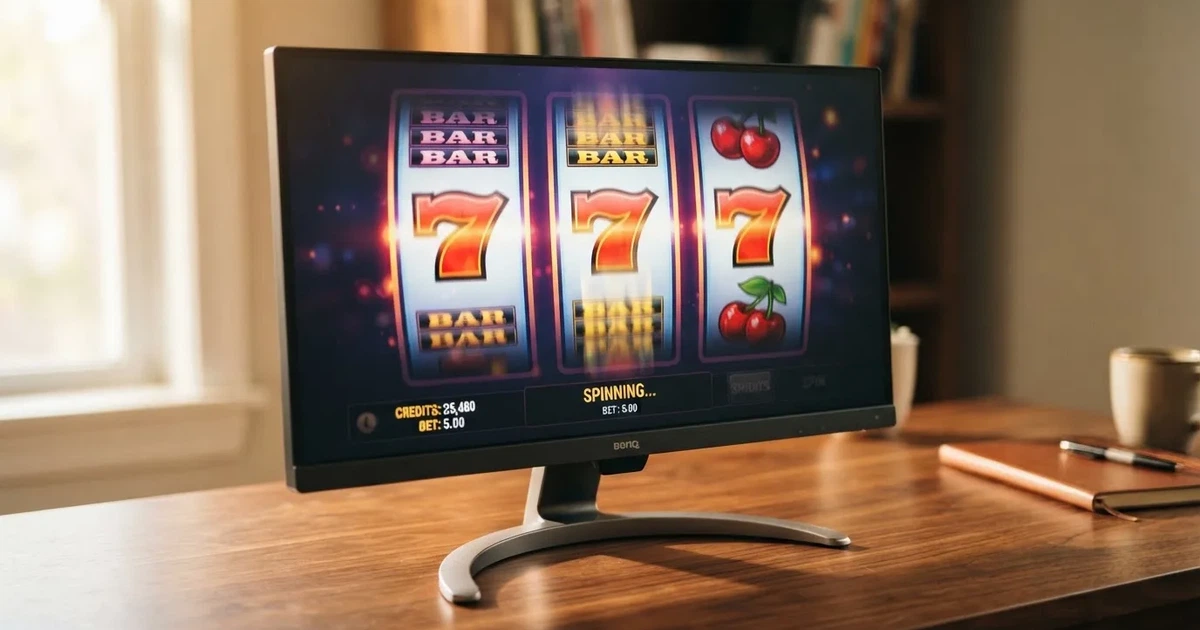
The site styled as Uptown Pokies sits in a category Australian readers need to understand before anything else: it is an offshore casino, not a locally licensed one. No state or territory in Australia licenses an online casino to offer pokies or table games to residents. What the marketing calls “Uptown Pokies Australia” is a Curaçao-registered operation that has been the subject of an ACMA formal warning, and the bonuses, loyalty perks and “fast payouts” pitched on affiliate pages sit on top of that single fact. This page walks through what is publicly known — the legal frame, the payments, the bonus claims, the mobile experience, the games — and lays out what an Australian reader is actually looking at when they land on one of these sites.
Table of Contents
- The Legal Prohibition Australians Actually Face
- The Consequences for an Australian Depositor
- Responsible Gambling Tools That Actually Apply
- Payments an Australian Reader Will Encounter on These Sites
- Bonus Claims and What the Marketing Words Don’t Say
- Mobile and App: How These Sites Present on a Phone
- The Games and Providers Behind the Lobby
- ACMA Actions Across the Featured Set
- Uptown Pokies Itself, Against This Background
- The Bigger Picture and the Reforms on the Horizon
- Frequently Asked Questions
The Legal Prohibition Australians Actually Face
The Interactive Gambling Act 2001, tightened by the Interactive Gambling Amendment Act 2017, makes it an offence to provide online casino games, online pokies or in-play betting to a person physically in Australia. No state or territory issues a licence for those products. What is licensable is wagering on races and sporting events placed before the event, lotteries and keno, and in practice the Northern Territory Racing and Wagering Commission handles most of that bookmaker licensing. The same commission regulates 52 of Australia’s online bookmakers — Sportsbet, Bet365, Ladbrokes sit among them — and meets once a month in Darwin with no full-time staff of its own.
The IGA targets the provider, not the individual player. That detail matters: an Australian clicking through to Uptown Pokies is not at risk of prosecution. The risk runs the other way. An offshore site gives no Australian consumer protection, no complaints body, and no recourse when a withdrawal is refused or a bonus term is invoked to void winnings. The site can be blocked by an Australian internet service provider while a balance still sits in the account, and that has already happened to more than 1,750 other illegal gambling and affiliate marketing websites since November 2019.
Enforcement belongs to the Australian Communications and Media Authority. The ACMA investigates, issues formal warnings, and directs ISPs to block illegal services. In June 2026 the ACMA reported that 1,751 illegal gambling and affiliate marketing websites had been blocked since the first blocking request in November 2019, and that more than 230 unlicensed gambling services had left the Australian market since enforcement was strengthened in 2017. In the same June 2026 round, twelve more sites went onto the block list: 7Signs, ChromaBet, Donbet, Duospin, Freshbet, Slots Gem, Jacks Club, Lucky Start, Pointsbetz, Spinrise, Vinyl Casino and Wildsino.
H2 Gambling Capital’s 2025 estimate puts Australians’ annual losses to illegal gambling sites at about A$3.9 billion, and the share of gambling going through legal channels fell from 74% in 2021 to 64%. The market has not stayed still while the law has.
What “Formal Warning” Means in Practice
A formal warning is the ACMA’s documented step before a blocking request. It names the operator behind the site and the date, and it ties the breach to a specific section of the Interactive Gambling Act. Once a warning is on the record, the next step is referral to ISPs for blocking. Uptown Pokies itself was named in an August 2022 formal warning to Proxous Advanced Solutions Limited, which the ACMA found had supplied Realtime Gaming-branded software to illegal online casinos serving Australians. That warning lists Uptown Pokies among the contravening services. The site’s operating company has shifted since then, but the underlying legal posture has not.

The Consequences for an Australian Depositor
The phrase “offshore licence” is doing a lot of work on these sites. A Curaçao e-Gaming sub-licence, or whatever licence the footer displays, is a permit issued by a foreign jurisdiction with no enforcement reach inside Australia. Australian consumer law does not apply. The ACMA does not regulate the operator. AUSTRAC’s threshold-transaction-report rule, which applies to physical cash transfers of A$10,000 or more, does not capture ordinary electronic bank transfers — meaning there is no automatic flag on a deposit to an offshore casino, but no automatic protection either.
A credit card cannot legally be used to fund any Australian-licensed online wagering, and the ban extends in practice to credit-linked digital wallets. The Interactive Gambling Act’s 2023 amendments stopped short of an explicit wallet carve-out, and the practical effect is that licensed operators refuse Apple Pay or Google Pay payments made from a credit line. Debit card, bank transfer, PayID, Osko and BPAY are the lawful deposit routes for licensed wagering. An offshore site asking for a credit card or a crypto deposit is operating outside those rules altogether.
Once a balance is on an offshore site, three things tend to surface only when the player tries to withdraw: identity verification the site did not ask for at deposit, bonus terms that void winnings on the grounds of “irregular play”, and a processing window that stretches from “instant” on the homepage to weeks on the back end. None of these are within the reach of an Australian regulator.
Responsible Gambling Tools That Actually Apply
BetStop, the National Self-Exclusion Register, has been live since August 2023 and binds every Australian-licensed online and phone wagering service. A player who registers with BetStop cannot open new accounts with licensed Australian bookmakers, and existing accounts are closed. An offshore casino is not connected to BetStop. The exclusion does not extend to sites run from Curaçao or any other foreign jurisdiction, and the offshore site has no obligation to check BetStop before accepting an Australian deposit.
The same gap runs through every other consumer-protection tool. Dispute resolution schemes, complaint avenues to state regulators, mandatory return-to-player disclosures — these apply to licensed operators and stop at the border. The tools that do apply to anyone, regardless of where they play, are the ones outside the gambling industry: the National Gambling Helpline on 1800 858 858, free and 24/7, with chat at Gambling Help Online. For anyone who feels their play is moving faster than their judgement, that is the line to call first.
Bank-level gambling blocks close part of the gap from the deposit side. Westpac’s gambling block works at card level, refusing authorisation of transactions registered under the merchant category code “Betting/Casino Gambling” on eligible personal credit and debit cards. ANZ’s gambling block, activated through the ANZ app, extends to gambling transactions routed through a digital wallet such as Apple Pay on an eligible card, not only the physical card. Once turned on, ANZ requires a 48-hour cooling-off period before the block can be removed, and the bank warns plainly that some non-gambling transactions may be blocked in error. Commonwealth Bank and NAB run equivalent schemes. These blocks are imperfect — they key on a merchant category code, and an offshore casino’s code is not always clean — but they make a deposit harder to send in the first place, which is the moment an intervention has the most leverage.
Payments an Australian Reader Will Encounter on These Sites
Offshore casinos targeting Australian players tend to list the same handful of deposit methods, with one or two Australian-specific additions. The local payments are PayID and Osko. Osko, the instant transfer layer of Australia’s New Payments Platform, moves money between participating Australian banks in under a minute, 24/7, weekends included, whether addressed to a BSB and account number or to a PayID. The PayID check shows the name of the account holder before the transfer is sent, and AP+ warns that being asked to transfer to a PayID on an illegal gambling site is almost certainly a scam signal. More than 100 Australian financial institutions support PayID-based instant transfers, and more than 25 million PayID identifiers had been registered by April 2025.
BPAY sits beside PayID as the other Australian bill-payment backbone. BPAY has operated since 1997, is available in the online banking of more than 140 banks and financial institutions, and is run by Australian Payments Plus, the same entity that operates PayID and Osko. The four major banks — ANZ, Commonwealth Bank, National Australia Bank and Westpac — own BPAY equally through Cardlink Services Limited. For an Australian, BPAY looks familiar, which is part of why offshore sites list it: it lowers the perceived friction of sending money offshore.
The international methods recur on every offshore cashier: Visa and Mastercard debit cards, American Express, Neosurf prepaid vouchers, e-wallets like ecoPayz, and a cryptocurrency option for sites that still accept it. The Reserve Bank of Australia’s July 2025 review on card payment costs proposes removing surcharges on eftpos, Mastercard and Visa transactions, and explicitly leaves American Express outside the scope of that proposed ban — a small but real reminder that Amex’s three-party network sits apart from the four-party Visa and Mastercard model. None of these routes alter the legal position: the deposit still leaves Australia for an unlicensed operator.
Apple Pay, Google Pay and Samsung Pay collectively accounted for around 45% of all card payments in Australia by number at the end of 2025. Apple does not charge consumer fees for using Apple Pay, and any surcharge that surfaces at checkout comes from the merchant’s own card-processing fees rather than from Apple. Transaction limits and PIN requirements are set by the card issuer or the merchant, not by Apple. That is a useful frame for anyone trying to read a casino cashier page: the wallet is a transport, and the card behind the wallet is what the issuer’s gambling block will or will not catch.
The AUSTRAC reporting rule that sometimes worries readers — transfers of A$10,000 or more must be reported — applies only to physical cash. Ordinary electronic bank transfers are not subject to that per-transaction reporting requirement, whatever their size. The fear of an automatic flag is unfounded; the protection an Australian consumer might want from that flag is also absent.
Bonus Claims and What the Marketing Words Don’t Say
The promotional pattern around Uptown Pokies follows the offshore-casino template. A welcome package spread across the first few deposits, free spins on a named slot, a “no deposit” headline offer for new sign-ups, a reload bonus for existing players, a birthday bonus, and a tiered loyalty or VIP scheme that promises cashback and a personal account manager at the upper levels. None of these come from the operator’s own published terms on this page; they come from affiliate marketing pages whose business model is the click that converts to a deposit.
The “free” in free spins is the most elastic word on the page. A free-spin bundle almost always carries a wagering requirement — a multiplier on whatever the spins produce that has to be turned over before withdrawal — and a maximum cashout cap that limits how much of the spin winnings can ever be withdrawn. A “no deposit” bonus is the same structure, with the same caps, attached to a sign-up that itself triggers the site’s verification process when the player tries to withdraw. The birthday bonus is typically credited automatically once a year and carries its own wagering and cap, often a smaller cap than the welcome package. Loyalty cashback is paid on net losses, sometimes weekly, and is itself subject to a wagering requirement that varies by tier.
A reader comparing two offshore bonus offers should read the wagering multiple first, the maximum cashout cap second, and the eligible-games list third. The headline number — A$1,500 welcome, 100 free spins, 200% match — is the last thing that matters. The headline exists because it converts a click; the small print exists because it converts the click into a deposit the player cannot easily withdraw.
None of these bonus terms are Australian-regulated. If a bonus term is applied in a way the player considers unfair, the operator’s own complaints process is the only available recourse, and that process is run by the operator.
Mobile and App: How These Sites Present on a Phone
The mobile experience offered by offshore casinos targeting Australians is built around the mobile browser rather than a native app. The Google Play and Apple App Store policies prohibit real-money gambling apps in Australia outside of licensed wagering operators, and the offshore sites do not appear in either store. What an Australian player downloads, when anything is downloaded, is usually a web app shortcut or a wrapper that points back to the same browser-based lobby.
The lobby itself compresses well. Slots run in landscape or portrait, the cashier is reachable from the header, and the live-dealer tables stream through the browser without a separate plugin. Battery drain is heavier on live tables than on standard slots, and data use climbs quickly on live video. None of this changes the legal posture: the site is the same offshore site, on a smaller screen.
A small but real mobile-side consideration is the gambling block. ANZ’s block, activated through the app, blocks gambling transactions routed through a digital wallet such as Apple Pay on an eligible card. Westpac’s block works at the card level on the merchant category code. A mobile deposit that flows from a wallet through a credit line is more likely to be stopped than a deposit that flows from a debit card or a direct bank transfer — and that difference shows up on the phone, where the wallet is the default tap-to-pay method.
The Games and Providers Behind the Lobby
The lobby marketed as Uptown Pokies has, over the years, carried Realtime Gaming titles, then a mix of RTG and a handful of other studios. Realtime Gaming software is the brand named in the August 2022 ACMA formal warning to Proxous Advanced Solutions Limited for supplying to illegal online casinos serving Australians. The provider behind the games does not change the legal status of the site, but it is the same fact that put Uptown Pokies on the ACMA’s record in the first place.
Live-dealer tables — blackjack, roulette, baccarat — are typically supplied by separate live-casino studios. Their presence in a lobby does not indicate a separate licence, and a live table streams from a studio the player has no way to verify independently. Progressive jackpots, advertised heavily on affiliate pages, are pooled across the provider’s network and paid by the operator. The operator’s terms are what determine whether a jackpot win is honoured at the advertised amount or paid in instalments, and that is the part an Australian player cannot escalate.
The game selection is the part of the site that most resembles a licensed casino. The legal posture, the bonus terms, the payment risk and the withdrawal friction are where it diverges. A reader comparing sites should hold those two layers apart.
ACMA Actions Across the Featured Set
The table below lists eleven brands the ACMA has acted against for offering prohibited interactive gambling services to Australians. Each row carries the ACMA’s own record of the formal warning: the operator behind the brand and the date the warning was published. Subject-support notes come from the third-party listings each brand appears in, and are written here as those listings report them rather than as claims the operator makes.
| Brand | ACMA action and date | Operator named by the ACMA | Subject support |
|---|---|---|---|
| RocketPlay | Formal warning, March 2026 (Pulsup Ltd); earlier May 2022 (Dama N.V.) | Pulsup Ltd | Listed on Gambling Insider |
| Level Up Casino | Formal warning, May 2022 | Dama N.V. | Listed on Westpac’s gambling block page |
| Woo Casino | Formal warning, March 2025 | Dama N.V. | — |
| Spirit Casino | Formal warning, May 2025 | Dama N.V. | — |
| National Casino | Formal warning, July 2025 | Consolutetish S.R.L. | Listed on acma.gov.au, austrac.gov.au, betstop.gov.au |
| Bizzo Casino | Formal warning, July 2025 (Consolutetish S.R.L.); earlier 2022 (TechSolutions Group) | Consolutetish S.R.L. | Listed on Gambling Insider |
| Ignition Casino | Formal warning, July 2025 | Bamboo Media | — |
| Instant Casino | Formal warning, February 2025 | EOD Code SRL | Listed on ecoPayz, PayID |
| Jackbit | Formal warning, April 2026 | Ryker B.V. | — |
| Casino Intense | Formal warning, April 2025 | Sterplay Holding Ltd | Listed on acma.gov.au, austrac.gov.au, betstop.gov.au |
| Sky Crown | Formal warning, September 2022 | Hollycorn N.V. | — |
The geographic spread of operators — Curaçao, Cyprus-registered holding companies, an Italian SRL, an Eastern European BV — is itself a signal. None of these jurisdictions has an enforcement relationship with the ACMA. The formal warning is the ACMA’s last documented step before a blocking request, and most of the brands listed above have already been blocked at the ISP level in Australia, or are one round away from it.
Why the Same Operator Name Recurs
Dama N.V. appears twice in the table — Woo Casino and Spirit Casino — and a third time in the broader record through Rocketplay in 2022. The ACMA names the operating company, not just the brand, because the same company can stand behind multiple skins. A formal warning to one brand does not necessarily protect the others. Hollycorn N.V., the operator named in the Sky Crown and Blue Leo warning, follows the same pattern. Consolutetish S.R.L. carries two brands on a single July 2025 warning — National Casino and Bizzo Casino — and Bizzo was already named in a 2022 warning to TechSolutions Group, a separate entity. The brand can change; the operator behind it often does not.
The Blocking Rate as a Measure of Enforcement Pace
The arithmetic that belongs on this page is the rate at which the ACMA has converted its enforcement work into blocked sites. Between the first blocking request in November 2019 and the count reported in June 2026 — roughly 6.6 years — the ACMA moved 1,751 illegal gambling and affiliate marketing websites onto Australian ISP block lists. That works out to a little over 260 sites per year, or about five a week. The June 2026 round alone added twelve. The pace is steady, not a one-off, and the sites that come off one brand often resurface under a new name on a new domain within weeks. A reader who has seen one of these sites blocked and assumes the block has ended the story should look at the rate: it is a treadmill, not a one-time sweep.
Uptown Pokies Itself, Against This Background
Uptown Pokies was named in the August 2022 ACMA formal warning to Proxous Advanced Solutions Limited, alongside other services that had taken Realtime Gaming software. The site’s operating company has changed since then, and the ACMA has not, in the material reviewed here, issued a fresh formal warning naming Uptown Pokies by name in 2025 or 2026. That does not change the legal posture. The IGA’s prohibition applies to the provision of prohibited interactive gambling services to a person in Australia, and the site offering pokies and table games to Australian visitors is providing those services whether or not a fresh warning names it this quarter.
The site’s marketing — welcome packages, no-deposit offers, free spins, a loyalty tier and a birthday bonus — is the same offshore template the table above documents across other brands. The payments it accepts (PayID, BPAY, Visa and Mastercard debit, Neosurf, occasionally a cryptocurrency) are the same routes, with the same friction when withdrawal time comes. The mobile experience is the same browser-based lobby. The legal position is the same. The page closes on the same judgement as it opens: Uptown Pokies is not a place an Australian can play on a licensed, protected basis, and the marketing language is built for the moment before that fact lands.
The Bigger Picture and the Reforms on the Horizon
The Interactive Gambling Amendment (Gambling Reform) Bill 2026 passed Parliament on 19 August 2026. Its advertising and inducement measures commence on 1 January 2027 — law with a start date, not yet in force on a page dated 2026. The bill tightens the rules on bonus offers, sign-up inducements and affiliate marketing that target Australians. Its passage does not legalise online casino games; it tightens the prohibition. The Australian-licensed bookmaker market remains the licensed channel for online wagering, and it remains separate from online pokies and online table games.
The 2026 reform sits on top of a record the ACMA has been building since 2017. More than 230 unlicensed gambling services have left the Australian market since then — through blocking, through voluntary exit, or through rebranding out of reach. H2 Gambling Capital’s 2025 estimate of A$3.9 billion in annual losses to illegal sites, and the fall in the legal channel share from 74% to 64% between 2021 and 2025, frame the size of what is still moving offshore. The block list grows by the dozen each quarter. The licensed market is the only channel the law recognises.
Tax is a separate question that recurs in reader queries. Gambling winnings of a recreational player are not assessable income under section 6-5 of the ITAA 1997, and losses are not deductible, unless the person carries on a business of gambling. The ATO treats a recreational punter differently from a professional gambler, and the line between the two is the ATO’s to draw. The minimum age for any Australian wagering product is 18.
Frequently Asked Questions
Is the site styled as Uptown Pokies actually licensed to accept Australian players?
No. No Australian state or territory licenses an online casino to offer pokies or table games to residents. The site is an offshore operation under a foreign jurisdiction, and the Australian Communications and Media Authority named it in an August 2022 formal warning. An offshore licence has no Australian enforcement reach.
What sign-up bonus does a site styled as Uptown Pokies typically advertise?
The standard offshore template: a multi-deposit welcome package, a free-spin bundle, sometimes a “no deposit” headline offer. None of these come from the operator’s own published terms; they come from affiliate marketing pages. The headline amount is the least important detail — the wagering multiple, the maximum cashout cap and the eligible-games list determine what the bonus is actually worth.
Does a site like this behave differently through its app compared with its regular website?
There is no separate native app for Australian players. Google Play and Apple App Store policies prohibit real-money gambling apps in Australia outside licensed wagering operators. What is sometimes called an “app” is a web-app shortcut to the same browser-based lobby. The legal posture is unchanged across screens.
What do reviews say about how a site styled this way handles a birthday or loyalty bonus claim?
Birthday bonuses are typically credited once a year and carry their own wagering requirement and a maximum cashout cap, often smaller than the welcome package. Loyalty cashback is paid on net losses, sometimes weekly, and is itself subject to a wagering multiple that varies by tier. The complaint pattern in third-party reviews is that the bonus is credited but the conditions attached to it become the friction at withdrawal.
How can someone check whether a site calling itself Uptown Pokies is legitimate before depositing anything?
The first check is the ACMA’s published list of formal warnings and blocked sites. The second is the licensing claim in the site’s footer, which should be verified against the regulator named there. The third is the payment page — a credit card request or a crypto deposit request is a signal that the site is operating outside Australian rules. None of these checks make the site safe; they only sharpen the picture before any money moves.
What withdrawal method, such as Neosurf, does a site like this typically mention, and does it matter?
Neosurf is a prepaid voucher — it works for deposits, not for withdrawals. Offshore casinos typically withdraw through bank transfer, e-wallets or, occasionally, cryptocurrency. The withdrawal method matters less than the friction that surrounds it: verification requests at first withdrawal, processing windows longer than the deposit page implies, and bonus terms that can be invoked to void winnings. The withdrawal page is where the marketing language meets the terms.