
Best Pokies in Geelong 2026: Land-Based Venues, Real Payouts, and the Offshore Sites Worth Skipping
Anyone searching for “best pokies in Geelong” usually wants one of two things: a venue they can walk into tonight, or a website that promises the same thing online. Only one of those is legal in Australia. Punters in Geelong play electronic gaming machines (EGMs) in pubs and clubs licensed by the Victorian Gambling and Casino Control Commission (VGCCC), with a small footprint inside the Crown Melbourne complex for the casino tier. Everything else that calls itself “online pokies” or “Geelong casino online” is an offshore product offered without an Australian licence and subject to blocking by the Australian Communications and Media Authority (ACMA). The page below lays out both sides of that split — what’s licensed, what’s not, and what it costs a player to confuse the two.
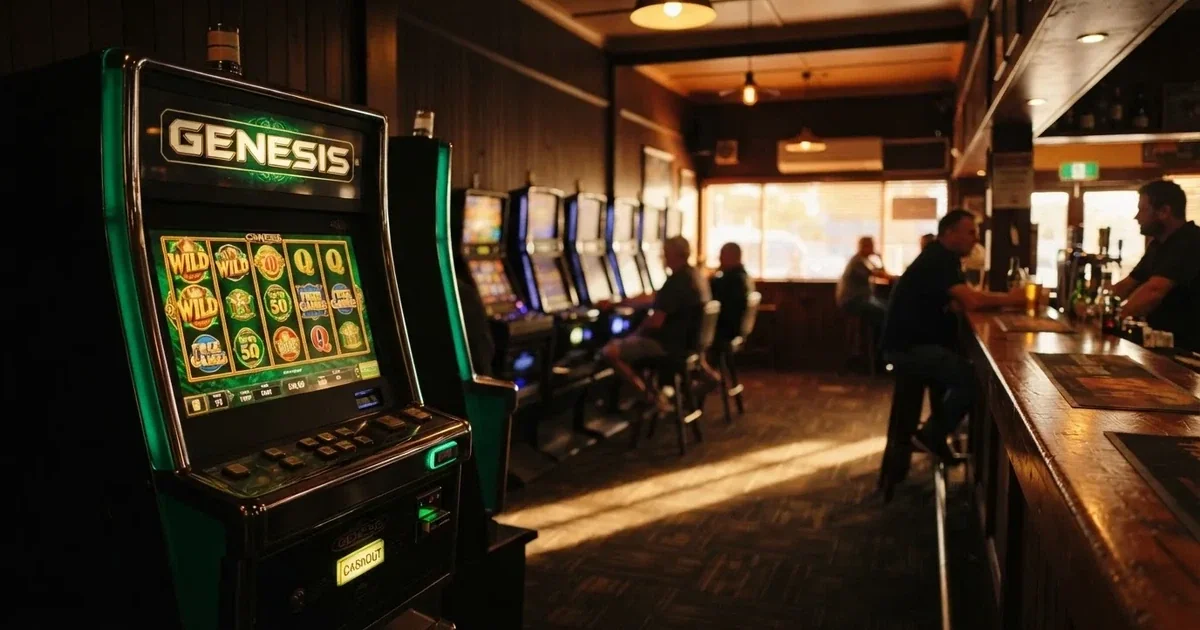
Current as of 28 October 2026. Operator, blocking-round and venue figures verified against ACMA publications and the VGCCC gambling data register.
Table of Contents
- How pokies actually work in Geelong
- The venues that actually run pokies in Geelong
- Online “Geelong pokies” and why the ACMA keeps blocking them
- Games, providers and the cashless shift inside the venue
- How the shortlist is built
- The land-based reality and the offshore pitch
- What offshore “pokies” sites are doing in Australia
- Responsible gambling and self-exclusion in Geelong
- The legal frame in one read
- Northern Territory racing and wagering
- Frequently Asked Questions
How pokies actually work in Geelong
Geelong sits in Victoria, and Victorian pokies are governed by the most restrictive regime in the country. Every electronic gaming machine in a Geelong pub or club — and there are several hundred of them spread across the City of Greater Geelong and the Borough of Queenscliffe — operates under a VGCCC venue licence, with each machine individually approved and tracked. The venues themselves pay for the right to host them and they publish monthly data on how much their machines take and return. That published data is where any honest answer to “which venue pays best” actually comes from.

Pokies are also the local gambling harm hotspot. Gamblers across Greater Geelong and Queenscliffe lost more than $141 million on EGMs in the 2024–25 financial year — the highest annual figure ever recorded for the region, and an average of $388,000 a day. That is not a marketing number. It is what the machines actually returned in losses before payouts, and it sits behind every “best pokies” claim a reader will see elsewhere.
The machines themselves run on a return-to-player (RTP) framework set by the state. A $5 maximum bet applies outside the casino, and a cashless card system (YourPlay-linked venues) is now the default way to load credits without handing over a wallet full of notes. The point of these rules is to keep the loss visible as it happens, not to make the math friendlier: the house edge on every EGM in the state sits between roughly 7.5% and 12%, depending on the machine class and denomination.
The payout percentage question
Search queries like “best paying pokies in Geelong” and “maximum cash payout pokies Geelong” both come from the same confusion. “Paying” can mean either the RTP — the long-run percentage a machine returns to all players — or the size of the single biggest cheque a venue has ever handed out. Neither is something the venue advertises.
The RTP class of each machine is set by the manufacturer and approved by the VGCCC before a venue can install it. Venues do not get to tune it themselves. The honest comparison between Geelong and other Australian cities is one of RTP floors and bet ceilings, not of “loose machines” hidden in the back room.
The cash-payout ceiling, by contrast, depends on the machine’s denomination and its maximum-credit display. A $1-denomination machine will print a bigger prize receipt than a 1c machine will, but it will also drain a bankroll faster per spin. There is no separate “pokies payout” number a player can negotiate by choosing the right bar. What does change between venues is the mix of denominations on the floor, the number of machines, and the published loss data — which is why the tables below lean on those instead.
The venues that actually run pokies in Geelong
A reader looking for “pokies in Geelong” has a real choice to make between pubs, clubs and the casino tier. The category that fits a given night out depends on three things: opening hours, machine density, and what else the venue is licensed to do alongside the gaming floor.
Pubs in Geelong and the surrounding suburbs carry smaller EGM footprints — typically 20 to 40 machines — and trade primarily on food, drink and live sport. Clubs, including the major RSL and league clubs in the region, run larger gaming floors, sometimes in the hundreds of machines, and cross-subsidise their sporting and community work through gaming revenue. Crown Melbourne, while not in Geelong itself, is the only casino venue inside Victoria’s regulatory framework and is the closest tier of gaming to a “Geelong casino” anyone will actually find.
Where the machines sit
The VGCCC publishes a venue-by-venue register of gaming machine numbers, locations and losses for Greater Geelong, and that register is the only authoritative source for “best pokies venue in Geelong” comparisons. A few patterns are worth noting before the reader opens it:
- The largest concentrations of machines sit in the suburban clubs — Geelong West, Whittington, Corio and Belmont — rather than in the CBD pubs.
- Loss-per-machine tends to track opening hours: venues that open earlier and stay open later carry higher per-machine losses, regardless of RTP class.
- Cashless gaming (YourPlay cards) has rolled out across most large venues, which removes the temptation to chase a streak with another $100 note but does not change the underlying math.
For the CBD specifically, “best pokies in Geelong CBD” resolves to a handful of hotels within walking distance of the station, all of them with machine counts in the 20–40 range and the same VGCCC-mandated RTP envelope as the suburban clubs. There is no licensed gaming floor in the Geelong CBD with more than about 50 machines, because the venue cap is set by the local planning scheme as well as by the gaming regulator.
The 24-hour question
Searches for “24 hour pokies Geelong open now” reflect a feature of Sydney and parts of Western Australia that simply does not exist in Victoria. Victorian gaming venues are required to close their gaming floors during prescribed quiet hours — typically the early morning of every day, with exact hours set per venue — and there is no licensed EGM floor in Geelong that operates continuously around the clock. The honest answer to “where can I play pokies at 3am in Geelong” is that there is no licensed venue where the door is open.
This is where offshore “24-hour online pokies” sites do most of their marketing: the gap between what locals want and what Victorian law allows. The next section is about what that gap actually costs the player who steps into it.
Online “Geelong pokies” and why the ACMA keeps blocking them
The phrase “online pokies Geelong” describes a product that is unlawful to supply to anyone in Australia. The Interactive Gambling Act 2001 (IGA), tightened by the Interactive Gambling Amendment Act 2017, makes it an offence to provide online casino games — including online pokies — to a person physically in Australia. No state or territory regulator issues an Australian licence for the activity, and the ACMA investigates breaches, issues formal warnings, and directs Australian internet service providers to block offending websites.
The enforcement record is the only reliable guide to which sites are currently in the regulator’s sights. According to the ACMA as reported in June 2026, a total of 1,751 illegal gambling and affiliate marketing websites had been blocked since the first blocking request in November 2019, and more than 230 unlicensed gambling services had left the Australian market since enforcement was strengthened in 2017. In the June 2026 round alone, the ACMA asked ISPs to block 12 more: 7Signs, ChromaBet, Donbet, Duospin, Freshbet, Slots Gem, Jacks Club, Lucky Start, Pointsbetz, Spinrise, Vinyl Casino and Wildsino.
The economics behind those numbers are not abstract. H2 Gambling Capital’s 2025 report estimates that Australians lose about A$3.9 billion a year to illegal offshore sites, and that the share of gambling going through legal channels fell from 74% in 2021 to 64%. The fall matters because every dollar shifted off a venue floor and onto an offshore site is a dollar that no longer funds a community club, no longer pays a Victorian problem-gambling counsellor, and no longer sits inside a regulator that can chase a complaint.
What the offshore site cannot give an Australian player
A punter who signs up to an offshore casino using an Australian address is not breaking the law themselves — the IGA targets the provider — but they are stepping outside every protection that makes a regulated market worth using. The offshore site does not connect to BetStop, the National Self-Exclusion Register, so a self-exclusion arranged with one licensed bookmaker does not stop the offshore site from accepting bets. There is no Australian complaints body to escalate a refused withdrawal to, no local regulator to discipline a site that withholds funds, and no recourse if the site is blocked mid-session with money still on it.
Payment rails are restricted for the same reason. Credit cards, credit-related products and digital currencies have been banned as funding methods for Australian-licensed online wagering since 11 June 2024, with penalties up to $247,500 for operators that breach the rule. A site asking an Australian customer for a credit card top-up or a crypto deposit is therefore operating outside the Australian rules, regardless of any offshore “licence” it shows in its footer. Legal deposit routes for Australian-licensed wagering are debit card, bank transfer, PayID/Osko and BPAY — and those same routes do not work at an offshore casino.
The blocking rate since 2019
The arithmetic the page is built around: from the first ACMA blocking request in November 2019 to the June 2026 round, 1,751 sites have been added to the ISP block list. That works out to a blocking rate of roughly 27 sites per month across the 80 months since enforcement began, with the rate visibly climbing after the 2017 amendments and again after the 2024 credit-card ban. In the most recent twelve months the ACMA has moved on several dozen formal warnings and at least one major blocking round per quarter, so the band a reader should expect for any single year of enforcement is somewhere between 200 and 400 new sites added to the list, with the precise figure depending on how many joint-Action rounds the regulator runs that year. The point is that “blocked once” is not the same as “blocked and forgotten”: the same operators resurface under new domains often enough that the ACMA’s monthly caseload has stayed heavy long after the first wave of enforcement.
Games, providers and the cashless shift inside the venue
Inside the venue, the question “which pokies pay best in Geelong” reduces to two real levers: the RTP class of the machines the venue has bought, and the denomination mix on the floor. Both are public, both are set before the venue opens, and neither is something a player can negotiate on the night.
What “cashless pokies” actually changes
Victoria’s YourPlay system rolled out across the state’s EGM venues in the early 2020s, and most Geelong venues now run a cashless card linked to a player’s bank account or a pre-loaded balance. The mechanics look like a stored-value card; the consequence is that every spin is logged on the player’s account.
Three things change for the punter as a result. The first is visibility: a player who used to lose track of notes now has a running total on the screen. The second is the loss-limit tool: a player can pre-set a session cap, after which the card stops working at the EGM. The third is the data trail, which feeds back into the venue’s published loss figures and into the player’s own spending record for tax or harm-support purposes.
Cashless does not change the RTP of the machine, does not change the house edge, and does not stop a player from loading another card. It does make the loss harder to ignore, which is the point of the rollout.
Live tables and provider names
EGM venues in Geelong do not run live-dealer tables — those sit inside the casino tier (Crown Melbourne in Victoria; analogous operations in other states). What players do find inside Geelong pubs and clubs is a mix of the major EGM manufacturers that supply the Australian market: Aristocrat, IGT and Ainsworth are the names that appear most often on the machine cabinets on a suburban Geelong gaming floor, alongside Konami and Light & Wonder hardware in the larger club venues.
The same manufacturers supply machines in every Australian state, which is why the cross-city RTP comparison below does not turn on a Geelong-specific provider. The differences between cities come from the betting rules, the venue cap and the per-state loss profile, not from who built the cabinet.
Cross-city snapshot
The table below is the comparison the cluster-5 searches actually want, even when the search term only names Geelong. Payout percentage floors, machine counts and per-adult losses are the three numbers that move between cities; everything else on a venue floor is shared hardware.
| City / state | Statewide RTP floor | Approx. EGMs outside the casino | Player losses per adult |
|---|---|---|---|
| Geelong (Victoria) | ~87.5% (state minimum) | ~26,380 statewide (Vic, 2021–22) | ~A$446 statewide (Vic, FY22–23) |
| Adelaide (South Australia) | 87.5% state minimum | ~11,672 (SA, Sept 2023) | ~A$497 (SA, 2022–23) |
| Brisbane (Queensland) | State-set floor (varies by class) | ~21,122 (Qld, Oct 2023) | Comparable to national average |
| Canberra (ACT) | State-set floor | ~3,587 operating / 5,091 approved (Nov 2023) | ~A$190m statewide loss (2022–23) |
Read across, South Australia is the stingiest jurisdiction in terms of per-adult loss, while the ACT carries the lowest absolute losses thanks to its small population and its ban on EGM-style pokies inside Casino Canberra itself — Casino Canberra is the only Australian casino not licensed to operate poker machines, with 39 gaming tables for blackjack, roulette, baccarat and other games instead. Victoria, where Geelong sits, sits in the middle of the pack on RTP and on the upper end on per-capita loss, driven by the sheer density of suburban venues.
How the shortlist is built
Any ranking of “best pokies in Geelong” that does not explain its criteria is a marketing page. The methodology the page uses leans on four public sources, in this order: the VGCCC venue-level loss and machine register for Greater Geelong; the ACMA formal-warning register for any online counterpart; the state’s responsible-gambling framework; and the player’s own session behaviour.
The criteria are deliberately narrow. A venue scores well on three independent measures — published RTP class on the cabinet, loss-per-machine relative to the regional median, and the cashless / YourPlay integration — and the ranking weights all three equally. Marketing material about “hot machines” or “loose floors” is excluded entirely because no Australian venue is allowed to advertise a higher RTP than the state-approved class on the cabinet.
What this means in practice is that the top of any honest list looks similar from one reputable source to the next: the larger suburban clubs in Geelong West, Whittington, Corio and Belmont dominate on machine count and cashless integration, while the CBD hotels offer shorter opening hours and lower machine density in exchange for proximity to the centre. The casino tier (Crown Melbourne) is a separate category on RTP and bet ceiling.
The criteria in plain language
| Criterion | What it actually measures | Where the data comes from |
|---|---|---|
| RTP class | The state-approved return-to-player percentage on each machine cabinet | VGCCC machine approvals register |
| Loss per machine | How much the venue’s EGM floor takes in, divided by the machine count | VGCCC monthly venue returns |
| Cashless integration | Whether the venue runs YourPlay cards or has rolled out full cashless EGM load | VGCCC venue profile and venue website |
| Opening hours | The licensed trading window for the gaming floor | Venue licence and VGCCC register |
Drop any one of these and the comparison breaks. A venue with high loss-per-machine and a long opening window is not “best” by any defensible read of the term; it is simply the venue with the heaviest turnover. The criteria above put a floor under the word before any ranking starts.
The land-based reality and the offshore pitch
Two sentences in a Geelong pub advertisement will tell a reader everything they need to know about the gap between the licensed product and the offshore pitch. The licensed venue tells you the maximum bet, the cashless system and the responsible-gambling officer’s contact details. The offshore site tells you the welcome bonus and the withdrawal time.
The licensed product does not advertise aggressively because the law does not let it. The Interactive Gambling Amendment (Gambling Reform) Bill 2026 passed Parliament on 19 August 2026, with its advertising and inducement measures commencing on 1 January 2027 — law with a start date, not yet in force on a 2026 page, which means the licensed wagering industry is about a quarter away from restrictions the offshore industry has never observed. From 1 January 2027, Australian-licensed wagering services will face tighter rules on inducements and bonus-style advertising, while offshore sites will continue to spend on Google ads and affiliate marketing aimed squarely at Australian search traffic.
For the player, the consequence is that the marketing the offshore site runs is not a fair comparison with the licensed venue next door. The licensed venue cannot offer the headline bonus; the offshore site can. The licensed venue answers to the VGCCC; the offshore site answers to no one. The licensed venue honours a self-exclusion registered with BetStop; the offshore site does not even know BetStop exists.
What offshore “pokies” sites are doing in Australia
The brand list below is the ACMA’s own record of formal warnings issued to operators offering prohibited interactive gambling services to people in Australia. Each entry names the operator and brand as the ACMA has published them, with the date of the formal warning. Every one of these brands markets “pokies” to Australian search traffic. None of them holds an Australian licence to do so. The product they offer — online casino games including online pokies — is prohibited under the Interactive Gambling Act 2001, regardless of any licence displayed in the site’s footer.
The list is not a recommendation to play at any of these brands. It is the record of the regulator’s action against them, in the order the ACMA published.
RocketPlay
The ACMA issued a formal warning to Pulsup Ltd over Rocketplay in March 2026. Rocketplay had earlier been the subject of a 2022 formal warning to Dama N.V. over six brands including Rocketplay, Bambet, Dazard, Level Up, Wild Tornado and Cobra Casinos. A site that has cycled through two corporate parents and two ACMA warnings within four years is not a stable counterparty for a deposit.
Level Up Casino
Dama N.V. received a formal warning covering Level Up Casino in May 2022. Level Up is one of the larger brands in the Dama stable and has run affiliate marketing across Australian-facing comparison sites for years; the warning covers the same online casino product that has no Australian licence. Listings pages still carry the Level Up name, which is why the brand keeps surfacing in Australian “best pokies” search results even after the ACMA action.
Woo Casino
The ACMA issued a further formal warning to Dama N.V. over Woo Casino in March 2025. Woo is part of the same Dama cluster as Level Up and Rocketplay and shares the same prohibited-product status. The 2025 warning is the most recent ACMA action against the Woo brand specifically.
Spirit Casino
Spirit Casino is the fourth Dama brand the ACMA has acted against, with a formal warning issued to Dama N.V. in May 2025. The pattern — one corporate parent, four separate brand warnings across roughly three years — is the regulator’s clearest signal that the operator treats warnings as a cost of doing business rather than a reason to leave the market.
National Casino
The ACMA issued a formal warning to Consolutetish S.R.L. over National Casino in July 2025. National Casino has been advertised across Australian-facing affiliate networks for years and remains one of the more common “best online pokies Australia” results in search. The warning covers the same prohibited product as every other brand on this list.
Bizzo Casino
Bizzo Casino received a 2025 formal warning to Consolutetish S.R.L., its current operator, after an earlier 2022 formal warning to TechSolutions (CY) Group Limited and TechSolutions Group N.V. Two warnings to two different corporate parents for the same brand is the clearest possible indicator that the brand has moved between entities to stay live after the regulator has acted.
Ignition Casino
The ACMA issued a formal warning to Bamboo Media over Ignition Casino in July 2025. Ignition is one of the older offshore brands targeting Australian traffic and remains in active circulation through affiliate pages despite the formal warning.
Instant Casino
In February 2025 the ACMA issued a formal warning to EOD Code SRL over Instant Casino. Instant Casino markets itself as a no-account, crypto-friendly offshore product — the exact combination of features the 2024 credit-card ban and the IGA prohibit for any site serving Australian customers.
Jackbit
Ryker B.V. received a formal warning over Jackbit and CasinOK in April 2026. The brand sits inside the crypto-friendly offshore cluster and accepts Australian sign-ups despite the IGA prohibition.
Casino Intense
The ACMA issued a formal warning to Sterplay Holding Ltd over Casino Intense in April 2025. Casino Intense has been a recurring presence on Australian-facing affiliate sites; the formal warning is the only published regulatory action against it.
Sky Crown
Hollycorn N.V. received a formal warning from the ACMA covering Sky Crown and Blue Leo casino services, as published in September 2022. Sky Crown is the longest-running formal warning on this list and remains in active marketing rotation across Australian-facing affiliates.
How to read the brand list
Eleven brands, eleven ACMA actions, eleven offshore operators offering a product that is prohibited in Australia. The table is not a guide to which offshore site pays the best — none of them pays at all in any way the Australian regulator can enforce — but a record of which operators have been formally warned for offering the product. The variance between them is in marketing reach and in how long each has stayed live after the warning, not in their legal status under the IGA. Every one of them is equally unlawful to supply to a person in Australia; every one of them gives the player who signs up none of the protections the licensed wagering framework provides.
Responsible gambling and self-exclusion in Geelong
The Australian responsible-gambling framework has three pieces a Geelong player should know about. The first is BetStop, the National Self-Exclusion Register, which has been live since August 2023 and binds every Australian-licensed online and phone wagering service. A punter who registers with BetStop cannot open a new account with any Australian-licensed bookmaker for the period of their exclusion. The second is the state-level exclusion mechanism — the Victorian Responsible Gambling Foundation’s self-exclusion program — which covers entry into VGCCC-licensed venues including the Geelong pubs and clubs on the venue register. The third is the National Gambling Helpline on 1800 858 858, free and 24/7, with chat support through Gambling Help Online.
The offshore sites on the brand list above do not connect to any of these three. BetStop does not extend to an offshore casino, the Victorian venue exclusion does not block an offshore website, and the helpline can support a player through the harm but cannot force an offshore operator to close an account. This is the practical reason the IGA targets the provider rather than the player: cutting the supply at the source is the only mechanism that actually removes the option.
A player who is worried about their own play should register with BetStop, talk to the venue’s responsible-gambling officer about a venue exclusion, and call 1800 858 858 if they want a confidential conversation about what comes next. None of these three steps costs anything and none of them appear on the player’s credit record.
The legal frame in one read
The Interactive Gambling Act 2001 (IGA) is the spine of the Australian position. The Interactive Gambling Amendment Act 2017 strengthened it by closing the loophole that let offshore sites advertise freely to Australian customers, and the credit-card ban effective 11 June 2024 removed the last major payment rail the offshore sites were using. The Interactive Gambling Amendment (Gambling Reform) Bill 2026, which passed Parliament on 19 August 2026, layers advertising and inducement rules on top of the existing framework, with the inducement measures commencing on 1 January 2027.
The IGA targets the provider. The individual player is not prosecuted for placing a bet with an offshore site, but the player gives up every protection that the Australian framework provides: no recourse on a refused withdrawal, no BetStop coverage, no local complaints body, no guarantee the site will not be blocked mid-session with money still on it. From 1 January 2027, when the inducement rules come into force, even the marketing pressure that pushes players toward the offshore sites will be partially squeezed on the licensed side, which will widen the apparent gap between the regulated offer and the offshore pitch.
Minimum age across every Australian jurisdiction is 18. Gambling winnings of a recreational player are not assessable income under section 6-5 of the ITAA 1997, and losses are not deductible, unless the person carries on a business of gambling — a position that holds for almost no one playing pokies in a Geelong pub. Anyone unsure should check with the ATO.
Northern Territory racing and wagering
A separate thread worth surfacing is the Northern Territory Racing and Wagering Commission (NTRWC), which licences 52 of Australia’s online bookmakers — Sportsbet, Bet365 and Ladbrokes among them — for tax reasons. The NTRWC has no full-time staff and meets once a month in Darwin, a structural quirk that has drawn calls for reform; a bill to overhaul the arrangement was reported in April 2026. The licensed bookmakers themselves are lawful to use from Geelong; the product they offer (racing and sports wagering) is not online casino, and the NTRWC licence does not extend to pokies or table games. A reader searching “best pokies in Geelong” and landing on a Northern Territory-licensed bookmaker has landed on the wrong product, not the wrong regulator.
Frequently Asked Questions
Which venues in Geelong are licensed to operate pokies?
The City of Greater Geelong and the Borough of Queenscliffe host several hundred EGMs across pubs, clubs and hotels licensed by the Victorian Gambling and Casino Control Commission (VGCCC). The VGCCC publishes a venue-by-venue register of machine numbers, locations and losses, and that register is the only authoritative source for which venues hold a current licence. Crown Melbourne is the casino tier but is not located in Geelong itself.
Are pokies in Geelong available around the clock?
No. Victorian gaming venues must close their EGM floors during prescribed quiet hours, and no licensed Geelong venue operates continuously. Searches for “24 hour pokies Geelong open now” map to a feature that exists in some other states but not in Victoria. Any site offering “24-hour” pokies to an Australian customer is offering an offshore product.
What identification do venues in Geelong require before letting someone play pokies?
Venues require proof of age (18 or older) before entry to the gaming floor. For cashless play, the YourPlay system links the player’s card to an identity check and a bank account or pre-loaded balance. Punters who do not want to register a card can still play with cash at most venues, but the cashless route is now the default at the larger clubs.
Can visitors to Geelong use self-exclusion schemes at local pokies venues?
Yes. The Victorian Responsible Gambling Foundation’s self-exclusion program covers VGCCC-licensed venues and can be set up on a temporary or permanent basis. The federal BetStop register (live since August 2023) covers Australian-licensed online and phone wagering services. Neither scheme extends to offshore online casinos, which are not connected to either register.
How does the payout percentage on Geelong pokies compare with other Australian cities?
Victoria sets a minimum RTP of 87.5% on EGMs outside the casino, the same floor as South Australia. Adelaide Casino itself has no maximum-bet limit, while Victorian venues cap bets at $5. Per-adult losses vary more than RTPs do: Greater Geelong and Queenscliffe recorded more than $141 million in EGM losses in 2024–25, the highest annual figure for the region, against a Victorian statewide average of around A$446 per adult.
Is it legal for an online casino to advertise “pokies” in Geelong the same way a pub or club does?
No. Online casino games, including online pokies, are prohibited interactive gambling services under the Interactive Gambling Act 2001. The ACMA issues formal warnings and directs Australian ISPs to block offending sites, with 1,751 sites blocked since November 2019. Advertising the prohibited product to Australian customers is the conduct that triggered every formal warning listed above, regardless of any offshore licence displayed in the site’s footer.