
Best Pokies in Tasmania 2026: What the State Actually Licences, and What It Doesn’t
Tasmania is one of the smaller Australian gambling markets in machine count but one of the most concentrated. Two casinos, a network of pubs and clubs that came out from under a decades-long monopoly in 2017, and a state government that began rolling out mandatory cashless gaming cards from December 2025 with default loss ceilings attached. The shape of “best pokies” in Tasmania is therefore not a comparison of welcome bonuses or RTP hunts, the way it would be for an offshore site. It is a question of where the machines are licitly housed, what the law asks the punter to do at the door, and how much can be lost before the card refuses the next spin.
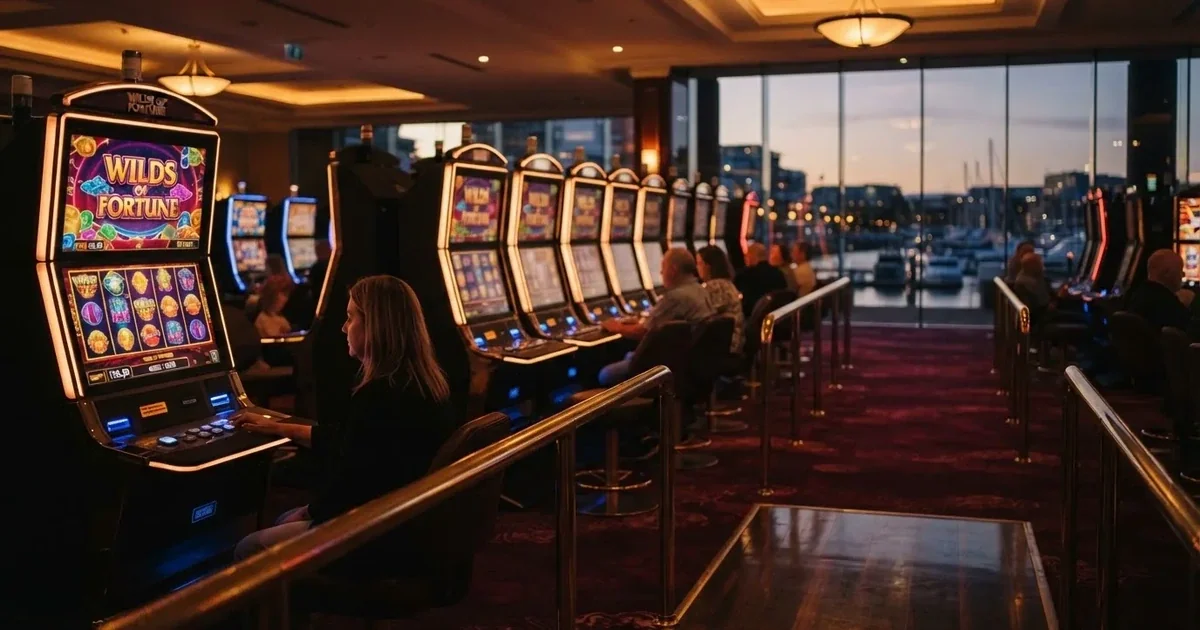
This page covers the licensed, land-based venues in Tasmania where pokies actually run, the cashless card regime that changed how they run, and the cluster of offshore brands — RocketPlay, Woo, Instant Casino, Jackbit, and the rest — that the Australian Communications and Media Authority has publicly warned for offering the same product to Australians online. Information current as of 28 October 2026 and checked against the ACMA’s published register of formal warnings and blocking requests.
Table of Contents
- The Two Casinos Tasmania Actually Licences
- Pubs, Clubs and the New Cashless Card Regime
- What Identification Venues Ask For
- Round-the-Clock Machines: How Often and Where
- Paying Out: Cash, Card and the Practical Mechanics
- The Online Substitute That Isn’t
- The ACMA Warnings: Eleven Offshore Brands and Why They Are on This Page
- The Blocking Rate: How Fast the Offshore Pile Is Growing
- Self-Exclusion: What Tasmania Offers, and What It Doesn’t Reach
- The Comparison: Why the Tasmania Picture Is Not What the Search Results Imply
- What an Online Pokies “Bonus” Means on the Wrong Side of the Law
- What the Land-Based Numbers Look Like
- Where This Leaves the Punter
- Frequently Asked Questions About Pokies in Tasmania
The Two Casinos Tasmania Actually Licences
Tasmania has only two casinos, both operated under state licence by Federal Group, the Farrell-family-owned company that traces back to the Federal Coffee Palace Company founded in Melbourne in June 1885. The Farrells took majority control of the holding company by 1989 and privatised the group in 1990; the licence structure still sits inside that family-controlled business today.

Wrest Point Hotel Casino in Hobart opened on 10 February 1973 as Australia’s first legal casino. The Country Club Casino in Launceston followed in 1982, its design modelled on the stately homes of the American South in a Georgian style picked for the rural landscape around Launceston rather than transplanted onto it. Both properties remain the only sites in Tasmania where the full casino floor — tables and EGMs under one roof — is licensable.
Outside those two buildings, electronic gaming machines in Tasmania were for decades run exclusively by Federal Group under the Gaming Control Act 1993. In August 2017 Federal Group relinquished that monopoly, and individual pubs and clubs were at last able to hold their own machine licences. The state’s poker-machine estate today is therefore split between the two casinos and a wider pub and club network that has been licensable in its own right only since 2017.
The financial weight of the Federal Group’s Tasmanian gambling structure shows in one reporting year alone. Mulawa Holdings, part of the group’s licence holdings, saw profit nearly double from A$13.9 million to A$24.4 million in the year to 30 June 2018 on revenue of A$543 million, while paying roughly A$75 million in gaming taxes and licence fees to the Tasmanian government. Federal Group remains the only operator with a casino licence in the state; pubs and clubs compete with Wrest Point and the Country Club for the broader machine market, but they do not have a casino licence of their own.
Pubs, Clubs and the New Cashless Card Regime
For most Tasmanians the pokies are not at Wrest Point or the Country Club. They are in the local pub or the suburban RSL, on a bank of machines between the bar and the bistro. That is the estate the 2017 deregulation opened up, and the estate the cashless gaming card reform is now reshaping.
From December 2025 hotel and club poker machines in Tasmania began mandatory carded play. The default loss limits the system imposes are A$100 per day, A$500 per month and A$5,000 per year, and a punter who wants to raise any of those ceilings has to wait a minimum of 24 hours after the request before it takes effect. The Tasmanian Liquor and Gaming Commission oversees the system. No rollout date had been set for the casino floor as of September 2024; the casinos are a separate installation under the same regulatory umbrella.
The point of those numbers is not to advertise the ceiling. The ceiling is the floor’s mirror: what the regulator has decided a Tasmanian punter can lose without a deliberate decision to spend more. A venue that lets a player raise the daily cap on the spot is not running the system the Commission wrote; a venue that defaults a casual punter to a much lower threshold without a process is not running it either. The card is the reason the limit is enforced rather than aspirational.
For a player walking in off the street, the practical sequence is straightforward. Insert the card, the terminal reads the daily and monthly balances against the loss limits already on file, and a spin that would breach a limit is refused at the source. There is no cash alternative to fall back on for the machines themselves; the cashless reform is precisely the move away from coins and notes feeding the cabinet.
What Identification Venues Ask For
Tasmania sets 18 as the minimum age to enter a gaming floor and play the machines. Venues are required to verify that age before letting a punter onto the floor, which in practice means a driver’s licence, a passport, or a government-issued Proof of Age card at the door. The cashless gaming card adds a second identification step, since the card itself has to be linked to a verified identity before any of the loss limits can be enforced against it.
The reason the card and the door check are separate is the kind of player each one is aimed at. The door check stops an under-18 from ever reaching the machine. The card, because it carries a daily, monthly and annual loss envelope, stops a verified adult from drifting past what they meant to spend. Both gates have to hold. A venue that runs the door check loosely, or that lets one punter’s card cover another punter’s spins, has undermined the system rather than run it.
Round-the-Clock Machines: How Often and Where
The phrase “24-hour pokies” recurs in Tasmanian search traffic, and the honest answer is that operating hours depend on the venue and the licence conditions attached to it. Some of the state’s larger hotels run gaming floors through the night, particularly those attached to the casino complexes or to hotels that hold late trading approvals. Smaller pubs and clubs are more commonly closed in the small hours, sometimes by their own choice and sometimes by the trading conditions the Liquor and Gaming Commission has set on their licence.
The Spirit of Tasmania ferries have, from time to time, been raised in search traffic as if they were a venue in their own right. They are not. The ships run licensed gaming on board under federal arrangements with the Tasmanian regulator, but the relevant question for a punter planning a trip is which Tasmanian venue they will be playing in before or after the crossing, not what is in the lounge on the way across Bass Strait.
For a punter planning a session, the most reliable way to know is to call the venue directly. A gaming floor that the marketing describes as “open 24 hours” can be running with reduced machine banks overnight; a venue that closes its gaming floor at midnight may still be serving drinks in the front bar. The hours on the door are the hours that matter.
Paying Out: Cash, Card and the Practical Mechanics
Tasmania’s poker machines traditionally pay out in cash or, where the venue runs a ticket-in/ticket-out system, in a printed ticket that can be cashed at the desk or fed into another machine. The cashless gaming card reform that began in December 2025 sits on top of this: a player who has hit a win on a carded machine will see the credit land on the card rather than as a stream of coins, and the same card is what the venue uses to pay out winnings at the cashier.
The settlement picture for a withdrawal is therefore not the kind of timeline a punter would associate with an online casino. There is no pending period, no processing window, and no payment-method routing. The win is on the card; the punter takes the card to the cashier; the cashier pays out. What does sit between a player and their money is the venue’s own internal limit on a single cashout — sometimes called the “maximum cash payout” — which is a function of the venue’s float and the machine’s denomination rather than of any state-wide rule. A high-denomination machine in a busy casino can routinely pay out a few thousand dollars in a single transaction; a low-denomination pub machine can be capped much lower.
The payout percentage that matters to a punter is the return-to-player rate on the machine, which in Tasmania is set under the same kind of state-level framework South Australia uses, with a minimum in the high 80s. Tasmania’s exact statutory minimum is not as prominently published as South Australia’s 87.5%, and the practical RTP on any given machine will sit somewhere above that floor depending on the game, the denomination and the operator’s configuration.
For comparison: South Australia’s minimum gaming-machine RTP is 87.5%, with a general maximum bet of A$5.00 outside the casino, while Adelaide Casino itself has no maximum-bet limit. Tasmania’s framework runs broadly comparable settings, but the comparison a punter will feel at the machine is the denomination and the game, not the headline percentage. A 90% machine at A$1 a spin and an 87.5% machine at 5c a spin spend the bankroll at very different rates, and the difference between them compounds over the course of a session long before the percentage gap starts to matter.
The Online Substitute That Isn’t
The Interactive Gambling Act 2001, strengthened by the Interactive Gambling Amendment Act 2017, makes it an offence to provide online casino games, online pokies or in-play betting to a person in Australia. No state or territory licences them. What is licensable is wagering on races and sport placed before the event, lotteries, and keno — in practice licensed by the Northern Territory, whose Racing and Wagering Commission regulates 52 of Australia’s online bookmakers including Sportsbet, Bet365 and Ladbrokes, has no full-time staff, and meets once a month in Darwin.
The law targets the provider, not the punter. The individual player is not prosecuted for using an offshore site; the operator is the one the ACMA investigates, warns and, where necessary, blocks. What the offshore site does not give an Australian player is any of the consumer protections a Tasmanian venue is required to offer: no complaints body, no recourse if a withdrawal is refused, and no guarantee the balance on the account will still be reachable the morning the ACMA’s blocking request reaches an Australian ISP.
The scale of the offshore market the IGA was written against is large enough that the regulator publishes the number. According to the ACMA as reported in June 2026, a total of 1,751 illegal gambling and affiliate marketing websites had been blocked since the first blocking request in November 2019, and more than 230 unlicensed gambling services had left the Australian market since enforcement was strengthened in 2017. In the most recent round reported on 26 June 2026 the ACMA asked Australian ISPs to block a further 12: 7Signs, ChromaBet, Donbet, Duospin, Freshbet, Slots Gem, Jacks Club, Lucky Start, Pointsbetz, Spinrise, Vinyl Casino and Wildsino. H2 Gambling Capital’s 2025 report estimates that Australians lose about A$3.9 billion a year to illegal gambling sites, and that the share of gambling going through legal channels fell from 74% in 2021 to 64%.
A punter comparing the licensed Tasmania product to an offshore site is therefore not weighing two rival offers against each other. One of them is on the wrong side of the IGA, takes deposits through channels the Australian government has banned for licensed wagering — credit cards, credit-related products and digital currency have been prohibited as payment for licensed online wagering since 11 June 2024, with penalties up to A$247,500 for operators — and can be switched off mid-session by a blocking order. The other is a poker machine in a Hobart pub, with a card in the slot and a cashier at the door.
The ACMA Warnings: Eleven Offshore Brands and Why They Are on This Page
The brands below are not a ranking, and they are not a recommendation. Each one is on this page because the ACMA itself issued a formal warning over it for offering prohibited interactive gambling services to Australians. The decision to publish a warning is the ACMA’s, the date is the ACMA’s, and the operator name on the warning is the ACMA’s; what these write-ups do is carry those facts forward and judge what they mean for a Tasmanian punter. None of these brands can lawfully offer online pokies to a person in Australia, whatever licence the homepage displays.
| Brand | ACMA action and date | Operator named by the ACMA | Subject support |
|---|---|---|---|
| RocketPlay | Formal warning, March 2026; earlier warning to a related entity, May 2022 | Pulsup Ltd (Rocketplay); Dama N.V. (2022) | — |
| Level Up Casino | Formal warning, May 2022 | Dama N.V. | Listings-only (Wikipedia; VGCCC) |
| Woo Casino | Formal warning, March 2025 | Dama N.V. | Listings-only (Wikipedia) |
| Spirit Casino | Formal warning, May 2025 | Dama N.V. | — |
| National Casino | Formal warning, July 2025 | Consolutetish S.R.L. | Listings-only (ABC; Infrastructure Australia) |
| Bizzo Casino | Formal warning, July 2025; earlier warning, 2022 | Consolutetish S.R.L.; TechSolutions (CY) Group Limited / TechSolutions Group N.V. (2022) | — |
| Ignition Casino | Formal warning, July 2025 | Bamboo Media | — |
| Instant Casino | Formal warning, February 2025 | EOD Code SRL | — |
| Jackbit | Formal warning, April 2026 | Ryker B.V. | — |
| Casino Intense | Formal warning, April 2025 | Sterplay Holding Ltd | Listings-only (ABC; ASGAM; CBS South Australia) |
| Sky Crown | Formal warning, September 2022 | Hollycorn N.V. | Listings-only (Wikipedia) |
The table is not a comparison of products. It is the ACMA’s own list, in the order the warnings were published, with the operator name the regulator attached to each. A subject-support cell is empty where the only available sources for the brand are affiliate marketing pages, and is filled where an independent source — a Wikipedia entry, a regulator publication, an Australian news outlet — has covered the brand for reasons other than promotion.
RocketPlay
RocketPlay is on this page because the ACMA issued a formal warning over it twice. The first warning, in May 2022, named Dama N.V. as the operator across six brands including RocketPlay; the second, in March 2026, named Pulsup Ltd over Rocketplay specifically. The site is therefore a useful illustration of what the warning cycle looks like in practice: the ACMA names the operator, the operator rebrands or re-incorporates, and a new warning is issued under the new name. The product on the Australian-facing page does not change. For a Tasmanian punter the relevant fact is the second warning, the most recent, and the operator name attached to it.
Level Up Casino
Level Up Casino was named in the same May 2022 warning to Dama N.V. as five other brands. The listings-only subject-support note means the only sources that carry the brand are reference pages on Wikipedia and on the Victorian regulator’s site, neither of which is endorsement — both are descriptive entries of an offshore operator. The fact that ACMA has named it, in the same warning that named RocketPlay, is the fact that decides its place in this comparison.
Woo Casino
Woo Casino attracted its own formal warning in March 2025, again under Dama N.V. By that stage the operator had already absorbed one warning for Level Up and the RocketPlay cluster; the Woo warning is the ACMA returning to a known operator under a new brand. For a punter, the takeaway is the pattern: a single operator can hold several brand names, the warning applies to the brand, and the next brand often follows within months.
Spirit Casino
Spirit Casino drew a formal warning in May 2025, also under Dama N.V. By the time Spirit was named, Dama N.V. had accumulated three warnings in roughly three years — Level Up, RocketPlay’s reissue, and Woo — for the same prohibited product offered to Australians. Spirit is the next line in that pattern rather than a one-off.
National Casino
National Casino drew a formal warning in July 2025, under Consolutetish S.R.L., in the same ACMA action that also named Bizzo Casino. The two warnings together mark Consolutetish as a new operator on the ACMA’s list, in the same month the agency returned to Dama N.V. for the same conduct.
Bizzo Casino
Bizzo Casino was named in July 2025 under Consolutetish S.R.L., and had earlier been the subject of a 2022 formal warning to TechSolutions (CY) Group Limited and TechSolutions Group N.V. The repeat warning is the clearest signal the ACMA sends: a brand that has already been warned once, that re-emerges under a new parent, and that the regulator has to warn again. The two-and-a-half-year gap between warnings is the time it takes for a brand to rebrand and resume offering.
Ignition Casino
Ignition Casino drew a formal warning in July 2025 under Bamboo Media, in the same round that named National Casino and Bizzo. The brand had been operating under various names for some time before the ACMA action; the warning is what brings it into the regulator’s published record.
Instant Casino
Instant Casino drew a formal warning in February 2025 under EOD Code SRL, one of a handful of EOD Code brands the ACMA has acted against. By the time the warning issued, Instant Casino had been advertising to Australian search traffic for some time under various landing pages; the ACMA action is what makes the brand visible in the regulator’s record rather than the marketing’s.
Jackbit
Jackbit drew a formal warning in April 2026 under Ryker B.V., in the same ACMA action that named CasinOK. Ryker B.V. is a more recent operator on the ACMA’s list than Dama N.V. or Consolutetish S.R.L.; the April 2026 warning is the agency’s first public action against the company for prohibited services to Australians.
Casino Intense
Casino Intense drew a formal warning in April 2025 under Sterplay Holding Ltd. The listings-only subject-support note reflects the fact that the brand has appeared in Australian media coverage for reasons other than promotion — in regulatory reporting and in industry coverage of the offshore market — rather than only on affiliate pages.
Sky Crown
Sky Crown drew a formal warning in September 2022 under Hollycorn N.V., in the same action that named Blue Leo. Sky Crown is the longest-standing warning on this list; its continued operation under the same operator is itself a measure of how the offshore market responds to a warning from the ACMA.
The Blocking Rate: How Fast the Offshore Pile Is Growing
The blocking rate is the total of blocked sites divided by the time since the first blocking request. The first ACMA blocking request was issued in November 2019; the running total reached 1,751 sites by June 2026. This rate averages the regulator’s activity across the period and is best understood as a band with its own conditions rather than a single static figure.
Using the endpoints research gives — November 2019 as the first request and 1,751 sites by June 2026 — the implied average is in the range of roughly 260 to 275 sites added to the blocked list per year across the period the ACMA has been publishing blocking rounds. The condition on that band is that the rate is averaged over six and a half years and that individual rounds are very far from even. The June 2026 round alone added 12 sites; other rounds have added more, some none at all. The headline number is the size of the pile, not the slope, and the slope is informative only as a description of how steadily new sites arrive at the regulator’s door.
For a Tasmanian punter, the practical reading is that the list the ACMA is asked to block is not a static register. It grows by roughly the equivalent of a substantial new batch every couple of months, and the names on it change as operators rebrand. The RocketPlay case — warned in 2022, re-warned in 2026 under a different parent — is the rule rather than the exception.
Self-Exclusion: What Tasmania Offers, and What It Doesn’t Reach
Tasmania’s responsible-gambling support is run through Anglicare Tasmania’s Gamblers Help Service. The Gambling Helpline Tasmania number is 1800 858 858, free, 24 hours a day, and the service can help a punter arrange venue self-exclusion across the pubs, clubs and casinos in the state. In-person counsellors are based in Hobart, Launceston, Devonport and Burnie.
The federal scheme a Tasmanian punter will read about is BetStop, the National Self-Exclusion Register. BetStop has been live since August 2023. It binds Australian-licensed online and phone wagering services — the bookmakers licensed in the Northern Territory, the lotteries, the keno operators — to a single exclusion that propagates across every participating brand. What BetStop does not reach is an offshore casino, which is not licensed in Australia and which is therefore not connected to the register. A Tasmanian punter who has self-excluded through BetStop and then logs into an offshore casino has excluded themselves from the legal Australian market and nowhere else.
Venue-level self-exclusion, arranged through Gamblers Help, is what covers the Tasmanian gaming floor — the pubs, the clubs, the two casinos. The mechanics differ from BetStop’s; the punter negotiates the exclusion with the venue, with the support service facilitating, and the venue records the exclusion against its own entry and against the shared register the Liquor and Gaming Commission maintains. The exclusion is enforceable at the door, in cashless gaming card terms at the machine, and across any venue in the state that runs the same scheme.
For a punter trying to decide which scheme to use, the honest reading is that BetStop is the cleaner mechanism for online wagering and that venue self-exclusion is the cleaner mechanism for the Tasmanian gaming floor. The two schemes cover different products. BetStop does not extend to a poker machine in a Hobart pub; venue self-exclusion does not extend to an offshore casino. A punter who plays both has to enrol in both, or accept that the offshore site is unprotected.
The Comparison: Why the Tasmania Picture Is Not What the Search Results Imply
A Tasmanian punter typing “best pokies” into a search bar in 2026 will be served a page that conflates the licensed Tasmanian product — two casinos, a network of pubs and clubs, a cashless card system with loss ceilings — with a long tail of offshore brands that the ACMA has warned for offering the same product to Australians online. The conflation is the marketing of the offshore brands, and the marketing is what the ACMA’s warnings are written against.
The licensed Tasmania product does not run on welcome bonuses, payout time or game provider. It runs on a regulated gaming floor, a mandatory cashless card with statutory loss limits, and a self-exclusion system that is enforceable at the door. The product a punter is buying is a spin on a poker machine in a venue that has agreed to be bound by those rules, and the comparison the punter is implicitly being asked to make is against a brand that has refused to be bound by them.
The arithmetic that matters to a punter choosing between the two is the loss ceiling. The cashless card imposes A$100 a day, A$500 a month and A$5,000 a year by default, raisable only after a 24-hour wait. The offshore site imposes no such ceiling, no waiting period and no enforceable self-exclusion; the site’s own responsible-gambling page is a marketing page rather than a regulator’s instruction. The licensed venue is the product with a ceiling, and the offshore site is the product without one. The punter choosing between them is choosing how much they trust themselves to walk away.
What an Online Pokies “Bonus” Means on the Wrong Side of the Law
The reason the offshore sites carry welcome bonuses is that they cannot offer the licensed product. A welcome bonus is, in effect, the substitute the offshore market has invented for the regulated environment Australia has refused to license. A licensed Tasmanian venue does not offer a welcome bonus to walk in the door because it does not need to; the door is licensed, the machines are licensed, and the only thing the punter pays for is the spin.
A punter who sees a “no-deposit bonus” advertised for online pokies in Tasmania is therefore looking at a product the IGA says cannot lawfully be offered. The offer is not a discount. It is the price of entry to a market that does not exist in Australian law, and the price is paid in a balance the ACMA can order blocked at the next round, a withdrawal the operator can refuse, and a complaints body that does not exist on the offshore side of the IGA. The bonus is the cost. The licensed venue is free.
What the Land-Based Numbers Look Like
South Australia, for comparison, had 11,672 gaming machines outside Adelaide Casino in 471 venues in September 2023, with Adelaide Casino adding 950 machines and 90 gaming tables under one roof. Queensland had 21,122 gaming machines operating in 351 venues in October 2023. Tasmania’s pub and club estate, by the size of the state, is smaller than both, but it carries the same regulatory structure: minimum RTP, venue licensing, and the cashless card regime that started in December 2025.
The losses those estates generate are reported at the state level rather than the venue level, and the most recent comparable figure is South Australia’s A$0.92 billion in gaming-machine losses outside Adelaide Casino in 2022-23, equivalent to about A$497 per adult. The Tasmanian figure is smaller in absolute terms but follows the same shape: the bulk of the losses come from pub and club EGMs rather than from the casino floor, and the bulk of the loss per player comes from a small number of frequent players rather than from the casual population.
The Star Entertainment Group’s experience in Queensland is the cautionary tale the cashless card regime is partly written against. In late 2022 the Queensland Government, acting on an independent review by former Court of Appeal judge Robert Gotterson, found Star Entertainment unsuitable to hold its Queensland casino licences after concluding it had misled regulators and failed its anti-money-laundering duties; Star was fined A$100 million on 9 December 2022, with a 90-day suspension of the Treasury Brisbane and Star Gold Coast licences deferred to 1 December 2023 to allow remediation. Treasury Casino in Brisbane closed on 25 August 2024 to make way for the new Star casino at Queen’s Wharf, and the A$3.6 billion Queen’s Wharf Brisbane precinct opened in stages from 29 August 2024.
The lesson for Tasmania is the institutional shape, not the specific operator. Star’s Queensland experience is the public record of what happens when a casino operator fails the regulator’s suitability test and the regulator has the legal machinery to act. Tasmania’s Liquor and Gaming Commission carries the same machinery; the cashless card regime is one piece of the machinery it has chosen to use.
Where This Leaves the Punter
The honest answer to “best pokies in Tasmania” is the licensed venues Tasmania actually licences: Wrest Point, the Country Club, and the pub and club estate that has been licensable in its own right since 2017, all running under the cashless card regime with the loss limits the system imposes.
The marketing answer is the offshore brand with the welcome bonus, and the ACMA’s published record of formal warnings is the regulator’s response to that marketing. The two answers are not a fair comparison. One of them is a Tasmanian venue with a cashier at the door and a card in the machine; the other is a site the regulator has named, in some cases more than once, for offering the product it does to Australians online. The page is a record of both, and the punter’s choice is which side of that record to be on.
Frequently Asked Questions About Pokies in Tasmania
Which venues in Tasmania are licensed to operate pokies?
Tasmania licences two casinos — Wrest Point in Hobart and the Country Club in Launceston — and a network of pubs and clubs that have been able to hold their own machine licences since Federal Group’s monopoly ended in August 2017. The full casino floor is at the two Federal Group properties; the wider poker-machine estate is in licensed pubs and clubs across the state.
Are pokies in Tasmania available around the clock?
Some are, some aren’t. The casino complexes and larger hotels with late trading approvals run gaming floors through the night; smaller pubs and clubs are more commonly closed in the small hours, either by choice or by the trading conditions on their licence. Calling the venue directly is the reliable way to know what its gaming floor is doing at any given hour.
What identification do venues in Tasmania require before letting someone play pokies?
Tasmania’s minimum age for the gaming floor is 18, and the venue verifies that at the door — typically with a driver’s licence, a passport, or a government-issued Proof of Age card. The cashless gaming card adds a second identification step, because the card has to be linked to a verified identity before any of the loss limits can be enforced against it.
Can visitors to Tasmania use self-exclusion schemes at local pokies venues?
Venue-level self-exclusion, arranged through Anglicare Tasmania’s Gamblers Help Service on 1800 858 858, is the mechanism that covers the Tasmanian gaming floor, and it is open to residents and visitors alike. BetStop, the National Self-Exclusion Register, covers Australian-licensed online and phone wagering services and does not extend to either the Tasmanian gaming floor or to offshore casinos.
How does the payout percentage on Tasmania pokies compare with other Australian cities?
South Australia publishes a minimum gaming-machine RTP of 87.5% and a general maximum bet of A$5.00 outside the casino, while Adelaide Casino itself has no maximum-bet limit. Tasmania’s framework runs comparable settings, and the practical RTP on any given machine sits above the state floor depending on the game, the denomination and the operator’s configuration. The bigger driver of a session’s cost is the denomination and the stake per spin, not the headline percentage gap.
Is it legal for an online casino to advertise ‘pokies’ in Tasmania the same way a pub or club does?
No. The Interactive Gambling Act 2001 makes it an offence to provide online casino games or online pokies to a person in Australia, and the ACMA enforces that prohibition by issuing formal warnings, ordering ISPs to block offending sites, and publishing the names of the operators it has acted against. The advertising is the marketing of an unlawful product; the licensed pub and club is the lawful one.