
High roller casino bonus in Australia: the legal gap a reader should see first
A reader who lands on this page from Australia has usually been told a different story. Review sites list a “best high roller casino with bonus” as if such a category existed locally, and offshore operators market their VIP tiers through affiliate pages that rank well in Australian search. The first consequence of following those threads is that the product on offer is, on this side of the world, against the law. The Interactive Gambling Act 2001, as tightened by the 2017 amendments, makes it an offence to provide online casino games, online pokies and in-play betting to a person physically in Australia, and no Australian state or territory licenses any of it. A “high roller bonus” sold to an Australian reader is therefore not a market segment — it is a prohibited service packaged as one. High roller casino bonus in Australia — More on this topic at casino ratings .

Current as of 28 October 2026, checked against the Australian Communications and Media Authority’s published enforcement record and the Reserve Bank of Australia’s consumer payment guidance.
This page does what the marketing cannot. It walks through the legal frame, the responsible-gambling tools that do bind Australians, how money actually moves at Australian-licensed wagering sites and at the offshore casinos that ignore the rules, what a high-roller bonus really costs once its wagering multiple is set against it, the mobile experience that wraps all of this, the gameplay itself, and a side-by-side of the eleven brands the ACMA has formally warned for offering exactly the product this page discusses. The verdict is the same in every section, and is stated here plainly so the rest of the page can be read for what it adds rather than what it concludes.
Table of Contents
- The legal landscape an Australian reader is dealing with
- Responsible gambling tools that bind, and the ones that do not
- How money moves for high-stakes play in Australia
- What a high-roller bonus actually costs the punter
- The mobile experience at an offshore casino
- The games the marketing is selling
- The eleven brands the ACMA has named
- What an Australian reader can actually do
- Frequently asked questions
The legal landscape an Australian reader is dealing with
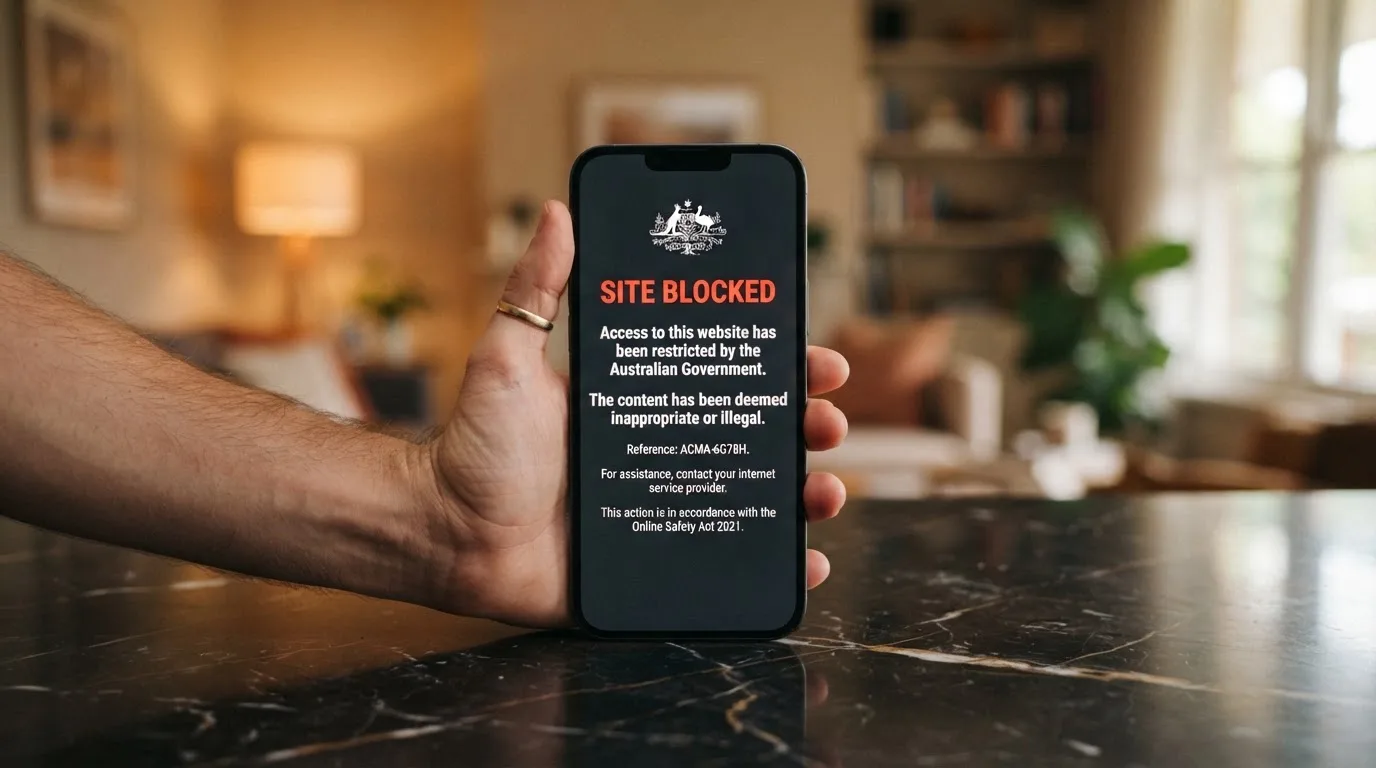
The Interactive Gambling Act 2001 has been the load-bearing wall of Australian online gambling policy for two decades. The 2017 amendments turned what had been a partial prohibition into an enforceable one, gave the Australian Communications and Media Authority the power to issue formal warnings and direct internet service providers to block offending services, and made the offering of online casino games and in-play wagering to Australian residents a civil offence carrying penalties into the hundreds of thousands of dollars. Lotteries, keno and pre-event wagering on races and sport remain licensable. Casino games on a phone or laptop do not, anywhere in Australia.
A handful of practical consequences follow.
The operator is the target, not the player. The IGA goes after the entity providing the service. An Australian punter does not face prosecution for opening an account at an offshore casino. The flip side is sharper: that punter has no Australian consumer protection, no Australian complaints body, and no way to compel a withdrawal if the offshore site decides to delay, limit or refuse it. The Australian bank that issued the card cannot reverse a transaction that sailed through under a gambling merchant code once the money has been claimed, and the ACMA cannot unlock a balance that has been swallowed by a site now blocked at the ISP level.
The licensing claim on the site is a separate question. Offshore casinos licensed in Curaçao, Anjouan or similar jurisdictions display those seals prominently. The seal is real in the sense that the regulator exists; what it does not do is extend into Australia. A Curaçao-licensed operator offering online pokies to an Australian reader is in breach of Australian law regardless of what its own licence permits. The ACMA has been naming names in formal warnings for years on this point, and the operators named read like a roll call of the offshore brands an Australian review site would otherwise list.
The 2024 credit-card ban, applied from 11 June 2024 to Australian-licensed wagering services, closed a second door. Licensed operators cannot accept credit cards or credit-related products, and the wording of the rules was drawn to extend to linked digital wallets such as Apple Pay when they ride on a credit facility. A reader who tries to fund an Australian-licensed wagering account with a credit card is asking the operator to break the law, and that question will surface the moment the deposit screen rejects the card. Offshore operators do not face the same restriction, but the deeper prohibition — that the casino product itself is not licensable here — still binds.
The Interactive Gambling Amendment (Gambling Reform) Bill 2026, passed by Parliament on 19 August 2026, will tighten advertising and inducement rules further once its provisions commence on 1 January 2027. On a page read during 2026, the bill is law with a start date, not yet in force; its practical bite lands at the turn of the year, when inducements aimed at Australian audiences will move closer to the same enforcement line the prohibited product itself already sits on.
What the ACMA has actually done
The ACMA’s enforcement record is the most concrete evidence a reader can read against the marketing. By the reporting of June 2026, the authority had directed Australian ISPs to block 1,751 illegal gambling and affiliate marketing websites since the first blocking request in November 2019, and more than 230 unlicensed services had withdrawn from the Australian market since enforcement was strengthened in 2017. The June 2026 round alone added twelve names to the block list — 7Signs, ChromaBet, Donbet, Duospin, Freshbet, Slots Gem, Jacks Club, Lucky Start, Pointsbetz, Spinrise, Vinyl Casino and Wildsino — and that is one round, not the catalogue.

The blocking rate, measured from the first block in November 2019 to the running total of 1,751 sites reported in June 2026, sits at a rough monthly pace of roughly twenty-six sites per month across that stretch, with the spread widening materially once the 2017 enforcement strengthening gave the ACMA its modern toolkit. The rate is a band rather than a single figure: it depends on the start point chosen, on whether affiliate marketing pages are counted alongside gambling sites, and on the months with concentrated rounds. Read against an industry that adds comparable numbers of new domains per quarter, the pace is one of attrition, not eradication — the supply refreshes faster than the block list can be cleared.
Alongside blocking, the ACMA issues formal warnings, the precursor step before a civil penalty application. The warnings named further down the page are the same mechanism applied to individual brands; the cumulative pattern is what gives the policy its teeth.
The Northern Territory carve-out
One piece of the picture looks like a loophole until it is read carefully. The Northern Territory Racing and Wagering Commission regulates fifty-two of Australia’s online bookmakers — including the household names Sportsbet, Bet365 and Ladbrokes — through a licensing regime that is competitive at the Territory level for tax reasons. The commission has no full-time staff and meets once a month in Darwin, a fact a 2026 ABC report flagged when Territory legislation to reform the regulator was under discussion. What the NTRWC licenses is wagering on racing and sport placed before the event, not online casino games and not in-play betting. The bookmakers it licenses sometimes run casino-style products for customers outside Australia; what they cannot lawfully offer those products to is anyone inside Australia. The Territory licence, in other words, does not extend the catalogue — it sits beside the prohibition, not over it.
Responsible gambling tools that bind, and the ones that do not
A reader who has moved past the legal picture has a second set of questions, and they are about the safety net. The Australian safety net has a specific shape, and the pieces that look like protection from the outside sometimes do not reach the product the reader is actually using.
BetStop, the National Self-Exclusion Register, has been live since August 2023. It allows a person to register once and be excluded from every Australian-licensed online and phone wagering service simultaneously, with exclusion periods from three months to a lifetime. The mechanism is enforced on the operator side through account closure and the return of any balance in the player’s favour. The limitation is the one that matters most in this context: BetStop binds Australian-licensed services. An offshore casino, operating outside the regime, is not connected to the register. Registering with BetStop does not block access to an offshore site, does not stop an offshore site from accepting a deposit, and does not return a balance that an offshore site has decided to withhold. A high roller who is trying to step back from offshore casino play cannot lean on BetStop to do it for them, because BetStop was not built to reach them.
The National Gambling Helpline, on 1800 858 858, is free and available around the clock, with web chat through Gambling Help Online. The helpline is the part of the framework that does reach anyone, including a player at an offshore site, and a high-spending punter feeling the pull of one more session can call it from anywhere in Australia without identifying themselves to the operator they are using.
Australia’s banks, separately, have built card-level gambling blocks that work without any involvement from the operator. Commonwealth Bank’s gambling lock, applied through the CommBank app, blocks most gambling transactions on eligible cards and the bank itself states it cannot guarantee every gambling-related transaction will be stopped. ANZ’s gambling block, activated in the ANZ app, blocks gambling transactions made through a digital wallet such as Apple Pay on an eligible card, not just transactions made with the physical card, and removing the block once it is turned on requires a forty-eight-hour cooling-off period. Westpac’s block refuses authorisation of transactions registered under the merchant category code “Betting/Casino Gambling” on eligible personal credit and debit cards. The card-level blocks do reach offshore merchants, because the block sits in the issuing bank’s authorisation flow rather than at the operator end; a reader who turns one on and then tries to deposit at an offshore casino will meet the block at the moment of authorisation, before any money has moved.
That reach has a counterpoint. The same blocks will stop legitimate deposits at Australian-licensed wagering services if those services happen to use the same merchant category code, and they do. A reader who has turned a gambling block on and then wants to back a horse at a licensed TAB has to remove the block first, which means accepting the forty-eight-hour cooling-off period at ANZ or the equivalent pause elsewhere. The card-level block is a blunt tool that hits every gambling-coded merchant, and that includes the legal ones.
What this means for the reader who is genuinely trying to step back
The cleanest answer for an Australian punter who wants the legal product, and the safety net, is to stay with Australian-licensed wagering services and use BetStop and the card-level blocks together. The combination is what the Australian framework is built to deliver.
| Tool | Reach | Best for |
|---|---|---|
| BetStop | Licensed wagering services | Permanent exclusion |
| Gambling Help Online | Any operator (including offshore) | Immediate support |
| Bank card blocks | All gambling-coded merchants | Impulse control |
The framework is not built to deliver the same protection to offshore casino play, because offshore casino play is not in the framework at all.
How money moves for high-stakes play in Australia
The payments section looks, at first glance, like a comparison of payment methods. Underneath, it is a comparison of two parallel systems that do not meet: the Australian one, with its own rails and its own consumer protections, and the offshore one, which runs on its own and arrives in an Australian bank account only when the operator decides to send it.
The Australian rails
The licensed wagering services an Australian reader can lawfully use — the online bookmakers, the TABs, the lotteries — accept a defined set of deposit methods. Debit card and bank transfer are the obvious ones. PayID, on top of the New Payments Platform, settles in under a minute between participating banks and credit unions, twenty-four hours a day, seven days a week, and is available at over a hundred Australian financial institutions. By April 2025, more than twenty-five million PayID identifiers had been registered on the platform. Osko, the instant transfer service that rides on the same platform, gives the same near-instant settlement whether the payment is addressed to a BSB and account number or to a PayID. Paying to a PayID shows the name on the account before the transfer is sent, and that name-check is the single most useful fraud signal in the system: AP+ warns that being asked to send money to a PayID on an illegal gambling site almost certainly means a scam site.
BPAY, in operation since November 1997 and now run by Australian Payments Plus alongside PayID and Osko, sits in the bill-payment slot of online banking and is offered by more than ninety-five thousand businesses across Australia. It is the rail Australian readers use to pay utilities, council rates and many smaller service providers, and a handful of Australian-licensed wagering services accept it as a deposit route. It is not a rail that reaches offshore casino operators, who have no Australian biller code.
The New Payments Platform itself went live on 13 February 2018 and is owned by New Payments Platform Australia Ltd, a non-profit company whose thirteen shareholders include the Reserve Bank of Australia and the major banks. The ACCC authorised the 2021 merger that brought NPP Australia, BPAY and eftpos under the single holding entity that is now Australian Payments Plus. Participants in the platform are held to a monthly outage cap of two minutes, which is why transfers settle in seconds rather than the hours a legacy bank transfer could take.
Digital wallets are the deposit method most readers already have open. Apple Pay, Google Pay and Samsung Pay together carried roughly forty-five per cent of all card payments in Australia by number at the end of 2025. Apple itself charges consumers no fee for using Apple Pay in stores, online or in apps, and the transaction limits and PIN requirements are set by the issuing bank or the merchant, not by Apple. The wrinkle that matters here is that an Australian-licensed wagering service cannot accept credit cards, and a digital wallet linked to a credit facility falls inside the same restriction; a reader funding a licensed wagering account from Apple Pay linked to a credit card will meet the same rejection at the deposit screen.
The offshore picture
Offshore casinos that accept Australian players run on cards, e-wallets and, increasingly, crypto. A Visa or Mastercard debit card issued by an Australian bank will often authorise the first deposit, because the bank’s authorisation flow is checking the merchant category code against the card’s own settings rather than against a list of prohibited gambling sites. The card-level gambling blocks at Commonwealth Bank, ANZ and Westpac sit in the same authorisation flow and will reject the transaction before it goes through; a reader with one of those blocks on will not reach the offshore cashier. A reader without one will, and will see the deposit land in the operator’s balance, where Australian consumer law does not reach it.
Crypto sits one step further outside the Australian system. A Bitcoin or stablecoin deposit moves peer-to-peer into the casino’s wallet, and there is no Australian bank authorisation to block, no PayID name check to warn of fraud, and no Australian consumer protection to fall back on if the operator refuses to return the funds. The reader’s recourse, if there is one, is whatever dispute mechanism the casino’s own terms provide, written by the casino.
The Reserve Bank’s July 2025 review of card payment costs proposed removing surcharges on eftpos, Mastercard and Visa transactions, and explicitly left American Express outside the scope of the proposed ban. American Express operates a three-party scheme, issuing cards and processing transactions itself rather than running the four-party network Visa and Mastercard use, and that structural difference is what keeps it outside the surcharge conversation. The relevance to a high-roller reader is that Amex is the card type most likely to attract a surcharge at a foreign-licensed merchant, including an offshore casino, and the surcharge the RBA proposes to remove is the one a high-stakes punter is most likely to be charged in the first place.
How the two systems meet — or fail to
When an offshore casino pays out, the money arrives in the player’s Australian bank account as an international transfer or a card refund, depending on the route. Either way, the transfer is processed by an Australian bank, and the bank sees the inbound transaction with a description that ties it to a gambling merchant. A reader with a card-level gambling block turned on may find that the inbound payout is also blocked, because the block sits on the merchant category code rather than on the direction of the transaction. A reader without a block will see the money land, less any currency conversion the casino or the bank applies, and will have no Australian complaints body to write to if the amount is short. The Australian Taxation Office treats recreational gambling winnings as non-assessable income and losses as non-deductible, which is one Australian institution that does reach a reader at an offshore casino, in the form of a tax return that records neither a win nor a loss.
What a high-roller bonus actually costs the punter
A high-roller bonus is sold on size. The headline is the dollar value — the deposit match, the reload, the “VIP welcome package” sized for a player who moves serious money. The arithmetic that determines whether the bonus is worth taking is the wagering, or turnover, requirement attached to it, and that arithmetic almost always comes out the wrong way for the punter. The page is built around what the calculation reveals, because the calculation is the only part of the offer that survives contact with the maths.
The mechanics, stripped of marketing language, run as follows. The casino credits the bonus amount to the player’s account. Before any of that bonus, and often the deposit behind it, can be withdrawn as cash, the player must wager the bonus a stated multiple of times on eligible games. A bonus of A$1,000 with a 40x wagering requirement means A$40,000 of qualifying bets must be placed before the bonus converts to withdrawable cash. If a maximum-cashout cap is attached — and the better end of the market usually attaches one — the bonus converts only up to that cap, regardless of how far the wagering goes. A max-cashout cap of 5x the bonus on a A$1,000 bonus is a ceiling of A$5,000 in withdrawable funds from bonus play, with anything beyond returned to the casino or voided.
The expected loss on the turnover is the figure the marketing does not put on the page. Set against a game return-to-player of, say, 96 per cent, every A$1,000 of wagered play costs the player about A$40 on average across many spins or hands. A$40,000 of required wagering therefore costs, in expectation, around A$1,600 over the life of the bonus — more than the bonus itself on a A$1,000 headline, before any cap is applied. The bonus is paid for by the play it forces, and the play is what the punter was going to be doing anyway; the bonus’s net contribution, once the expected loss is subtracted from the headline, is usually a small positive or a small negative, depending on the cap. The marketing name for the package is rarely a guide to its real value, because the real value sits in the small print.
Why offshore bonuses cost more than they look
The Australian context changes the maths in two ways. First, the bonus is being claimed at an offshore casino that the ACMA has, in many cases, formally warned for offering exactly this product to Australians; the formal warning is a public record, not a private one, and a reader who claims the bonus is funding an operator the Australian regulator has identified as breaking Australian law. The financial cost is set against a counterparty with no Australian consumer protection. Second, the wagering games on offer at an offshore casino are not the games an Australian-licensed wagering service provides; the catalogue is broader, the rules are written by the operator, and the dispute path is whatever the operator’s own terms say it is. A reader who has a withdrawal limited or refused by an offshore casino cannot write to the ACMA, cannot complain to the operator’s local regulator in a way that produces an Australian outcome, and cannot rely on the issuing bank to reverse a transaction that has already been claimed by the merchant.
The combination is what makes a high-roller bonus sold to an Australian reader a worse deal than the same bonus sold to a reader in a regulated market. The wagering maths is the same, but the recourse if the operator decides not to pay is materially thinner. A reader who has done the calculation on the offer should also weigh what happens if the calculation works out and the operator refuses the withdrawal anyway.
The mobile experience at an offshore casino
Most Australian readers who land on an offshore casino site do so on a phone, because the marketing meets them there. The mobile experience is the product, and what the mobile experience actually delivers is the next shelf to look at honestly.
A high-roller casino app, in the offshore market, is most often a mobile-optimised website wrapped in a thin native shell rather than a full app distributed through an Australian app store. Apple’s App Store and Google Play both restrict the distribution of real-money casino apps to licensed operators in regulated jurisdictions, which means an offshore casino’s “app” is usually a direct download from the operator’s own site or a progressive web app the reader installs by following instructions on the casino’s homepage. The install path itself is informative: an Australian app store will not carry the product, and a reader who has been guided through a sideload is one step further outside the Australian framework than the marketing language suggested.
Once running, the mobile product is functionally complete. The lobby holds the full slot catalogue, the live dealer tables stream at phone resolution, and the cashier presents the same deposit and withdrawal methods as the desktop site. The phone is the cashier, and the cashier is where the Australian-specific mechanics surface: a card-level gambling block rejects the deposit at authorisation, a PayID deposit shows the account name and gives the reader a moment to reconsider, and a crypto deposit bypasses both checks and lands the money in the operator’s wallet before any Australian institution has looked at it. The mobile experience, in other words, is the experience of the Australian banking system meeting (or failing to meet) the offshore operator, and the seams show at the cashier more than anywhere else on the screen.
Apple Pay, the most common mobile wallet in Australia, illustrates the seam. Apple itself charges no fee to the consumer, the transaction limits and PIN rules are set by the issuing bank or merchant, and an Australian bank with a gambling block turned on will reject the transaction at the wallet level, not the card level. ANZ’s block reaches into the wallet for that reason; Commonwealth Bank’s lock does not extend to wallet transactions in the same way; the difference is in the issuing bank’s own configuration. A reader funding an offshore casino from Apple Pay on a credit card, where the credit-card ban does not apply because the offshore operator is outside the Australian regime, will see the deposit authorise, and that authorisation is the moment the Australian framework stops being relevant to the transaction.
The games the marketing is selling
A high-roller slot is, mechanically, a slot with a higher minimum bet than the casual floor and often a higher maximum. The maths do not change: a slot’s return-to-player is the long-run percentage of money wagered that the game returns to players in winnings, and a high-roller slot has the same RTP as its low-stakes cousin if the paytable is identical. What changes with the stake size is the volatility profile — a high-volatility slot delivers less frequent wins of larger size, a low-volatility slot delivers more frequent wins of smaller size, and a high-roller budget tolerates the dry stretches a casual budget does not.
The catalogue an offshore casino offers runs from branded video slots through classic three-reel games to live dealer tables streamed from studios in Malta, Latvia, the Philippines and elsewhere. The branded video slots are the marketing’s centre of gravity; the live dealer tables are the closest an offshore casino gets to the experience a reader at Crown Melbourne or The Star Sydney already knows. The Australian-licensed alternative for the live-dealer experience is the land-based casino floor, which is licensed, regulated by state gaming authorities, and offers the same table games with the same rules the offshore live studios run.
The paytable of a high-roller slot reads, in essence, like any other slot: a base game return, a bonus feature return, a jackpot contribution, all rolled into the published RTP. The published RTP is set by the game provider and is the same number the casual player sees on the same game at the same stakes, because the math does not bend to the player’s budget. A high-roller budget lets the player sit through the variance a casual budget cannot, which is why the games are marketed to high rollers, but it does not change the underlying edge the house carries on every spin. The expectation, across enough spins, converges on the published RTP, and the house edge — the percentage of every dollar wagered the casino keeps on average — is the complement. A 96 per cent RTP is a four per cent house edge, and that four per cent is the same for a A$1 spin and a A$100 spin.
Why “real money” high-roller slots read the same as the casual ones
The “real money” framing in the marketing is a reminder that the player is funding the account with their own money and standing to win or lose it. The framing does not change the math, which is the same on a free-play demo as it is on a real-money session, because the random number generator does not know what kind of money is on the line. A high-roller slots session is, mechanically, a longer session of the same game, and the longer session is what makes the high-roller budget relevant. The marketing’s emphasis on “real money” is what sells the product; the maths’ indifference to the size of the stake is what the marketing does not put on the page.
The eleven brands the ACMA has named
This is the shelf that has to do the most honest work, because these are the brands an Australian search returns. Each one is on this page because the ACMA itself issued a formal warning over it for offering prohibited services to Australians. The product each one is offering — online casino games, online pokies, live dealer tables — is the product this page discusses. None of it is licensed in Australia, and the formal warning is the regulator telling the public so.
The comparison below lines up the brand, the ACMA action against it, the operating entity the ACMA named, and what the public record says about how the subject of this page (high-roller casino bonus terms, payment methods, or related specifics) is supported for each. No bonus terms are printed, because the only sources for them are affiliate marketing pages, and printing them would put the marketing language back on a page that has spent its length taking it off.
| Brand | ACMA action and date | Operator named by the ACMA | Subject support |
|---|---|---|---|
| RocketPlay | Formal warning, March 2026 (also Dama N.V., May 2022) | Pulsup Ltd | Listings-only (Gambling Insider) |
| Level Up Casino | Formal warning, May 2022 | Dama N.V. | Listings-only (Westpac) |
| Woo Casino | Formal warning, March 2025 | Dama N.V. | — |
| Spirit Casino | Formal warning, May 2025 | Dama N.V. | — |
| National Casino | Formal warning, July 2025 | Consolutetish S.R.L. | Listings-only (ACMA, AUSTRAC, BetStop) |
| Bizzo Casino | Formal warning, July 2025; earlier 2022 | Consolutetish S.R.L. (earlier TechSolutions) | Listings-only (Gambling Insider) |
| Ignition Casino | Formal warning, July 2025 | Bamboo Media | — |
| Instant Casino | Formal warning, February 2025 | EOD Code SRL | Listings-only (EcoPayz, PayID) |
| Jackbit | Formal warning, April 2026 | Ryker B.V. | — |
| Casino Intense | Formal warning, April 2025 | Sterplay Holding Ltd | Listings-only (AUSTRAC, BetStop, Gambling Insider) |
| Sky Crown | Formal warning, September 2022 | Hollycorn N.V. | — |
The table is built from the ACMA’s own published formal warnings. Where research could find a subject-specific data point in a non-affiliate source — a regulator page, a card-issuer page, a payment-rail page — that source is named in the right-hand column. Where the only sources were affiliate marketing pages, those are not transcribed as if they were facts, and the cell carries the article-language no-data marker instead. The point of the column is to make the asymmetry visible: an offshore casino can publish a hundred bonus terms and a thousand payout claims, but the public record on what it actually does when a player asks for their money back is much thinner, and that asymmetry is the whole reason the column exists.
What the warnings actually say
The formal warnings the ACMA has issued over these brands follow a consistent template. The authority identifies the operator, names the website, sets out the conduct it considers to be the provision of a prohibited interactive gambling service to customers in Australia, gives the operator a period to respond, and publishes the warning on its website once the period has closed. The legal underpinning is the Interactive Gambling Act 2001; the trigger is evidence, gathered by the ACMA itself or supplied by complaints, that the operator is offering online casino games to Australian residents. The warning is the precursor to civil penalty proceedings, and it is also the public record a reader can read to confirm that the brand they are looking at has been told, in writing, that its conduct breaches Australian law.
Dama N.V., the operator named in five of the eleven entries above, is the most recurrent. Its first ACMA formal warning covered six brands in May 2022; further warnings followed in March 2025 over Woo Casino and in May 2025 over Spirit Casino; the RocketPlay warning of March 2026 names Pulsup Ltd as the operator but RocketPlay was also among the six in the May 2022 warning, so the brand has cycled through more than one corporate entity while continuing to offer the same product. The pattern is the operator’s: the brand identity changes, the underlying offer to Australian residents does not.
Bizzo Casino has its own two-step history. The 2022 warning named TechSolutions (CY) Group Limited and TechSolutions Group N.V.; the 2025 warning names Consolutetish S.R.L. The same brand, two different operators, both told in writing that what they are selling to Australians is against the law. The pattern holds across the rest of the table: the brand the reader sees is rarely the same legal entity the ACMA wrote to, and the entity the ACMA wrote to is rarely the only one operating that brand.
Reading the table against the marketing
A reader who searched for a “high roller casino bonus” has, by the time they reach this table, been shown eleven brands that the Australian regulator has formally identified as offering exactly that product to Australians. The bonus terms those brands publish are the inducement; the ACMA warning is the regulatory record. The two cannot both be true in the way the marketing presents them, and the table puts them on the same page so the reader can see them side by side. The verdict on each row is the same and is stated once: the product is prohibited in Australia, the operator has been told so, and the bonus terms are the marketing language that sits on top of that prohibition. The reader who reaches this table has reached the conclusion of the page.
What an Australian reader can actually do
The conclusion a page of this kind arrives at is not that the reader has no options. It is that the reader’s options are different from the marketing’s, and the difference is the point.
The lawful path for high-stakes play in Australia runs through the licensed wagering services — the online bookmakers regulated by the Northern Territory Racing and Wagering Commission, the TABs in each state and territory, the lotteries and keno products run by the state authorities. The product catalogue on those services is narrower than an offshore casino’s: no live dealer baccarat streamed from a Malta studio, no progressive jackpot slots with seven-figure top prizes, no crypto deposit that settles in seconds. What the licensed services offer in return is the Australian consumer protection the offshore product does not: a regulator that can compel a payout, a complaints body that will read the case, a banking system that sees the transaction and can reverse it under defined conditions, and a responsible-gambling framework that reaches the player.
For the player who wants the casino product itself — the table games, the slots, the live dealer rooms — the Australian alternative is the land-based casino floor. Crown Melbourne, The Star Sydney, Crown Perth, The Star Gold Coast, SkyCity Adelaide and SkyCity Darwin are licensed under state and territory gaming legislation, run Know Your Customer checks at the door, enforce responsible-gambling measures on site, and carry the kind of dispute resolution path the offshore product does not. A high-roller room at Crown Melbourne offers stakes and VIP treatment a casual punter does not see, and it does so under the supervision of the Victorian Gambling and Casino Control Commission, which is a fundamentally different counterparty from an offshore operator with no Australian footprint.
For the player who is trying to step back, the responsible-gambling tools the Australian framework does provide — BetStop, the card-level gambling blocks, the National Gambling Helpline on 1800 858 858 — work together. BetStop binds the Australian-licensed services; the card-level blocks reach further, into the offshore authorisation flow; the helpline is the part that reaches the player wherever they are. The combination is what the framework was built for, and the reader who uses it will find the marketing’s offer has a counterpart that the marketing does not name.
Frequently asked questions
What deposit level typically qualifies a player as a high roller at a casino?
There is no industry-wide threshold. Offshore marketing tends to draw the line in the A$1,000-and-up range for a single deposit, with VIP tiers stepping up into the tens of thousands; the line is set by the operator, not by a regulator, and varies brand to brand. What marks a high-roller budget is the ability to absorb variance, not the size of any single deposit.
Do high-roller bonuses usually come with higher wagering requirements?
Not necessarily higher in multiple, but they are attached to larger bonus amounts, so the dollar turnover the player has to generate is larger. A 40x wagering multiple on a A$1,000 bonus is A$40,000 of qualifying bets; on a A$5,000 bonus it is A$200,000. The expected loss scales with the turnover, not the multiple.
Is it legal for an online casino to offer high-roller bonuses to Australians?
No. Under the Interactive Gambling Act 2001, offering online casino games to a person in Australia is a prohibited interactive gambling service. The size of the bonus does not change the legal status of the offer; an offshore casino marketing a high-roller bonus to an Australian reader is offering a prohibited service, and the ACMA has issued formal warnings to multiple operators doing exactly that.
Can high-roller status be reached through a PayID deposit?
PayID is an Australian instant-payment rail operated by Australian Payments Plus and available through more than a hundred Australian financial institutions. It settles transfers between Australian banks in under a minute. It is not, on its own, a path to high-roller status at any operator; status is granted by the operator based on deposit and play history, not on the payment method used for a single deposit.
Are high-roller tables or limits offered at licensed Australian land-based casinos?
Yes. Australian land-based casinos operate high-roller rooms with elevated table limits and dedicated service. Crown Melbourne’s rooms, The Star Sydney’s, Crown Perth’s and the others run stakes well above the main floor and are regulated under the relevant state or territory gaming authority, which provides consumer protection the offshore equivalent does not. See also The high cashback bonus, the offshore casino, and the Australian reader .
What should a high-spending player check before trusting a casino site?
Whether the product on offer is licensed for play from Australia — and for online casino games, it never is. Beyond that, the formal warning record on the ACMA’s website, the operating entity named in the site’s terms, the payment methods the cashier accepts and the dispute path the site’s own terms describe are all worth reading before any deposit is made. The marketing pages rarely cover any of them.