
Pokies open near me Australia 2026: the licensed venue route, what the ACMA has acted against, and what offshore cannot legally offer
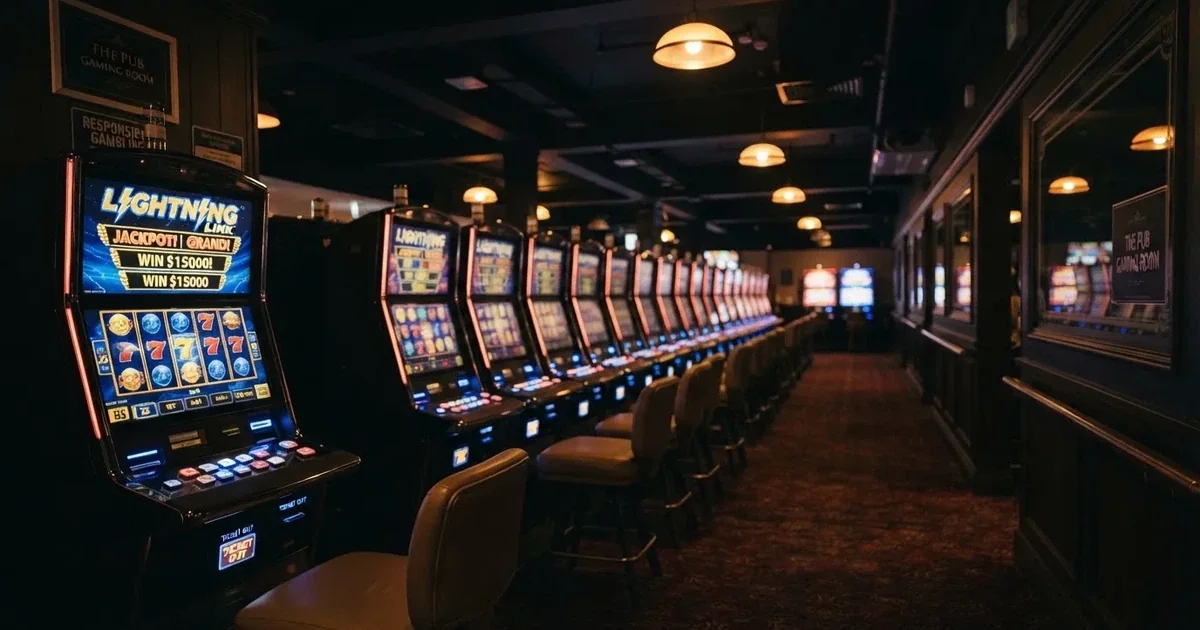
The phrase “pokies open near me” returns, almost without exception, the same answer in this country: a licensed pub, club or casino within driving distance, with a row of electronic gaming machines on the other side of a door. There is no online substitute for that — the Interactive Gambling Act 2001 makes it an offence to offer online casino games, online pokies or in-play wagering to a person physically in Australia, regardless of where the site is incorporated or what licence it displays offshore. This page treats the legal option as the answer the search is actually after, and treats the offshore claims as a separate problem the Australian Communications and Media Authority has been steadily shutting down.
Current as of 28 October 2026 and verified against the Australian Communications and Media Authority’s published register of blocking requests and formal warnings.
Table of Contents
- Why this question keeps coming back
- Help comes before the venue, not after it
- Where the machines actually live
- Finding a venue that is open right now
- What the ACMA has done, in numbers
- Where the offshore route runs into the law
- The ACMA’s recent formal warnings, side by side
- The two legal answers to the search
- What changes at the door
- Where the line sits on age, ID and credit
- The NT loophole most readers will hear about
- A note on the wider landscape
- Where to go from here
- Frequently asked questions
Why this question keeps coming back
The search sits in a narrow lane. People type it when they want to drive somewhere, walk into a venue, sit at a machine, and play. They are not looking for an offshore site with a Curacao registration, a “play now” button, and an Australian flag in the footer — the kind of result that loads if you type the same words into a search engine without thinking about it. The reason that distinction matters is the subject of this page: there is one legal way to find pokies open near you in Australia, and there are many ways that pretend to be it but cannot lawfully offer what you are looking for.

Poker machines themselves are legal, regulated state by state, and operate in tens of thousands of pubs, clubs and casinos across the country. Australia holds about 3% of the world’s pub and club poker machines with 0.3% of the global population, and in 2020–21 alone Australians wagered close to A$150 billion through those machines and lost A$12.18 billion on them. That is the playing field the question lands on. What you do once you walk through the door is a personal decision; what this page does is make sure you walk through the right door.
Help comes before the venue, not after it
The most useful thing a page like this can do is put a number where it belongs — at the top, not the bottom. If gambling is starting to feel less like a choice and more like a need, or if a session has already gone past where it should have stopped, the call to make is the National Gambling Helpline on 1800 858 858 — free, twenty-four hours a day, every day. The same service runs chat at Gambling Help Online.
BetStop, the National Self-Exclusion Register, has been live since August 2023 and binds every Australian-licensed online and phone wagering service. What it does not bind is any offshore casino, which is one reason the legal venue route looks the way it does: the protections that Australians can rely on only attach to operators the Australian regulator can reach. A pre-commitment card scheme in Tasmania was planned as the strictest in the country; its rollout was pushed back to late 2025, with implementation still finding its feet.
None of that replaces a phone call. It is the other way around — the phone call is the part that works today, the rest is the regime around it.
Where the machines actually live
A poker machine in Australia is licensed at the state or territory level, and each jurisdiction runs its own design rules, return-to-player floors and operating hours. NSW, the largest jurisdiction by machine count, held 87,298 gaming machines outside its casinos across 2,195 venues as of June 2023, with player losses of A$8.18 billion in 2022–23. Queensland had 21,122 machines across 351 venues in October 2023; Victoria ran 26,380 outside Crown Melbourne across 488 venues in 2021–22, sitting under a statewide cap of 30,000. Western Australia banned the machines in pubs and clubs when Crown Perth opened in 1985 and has kept that ban in place since — Crown Perth’s own count has grown from about 200 machines in 1985 to roughly 2,500 today, every one of them approved by the state’s Gaming and Wagering Commission.
Registered clubs in New South Wales were the first to operate the machines legally, from 1956 onwards. Tasmania granted the Federal Group a monopoly licence over every machine in the state from 1968, and legislation passed in November 2021 ended that monopoly and moved oversight to the Tasmanian Liquor and Gaming Commission. Each of these decisions sits in a different place on the map, and the practical consequence is that “what’s open near me” depends on which state the question is being asked in.
Hours the venues actually keep
Trading hours sit with each venue, not with a national rule. The general pattern across the eastern mainland states is that pubs and clubs open their gaming rooms during the late morning and run them into the early hours of the next day, with breaks in the small hours that vary by licence. Twenty-four-hour gaming rooms exist, mainly in the larger clubs and casino complexes, but they are not the default — most suburban venues close the gaming floor in the early hours and reopen it later the same day. The way to find out which venues near you are open right now is the subject of the next section.
The legal return-to-player floor varies by state
| Jurisdiction | Minimum RTP |
|---|---|
| New South Wales | 85% |
| Northern Territory | 85% |
| Queensland | 85% |
| Victoria | 85% (87% at Crown Melbourne) |
| ACT | 87% |
| Tasmania | 87% |
| South Australia | 87.5% |
| Western Australia | 90% |
The minimum return-to-player (RTP) the law requires is set per jurisdiction: 85% in NSW, the Northern Territory, Queensland and most of Victoria, with 87% at Crown Melbourne; 87% in the ACT and Tasmania; 87.5% in South Australia; and 90% in Western Australia. Those are floors, not the RTP a particular machine runs at. The legal ceiling on what a venue can keep is the floor; what a specific machine actually returns is a separate figure set by the game designer and the venue’s settings.
Finding a venue that is open right now
The fastest answer to “pokies open near me now” is rarely a search engine — it is the venue’s own front-of-house information and a phone call. Most licensed pubs and clubs publish their gaming-room hours on their website, on Google Business listings, and at the entrance; many also answer the phone during business hours and can tell a caller what the floor is doing today. Casino complexes publish longer schedules because their gaming floors run around the clock.
Two practical steps work in this market. First, search “club gaming hours” or “pub poker machines” for your area rather than the bare search phrase — the search returns the venues themselves rather than the offshore redirects that bid on the broader phrase. Second, check the state regulator’s own register if a claim looks unusual: Liquor & Gaming NSW, the Victorian Gambling and Casino Control Commission, the Office of Liquor and Gaming Regulation in Queensland, and so on. A licence number on the door should match the register.
If a venue cannot or will not confirm its gaming-room hours in advance, that is itself information — the licensed venue route does not require a reader to bargain for it.
What the ACMA has done, in numbers
The Australian Communications and Media Authority has run a sustained enforcement effort against offshore gambling services targeting Australians. As of June 2026, the ACMA had asked Australian internet service providers to block 1,751 illegal gambling and affiliate marketing websites since the first blocking request in November 2019 — a six-and-a-half-year campaign that has gathered pace rather than slowed. More than 230 unlicensed services have left the Australian market entirely since enforcement was strengthened in 2017.
The most recent published round, reported on 26 June 2026, added 12 more domains to the block list: 7Signs, ChromaBet, Donbet, Duospin, Freshbet, Slots Gem, Jacks Club, Lucky Start, Pointsbetz, Spinrise, Vinyl Casino and Wildsino. The cumulative running total moves in batches of that size, several times a year, and the gap between a brand’s appearance in an affiliate review and its appearance on the ACMA’s list is often measured in months.
The arithmetic of how often it works
Blocking a site in Australia takes time. The ACMA investigates a service, identifies its operator, issues a formal warning if the provider does not come into line, and then directs Australian ISPs to add the relevant domains to the block list. Between the first blocking request in November 2019 and the running total of 1,751 sites reported in June 2026, the average pace works out to roughly 268 blocking requests per year — about one every 33 hours, on a straight average across the six-and-a-half-year window. That figure is a running average rather than a steady drip: blocks arrive in published rounds of a dozen or so, several times a year, with quiet stretches between. The rate has not slowed.
It is worth saying what that figure does not mean. It is not a measure of how many Australians tried to reach an offshore site on any given day. It is a measure of how often the regulator has had to ask an ISP to close a door that should never have been open. Each block is a separate decision, and each one began with a service offering something the Interactive Gambling Act 2001 already prohibited.
Losses to illegal sites, against the legal share
H2 Gambling Capital’s 2025 report estimates that Australians lose about A$3.9 billion a year to illegal gambling sites — a figure separate from, and additional to, the A$12.18 billion lost on land-based machines in 2020–21. The same report puts the share of Australian gambling going through legal channels at 64% in 2025, down from 74% in 2021. The shift is the figure to watch: legal channels have lost ten percentage points of share in four years, which is what the ACMA’s blocking effort is trying to reverse.
Where the offshore route runs into the law
The offshore casino offering is built on a contradiction. The Interactive Gambling Act 2001, as tightened by the Interactive Gambling Amendment Act 2017, makes it an offence to provide online casino games, online pokies or in-play wagering to a person in Australia. No state or territory licenses that activity. The site may hold a licence from Curaçao, from Malta, from Anjouan or from anywhere else — the licence is to a foreign regulator, the offer is to an Australian customer, and the IGA targets the provider.
What that means for a player who signs up: no Australian consumer protection applies, no Australian complaints body can hear a dispute, and no Australian court can compel a payout if the site refuses one. The site can be blocked by an ISP with a balance still sitting in the account. The site’s terms and conditions will, somewhere deep in them, route any dispute to a foreign jurisdiction under a foreign law. None of that is hidden, exactly, but it is not what the marketing surface leads with.
What enforcement looks like in practice
The ACMA’s tool set is three-pronged. It can investigate, issue formal warnings, and direct ISPs to block. A formal warning is the visible marker on a brand’s file: it is published on the ACMA’s website, it names the operator behind the brand, and it is the precursor to a blocking request if the service stays available to Australians. The list below summarises recent formal warnings; the operator write-ups further down carry the same information in a different shape.
Why the credit-card and crypto bans matter
Since 11 June 2024, credit cards, credit-related products and digital currency have been banned as payment for licensed online wagering in Australia, with penalties up to A$247,500 for operators that accept them. The legal deposit routes for licensed wagering are debit card, bank transfer, PayID/Osko and BPAY. A site that asks an Australian customer for a credit card number or a crypto wallet address is, by that fact alone, not running under an Australian licence — the rule is a payment-route test as well as a consumer-protection one. It catches a class of operator that the offshore marketing pages do not flag.
The 2026 reform, and what it changes
The Interactive Gambling Amendment (Gambling Reform) Bill 2026 passed Parliament on 19 August 2026. Its advertising and inducement measures commence on 1 January 2027 — law with a start date, not yet in force on a 2026 page. The reform tightens what an Australian-licensed operator can say in advertising and what inducements it can offer; it does not, by itself, legalise any offshore offer that was prohibited before. The change a reader sees on a 2026 page is what the existing IGA already prohibits. The 2026 reform is the next layer.
The tax position, briefly
Gambling winnings of a recreational player are not assessable income in Australia (section 6-5 of the Income Tax Assessment Act 1997), and gambling losses are not deductible — unless the person is carrying on a business of gambling, which most players are not. That is the model only, and the Australian Taxation Office is the body to ask for any individual position. It does not change the legality of what the player is doing.
The ACMA’s recent formal warnings, side by side
The table below pulls the ACMA’s recent formal warnings into one view. Each row names the brand, the date of the warning, the operator the ACMA named, and what other sources say about the brand’s claim to Australian availability — that last column is taken from public listings where research found them, and is left blank where it did not. The brand order follows the ACMA’s chronology from most recent backwards, with multiple warnings on the same operator grouped together.
| Brand | ACMA action and date | Operator named by the ACMA | Subject support |
|---|---|---|---|
| RocketPlay | Formal warning, March 2026 | Pulsup Ltd | — |
| Jackbit | Formal warning, April 2026 | Ryker B.V. | — |
| Casino Intense | Formal warning, April 2025 | Sterplay Holding Ltd | Listed in public coverage of Australian-facing operators |
| Ignition Casino | Formal warning, July 2025 | Bamboo Media | — |
| National Casino | Formal warning, July 2025 | Consolutetish S.R.L. | Noted in industry coverage as serving Australian traffic |
| Bizzo Casino | Formal warning, July 2025; earlier 2022 | Consolutetish S.R.L. (2025); TechSolutions (2022) | — |
| Spirit Casino | Formal warning, May 2025 | Dama N.V. | — |
| Woo Casino | Formal warning, March 2025 | Dama N.V. | — |
| Instant Casino | Formal warning, February 2025 | EOD Code SRL | — |
| Level Up Casino | Formal warning, May 2022 | Dama N.V. | Listed on software-provider partner pages |
| Sky Crown | Formal warning, September 2022 | Hollycorn N.V. | — |
Two patterns sit in that table. The first is that a single operator name — Dama N.V., Consolutetish S.R.L. — can sit behind several different brand fronts, which is how the offshore market tends to be structured: one licence, several skins. The second is that a second warning on the same brand, years after the first, is itself information — the formal warning did not move the operator off the Australian market, the second formal warning did.
RocketPlay
The most recent ACMA action on the list. In March 2026 the regulator issued a formal warning to Pulsup Ltd over Rocketplay. Dama N.V. sat behind an earlier Rocketplay warning in May 2022, and the brand changed corporate parent between those two dates without leaving the Australian market. Rocketplay is presented by its affiliate material as a casino site accepting Australian players; the ACMA’s view, twice, has been that the offer is one the IGA already prohibits.
Level Up Casino
A formal warning from May 2022 covers Level Up alongside five other Dama N.V. brands. The brand is listed on partner pages run by software providers as a venue carrying their games, which is how the offshore market is normally distributed: a game studio signs content deals with operators, and the operators handle the player-facing side. The warning is the ACMA’s, the listing is the studio’s — neither says the offer is lawful in Australia.
Woo Casino
A second Dama N.V. brand, with a separate formal warning dated March 2025. The warning sits two and a half years after the May 2022 round, which means the operator continued to accept Australian traffic across the intervening period despite the earlier action. Woo Casino is one of the clearest examples in this list of a brand whose second warning says more than the first one did.
Spirit Casino
Also a Dama N.V. brand, with a formal warning dated May 2025 — three years after the original 2022 round, and two months after the Woo Casino warning. The same operator, the same regulated conduct, a separate brand front, and a separate enforcement step. The picture this draws is one of a corporate group rotating brands to keep the same offer available.
National Casino
A formal warning dated July 2025, naming Consolutetish S.R.L. as the operator. Public industry coverage of Australian-facing offshore operators has flagged National Casino as serving Australian traffic. The warning itself is the ACMA’s; the coverage is third-party; both point at the same activity.
Bizzo Casino
Two warnings, separated by three years. The earlier one, in 2022, named TechSolutions (CY) Group Limited and TechSolutions Group N.V.; the July 2025 warning named Consolutetish S.R.L. The corporate structure has changed; the offer to Australian customers has not. A reader looking at Bizzo today sees the same kind of marketing the 2022 warning covered, with a different company behind it.
Ignition Casino
A July 2025 formal warning to Bamboo Media. Ignition is one of the older offshore brands on this list, and the ACMA’s action against it is comparatively recent — which is consistent with the regulator’s pattern of working through operators methodically rather than striking only at new entrants.
Instant Casino
The earliest 2025 warning on the list: February 2025, against EOD Code SRL. The brand positions itself as an instant-play casino and has featured in affiliate marketing aimed at Australian traffic. The ACMA’s view is that the offer the marketing describes is the one the IGA already prohibits.
Jackbit
A formal warning dated April 2026, against Ryker B.V. Jackbit is a comparatively recent entrant among the warned brands, and the warning is also recent. The regulator’s newer actions tend to land faster after launch than its older ones did.
Casino Intense
A formal warning dated April 2025, against Sterplay Holding Ltd. The brand has appeared in public coverage of Australian-facing operators — the same coverage that names several other brands on this list, without itself conferring any legitimacy. A formal warning is the ACMA’s view; an industry listing is the industry’s view. Neither is a licence.
Sky Crown
The earliest warning on the table, dated September 2022 and naming Hollycorn N.V. alongside Blue Leo. Hollycorn has run a stable of casino brands over several years, and Sky Crown is the one whose warning sits on the published register. The 2022 date is the marker to read here: that is how long the enforcement effort has been running.
The two legal answers to the search
Strip the question back and there are two ways to answer “pokies open near me” in Australia, and only two. The first is the licensed venue: a pub, club or casino in your state, regulated by the state regulator, with a gaming room you can walk into and a machine you can play under the state’s own rules. The second is not an answer at all — it is the absence of one. Anything else is an offshore offer the IGA already prohibits, the ACMA has already warned about or already blocked, and the credit-card and crypto payment bans already exclude from the licensed ecosystem.
The first answer is the one the question is asking for. The second is the one that turns up most often in the search results because the offshore marketing budget is larger than the local club’s, and that is what the ACMA’s blocking round is for.
What changes at the door
Walking into a licensed venue in Australia is a different act from loading an offshore site, and the differences are practical rather than legalistic. A licensed venue asks for identification on entry or at the machine — the legal minimum age is 18, and venues enforce it because their licence depends on it. An offshore site will ask for an email address, a username, and a payment method; that combination is enough to verify a customer against the payment rail, but it is not enough to verify an identity, and it is not bound by the Australian identification regime.
A licensed venue’s machine carries the RTP floor the state’s law requires. The machines themselves are approved designs under the state regulator’s technical standards — which game, which RTP, which volatility classification. An offshore site runs whatever game the studio ships, on whatever settings the operator chooses, and the Australian regulator has no reach into either.
A licensed venue settles a payout at the cashier’s window, in Australian dollars, with a receipt. An offshore site settles a withdrawal through the same rails it accepted the deposit, in the currency it chose, under the site’s own terms. If the site decides the withdrawal is suspicious, the player has the site’s internal complaints process and then whatever arbitration the licence on the footer names — which is usually a foreign one.
None of this is a recommendation to play. It is a description of what changes between one door and the other, written so that a reader who types the phrase into a search engine has a clearer picture of the two things the search could be returning.
Where the line sits on age, ID and credit
The minimum age for any gambling activity in Australia is 18. A licensed venue checks it on entry; an offshore site has no Australian mechanism to enforce it, and the IGA does not impose an age-verification duty on the player. The payment ban reinforces the picture: a debit card, a bank transfer, PayID/Osko or BPAY for licensed wagering; no credit, no credit-related product, no digital currency. An Australian under 18 cannot lawfully enter the gaming room; an Australian with a credit card cannot lawfully fund a licensed wagering account. Both rules are bypassed by the offshore route.
What BetStop does and does not cover
BetStop is the National Self-Exclusion Register, live since August 2023. A person who registers with BetStop is excluded from every Australian-licensed online and phone wagering service, and the exclusion periods run from three months to a permanent block. What BetStop does not cover is any offshore casino — which is why a self-excluded player who then opens an offshore account can still play, and why the legal venue route remains the only one a self-exclusion binds. The register is a powerful tool for the operators it reaches; it is silent on the ones it does not.
The NT loophole most readers will hear about
The Northern Territory Racing and Wagering Commission regulates 52 of Australia’s online bookmakers — including Sportsbet, Bet365 and Ladbrokes — under Territory licences the operators took up for tax reasons. The commission has no full-time staff and meets once a month in Darwin, which is a thin layer of regulator for the size of the industry it oversees. A bill to reform the commission was before the Territory parliament in April 2026. What the NT licences cover is wagering on races and sport placed before the event — not online casino games, online pokies or in-play betting, which remain prohibited everywhere in Australia. The NT licence is real, the activities it covers are narrower than the marketing suggests, and the structural critique is one the Territory itself is trying to answer.
A note on the wider landscape
The “best-of” shape this subject might tempt a writer into is the wrong shape for it. There is no top eleven of offshore casinos to recommend to an Australian reader, and any list that ranks them is ranking offers the IGA already prohibits. The list on this page is not a ranking — it is the ACMA’s recent enforcement record, read across. The brands on it are the ones the regulator has named, in the order the regulator named them, with the gaps where research did not find a third-party listing left blank. Reading it as a leaderboard would be reading it wrong.
The legal venues are the answer. The licensed pub around the corner, the registered club down the road, the casino in the nearest capital city — these are the doors the question leads to, and they are the doors the search would lead to if the search engine’s results page did not carry an offshore bid on the same words.
Where to go from here
The first thing to do is the one the reader was already going to do: pick a venue. A licensed pub or club within driving distance, with a gaming room that fits the reader’s schedule, is what the search is asking for. A phone call to the venue during the day will confirm tonight’s hours.
The second thing, if the reader has any concern about their own play, is the call already named at the top: 1800 858 858, free, 24 hours. BetStop is the register for a formal self-exclusion, Gambling Help Online runs chat, and the family of services around them is the one designed for this exact situation.
The third thing, if the reader wants to follow the ACMA’s enforcement, is the ACMA’s own register of blocking requests and formal warnings — the running total of 1,751 blocked sites, the 12 most recent ones, and the formal warnings named above are all published there. The regulator’s record is the place the offshore offers end up, not the place they begin.
Frequently asked questions
What hours do most Australian pubs and clubs typically keep their poker machines open?
There is no national schedule. Most suburban pubs and clubs open their gaming rooms from late morning into the early hours, with a small-hours break that varies by venue. Larger clubs and the casino complexes run gaming floors around the clock. Trading hours are set by the venue’s licence and are usually posted at the entrance and on the venue’s website.
Is there a way to check which nearby venue currently has poker machines open right now?
The fastest method is a phone call to the venue during business hours, followed by the venue’s own website or Google Business listing. State regulator registers — Liquor & Gaming NSW, the Victorian Gambling and Casino Control Commission, the Office of Liquor and Gaming Regulation in Queensland and so on — confirm a venue’s licence but rarely publish live trading hours. A venue that cannot or will not confirm its hours is itself a signal.
Are poker machines in a licensed pub or club the same thing as an online pokies game?
The physical machine and the online game are different products under Australian law. The land-based machine is licensed by the state or territory, runs under the state’s technical standards and is governed by the state regulator. Online pokies are prohibited for people in Australia under the Interactive Gambling Act 2001 — no state or territory licenses them, and offering them to an Australian customer is an offence under the Act.
Do all pubs and clubs run pokies for 24 hours, or only some venues?
Only some venues. Twenty-four-hour gaming floors exist, mainly in the larger clubs and the casino complexes, but they are not the default. Most suburban pubs and clubs close the gaming room in the early hours and reopen it the same morning. The schedule is set by each venue’s own licence conditions.
What identification, if any, does a venue ask for before letting someone play the machines?
Licensed venues enforce the legal minimum age of 18 and will ask for identification on entry or at the machine — typically a driver’s licence, passport or similar government-issued photo ID. The requirement sits in the venue’s licence conditions, and the venue’s licence depends on meeting it. An offshore site asking only for an email address and a payment method is not running under any Australian licence.
How does the number of poker machines in Australian venues compare with the rest of the world?
Australia holds about 3% of the world’s pub and club poker machines with 0.3% of the global population. In 2020–21 Australians wagered close to A$150 billion through gaming machines and lost A$12.18 billion on them — figures that put Australia at or near the top of the per-capita rankings globally. The machines are licensed and regulated state by state, with each jurisdiction setting its own design rules and return-to-player floors.