
RTG casinos for Australian players in 2026: what is and is not available
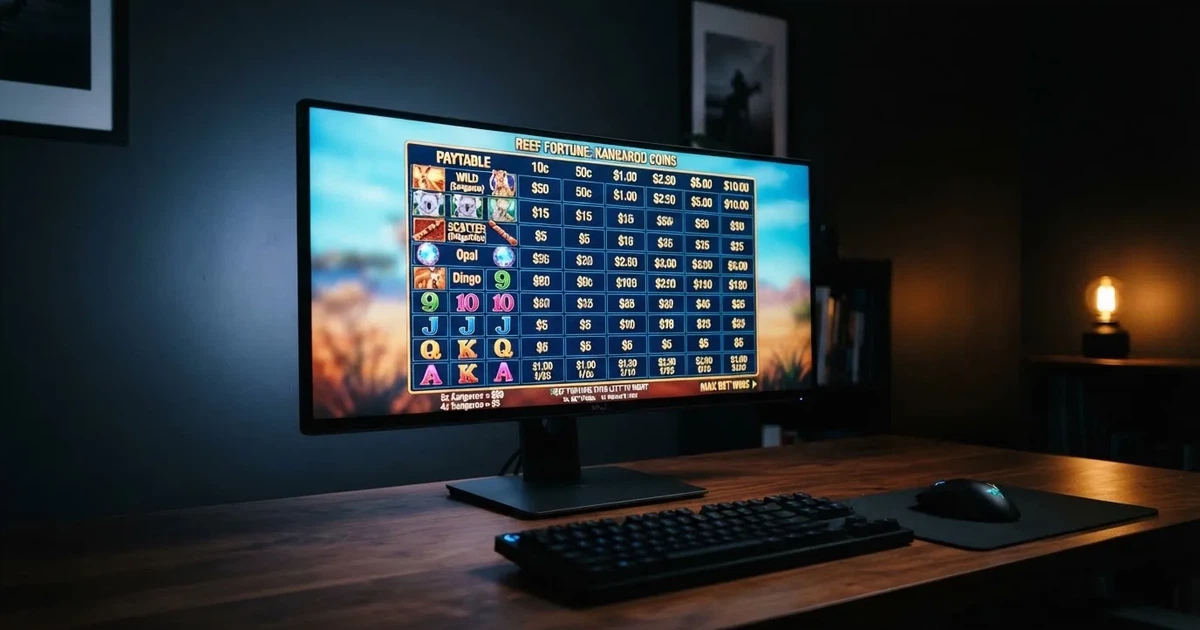
The phrase “best RTG casinos Australia” returns a familiar mix — branded welcome packages, offshore licence badges, and a long list of Curaçao-registered operators running Real Time Gaming software. None of those sites may lawfully offer online casino games to a person in Australia. The Interactive Gambling Act 2001, as tightened by the Interactive Gambling Amendment Act 2017, makes it an offence to supply those games here, and the Australian Communications and Media Authority has been steadily issuing formal warnings and directing internet providers to block the brands that try. This page walks through what Real Time Gaming actually is, how its slots end up marketed to Australians, and what a player sitting in Sydney, Perth or a regional town is realistically able to do.
Current as of 28 October 2026 and checked against the ACMA’s published formal warnings list.
Table of Contents
- Where Australian players stand when they look for an RTG site
- What offshore RTG sites actually offer, and why the offer keeps changing
- What Real Time Gaming actually makes, and how it works under the hood
- What the law actually says about online casino games in Australia
- Responsible gambling supports that apply on this side of the law
- The ACMA action log, in plain language
- The blocking rate: how fast the offshore set is shrinking
- Looking inside the eleven warned operators
- Reading the comparison of RTG against Aristocrat and the local market
- How a reader is meant to use this page
- Where to read further
- Frequently asked questions
Where Australian players stand when they look for an RTG site
A useful starting point is to clear up what “RTG casino” actually means in search results. Real Time Gaming is a slot and table-game studio founded in Atlanta in 1998, bought by Hastings International of Curaçao in January 2007, and relocated to Heredia, Costa Rica, where its development team has worked since 2007–2008. The studio does not run casino sites itself — it licenses its games library to operators, almost all of whom are registered in Curaçao or another offshore jurisdiction. A “RTG casino”, then, is any site running that software package, and the dozens of brands advertising to Australian players are precisely that: offshore operators using a Curaçao licence to reach a market the licence does not actually cover.

The Australian market treats that offer as prohibited. Online casino games and online pokies cannot be licensed in any state or territory; the only forms of gambling that can be licensed online are wagering on pre-event racing and sport, lotteries and keno, with the practical bulk of online bookmakers licensed by the Northern Territory Racing and Wagering Commission. The minimum age for any licensed gambling activity is 18. A “casino” running RTG slots and accepting AUD deposits, regardless of how its homepage reads, sits outside what the Australian regulatory framework permits.
The visible consequence is a long stream of ACMA enforcement. In a round reported on 26 June 2026 the regulator asked Australian ISPs to block another twelve illegal sites — 7Signs, ChromaBet, Donbet, Duospin, Freshbet, Slots Gem, Jacks Club, Lucky Start, Pointsbetz, Spinrise, Vinyl Casino and Wildsino — bringing the running total of blocked sites to 1,751 since the first blocking request in November 2019, with more than 230 unlicensed services having left the Australian market since 2017. The pattern over the past three years has been the same shape: a brand opens, the ACMA issues a formal warning, the site rebrands or relocates, and a related domain pops up. The infrastructure on the operator side is portable; the prohibition on the player side is fixed.
What that means in practice is that no Australian player can play online RTG slots lawfully. They can access the games through one of these offshore sites, but doing so is to play at an unlicensed venue: there is no Australian complaints body, no recourse if a withdrawal stalls, and no guarantee the site will still resolve at the end of the month. The site may take an AUD deposit today and be on tomorrow’s block list, leaving whatever balance is sitting on it unreachable.
What offshore RTG sites actually offer, and why the offer keeps changing
Walk through any aggregator page titled “best RTG casinos Australia” and the offer repeats itself in much the same shape: a welcome package, often expressed as a matched percentage plus free spins, with weekly reload offers for returning players, a loyalty or VIP tier system, and a payment page that lists cards, e-wallets and an option or two involving cryptocurrency. The licence listed in the footer is almost always Curaçao; the operator is registered to an offshore holding company; the responsible-gambling page links to Gambling Help Online or its international equivalents.
The problem is not that the offer is technically impossible to honour. The problem is that none of these offers is reachable from Australia in a way the IGA recognises. The ACMA treats any site offering prohibited interactive gambling services to people physically in Australia as liable for enforcement, irrespective of the badge it displays, and it has been formally warning the major holding companies behind these brands for years. Every one of the eleven operators profiled further down this page has had a formal warning issued over it within the past four years — some, like Dama N.V., multiple times across multiple brands.
That dynamic is the reason “best RTG casinos Australia” lists keep changing. Brands churn faster than pages can be updated: a brand featured one month may be on the next blocking request, and a renamed successor carries the same software and often the same terms. The same lesson sits behind the H2 Gambling Capital 2025 estimate that around A$3.9 billion a year leaks to illegal offshore gambling sites from Australia, and that the share of gambling spend going through legal channels fell from 74 per cent in 2021 to 64 per cent. The offshore offer still draws players; the compliance gap keeps widening.
Two practical upshots follow. First, the “best” of an unlicensed market is not a meaningful comparison for an Australian reader — the underlying product is the same RTG library across most of these operators, the welcome bonuses are within a similar band, and the volatility for the player is the same in every case. Second, players looking for a comparable experience inside Australian law have to look elsewhere — at the licensed wagering operators for sports and racing products, or at the regulated land-based venues for pokies.
What Real Time Gaming actually makes, and how it works under the hood
The studio’s catalogue is broad, and a working knowledge of it is useful when comparing what an offshore site offers against what the brand names suggest. Real Time Gaming produces slot games, table games and video poker, distributed as a platform package to licensed operators. The studio’s design philosophy centres on a relatively conservative math model and a feature set oriented around free-spin rounds, progressive jackpots and a small number of signature mechanics.
A few details matter when an Australian reader sees these games advertised. RTG does not allow casino operators to alter payout settings on its slot and video poker games — the RTP figures published at game level apply across every operator running the same title, which is unusual in a market where most providers let operators dial RTP up or down within a published band. The studio caps its own liability by enforcing maximum-bet restrictions intended to keep any single progressive jackpot game’s payout at or below A$50,000 — an unusually low ceiling relative to providers such as Microgaming or NetEnt, whose progressive pools run into the millions.
The history of the studio explains that posture. In 2004 a player won US$1.3 million from a US$1,000 deposit playing Caribbean 21 on Real Time Gaming software at the Hampton Casino; RTG responded by capping the Caribbean 21 maximum bet at US$5 before removing the game from its portfolio entirely. The cap structure across the rest of the catalogue reads as the same defensive lesson: a cap-and-remove reflex, applied prospectively across the whole library.
The studio’s most prominent former operator in the mid-2000s was the Crystal Palace Group, owned by Warren Cloud, which reported £20.4 million of pre-tax profit in 2005 before Cloud’s death in July 2008 aged 34. The financial scale of RTG’s distribution does not reach the largest tier of the global slot industry — Aristocrat Leisure, by way of contrast, reported 2025 revenue of A$6.30 billion and normalised net profit after tax and amortisation of A$1.55 billion — but it occupies a steady mid-tier position in offshore markets where its software is licensed.
For an Australian reader specifically, the relevant comparison is between RTG’s offshore software and the games actually operating in Australian venues. Australian pokies in clubs, hotels and casinos are typically supplied by local manufacturers, with Aristocrat the dominant force — Aristocrat Leisure is the largest gambling-machine manufacturer in Australia and the second-largest slot-maker worldwide behind International Game Technology. Local pokies are independently tested and audited under state and territory regulation; RTG titles on offshore sites are not.
What the law actually says about online casino games in Australia
The regime is set out in two statutes. The Interactive Gambling Act 2001, as amended by the Interactive Gambling Amendment Act 2017, creates civil and criminal offences for supplying prohibited interactive gambling services to customers physically in Australia. Prohibited services include online casino games (roulette, blackjack, baccarat, online poker and the like), online pokies and in-play betting on sports. The amendments strengthened what had been a narrower regime and turned enforcement into a regular ACMA activity.
The way enforcement works has three layers. The ACMA investigates complaints, requests information from operators, and issues formal warnings as a first step. Continued breach leads to the ACMA directing Australian ISPs to block the offending domains under section 313 of the Telecommunications Act 1997. The individual player is not prosecuted — the IGA targets the provider — and that asymmetry is one reason offshore operators keep arriving: the cost of non-compliance falls on operators the ACMA can reach, not on the Australian customers who keep funding them.
The payment side has been tightened too. Since 11 June 2024, credit cards, credit-related products and digital currency have been banned as payment for licensed online wagering, with penalties of up to A$247,500 for operators. Permitted deposit routes for licensed Australian wagering are debit card, bank transfer, PayID/Osko and BPAY. A site asking an Australian for a credit-card deposit or for crypto is operating outside the Australian rules on its payment side as well as its supply side.
The most recent legislative move is the Interactive Gambling Amendment (Gambling Reform) Bill 2026, which passed Parliament on 19 August 2026. Its advertising and inducement measures commence on 1 January 2027 — law with a start date, not yet in force. The change is consequential: it moves against the marketing plumbing that brings Australian eyeballs onto offshore RTG sites in the first place, and the commencement date is the line a 2026 reader needs to watch.
The state-by-state picture is consistent. The Northern Territory hosts the bulk of Australia’s licensed online bookmakers — 52 of them, including the major brands — through the Northern Territory Racing and Wagering Commission, which has no full-time staff and meets once a month in Darwin. The model is unusual: the Territory licenses the operators because the operators pay tax there, not because the Territory is the principal market for their products. The trade-off is light-touch regulation at the wholesale level, with state regulators carrying the responsibility for retail gaming in clubs, hotels and casinos.
Responsible gambling supports that apply on this side of the law
The first port of call for anyone whose gambling has become a concern is Gambling Help Online and the National Gambling Helpline at 1800 858 858, which is free, available 24/7, and operates a live chat service through the Gambling Help Online website. These are funded under national agreements and are independent of any casino operator.
The second is BetStop, the National Self-Exclusion Register, which has been live since August 2023. BetStop binds every Australian-licensed online and phone wagering service to honour a registered exclusion — a person on the register cannot open new accounts or transact with existing ones, and operators are required to enforce this. The crucial caveat for the RTG question is that BetStop does not bind offshore casinos: an Australian on BetStop remains free to deposit at an offshore site not connected to the register. Self-exclusion at an offshore site has to be set with that site’s own support team, and the practical effect varies.
State and territory self-exclusion schemes apply to land-based venues. These vary by jurisdiction — the Victorian Responsible Gambling Foundation, Queensland’s self-exclusion arrangements, and Western Australia’s Casino Gaming self-exclusion operate their own schemes. The principles are the same: a person on the register cannot be served by participating venues, and the venues are required to take reasonable steps to enforce the exclusion. For a 2026 reader, the practical move is to register with both BetStop and the relevant state scheme if they use land-based pokies.
A small but useful point about credit and crypto: the same 11 June 2024 measures that banned credit cards and digital currency at licensed wagering mean that any site accepting those from an Australian is, by definition, not an Australian-licensed wagering site. That is a fast way to filter out the unlicensed market before the deposit is even attempted.
Payment friction is part of the responsible-gambling design. PayID/Osko, BPAY, debit card and bank transfer all leave a clear transaction trail through an Australian bank account; they make it harder to push money rapidly to offshore sites, and harder to push large sums without a record. A crypto deposit, by contrast, is fast, semi-anonymous and irreversible once it crosses onto an offshore wallet — exactly the set of properties responsible-gambling regulators try to push against.
The financial side of a gambling problem is not addressed by the helpline alone. Gambling winnings of a recreational player in Australia are not assessable income under section 6-5 of the Income Tax Assessment Act 1997 and losses are not deductible, so tax planning is not the lever — the lever is the same as it would be for any consumer credit problem: financial counselling, a conversation with the bank about transaction blocks, and where appropriate, contacting the National Debt Helpline on 1800 007 007.
A note on the language used here. Australians use specific terms that the rest of the English-speaking gambling world uses differently: “pokies” for slot machines, “punter” for a bettor, “wagering” as the umbrella over betting. The terms used throughout this page match that local register. The terms “RTG casino” and “RTG casinos” are used here as shorthand; the native form “pokies” is used wherever the regulatory frame is the topic.
The ACMA action log, in plain language
Eleven brands sit at the centre of the ACMA’s recent enforcement on prohibited interactive gambling services to Australians. The table below sets them out by name, by the holding company the ACMA named, and by the date of the formal warning.
| Brand | Holding company named by the ACMA | ACMA action and date |
|---|---|---|
| RocketPlay | Pulsup Ltd (RocketPlay); earlier Dama N.V. | Formal warning, March 2026; earlier warning, May 2022 |
| Level Up Casino | Dama N.V. | Formal warning, May 2022 |
| Woo Casino | Dama N.V. | Formal warning, March 2025 |
| Spirit Casino | Dama N.V. | Formal warning, May 2025 |
| National Casino | Consolutetish S.R.L. | Formal warning, July 2025 |
| Bizzo Casino | Consolutetish S.R.L.; earlier TechSolutions | Formal warning, July 2025; earlier warning, 2022 |
| Ignition Casino | Bamboo Media | Formal warning, July 2025 |
| Instant Casino | EOD Code SRL | Formal warning, February 2025 |
| Jackbit | Ryker B.V. | Formal warning, April 2026 |
| Casino Intense | Sterplay Holding Ltd | Formal warning, April 2025 |
| Sky Crown | Hollycorn N.V. | Formal warning, September 2022 |
The table is a regulatory record, not a comparison. Three patterns stand out. First, a handful of holding companies appear more than once: Dama N.V. is named across four of the eleven brands, and Consolutetish S.R.L. across two — the warning is being directed at the operator behind the brands, not at the brand identity. Second, the warnings span 2022 through 2026, which means the action is sustained rather than a single sweep; the ACMA is not warning and stopping. Third, two of the brands — RocketPlay and Bizzo Casino — have each been warned twice, once under their current operator and once under a predecessor, which is the textbook pattern of re-incorporation under a new shell after a warning.
A few of the brands sit on a backbone of other supplier relationships that put them on this page’s subject. National Casino’s software catalogue includes titles from Betsoft and Pragmatic Play, and Casino Intense lists 1spin4win’s catalogue. Neither of those relationships changes the legal position: the supplier relationship is between two offshore entities, and the IGA offence is on the side offering the games to a person in Australia. The supplier listings are what they are — listings on a third-party’s page — and they are not a clearance of the receiving operator’s Australian status.
The page includes no wagering multiples, payout percentages, withdrawal times or RTPs for these operators. The figure that matters here is not a bonus cost or a return-to-player figure — both of which would be calculated from inputs the research does not carry — but the ACMA’s own published record, which is the only material the regulator asks the public to rely on.
The blocking rate: how fast the offshore set is shrinking
The plan asked for a calculation of one figure: the running total of blocked sites, against the date of the first blocking request, expressed as a band rather than a single number. The two inputs are the published total of 1,751 blocked sites as reported in June 2026, and the first blocking request in November 2019. From November 2019 to June 2026 is roughly 79 months.
Dividing 1,751 by 79 gives an average of roughly 22 sites blocked per month over that span. The figure is conservative: the early years of the regime contributed smaller monthly totals, and the rate has accelerated as more blocking requests are processed. A typical month in the past two years sits in the high teens to low twenties, with single rounds like the June 2026 sweep pulling it toward the middle of that band on their own.
What the rate tells a reader is the operational shape of enforcement: an Australian ISP-level block does not remove the operator, but it does remove the operator from the most accessible Australian audience. The operators that survive a blocking round tend to relaunch on a new domain within weeks; the ACMA’s next round catches the new domain. The published running total understates the real activity for that reason — it counts unique domains blocked, not the standing offer the operator makes.
A bandwidth point for any reader who has been personally affected: balances held on a blocked site are not automatically refunded or returned to the player. The block cuts off Australian access; it does not put the operator’s customer-relationship team under any Australian obligation. Recovery of a stuck balance has to be pursued through the operator’s own support channels, with whatever leverage a player can bring. The faster the blocking rate, the more often this happens.
Looking inside the eleven warned operators
Each of the eleven brands below sits on the ACMA’s published warning register. None is recommended. Each write-up sets out what the regulator has on the record and what the operator claims about its catalogue, then closes on the practical picture for a person in Australia considering access.
RocketPlay — the most recently warned of the Dama N.V. brands
The ACMA issued a formal warning to Pulsup Ltd over RocketPlay in March 2026, having earlier warned Dama N.V. over the same brand in May 2022. The change of operator between the two warnings is the textbook re-incorporation pattern that follows an enforcement action: the brand identity continued, the operator on the licence changed. For an Australian reader, the relevant point is that the ACMA has had to say the same thing about the same brand twice. The welcome offer sitting on the front page at any given moment is replaceable; the warning is the durable record.
Level Up Casino — part of the May 2022 Dama N.V. round
Level Up was one of six Dama N.V. brands named in the May 2022 formal warning — alongside Bambet, Dazard, Rocketplay, Wild Tornado and Cobra Casinos. The brand has not been named again on the ACMA register, but the holding company has: Dama N.V. was warned again over Woo Casino in March 2025 and over Spirit Casino in May 2025. The pattern is consistent enough that a reader looking for a Dama N.V. brand on the ACMA list can reasonably expect to find one.
Woo Casino — the second Dama N.V. action in 2025
Woo Casino was the subject of a Dama N.V. formal warning in March 2025. Like Spirit Casino two months later, it was caught by a fresh round rather than a relic from the 2022 batch, meaning the ACMA had reasonable grounds to believe prohibited services continued to be offered despite the prior warning. For a reader choosing among Dama N.V. brands, this is the active end of the operator’s relationship with the regulator.
Spirit Casino — the third Dama N.V. action in twelve months
Spirit Casino’s formal warning followed Woo Casino’s by two months, in May 2025. Three Dama N.V. actions in roughly twelve months — the Woo, the Spirit, and the earlier Level Up legacy — point to a holding company whose compliance posture has not converged on the regulator’s expectation. The holding structure behind Spirit is the same as the holding structure behind Woo and Level Up. A player looking at one of the three is looking at the same operator in three different shirts.
National Casino — the Consolutetish S.R.L. side of the picture
National Casino was named with Bizzo Casino in the July 2025 warning to Consolutetish S.R.L. The brand lists Pragmatic Play and Betsoft among its software providers — both well-known third-party studios whose catalogues appear widely across the offshore market. The lesson is a familiar one: the supplier list on an offshore site’s footer tells the reader what games the site is showing, not what the site’s standing is.
Bizzo Casino — the brand warned twice
Bizzo Casino has been warned twice: by Consolutetish S.R.L. in July 2025, and by TechSolutions (CY) Group Limited and TechSolutions Group N.V. in 2022. Two warnings under two operators for the same brand is the clearest signal that re-incorporation does not reset the underlying conduct. Whatever the site is today, it is the same product the ACMA has been after for three years.
Ignition Casino — the Bamboo Media warning
Ignition Casino was named in the July 2025 warning to Bamboo Media. Ignition has a long history in the US-facing market; the Australian angle is that the same brand is offered under different licensing arrangements to different regions, and the Australian offer is the prohibited one.
Instant Casino — the EOD Code SRL warning
Instant Casino was the subject of an EOD Code SRL warning in February 2025. The brand’s offer — fast withdrawal, multiple payment rails including crypto — is representative of how the offshore market competes: speed and discretion in exchange for the absence of any Australian regulatory cover. The trade-off is the regulator’s view, not the player’s.
Jackbit — paired with CasinOK in the same warning
Jackbit was named alongside CasinOK in the April 2026 warning to Ryker B.V. — the most recent action in the set. Two brands in one warning is the kind of batch operation the ACMA has settled into; the regulator has become more efficient at catching multiple related brands in a single enforcement action.
Casino Intense — the operator with the longest third-party supplier list
Casino Intense, named in the April 2025 warning to Sterplay Holding Ltd, lists several third-party studios including 1spin4win. The 1spin4win studio was founded in 2021, runs a Curaçao gaming licence from Scharlooweg 39 in Willemstad, and reports a portfolio of more than 190 online slots, with HTML5 builds aimed at low-bandwidth markets. None of that changes Casino Intense’s Australian status — the licence is Curaçao and the IGA still applies — but it gives a reader a way to read the supplier relationship honestly.
Sky Crown — paired with Blue Leo in the same warning
Sky Crown was named along with Blue Leo in a 2022 formal warning to Hollycorn N.V. The warning is older than the more recent Dama N.V. and Consolutetish rounds, but the brand has not been re-cleared, and Hollycorn N.V. remains on the regulator’s record as a holding company the ACMA has had to address.
Reading the comparison of RTG against Aristocrat and the local market
The choice between an offshore RTG site and what is available in Australia is not actually a choice — the IGA forecloses the first option. A more useful comparison for a player is between what the offshore RTG sites offer and what Aristocrat’s land-based pokies offer in clubs, hotels and casinos across the country.
Aristocrat Leisure Limited was founded in 1953 by Leonard Ainsworth, listed on the Australian Securities Exchange in 1996 under the ticker ALL, and has its administrative and research headquarters in North Ryde, Sydney. It is the largest gambling-machine manufacturer in Australia and the second-largest slot-machine manufacturer worldwide behind International Game Technology. The company develops electronic gambling machines, casino management systems, online real-money gambling technology, iLottery products and social casino games, with its online arms structured as Product Madness (social games) and Aristocrat Interactive (real-money online gambling technology). Aristocrat Interactive was formed in April 2024 by combining the Anaxi unit with the NeoGames group acquired in roughly US$1 billion deal — a structurally different online arm from what an RTG-licensing offshore site offers.
Aristocrat is also a very large publicly listed company — 2025 revenue of A$6.30 billion, normalised net profit after tax and amortisation of A$1.55 billion, and 7,400 employees, audited and reporting under Australian disclosure rules. The contrast with an offshore RTG operator is not a moral comparison; it is a structural one. One set of pokies sits in clubs and casinos regulated by state and territory authorities, with public financial reporting, dispute resolution paths and self-exclusion options. The other sits behind an offshore licence and a domain the ACMA can block on a monthly schedule.
For a player making decisions about where to spend recreational gambling money in Australia, the controlled environment is the one the regulator has positive visibility into, while the offshore RTG market is by definition not.
How a reader is meant to use this page
This is not a recommendation page. The ACMA’s own material is the only source that matters, and the picture it paints is that no offshore RTG site is a legitimate online casino option for an Australian. The comparison work here is the action of comparing an unreachable offer — offshore RTG sites — against the offer the law actually provides for Australians, and explaining why the gap is not closing fast enough.
What the page tries to give a reader is three practical things: the names of the eleven operators the ACMA has formally warned, so the names can be recognised when they appear in promotional material; the legal frame, so a curious player can see what is and is not licensed here; and the responsible-gambling supports, so anyone whose play has become a concern has somewhere to turn that is independent of the marketing plumbing.
A 2026 reader looking at this subject should leave it with one clean distinction: online casino games, including RTG titles, are not licensable in Australia; offshore RTG operators are subject to ACMA warnings and blocks; licensed Australian alternatives are wagering on pre-event sport and racing, plus land-based pokies at clubs, hotels and casinos.
Where to read further
The Australian Communications and Media Authority’s website carries the formal-warning register and the published blocking-request notifications. BetStop — the National Self-Exclusion Register — is the place to register an exclusion from Australian-licensed online wagering. Gambling Help Online and the National Gambling Helpline at 1800 858 858 operate 24/7 with chat and phone counselling. State and territory regulators carry the detail on self-exclusion for land-based venues, and the Northern Territory Racing and Wagering Commission maintains the register of licensed wagering operators.
For financial harm, the National Debt Helpline on 1800 007 007 routes callers to free financial counselling. Where the issue is gambling specifically, the same conversation can start with a GP, with gambling-specific treatment through the Turning Point or similar state services, and with peer-support organisations including Gamblers Anonymous.
A last note: any source that promises a “best RTG casinos Australia” list is competing in a market the regulator is closing down. The ranking is happening on a moving target. Reading the ACMA’s register is the closest thing to a settled shortlist there is, and the register does not rank.
Frequently asked questions
Are RTG casinos legal for Australian players?
No. RTG casinos are online casino sites running Real Time Gaming software, almost all of them registered in Curaçao. Online casino games — including RTG slots — cannot be licensed in Australia under the Interactive Gambling Act 2001, and the ACMA has issued formal warnings against eleven of the most-advertised operators since 2022. The only forms of online gambling that can be licensed in Australia are wagering on pre-event racing and sport, lotteries and keno.
What does RTG actually make?
Real Time Gaming produces a catalogue of online slot games, table games and video poker, licensed to offshore casino operators. The studio was founded in Atlanta in 1998, moved to Costa Rica in 2007–2008 and has been owned by Hastings International of Curaçao since January 2007. RTG does not allow operators to alter payout settings on its games, and caps progressive jackpot payouts at roughly A$50,000 per game.
Are RTG games available at land-based Australian venues?
Not directly. Australian pokies in clubs, hotels and casinos are produced by local manufacturers, with Aristocrat the dominant supplier. Aristocrat Leisure is the largest gambling-machine manufacturer in Australia and the second-largest slot-maker globally behind International Game Technology. RTG slots are a different product for a different channel: they sit on offshore sites accessed via the internet.
How can a player check whether an RTG-style site is fair before considering it?
There is no Australian regulator-issued assurance for an offshore RTG site. The Curaçao licence the operator displays does not require the public-facing audit disclosures the Australian state regulators require of land-based pokies, and the offshore operator does not connect to BetStop or to Australian complaints channels. Players who want a controlled environment need to look at Australian-licensed wagering or at land-based venues, not at offshore sites.
Why do offshore sites keep marketing RTG games to Australians if the activity is prohibited?
Because the Australian market is large and the regulatory cost of non-compliance is borne by operators, not by players. The H2 Gambling Capital 2025 estimate is that around A$3.9 billion a year leaks from Australian consumers to illegal offshore gambling sites. The marketing continues because the marketing converts. The Interactive Gambling Amendment (Gambling Reform) Bill 2026, passed on 19 August 2026, is the start of the response; its advertising and inducement measures commence on 1 January 2027.
What is the practical response to seeing an RTG game advertised to Australians?
Treat the offer as not legally available in Australia, regardless of how it is presented or which licence badge it carries. Do not deposit. For anyone whose offshore play has become a concern, the National Gambling Helpline on 1800 858 858 is free and available 24/7, Gambling Help Online runs a chat service, and BetStop is the place to register a self-exclusion from licensed wagering. State-based self-exclusion covers land-based venues.