
$20 minimum deposit pokies in Australia in 2026: what’s on offer, what it costs, and where the law stands
A reader typing “20 dollar deposit pokies Australia” usually wants the same thing they would walk into a pub or club for: a few minutes on a poker machine, with a $20 note in hand and the chance of a small payout before the bar tab eats the rest of the night. The online version of that impulse exists, and it is heavily advertised in Australia. None of it is licensed here. $20 minimum deposit pokies in Australia in 2026 — More on this topic at casino ratings .
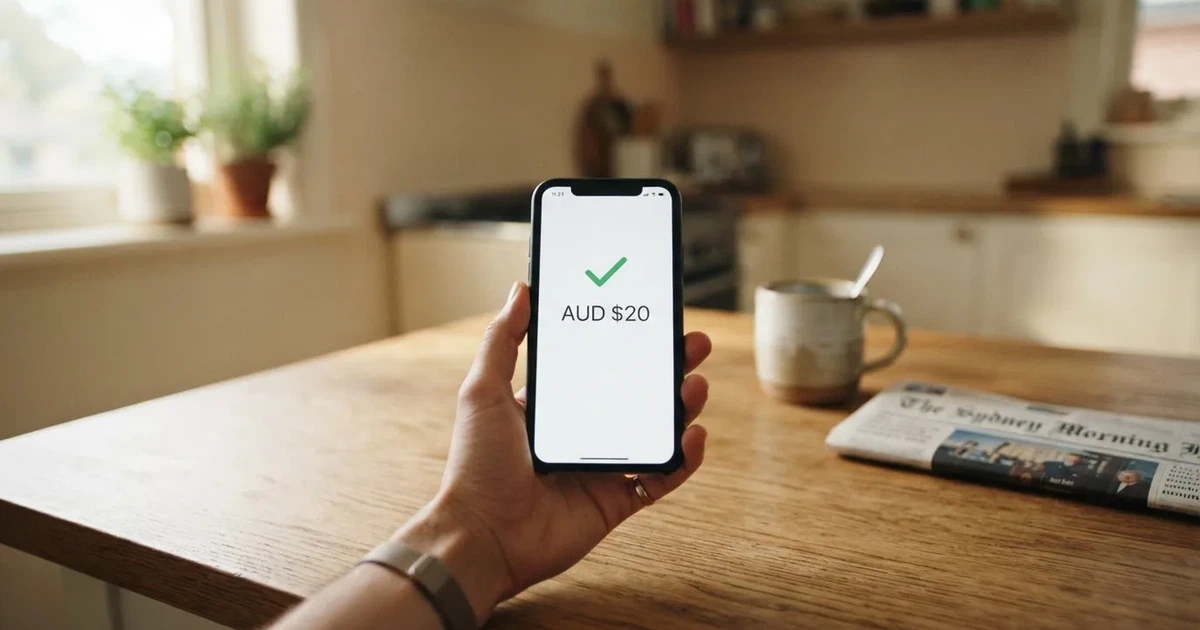
That sentence is the spine of the rest of this page. Everything that follows rests on it: the offshore market that takes a $20 deposit, the ACMA record of formal warnings over brands operating in it, the legal status of online pokies under the Interactive Gambling Act 2001, and the licensed land-based machines a $20 actually works on. A reader who walks away with one thing should walk away with the gap between those two markets and what it costs.
Data current as of 28 October 2026 against the ACMA register and the Australian Communications and Media Authority’s published formal warnings.
Table of Contents
- Responsible play: where to turn if the $20 stops being fun
- How money moves for $20 deposit pokies in Australia
- What a fair ranking of $20 minimum deposit pokies sites would weigh
- The legal frame: the Interactive Gambling Act and what it actually prohibits
- Landscaped Comparison
- Operator write-ups: what each warning tells the reader
- Licensed Minimum Return-to-Player (RTP) by Jurisdiction
- The licensed alternative: what a $20 actually buys in a venue
- Frequently asked questions
Responsible play: where to turn if the $20 stops being fun
A $20 deposit sits at the bottom of any poker machine session, online or in a club, and the lower the floor the easier it is to top up. The legal Australian product is in the venue. The offshore site is not. Either way, the moment the session stops being a session — chasing losses, depositing to recover a balance, playing at work, hiding the spend from someone close to you — the right response is to stop playing and ask for help. Free, confidential, 24/7 help in Australia.

Gambling Help Online runs the National Gambling Helpline on 1800 858 858, with web chat and email. The counsellors are trained for both venue-based and online play, including offshore sites, and they can talk through self-exclusion, banking blocks, and what to do about a balance sitting on a site that may be blocked next month. The same organisation runs BetStop, the National Self-Exclusion Register, which has been live since August 2023 and binds every Australian-licensed online and phone wagering service to honour a registered exclusion. BetStop does not bind offshore casino sites, because they are not licensed here; a self-exclusion request is honoured voluntarily by some operators and ignored by others.
If the session is already past the point of a phone call, the formal step is to register with BetStop on the gamblinghelponline.org.au site, set the exclusion period that fits, and tell the bank to block gambling transactions. Two further steps that help: a separate email address used only for gambling, deleted, and a payment route that does not allow gambling merchants by default. The mechanics of those steps are not the hard part; deciding to make the call is.
The legal minimum age for any form of Australian gambling is 18. Offshore sites ask for it, some of them, and verify it less reliably. The same $20 spent on a venue machine goes through a venue that checks the door. That difference is structural, and it is one of the reasons the regulator matters.
How money moves for $20 deposit pokies in Australia
The way a $20 reaches an online pokies site, and the way it comes back, defines what the reader is actually buying. A licensed Australian wagering service — a bookmaker taking a pre-event bet on a horse race or a sports match — runs on a closed set of payment routes: debit card, bank transfer, PayID/Osko, BPAY. Credit cards, credit-related products and digital currency have been banned as payment for licensed online wagering since 11 June 2024, with penalties of up to $247,500 for an operator that accepts them. A site asking an Australian customer for a credit card or a crypto deposit is, by that one signal, operating outside the Australian rules. That signal does not by itself prove the site is illegal, but it narrows the field.
Deposit timing for the routes a $20 would actually travel on, inside Australia:
- Debit card: the deposit is usually instant at the casino end; the bank posts it in seconds. A $20 is a normal transaction, well under any fraud threshold, and rarely triggers extra verification.
- PayID/Osko: the deposit is instant, 24/7, with the money in the casino account in under a minute. PayID has become the default for smaller deposits at licensed Australian wagering services because it ties the payment to a verified bank account or phone number.
- BPAY: the deposit is not instant. The customer creates a BPAY payment through their own bank, the casino receives it within one to two business days, and the funds are then credited. A $20 takes the same time as a $2,000 payment because BPAY is batched.
- Bank transfer (direct deposit): one to two business days for the funds to arrive, depending on the bank’s processing window and the time of day the transfer is initiated.
Withdrawal timing depends on the same rails in reverse, with a casino’s own pending period on top. A pending period is the gap between the customer requesting the withdrawal and the casino releasing the funds — typically 24 to 72 hours at a well-run site, occasionally longer. Once released:
- PayID/Osko: usually within minutes once the casino releases the funds.
- Debit card: same-day to two business days, depending on the bank’s settlement window. Visa Direct and Mastercard Send can be faster, but not every bank supports them.
- BPAY: not available for withdrawals at all in practice.
- Bank transfer: one to three business days, with some banks crediting same-day on local transfers.
A $20 deposit tests the rails in a specific way: it is well below any threshold that would justify a manual review, but it is also small enough that a casino with a minimum withdrawal above $20 (most of them) means the reader has to win before they can ask for any money back. The minimum-withdrawal floor is a quiet cost of the format, and it is part of why a $20 is not a fair test of an offshore site’s payout speed. The fair test is whether the site will let a customer withdraw their own $20 + any winnings without friction, and most of them will not let the reader try until they cross their own floor.
Settlement is one piece of the cost. The other piece is what the casino does with the funds between deposit and withdrawal: bonus terms, wagering requirements, max-cashout caps, game restrictions. Those terms are exactly where an offshore site’s “real money” promise gets tested, and exactly where the ACMA record starts to matter.
What a fair ranking of $20 minimum deposit pokies sites would weigh
A ranking of online pokies sites that accept a $20 deposit and let an Australian customer play real-money games is not built here, and the reason is structural rather than editorial. The Interactive Gambling Act 2001, strengthened by the Interactive Gambling Amendment Act 2017, makes it an offence to provide online casino games — online pokies among them — to a person physically in Australia. No state or territory issues a licence for them. The Northern Territory Racing and Wagering Commission, which regulates 52 of Australia’s online bookmakers including Sportsbet, Bet365 and Ladbrokes, does so for tax reasons on wagering services; the commission has no full-time staff and meets once a month in Darwin. Its remit is pre-event betting, not casino games.
What a fair ranking would weigh, in the abstract, if a reader wanted to compare the offshore sites accepting $20 from Australians anyway, breaks into four groups:
- Legal exposure. Whether the operator has been the subject of an ACMA formal warning, a blocking request, or an existing investigation. The register is public. A site on it is not safer than a site not on it; both are illegal to provide to Australians, but one has been named.
- Game fairness and RTP disclosure. Whether the site publishes return-to-player figures per title, whether the games come from a named provider with an independent testing certificate (eCOGRA, GLI, iTech Labs), and whether the random number generator is auditable. Offshore sites that publish per-title RTP and a current test certificate are doing the minimum; sites that do not are asking the reader to take the house edge on faith.
- Money in and money out. The payment routes accepted (debit card, PayID, crypto), the deposit and withdrawal minimums, the pending period, the max-cashout cap, and whether the bonus terms let the reader actually withdraw a $20 + winnings balance. A casino that requires 40x wagering on a deposit bonus before any withdrawal is a casino the reader pays to enter, not a casino the reader is paid by.
- Player protection and recourse. Whether the site is on BetStop, whether it offers a deposit limit, a session limit, a reality check, a self-exclusion, and what happens if the reader needs to complain. An offshore site’s complaint body is its own, with no Australian regulator behind it.
None of those four groups can rescue the legal problem. The first three are about which illegal site harms the reader least. The fourth is about whether the reader has any leverage at all. Both are real questions for a reader who is going to play anyway. Neither makes the play legal.
The legal frame: the Interactive Gambling Act and what it actually prohibits
The Interactive Gambling Act 2001, as amended in 2017, is the federal statute that governs online gambling in Australia. Its structure is simple and its scope is wide. It prohibits the provision of “interactive gambling services” to customers physically in Australia, with the prohibition covering online casino games, online pokies, online slots, online table games and in-play betting. What is permitted is wagering on races and sporting events placed before the event, lotteries and keno — what the statute calls “wagering services.” The Interactive Gambling Amendment (Gambling Reform) Bill 2026 passed Parliament on 19 August 2026; its advertising and inducement measures commence on 1 January 2027. As of 2026 the new measures are law with a start date, not yet in force.
The individual player is not prosecuted under the Act. The Act targets the provider. That is a useful thing to know if the reader has already deposited, because the practical consequence is that a refund request through an Australian consumer protection body is not the right route — the body has no jurisdiction, and the transaction was illegal at the provider end, not the customer end. The right route, if a withdrawal is refused, is the payment route itself: a chargeback through the bank if the deposit was on a debit card, or a complaint through the card scheme. PayID and BPAY have weaker chargeback mechanics, which is one reason a PayID deposit at an offshore site is a worse-protected $20 than a debit card deposit at the same site.
Minimum age is 18 across every form of Australian gambling. The licensed venue checks it at the door. The offshore casino checks it on a form. The two are not equivalent.
The enforcement arm is the ACMA, the Australian Communications and Media Authority. The ACMA investigates complaints, issues formal warnings, and directs Australian internet service providers to block illegal sites under section 313 of the Telecommunications Act 1997. As of the round reported on 26 June 2026, the ACMA had asked ISPs to block 1,751 illegal gambling and affiliate marketing websites since the first blocking request in November 2019, and more than 230 unlicensed gambling services had left the Australian market since enforcement was strengthened in 2017. The June 2026 round alone added 12 more sites to the blocking list: 7Signs, ChromaBet, Donbet, Duospin, Freshbet, Slots Gem, Jacks Club, Lucky Start, Pointsbetz, Spinrise, Vinyl Casino and Wildsino.
The scale of the offshore market is not small. H2 Gambling Capital’s 2025 report estimated Australians lose about A$3.9 billion a year to illegal gambling sites, and that the share of gambling going through legal channels fell from 74% in 2021 to 64%. Those two figures together — $3.9 billion offshore, a falling share of legal play — describe a market that has grown faster than enforcement has shrunk it.
The legal frame, for the reader’s purpose, is four lines:
- Online pokies for Australians are prohibited at the provider end, not the player end.
- The provider can be blocked, warned, fined, and the site removed from Australian internet.
- The player cannot be prosecuted, but has no Australian consumer protection if a withdrawal is refused.
- The licensed product is a poker machine in a club, pub or casino, regulated by the relevant state or territory.
Landscaped Comparison
| Brand | ACMA action and date | Operator named by the ACMA | Subject support |
|---|---|---|---|
| RocketPlay | Formal warning, March 2026 | Pulsup Ltd | — |
| Level Up Casino | Formal warning, May 2022 | Dama N.V. | — |
| Woo Casino | Formal warning, March 2025 | Dama N.V. | — |
| Spirit Casino | Formal warning, May 2025 | Dama N.V. | — |
| National Casino | Formal warning, July 2025 | Consolutetish S.R.L. | — |
| Bizzo Casino | Formal warning, July 2025 | Consolutetish S.R.L. | — |
| Ignition Casino | Formal warning, July 2025 | Bamboo Media | — |
| Instant Casino | Formal warning, February 2025 | EOD Code SRL | — |
| Jackbit | Formal warning, April 2026 | Ryker B.V. | — |
| Casino Intense | Formal warning, April 2025 | Sterplay Holding Ltd | — |
| Sky Crown | Formal warning, September 2022 | Hollycorn N.V. | — |
Two structural notes sit beside the table. The first is that several brands share an operator: Dama N.V. appears four times in the record (RocketPlay, Level Up Casino, Woo Casino, Spirit Casino), Consolutetish S.R.L. twice (National Casino, Bizzo Casino), and Hollycorn N.V. twice (Sky Crown, Blue Leo). A warning over one brand at one operator is, in practice, a warning over the whole Dama N.V. network — the ACMA does not need to repeat itself for each brand. The second is that the operator names on the warnings are Curaçao, Cyprus and other offshore-registered companies; the brand the reader sees and the legal entity behind it are usually not the same name.
Operator write-ups: what each warning tells the reader
A warning over a brand is the strongest publicly available signal that the brand is providing prohibited services to Australians. The warnings below rest on the ACMA’s own publications; the verdict sits on what each warning actually changes for a reader who is comparing the offshore market.
RocketPlay
The ACMA issued a formal warning over RocketPlay in March 2026, naming the operator as Pulsup Ltd. RocketPlay had already been the subject of an earlier warning, in May 2022, when the operator was Dama N.V. Two warnings over the same brand, four years apart, with a change of operator in between, is the ACMA telling the offshore market that reincorporating under a new parent does not reset the record. For a reader comparing the brand, the warning is the only consistent public fact: the brand has been on the wrong side of the law twice and changed operator between the two. A second warning is what a regulator issues when it has run out of patience with the first.
Level Up Casino
The Dama N.V. warning of May 2022 covered six casino brands in one notice: Bambet, Dazard, Level Up, Rocketplay, Wild Tornado and Cobra Casinos. Level Up is one of six siblings. For a reader comparing Dama N.V. brands, the warning over one brand is a warning over all six, because the ACMA does not treat sister brands as separate cases; the same operator, the same conduct, the same notice. A site on the list is part of a network, and the network is what was warned.
Woo Casino
Woo Casino received a fresh Dama N.V. warning in March 2025 — three years after the 2022 notice that included RocketPlay under the same operator. Two warnings over the same operator, with Woo added to the second, is the ACMA’s record of an operator that has not changed its conduct. For a reader, the Woo warning is functionally the same warning as the Level Up warning, because both are Dama N.V.
Spirit Casino
Spirit Casino joined the Dama N.V. warning list in May 2025. It was not on the 2022 notice. The 2025 addition is what an operator looks like when the regulator has identified a new brand under the same operator and named it. For a reader, the Spirit Casino warning is not a different case from Woo Casino’s — both are Dama N.V. — and the same reasoning applies.
National Casino
National Casino received a Consolutetish S.R.L. warning in July 2025. The operator is a different one from the Dama N.V. cluster, which is useful: it tells the reader that the ACMA’s enforcement is not concentrated on a single operator but spread across the offshore market. The July 2025 notice also named Bizzo Casino, which puts National Casino and Bizzo in the same operator case.
Bizzo Casino
Bizzo Casino was named in the same July 2025 Consolutetish S.R.L. notice as National Casino. Bizzo had already been the subject of a 2022 formal warning, that time to TechSolutions (CY) Group Limited and TechSolutions Group N.V. Two warnings, two different operators, eight years of the same conduct. For a reader, Bizzo is the brand with the longest continuous record on the ACMA’s list.
Ignition Casino
Ignition Casino was warned in July 2025 under Bamboo Media. The operator is unrelated to Dama N.V. or Consolutetish S.R.L., which makes Ignition a fresh data point in the ACMA’s enforcement pattern: it is not just two operators being warned repeatedly, it is a wider set.
Instant Casino
Instant Casino received an EOD Code SRL warning in February 2025 — the earliest of the warnings on this list, by date. For a reader, Instant is the brand that has been on the ACMA’s published warning list for the longest of the eleven without a follow-up enforcement event.
Jackbit
Jackbit was warned in April 2026 under Ryker B.V., alongside CasinOK. The April 2026 warning is the most recent on the list. A warning over Jackbit is a warning over a brand whose conduct the ACMA has now named for the first time.
Casino Intense
Casino Intense was warned in April 2025 under Sterplay Holding Ltd. The April 2025 date sits in the middle of the warning sequence on this list.
Sky Crown
Hollycorn N.V. was warned over Sky Crown and Blue Leo in September 2022. Sky Crown is the oldest warning on the list. For a reader, Sky Crown is the case where the brand has been on the ACMA’s published list for the longest without a follow-up enforcement event.
Licensed Minimum Return-to-Player (RTP) by Jurisdiction
| Jurisdiction | Minimum RTP |
|---|---|
| New South Wales | 85% |
| Northern Territory | 85% |
| Queensland | 85% |
| Victoria | 85% (87% Crown Melbourne) |
| ACT | 87% |
| Tasmania | 87% |
| South Australia | 87.5% |
| Western Australia | 90% |
The numbers below illustrate the scale of the ACMA’s enforcement efforts. The ACMA’s first blocking request went out in November 2019. The cumulative total reported on 26 June 2026 was 1,751 illegal gambling and affiliate marketing websites blocked. A blocking rate is the average number of sites blocked per year over that period, with a band for the uncertainty in the early years and a separate figure for the most recent full year.
- Period: November 2019 to 26 June 2026 — roughly 6.6 years.
- Cumulative: 1,751 sites blocked.
- Average across the period: roughly 265 sites per year, or about 22 per month, assuming the rate held roughly constant.
- The June 2026 round alone added 12 sites in one directive — a snapshot of the pace at which the ACMA is processing the queue.
The band that fits the data runs from roughly 22 to 30 sites per month, depending on how the early years (when enforcement was new) compared to the later years (when it had settled into a routine). The lower end of the band assumes the first year or two saw few blockings while the ACMA built its case; the upper end assumes a steady monthly pace across the full period. Both readings are plausible; neither is the ACMA’s published figure, because the ACMA does not publish a monthly rate.
The rate matters for the reader because it sets the timeline for what an offshore $20 deposit site looks like over its life. A site accepted today has a reasonable chance of being on a blocking list in two to three years, with the bonus balance, withdrawal queue and any active session cut off when Australian ISPs apply the block. A $20 deposited today may not be retrievable by the time the site is blocked; the offshore operator has the funds and the regulator cannot force a refund.
The more than 230 unlicensed gambling services that have left the Australian market since 2017 are a separate, overlapping number: those are operators that pulled out without being blocked, either voluntarily or after a warning. The two numbers together — 1,751 blocked, 230 left — describe the offshore market shrinking faster than the cumulative total suggests, because the same brand can be blocked, reappear under a new name, and be blocked again.
The licensed alternative: what a $20 actually buys in a venue
A $20 in a licensed Australian venue buys a session on a poker machine under a state or territory regime with a published return-to-player floor. The legal minimum return varies by jurisdiction: 85% in New South Wales, the Northern Territory, Queensland and (generally) Victoria, with Crown Melbourne at 87%; 87% in the Australian Capital Territory and Tasmania; 87.5% in South Australia; and 90% in Western Australia. Western Australia banned poker machines in pubs and clubs when Crown Perth opened in 1985; Crown Perth’s own machine count has grown from about 200 in 1985 to roughly 2,500, all approved by the state’s Gaming and Wagering Commission. The 90% return is the highest in the country and the reason a Western Australian session on a $20 is, in expectation, the closest thing to a fair game Australia offers.
In 2020–21 Australians bet almost A$150 billion through gaming machines and lost A$12.18 billion on them; Australia has about 3% of the world’s pub and club poker machines with 0.3% of the global population. New South Wales alone had 87,298 gaming machines outside casinos across 2,195 venues as of June 2023, with player losses of A$8.18 billion in 2022–23. Queensland had 21,122 gaming machines operating in 351 venues in October 2023; Victoria had 26,380 outside Crown Casino in 488 venues under a 30,000 statewide limit in 2021–22. The licensed market is large because the venues are large.
The licensed product has a different shape from the offshore product in three ways that matter to a $20 session. First, the return-to-player is published and audited. Second, the venue is regulated by a state or territory body with complaint mechanisms, payout obligations, and machine-level monitoring. Third, the player has recourse: a malfunctioning machine, a refused payout, a dispute over a jackpot can be taken to the regulator. The offshore site has none of those three. A $20 in a venue is a $20 with a published return; a $20 at an offshore site is a $20 with no published return and no recourse if it disappears.
The cost of the licensed product is the time and travel to a venue, the social environment, and the machine’s house edge. The cost of the offshore product is the legal exposure at the provider end, the lack of recourse at the player end, and the bonus terms that determine whether the $20 + any winnings is actually withdrawable.
Frequently asked questions
Is $20 deposit online pokies play legal for Australians?
No. Under the Interactive Gambling Act 2001, as amended in 2017, it is an offence to provide online casino games, including online pokies, to a person in Australia. No state or territory issues a licence for them. The Northern Territory Racing and Wagering Commission regulates wagering services (pre-event betting on races and sport), not casino games. The legal Australian product is a poker machine in a licensed venue.
What happens to a $20 deposit sent to an offshore online pokies site?
The offshore site holds the funds under its own terms, which usually include a pending period on withdrawals, a minimum-withdrawal floor above $20, and bonus terms that may require wagering before any withdrawal. If the site is on a future ACMA blocking list, Australian ISPs will block it and the reader will lose access to the account while the balance sits with the offshore operator. The reader has no Australian consumer protection recourse.
How is a $20 online pokies deposit different from feeding $20 into a pub poker machine?
The pub machine is licensed, with a published return-to-player (85% to 90% depending on the state), a regulator, and a venue that pays out winnings on the spot. The offshore site is unlicensed in Australia, with no published RTP for individual titles, no Australian regulator, and no guarantee that winnings will be paid. The two are not the same product under a different label; they are different products with different consumer outcomes. See also What a $5 minimum-deposit online casino actually costs an Australian… .
Why do $20 deposit pokies ads keep appearing if online pokies are banned here?
Because the operators are offshore, beyond the reach of the Interactive Gambling Act’s provider-targeted enforcement, and because affiliate marketing sites are paid per Australian sign-up regardless of whether the sign-up is legal. The ACMA blocks sites when it processes them through the queue; the queue is long. Advertising is the channel that fills the gap between enforcement rounds.
Is there any deposit size at which online pokies become legal for Australians?
No. The Interactive Gambling Act’s prohibition is on the provision of online casino games, not on the size of the deposit. A $5, $20, $200 or $2,000 deposit at an offshore site is the same legal status: prohibited at the provider end, with no Australian licence behind it.