
What an “instant” PayID withdrawal really costs in 2026
Anyone searching for an instant PayID withdrawal of real money from an online casino in Australia is after a single reassurance: that when the session ends, the cleared winnings land in a real bank account, in dollars the player can actually spend. PayID, the address-by-mobile-or-email overlay on the New Payments Platform, makes that technically trivial. More than a hundred Australian financial institutions route a PayID-to-PayID transfer through Osko, and Osko settles in under a minute, twenty-four hours a day, weekends included. The cost of an “instant” payout is not a bank fee. It is that the only brands a real-money player can actually withdraw from in this country are the ones the Australian Communications and Media Authority has already warned, because no Australian licence covers online casino games in the first place. The PayID transfer can be instant. The protection around the casino on the other side of it cannot be.
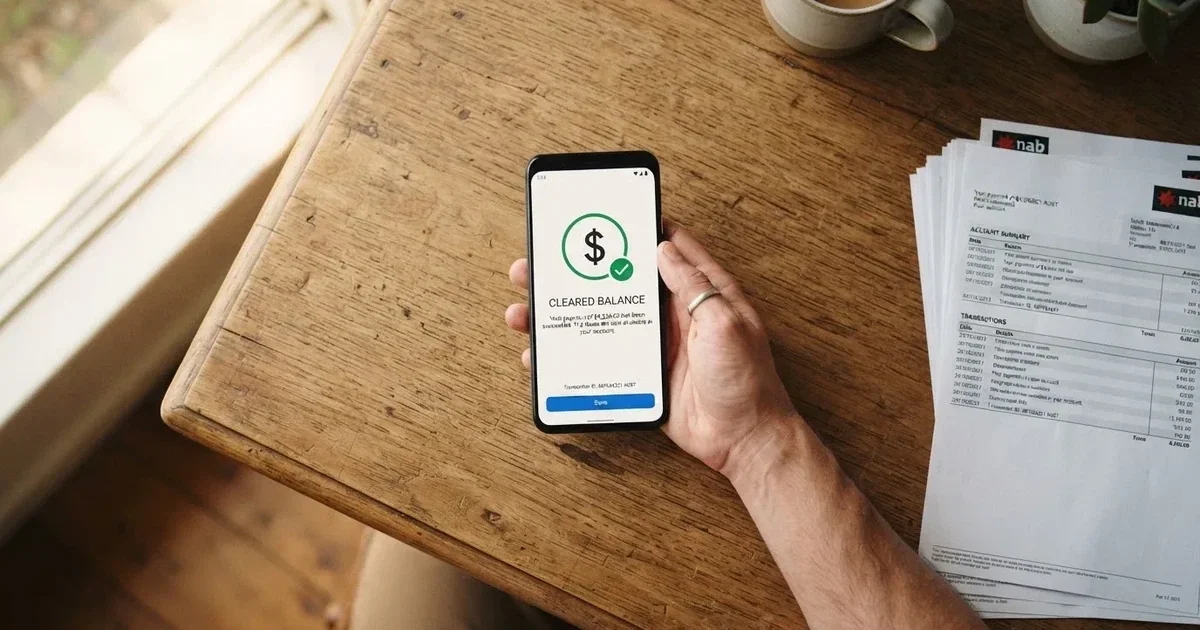
Data current as of 28 October 2026, verified against the Australian Communications and Media Authority’s register of formal warnings and the Reserve Bank of Australia’s published payments-system material.
Table of Contents
- The cost that arrives before the payout: why a withdrawal is the wrong place to start
- Settlement mechanics: how PayID actually moves money in 2026
- The brands the ACMA has named, and what “PayID support” actually means on each one
- Fundamentals of a real-money PayID withdrawal: what “instant” actually includes
- Prohibition, the blocks, and the rate the wall goes up
- Where this leaves a reader weighing an “instant” PayID withdrawal
- Frequently asked questions
The cost that arrives before the payout: why a withdrawal is the wrong place to start
Chasing a real-money withdrawal after a bonus round is the most common pattern in harmful online play in this country, and the cost of an “instant” payout is that it lets the pattern run further than the player meant.
The withdrawal itself is a small event. Press a button. Confirm the amount. Watch a balance appear. What surrounds it is not small. A no-deposit bonus that converts to withdrawable cash, gets lost, gets chased back, gets lost again: that sequence does not look like harm while it is running. It looks like the natural next step. The session that ends in a real-money withdrawal often began with a free spin, and the difference between a quiet Tuesday-night play and a Thursday-morning overdraft is rarely a single spin. It is the unacknowledged slippage of one decision into the next.
A useful reframing: the withdrawal is not the start of the question. It is the end of an assumption that real money was on the line from the first spin. At the offshore casinos the rest of this guide lists, that assumption is partly true. The bonus credits do convert, after the wagering requirements are met, into a real-money balance. They do not convert into a regulated balance. The conversion runs through the casino’s own ledger, on the casino’s own compliance queue, with no Australian complaints body standing behind the result. When the conversion works, the PayID withdrawal lands in a minute. When it does not, the player has no local regulator to ring.
BetStop, the National Self-Exclusion Register, is the piece of infrastructure an Australian player can actually use. It went live in August 2023 and binds every Australian-licensed online and phone wagering service to honour an exclusion request. That is the protection it offers, and it is real. It does not extend to offshore casinos, and offshore casinos are the only place PayID is being marketed as a real-money withdrawal method today. Self-excluding through BetStop still helps. It cuts off the licensed Australian bookmakers and the licensed online wagering services a player might also be using — Sportsbet, Bet365, Ladbrokes, all the names that hold Northern Territory licences — which removes one channel a harmful pattern runs through.
The National Gambling Helpline, 1800 858 858, is free and runs twenty-four hours a day. It reaches counsellors familiar with Australian gambling products specifically. Gambling Help Online offers web chat for anyone who would rather type than speak. Both services are independent of any operator and confidential. Neither asks whether the offshore casino paid out.
Two practical disciplines reduce the cost the search itself already implies. Set a session budget before the first deposit, and stop when the budget is gone — winnings included. Withdraw winnings the same day they clear, rather than letting them recycle into another stake. The first rule caps the loss. The second removes the temptation to chase, which is where the harm usually lives. Neither rule needs an app. Neither rule is the casino’s job to enforce.
Settlement mechanics: how PayID actually moves money in 2026
PayID is a label. The plumbing underneath is the New Payments Platform, and the service most consumers meet through is Osko. Together they explain why “instant” is a fair description of the bank side of a withdrawal, and why that fact says nothing about whether the casino on the other end is legitimate.
A PayID is one of four identifiers — a mobile number, an email address, an ABN or an Organisation Identifier — linked to a bank account at an Australian financial institution. The link is held by Australian Payments Plus, the industry’s domestic payments body. When someone pays to a PayID, the sender’s bank resolves the identifier to a real BSB and account number and presents the name registered to it before the customer confirms the transfer. That name check is the anti-scam feature. A punter who sees the displayed name is not the account they thought they were paying does not press send.
More than a hundred Australian banks and credit unions offer PayID, and the identifier is built into their existing online banking. By April 2025, more than twenty-five million PayIDs were registered across the country. Adding one to a personal account takes a few taps in a banking app. The customer chooses what identifier to expose and which account it points to. None of that is unusual any more. PayID has become the default way Australians address one another for ordinary transfers between individuals, and Osko — the product layered on the same NPP rails — guarantees those transfers settle in under a minute, twenty-four hours a day including weekends.
The Reserve Bank of Australia regulates the New Payments Platform and runs the Fast Settlement Service that settles each transaction individually in close to real time. The system is built for speed. What it is not built for is verification of the receiving party. A PayID transfer to a casino’s merchant account clears at the speed Osko promises, but the casino’s decision to release a withdrawal is a separate operation that runs on the casino’s own queue.
That is where “instant” turns into something the marketing copy tends to skip. A first withdrawal at almost any online casino, licensed or not, requires an identity check. The casino asks for documents — a driver’s licence or passport, proof of address, sometimes a photograph of the card used to deposit — and runs them against sanctions lists and anti-money-laundering rules. Until that once-only check clears, no withdrawal, however funded, leaves the casino. Real money on the casino side sits in pending status. The PayID side, meanwhile, can settle the moment the casino releases the funds. The bank’s “instant” delivery is not the bottleneck; the casino’s compliance queue is.
A second pattern is worth naming, because it is the one a player is more likely to meet. Returning players, whose identity check is already on file, see PayID withdrawals settle in minutes once the casino’s finance team approves them — a few hours overnight is typical, sub-hour in the best cases. That experience is real. It is also what the offshore sites that have been warned by the ACMA use as their pitch. The instant PayID withdrawal at Instant Casino, at Jackbit, at the rest of the brands later in this guide, runs on the same NPP rails. What those brands do not run on is an Australian licence, because online casino games cannot be licensed here at all.
The protection the system itself offers is the name-check the payer sees before sending. Australian Payments Plus has published a direct warning: anyone asked to transfer funds to a PayID on an illegal gambling site is “almost certainly” being scammed. AP+ defines the slang — a “scambling” site is an illegal online gambling platform advertised on social media and messaging apps that tricks people into gambling on a scam website. PayID itself will never contact a customer. Any email or text claiming to be from PayID is a scam. PayID will never ask for money in order to release a payout, and it will never ask anyone to “upgrade” an account. The legitimate use of PayID is between known parties — splitting a bill, paying a tradesperson, moving money between the customer’s own accounts. A withdrawal from an offshore casino sits outside that picture, and the regulator that runs PayID has said so in writing.
A quick note on what the banks themselves do. Westpac’s gambling block refuses authorisation of transactions registered under the merchant category code “Betting/Casino Gambling” on eligible personal credit and debit cards. ANZ’s gambling block, activated in the ANZ app, blocks gambling transactions made through a digital wallet such as Apple Pay on an eligible card, not just the physical card. Removing the ANZ block requires a forty-eight-hour waiting period once it is on, and ANZ warns that not every gambling transaction will be blocked and some non-gambling transactions might be blocked in error. Apple itself does not surcharge Apple Pay; any surcharge comes from the merchant’s card-processing fees, not from Apple. The transaction limits and PIN requirements for Apple Pay are set by the card issuer, not by Apple. None of these card-side blocks apply to a PayID transfer from a customer’s bank account to a casino’s account. PayID sits outside the card rails those blocks were built on. A player who has turned on a gambling block at their bank has stopped one route. They have not stopped the PayID route.
What all of this leaves, on the reader’s side of the transaction, is the practical question the search is really asking. The PayID rail can deliver the cash in under a minute once the casino releases it. The casino’s release is the bottleneck for first withdrawals, the gate for every future withdrawal, and the single point at which the absence of an Australian licence matters most — because if the casino refuses, delays or simply disappears, there is no Australian complaints body, no local regulator and no bank chargeback to reverse a PayID transfer to a merchant account.
The brands the ACMA has named, and what “PayID support” actually means on each one
Every brand in the table below has been the subject of a formal warning issued by the Australian Communications and Media Authority under the Interactive Gambling Act 2001. The reason that matters is the same in every row: online casino games cannot be licensed in Australia. No state or territory issues that licence. Whatever licence any of these brands display on their own footer — Curaçao, Anjouan, Kahnawake — is irrelevant to whether they may lawfully take a real-money bet from a person in Australia. They may not. The brand list below is not a ranking and not a recommendation. It is a record of which brands the regulator has named, when it named them, and what those brands’ own published support pages say about PayID where they say anything at all.
| Brand | ACMA action and date | Operator named by the ACMA | PayID subject support | Source for the support claim |
|---|---|---|---|---|
| RocketPlay | Formal warning — March 2026 | Pulsup Ltd | Not stated in source | — |
| Level Up Casino | Formal warning — May 2022 | Dama N.V. | Listings only | Westpac |
| Woo Casino | Formal warning — March 2025 | Dama N.V. | Not stated in source | — |
| Spirit Casino | Formal warning — May 2025 | Dama N.V. | Not stated in source | — |
| National Casino | Formal warning — July 2025 | Consolutetish S.R.L. | Listings only | AUSTRAC, Wikipedia |
| Bizzo Casino | Formal warning — July 2025 (also 2022, TechSolutions) | Consolutetish S.R.L. | Not stated in source | — |
| Ignition Casino | Formal warning — July 2025 | Bamboo Media | Not stated in source | — |
| Instant Casino | Formal warning — February 2025 | EOD Code SRL | Listings only | ecoPayz, PayID |
| Jackbit | Formal warning — April 2026 | Ryker B.V. | Not stated in source | — |
| Casino Intense | Formal warning — April 2025 | Sterplay Holding Ltd | Listings only | AUSTRAC, iTnews, NAB |
| Sky Crown | Formal warning — September 2022 | Hollycorn N.V. | Not stated in source | — |
A reading note. Where the table shows “Not stated in source”, the brands the ACMA has warned over do not, on the public-facing pages the regulator’s own evidence used, mention PayID at all. The brand may still settle withdrawals via PayID on the NPP rail — the rail is universal — but that is the bank’s rail, not the casino’s offering. A reader choosing between these brands on PayID speed is choosing between brands that, on the regulator’s record, have not built PayID into their stated payment offering. Where the table shows “Listings only”, the brand’s PayID handling is recorded in payment-method directories rather than on the operator’s own page. The brand may or may not process PayID directly; the directory says it appears in the brand’s accepted-methods pages somewhere. That is a thinner claim than “the brand processes PayID for Australian customers”, and the table records the thinness rather than upgrading it. None of the table’s subject-support entries is an endorsement, and none should be read as one.
RocketPlay
Two ACMA warnings sit on this brand’s record, and that is the unusual feature. The first, in May 2022, named Dama N.V. as the operator across six brands — Bambet, Dazard, Level Up, Rocketplay, Wild Tornado and Cobra Casinos. The second, in March 2026, named Pulsup Ltd as the operator of Rocketplay.com.au specifically. The brand has moved between operators and back into the regulator’s sights. The cost of that to a player is operational: an account opened under one operator can find itself serviced by another, with different banking arrangements, different bonus terms and a different compliance queue. The “instant” PayID withdrawal a returning player remembers may have been issued by a company the regulator has now displaced.
Level Up Casino
Level Up was one of the original six Dama N.V. brands warned in May 2022. The 2022 action named it alongside Bambet, Dazard, Rocketplay, Wild Tornado and Cobra Casinos, all under the same parent. Dama N.V. has since appeared in two further ACMA actions in 2025, over Woo Casino and Spirit Casino, but Level Up itself has not been the subject of a fresh individual action. The cost of being in the original cohort is not the same as the cost of a recent action: the regulator’s history on Level Up is long, but its most recent attention has gone to Dama N.V.’s newer brands.
Woo Casino
Dama N.V. was warned over Woo Casino in March 2025, the first of two Dama N.V. actions that year. The brand had not previously appeared on the ACMA’s published warning list. The cost of the warning is the operating-company exposure it shares with every other Dama N.V. brand in the table: a single warning to a parent operator names every casino running under it. For a player, the relevant question is not which brand the regulator acted against, but which operator runs the brand they are depositing at.
Spirit Casino
Spirit Casino was the subject of the second Dama N.V. warning in 2025, issued in May, two months after the Woo Casino warning. The same pattern applies: an operator-level warning covers every brand running underneath it. The cost to a player who chose Spirit over Woo for any reason — a different bonus, a different theme, a different loyalty scheme — is the realisation that the regulator’s action does not differentiate between them.
National Casino
National Casino was warned in July 2025, with Consolutetish S.R.L. named as the operator. The same warning covered Bizzo Casino, which sits in this list separately because of its earlier 2022 history. What makes National Casino worth naming on its own is the AUSTRAC listing alongside it: AUSTRAC is the financial-crime regulator, and a brand that appears in AUSTRAC’s public material is one the financial-crime regulator knows. The cost is the shape of the contact: not just the gambling regulator, but the financial-intelligence one as well.
Bizzo Casino
Bizzo Casino carries the longest regulatory history in this list. The 2022 formal warning named TechSolutions (CY) Group Limited and TechSolutions Group N.V. as the operators. The July 2025 warning named Consolutetish S.R.L. Two operators, two warnings, three years apart. The cost of that history is the absence of a clean operator record any returning player can point to. The brand has not been continuously operated by the same company over the period the ACMA has been watching, and the company named on the latest warning is not the one named on the original.
Ignition Casino
Ignition Casino was warned in July 2025, with Bamboo Media named as the operator. Bamboo Media is the only operator in this list that has not appeared on any other ACMA warning. The cost is straightforward: the brand has its own dedicated regulatory contact, separate from the larger Dama N.V. or Consolutetish S.R.L. portfolios, and a player has no operator-level diversification to fall back on if the brand’s Australian traffic is shut down.
Instant Casino
Instant Casino is the brand where the search term maps most directly onto the source data. The ecoPayz and PayID listings are the only subject-support signal recorded on any brand in this table, and the ACMA’s formal warning was issued to EOD Code SRL in February 2025. The brand’s own page is the strongest available evidence for an Australian player considering an instant PayID withdrawal here — and the regulatory record is the strongest available evidence against. The cost is the gap between those two: a brand that handles PayID on paper, and a regulator that has named it for offering prohibited services.
Jackbit
Jackbit is one of two brands whose ACMA action was issued in 2026, alongside RocketPlay. The operator named is Ryker B.V., which has not previously appeared on the ACMA’s published warning list. The cost is the freshness: a brand whose operator has only just been named, with no operator-level history a player can check against. The April 2026 warning is the entirety of the public record on the parent.
Casino Intense
Casino Intense was warned in April 2025, with Sterplay Holding Ltd named as the operator. The brand appears across AUSTRAC, iTnews and NAB listings — a broader regulatory and trade-press footprint than most of the brands in this list. The cost is the surface area: a brand that has been written about in the banking, financial-crime and technology press as well as the gambling regulator’s register is one a player cannot research by reading a single page.
Sky Crown
Sky Crown was the subject of the September 2022 formal warning to Hollycorn N.V., the same operator the ACMA named over Blue Leo in the same action. Sky Crown is the oldest individual warning in this list, and the cost of that age is the most stable paper trail: the operator has been on the regulator’s record for more than three years, and the Hollycorn portfolio includes other brands the ACMA has named as well. A player researching Sky Crown can read the whole regulatory history without having to dig for it.
Fundamentals of a real-money PayID withdrawal: what “instant” actually includes
A real-money PayID withdrawal is not a single event. It is a pipeline, and each step has its own clock.

The pipeline starts when the player hits the withdrawal button. The casino’s cashier logs the request, runs it through the player’s account history, and either approves it, queues it for review, or rejects it. Approval at this stage checks for bonus-abuse rules: whether the wagering requirements attached to any active bonus have been met, whether the withdrawal amount exceeds any maximum-cashout cap tied to a free-spin offer, whether the requested amount is below the casino’s published minimum. Once approved, the casino prepares the payout. The PayID itself is a destination identifier — a mobile number, an email address, an ABN or an Organisation Identifier — and the casino enters that identifier into its banking interface alongside the amount. From that point on, the bank handles the speed. Osko settles the transfer in under a minute. The casino’s processing time is the variable the marketing copy tends to skip; the bank’s settlement time is the one it tends to claim.
Real money, in this context, means cash the player has deposited and wagered — or cash that has converted from bonus credits after the wagering requirements attached to those credits have been met. It is distinct from “bonus balance” or “pending balance” in the casino’s own ledger. The distinction matters at the cashier, because most casinos will not let a player withdraw a bonus balance directly: the wagering requirement has to be cleared first, the bonus converted to real money, and only then can the resulting balance be cashed out. A “no-deposit bonus” follows the same rule. The bonus credits arrive without a deposit, but they carry a wagering requirement the player must clear before any withdrawal — and the size of that requirement is the single biggest determinant of how long the bonus stays in the account before the player can hit PayID at all.
The identity check that gates a first withdrawal is the second clock the pipeline runs on. A casino operating under any reasonable anti-money-laundering framework asks for documents on the first withdrawal and reviews them before approving it. A driver’s licence or passport, a recent utility bill or bank statement as proof of address, and sometimes a photograph of the front of the card used to deposit, are standard. The review itself can take twenty-four to seventy-two hours on a first withdrawal, longer if the documents are unclear or the player’s name does not match the payment account. Subsequent withdrawals, with the identity check on file, do not re-run this step.
A third clock sits at the payment-method level. PayID is the fastest Australian bank transfer rail, and that is the only speed claim that is genuinely “instant” in this pipeline. Osko, layered on the New Payments Platform, settles between participating banks in under a minute. Where PayID gives way to a standard BSB-and-account-number transfer, the speed drops to overnight, batch-processed. A player who has set up PayID correctly on their bank account can expect the bank’s end of the transfer to settle in under a minute once the casino releases the funds. A player who has not set up PayID at all, and who is being paid to a regular bank account number, will see the transfer clear the next business day.
The minimum balance question is the one most often skipped in the marketing. Every casino sets its own minimum withdrawal amount, and the figure is usually higher than the casino’s minimum deposit. A$20 to A$50 is the common band, with some brands setting higher minimums on specific methods. A player who has cleared a bonus requirement down to a small remaining balance will sometimes find the balance below the minimum and be unable to withdraw it at all. The bonus credits in such a case have not been “earned” — they have simply been played through and lost to the house edge, with no cash-out path available. The practical rule is to read the minimum-withdrawal figure before starting to play a no-deposit bonus, because the figure is the difference between a real-money payout and a few dollars trapped in the casino’s account.
The maximum withdrawal is the same shape of question, viewed from the other side. Casinos that issue no-deposit bonuses often cap the maximum cash-out from bonus-derived winnings — A$100 is a common cap, with some brands setting the limit higher and some lower. Anything won above the cap is forfeit on withdrawal. A player who has converted a no-deposit bonus to a real-money balance above the cap will be paid the cap and lose the rest at the cashier. This is the second-largest cost a no-deposit bonus can carry, after the wagering requirement itself.
Prohibition, the blocks, and the rate the wall goes up
Online casino is prohibited in Australia. The Interactive Gambling Act 2001, strengthened by the Interactive Gambling Amendment Act 2017, makes it an offence to provide online casino games, online pokies or in-play betting to a person physically in Australia. No state or territory issues a licence for those products. The Northern Territory Racing and Wagering Commission regulates fifty-two online bookmakers — Sportsbet, Bet365, Ladbrokes among them — licensed for tax reasons in the Territory for wagering on races and sport placed before the event. The commission has no full-time staff and meets once a month in Darwin. Lotteries and keno are licensable separately. Casino games, online or otherwise outside a physical casino, are not.
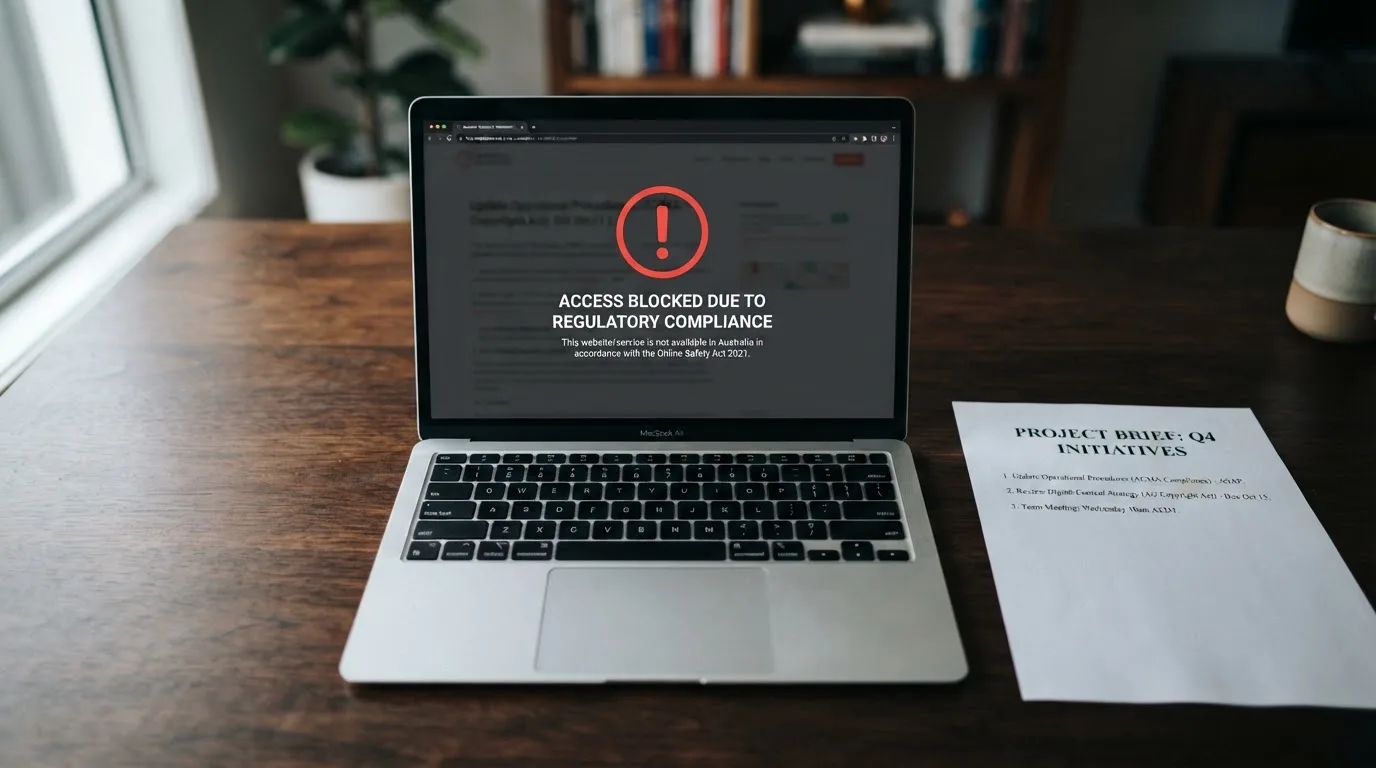
The enforcement side sits with the ACMA. The regulator investigates complaints, issues formal warnings to operators it identifies as offering prohibited services to Australians, and can direct Australian internet service providers to block illegal sites at the network level. The IGA targets the provider, not the individual player. No Australian has been prosecuted for placing an online casino bet. What an Australian player does not get from an offshore casino is the protection Australian consumer law would otherwise provide: no local complaints body, no local regulator to escalate to, and no recourse if the operator refuses a withdrawal or simply stops answering email. The site can be blocked with a real-money balance still on it. That has happened to players in Australia, and the regulatory record of the brands later in this list is the reason it continues to.
As of the ACMA’s June 2026 update, a total of 1,751 illegal gambling and affiliate marketing websites had been blocked since the first blocking request in November 2019. More than 230 unlicensed gambling services had left the Australian market since enforcement was strengthened in 2017. H2 Gambling Capital’s 2025 report estimates that Australians lose about A$3.9 billion a year to illegal gambling sites, and that the share of gambling going through legal channels fell from 74% in 2021 to 64%. The arithmetic on the blocks is worth doing in the open.
Between November 2019 and June 2026 is roughly six years and seven months — seventy-nine months in total. Divide 1,751 blocked sites by seventy-nine months and the rate works out at about twenty-two sites per month, or just over 265 per year. The figure is a band, not a precise count, because the ACMA’s monthly actions vary in size and the first blocking request is a starting point rather than a zero. A reasonable reading: somewhere between twenty and twenty-five illegal gambling or affiliate sites are added to the block list every month, with the rate neither rising nor falling sharply across the period the ACMA has reported on. That is a slow, steady wall going up around the offshore casino industry in Australia, and the brands the ACMA names by way of formal warning are the ones that have been noticed specifically enough to be warned before they are blocked.
The June 2026 round alone asked Australian ISPs to block twelve more sites: 7Signs, ChromaBet, Donbet, Duospin, Freshbet, Slots Gem, Jacks Club, Lucky Start, Pointsbetz.com, Spinrise, Vinyl Casino and Wildsino. None of those is a brand a returning Australian player is likely to recognise, and that is the point. The block list is not aimed at the major offshore brands; the major offshore brands are being warned, one operator at a time, in formal warnings the ACMA publishes on its own register.
The 2026 reform. The Interactive Gambling Amendment (Gambling Reform) Bill 2026 passed Parliament on 19 August 2026. Its advertising and inducement measures commence 1 January 2027. The Bill is law with a start date, not yet in force on a 2026 page. What the Bill targets is the affiliate marketing and bonus-offer surface that has historically pulled Australian players onto offshore sites in the first place. The bonus code, the “free spins on signup” promotion, the influencer post linking to an offshore casino — those are the mechanisms the reform is aimed at, and the eighteen months between passage and commencement is the window in which those mechanisms will be wound down.
Payments are part of the regulatory frame. Under the Interactive Gambling Act 2001 as amended in 2023, Australian-licensed online wagering services cannot accept credit cards or other credit-related products as payment. Penalties for licensed operators that breach the rule run up to A$247,500. Legal deposit routes for licensed wagering are debit card, bank transfer, PayID/Osko and BPAY. The 2023 amendment closed the credit route for licensed operators; the 2024 commencement of the prohibition (11 June 2024) is the date from which the rule is enforceable. A site asking an Australian for a credit card or a crypto deposit is operating outside the Australian rules. PayID itself is not banned as a deposit method on licensed Australian wagering sites; it sits in the legal channel alongside debit card and BPAY. The reason PayID appears in this guide is that the search term brings readers here, and the legal channel for PayID on a casino game does not exist.
Tax is the last. Gambling winnings of a recreational player are not assessable income in Australia, under section 6-5 of the ITAA 1997, and losses are not deductible. The rule reverses for a person who carries on a business of gambling, which a casual player is not. The rule is model-only, and any reader with a real question about their own situation is well-advised to check with the ATO.
Where this leaves a reader weighing an “instant” PayID withdrawal
A reader who arrived at this page looking for reassurance that real winnings can be pulled out quickly through PayID has, by the end of the article, the information that reassurance requires. The bank side of the transfer is genuinely instant: PayID, Osko and the New Payments Platform settle between Australian accounts in under a minute, twenty-four hours a day. The casino side is gated by an identity check on the first withdrawal, a wagering requirement on any bonus-derived balance, and the operator’s own compliance queue. None of those gates is unusual for the industry.
The unusual part is the regulatory position. Every brand a real-money player can withdraw from in this country is on the ACMA’s formal-warning register, because no licence for online casino games exists in Australia. The eleven brands in the table above are the ones the regulator has named individually, and the table records their PayID handling as the source data describes it — mostly absent, sometimes listed in directories, never endorsed. The cost a player pays for an “instant” PayID withdrawal at any of them is the absence of Australian consumer protection on the other side of the transfer: no local regulator to escalate to, no local complaints body, no chargeback on a PayID transfer to a merchant account. The regulator’s own warning — that a PayID transfer to an illegal gambling site is “almost certainly” a scam — sits in the public record, and a player weighing the brands above weighs it against the speed of the rail.
For a player choosing between the brands, the practical distinctions are narrow and the regulatory position is the same. RocketPlay carries two operator-level warnings. Level Up is part of the original 2022 cohort. Woo and Spirit were named in the same 2025 Dama N.V. double-warning. National Casino and Bizzo Casino share a 2025 warning under Consolutetish S.R.L., with Bizzo carrying an earlier 2022 history. Ignition Casino sits under Bamboo Media. Instant Casino is the brand where the PayID signal is most direct, and the regulator’s signal against it is equally direct. Jackbit is the freshest operator name on the list. Casino Intense carries the broadest non-gambling-regulator footprint. Sky Crown carries the oldest individual warning.
The choice between them is not a choice between safety and risk. Every brand on this list is on the ACMA’s register for offering prohibited services to Australians. The choice is between brands at different points in that enforcement history, with different operators named, and with different PayID signals on the public record. A player who weighs that choice on speed alone has chosen a different question than the one the regulator’s register answers.
Frequently asked questions
Is it legal for an online casino to pay out real money through PayID to someone in Australia?
No. Under the Interactive Gambling Act 2001, online casino games cannot be licensed anywhere in Australia, and offering them to a person in Australia is an offence for the operator. PayID is a payment rail, not a legal basis; it does not change whether the underlying service is licensable. The casino is the prohibited party, not the bank transfer. An Australian player using PayID is not committing an offence themselves, but they are withdrawing from an operator the ACMA has named for breaking Australian law.
What is the difference between withdrawing bonus credit and withdrawing real money through PayID?
Bonus credit sits in a separate balance in the casino’s ledger and cannot be withdrawn until the wagering requirement attached to it has been cleared. Once cleared, the bonus balance converts to a real-money balance, which can be cashed out. Real money means cash that has been deposited by the player, or bonus-derived cash that has already been converted. A PayID withdrawal can only be initiated against the real-money balance, not against an unconverted bonus, and the casino’s cashier enforces that distinction before the PayID transfer begins.
Does a no-deposit bonus need to be converted before a real-money PayID withdrawal is possible?
Yes. A no-deposit bonus arrives as bonus credit, and a wagering requirement applies before any of it becomes withdrawable. The size of that requirement is set by the casino and is usually expressed as a multiple of the bonus amount — twenty times, thirty times, forty times are common. Until the player has wagered the bonus through enough times to clear that requirement, no PayID withdrawal is available on the bonus-derived balance, regardless of how much the bonus has grown during play.
What ID is usually required before a first real-money PayID withdrawal?
The casino asks for a government-issued photo ID — a driver’s licence or passport — plus a recent proof of address such as a utility bill or bank statement. Some brands also ask for a photograph of the front of the card used to deposit. The review runs against anti-money-laundering and sanctions checks and typically takes twenty-four to seventy-two hours. Once cleared, the document set is kept on file and is not re-requested on subsequent withdrawals, which is why later PayID withdrawals settle much faster than the first one.
Is there a minimum balance needed before a PayID withdrawal can be requested?
Yes, and the figure varies by brand. Most casinos set a minimum withdrawal between A$20 and A$50, with some brands higher on specific payment methods. A bonus that has been wagered down to a balance below the minimum cannot be cashed out at all and is effectively lost. Reading the minimum-withdrawal figure on the casino’s terms page before starting to play a no-deposit bonus is the difference between a real payout and a few trapped dollars with no cash-out path.