
Casinos that accept MiFinity in Australia in 2026: the cost of an illegal offshore route
A search for a casino that takes MiFinity in Australia does not return a market of equal options. It returns an offshore casino landscape, every operator of which sits on the wrong side of the Interactive Gambling Act 2001, plus a payments wallet whose own fees, currency markups and identity requirements sit in plain sight if a reader cares to read them. This page is a working answer to that search — which sites list MiFinity, what a deposit or withdrawal actually costs at the wallet, and what the ACMA has already done to most of them. The whole picture is framed by a single rule: no online casino can lawfully take an Australian player at all, whatever the brand’s homepage says about its licence.
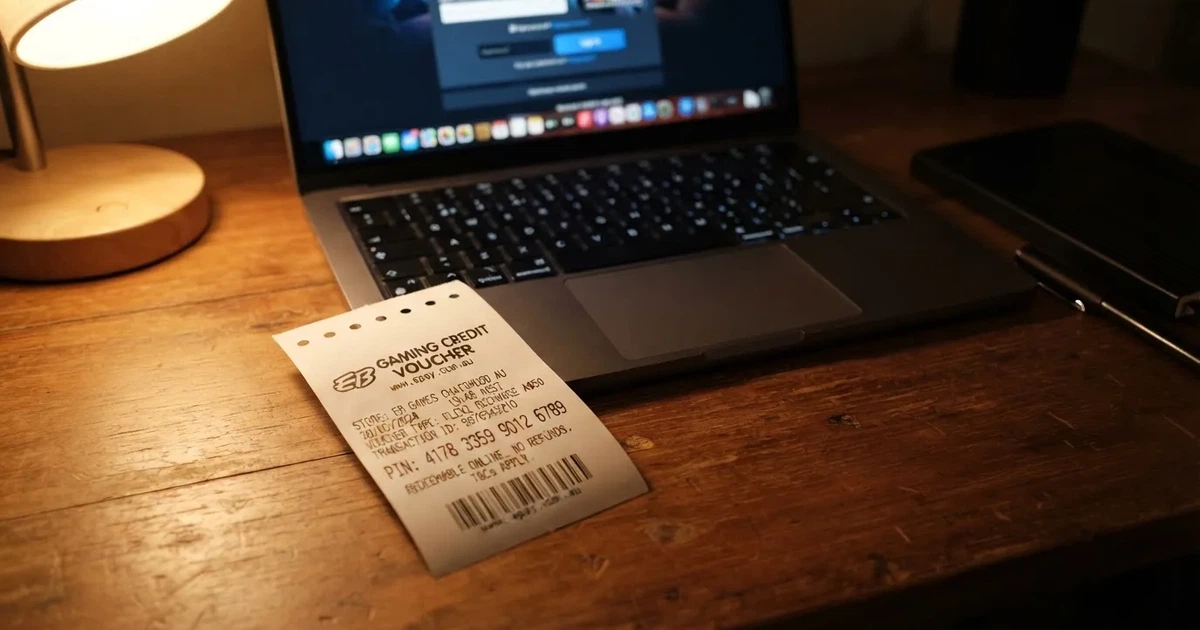
28 October 2026 — checked against the ACMA Register of blocked services and the MiFinity published terms.
Table of Contents
- How the ACMA has reshaped this market since 2017
- MiFinity itself — the wallet behind the deposit button
- The arithmetic: how fast the ACMA has been moving
- What a MiFinity deposit and withdrawal look like at these operators
- Responsible play — what an offshore MiFinity casino cannot offer
- What the ACMA has done to the operators on this page
- RocketPlay
- Level Up Casino
- Woo Casino
- Spirit Casino
- National Casino
- Bizzo Casino
- Ignition Casino
- Instant Casino
- Jackbit
- Casino Intense
- Sky Crown
- The legal frame, in full
- Choosing between these eleven — what the record actually says
- Frequently asked questions
How the ACMA has reshaped this market since 2017
The Australian Communications and Media Authority is the body that decides which offshore gambling sites get added to its blocking list and which operators get a formal warning. The numbers move quickly. By the round reported on 26 June 2026, the ACMA had asked Australian ISPs to block 1,751 illegal gambling and affiliate marketing websites since the first blocking request in November 2019, and more than 230 unlicensed gambling services had left the Australian market since enforcement was strengthened in 2017. A single blocking round in June 2026 added twelve names — 7Signs, ChromaBet, Donbet, Duospin, Freshbet, Slots Gem, Jacks Club, Lucky Start, Pointsbetz, Spinrise, Vinyl Casino and Wildsino — to a list the regulator keeps adding to roughly every quarter.

The cost side runs alongside the block list. H2 Gambling Capital’s 2025 report put annual Australian losses to illegal gambling sites at about A$3.9 billion, and noted the share of gambling going through legal channels fell from 74 per cent in 2021 to 64 per cent. The legal side is small and structured. The Northern Territory Racing and Wagering Commission regulates 52 of Australia’s online bookmakers — Sportsbet, Bet365 and Ladbrokes among them — licensed in the Territory mainly for tax reasons. The commission itself is part-time: no full-time staff, one meeting a month in Darwin. Online casino, online pokies and in-play betting are not licensed anywhere in Australia. What is licensable is wagering on races and sport placed before the event, lotteries and keno. That is the entire legal floor of the Australian online gambling market, and MiFinity-friendly casino sites sit above it, not on it.
The legal frame is reinforced by a single hard rule on how an Australian can pay. Since 11 June 2024, no Australian-licensed wagering service may accept credit cards, credit-related products or digital currency, with operator penalties up to A$247,500. Legal deposit routes for licensed wagering narrow to debit card, bank transfer, PayID and Osko instant transfers, and BPAY. A site asking an Australian player for a credit card or a crypto deposit is operating outside the Australian rules, whether it says so or not. MiFinity sits outside that licensed frame by design: it is an eWallet that can be topped up by debit/credit card, cryptocurrency, or one of 18 currencies’ worth of fixed-denomination MiFinity eVoucher bought from partner resellers. None of those top-up paths make the destination site Australian-licensed. They just get the money offshore.
MiFinity itself — the wallet behind the deposit button
MiFinity is a regulated eWallet, not a payment processor disguised as one. Two entities carry the regulation. MiFinity UK Limited is authorised by the UK Financial Conduct Authority under the Electronic Money Regulations 2011. MiFinity Malta Limited is authorised by the Malta Financial Services Authority as a financial institution. The wallet can hold balances in multiple currencies and can be funded from card, crypto or an eVoucher.

The fee shape is the part most players skip, and it is the part that decides what a deposit or a withdrawal actually costs. SEPA bank transfer deposits are free. Card deposits on VISA and MasterCard within the EEA carry a 1.8 per cent fee. Cryptocurrency deposits cost 1.8 per cent across BTC, ETH, LTC, USDT, USDC, XRP, XLM and BCH, and cryptocurrency withdrawals are charged the same 1.8 per cent. Foreign-exchange conversion runs up to 2.99 per cent over wholesale rates for standard currencies, rising to up to 3.99 per cent for exotic currencies. Transfers between a user’s own MiFinity eWallets are free, and receiving money into a MiFinity eWallet is free. Transfers to friends and family cost 1 per cent, capped at 10 EUR. An inactivity fee of 1 EUR per month kicks in on a personal account after 12 months without a login.
That last detail matters in a casino context. The MiFinity eWallet that funds a deposit today may sit unused for a year if a player walks away from the site. The fee is small, but it is the wallet’s way of saying it expects active use, and an Australian player who funds it once, plays once, and returns a year later will be paying 12 EUR in inactivity fees before any second deposit clears.
A second detail sits beside it. MiFinity requires verification documents before a user can move to higher spending limits. A player who tops up small and plays small will not see this requirement at first. The first larger withdrawal — or the first deposit that triggers MiFinity’s risk checks — is the moment the verification flow arrives. Submitting the documents is the wallet’s decision, not the casino’s, and the casino has no way to push it through faster.
The MiFinity eVoucher sits as a separate product from the eWallet itself. It is sold in fixed denominations by partner resellers, available in 18 currencies, and works as a one-shot top-up: the buyer redeems the voucher at the MiFinity wallet, the wallet’s balance goes up by that fixed amount, and the buyer is then free to spend that balance at any merchant that lists MiFinity, including a casino cashier. The voucher’s appeal is structural: it lets a player top up the wallet without handing a card number to MiFinity at all, because the voucher was bought and paid for in cash-equivalent at a reseller. The wallet still receives the funds; the player still has to clear MiFinity’s own verification to move them at scale.
The arithmetic: how fast the ACMA has been moving
The ACMA blocking total quoted above — 1,751 websites blocked since November 2019 — is the headline number, and the detailed breakdown sits underneath it.
The first blocking request was issued in November 2019. By the round of 26 June 2026, 1,751 sites had been blocked across roughly 80 months. That is an average of about 22 blocked sites per month, or roughly one every 33 hours, sustained over six and a half years. The rate is not constant. It is heavier in some months and lighter in others, and the regulator adds sites in batches every few weeks rather than as individuals. The average is the headline; the band is the more honest description.
A reasonable band runs from about 15 blocked sites per month in quieter stretches to roughly 30 in heavier ones, with the single blocking round of June 2026 alone adding 12 names. Over the full arc, the ACMA’s blocking work has run at a pace no individual operator can reasonably outrun, and a site that has avoided a block so far has done so by being too small to draw attention, not by being compliant. The cumulative figure — 1,751 — is the one a reader should weigh: it is the size of the enforcement floor underneath any individual site.
What a MiFinity deposit and withdrawal look like at these operators
The mechanics at the casino side are mostly the same across the eleven operators the ACMA has warned. A player opens an account, walks to the cashier, picks MiFinity from the deposit list, and is redirected either to a MiFinity login or to the eVoucher redemption screen. The minimum deposit at these sites is usually A$10 to A$20. The deposit itself is fast — once the wallet is funded, the cashier credits the casino balance within minutes. The 1.8 per cent card fee, the FX markup, and any eVoucher reseller markup have already been paid by the time the funds arrive at the casino, so the casino’s deposit screen does not warn the player about them.
A withdrawal runs through the same wallet, in the other direction. A player requests a MiFinity withdrawal from the casino cashier. The casino’s own payments team then runs a manual review: identity, source-of-funds, anti-money-laundering, and a check against any bonus terms the player triggered. The review typically takes 24 to 72 hours. Once the casino releases the funds, they arrive in the MiFinity wallet within minutes. From the wallet, the player can move the balance back to a debit card, a bank account, or out as cryptocurrency, each path carrying its own fee from MiFinity’s published schedule. A withdrawal that the casino holds in manual review is the slow part; a withdrawal that MiFinity holds is rare, because the wallet does not batch-settle on its own schedule.
The casino side is what makes the difference. A card withdrawal at these offshore sites typically follows the same manual review path; a MiFinity withdrawal does not arrive faster because it is MiFinity, it arrives at the same speed the casino decides to release funds, and the wallet’s job is just to receive them. The reason MiFinity is popular in this market is not speed. It is that the deposit side does not require a credit card, the wallet’s balance can be funded from multiple sources, and the player keeps the wallet between casinos. The wallet is a payment instrument, not a fast-track.
Responsible play — what an offshore MiFinity casino cannot offer
The protection an Australian player has at an Australian-licensed operator does not travel offshore. BetStop, the National Self-Exclusion Register, has been live since August 2023 and binds every Australian-licensed online and phone wagering service, which is how a player who has excluded themselves can rely on the exclusion holding. None of the eleven operators the ACMA has warned is connected to BetStop, because none of them holds an Australian interactive gambling licence. A self-exclusion registration on BetStop will not stop any of these sites from taking a MiFinity deposit.
The bank-side blocks are the only protection that actually reaches the offshore casino cashier. Westpac’s gambling block works at card level: it refuses authorisation of transactions registered under the merchant category code “Betting/Casino Gambling” on eligible personal credit and debit cards. ANZ’s gambling transaction block, activated in the ANZ app, goes further — it blocks gambling transactions made through a digital wallet such as Apple Pay on an eligible card, not just the physical card. Once turned on, removing ANZ’s block requires a 48-hour waiting period, and ANZ itself warns that not all gambling transactions will be blocked and some non-gambling transactions might be blocked in error.
The wallet-side picture is mixed. Apple does not charge consumers for using Apple Pay in stores, online or in apps; any surcharge is the merchant’s, not Apple’s. Apple also states that transaction limits and PIN requirements for Apple Pay purchases are set by the card issuer or merchant, not by Apple itself. By the end of 2025, Apple Pay, Google Pay and Samsung Pay collectively accounted for around 45 per cent of all card payments in Australia by number. Under the Interactive Gambling Act 2001 as amended in 2023, Australian-licensed online wagering services cannot accept payment by credit card or other credit-related products, a restriction that constrains gambling use of linked digital wallets like Apple Pay as well. A MiFinity deposit that arrives at the casino from a card-funded wallet is, from the casino’s side, a card payment; the bank-side block will see it as such if the merchant code is set correctly.
The consumer-protection net an Australian reader has at an offshore MiFinity casino is therefore narrower than at home. No BetStop. No Australian complaints body. No Australian recourse if the casino refuses a withdrawal. No guarantee that the operator will still be reachable when the player wants to close the account. The 1,751 blocked sites are the size of the regulator’s case that this is a market where exit is not guaranteed.
What the ACMA has done to the operators on this page
Eleven operators sit below. Each is named because the ACMA itself has issued a formal warning to its operating company for offering prohibited interactive gambling services to Australians, and each has MiFinity in its cashier. None of them holds an Australian licence. The table is not a ranking and the order is not a recommendation — it is the order in which the ACMA’s most recent action against each one was published.
| Operator | ACMA action and date | Operator named by the ACMA | MiFinity as a deposit option |
|---|---|---|---|
| RocketPlay | Formal warning, March 2026 | Pulsup Ltd (Rocketplay.com.au) | — |
| Level Up Casino | Formal warning, May 2022 | Dama N.V. | Listings report MiFinity |
| Woo Casino | Formal warning, March 2025 | Dama N.V. | — |
| Spirit Casino | Formal warning, May 2025 | Dama N.V. | — |
| National Casino | Formal warning, July 2025 | Consolutetish S.R.L. | Listings report MiFinity |
| Bizzo Casino | Formal warning, July 2025; earlier 2022 | Consolutetish S.R.L.; earlier TechSolutions | — |
| Ignition Casino | Formal warning, July 2025 | Bamboo Media | — |
| Instant Casino | Formal warning, February 2025 | EOD Code SRL | Listings report MiFinity |
| Jackbit | Formal warning, April 2026 | Ryker B.V. | — |
| Casino Intense | Formal warning, April 2025 | Sterplay Holding Ltd | Listings report MiFinity |
| Sky Crown | Formal warning, September 2022 | Hollycorn N.V. | — |
The pattern in the third column is the point. The ACMA has acted against these eleven, but only a minority of them have MiFinity confirmed in independent listings; for the rest, the cashier list is not independently verified and is left blank rather than stated. A reader looking for a MiFinity-accepting site by name will find the wallet on the cashier pages of some and not on others, and the table’s blank cells reflect that uncertainty rather than an absence of the wallet.
The table’s column on the operating company is the column a reader should weigh. Eight different operators sit behind eleven brands, and one — Dama N.V. — sits behind three of them (Level Up, Woo and Spirit). The same operator name reappearing under multiple brands is the structure of the offshore market: one company, several skins, each one a fresh target for an ACMA warning but each one still operating while the next round of enforcement is being prepared. The Dama N.V. cluster alone shows how a single enforcement letter can leave two-thirds of a portfolio untouched.
RocketPlay
Pulsup Ltd received the ACMA’s formal warning over Rocketplay.com.au in March 2026. The brand had already been caught in the same net once — Dama N.V. was warned over it in May 2022 as one of six brands, so the same site has now been named twice in four years under two different operating companies. The .com.au address in the 2026 warning is a small tell: it is the Australian-facing skin of an otherwise international brand, and an Australian player landing on it via a MiFinity deposit is, on the ACMA’s view of the matter, the person the operator is targeting. The site’s casino products are prohibited interactive gambling services under the IGA 2001, and MiFinity is in the cashier but not confirmed by independent listings. Verdict: a brand the regulator has now warned twice in four years, with the second warning naming a different operator — the kind of record that says the site has been moved between companies rather than brought into compliance.
Level Up Casino
Dama N.V. received the ACMA’s formal warning over Level Up Casino in May 2022 as one of six brands named in a single letter. Dama N.V. is the largest single operator by brand count on this page — it also sits behind Woo Casino and Spirit Casino. The original 2022 letter was a wide-net warning, and Level Up has not been the subject of a follow-up letter since. Independent listings report MiFinity in the cashier. Verdict: an early entry on the ACMA’s warning list that has not been re-warned since, but still belongs to the operator that has been warned more often than any other on the page.
Woo Casino
Dama N.V. was warned over Woo Casino in March 2025 — the second time the operator had been pulled up by the ACMA, after the 2022 letter that named six brands including Woo’s sibling sites. The gap between the two warnings is just under three years. Woo’s MiFinity status is not independently confirmed. Verdict: the brand sits inside the Dama N.V. cluster that has now drawn two ACMA letters across the same three-year window, with no confirmation that the cashier has MiFinity at all.
Spirit Casino
Dama N.V. was warned over Spirit Casino in May 2025, two months after the same letter went out over Woo Casino. The pair of warnings across two months is the regulator signalling that the operator’s entire portfolio is in view, not a single rogue brand. Spirit’s MiFinity status is not independently confirmed. Verdict: part of the same Dama N.V. cluster that has drawn a second round of ACMA letters in 2025 — the brand a player arrives at matters less than the operator behind it.
National Casino
Consolutetish S.R.L. received the ACMA’s formal warning over National Casino in July 2025, alongside a warning over Bizzo Casino. Independent listings report MiFinity in the cashier. Verdict: a brand on a confirmed MiFinity list that sits on the most recent ACMA warning round, with the operator behind it named for the first time on this page.
Bizzo Casino
Consolutetish S.R.L. was warned over Bizzo Casino in July 2025 — the second formal warning tied to Bizzo, after TechSolutions (CY) Group Limited and TechSolutions Group N.V. were warned over the same brand in 2022. Three years apart, two different operators, the same site. MiFinity is not independently confirmed at the cashier. Verdict: the only brand on this page with two formal warnings against two different operating companies — a record that says the brand has been handed between operators while continuing to take Australian players.
Ignition Casino
Bamboo Media received the ACMA’s formal warning over Ignition Casino in July 2025. Ignition is one of the better-known offshore brands internationally, and the warning is the ACMA’s first against Bamboo Media as an operating company on this page. MiFinity is not independently confirmed at the cashier. Verdict: a high-profile brand the regulator has now addressed for the first time at this operator, with the cashier’s payment list unverified.
Instant Casino
EOD Code SRL received the ACMA’s formal warning over Instant Casino in February 2025. Independent listings report MiFinity in the cashier, and the same listings tie Instant Casino to PayID. Verdict: a brand on a confirmed MiFinity and PayID list, named by the ACMA in early 2025, with a cashier that draws on two of the payment instruments most relevant to an Australian player.
Jackbit
Ryker B.V. received the ACMA’s formal warning over Jackbit and a sibling brand, CasinOK, in April 2026. Jackbit is the brand with the most recent ACMA action on this page that is not a RocketPlay re-warning. MiFinity is not independently confirmed. Verdict: the most recent operator-level warning on the page, with the cashier’s MiFinity status unverified.
Casino Intense
Sterplay Holding Ltd received the ACMA’s formal warning over Casino Intense in April 2025. Independent listings report MiFinity in the cashier. Verdict: a brand on a confirmed MiFinity list, named by the ACMA in mid-2025 under a single-operator warning that did not name sibling brands.
Sky Crown
Hollycorn N.V. received the ACMA’s formal warning over Sky Crown and its sibling Blue Leo, published in September 2022. Sky Crown is the oldest warning on the page by publication date and has not been re-warned since. MiFinity is not independently confirmed. Verdict: the earliest ACMA warning still standing on the page, against an operator that has not drawn a follow-up letter in three and a half years.
The legal frame, in full
The Interactive Gambling Act 2001, as amended by the Interactive Gambling Amendment Act 2017, makes it an offence to provide online casino games, online pokies or in-play betting to a person physically in Australia. No state or territory licences those products. What is licensed is wagering on races and sport placed before the event, lotteries and keno — in practice, online bookmakers are licensed by the Northern Territory Racing and Wagering Commission for tax reasons, not because the Territory is the natural regulator of betting. The minimum age is 18. The Interactive Gambling Amendment (Gambling Reform) Bill 2026 passed Parliament on 19 August 2026, with its advertising and inducement measures commencing on 1 January 2027 — a law with a start date, not yet in force on a page read in 2026.
The ACMA is the enforcement body. It investigates, issues formal warnings, and directs ISPs to block illegal sites. The 1,751 blocked sites are the cumulative output of that work. The individual player is not prosecuted under the IGA — the Act targets the provider, not the customer — but the offshore site gives the player no Australian consumer protection, no Australian complaints body, and no recourse if a withdrawal is refused. A site that gets added to the ACMA’s blocking list can carry a player balance at the moment of blocking; the player’s funds do not move with the block.
Player protection at Australian-licensed operators is real but narrow. BetStop has been live since August 2023 and binds every Australian-licensed online and phone wagering service. The National Gambling Helpline is 1800 858 858, free, 24/7, with chat at Gambling Help Online. Neither of those mechanisms reaches an offshore casino. The bank-side blocks are the consumer-side lever that does reach the offshore cashier: Westpac’s merchant-code block, ANZ’s app-level gambling block with the 48-hour removal wait, and similar mechanisms at the other major banks. The Apple Pay, Google Pay and Samsung Pay rails sit on top of those card-level blocks and inherit the same treatment.
Tax is the only part that reads as good news for an Australian player at an offshore site. Recreational gambling winnings are not assessable income under section 6-5 of the ITAA 1997, and losses are not deductible. The ATO’s view is model-only — anyone who treats gambling as a business is in a different position. The headline is that recreational winnings are not taxed, but the cost the player pays is on the deposit and withdrawal side, not on the tax side, and that is where the MiFinity fees sit.
Choosing between these eleven — what the record actually says
The eleven operators above are not equally weighted. Dama N.V. sits behind three of them, has been warned twice by the ACMA, and has been allowed to keep two-thirds of its portfolio outside the formal-warning net. Consolutetish S.R.L. sits behind two of them, including Bizzo Casino, which has been warned twice under two different operating companies — the strongest signal on the page that a brand survives enforcement by changing hands. Hollycorn N.V. sits behind Sky Crown with the oldest warning still standing and no follow-up. The other six are one-off warnings at single brands.
The MiFinity column in the table tells its own story. Only a minority of the eleven have MiFinity confirmed by independent listings; the rest are blank. A player searching specifically for a MiFinity-accepting site is left with four confirmed names — Level Up, National Casino, Instant Casino, Casino Intense — and seven where the cashier’s payment list is unverified. Of those four, two are Dama N.V. brands that have not been re-warned but belong to the most-warned operator on the page. The other two — National Casino and Instant Casino — are the most recent ACMA warnings on the page, July 2025 and February 2025 respectively, and the only confirmed MiFinity options that are also names the regulator has acted against this year or last.
The honest summary is short. The wallet is real and works. The sites that list it are illegal under the IGA. The ACMA has warned all eleven of them, and the rate at which the regulator is moving — 1,751 blocked sites across 80 months — is faster than any one operator can reasonably expect to outrun. The fees the wallet charges are visible on MiFinity’s own pages and they are the player’s cost, not the casino’s. The MiFinity eVoucher is the one path that lets a player top up without a card, but the wallet that receives it still requires verification before the player can move the balance at scale. The bet a player is making is not whether MiFinity works. It is whether the casino at the other end will still be there when the player wants to withdraw.
Frequently asked questions
Is it legal for an online casino to accept MiFinity from a player in Australia?
No. The Interactive Gambling Act 2001 makes it an offence to provide online casino games, online pokies or in-play betting to a person in Australia. No Australian licence covers any of those products, so a casino taking a MiFinity deposit from an Australian player is operating illegally under Australian law, whatever offshore licence it displays.
What is the smallest deposit a MiFinity casino site usually asks for?
The minimum deposit at the offshore MiFinity-accepting sites sits around A$10 to A$20, with the lower end of that range common. The MiFinity eVoucher, sold by partner resellers in 18 currencies, is also a fixed-denomination top-up that lets a player add funds to the wallet without using a card at all.
Does a MiFinity withdrawal clear any faster than a card withdrawal at these sites?
Not because of the wallet. The casino’s own manual checks — identity, source-of-funds, anti-money-laundering, bonus terms — take 24 to 72 hours before funds are released. Once released, the MiFinity wallet receives the balance within minutes. A card withdrawal at the same casino runs through the same review window, so the wallet changes the destination, not the release speed.
Can MiFinity be used at every offshore pokies-style site, or only some of them?
Only at sites that have integrated MiFinity into their cashier. Independent listings confirm MiFinity at a minority of the eleven ACMA-warned operators on this page; for the rest, the cashier’s payment list is unverified. The wallet itself is available globally, but a site’s choice to list it is independent.
Does depositing with MiFinity add an extra fee at these casino sites?
The casino cashier does not charge an extra fee, but MiFinity’s own published fees do apply before the funds arrive. Card deposits carry 1.8 per cent, cryptocurrency deposits carry 1.8 per cent, foreign-exchange conversion runs up to 2.99 per cent over wholesale rates for standard currencies and up to 3.99 per cent for exotic currencies, and an inactivity fee of 1 EUR per month starts after 12 months without a login.
What should a player do if a MiFinity deposit does not appear in a casino account?
Start with the wallet, not the casino. Check that the MiFinity transaction actually left the wallet — the transaction reference, the timestamp, and the deducted balance — before contacting the casino. The casino’s deposit screen cannot see what the wallet has not yet settled. If the wallet shows the funds as sent and the casino balance has not updated after 30 minutes, the casino’s payment team is the next contact, with the wallet reference in hand.