
Best RTP slots in Australia: what the figure actually buys you
Data current as of 28 October 2026, checked against the ACMA’s register of formal warnings and blocking actions.
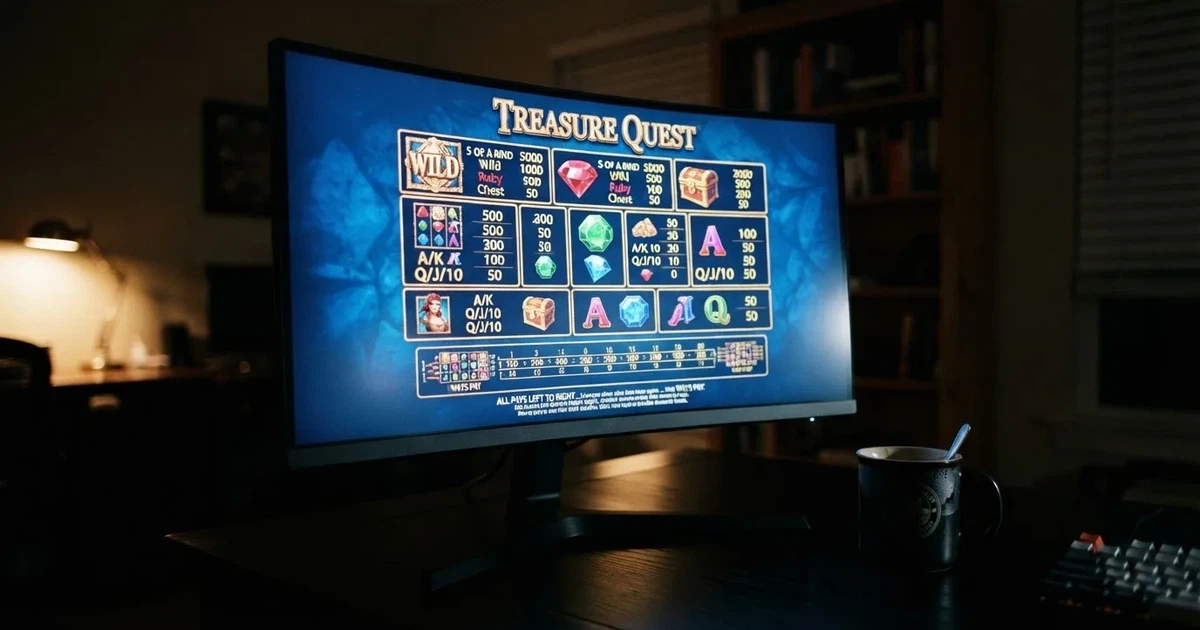
A player searching for the best RTP slots in Australia runs into a wall the marketing never mentions: no online casino, and no online pokies, can be licensed anywhere in this country. The Interactive Gambling Act 2001, tightened by the Interactive Gambling Amendment Act 2017, makes that an offence on the provider’s side. The “best RTP slot” an Australian can spin sits in a pub, club or casino on a machine regulated by a state or territory authority. Everything an offshore site sells under that name is operating outside the law, and the ACMA has been moving against them in waves.
That gap matters because RTP — return to player — is one of the few figures the industry agrees to publish. It is also the figure most easily turned into a sales pitch. A 96.5% RTP sounds generous until you set it against the throughput a real-money spin produces, the volatility that decides whether the player actually sees that return over a session, and the question of whether the site publishing it can legally take a deposit from an Australian in the first place. Those three things decide what the number is worth. The number alone decides nothing.
This page takes the position the material supports. RTP is a long-run statistical estimate, published on games a player in Australia cannot legally access online. The arithmetic underneath it is real. The marketing around it is not.
Table of Contents
- Responsible gambling: where an Australian player actually gets help
- Game-specific mechanics: what RTP is, and what it is not
- Comparison of ACMA-warned brands
- What the ACMA has actually done, in the order it did it
- Overview and core landscape: what “best RTP slot” actually means onshore
- Legality and regulation: what the Interactive Gambling Act actually says
- The brand-level verdict on each featured operator
- Closing position: what the material supports
- Frequently asked questions
Responsible gambling: where an Australian player actually gets help
The shelf most worth opening first is the one nobody opens voluntarily. An Australian thinking about RTP — the kind of punter who reads paytables and weighs house edges — is also the kind most likely to think they have the math under control. The help services that exist do not assume that. They assume the opposite.

Gambling Help Online runs the National Gambling Helpline on 1800 858 858, free and answered around the clock, with web chat available as well. BetStop, the National Self-Exclusion Register, has been live since August 2023 and is the binding opt-out across Australian-licensed online and phone wagering services. It connects every licensed bookmaker in the country: sign up once, and the licensed operators stop taking your bets. That is a real wall, built out of a single registration.
The wall has a hole, and an Australian player looking at offshore slot sites needs to know where it is. BetStop binds licensed wagering services. An offshore casino that the ACMA has already moved against is not part of that system. Registering with BetStop will not stop those sites from accepting a deposit. Self-exclusion on each offshore site has to be set up with that site directly, through whatever self-exclusion tool its own terms page advertises, and the record of compliance belongs to the operator alone.
For pokies played on licensed machines in pubs and clubs, every state runs its own exclusion register: New South Wales, Victoria, Queensland, South Australia, Western Australia, Tasmania, the ACT and the Northern Territory each carry their own scheme with its own enrolment. The state registers also bind the venues themselves — bars, clubs and casinos in that state.
What this shelf closes with is a plain instruction. A player who feels their own decision-making slipping should call 1800 858 858 first. The conversation is free, confidential, and it is the fastest way into a counsellor who knows the Australian landscape.
Game-specific mechanics: what RTP is, and what it is not
A paytable’s RTP figure is the percentage of total money wagered that the game is programmed, over a very long run, to return to players. The remainder is the house edge. A 96.5% RTP slot is a 3.5% house edge slot. The two figures are the same statement, expressed from opposite sides of the counter.
The arithmetic is not in dispute. The framing around it almost always is.
Long-run, not short-run
A RTP figure is calculated across millions of simulated spins. It describes the expected behaviour of the game across its installed base, not the behaviour of a single session at a single machine. A player sitting down with A$200 and a 96.5% RTP game is not “owed” A$193 back. The game owes them nothing. It returns A$193 across the lifetime of the machine, spread across thousands of sessions held by thousands of different players.
A single session can be anything. It can pay out ten times the stake in the first ten spins and leave the player A$150 ahead after twenty minutes. It can also go the other way. Both outcomes are consistent with a 96.5% RTP. The figure constrains the average; it does not constrain the experience of any single player.
Independent testing, before release
Slot games released by major providers — Aristocrat, IGT, Pragmatic Play, NetEnt, Microgaming and the rest — are submitted to independent testing houses before release. The labs run the simulation, certify the percentage, and the figure goes into the paytable. Whether any given offshore site chooses to publish the certified figure is a separate question, and the ACMA’s enforcement record suggests a number of them choose not to. The underlying game is what was tested. The marketing copy is something else.
Same theme, different figures
Two slot games with the same theme — the same symbols, the same bonus round, the same soundtrack — can carry different RTP figures because the math model underneath is different. Providers sometimes ship a 96.5% RTP version of a game to one market and a 94% version to another, depending on local regulation, tax position and operator deals. The art is the same. The math is not. A player who knows one figure by heart does not know the other.
Volatility, sitting next to RTP
RTP says nothing about how a game distributes its payouts. A 96.5% RTP game with low volatility pays small amounts frequently. A 96.5% RTP game with high volatility pays large amounts rarely. The average return is the same, but the experience of sitting in front of the machine for an hour is wildly different. Volatility is the second figure that matters. Most offshore marketing pages lead with RTP and bury volatility, if it appears at all.
The electronic gaming machine, onshore
In Australian pubs and clubs, pokies-style slot machines outside casinos numbered 87,298 in New South Wales as of June 2023, 26,380 in Victoria across 2021–22, 21,122 in Queensland as of October 2023, 11,672 in South Australia as of September 2023 and 3,587 in the ACT as of November 2023. Every one of those machines carries a state-set minimum RTP figure that the venue has to comply with. Queensland and New South Wales both publish the RTP for each approved game on request, and a player can ask the venue for the certified figure on a specific machine by its game number. That answer is something no offshore site is obliged to give, because the offshore site is not under the same jurisdiction.
The historical mechanics underneath those machines trace back to Charles Fey’s late-19th-century three-reel design — five symbols (horseshoes, diamonds, spades, hearts and the Liberty Bell), three bells paying the top prize of ten nickels. Bally’s Money Honey in 1963 added a bottomless hopper and automatic payout of up to 500 coins without an attendant. The first video slot, developed in 1976 by Fortune Coin Co. in Kearny Mesa, California, is the architectural ancestor of every game in a modern online casino lobby.
Comparison of ACMA-warned brands
Eleven brands appear in the comparison that follows. None of them is recommended as a place to play. The list exists for a different reason: each of the eleven has been the subject of a formal warning from the ACMA over offering prohibited online casino services to Australians. The order the ACMA acted on them — most recent first, then by earlier publication — gives the reader the chronological shape of the enforcement record. The page’s own value lies in what sits next to that record: a column for the operator named by the ACMA, a column for what published sources say the brand carries under the subject of RTP slots, and a column for the gap where no source has anything to say.
What separates one row from the next
Two things. First, the operator named in the ACMA’s formal warning publication — the legal entity the regulator addressed the action to, which is not always the brand name on the website. Second, whether any listing on the wider web describes the brand’s coverage of the subject. Most rows carry nothing under that heading, because most offshore casino brands are not catalogued by sources a reader can trust.
A column that carries the same value down every row carries no information and is dropped. That is why no licence column appears here: every brand in this set holds an offshore licence from one jurisdiction or another, and that fact is true for every row. It is not a differentiator. What does differentiate is the operator behind the brand and the date of the ACMA’s action, and both of those vary.
The blocking rate, as the calculation that earns the page its information
The ACMA’s June 2026 update reported a cumulative total of 1,751 illegal gambling and affiliate marketing websites blocked since the first blocking request in November 2019, with more than 230 unlicensed gambling services having left the Australian market since enforcement was strengthened in 2017. Spread across the roughly 79 months between November 2019 and the June 2026 report, the running total works out to an average of around 22 sites blocked per month, with substantial variation across rounds — single blocking orders have asked for a dozen sites at a time, others have moved on smaller batches. The blocking rate is a band rather than a single figure because the pace moves with how many sites the ACMA can identify and serve at a given moment, and how many providers rebrand and resurface under a new domain. The page’s number is the order of magnitude: more than twenty a month, sustained across six and a half years, with no sign of slowing.
The arithmetic is not on the page in formula form. The reader does not need the multiplication. They need the conclusion: the ACMA is not symbolically policing this market, it is grinding through it, and the brand list below is what that grinding has surfaced.
The comparison
| Brand | ACMA action and date | Operator named by the ACMA | Subject support |
|---|---|---|---|
| RocketPlay | Formal warning, March 2026 | Pulsup Ltd (RocketPlay); earlier Dama N.V., May 2022 | — |
| Level Up Casino | Formal warning, May 2022 | Dama N.V. | listings-only (BGaming) |
| Woo Casino | Formal warning, March 2025 | Dama N.V. | — |
| Spirit Casino | Formal warning, May 2025 | Dama N.V. | — |
| National Casino | Formal warning, July 2025 | Consolutetish S.R.L. | listings-only (en.wikipedia.org) |
| Bizzo Casino | Formal warning, July 2025; earlier 2022 | Consolutetish S.R.L.; earlier TechSolutions | — |
| Ignition Casino | Formal warning, July 2025 | Bamboo Media | — |
| Instant Casino | Formal warning, February 2025 | EOD Code SRL | — |
| Jackbit | Formal warning, April 2026 | Ryker B.V. | — |
| Casino Intense | Formal warning, April 2025 | Sterplay Holding Ltd | listings-only (ABC News, acma.gov.au, Crown Melbourne) |
| Sky Crown | Formal warning, September 2022 | Hollycorn N.V. | — |
Three of the eleven rows carry something under “Subject support” — and what they carry is a single listing source, not a verified statement from the brand itself. The remaining eight have no listing a reader can cross-check, which is itself the answer: when no independent catalogue mentions a brand’s slot coverage, the brand is selling the RTP figure on its own page, and the page is its own only source.
The same holds for “ACMA action and date” in a way the table does not show directly. The date column is the date the ACMA published its warning, not the date the site first offered services to Australians. Some of these operators had been running for years before the regulator moved. Woo Casino, for instance, received its first warning in March 2025, but the Dama N.V. entity behind it had already been the subject of a separate May 2022 action covering six brands. The same operator name appearing in two rows is the regulator catching up with an entity it had already addressed under another brand.
What the ACMA has actually done, in the order it did it
The shelf below sits next to the comparison and grounds its dates. It also answers a question the table cannot: which brands belong to the same operator group, which is the only way to read the enforcement record as a record rather than a list of names.
The ACMA issued a formal warning to Hollycorn N.V. in September 2022 over its Sky Crown and Blue Leo casino services. Sky Crown remains on the brand list; Blue Leo does not, because the warning covered both but the brand-level subject of an RTP-slots page is the one with the more direct slot-lobby association.
In May 2022 the ACMA issued a formal warning to Dama N.V. covering six casino brands: Bambet, Dazard, Level Up, Rocketplay, Wild Tornado and Cobra Casinos. Level Up and RocketPlay both appear in the comparison table. The other four are not featured brands here, but the operator action is the one that matters — Dama N.V. is the legal entity behind Level Up’s May 2022 warning and is also the entity behind Woo Casino’s March 2025 warning and Spirit Casino’s May 2025 warning. Three rows, one operator, three separate brand launches re-using the same corporate structure.
TechSolutions (CY) Group Limited and TechSolutions Group N.V. received a 2022 formal warning that covered Bizzo Casino among other brands. By July 2025 the ACMA had moved against Consolutetish S.R.L. covering National Casino and Bizzo Casino, with the Bizzo entry explicitly noting that the brand had already been the subject of the earlier TechSolutions action. The brand changed operator; the regulator followed.
Bamboo Media received a July 2025 formal warning over Ignition Casino. The same round also caught Consolutetish S.R.L. over National Casino and Bizzo Casino, and Sterplay Holding Ltd’s Casino Intense warning landed a few months earlier in April 2025. EOD Code SRL’s February 2025 warning over Instant Casino sits at the front end of that cluster, and Pulsup Ltd’s March 2026 warning over Rocketplay.com.au carries the RocketPlay brand forward under yet another operator name — the third entity the ACMA has addressed in connection with the same brand, after Dama N.V. in 2022 and now Pulsup in 2026.
Ryker B.V.’s April 2026 warning over Jackbit and CasinOK closes out the most recent wave. CasinOK is not a featured brand; Jackbit is, because the brand name has appeared widely enough in player-facing listings to warrant the entry.
What the shelf closes with is a structural observation. The same operator name reappearing across rows is not a coincidence of branding. It is the offshore industry’s standard response to enforcement: a new corporate entity, a fresh licence application in Curacao or Anjouan, and the same brand — or a near-identical one — back online within weeks. The ACMA’s blocking power is real. The rebrand cycle is faster.
Overview and core landscape: what “best RTP slot” actually means onshore
The phrase “best RTP slot” does not work the same way in Australia as it does in markets where online casinos are legal. In the United Kingdom, a comparison page can list the highest-RTP games on licensed UK sites, name the providers, and link to where to play. In Australia, the equivalent product is the licensed electronic gaming machine in a pub, club or casino. The machine has a state-approved minimum RTP, the game is identifiable by its title and version number, and the venue has to comply with the figure.
In Queensland and New South Wales, every approved game’s RTP is on a public register. A player who knows the title can ask the venue for the figure on the machine in front of them. Victoria and South Australia publish similar information through their regulators, although not always on a per-machine basis. The ACT publishes a list of approved games for its 3,587 machines outside casinos.
The offshore industry has not been slow to notice the marketing opportunity. An Australian player Googling “best RTP slot” finds pages advertising 96.5% RTP games with free-spin bonuses and same-day payouts. The games are real — NetEnt’s Blood Suckers sits at the top of most published RTP tables, and several Pragmatic Play and Play’n GO titles clear 96%. The site offering them is the part that fails the test. None of the offshore sites a player finds through that search hold an Australian licence, because none can. The IGA makes the licence impossible to issue. What the site can hold is an offshore licence from a jurisdiction that does not regulate Australian consumers, and that is the entire legal basis on which the deposit is accepted.
The cost figure that decides what an offer is worth
H2 Gambling Capital’s 2025 report estimates that Australians lose about A$3.9 billion a year to illegal gambling sites, and that the share of gambling going through legal channels fell from 74% in 2021 to 64%. The A$3.9 billion is the cost the player pays on top of what they would have lost at a licensed venue. It is also the cost on top of what they would have lost at no venue at all. The 10-percentage-point fall in the legal-channel share is the same trend told from the other side: more money moving offshore, less moving through the regulated system.
The cost to the individual player is not A$3.9 billion divided across the population. It is concentrated. H2 does not break out per-player figures, but the structure of the offshore market — heavy bonus incentives, no responsible-gambling enforcement, no cooling-off requirements — tends to attract the players who can least afford to lose.
The Northern Territory bookmaker question
The Northern Territory Racing and Wagering Commission regulates 52 of Australia’s online bookmakers, including Sportsbet, Bet365 and Ladbrokes, all licensed in the Territory for tax reasons. The commission has no full-time staff and meets once a month in Darwin, a structure that has drawn parliamentary attention in 2026. The NT regulator’s jurisdiction covers wagering on races and sport placed before the event. It does not cover online casino games, online pokies or in-play betting. The distinction is important because a brand can hold an NT licence for its sportsbook and operate a separate casino product under an offshore licence, and the player who registered for the sportsbook is then marketed the casino product through the same login.
Legality and regulation: what the Interactive Gambling Act actually says
The Interactive Gambling Act 2001 is the federal statute. The Interactive Gambling Amendment Act 2017 tightened it. Together they make it an offence to provide online casino games, online pokies or in-play betting to a person physically in Australia. No state or territory can licence what the IGA prohibits at the federal level. The result is that no legal online casino product exists in this country, and no legal online pokies product exists in this country, full stop.
What is licensable is wagering on races and sport placed before the event, lotteries and keno. The Northern Territory is the licensing hub in practice, holding the largest portfolio of online bookmakers, with other states also issuing licences for their own operators. A sports bettor in Australia using a licensed Sportsbet, Bet365 or Ladbrokes account is using a product the IGA permits. A pokies player in Australia using a licensed venue’s machine is using a product regulated by state law. The same player who clicks an offshore casino’s link is doing something else entirely.
The ACMA’s enforcement tools
The ACMA — Australian Communications and Media Authority — investigates complaints, issues formal warnings, and can direct Australian internet service providers to block illegal sites. The first blocking request went out in November 2019. As of June 2026, 1,751 illegal gambling and affiliate marketing websites had been blocked, with more than 230 unlicensed gambling services having left the Australian market since 2017.
ACMA blocking summary
| Metric | Detail |
|---|---|
| First blocking request | November 2019 |
| Cumulative blocked sites | 1,751 |
| Average blocking rate | ~22 per month |
The June 2026 round alone added twelve sites: 7Signs, ChromaBet, Donbet, Duospin, Freshbet, Slots Gem, Jacks Club, Lucky Start, Pointsbetz, Spinrise, Vinyl Casino and Wildsino. That is one round, one month. The blocking rate runs at an average of roughly twenty-two sites per month over the six-and-a-half-year window, with the most recent reporting showing no deceleration.
What an individual Australian player faces
The IGA targets the provider, not the player. An Australian punter who deposits at an offshore casino is not prosecuted. What they give up is the consumer protection that comes with a licensed operator: no Australian complaints body, no enforceable withdrawal guarantee, no recourse if the site refuses to pay out, and no BetStop coverage to stop further deposits. The site can be blocked with a balance still sitting on it, and the ACMA’s blocking power does not include a refund mechanism. The player’s only practical protection is choosing not to deposit in the first place.
Payment rules
Credit cards, credit-related products and digital currency are banned as payment for licensed online wagering since 11 June 2024, with penalties up to A$247,500 for operators who breach the rule. Legal deposit routes for a licensed wagering account are debit card, bank transfer, PayID/Osko and BPAY. An offshore site asking for a credit card or a crypto deposit is operating outside the Australian rules regardless of what licence the site footer advertises. The payment method is the easiest single signal a player can check: if the site is asking for crypto, the site is not under Australian jurisdiction.
The 2026 reform package
The Interactive Gambling Amendment (Gambling Reform) Bill 2026 passed Parliament on 19 August 2026. Its advertising and inducement measures commence on 1 January 2027. The reform is law with a start date, not law currently in force. The distinction matters on any page written before that date: a reader looking at inducement advertising in late 2026 is looking at conduct that is legislatively scheduled to be unlawful from 1 January 2027, and the IGA’s existing prohibition continues to apply in the meantime.
Tax treatment
Gambling winnings of a recreational player are not assessable income under section 6-5 of the ITAA 1997, and losses are not deductible. The exception is a person carrying on a business of gambling — professional gamblers in the tax-law sense — whose treatment is a separate matter. For the player who plays pokies at the pub or has the occasional punt, the ATO has nothing to claim and nothing to refuse. The check with a tax professional applies to anyone whose gambling has crossed from recreational into something else.
The brand-level verdict on each featured operator
What follows is the page’s own judgement on each of the eleven brands the ACMA has acted against. The specifications above each verdict are the regulator’s, not the brand’s. The verdict is the position the material supports, in one sentence per brand, ending on what the block above it actually established rather than on the brand’s suitability for the reader.
RocketPlay
The RocketPlay brand has been the subject of two separate ACMA actions under two different operators: Dama N.V. in May 2022 and Pulsup Ltd in March 2026. The fact that the regulator has had to address the same brand twice, under different corporate entities, is the only signal that matters. A player who can read that record and still deposit has decided to deposit on terms that include no Australian consumer protection, no BetStop coverage, and a real risk that the next round of blocking action will take the site offline while their balance is unwithdrawn.
Level Up Casino
Level Up is the only brand in the comparison whose subject support comes from a single listing source rather than no source at all — the BGaming provider catalogue. That is not enough to characterise the brand’s slot coverage, and the ACMA action in May 2022 is unchanged. The brand sits where it sat four years ago: a Dama N.V. operator the regulator has warned, with a slot lobby that a single provider catalogue entry mentions and nothing more.
Woo Casino
Woo Casino’s ACMA action is dated March 2025, and the operator behind the brand is Dama N.V. — the same entity the regulator addressed in May 2022 over six other brands. A warning against an operator that already has a warning on file is a regulator using its administrative tools in sequence rather than escalating. The site is still operating, still accepting deposits, still offering slot games to Australians from outside Australian jurisdiction. The ACMA’s pace is the rate of enforcement; the rate of enforcement is not the rate at which the underlying activity stops.
Spirit Casino
Spirit Casino shares the Dama N.V. operator with Woo Casino, but the warning is dated May 2025 rather than March 2025. Two warnings, two months apart, on the same operator, on different brands — that is the regulator working through a portfolio rather than catching a single offender. A player choosing between the two Dama N.V. brands is choosing between two entries in the same enforcement file. There is no meaningful difference in the consumer-protection outcome.
National Casino
The July 2025 warning over National Casino names Consolutetish S.R.L., and the subject support column carries a Wikipedia entry — a marginal listing at best. The brand is recent enough that the ACMA’s action is the most prominent thing on the public record about it. There is no positive case for depositing with an operator whose own marketing copy is the only source on the brand’s slot coverage, and whose own regulatory status is one warning away from a blocking request.
Bizzo Casino
Bizzo is the brand with the longest enforcement history in the table: TechSolutions in 2022, Consolutetish S.R.L. in July 2025. Two warnings under two operators on the same brand is not the kind of pattern that suggests the underlying issue has been addressed. The brand has changed hands; the regulatory exposure has not. A player depositing at Bizzo is depositing at a brand the ACMA has now formally warned twice.
Ignition Casino
Ignition Casino’s July 2025 warning names Bamboo Media as the operator, with no listing source under subject support. The brand is one of the older names on the offshore market but carries no Australian-specific coverage that any independent catalogue records. The ACMA action is the regulator’s first formal engagement with the brand in this period, and the absence of prior action is not the same as the absence of prior activity.
Instant Casino
The February 2025 warning over Instant Casino, addressed to EOD Code SRL, was one of the earlier actions in the most recent enforcement cluster. The brand carries no listing source under subject support, and the warning’s early position in the cluster is a timing artefact rather than a sign of any particular severity. A player looking at Instant Casino is looking at the same shape of offer as every other row: offshore, unlicensed for Australia, and on the regulator’s record.
Jackbit
Jackbit’s April 2026 warning is the most recent entry in the comparison, addressed to Ryker B.V. and covering both Jackbit and the related CasinOK brand. The two-brand structure is the same pattern as Dama N.V.’s 2022 warning: one operator, two brands, one action. A player who deposits at Jackbit is depositing at a site the ACMA has formally addressed within the last twelve months, with the same operator also running a second brand from the same warning.
Casino Intense
The April 2025 warning over Casino Intense is addressed to Sterplay Holding Ltd, and the subject support column carries a small cluster of listing sources — ABC News, ACMA publications, Crown Melbourne’s site — none of which characterise the brand’s slot coverage directly. The listing sources are not endorsements; they are mentions in unrelated news and reference material. A player reading the column as a recommendation is reading the wrong thing.
Sky Crown
Sky Crown’s formal warning is dated September 2022, the oldest entry in the table, and the Hollycorn N.V. operator behind it was also warned over the related Blue Leo brand at the same time. Three and a half years on the regulator’s record is the longest exposure in the comparison, and the brand is still operating. The pace of rebrand and re-launch is faster than the pace of formal warning; the formal warning is the slowest tool the ACMA has, and the brand list is what its use looks like over time.
Closing position: what the material supports
The phrase “best RTP slot Australia” pulls in two directions and resolves in one. The figure itself — the certified return-to-player percentage on a specific game — is real, tested, and published by major providers. It is the same figure a player would find on a UK or European licensed site. It is not what the page is about, because a player in Australia cannot legally access those sites.
The legal product is the licensed electronic gaming machine in a pub, club or casino, with a state-approved minimum RTP, a regulator on the other end of the phone, and a venue that has to comply. The offshore product is the same game name attached to a deposit mechanism that takes crypto, an operator entity that rebrands every time the regulator moves, and a consumer-protection regime that runs to whatever the site’s own terms page says. The figure is the same. The frame around it is not.
What the page concludes is the position the material supports, plainly. The best RTP slot a player can access legally in Australia is on a licensed machine in a regulated venue, and the RTP figure is on the regulator’s register or on request from the venue. The best RTP slot a player sees advertised in search results is on an offshore site that the ACMA has acted against in formal warnings running at a rate of roughly twenty-two sites per month over the last six and a half years, with the same operator names appearing across multiple brands and the same brand names appearing across multiple operators.
The arithmetic underneath RTP is not in dispute. The legal status of where a player spins is not in dispute. What is in dispute — what the marketing turns into a dispute — is whether the player ought to spin at all. The help line is 1800 858 858. The self-exclusion register is BetStop. Both are free, both are Australian, and both work without the player first deciding to lose.
Frequently asked questions
How is a slot’s RTP percentage calculated over the long run?
Testing laboratories run simulations of millions of spins on the game’s math model, recording the total returned to simulated players against the total wagered. The percentage is the ratio of those two figures across the full simulation. The figure describes the average behaviour of the machine across its installed base, not the outcome of any single session, and it is fixed by the math model rather than by what happened at the machine yesterday.
Does a slot’s RTP figure guarantee any result over a single session?
No. A 96.5% RTP figure is an average across millions of spins. A single session can return ten times the stake in the first ten spins or zero across an hour, and both outcomes are consistent with the same published figure. The RTP constrains the average; it does not constrain what any particular player experiences, and it is not a promise of return on any individual deposit.
Are RTP figures independently tested before a slot is released?
Yes, for games released by major providers. Independent testing laboratories certify the percentage before the game goes live, and the certified figure is what the paytable displays. Whether any given offshore operator chooses to publish the certified figure on the player-facing page is a separate question, and the ACMA’s enforcement record suggests that some operators choose not to — the underlying game is what was tested, but the marketing copy around it is not.
How many licensed gaming machines operate outside casinos in Queensland compared with New South Wales?
As of October 2023, Queensland had 21,122 pokies-style machines outside casinos. As of June 2023, New South Wales had 87,298 — more than four times the Queensland figure. The gap reflects NSW’s longer history of legalised slot machines (1956) versus Queensland’s later and more restricted rollout, with NSW venues outnumbering Queensland venues across pubs, clubs and hotels by a wide margin.
Why do two slots with the same theme sometimes carry different RTP figures?
Providers sometimes ship multiple RTP versions of the same game to different markets, depending on local regulation, tax position and operator deals. The art and the bonus round are identical; the math model underneath is not. A 96.5% version in one market and a 94% version in another is the same theme with a different return, and a player who knows one figure by heart does not know the other. The figure on the paytable at the machine in front of the player is the one that matters for that spin.
Can a player request the RTP figure for a specific licensed pokies machine in Australia?
Yes. Queensland and New South Wales both publish approved games on public registers, and a player can ask the venue for the certified RTP on a specific machine by its game number. Victoria, South Australia and the ACT publish similar information through their state regulators. An offshore casino site is under no equivalent obligation, and the published figure on the player-facing page is the operator’s own claim rather than a regulator’s certified number.