
Best pokie machine to play Australia: what the question is actually asking
Currency and data current as of 28 October 2026, verified against the Australian Communications and Media Authority’s published blocking and warning rounds.
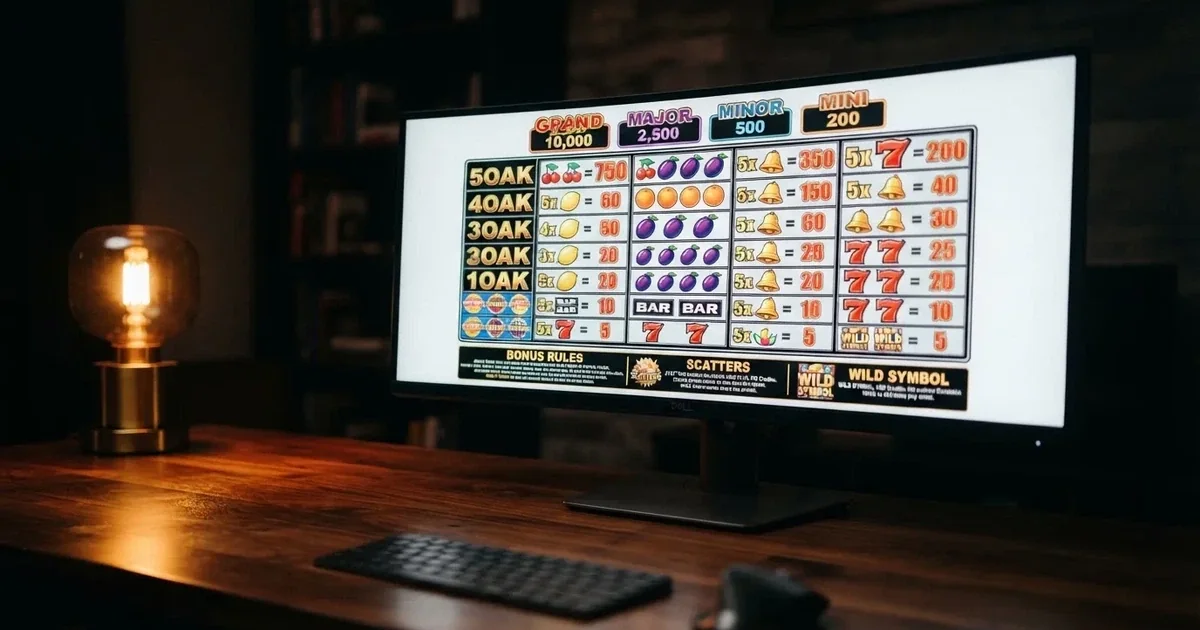
The phrase “best pokie machine to play” lands in Australian search boxes as though it had one answer. It does not. The question collapses three different decisions into one: which licensed venue to walk into, which machine inside that venue to sit down at, and how much each spin is worth once the maths is run. Australia has roughly 195,000 poker machines outside casinos across the country — about three per cent of the world’s pokies for a fraction of one per cent of its population — and not one of them is licensed online. The legal product is the machine in front of the punter; everything else that calls itself a “pokie machine app” or an “online pokie” is operating against the Interactive Gambling Act 2001 and has, in many cases, been formally warned by the regulator for doing so.
That single fact reshapes the question. The “best” machine is the one that fits the budget, the volatility the player can stomach, and the return-to-player the venue is required by law to publish. The rest of this page works through each of those decisions, then through the eleven offshore brands the ACMA has publicly named in its warning rounds — because the same searches that return licensed, factual answers also return these brands, and a reader deserves to know what they actually are.
Table of Contents
- What a pokie machine pays back — and why the figure sits in the eighties or nineties
- Paytable screens, audits and where the RTP number is supposed to live
- How the money moves — deposits, withdrawals and why “payout percentage” is not a withdrawal time
- Mobile and apps — why the licensed machine does not have a download
- The specific games to know — and why the offshore catalogue is not a real catalogue
- The offshore brands the ACMA has named — and what “formal warning” actually means
- The legal frame — what the IGA actually prohibits, and what enforcement looks like
- Responsible gambling — what the venue-based system does, and where the offshore site offers nothing
- What the data shows — the blocking rate since November 2019
- Where the offshore search results actually lead
- Frequently asked questions
What a pokie machine pays back — and why the figure sits in the eighties or nineties
Every pokie machine in a licensed Australian venue carries a minimum return-to-player (RTP) written into the state or territory’s gambling law. The floor is not uniform: 85 per cent in New South Wales, the Northern Territory, Queensland and most of Victoria, 87 per cent at Crown Melbourne and across the Australian Capital Territory and Tasmania, 87.5 per cent in South Australia, and 90 per cent in Western Australia — the only jurisdiction where the machines themselves sit inside a single casino rather than pubs and clubs. The RTP printed on a machine’s help screen is the long-run return across millions of spins; a session of two hundred spins is not the long run.

What separates one machine from the next inside that band is volatility — the shape of the payout curve. A low-volatility machine pays small wins often. A high-volatility machine pays rarely and in larger amounts. Neither is “better” than the other, because the RTP is set independently of the volatility class. A 90 per cent machine with high volatility will drain a $50 session in dry spells and occasionally return $400 in a single feature; the same RTP on a low-volatility machine will keep the balance ticking over with two- and three-credit hits but rarely produce a memorable payout. The decision is which pattern fits the bankroll and the patience available.
Bet size does not change the odds. Doubling the credit value doubles the size of every win and the cost of every spin, but the per-credit RTP is fixed. A player staking one credit per line on a 25-line machine is not playing a “safer” version of the same game than a player staking five credits per line; they are playing a smaller-denomination version of the same random-number generator with the same hit frequency and the same feature triggers. The only thing bet size genuinely changes is how fast the session spends.
Multi-line machines are not more likely to pay out than single-line ones. Adding paylines adds ways to win on each spin, but each line is evaluated independently against the same RNG output, and the total return across all lines still converges on the printed RTP. The visual difference — a 50-credit win on a 25-line machine when only one line connected — is a presentation choice, not a better odds structure.
Paytable screens, audits and where the RTP number is supposed to live
A pokie machine in an Australian venue is required to display its RTP, and the figure can be verified two ways. The first is the help screen on the machine itself, which lists the par sheet for each credit combination. The second is the regulator’s published certification — each state and territory tests machines before they are deployed, and the approved games list is searchable. In NSW, Liquor & Gaming NSW publishes the authorised games register; in Victoria, the Victorian Gambling and Casino Control Commission (which took over from the VCGLR on 1 July 2022) maintains the equivalent; in Queensland, the Office of Liquor and Gaming Regulation holds the testing records. The par sheet on the machine and the certification on the regulator’s file should agree; if they do not, the venue is in breach.
The audit trail behind a machine starts with the manufacturer’s submission to an accredited testing facility — usually in Australia or New Zealand — and ends with the state regulator’s approval letter. Independent testing houses verify that the random number generator meets the published hit frequency and that the theoretical RTP matches what is printed on the help screen. A machine that ships with a 90 per cent par sheet and a regulator’s tick is the same machine in every venue it appears in; what changes between venues is the betting denominations and the maximum bet per spin.
How the money moves — deposits, withdrawals and why “payout percentage” is not a withdrawal time
The phrase “pokie machine payout” gets used two ways. Inside a venue, a payout is the credit return on a spin — a 25-credit line hit on a $1 denomination machine pays $25 in cash or ticket-out. The “payout percentage” is the long-run RTP, which is the only number a player should be choosing on. The other meaning — the time a withdrawal takes — applies only to offshore sites, and only to withdrawals a player should not be making in the first place.
For licensed wagering on sports and racing — which is what Australians can legally transact online — deposits go in by debit card, bank transfer, PayID, Osko or BPAY. Credit cards, credit-related products and digital currency have been banned as payment methods since 11 June 2024, with penalties of up to $247,500 for any operator accepting them. A site asking an Australian for a credit card or a Bitcoin deposit is, by definition, not operating under the Australian rules. Withdrawals back to the original debit card are the standard route; PayID withdrawals clear inside minutes, BPAY and bank transfers take one to three business days.
For pokie machines specifically, there is no withdrawal step. The machine pays out in cash or prints a ticket-out voucher that the cashier redeems or that another machine reads. The settlement is immediate; the RTP is what is being settled against.
Mobile and apps — why the licensed machine does not have a download
There is no app for a pub poker machine, and there is no legal app for an Australian-facing online pokie. The licensed product lives inside the venue; the “real pokie machine app” advertised in app stores is an offshore casino product dressed up to look like a venue machine. The marketing leans on the visual resemblance — the reels, the bonus rounds, the “free spins” language — but the underlying product is an online casino game running on a remote server, which is what the Interactive Gambling Act prohibits.
What the licensed venues do offer, increasingly, is a member card tied to a loyalty account, which tracks play across machines and venues and feeds the venue’s responsible-gambling system. BetStop, the National Self-Exclusion Register, binds the licensed wagering and sports-betting operators but does not bind the venue machines the same way; state-level self-exclusion schemes cover those. Tasmania’s planned mandatory pre-commitment cards, which were to be nation-leading, were delayed into late 2025 — a reform that, when it ships, will require a player card before any spin.
On a mobile browser, the licensed wagering operators run full sports and racing books with apps that pull live odds and settle bets on the same rails as their desktop sites. Those products are lawful. The grey zone is the casino game running through the same mobile browser — slots, roulette, live-dealer tables — which is the prohibited category under the IGA whether the URL begins with “pokie” or not.
The specific games to know — and why the offshore catalogue is not a real catalogue
The Australian licensed catalogue is small and tightly regulated. In NSW, Liquor & Gaming NSW authorises just over 53,000 approved games; the venues choose from that list when they buy or lease a machine. Outside NSW, the lists are smaller and the machines are older on average. The names most Australians will recognise — Queen of the Nile, Where’s the Gold, 50 Lions, Big Red — are the Aristocrat and Ainsworth back catalogue that has run in pubs and clubs for two decades. These are not the offshore casinos’ “best pokie machine” picks; they are the machines the Australian regulators actually cleared.
The offshore casino catalogue is, by contrast, enormous and unregulated by Australian authorities. The ACMA’s blocking requests list brands and games by URL, not by title; the regulator does not maintain a list of “approved offshore pokies” because the entire category is prohibited. What an offshore casino’s lobby calls a “high-paying pokie” is, in Australian regulatory terms, a prohibited interactive gambling service with no certification from any Australian testing house.
Two related tables matter here, both because they appear in the same search results and because the licensed-Australia reader will meet them whether they meant to or not. Baccarat and blackjack are both played at Crown Melbourne under Victorian Gambling and Casino Control Commission approval, with house edges the venue is required to publish. Baccarat runs 1.06 per cent on the Banker bet, 1.24 per cent on the Player bet and 14.36 per cent on the Tie — the Tie bet is a marketing trap, not a strategy. Blackjack with optimal play sits at about 0.28 per cent under liberal Las Vegas Strip rules and 0.43 per cent under Atlantic City rules; what Crown Melbourne runs is its own variant, but the published house edge sits in that range. Both games have rules made available to patrons on request under section 66 of the NSW Casino Control Act 1992 — a useful comparison point when an online casino claims “transparent rules”.
The offshore brands the ACMA has named — and what “formal warning” actually means
There is no licensed online pokie product in Australia. The brands below are listed because the ACMA itself issued a formal warning over each one for offering prohibited services to people in Australia. A formal warning is published on the regulator’s site, names the operating company and the date, and is the step before an ISP blocking request. It is not a recommendation to play and not a comparison ranking; it is the regulator’s own list of who is currently in breach.
| Brand | ACMA action and date | Operator named by the ACMA | Subject support |
|---|---|---|---|
| RocketPlay | Formal warning, March 2026 | Pulsup Ltd (RocketPlay); earlier Dama N.V., May 2022 | — |
| Level Up Casino | Formal warning, May 2022 | Dama N.V. | Bgaming listings only |
| Woo Casino | Formal warning, March 2025 | Dama N.V. | — |
| Spirit Casino | Formal warning, May 2025 | Dama N.V. | — |
| National Casino | Formal warning, July 2025 | Consolutetish S.R.L. | Wikipedia listings only |
| Bizzo Casino | Formal warning, July 2025 | Consolutetish S.R.L.; earlier TechSolutions, 2022 | — |
| Ignition Casino | Formal warning, July 2025 | Bamboo Media | — |
| Instant Casino | Formal warning, February 2025 | EOD Code SRL | — |
| Jackbit | Formal warning, April 2026 | Ryker B.V. | — |
| Casino Intense | Formal warning, April 2025 | Sterplay Holding Ltd | ABC, ACMA, Crown Melbourne listings only |
| Sky Crown | Formal warning (September 2022) | Hollycorn N.V. | — |
The pattern is the regulator’s, not a marketing one: the same offshore groups run multiple brands, get warned, rebrand, and reappear under a new name. Dama N.V. alone has been warned over at least four distinct sites across the four years the ACMA has been publishing these notices. A player following an offshore brand’s social media through one of those rebrandings is, in practical terms, following the same corporate operator under a new URL — and the same enforcement exposure, since the ACMA tracks operating entities, not just brand names.
RocketPlay — the most recent warning, and the brand’s earlier brush with the regulator
Pulsup Ltd was warned over RocketPlay in March 2026 — the freshest formal warning on the ACMA’s list at the time of writing. The same brand had been the subject of an earlier May 2022 warning when it sat under Dama N.V.’s umbrella. Two warnings on the same brand, four years apart, is a regulator’s signal that the operator has not adjusted course after the first contact; it is also a signal that the underlying Dama N.V. group has cycled the brand between entities, which is the structural pattern the ACMA is built to police. The site advertises a casino product the IGA prohibits; no Australian consumer protection attaches to it.
Level Up Casino — the original 2022 Dama N.V. warning
Dama N.V. was named over Level Up Casino in May 2022, the same warning that also covered Bambet, Dazard, Rocketplay, Wild Tornado and Cobra Casinos. Level Up appears in third-party game-provider listings under Bgaming’s content, which is the catalogue an offshore operator uses to populate a lobby; the listing is what the provider publishes, not what any Australian regulator has approved. The site displays an offshore licence; that licence does not legalise the service for an Australian customer.
Woo Casino and Spirit Casino — the 2025 Dama N.V. follow-up warnings
The ACMA issued two further formal warnings to Dama N.V. in 2025: Woo Casino in March and Spirit Casino in May. The two warnings, two months apart, are not coincidental — they reflect the regulator’s continued tracking of the same group after the May 2022 warning did not produce a market exit. Dama N.V. is one of the most warned-about operators in the ACMA’s published register, and the practical read for an Australian punter is that any new brand the group launches should be assumed to carry the same enforcement risk as the ones already named.
National Casino and Bizzo Casino — the 2025 Consolutetish warnings, and the older TechSolutions history
Consolutetish S.R.L. was warned in July 2025 over both National Casino and Bizzo Casino. Bizzo had already been the subject of a 2022 formal warning to TechSolutions (CY) Group Limited and TechSolutions Group N.V., which means the brand has crossed two separate operator groups and two separate warning rounds. The recurring pattern is the same as Dama N.V.’s: a brand moves between corporate vehicles and reappears under a new entity, and the ACMA tracks both. National Casino appears in Wikipedia’s catalogue entries for offshore casinos; that is what third-party listings carry, not what an Australian regulator has approved.
Ignition Casino — the Bamboo Media warning
Bamboo Media was warned over Ignition Casino in July 2025, alongside the Consolutetish warnings. Ignition is one of the older offshore casino brands in the Australian search results, and the brand has cycled through several operator entities since its launch. The ACMA’s July 2025 warning is the most recent action on it.
Instant Casino — the February 2025 EOD Code SRL warning
EOD Code SRL was warned over Instant Casino in February 2025. Instant Casino has marketed itself aggressively through affiliate networks targeting Australian search traffic; the formal warning is the regulator’s response to that targeting.
Jackbit and CasinOK — the April 2026 Ryker B.V. warning
Ryker B.V. was warned in April 2026 over both Jackbit and CasinOK in a single notice — two brands run by the same operator, named together. The dual-brand warning is the ACMA’s standard approach for groups running multiple skins off one licence.
Casino Intense — the April 2025 Sterplay warning
Sterplay Holding Ltd was warned over Casino Intense in April 2025. The brand appears in third-party listings from ABC News, the ACMA’s own register and Crown Melbourne’s site (as a comparison point, not an endorsement).
Sky Crown and Blue Leo — the 2022 Hollycorn warning
Hollycorn N.V. was warned over Sky Crown and Blue Leo in September 2022, the earliest formal warning on the list. Hollycorn runs several further brands; the ACMA has not yet named all of them in a published warning, but the pattern is the same as the other operators here.
The legal frame — what the IGA actually prohibits, and what enforcement looks like
The Interactive Gambling Act 2001, as tightened by the Interactive Gambling Amendment Act 2017, makes it an offence to provide online casino games, online pokies or in-play betting to a person physically in Australia. No state or territory issues licences for those products. What is licensable is wagering on races and sport placed before the event, lotteries and keno — which in practice means licensed bookmakers like Sportsbet, Bet365 and Ladbrokes are regulated in the Northern Territory by the NT Racing and Wagering Commission, a body that meets once a month in Darwin and has no full-time staff. The minimum age across all Australian gambling is 18.
The enforcement side sits with the ACMA. The regulator investigates complaints, issues formal warnings (the notices above) and directs Australian internet service providers to block illegal sites. As of June 2026, the ACMA had asked ISPs to block 1,751 illegal gambling and affiliate marketing websites since the first blocking request in November 2019 — and more than 230 unlicensed gambling services had left the Australian market entirely since enforcement was strengthened in 2017. The June 2026 round alone named twelve more: 7Signs, ChromaBet, Donbet, Duospin, Freshbet, Slots Gem, Jacks Club, Lucky Start, Pointsbetz, Spinrise, Vinyl Casino and Wildsino. None of those is a licensed product in Australia. None of them offers Australian consumer protection if a withdrawal is refused or a balance disappears.
H2 Gambling Capital’s 2025 estimate puts Australian losses to illegal sites at around A$3.9 billion a year, and the share of gambling going through legal channels has fallen from 74 per cent in 2021 to 64 per cent. The offshore market is not a niche; it is the majority of what Australians actually spend on unlicensed gambling. The legal product — the pub and club machine, the Crown casino, the licensed wagering account — is the minority by spend.
The individual player is not prosecuted under the IGA; the Act targets the provider. The practical consequence for a player using an offshore site is the absence of every protection the Australian system offers: no Australian complaints body, no recourse if a withdrawal stalls, no guarantee the site will still exist next week, and the risk that the site gets blocked while a balance is still on it. The BetStop National Self-Exclusion Register, live since August 2023, binds licensed online and phone wagering operators; an offshore casino is not connected to it, and self-excluding through BetStop does nothing for an offshore site the player is also using.
The Interactive Gambling Amendment (Gambling Reform) Bill 2026 passed Parliament on 19 August 2026. Its advertising and inducement measures commence on 1 January 2027 — law with a start date, not a measure in force on a 2026 page. When those provisions commence, the rules around offshore advertising to Australian customers will tighten further.
On the tax side, gambling winnings of a recreational player are not assessable income under section 6-5 of the ITAA 1997, and losses are not deductible. The exception is a person carrying on a business of gambling, which is a different question entirely. The ATO is the right source on whether a particular activity crosses the line; the rule of thumb is that a casual punter does not.
Responsible gambling — what the venue-based system does, and where the offshore site offers nothing
The Australian responsible-gambling system is built around the licensed venue. The National Gambling Helpline (1800 858 858) runs free, 24/7, with chat at Gambling Help Online. BetStop binds the licensed wagering and sports-betting operators. Each state and territory runs its own self-exclusion scheme for venue machines. Tasmania’s mandatory pre-commitment cards, delayed into late 2025, will require a card before any spin when they ship — the first jurisdiction to make pre-commitment non-optional.
What the system does not do is reach the offshore casino. A player who has self-excluded through BetStop, set a deposit limit with their licensed bookmaker and added their name to a state venue-exclusion register can still open an offshore casino account the same afternoon, because none of those systems share data with operators outside the Australian regulatory perimeter. The ACMA’s blocking and warning work reduces the supply; the responsible-gambling system only manages demand on the licensed side. The gap between the two is exactly the gap the offshore marketing targets.
A practical note for the reader comparing options: the venue-based system is what gives a session in an Australian pub or club a layer of protection the offshore site cannot replicate. Pre-commitment, venue exclusion, staff trained to recognise harm — none of these exist on an offshore URL. The cost of using the offshore product is not just the worse odds or the absence of consumer recourse. It is the absence of every safeguard a player would otherwise have on the other side of the same search results.
What the data shows — the blocking rate since November 2019
The arithmetic on the ACMA’s enforcement record is straightforward. From the first blocking request in November 2019 to the published round in June 2026, the regulator asked Australian ISPs to block 1,751 illegal gambling and affiliate marketing websites. The first request sat at the start of a six-and-a-half-year window; the running total now sits at 1,751. That is an average of roughly 269 sites blocked per year over the full period — but the early years were quieter, and the recent rounds have run harder.
The June 2026 round alone named twelve sites, and the warning rounds above have added eleven more formal warnings on top of the blocking work. The practical read is that the supply of offshore sites targeting Australians is replenishing as fast as the regulator blocks and warns. A reader looking for a “best” among those sites is choosing between brands that are, at the time of comparison, actively in the regulator’s enforcement queue or recently out of it.
Where the offshore search results actually lead
The eleven brands above are not an exhaustive list of offshore operators targeting Australian search traffic. They are the eleven the ACMA has published formal warnings over, plus the twelve from the June 2026 blocking round. Between them they account for a small fraction of the offshore market, and the bulk of the search results that turn up alongside any “best pokie machine” query.
The reason those brands return in Australian search results is their online prominence, not regulatory standing. The brand name on the page and the operator name on the ACMA’s warning notice are often not the same entity by the time the reader clicks through; a brand warned under Dama N.V. in May 2022 may now sit under a different operating company, and the warning travels with the operator, not the brand.
What the offshore product is, in plain terms: a casino game running on a remote server, presented in a venue-style wrapper, paid into with a payment method the Australian rules forbid licensed operators from accepting, with no Australian regulatory protection on the other side. The licensed alternative — the pub or club machine, the Crown casino — is what the rest of this page has been describing. The comparison is not close on protection, RTP disclosure or payment rails.
Frequently asked questions
What is the difference between a low-volatility and a high-volatility pokie machine?
Low-volatility machines pay small wins often; high-volatility machines pay rarely and in larger amounts. The RTP is set independently of the volatility class, so the choice is about the shape of the session, not the long-run return. A $50 bankroll on a high-volatility machine will produce more dry spells and the occasional large hit; on a low-volatility machine the same bankroll will produce a steadier, less memorable session. Pick the pattern that matches the patience available.
Does bet size change the odds on a pokie machine?
No. Betting more per line increases the size of every win and the cost of every spin, but the per-credit RTP is fixed. A 25-line machine played at one credit per line and the same machine played at five credits per line return the same percentage of credits staked over the long run; what changes is the denomination. The exception is a machine that requires max credits to qualify for the top jackpot — the help screen will say so explicitly.
Are mobile pokie-machine apps the same as the licensed machines in a pub or club?
No. The licensed machine is a regulated piece of physical hardware in an Australian venue, with a state-tested par sheet and a venue-based responsible-gambling system around it. A “pokie machine app” is an offshore casino product running on a remote server. The visual resemblance is marketing; the regulatory status is the opposite of what the marketing implies. The ACMA has formally warned the operators behind many of those apps for offering a prohibited interactive gambling service to Australians.
How can someone find the payout percentage of a specific pokie machine before playing?
The help screen on the machine itself prints the par sheet, which lists the RTP for each credit combination. The state regulator’s approved games register — Liquor & Gaming NSW in NSW, the Victorian Gambling and Casino Control Commission in Victoria, the Office of Liquor and Gaming Regulation in Queensland — should agree with the help screen figure. If a machine’s help screen and the regulator’s record diverge, the venue is in breach and the matter can be reported to the state regulator.
Are multi-line pokie machines more likely to pay out than single-line ones?
Not in the sense that matters. Adding paylines adds ways to win on each spin, but each line is evaluated independently against the same RNG output, and the total return across all lines converges on the printed RTP. A 50-credit win on a 25-line machine when only one line connected is a presentation choice; the player’s per-spin return is the same as it would be on a single-line version of the same game at the same RTP. The number of lines is a betting structure, not an odds structure.