
Offshore no-deposit free-spin offers, the Australian rule, and what the ACMA has done about it in 2026
Data current as of 28 October 2026, cross-checked against the Australian Communications and Media Authority’s published register of formal warnings and blocking actions. Offshore no-deposit free-spin offers, the Australian rule, and what the… — More on this topic at casino ratings .

Table of Contents
- The legal frame Australians actually face when an offshore casino advertises free spins
- Where responsible gambling fits when the offer is offshore
- Why paying in crypto does not change who is on the other end
- The payment methods a no-deposit page usually mentions, and what each one actually does for an Australian
- How a no-deposit free-spin offer is actually built
- The titles the marketing tends to spotlight, and what an Australian player should know about each
- Landscape
- Brand-by-brand reading of the eleven operators the ACMA has warned
- The broader picture of the offshore market in 2026
- The Australian tax position for a recreational player
- Where this leaves the reader
- Frequently asked questions
The legal frame Australians actually face when an offshore casino advertises free spins
No online casino game offered to a person in Australia is licensed anywhere in this country. The Interactive Gambling Act 2001, as tightened by the Interactive Gambling Amendment Act 2017, makes the supply of online casino games, online pokies and in-play wagering a civil offence, and the only products the Act leaves licensable are pre-event racing and sports betting, lotteries and keno. In practice the small number of licensed online bookmakers — Sportsbet, Bet365 and Ladbrokes among them — hold Northern Territory licences through the Northern Territory Racing and Wagering Commission, a body that meets once a month in Darwin and has no full-time staff, because the Territory grants those licences for tax reasons rather than as a consumer-protection regime.
That is the line a no-deposit free-spin offer sits on the wrong side of. A player clicking through to a casino page that promises fifty or a hundred free spins for the price of an email address is being invited to register with an operator that the IGA prohibits from serving Australians in the first place. The offshore licence a site displays at the bottom of its homepage — Curaçao, Anjouan, the Philippines — does not change that. The Australian rule asks whether the supply itself is lawful here, not where the operator happens to be incorporated, and the answer is no. The rest of this page deals with what flows from that, because the rest of what is written about no-deposit free spins for Australians is built on a premise the Act does not permit.
What the ACMA actually does, and how often
The ACMA does not prosecute individual players. The IGA targets the provider, and the regulator’s toolkit runs through investigation, formal warnings and directions to Australian internet service providers to block offending websites. By June 2026 the ACMA had asked ISPs to block 1,751 illegal gambling and affiliate marketing websites since the first such request in November 2019, and more than 230 unlicensed services had left the Australian market since enforcement was strengthened in 2017. The June 2026 round alone added another twelve domains: 7Signs, ChromaBet, Donbet, Duospin, Freshbet, Slots Gem, Jacks Club, Lucky Start, Pointsbetz, Spinrise, Vinyl Casino and Wildsino.
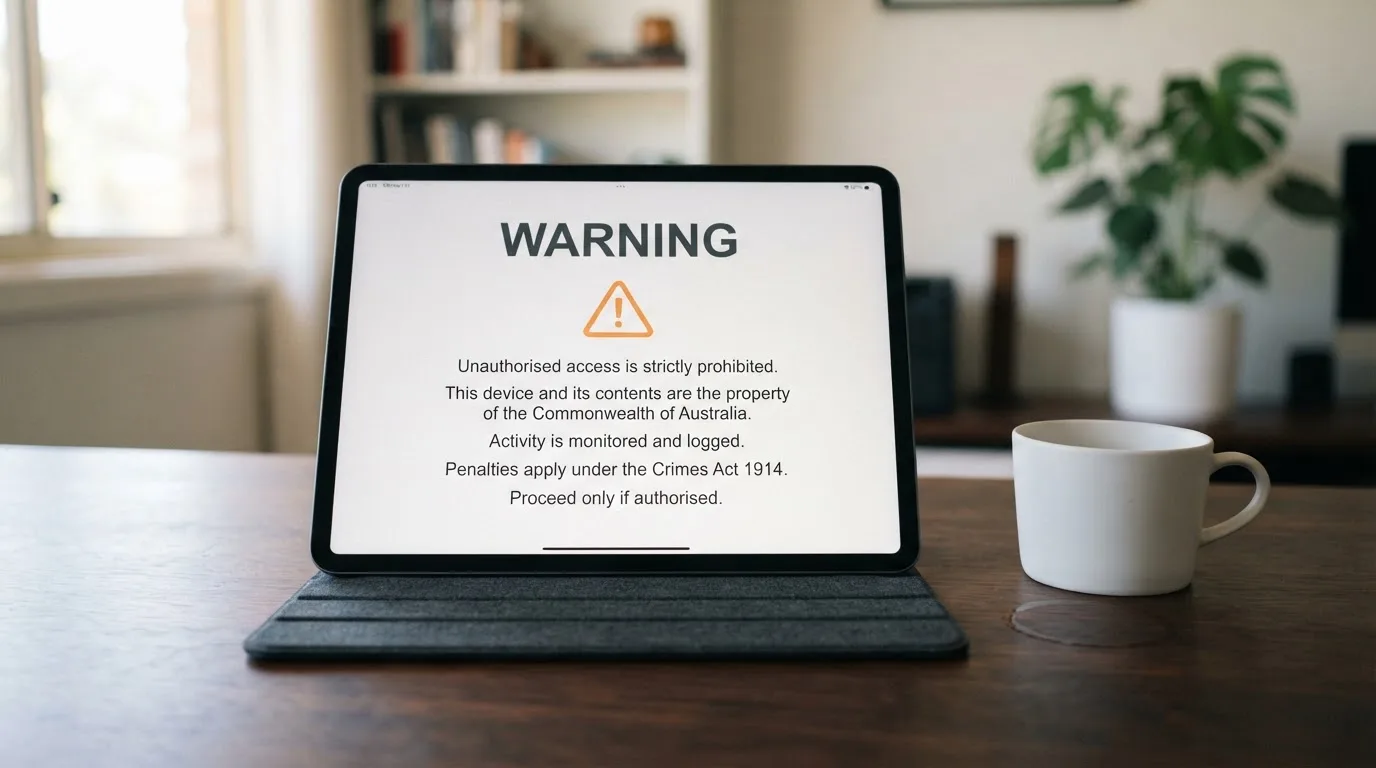
The point worth holding onto is the cadence. Blockings are not one-off: the ACMA issues new rounds every few months, and the formal-warning register behind them runs longer still. A site that advertised freely this time last year may already be inaccessible through a major Australian ISP, and the operator behind it may already have received a written warning naming it under the IGA. For an Australian player, that has two consequences that no bonus terms page mentions — access through a major ISP may simply not work, and any balance left on the account at that moment is sitting with an entity the Australian regulator has told to stop.
Why an Australian consumer has no recourse against an offshore site
This is the part a free-spins landing page never explains. The Australian complaints bodies — the ACMA itself for the regulatory side, the Australian Financial Complaints Authority for anything touching a bank, the various state and territory gambling help services — are built around Australian-licensed operators. An offshore casino is not connected to any of them. A refused withdrawal has to be chased through the operator’s own customer-service channels, in whatever jurisdiction its licence is written, with whatever dispute mechanism that licence requires. BetStop, the National Self-Exclusion Register that has been live since August 2023, binds only Australian-licensed online and phone wagering services. Excluding yourself from BetStop does not exclude you from an offshore site, because the offshore site was never enrolled in it. The same is true of the responsible-gaming limits a licensed Australian bookmaker must offer. They do not travel.

H2 Gambling Capital’s 2025 estimate puts annual Australian losses to illegal gambling sites at around A$3.9 billion, and the share of gambling flowing through legal channels fell from 74 per cent in 2021 to 64 per cent by the time the report was written. Those are not figures anyone is going to recover. They are losses paid to entities that, by definition, were never answerable to the Australian consumer-protection system in the first place.
Where responsible gambling fits when the offer is offshore
A page that talks about free spins owes a reader the help lines, because the marketing works regardless of the legal status of the offer. The National Gambling Helpline is 1800 858 858 — free, twenty-four hours a day — and the same service is reachable by online chat through Gambling Help Online. Both are run by the Australian state and territory health services and exist for the gambler and for the people around them, not for the operator.
BetStop, the National Self-Exclusion Register, is the structural answer the Australian licensed industry built. A person who enrols is excluded from every Australian-licensed online and phone wagering service at once, and the exclusion runs for a chosen period of at least three months up to a permanent block. The catch is the one already named: BetStop covers the licensed market, and an offshore casino is not on it. Self-excluding from BetStop and then opening an account with an offshore operator is, in practice, doing half the job. The exclusion only works for the operators who agreed to honour it.
The Australian banks have built their own layer on top of this. Westpac’s gambling block works at the card level, refusing authorisation of any transaction registered under the merchant category code for betting and casino gambling on eligible personal credit and debit cards. ANZ runs a similar block through its app, and ANZ’s block extends to Gambling Transactions made through a digital wallet such as Apple Pay on an eligible card, not just the physical card. Once ANZ’s block is on, removing it requires a forty-eight-hour cooling-off period — the bank adds the wait on purpose — and the product terms warn that not every gambling transaction will be blocked and that some non-gambling transactions may be blocked in error. Commonwealth Bank offers an equivalent card-level gambling lock through its app. None of these tools reach a crypto deposit, which is one of the reasons the next section matters.
Why paying in crypto does not change who is on the other end
The pages that market “no KYC” no-deposit free-spin offers tend to argue the anonymity angle: no identity document, no name on the transaction, nothing to trace. The argument mistakes the question. The question is not whether the Australian bank can see the payment — it cannot, on a crypto rail. The question is whether the operator on the other end is one the Australian consumer-protection system has any hold over, and the answer is no, in the same way it was no before the coin left the wallet.
The Interactive Gambling Act’s 2023 amendments did more than tighten the prohibited-services list. They also banned the use of credit cards and credit-related products for licensed online wagering, a restriction that pulls in linked digital wallets like Apple Pay, and they banned the use of digital currency as a payment method for licensed online wagering from 11 June 2024. The penalties for an Australian-licensed operator that takes a credit or a crypto deposit are real — up to A$247,500 per breach — and the ban exists precisely because those rails make responsible-gaming tools harder to enforce. None of that reaches an offshore site. An offshore site is not licensed, the ban does not bind it, and the responsible-gaming tools it might or might not offer are tools the operator wrote for itself.
The crypto angle adds a second problem. The offshore casino’s “no KYC” claim sits alongside the IGA’s prohibition on supplying casino games to Australians, and the consumer has no Australian body to complain to if the offer goes wrong. A refused withdrawal of fiat winnings can be escalated through a chargeback at the card issuer; a refused withdrawal of crypto winnings usually cannot, because most crypto transactions are irreversible by design. The reader who picks an offshore site because the deposit is harder to trace is also picking the rail that makes a complaint hardest to file. That is the trade, and the marketing does not state it.
The payment methods a no-deposit page usually mentions, and what each one actually does for an Australian
A no-deposit free-spin offer is, by definition, free to claim. The payment methods a page lists beside it are the methods a player would use after the spins convert to a withdrawable balance, and that is the moment the practical questions start. A short reading of each is in order.
Debit cards and the gambling blocks that already sit on them
| Payment Method | Transaction Speed | Status in Australia |
|---|---|---|
| Debit Card | Instant | Licensed |
| Bank Transfer | Under a minute | Licensed |
| PayID | Instant | Licensed |
| BPAY | Next business day | Licensed |
| Apple Pay | Instant | Licensed |
A standard Visa or Mastercard debit card is the payment method most Australians already hold, and the gambling blocks most major banks now layer onto those cards mean a transaction can be refused at the merchant-category-code level before it reaches the casino. Westpac, ANZ and Commonwealth Bank all run such blocks through their apps, and the blocks cover digital-wallet transactions on the same card as well. A player who has not turned a block on may still find a transaction refused at the cashier, because the merchant’s category code triggers the block regardless. The reader-facing point is that the block is a feature, not a bug: a refused deposit at an offshore casino is the protection doing its job. A player who has turned a block off to make the deposit work has turned the protection off on purpose, and the bank’s forty-eight-hour cooling-off period before ANZ will reinstate the block is the bank’s way of asking whether that is really what they want.
PayID, Osko and the bank-transfer route
PayID and Osko are the two halves of the same Australian Payments Plus product. With Osko, a bank transfer between participating Australian banks arrives in under a minute, twenty-four hours a day, including weekends, addressed to either a BSB and account number or to a PayID. PayID-based instant transfers are now available at more than a hundred Australian financial institutions, and more than 25 million PayID identifiers had been registered on the New Payments Platform as of April 2025. PayID has one feature that matters here: before a transfer is sent, the payer sees the name of the account holder. AP+ itself warns that being asked to transfer money to a PayID on an illegal gambling site almost certainly means a scam site. The warning is in the product documentation. An Australian player who sees a PayID field at the cashier of an offshore casino is being shown that warning by the system, not by the operator.
BPAY and the bill-payment rail
BPAY is the bill-payment service built into Australian online banking. The payer enters a Biller Code and a Customer Reference Number, both printed on the bill, and the transfer is debited from the payer’s own account and credited to the biller. BPAY has operated in Australia since 1997, is available in the online banking of more than a hundred and forty banks and financial institutions, is offered by more than ninety-five thousand businesses, and is run by Australian Payments Plus alongside PayID and Osko. The same AP+ warnings apply — a biller code at an offshore casino is still a payment to an entity the IGA prohibits from supplying casino games to Australians — but the rail is one a player can recognise.
Apple Pay, Google Pay and Samsung Pay
By the end of 2025, Apple Pay, Google Pay and Samsung Pay transactions collectively accounted for around 45 per cent of all card payments in Australia by number. None of those wallets charge a fee to the consumer for using them in stores, online or in apps — any surcharge comes from the merchant’s own card-processing fees, and transaction limits and PIN requirements for Apple Pay purchases are set by the card issuer or the merchant, not by Apple. What this means for an offshore casino is the same thing it means for any other merchant: the underlying card controls — including a gambling block — travel with the card, and ANZ’s product terms confirm that its block covers Apple Pay transactions on an eligible card as well. A wallet changes the rail, not the rules.
American Express
American Express was established in 1850 as a freight-forwarding company and became a card issuer later, launching its first charge card on 1 October 1958. Unlike Visa or Mastercard’s four-party network, Amex has traditionally issued cards and processed transactions itself as a three-party scheme. The Reserve Bank of Australia’s July 2025 review of merchant card payment costs proposed removing surcharges only on eftpos, Mastercard and Visa transactions, explicitly leaving American Express outside the scope of the proposed surcharge ban. The detail is mostly relevant because Amex is the card that tends to be declined where other cards are accepted, and that is true at offshore casinos as well. The RBA carve-out is the structural reason.
The threshold-transaction-report question
The reader who wonders whether a large transfer will trigger an AUSTRAC report should know that the threshold-transaction-report rule, which requires reporting of transfers of A$10,000 or more, applies only to physical cash. Ordinary electronic bank transfers are not subject to that per-transaction reporting requirement, regardless of the amount sent. That is not a permission to send A$10,000 to an offshore casino — the IGA’s prohibition on supply is the operative rule — but it does answer the specific question.
How a no-deposit free-spin offer is actually built
A no-deposit free-spin offer is a marketing construct, and the parts that matter are almost never the part the headline emphasises. The headline is the spin count — fifty, a hundred, sometimes two hundred — and the terms sit behind it. A reader who only reads the headline has read the offer’s least informative line.
What the “no deposit” tag actually buys
The “no deposit” tag is the inducement. It is what makes a player register an account and confirm an email address before any money changes hands, and the value of that registration to the operator is the value of having the player’s details on file. The spins themselves are usually credited to a single named slot — sometimes a popular title, sometimes an obscure one chosen because the operator has a favourable revenue share on it — and the winnings from those spins are paid as a bonus balance, not as cash.
What sits behind the spin count
The two clauses that decide what the offer is worth are the wagering requirement and the maximum cashout. A wagering requirement of, say, forty times the bonus amount means the player has to wager forty times whatever the spin winnings came to before any of it can be withdrawn. A maximum cashout caps the amount that can ever be withdrawn from the offer — typical caps sit at A$100 or thereabouts, regardless of how much the spins returned. A player who lands a large symbol combination on the named slot can find that the winnings above the cap simply do not exist, in withdrawal terms. The marketing term for this is sometimes a “conversion cap” or a “max win” rule, and it is the line that quietly decides what the offer is actually worth.
Game weighting, expiry and the spin value
Game weighting is the third clause and the most opaque. Most no-deposit free-spin offers apply the wagering requirement only to slot play, and even then the contribution is rarely one hundred per cent across the whole lobby — table games and live casino games usually contribute nothing or close to nothing, and some slots are excluded outright. The expiry window is the fourth: most offers give the player a fixed number of days to use the spins and a further fixed number of days to clear the wagering requirement. The spin value — how much each free spin is worth, usually the slot’s minimum stake — rounds out the structure. A reader who treats the headline spin count as the offer has read the cover, not the book.
The pattern offshore operators actually run
The pattern across most offshore operators is recognisable enough to summarise: a no-deposit spin bundle attached to a single named slot, winnings paid as a bonus, a wagering requirement in the thirty-to-fifty-times range applied to the bonus amount, a maximum cashout that turns most wins into a small fixed amount, and an expiry window measured in days. The pages that advertise these offers tend to lead with the spin count and bury the rest of it under several layers of disclosure. That is the pattern this section describes, not any single operator’s offer.
The titles the marketing tends to spotlight, and what an Australian player should know about each
A no-deposit free-spin offer usually names a single slot. The slot is named because the operator has chosen it, not because the player has. A short reading of the titles the marketing tends to reach for is in order, because the choice is not arbitrary and the reader is entitled to know why those titles keep appearing.
Free pokie spins and what a “pokie” is in this context
“Free pokie spins” is the phrasing an Australian-facing page uses, and “pokie” in that context is Australian English for a slot machine. The titles an Australian-facing page lists under that heading are the same titles any other English-language page would list — the same studios, the same mechanics — but the page dresses them in the local vocabulary. The point worth keeping is that “pokie” is the marketing word for the same product a European-facing page calls a slot or a video slot.
The titles that recur and why
A short list of the recurring titles across the marketing of no-deposit offers gives a reader a feel for the pattern: Starburst, Book of Dead, Gonzo’s Quest, Wolf Gold, Sweet Bonanza, Big Bass Bonanza. Each of those is a slot with a recognisable name, a recognisable mechanic and a wide enough release that almost every offshore aggregator carries it. The reason those titles recur is the reason any catalogue keeps the same items in the front window: they convert. The reader who sees the same five titles on offer after offer is looking at the same handful of supplier-relationships, and that is information about the market rather than about the player.
What the marketing does not show
The marketing does not show the return-to-player figure for the named slot, the volatility band, the hit frequency, or whether the named slot is even the one the wagering requirement can be cleared on. Some of those figures appear in the slot’s own information page; none of them appear on the offer page. The reader who treats the offer page as the full picture has read the catalogue copy and missed the specification.
Landscape
The brands below are not a ranking. They are listed because the Australian Communications and Media Authority has issued a formal warning over each of them, under the Interactive Gambling Act 2001, for offering prohibited services to Australians. The table is built from the regulator’s own register rather than from affiliate marketing pages, and the comparison is meant to show how often the same operator structure recurs.
| Brand | ACMA action and date | Operator named by the ACMA | Subject support |
|---|---|---|---|
| RocketPlay | Formal warning — March 2026 | Pulsup Ltd (Rocketplay); earlier Dama N.V., May 2022 | listings-only |
| Level Up Casino | Formal warning — May 2022 | Dama N.V. | listings-only |
| Woo Casino | Formal warning — March 2025 | Dama N.V. | no-data |
| Spirit Casino | Formal warning — May 2025 | Dama N.V. | no-data |
| National Casino | Formal warning — July 2025 | Consolutetish S.R.L. | listings-only |
| Bizzo Casino | Formal warning — July 2025; earlier warning 2022 | Consolutetish S.R.L.; earlier TechSolutions | listings-only |
| Ignition Casino | Formal warning — July 2025 | Bamboo Media | no-data |
| Instant Casino | Formal warning — February 2025 | EOD Code SRL | listings-only |
| Jackbit | Formal warning — April 2026 | Ryker B.V. | no-data |
| Casino Intense | Formal warning — April 2025 | Sterplay Holding Ltd | listings-only |
| Sky Crown | Formal warning — September 2022 | Hollycorn N.V. | no-data |
What the table makes plain is the recurrence on the operator side. Two of the eleven brands — Level Up and Woo and Spirit — sit under the same Dama N.V. operator, Bizzo and National Casino sit under the same Consolutetish S.R.L., and the rest spread across single-brand holdings. The pattern is consistent: each brand the ACMA names sits behind a separate holding entity, and the holding entity is what the warning actually attaches to. A reader who treats the brand as the operator has read the wrong line.
The blocking rate since November 2019
Since the ACMA’s first blocking request in November 2019, the regulator has asked Australian internet service providers to block 1,751 illegal gambling and affiliate marketing websites by June 2026. Spread across the roughly seventy-nine months between those two dates, the running total works out to a band of roughly twenty-two blocking requests a month, with the rate climbing as the ACMA’s enforcement programme matured. The arithmetic belongs to the page rather than to the regulator, and the condition is the obvious one: each blocking request covers a batch of websites rather than a single domain, so the figure is a measure of how often the regulator has used the power rather than a count of individual sites. What the band shows is that the ACMA’s blocking programme is a continuous operation rather than a one-off exercise — a site that is not blocked today is, on the historical rate, more likely than not to be added to a future round.
Brand-by-brand reading of the eleven operators the ACMA has warned
The same eleven brands reappear in the marketing around no-deposit free-spin offers in Australia. The read of each below draws on the ACMA’s formal-warning register and on nothing else, because the only sources for the offer-side details are affiliate marketing pages that the regulator has already named in a warning.
RocketPlay
The ACMA issued a formal warning to Pulsup Ltd over Rocketplay in March 2026. The site carries an earlier warning too, issued to Dama N.V. in May 2022 under a previous Australian-facing branding, and the fact that the same offer has been re-launched under a new holding is the most useful thing a reader can take from the brand page. The offer-side terms RocketPlay markets in Australia are not in scope for this page, because the only source for them is affiliate marketing pages that the regulator has named.
Level Up Casino
Level Up Casino sits under Dama N.V., the same Curaçao-incorporated operator the ACMA warned in May 2022 over six brands at once. The formal warning lists online casino games and online pokies among the prohibited services the brand offered to Australians, and the brand has continued to operate under the same operator since. The pattern — one warning covering several brands, all of which continue — is the recurring shape of the Dama N.V. portfolio.
Woo Casino
The ACMA issued a further formal warning to Dama N.V. over Woo Casino in March 2025, on top of the May 2022 warning that already named the operator. Woo is the same operator as Level Up; the brand is the difference. The page does not attempt a read of Woo Casino’s offer terms, because the same source problem applies.
Spirit Casino
Spirit Casino is the third Dama N.V. brand on the ACMA’s register, with a formal warning issued in May 2025. Three warnings, one operator, three brand fronts: that is the picture the register draws, and the read of Spirit Casino is the read of Dama N.V. again.
National Casino
The ACMA issued a formal warning to Consolutetish S.R.L. over National Casino in July 2025. National Casino is named on the register alongside Bizzo Casino under the same operator. There is no offer-side read here, for the same source reason as the rest of the page.
Bizzo Casino
Bizzo Casino carries the most warnings of any brand on the list. The ACMA warned TechSolutions (CY) Group Limited and TechSolutions Group N.V. over the brand in 2022, then warned Consolutetish S.R.L. over the same brand in July 2025, on top of the National Casino warning in the same round. A brand that has attracted two formal warnings from the same regulator under two different operators is a brand whose marketing is doing something the regulator has had to act on twice.
Ignition Casino
The ACMA issued a formal warning to Bamboo Media over Ignition Casino in July 2025. Ignition is a long-running offshore brand and the warning sits alongside the warnings to Consolutetish S.R.L. in the same month — the July 2025 round was the regulator’s busiest on the register.
Instant Casino
The ACMA issued a formal warning to EOD Code SRL over Instant Casino in February 2025. Instant Casino is the brand whose marketing most often pairs a free-spin offer with a PayID deposit claim, which is the second question the FAQ block below addresses.
Jackbit
The ACMA issued a formal warning to Ryker B.V. over Jackbit in April 2026. Jackbit is the most crypto-leaning brand on the list, and the read of a crypto offer at an unlicensed operator is the read the responsible-gambling section above has already made.
Casino Intense
The ACMA issued a formal warning to Sterplay Holding Ltd over Casino Intense in April 2025. Casino Intense sits in the same cohort of single-brand holdings the regulator has had to warn individually.
Sky Crown
The ACMA issued a formal warning to Hollycorn N.V. over Sky Crown in September 2022, alongside a warning over the same operator’s Blue Leo service. Hollycorn is one of the more prolific operators on the ACMA’s register across its various brands.
The broader picture of the offshore market in 2026
The H2 Gambling Capital estimate of around A$3.9 billion a year in Australian losses to illegal gambling sites, and the fall in the legal-channel share from 74 per cent in 2021 to 64 per cent by the time of the 2025 report, is the headline scale. Behind that figure is the operational picture this page has been drawing: a market with no Australian consumer-protection reach, an enforcement regime that runs through warnings and ISP-level blocking rather than player-level prosecution, and an offer-side marketing that leans on inducements the Australian regulator has repeatedly told the operators behind them to stop using.
The 2026 reform timetable is worth holding onto, because the law is moving. The Interactive Gambling Amendment (Gambling Reform) Bill 2026 passed Parliament on 19 August 2026, and its advertising and inducement measures commence on 1 January 2027. The bill is law with a future start date rather than law already in force on a 2026 page, and the inducement measures are the relevant ones for the no-deposit-free-spin market, because they address the marketing layer rather than the supply layer the IGA already prohibits. The shape of the 2027 regime will decide how much of the marketing described on this page is still possible to run after the start date.
The Australian tax position for a recreational player
A recreational gambler’s winnings are not assessable income under section 6-5 of the ITAA 1997, and losses are not deductible, unless the person carries on a business of gambling. The point is model guidance rather than personalised advice — “check with the ATO” is the usual closing line for a reason — but the practical consequence is that a recreational player who withdraws a small win from a no-deposit offer keeps the win and writes off the time spent. The position is the same for legal and illegal winnings, which is one of the few points on which the legal status of the operator does not change the player’s tax form.
Where this leaves the reader
A no-deposit free-spin offer is a marketing construct, structured around a spin count, a wagering requirement, a maximum cashout and an expiry window, marketed by operators the Australian Communications and Media Authority has repeatedly had to warn. The arithmetic the offer is built on works against the player on every clause except the spin count itself, and the spin count is the line the marketing leads with. The Australian legal frame makes the supply of the offer unlawful in the first place, and the Australian consumer-protection system does not reach the operator on the other end. The responsible-gambling tools that do exist — BetStop, the bank-level gambling blocks, the National Gambling Helpline — work for Australian-licensed operators and for transactions with them, and the offshore offer is built to sit outside every one of them.
The reader who came to this page for a ranking is not going to find one, because a ranking of unlawful offers to Australians is not a thing this page can produce in good faith. The reader who came to understand what an offshore no-deposit free-spin offer actually is, and what it costs, is the reader this page was written for.
Frequently asked questions
What is the difference between a no-deposit bonus and a no-deposit free spins offer specifically?
A no-deposit bonus is a credit to the player’s bonus balance, redeemable across a range of games and usually subject to a wagering requirement. A no-deposit free-spins offer is restricted to a single named slot, the spin value is fixed, and the winnings are paid as a bonus balance with the same kind of wagering requirement attached. The free-spins offer is narrower in scope and usually carries a tighter maximum-cashout cap.
Do free pokie spins at a crypto casino come with different terms to a fiat one?
The headline structure is usually the same — a fixed number of spins on a single named slot, a wagering requirement and a maximum cashout. The practical difference is on the withdrawal side, because crypto withdrawals are harder to dispute than card withdrawals and the operator’s compliance with any responsible-gaming request is harder to enforce through a crypto rail.
Is claiming free spins from an offshore casino something an Australian can lawfully do?
The Interactive Gambling Act 2001 targets the supply of online casino games to Australians, not the individual player. The operator offering the spins is the party the regulator acts against, and the ACMA’s enforcement is built around formal warnings and directions to ISPs to block offending sites. The player is not prosecuted, but the offer itself is unlawful supply under Australian law.
Why would a site pair free spins with a PayID deposit claim if the spins are meant to be free?
The free spins are the registration inducement. The PayID deposit method becomes relevant once the spin winnings are paid as a bonus balance and the player wants to withdraw — the operator still needs a payment rail for that, even if the initial offer did not. AP+ warns that being asked to transfer money to a PayID on an illegal gambling site is almost certainly a scam signal.
How many free spins do these offers typically advertise, and does the number matter more than the terms?
Headline spin counts run from twenty to two hundred and are usually the figure the marketing leads with. The terms matter more: a wagering requirement of forty times the bonus amount and a maximum cashout of A$100 turns most headline spin counts into a small fixed payout, regardless of how many spins the offer advertises. See also Reload bonus offers in Australian online casinos .
What is usually excluded from a free-spins-only bonus that a full deposit bonus would include?
Free-spins-only bonuses typically exclude table games and live casino games from wagering contribution, exclude a list of named slots from the same contribution, and cap the maximum withdrawal at a fixed amount that a deposit bonus does not. They also expire faster than a deposit bonus, often within seven days of credit.