
Big jackpot slots for Australian readers: the gap between the offer and the law
A search for “big jackpot slots online” lands on an empty stretch in Australia. The same offshore brands that dominate those results everywhere else run here without a licence, because no Australian jurisdiction issues one — and the regulator has spent six years publicly cataloguing the operators that ignore that. This page is built around that gap rather than around it. It explains the mechanics of a big-jackpot slot, names the Australian law that keeps offshore casinos outside it, lists the brands the ACMA has acted against in the last twelve months, and points to what is genuinely licensed and reachable from Australia for anyone who wants to play a jackpot-style game for real money.
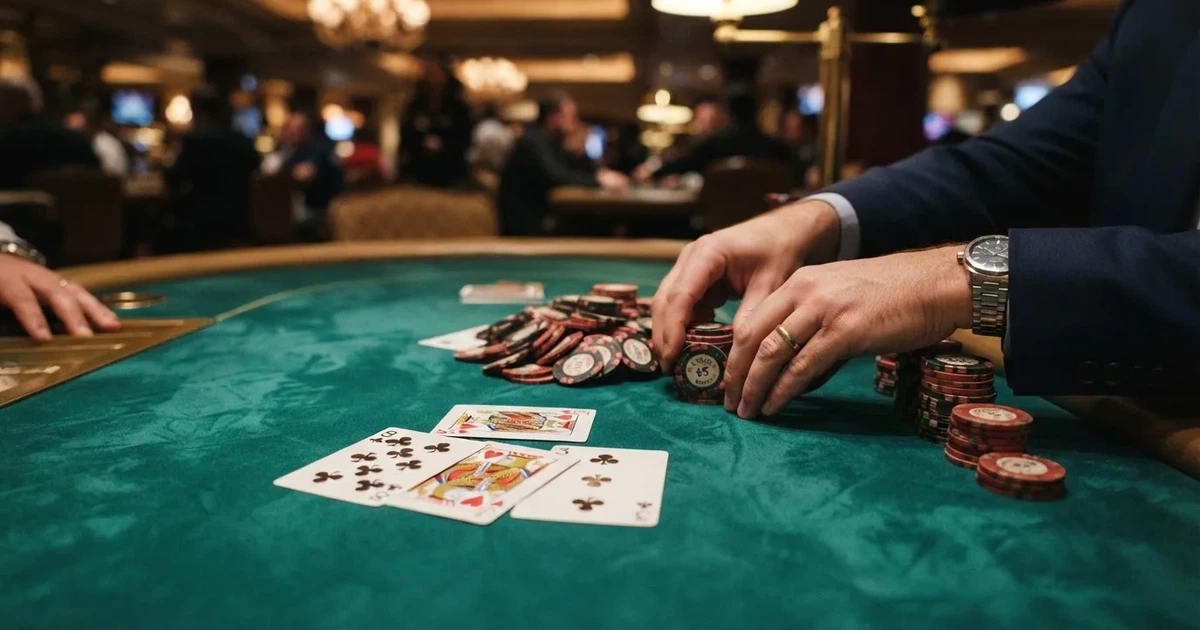
Current as of 28 October 2026, licence claims verified against the ACMA’s own register of formal warnings and the Interactive Gambling Act 2001.
Table of Contents
- The Australian legal landscape for online jackpot slots
- How a progressive jackpot slot actually works
- The ACMA enforcement record, brand by brand
- What playing at an offshore casino actually costs the punter
- What the IGA does not do
- Where jackpot play is actually licensed and reachable from Australia
- Responsible gambling for punters reading this page
- Reading the marketing copy around offshore casinos
- Jackpot slots for Australian readers, summarised
- Frequently asked questions
The Australian legal landscape for online jackpot slots
Offering an online casino game — slot machine, table game, jackpot title — to a person physically in Australia is a contravention of the Interactive Gambling Act 2001, tightened by the Interactive Gambling Amendment Act 2017. The target of the law is the provider, not the individual punter. No state or territory regulator, including the Victorian Gambling and Casino Control Commission, the New South Wales Casino Control Authority or the Northern Territory Racing and Wagering Commission, can issue an Australian licence for online casino products. What state and territory regulators do licence is wagering on races and sport placed before the event, lotteries and keno — and in practice those wagering services are licensed in the Northern Territory because the tax regime there is favourable: 52 of Australia’s online bookmakers, including Sportsbet, Bet365 and Ladbrokes, hold their licence from the NTRWC, a Darwin-based commission with no full-time staff that meets once a month. That is the full extent of online gambling licensed inside Australia.

| Activity | Status in Australia |
|---|---|
| Online Casino Games | Prohibited |
| Online Slots (Pokies) | Prohibited |
| In-Play Betting | Prohibited |
| Pre-Event Sports Wagering | Licensed |
| Lotteries and Keno | Licensed |
The currency stamp on this material is the ACMA’s own record of formal warnings and blocking requests. Where the operator named below is described, the source is the ACMA’s published register of formal warnings under the Interactive Gambling Act 2001.
That arrangement leaves a particular shape of demand unserved. A reader who types “best online casinos with big jackpot slots” into a search bar is usually asking which offshore casino runs the largest Mega Moolah pool, or which operator pays the highest progressive on a Monday morning. In Australia those questions have no licensed answer. The brands that show up in the search results are precisely the brands the ACMA has been writing formal warnings to since at least 2017, and the most recent round reported in late June 2026 added another twelve names to a blocking list that started in November 2019.
This page is written for a reader who arrives at that search bar wanting a working shortlist. It does not pretend the shortlist exists. It names the brands that dominate the offshore market, shows when and why the regulator has acted against each, and redirects to the licensed routes that actually exist.
What “online casino” means under the IGA
Section 5 of the Interactive Gambling Act 2001 defines a “prohibited interactive gambling service” as one provided to a customer in Australia that involves a game of chance, a game that mixes chance and skill, or wagering on an event after it has started (in-play). Online slot machines, progressive jackpot slots, online baccarat, online blackjack and online craps all sit inside that definition. The provider commits an offence by offering the service; the person playing does not. The provider does not commit an offence by holding a licence from Curaçao, Anjouan or Kahnawake — those regimes exist for the offshore market, but the Australian statute applies to the act of supplying to an Australian customer regardless of where the operator is incorporated or which offshore body has registered it.
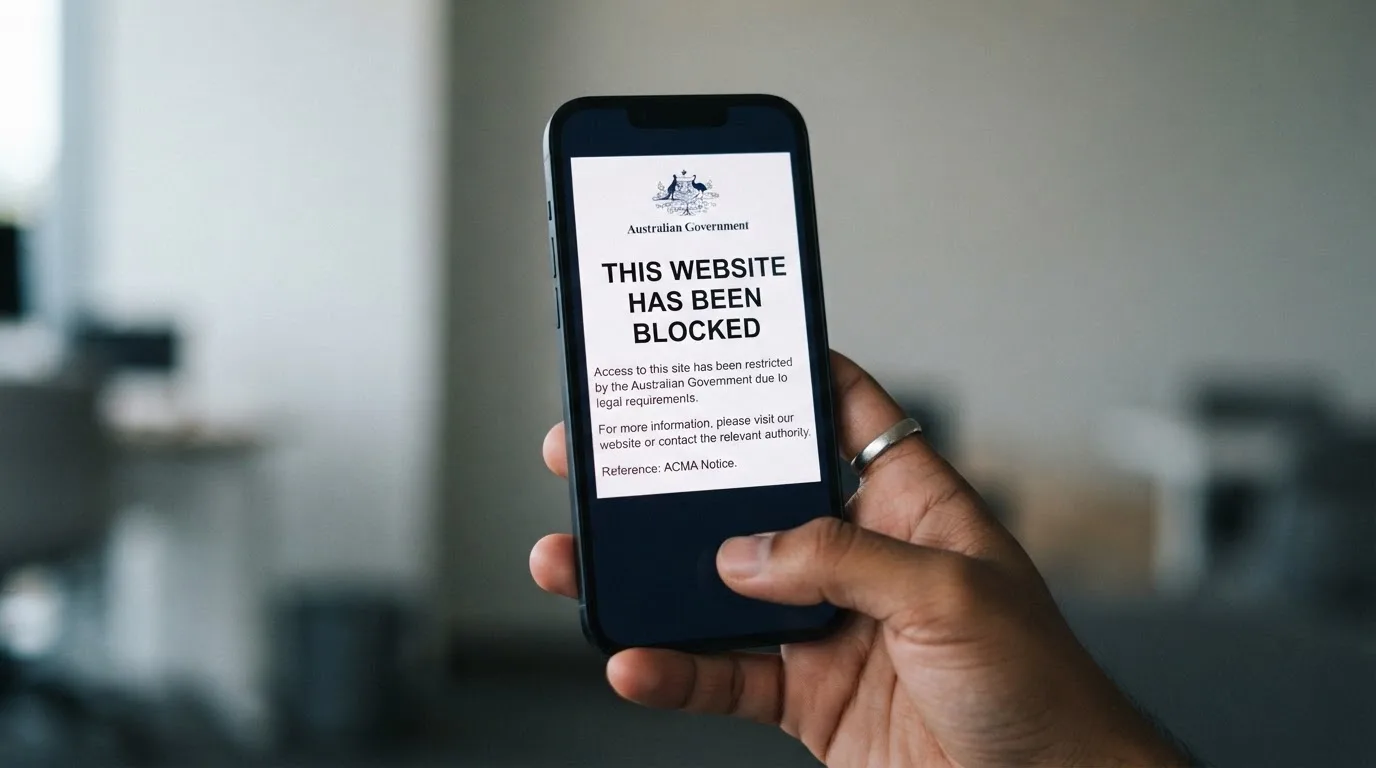
This is the reason an offshore casino will display a licence badge that does not authorise it to take Australian customers, and the reason the ACMA’s enforcement page names Curaçao-licensed brands repeatedly: Curaçao eGaming is the most common offshore seal on a brand the regulator has just warned. A licence badge on an offshore site is information about the operator’s corporate domicile. It is not information about whether the operator is allowed to take your money.
What is licensed, and to what extent
The NTRWC licences 52 online bookmakers. Their products are pre-event sports betting, racing and the handful of lottery-style products the licence permits. Progressive jackpots, online slots and live dealer table games are not among those products. Crown Melbourne operates approved table games — Traditional Baccarat, Crown Baccarat, 2 to 1 Baccarat and the Crown Pairs / Pot of Gold blackjack variants approved by the VGCCC in 2024 — but Crown Melbourne is a land-based casino, not an online one, and the same is true of The Star Sydney and the smaller state and territory casinos. Crown Resorts’ own corporate turmoil after the Bergin Commission findings and the appointment of special managers at Crown Melbourne is a separate story from this page’s subject, but it sits in the background of any sentence about Australian-licensed casino play.
There is no Australian-licensed online casino offering progressive jackpot slots to Australian residents, and there is no current bill before Parliament that would create one. The Interactive Gambling Amendment (Gambling Reform) Bill 2026, passed by Parliament on 19 August 2026, tightens advertising and inducement rules on existing licensees; its measures commence on 1 January 2027. It does not open a new online casino product category.
How a progressive jackpot slot actually works
The mechanism matters here, because the marketing around “big jackpot slots” leans on language that doesn’t survive contact with how a progressive pool is built. Three things define the product:
The pool grows with every losing wager. A small slice of each spin — typically a fraction of one percent — is diverted into a separate jackpot pool rather than paid out as ordinary winnings. The pool is shared by every machine in the linked network, which can be the dozen machines on one casino floor, or the several thousand machines running the same title across hundreds of licensed venues. The Megabucks progressive, introduced by International Game Technology in 1986 and first paid out on 1 February 1987 at $4,988,842.17, was the model. Mega Moolah, launched by Microgaming in 2006 and now distributed by Games Global, runs the same architecture across online operators worldwide.
The pool resets after a win. Once a jackpot is hit, the meter drops to a predetermined seed amount and starts accumulating again. There is no top. The “must-drop” or “must-hit-by” variant sets an upper cap and a random amount within a preset range — for example $1,000 to $3,000 — generated immediately after the previous jackpot is paid, so the player does not have to land a particular symbol combination to win it. The mystery-jackpot structure is what produces the visibly large, capped numbers on a casino’s homepage: the cap is a marketing budget, not a record.
Some pools cross 100 percent return. When a progressive pool grows large enough, the theoretical return on a maximum-coin spin crosses 100 percent — the machine becomes a positive-expectation bet. This break-even point is hard to calculate precisely for slots because the reel layouts and weighting are not published, and the progressive meter can reset before a player reaches the spin that would have qualified, but the mechanic is real. It is what justifies the long-standing strategy of placing maximum-coin bets on Megabucks-class machines, and it is what underwrites the multimillion-dollar headline figures.
The marketing word to watch is “guaranteed”. A progressive jackpot is not guaranteed to be paid at any particular size; it is paid when the qualifying spin is landed. A “must-hit-by” jackpot is guaranteed to be paid before the cap, but not at any specific size below the cap, and the published amount in the meantime is a clock reading, not a promise.
The Mega Moolah record, and what came after
The largest online slot jackpot ever recorded was €19,430,723.60, won on 27 April 2021 by a player in Belgium at Napoleon Sports & Casino on Microgaming’s Absolootly Mad: Mega Moolah. Games Global, the business that absorbed Microgaming’s progressive distribution arm, has reported two further wins of £11.5 million and 13.5 million on later Mega Moolah spins. The headline figure is a useful yardstick for what a progressive can grow to under sustained traffic; it is not a figure any single spin can promise.
Jackpot frequency between hits
A progressive pays out less often than a non-progressive slot of the same denomination because a meaningful share of the spin yield is routed into the pool rather than into the paytable. The base game still pays its ordinary line wins and feature bonuses, but the headline hit rate on the four Mega Moolah tiers (Mini, Minor, Major and Mega) sits well below the rate at which a non-progressive slot of comparable volatility produces a feature round. That is the structural reason a Mega Moolah session feels flatter than a session on a same-denomination non-progressive title between jackpot hits: it is paying out less often because it is paying out more, when it does.
The ACMA enforcement record, brand by brand
The brands in this section are not ranked. They are listed in the order the ACMA has acted against them, and each is named because the regulator itself has named it. None carries an Australian licence. The point of the table is to show, at a glance, who is operating in the space the search results suggest — and what the regulator’s published record says about each one.
Formal warnings and ACMA actions, 2022 to 2026
| Brand | ACMA action and date | Operator named by the ACMA | Subject support |
|---|---|---|---|
| Bambet | formal warning, May 2022 | Dama N.V. | — |
| Dazard | formal warning, May 2022 | Dama N.V. | — |
| Level Up Casino | formal warning, May 2022 | Dama N.V. | — |
| RocketPlay | formal warning, May 2022; further formal warning, March 2026 | Dama N.V. (2022); Pulsup Ltd (March 2026) | — |
| Wild Tornado | formal warning, May 2022 | Dama N.V. | — |
| Cobra Casinos | formal warning, May 2022 | Dama N.V. | — |
| Sky Crown | formal warning, September 2022 | Hollycorn N.V. | — |
| Blue Leo | formal warning, September 2022 | Hollycorn N.V. | — |
| Bizzo Casino | formal warning, 2022; further formal warning, July 2025 | TechSolutions Group (2022); Consolutetish S.R.L. (July 2025) | — |
| Instant Casino | formal warning, February 2025 | EOD Code SRL | — |
| Woo Casino | formal warning, March 2025 | Dama N.V. | — |
| Spirit Casino | formal warning, May 2025 | Dama N.V. | — |
| Casino Intense | formal warning, April 2025 | Sterplay Holding Ltd | — |
| Ignition Casino | formal warning, July 2025 | Bamboo Media | — |
| National Casino | formal warning, July 2025 | Consolutetish S.R.L. | — |
| Jackbit | formal warning, April 2026 | Ryker B.V. | — |
| CasinOK | formal warning, April 2026 | Ryker B.V. | — |
The column headings and the rows that follow carry the ACMA’s own register. The dash entries in “Subject support” mark brands for which research turned up no support either way; the level of risk a reader carries is the same whether a column is empty or filled, because what matters is whether the brand is licensed to take Australian money, which none of them are.
What the ACMA has blocked in 2026
In the round reported on 26 June 2026, the ACMA asked Australian ISPs to block 12 more illegal gambling sites: 7Signs, ChromaBet, Donbet, Duospin, Freshbet, Slots Gem, Jacks Club, Lucky Start, Pointsbetz, Spinrise, Vinyl Casino and Wildsino. The blocking request is the ACMA’s last-line tool. It follows an investigation, a formal warning, and a failure to comply, and it is the tool that produces the visible “blocked” page a reader sometimes meets on a Tuesday morning on a URL that worked on Monday.
The blocking rate, working out how fast the regulator catches up
The blocking rate is the page’s one piece of arithmetic, and the inputs are the ACMA’s own published numbers. As of late June 2026, a total of 1,751 illegal gambling and affiliate marketing websites had been blocked since the first blocking request in November 2019, and more than 230 unlicensed gambling services had left the Australian market since enforcement was strengthened in 2017. The running rate is roughly 260 blocked sites per year across the 81 months between November 2019 and the June 2026 total — a band rather than a single figure, because the count includes affiliate marketing pages as well as gambling services, and because the ACMA rounds its reporting to the calendar month rather than the calendar day.
That rate is high enough to be the headline of the picture, and not high enough to claim that the regulator is catching up with new entrants. A reader who chooses an offshore operator is choosing an operator on a list that grows by hundreds of entries a year, and the visible brand on the page today may be the next entry on the next quarterly round.
H2 Gambling Capital’s estimate of what flows offshore
The most recent estimate of what Australians lose to illegal sites comes from H2 Gambling Capital’s 2025 report, which puts the figure at about A$3.9 billion per year. The same report records that the share of Australian gambling going through legal channels fell from 74 percent in 2021 to 64 percent. The legal channel share is not falling because more Australians are gambling — it is falling because offshore product is more accessible than it was in 2017, and because the ACMA’s enforcement, however steady, has not reversed the trend.
What playing at an offshore casino actually costs the punter
The marketing word around offshore casinos is “freedom” — freedom from ID checks, freedom from deposit limits, freedom from the BetStop register, freedom to use a credit card or a cryptocurrency deposit. The same features are the source of the costs the marketing copy does not name. They are worth setting out plainly.
No Australian complaints body. If a withdrawal is refused, an offshore casino offers the punter whatever internal complaints process the operator has, and then the regulator in whatever jurisdiction the licence badge names. Curaçao, Anjouan and Kahnawake regulators handle complaints slowly and adjudicate them on the law of the licence, not on Australian consumer law. The punter has no recourse through NSW Fair Trading, Consumer Protection Victoria, the Queensland Office of Fair Trading or any of the other state and territory agencies that exist for licensed Australian services.
No connection to BetStop. BetStop, the National Self-Exclusion Register, has been live since August 2023. It binds every Australian-licensed online and phone wagering service. An offshore casino is not connected to BetStop. Self-excluding at BetStop does not exclude the punter from an offshore site; the offshore site has no mechanism through which the punter’s exclusion could be enforced. The National Gambling Helpline (1800 858 858, free, 24/7) and Gambling Help Online chat remain available regardless of where the gambling happens, and they are the route that works across both licensed and offshore channels.
No block-on-balance protection. A site blocked by the ACMA can disappear overnight, with the balance the punter had on it. There is no escrow requirement under any of the offshore licensing regimes, no requirement that player funds be held in segregated accounts, and no Australian authority that can compel an offshore operator to return a balance. A punter who keeps money on an offshore site between sessions is exposed to a one-sided closure that does not affect a balance at a Crown Melbourne cashier’s cage.
No tax, but no protection either. Recreational winnings are not assessable income under section 6-5 of the ITAA 1997 and losses are not deductible, except for the punter who carries on a business of gambling, which is not most punters. The same flat treatment of recreational winnings applies whether the punter plays at Crown Melbourne or at an offshore site. The asymmetry is that the Crown Melbourne punter has a regulator to complain to; the offshore punter does not.
What the IGA does not do
The IGA targets the provider, not the individual. A punter who opens an account, deposits, plays and withdraws from an offshore casino is not committing an offence under the statute. The ACMA’s enforcement record is built on actions against the operators, not on actions against the customers. That fact should not be read as an endorsement of the offshore product. It is a fact about who the law reaches, and the same fact is the reason the regulator’s tools are warnings, blocking requests and civil penalties rather than customer-side enforcement.
The penalties on operators are substantial: civil penalties up to A$247,500 per contravention for wagering operators, with stricter caps applying to the credit-card and crypto payment prohibition in force since 11 June 2024. The penalty framework is the reason a licensed Australian wagering operator does not accept a credit card or a cryptocurrency deposit. An offshore operator is not subject to those penalties, which is the reason its cashier page shows those payment methods.
Where jackpot play is actually licensed and reachable from Australia
The phrase “best online casinos with big jackpot slots” has no licensed Australian answer for the casino-product half of it. The licensed routes that exist for jackpot-style play are the licensed pokies venues, the licensed land-based casinos, and the licensed wagering services for racing and sport. None of those offers an online progressive jackpot slot. The substitutes that come closest:
Licensed pokies venues. A pub or club gaming room licensed by a state or territory regulator, holding a “gaming machine” approval, runs a fleet of approved pokie machines. Most fleets include progressive titles — the Australian pokies market is built around Aristocrat, IGT and Konami progressive networks that link machines across the operator’s venues. The biggest headline jackpots in Australia are paid at licensed venues, not at online operators. The punter visits the venue in person; the machines pay in cash; the operator is regulated by the state or territory gaming regulator.
Land-based casinos. Crown Melbourne, The Star Sydney, Crown Perth, The Star Gold Coast, the Brisbane casino operated by Treasury Brisbane and the Skycity Adelaide and Darwin properties run approved table games and approved gaming machines. Crown Melbourne’s blackjack and baccarat variants are VGCCC-approved; The Star Sydney operates under the NSW Casino Control Act 1992, whose section 66 requires every table game to be approved by the regulator and a copy of the approved rules to be available on request. The progressive jackpot machines on those floors are linked across the property, and in some cases across multiple properties in a network. The headline jackpots are smaller than the Mega Moolah record because the floor counts are smaller, but they are paid in person, on site, by a regulated operator.
Licensed wagering services. The NTRWC’s 52 licensees include the racing and sports brands most Australian punters already use. The products they offer are pre-event racing, pre-event sport and lotteries, with keno and some novelty products depending on the licence. None of those products is a progressive jackpot slot. The licensed route for racing and sport is the legal alternative to an offshore casino, and it is a real alternative rather than a placeholder.
The licensed options cover most of what an Australian punter actually wants to bet on. They do not cover online progressive jackpot slots, because no Australian regulator can license that product. A punter who wants to play a Mega Moolah-class title for real money has three choices: visit a licensed land-based casino, visit a licensed pokies venue, or play at an offshore site that has no Australian licence and no Australian complaints route.
Responsible gambling for punters reading this page
This section is here because the responsible-gambling shelf is a coverage requirement of this page, and because the responsible-gambling content for a page about offshore casinos is the responsible-gambling content the regulator’s own channels carry. It is not advice that the offshore product is safe to use; it is advice about what to do when gambling stops being safe, regardless of where it happens.
BetStop. BetStop, the National Self-Exclusion Register, is run by the ACMA under the National Consumer Protection Framework for Online Wagering. Live since August 2023. The registration is free, the exclusion period is a minimum of three months and can be set up to a lifetime, and the exclusion binds every Australian-licensed online and phone wagering service. It does not bind an offshore casino. The two routes for a punter who wants to be excluded from offshore product as well are the National Gambling Helpline and Gambling Help Online, which operate across both licensed and offshore channels.
National Gambling Helpline — 1800 858 858. Free, 24/7, run by Gambler’s Help and its state and territory counterparts. The line takes calls from punters and from family members, with counsellors trained in problem gambling and the financial counselling framework. The line is the same number whether the call is about an offshore site or a licensed venue; the counsellors are not the gambling operator’s staff.
Gambling Help Online. The web counterpart to the helpline, with live chat and email support. The site is operated by the same state and territory services that operate the phone line. It is the channel for a punter who would rather not phone.
State and territory counselling services. Each state and territory runs its own face-to-face and online counselling, listed on the helpline’s referral pages. The cost is generally free. The waiting time is generally short for a first appointment.
Financial counselling. A punter whose gambling has produced debt can be referred by the helpline to a free financial counsellor, who works through the debt independently of the gambling product. A financial counsellor is a better starting point than a credit repair agency for this case.
The right tool depends on what the punter wants. The helpline is the route to start with for any punter reading this page who is no longer sure the offshore product is working for them.
Reading the marketing copy around offshore casinos
Three sentences cover most of what an offshore casino’s homepage says.
“Licensed and regulated.” This refers to the offshore licence. It does not authorise the operator to take Australian customers. It is information about the operator’s corporate domicile.
“Play jackpot slots online.” This refers to the offshore product. It is offered in breach of section 5 of the Interactive Gambling Act 2001 because the customer is in Australia.
“Credit cards and crypto accepted.” This is one of the strongest signals that the operator is running outside the Australian regime. A licensed Australian wagering operator has been prohibited from accepting credit cards, credit-related products and digital currency as payment since 11 June 2024. The presence of either payment method is, on its own, evidence that the operator is not subject to the Australian rules.
The phrases “fair gaming”, “provably fair” and “RNG certified” are about the software, not about the operator. They can be true of an offshore casino’s RNG and still leave the punter with no complaints body and no Australian recourse.
Jackpot slots for Australian readers, summarised
The page’s subject is “best online casinos with big jackpot slots”, and the answer in Australia is: there is no licensed online casino offering big jackpot slots to Australians, because no Australian jurisdiction issues that licence. The brands that dominate the search results are the brands the ACMA has been acting against since 2017, and the visible blocks in June 2026 added another twelve names to a blocking list that now runs to 1,751 entries. The legal alternative is to play a progressive on the floor of a licensed casino or a licensed pokies venue, and the responsible-gambling safety net is BetStop, the National Gambling Helpline and the state and territory counselling services. Any punter who lands on this page looking for an offshore casino will find one in two clicks; what this page adds is the line that the regulator’s own register has written about it.
Frequently asked questions
Which online slot holds the record for the largest jackpot ever paid?
The record online slot jackpot is €19,430,723.60, won on 27 April 2021 by a player in Belgium at Napoleon Sports & Casino on Microgaming’s Absolootly Mad: Mega Moolah. Games Global, which now distributes the Mega Moolah progressive, has reported later wins of £11.5 million and £13.5 million on the same network.
Can a progressive jackpot slot be funded with a cryptocurrency deposit?
The Mega Moolah network itself does not require cryptocurrency, but most offshore operators running Mega Moolah accept Bitcoin, Ethereum and stablecoins at the cashier. A licensed Australian wagering operator has been prohibited from accepting digital currency as a deposit since 11 June 2024; an operator showing a crypto deposit option is therefore operating outside the Australian regime, and any subsequent balance has the same offshore exposure as the rest of the account.
Is it legal for an online casino to offer jackpot slots to Australians?
No. Offering an online casino game — slot machine, progressive jackpot slot, table game — to a person in Australia is a contravention of the Interactive Gambling Act 2001, tightened by the Interactive Gambling Amendment Act 2017. The target of the offence is the provider, not the punter; the relevant regulator is the ACMA; the visible enforcement tools are formal warnings, civil penalties and blocking requests.
Why do jackpot slots typically pay out less often than non-progressive slots?
A meaningful slice of every spin is routed into the progressive pool rather than into the paytable, so the base game’s line wins and feature bonuses happen at a lower rate than on a non-progressive slot of the same denomination. The headline payout is larger when it lands because the pool has been accumulating across every spin across every machine on the network.
Where can an Australian play a jackpot-style slot for real money through a licensed venue?
The licensed options are the licensed pokies venues — pubs and clubs holding state or territory gaming machine approvals, running Aristocrat, IGT and Konami progressive networks — and the licensed land-based casinos, including Crown Melbourne, Crown Perth, The Star Sydney, The Star Gold Coast, Treasury Brisbane and the Skycity Adelaide and Darwin properties. None of those offers an online progressive jackpot slot. The licensed wagering operators licensed by the NTRWC cover racing, sport, lotteries and keno; progressive jackpots are not among their licensed products.