
Under 1 Hour Withdrawal Casinos in Australia: The Real Settlement Picture
Data current as of 28 October 2026 and cross-checked against the Australian Communications and Media Authority register of formal warnings and blocking requests.

Table of Contents
- Responsible Gambling Comes Before Settlement Speed
- How Settlement Speed Is Actually Built
- The Landscape of Operators the ACMA Has Acted Against
- Top Operators and What the ACMA Record Says About Each
- What the Page’s Own Subject Does to This Market
- What the ACMA Enforcement Picture Looks Like
- What the Blocking Rate Tells Us About the Market
- What the Operator Reviews Above Are For
- The Legal Frame, in Full
- How the Page Fits the Reader’s Path
- Final Position
- Frequently Asked Questions
Responsible Gambling Comes Before Settlement Speed
A withdrawal clock that ticks down in minutes is the headline; the body of the page belongs to the quieter question of whether the player making the withdrawal is on solid ground at all. That is the order this page takes, because every claim that follows depends on it.
Australia runs two parallel markets. One is licensed, narrow and tightly bounded by the Interactive Gambling Act 2001 — wagering on races and sport placed before the event, lotteries, keno. The other is unlicensed, offshore and openly marketed to Australians despite the prohibition. The “under 1 hour” withdrawal promise is a feature of the second market, not the first, because no licensed Australian operator offers online casino games in the first place. So a reader who has been drawn in by the speed claim has already stepped across the line that the law draws, and the speed is being used to make that step feel like a service rather than a risk.

The support services that operate regardless of where the player actually plays are the right starting point. The National Gambling Helpline on 1800 858 858 is free, runs around the clock and connects callers to local counselling. Gambling Help Online provides web chat and email support. BetStop, the National Self-Exclusion Register, has been live since August 2023 and binds Australian-licensed online and phone wagering services — which is to say, the regulated bookmakers and not the offshore casinos this page is about. An offshore casino is not connected to BetStop, so registering there does not stop play at any site that holds the player’s balance offshore.
That asymmetry is the single most useful thing a reader can hold onto before going further. The faster a withdrawal claim looks, the further the operator typically sits from any Australian complaints body, the smaller the chance of holding it to a number, and the larger the case for pausing rather than depositing. The rest of the page reads those numbers out. The reader’s first move is to make sure the move to the page is one they want to make.
How Settlement Speed Is Actually Built
An under-1-hour settlement is not a marketing tweak. It is a stack of decisions about which rails are wired up, how compliance runs, and what counts as a withdrawal in the first place. Reading those layers plainly is the difference between trusting the claim and recognising what sits underneath it.
The Mechanics Behind a Sub-One-Hour Claim
Three layers have to align. The casino has to be set up to send money through a fast rail rather than queuing withdrawals for a daily batch. Compliance — identity checks, source-of-funds checks, sanctions screening — has to be running in real time on accounts that have already been verified, because a manual review of fresh documents is what usually breaks the clock. And the payment method on the player side has to be one that actually moves at the requested speed; the casino’s internal timer means nothing if the rail downstream takes a day.
That is why the same site can quote very different times for the same player depending on the rail chosen. The “under 1 hour” promise is conditional on both the operator and the payment method, and the second condition is the one most often glossed over in marketing. A withdrawal to a Visa card is not the same product as a withdrawal to an e-wallet or a crypto address; the casino is selling the latter while the player reads the former.
Why Off-Shore Sites Cannot Anchor the Claim to an Australian Regulator
An Australian player who holds an under-1-hour claim against an offshore site has no regulator to take it to. There is no local licence, no Australian complaints body, no local payment dispute mechanism. If the site declines a withdrawal, delays it past its advertised window, or refuses to honour a bonus condition, the recourse is the casino’s own internal complaint process and whatever alternative-dispute resolution service it has signed up to overseas — and the player’s leverage at every step of that chain is thinner than it would be against a regulated operator. The under-1-hour claim is therefore a promise whose breach has no local remedy.
What Can Still Stall a Withdrawal at a “Fast” Site
Even with the right rail and a fully verified account, several things can stretch the clock. A first withdrawal from a new account almost always triggers source-of-funds verification, which is the most common reason a fast casino’s advertised time blows out. Bonus-related terms often impose a hold until wagering is complete. Large withdrawals trigger enhanced due diligence under anti-money-laundering rules, and the threshold for that is set by the operator’s own policies rather than by the speed claim. Account flags from earlier sessions can lock a withdrawal behind a manual review. None of these are mentioned in the marketing; all of them are the everyday reason a sub-one-hour promise does not arrive on time.
Where Osko and PayID Sit in the Picture
The fastest domestic rail in Australia is Osko, run by Australian Payments Plus. A transfer between participating banks arrives in under a minute, twenty-four hours a day, including weekends, and is addressed either to a BSB and account number or to a PayID. PayID lets the payer see the recipient’s name before sending, which is a feature that matters in this market: Australian Payments Plus warns that being asked to transfer to a PayID on an illegal gambling site almost certainly means a scam. As of April 2025, more than 25 million PayIDs had been registered on the New Payments Platform, and over a hundred Australian financial institutions offer PayID-based instant transfers. The platform’s monthly outages are capped at two minutes.
That speed is what makes a domestic transfer feel ordinary. It is also the speed that an offshore casino cannot fully match on its own, because its account is not held at an Australian bank. The fastest legitimate settlement an Australian player can see is the speed of an inbound transfer once the casino has actually sent the money; the rest of the timeline is on the operator’s side.
The Landscape of Operators the ACMA Has Acted Against
The table below is not a ranking. Each brand sits on this page because the Australian Communications and Media Authority has issued a formal warning about it for offering prohibited interactive gambling services to Australians, and that is the single fact the rows share. The reader who arrived here for a withdrawal-speed answer will find that, on the legality side, the eleven brands are in the same place; they differ in the year and the operator behind them, and in what each one claims to support.
| Brand | ACMA action and date | Operator named by the ACMA | Subject support |
|---|---|---|---|
| RocketPlay | Formal warning, March 2026 (Pulsup Ltd); earlier warning, May 2022 (Dama N.V.) | Pulsup Ltd · Dama N.V. | Listings only |
| Level Up Casino | Formal warning, May 2022 | Dama N.V. | Listings only |
| Woo Casino | Formal warning, March 2025 | Dama N.V. | — |
| Spirit Casino | Formal warning, May 2025 | Dama N.V. | — |
| National Casino | Formal warning, July 2025 | Consolutetish S.R.L. | Listings only |
| Bizzo Casino | Formal warning, July 2025 (Consolutetish S.R.L.); earlier warning, 2022 (TechSolutions) | Consolutetish S.R.L. · TechSolutions Group | Listings only |
| Ignition Casino | Formal warning, July 2025 | Bamboo Media | — |
| Instant Casino | Formal warning, February 2025 | EOD Code SRL | Listings only |
| Jackbit | Formal warning, April 2026 | Ryker B.V. | — |
| Casino Intense | Formal warning, April 2025 | Sterplay Holding Ltd | Listings only |
| Sky Crown | Formal warning, September 2022 | Hollycorn N.V. | — |
The fact that all eleven brands share an underlying legal position is the point of the table, and the table’s last column records only what industry listings and payment-method pages say about whether the brand supports Australian payment rails. It is not an endorsement and not a working relationship with the brand; it is the kind of presence that shows up in marketing listings and disappears the moment the ACMA takes action. The reader using the table to navigate this market is, in effect, reading an enforcement register with a few extra notes attached.
Top Operators and What the ACMA Record Says About Each
The order of the eleven brands is the order in which the ACMA itself has issued formal warnings about them for offering prohibited services to Australians. Each write-up carries the same legal frame, because the law does not bend for any of them; what differs is the operator behind the brand, the date of the warning, and any earlier warning the same operator or group has already received. The reader who came for a withdrawal-speed ranking will not find one here, and the reason is that no offshore casino can offer what the page’s own subject asks for without sitting outside the Australian regulatory perimeter.
RocketPlay — Two Warnings, Eight Years of Operating Outside the Law
RocketPlay is the most recently warned brand on the list and the one with the longest paper trail in the ACMA register. The Australian Communications and Media Authority issued a formal warning to Pulsup Ltd in March 2026 over RocketPlay, and an earlier formal warning covered Dama N.V. in May 2022. The same operator group has therefore been on the receiving end of two separate enforcement letters for the same conduct, separated by four years, and the brand itself is what an Australian reader meets when typing the address into a browser. Industry listings carry the brand, but the ACMA’s own record is the more useful one: it is what the regulator says the operator has been doing, and it pre-dates any claim the brand might still make about how fast its withdrawals are. For a reader who values enforcement history over a homepage speed claim, RocketPlay is the brand with the most regulator attention behind it.
Level Up Casino — A 2022 Warning the Brand Has Not Yet Updated
Level Up Casino carries a single ACMA action: a formal warning to Dama N.V. in May 2022, alongside five other Dama N.V. brands — Bambet, Dazard, Rocketplay, Wild Tornado and Cobra Casinos — that the regulator named in the same enforcement letter. The 2022 warning is now several years old, which the marketing pages describe as a brand that has “moved on”; the regulator’s own record shows a brand that was warned once and has not been warned again under the same operator name. The withdrawal-speed claim is unaffected by either of those readings, because the legal position has not changed.
Woo Casino — A 2025 Warning Issued to the Same Dama Group
Woo Casino carries a fresh ACMA action: a formal warning to Dama N.V. in March 2025. The brand is one of two that the regulator named against the same Dama N.V. group in 2025 — the other being Spirit Casino — and the 2025 warning post-dates the 2022 letter by three years. For an Australian reader, the timeline is itself a fact: a regulator that returns to the same operator group and finds the same conduct in 2025 has, on its own face, not seen the change it warned about in 2022.
Spirit Casino — A 2025 Warning, the Second of Two on Dama N.V.
Spirit Casino carries a formal warning to Dama N.V. in May 2025, two months after the Woo Casino letter. The regulator named the same operator twice in the same year, and the brand sits on the ACMA’s enforcement record for an offence that the Interactive Gambling Act 2001 makes explicit: offering prohibited interactive gambling services to Australians. The withdrawal-time claim is unaffected; the legal status is unchanged.
National Casino — A 2025 Warning to a Different Operator Group
National Casino carries a formal warning to Consolutetish S.R.L. in July 2025, alongside Bizzo Casino, which is named in the same enforcement letter. National Casino also appears in industry listings as a brand with Australian payment-method coverage, which is what its “Subject support” cell on the table records — a presence in third-party listings, not a working relationship with any Australian payment rail. The brand sits outside Australian law for the same reason every other brand on this list does, and the 2025 warning is the most current ACMA action against it.
Bizzo Casino — Two Warnings, Two Operator Names, the Same Conduct
Bizzo Casino is the brand on this list with the longest enforcement history. Consolutetish S.R.L. received a formal warning in July 2025, and TechSolutions (CY) Group Limited and TechSolutions Group N.V. received an earlier warning in 2022 over the same brand. The 2022 and 2025 warnings name different corporate entities but the same casino service to Australians, and the regulator’s record therefore shows two operators carrying the same brand, both of which the ACMA has formally warned for the same conduct under the same Act. Industry listings carry the brand in the same way they carry the others; the regulator’s record is the more careful one to read.
Ignition Casino — A 2025 Warning to a Different Operator Group
Ignition Casino carries a formal warning to Bamboo Media in July 2025, in the same enforcement round that named Consolutetish S.R.L. for National Casino and Bizzo Casino. The brand’s operator group is therefore separate from the Dama N.V. group that runs several of the brands above; the conduct is the same, and the warning’s legal frame is the same. For a reader comparing two offshore brands on paper, the operator-group difference is one of the few things that actually varies across this market.
Instant Casino — An Early 2025 Warning
Instant Casino carries a formal warning to EOD Code SRL in February 2025, ahead of the round that named National Casino, Bizzo Casino and Ignition Casino a few months later. Industry listings carry the brand and reference Australian payment-method coverage; the ACMA’s record is what binds the brand to the prohibition regardless of what any listing says.
Jackbit — The Newest Warning on the List
Jackbit is the most recent brand on the page to be the subject of an ACMA formal warning. Ryker B.V. received the letter in April 2026, alongside CasinOK, and the 2026 timing puts the warning in the current calendar year. For an Australian reader who has landed on the brand via a speed-focused search, the warning is recent enough to read as a present-tense fact rather than a record entry. The legal frame is unchanged; the date is what makes this entry different from the rest.
Casino Intense — A 2025 Warning on a Different Operator
Casino Intense carries a formal warning to Sterplay Holding Ltd in April 2025. The brand is named in industry listings that include the Australian payment-method references that the table records, and the warning itself sits in the ACMA’s public register as a formal action under the Interactive Gambling Act 2001. The legal position is the same as the rest of the list; the operator name is what varies.
Sky Crown — The Oldest Warning on the List, Still Current
Sky Crown is the brand with the oldest ACMA action on the page: a formal warning to Hollycorn N.V., covering Sky Crown and the Blue Leo casino service, that the regulator published in September 2022. The 2022 date is the oldest here, and the warning sits in the same enforcement frame as the rest. The brand has not been re-warned under the same operator name since 2022, which the marketing pages will describe as a settled record; the regulator’s record simply shows that the warning has not been withdrawn. The legal position is unchanged.
What the Page’s Own Subject Does to This Market
A page about under-1-hour withdrawals, set against a market where no offshore operator can lawfully offer online casino games to Australians, has a particular shape. The first half of that shape is the speed claim itself and what would have to be true for it to land. The second half is the legal frame that the speed claim has to pass through on its way to the player, and what that frame does to any promise made on the other side of it.
Why an Offshore “Under 1 Hour” Claim Cannot Be Anchored Locally
The clearest way to read the claim is to separate what the casino controls from what it does not. The casino controls the time between “withdrawal approved” and “money sent,” which on a fast rail is genuinely short. The casino does not control the time between “money sent” and “money usable,” which on an Australian bank account is the Osko rail running in seconds when the casino actually uses it. What the casino does not control, and cannot advertise as part of its own clock, is the time between “I clicked withdraw” and “withdrawal approved,” which is where verification, source-of-funds checks, bonus holds and AML reviews sit. The advertised figure is the part the operator can measure; the unadvertised figure is the part that determines whether the player sees the advertised one in their own account.
The Osko Rail and the Promise of Domestic Speed
Osko, the instant-transfer service run by Australian Payments Plus, settles bank-to-bank transfers between participating Australian banks in under a minute, around the clock, including weekends. That is the genuine Australian settlement speed for a domestic transfer, and it is the speed that an Australian reader’s own banking app shows them every day regardless of any casino. The New Payments Platform, which carries Osko, became accessible to the public on 13 February 2018 and is owned by New Payments Platform Australia Ltd, a non-profit company whose thirteen shareholders include the Reserve Bank of Australia and the major banks. The platform’s monthly outages are capped at two minutes. PayID, which sits on the same platform, lets the payer see the recipient’s name before sending — a feature the operator of the platform warns against using to send to an illegal gambling site, because the request to do so almost certainly indicates a scam.
That is the speed the player already has on their own bank account. The under-1-hour withdrawal claim is the casino’s promise to add nothing to that. The promise the casino cannot keep is the one that would protect the player if the casino adds a lot.
How Gambling Blocks on Australian Cards Affect the Picture
Most Australian banks now let customers apply a gambling block at card level, and several of those blocks extend to digital wallets used through the same card. Westpac’s gambling block refuses authorisation of transactions registered under the merchant category code “Betting/Casino Gambling” on eligible personal credit and debit cards. ANZ’s block, activated through the ANZ app, blocks gambling transactions made through a digital wallet such as Apple Pay on an eligible card, not just the physical card, and removing the block once it is turned on requires a 48-hour waiting period. Commonwealth Bank lets customers apply a gambling lock to eligible cards via the CommBank app and blocks most gambling transactions, though the bank states it cannot guarantee all gambling-related purchases will be stopped.
These blocks shape the deposit side rather than the withdrawal side, but they shape it in ways that matter for the withdrawal clock too: a blocked card on the deposit side may not work as a withdrawal rail either, and a player who cannot deposit cannot test the withdrawal claim at all. The bank’s own block is therefore part of what determines whether an Australian player sees the speed the offshore casino is selling.
Credit Cards and Crypto Are Out of Scope for the Regulated Side
Under the Interactive Gambling Act 2001 as amended in 2023, Australian-licensed online wagering services cannot accept payment by credit card or other credit-related products, a restriction that also constrains gambling use of linked digital wallets. The rule was given effect on licensed services on 11 June 2024, with penalties up to $247,500 for operators that breach it. A site asking an Australian player for a credit card or a crypto deposit is therefore operating outside the Australian rules regardless of what licence it shows on its homepage. The withdrawal clock on a credit card that should not have been used in the first place is not a clock worth timing.
AUSTRAC Thresholds Are Not a Withdrawal Concern
A common worry is that a withdrawal of A$10,000 or more will trigger a report and freeze the funds. AUSTRAC’s threshold-transaction-report rule applies only to physical cash, not to ordinary electronic bank transfers. An electronic transfer of any size is not subject to that per-transaction reporting requirement, and the AUSTRAC threshold is therefore not what determines whether a large withdrawal from an offshore casino moves. What does determine it is the casino’s own enhanced-due-diligence policy and the bank’s own fraud and AML rules, which sit outside the AUSTRAC threshold rule entirely.
What the ACMA Enforcement Picture Looks Like
A Running Total of Blocked Sites
The Australian Communications and Media Authority’s enforcement record is the single most useful piece of public data on this market. According to the ACMA as reported in June 2026, a total of 1,751 illegal gambling and affiliate marketing websites had been blocked since the first blocking request in November 2019, and more than 230 unlicensed gambling services had left the Australian market since enforcement was strengthened in 2017. The reader who arrived here for a withdrawal-speed answer can hold that number against any “under 1 hour” promise made by a brand that sits behind one of those blocks.
The 26 June 2026 Blocking Round
In a round reported on 26 June 2026, the ACMA asked Australian internet service providers to block twelve more illegal gambling websites: 7Signs, ChromaBet, Donbet, Duospin, Freshbet, Slots Gem, Jacks Club, Lucky Start, Pointsbetz, Spinrise, Vinyl Casino and Wildsino. The twelve names are a snapshot of the market’s working inventory and a useful cross-check against any list of “fast withdrawal” sites a reader has been reading elsewhere. The round is recent, the brands in it are typical of the offshore market, and the ACMA’s action against them is what binds the names to the prohibition regardless of what the brands themselves claim.
Losses Routed Away from the Regulated Market
H2 Gambling Capital’s 2025 report estimates that Australians lose about A$3.9 billion a year to illegal gambling sites, and that the share of gambling going through legal channels fell from 74% in 2021 to 64%. The two figures are not the same story. The A$3.9 billion is the size of the illegal market; the fall from 74% to 64% is the share of the legal market that has been lost to it. The reader weighing an under-1-hour claim from an offshore brand is, on these numbers, looking at the largest segment of the Australian gambling market by current volume, and the segment with the lowest regulatory protection per dollar lost.
The Regulator’s Own Resources
The Northern Territory Racing and Wagering Commission regulates 52 of Australia’s online bookmakers — Sportsbet, Bet365 and Ladbrokes among them — which are licensed in the Territory for tax reasons; the commission has no full-time staff and meets once a month in Darwin. That is the regulator of the licensed Australian wagering market, which the page is not about; it is here because it shows how thinly the legal side is staffed, and therefore how much weight falls on the ACMA’s enforcement record when reading any offshore brand’s marketing.
Comparison of Legal Payment Methods
| Payment Method | Availability | Typical Speed |
|---|---|---|
| Osko | 100+ institutions | Under 1 minute |
| BPAY | 140+ institutions | 1-2 business days |
What Has to Be True
A withdrawal that clears in under an hour, end to end, requires four conditions to hold simultaneously. The casino must run real-time compliance rather than batch verification. The payment rail on the receiving side must be the fastest available to the player — Osko or PayID in Australia, an instant e-wallet transfer internationally, a stablecoin transfer at the crypto end. The casino’s own clock must be running on “withdrawal approved” rather than “withdrawal requested,” so that the time the player sees is the time the operator controls. And the player’s account must already be in a fully verified state, because verification is the part that breaks the clock.
What That Looks Like in Practice
For a verified account on a regulated payment rail, the operator-controlled portion of the clock is genuinely short, often minutes. The portion the operator cannot control — the time between a player clicking “withdraw” and the operator’s approval — is where the marketing figure does not apply. A first withdrawal from a new account, a bonus that has not been cleared, a large amount that triggers enhanced due diligence, an account that has been flagged for any reason — each of those stretches the clock past the advertised window without the operator having broken any promise it made.
What That Means Against the Marketing
The under-1-hour claim, read carefully, is the operator’s promise to add nothing once it has decided to send. It is not a guarantee that the operator will decide quickly. A reader weighing the claim should weight the promise accordingly: the casino controls the part of the clock it advertises, and the player’s experience depends on the part the casino does not.
What the Blocking Rate Tells Us About the Market
A page about offshore casinos advertising under-1-hour withdrawals is also a page about a market whose working inventory the ACMA is still actively shrinking. The arithmetic the reader can do on that record is short and direct, and it provides the core analysis for this page.
The first ACMA blocking request was made in November 2019. By June 2026, the regulator had asked Australian internet service providers to block 1,751 illegal gambling and affiliate marketing websites. That is roughly 1,751 sites blocked over a period of about 79 months, which gives a blocking rate in the order of twenty to twenty-two sites per month averaged across the full period — with the caveat that the early years of enforcement were slower than the rounds since 2023, and the rate in 2026 alone is materially higher than the long-run average. The figure is a band, not a point: the rate the regulator has run at over the most recent twelve months is the rate that should be projected forward, and the rate that any reader weighing the longevity of an offshore brand should treat as the working baseline.
What the band actually shows is that the market this page is about has been losing brands at a steady rate for more than six years. A reader who came to this page for an under-1-hour withdrawal answer is, on these numbers, looking at a market whose present names are likely to be a smaller set in twelve months’ time. The brands that have not yet been blocked are the ones to be most cautious about, because the regulator is still working through the list.
What the Operator Reviews Above Are For
The eleven operator write-ups above are not a shortlist. They are the brands the ACMA has itself named in formal warnings for offering prohibited interactive gambling services to Australians, set out so a reader who arrives looking for an under-1-hour withdrawal option can see, at a glance, that the option is also an option the regulator has acted against. The reviews are written so each one stands on its own, and so the differences between them — operator name, warning date, subject-support column — are visible without the reader having to compare them line by line.
The reviews end on a judgement because that is what an editorial review does. The judgement in each case is the same shape — that the brand sits outside Australian law for online casino play regardless of what licence it displays, and that the under-1-hour claim is the kind of marketing a reader should weigh against the regulator’s record rather than against the brand’s own homepage — but it is written differently for each brand, and the differences are not cosmetic. RocketPlay’s two-warning history reads differently from Sky Crown’s 2022 letter; Jackbit’s 2026 date reads differently from Woo Casino’s 2025 date; the regulator’s return to the Dama N.V. group reads differently from its first action against Sterplay Holding Ltd. Each brand has its own line on the regulator’s record, and the page reads that line back.
The Legal Frame, in Full
The Prohibition
Online casino games, online pokies and in-play betting cannot be licensed in Australia. The Interactive Gambling Act 2001, as amended in 2017, makes it an offence to provide those services to a person in Australia; no state or territory licenses them. What is licensable is wagering on races and sport placed before the event, lotteries and keno — in practice licensed by the Northern Territory. The minimum age for any licensed gambling activity in Australia is 18.
Enforcement
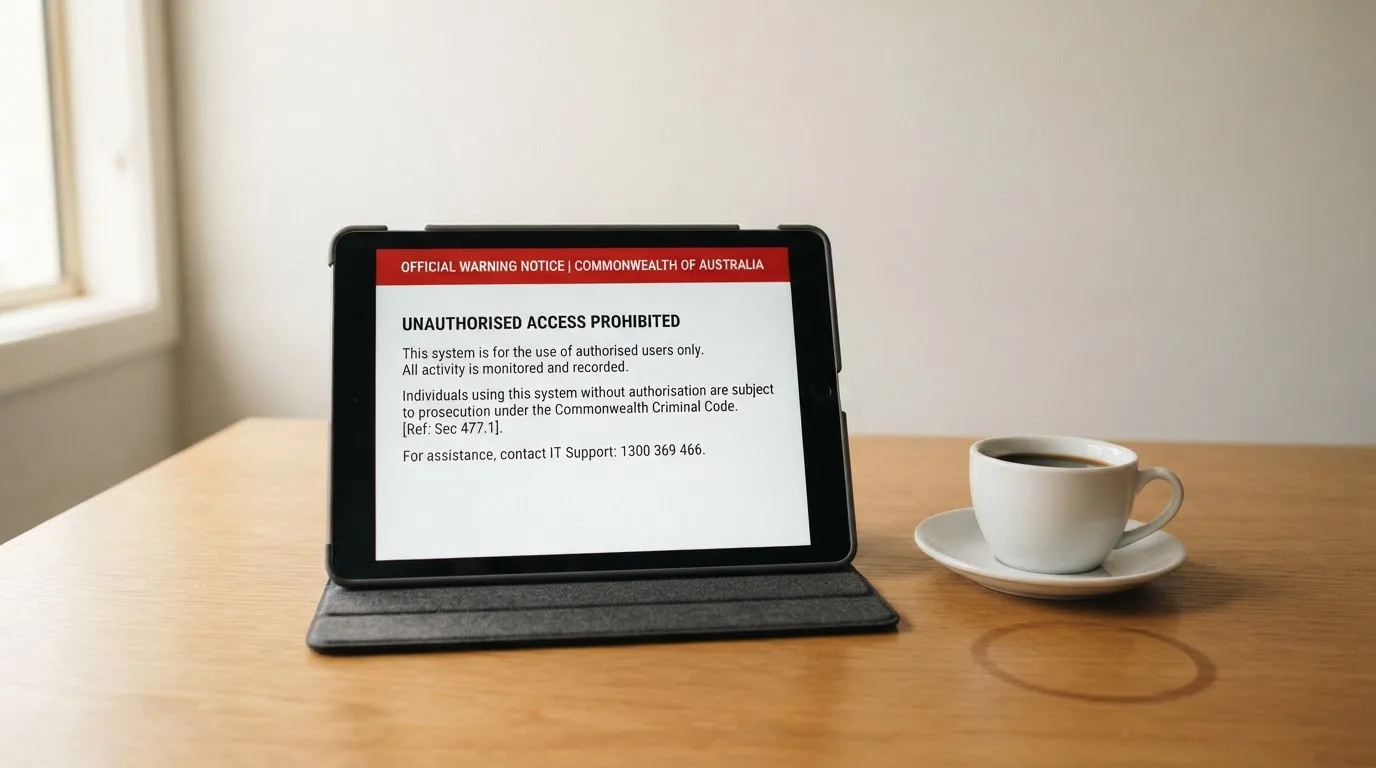
The ACMA investigates, issues formal warnings, and directs Australian internet service providers to block illegal sites. The 1,751 sites blocked since November 2019 are the working record of that enforcement. The individual player is not prosecuted — the Interactive Gambling Act targets the provider — but an offshore site gives the player no Australian consumer protection, no complaints body and no recourse if a withdrawal is refused, and it can be blocked with a balance still on it.
Player Protection
BetStop, the National Self-Exclusion Register, has been live since August 2023 and binds Australian-licensed online and phone wagering services. An offshore casino is not connected to BetStop, and a registration there does not stop play at any site that holds the player’s balance offshore. The National Gambling Helpline on 1800 858 858 is free, runs 24/7 and connects callers to local counselling; Gambling Help Online provides web chat and email support.
Payments
Credit cards, credit-related products and digital currency are banned as payment for licensed online wagering since 11 June 2024, with penalties up to $247,500 for operators that breach the rule. The legal deposit routes for licensed wagering are debit card, bank transfer, PayID or Osko, and BPAY. A site asking an Australian for a credit card or a crypto deposit is operating outside the Australian rules.
The 2026 Reform Bill
The Interactive Gambling Amendment (Gambling Reform) Bill 2026 passed Parliament on 19 August 2026; its advertising and inducement measures commence on 1 January 2027. The law is enacted with a start date and is not yet in force on a 2026 page. A reader weighing what the market will look like twelve months from now should read the 2027 commencement date as the next material change.
Tax
Gambling winnings of a recreational player are not assessable income under section 6-5 of the Income Tax Assessment Act 1997, and losses are not deductible, unless the person carries on a business of gambling. That is the ATO’s general position and a reader with a non-standard situation should check with the ATO directly.
How the Page Fits the Reader’s Path
A reader who came to this page for an under-1-hour withdrawal answer is in three groups, and the page reads to each of them differently. The first is the reader who has not yet deposited anywhere and is comparing withdrawal claims before deciding where, if anywhere, to play. For that reader the page is a fact-finding tool: the ACMA record is the fact to find, the eleven operators are the comparison set, and the under-1-hour claim is the marketing language to weigh against that record. The second is the reader who has already deposited and is wondering whether their existing site will pay them out under an hour. For that reader the page is a way to check whether their existing site sits on the ACMA register, and a way to think about what a withdrawal request will actually run into at a site that is not regulated by an Australian body. The third is the reader who has experienced a withdrawal delay or refusal and is trying to work out what recourse they have. For that reader the page’s legal frame is the part to read most carefully, because the recourse against an offshore site is the recourse the operator has signed up to, and the operator’s own terms set that scope.
In each case the reader’s first move is to use the support services named at the top of the page, and the reader’s second move is to use the regulator’s record to decide whether the speed claim on the brand’s homepage is one they want to test.
Final Position
The under-1-hour withdrawal claim is a marketing language that survives only against the part of an offshore casino’s clock it controls, and an offshore casino is by definition one the ACMA has been working through since November 2019. The reader who wants the speed has to take the legal position that goes with it, and the legal position is that no Australian consumer protection applies to the withdrawal if the operator decides not to honour it. The 1,751 sites blocked since November 2019 are the working evidence of what the regulator has done; the A$3.9 billion a year H2 Gambling Capital estimates Australians lose to illegal sites is the size of the market the regulator is acting against; and the 24/7 helpline on 1800 858 858 is the part of the system that works regardless of which side of the prohibition the player is on.
Frequently Asked Questions
What would actually have to happen behind the scenes for a casino withdrawal to clear in under an hour?
The casino would have to run real-time compliance rather than batch verification, the payment rail would have to be the fastest the player can use, the operator’s own clock would have to start on “withdrawal approved” rather than “withdrawal requested,” and the player’s account would have to be fully verified already. A first-time withdrawal or a flagged account breaks the clock at the verification step.
Does an “under 1 hour” withdrawal claim apply to every payment method a casino offers, or only some?
Only to the methods the casino has wired into its fast-settlement stack, and the marketing is usually written against the e-wallet or crypto rail rather than against a card withdrawal. A Visa or Mastercard cashout goes through a different rail with a different settlement profile, and the under-1-hour figure does not transfer across.
Is a sub-one-hour withdrawal promise from an offshore casino something Australians can hold the site to?
There is no Australian regulator to take the claim to. The recourse is the casino’s own complaints process and whatever alternative-dispute-resolution service it has signed up to overseas, and the player’s leverage at each step is thinner than it would be against an Australian-licensed operator. The promise is a marketing promise rather than a regulated one.
How does an under-1-hour claim compare with the real settlement time Australian banks describe for Osko transfers?
Osko, the instant-transfer service run by Australian Payments Plus, settles a bank-to-bank transfer between participating Australian banks in under a minute, twenty-four hours a day including weekends. The Osko rail is what makes a domestic transfer feel ordinary; the offshore casino’s claim is the part the operator adds on top of that rail, and the operator cannot guarantee any part of it the same way the rail can.
What is the difference between an “under 1 hour withdrawal” casino and a “same day payout” casino as claims?
An under-1-hour claim is a promise that the operator’s own portion of the clock will be measured in minutes, and the player’s experience depends on the verification step that sits before it. A same-day claim is a wider window that absorbs the verification step in most cases. The marketing word matters: the narrower the window the operator advertises, the more the verification step determines whether the player sees the figure in their own account.
What might still delay a withdrawal even at a site advertising under-1-hour processing?
First-withdrawal verification, source-of-funds checks, bonus-related holds until wagering is complete, large-amount enhanced due diligence under anti-money-laundering rules, account flags from earlier sessions, and the casino’s own manual review of any transaction it has questions about. None of these appear in the marketing; all of them are the everyday reason a sub-one-hour promise does not arrive on time.