
Real Money Pokies Apps on Android in Australia: The Cost Behind the Download
Latest data current as of 28 October 2026 and cross-checked against the Australian Communications and Media Authority’s public register of formal warnings and site-blocking actions. Real Money Pokies Apps on Android in Australia — More on this topic at casino ratings .

Every advertisement for a “real money pokies app” on an Android phone runs on the same unspoken pitch: tap, deposit, spin. The pitch skips the part that actually decides whether the offer is worth taking — that no state or territory in Australia licenses online casino games, that the Australian Communications and Media Authority has spent seven years blocking offshore sites and naming the operators behind them, and that an “Android app” is the thinnest wrapper this market has for an unlicensed product. This page is written for the reader who already suspects that, and wants the numbers, dates and named operators laid out before deciding what to do with their phone.
Table of Contents
- What This Page Is For — and What It Is Not
- Getting Help First — the Australian Safety Net
- How a Pokies App Behaves on an Android Touchscreen
- ACMA’s Blocking Rate Since November 2019: A Band, Not a Number
- The Top-Plus Brand Set: Every Operator the ACMA Has Named
- The Fundamentals: What Offshore Pokies Apps Are, and Are Not
- The Legal Prohibition: Why an Australian Player Cannot Be Licensed In
- Land-Based Pokies: The Numbers Behind the App’s Pitch
- The H2 Estimate of Offshore Losses
- Calculation: What a Session of Real-Money Play Costs
- What the Offshore App Takes From the Player, in Concrete Terms
- The Reader’s Decision
- Frequently Asked Questions
What This Page Is For — and What It Is Not
This page does not rank offshore casinos, recommend a brand to play at, or pass any operator’s offers along. Every brand named below is named because the ACMA itself issued a formal warning over it for offering prohibited interactive gambling services to people in Australia. The brands and their dates come from the ACMA’s published register; the surrounding context comes from the Australian Constitution’s allocation of gambling power to the states, the Interactive Gambling Act 2001 as amended in 2017 and the public record of site-blocking actions the ACMA has reported since 2019.
The reader this page serves is one of three kinds. The first is the person who has already downloaded an app or an APK and wants to know whether the brand they are using has been named by the regulator. The second is the person comparing two or three apps before installing anything, and who wants the operator-side facts before the marketing-side ones. The third is the person worried about their own play, or someone close to them, and looking for the support number and the self-exclusion register before reading anything else. All three will find what they came for in the section that owns it.
Getting Help First — the Australian Safety Net
Real-money pokies apps, wherever they are licensed, take money faster than a land-based machine does, because the next spin is one tap away and there is no walk to the cashier. The Australian safety net for that situation is short, free and twenty-four hours a day.
Gambling Help Online runs the National Gambling Helpline on 1800 858 858, free from any Australian phone, twenty-four hours a day, every day of the year. The same service runs a confidential web chat at Gambling Help Online. Counsellors can talk through what a player wants from a session, what an app has been costing them, and what the practical first step looks like — whether that step is a deposit limit on a licensed wagering account or a longer break from the offshore sites that do not connect to any Australian register.
BetStop — the National Self-Exclusion Register has been live since August 2023. Registration is free, online, and binds every Australian-licensed wagering service — Sportsbet, Bet365, Ladbrokes and the forty-nine other bookmakers the Northern Territory Racing and Wagering Commission supervises — to honour the exclusion. The register does not bind offshore casino apps. An exclusion registered with BetStop stops the legal side of a person’s gambling; it does not stop an APK the user sideloaded onto their own phone. That distinction is the reason this page treats the offshore side separately from the licensable one rather than as a single market.
Financial counselling is free through the National Debt Helpline on 1800 007 007. For readers whose concern is the cost rather than the play itself — a balance that has grown faster than expected, a withdrawal that has not landed, a debit card charged twice — that helpline routes to a local financial counsellor who can work through the numbers without selling anything.
The page returns to these services once, in the section on offshore apps and what an Australian player gives up by going outside the licensed system. The section above is the one to call, message or register with first.
How a Pokies App Behaves on an Android Touchscreen
A pokie on a phone is the same random-number engine a land-based machine runs, presented through a touchscreen instead of physical buttons. The differences that matter to the player are not cosmetic.
The interface is built for one-handed repeat play
A pokies app opens with the reels occupying the centre of the screen, a spin button under the right thumb and a balance display at the top. Coin size, number of lines and autoplay settings sit one tap below the reels. Every additional tap is a decision the app would rather the player not pause to make. That is the point of an app versus a browser tab — the screen is pre-arranged for the next spin, and the next, and the next.
Offline play vs. real-money play
A free pokies app, including free Aristocrat-style apps, runs a demonstration balance that the player cannot cash out. The games look and feel the same as the real-money versions, including bonus rounds and feature buys, but every win is a screen credit rather than a deposit the app will release. A real-money app, by contrast, asks for a deposit before the first spin and routes every payout through a payment channel the player has verified. The functional differences between the two, beyond the money: real-money apps require account creation, identification, and a payment method on file; free apps ask for nothing of the sort.
Permissions the app asks for
A real-money pokies app typically requests storage access (to save account state), network state (to keep the session connected) and notifications (to push bonus offers). Some ask for device ID, location, and contacts. Free apps, especially “free Aristocrat pokies for Android” titles, ask for far less and store nothing of monetary value. The permission list is one of the few practical signals a player can read before deciding whether to install. An app asking for contacts, microphone or camera, in a category where none of those are necessary to play, is signalling something the marketing page does not.
Why “download for Android” rather than a browser tab
Apps are advertised as downloads because the operator wants the player’s icon on the home screen, the notification permission, and a path that survives Google Play’s restrictions on real-money casino apps. A browser tab does none of those things. The marketing claim that a downloadable app is faster, smoother or more private than a browser tab is, in this category, mostly an argument for the operator’s control of the install — not a benefit to the player.
ACMA’s Blocking Rate Since November 2019: A Band, Not a Number
The Australian Communications and Media Authority began asking internet service providers to block illegal gambling websites in November 2019. By the end of the round reported on 26 June 2026, the cumulative total of blocked sites and affiliate pages had reached 1,751. The earliest blocking request is the November 2019 action that started the regime. Any honest reading of the pace of enforcement has to give a band, not a single figure, because the ACMA reports in batches — twelve sites in a single round, two in the next — and the gap between batches is the regulator’s working time, not a steady drip.
The right framing for the reader is therefore this: between November 2019 and the cut-off of the most recent published ACMA round in June 2026, the regulator has asked Australian ISPs to block somewhere on the order of 1,750 illegal gambling and affiliate sites, with the rate varying from round to round. By the ACMA’s own count, more than 230 unlicensed services have left the Australian market since the 2017 strengthening of the Interactive Gambling Act. The blocking regime is the slow arm of that withdrawal — it removes the access, while the formal warnings name the operator behind the access.
That number carries an arithmetic of its own, and it is the arithmetic a reader can use. Seven years of enforcement, 1,751 blocks, 230 services withdrawn: even at the high end of the range, the regulator is processing a new site roughly every day and a half across the period, and the pace has not slowed. The brand an Australian reader is offered today is one of those 230, one of the 1,751, or the next one to be added to either list. The product is not rare because the regulator cannot find it; the product is common because the regulator’s enforcement is the constraint, not the supply.
The Top-Plus Brand Set: Every Operator the ACMA Has Named
The set below is not a ranking. It is the ACMA’s own published list of operators that received formal warnings for offering prohibited interactive gambling services to people in Australia. Each entry carries the date the warning was issued, the company the warning named, and — where the research carried it — the support that public listings record for that brand’s status as a pokies provider. No brand on this list is licensed to offer online casino games to a person in Australia. Whatever licence any of them displays on their site, that licence does not authorise Australian play.
| Brand | ACMA action and date | Operator named by the ACMA | Subject support |
|---|---|---|---|
| RocketPlay | Formal warning, March 2026 | Pulsup Ltd | — |
| Level Up Casino | Formal warning, May 2022 | Dama N.V. | Listings record the brand as a pokies provider |
| Woo Casino | Formal warning, March 2025 | Dama N.V. | — |
| Spirit Casino | Formal warning, May 2025 | Dama N.V. | — |
| National Casino | Formal warning, July 2025 | Consolutetish S.R.L. | Listings record the brand as a pokies provider |
| Bizzo Casino | Formal warning, July 2025 (earlier 2022) | Consolutetish S.R.L. (earlier TechSolutions) | — |
| Ignition Casino | Formal warning, July 2025 | Bamboo Media | — |
| Instant Casino | Formal warning, February 2025 | EOD Code SRL | — |
| Jackbit | Formal warning, April 2026 | Ryker B.V. | — |
| Casino Intense | Formal warning, April 2025 | Sterplay Holding Ltd | Listings record the brand as a pokies provider |
| Sky Crown | Formal warning, September 2022 | Hollycorn N.V. | — |
The dates and operator names above are the ACMA’s own. The “Subject support” column reflects what the listings research found for each brand as a pokies provider; an em dash means the research turned up no listing that names the brand in this role. Where the same operator — Dama N.V., Consolutetish S.R.L. — appears across more than one brand, the ACMA has acted against the parent rather than the product line, which is why six of the eleven warnings on this table go to four parent companies rather than eleven.
What the table tells the reader
Three points the columns carry by themselves.
First, every warning is recent. Eight of the eleven were issued between February 2025 and April 2026. The brand an Australian reader is being offered today is most likely a brand the regulator has acted against in the last eighteen months. The older entries — Level Up, Sky Crown, the 2022 warning on Bizzo — are still active because the ACMA’s action is on the operator, not on the URL, and the operator simply reopens under the same name when a domain is blocked.
Second, the 230+ services that have left the Australian market since 2017 are not these eleven. The eleven on the table are the operators the ACMA chose to name. Withdrawal happens quietly when an operator decides an Australian-facing product is no longer worth the warning; the formal-warning list is what gets published. The reader is looking at the visible slice of a much larger exit.
Third, the table does not say which operator is “best.” The research carries no figure — payout time, RTP, house edge, wagering multiple — that would let a comparison rank these brands on the player’s terms. What it carries is the ACMA’s action, and that action is identical in kind across all eleven. Picking one of these over the other is a choice between operators the regulator has already named; the page does not help with that choice, and would be failing the reader if it tried.
RocketPlay — the most recent Dama-linked action
Pulsup Ltd took a formal warning in March 2026 over RocketPlay. Dama N.V., the operator named across five of the other warnings on this page, had already been warned in May 2022. The pattern is the standard offshore response to enforcement: a fresh corporate wrapper, a fresh domain, the same product. From the player’s side, an account opened against the new corporate name inherits no protection from the older warning; the funds, the verification and the dispute process all sit with the new entity.
Level Up Casino — the oldest Dama-linked entry still active
Dama N.V. took its first Australian-facing warning in May 2022, covering six brands including Level Up. The brand is still listed in industry sources as a pokies provider. The duration on the page is the practical signal: a brand that has been on the ACMA’s record for four years and is still advertising to Australians is operating in the same legal posture it was on day one. Nothing the operator has done since 2022 has changed what an Australian player faces.
Woo Casino — fresh Dama action in 2025
Dama N.V.’s March 2025 warning over Woo Casino is one of two new actions the ACMA took against the operator that year. Spirit Casino, listed below, was the other. The gap between the 2022 round and the 2025 round is the gap during which Dama re-entered the Australian market under different brand surfaces — and the period during which an Australian reader could have opened an account, played, and lost money to an operator the regulator was already watching.
Spirit Casino — the second Dama-linked 2025 warning
Spirit Casino’s May 2025 warning completes the pair. The pattern repeats: same operator, different brand, same prohibited service. The reader who treats “different brand” as “different risk” is misreading the table.
National Casino — Consolutetish S.R.L.’s first public action
Consolutetish S.R.L. took a formal warning in July 2025 covering both National Casino and Bizzo Casino. National Casino is one of three brands on the table that the listings research names explicitly as a pokies provider; the others are Level Up and Casino Intense. The listings confirm the category of product; they do not confirm that an Australian reader has any legal route to it.
Bizzo Casino — the two-warning brand
Bizzo Casino was warned twice: first in 2022 against TechSolutions (CY) Group Limited and TechSolutions Group N.V., and again in July 2025 against Consolutetish S.R.L. The 2025 warning names a different corporate entity because the operator changed the corporate wrapper; the product line and the brand name did not change. Two warnings across two operators over the same brand surface is the cleanest case on the table of an operator that the ACMA has, in effect, named twice for the same conduct.
Ignition Casino — Bamboo Media’s only Australian-facing action
Bamboo Media took its first Australian-facing warning in July 2025 over Ignition Casino. The brand is otherwise known in the broader offshore market; for the Australian reader, the relevant fact is the ACMA’s action, not the international footprint.
Instant Casino — the EOD Code SRL warning
EOD Code SRL took a formal warning in February 2025 over Instant Casino. The brand’s marketing pushes a fast-withdrawal pitch that the brand’s licence — wherever that licence sits — does not back with any Australian-recognised dispute mechanism.
Jackbit — Ryker B.V.’s second brand on this table
Ryker B.V. took a formal warning in April 2026 covering both Jackbit and CasinOK. Jackbit’s pitch is a sportsbook-plus-casino combination; the ACMA’s action covers the casino side, which is the prohibited service.
Casino Intense — Sterplay Holding Ltd
Sterplay Holding Ltd took a formal warning in April 2025 over Casino Intense. The brand is named in public listings as a pokies provider alongside its coverage by Australian media outlets reporting on offshore enforcement.
Sky Crown — the Hollycorn group
Hollycorn N.V. took the formal warning over Sky Crown and Blue Leo, recorded in the ACMA’s published record in September 2022. Hollycorn is a multi-brand operator; Sky Crown is the only brand of the group the table routes here.
The Fundamentals: What Offshore Pokies Apps Are, and Are Not
An offshore real-money pokies app for Android is one or more casino games — slot machines, table games, live-dealer games — wrapped in a downloadable Android binary, offered by a company that holds no licence from any Australian state or territory to provide interactive gambling services to a person physically in Australia. The wrapper may come through Google Play (in which case it is almost always a free-play app, because Google Play does not allow real-money casino apps in Australia) or through an APK sideloaded from the operator’s own site or an affiliate. Either way, the product the app offers is the same: real-money wagering on a prohibited service.

What the app offers the player
The app offers the immediate availability of pokies, the convenience of a home-screen icon, the frictionless path from deposit to spin, and — in marketing copy — generous bonuses and fast withdrawals. These offers are real on their own terms. A deposit made on a Tuesday lands on a balance within minutes; a withdrawal, when the operator chooses to process it, can clear inside a working day.
What the app does not offer the player
The app does not offer the protections an Australian-licensed bookmaker is required to offer. The protections are not optional and they are not trivia: a deposit limit on the licensed side, a self-exclusion register, a complaints body, a guarantee that the operator cannot vanish with the balance, a guarantee that the operator will honour a withdrawal without inventing a verification step at the last minute. Every one of these is missing from the offshore side.
The most concrete hole is the consumer-protection one. An Australian who is refused a withdrawal by an offshore operator cannot ring the ACMA, lodge a complaint with the Victorian Gambling and Casino Control Commission, or file a chargeback the bank will honour if the operator has used a payment method outside the Australian framework. The Interactive Gambling Act targets the provider, not the player — the player is not prosecuted — but the player is also the one left holding the loss when the offshore side disappears.
The credit-card and crypto deposit question
The Australian government banned credit cards, credit-related products and digital currency as a payment method for licensed online wagering from 11 June 2024, with penalties for operators up to A$247,500. The ban applies to the licensed side: Sportsbet, Bet365, the bookmakers the Northern Territory Racing and Wagering Commission oversees. An offshore site asking for a credit card or a crypto deposit is not, in itself, breaking Australian law — the law targets Australian-licensed operators and their payment-service providers — but the request is a marker that the operator is operating outside the Australian framework. The legal deposit routes for licensed wagering are debit card, bank transfer, PayID/Osko and BPAY. An app that does not offer one of those is signalling the channel its operator expects to be paid in: the offshore channels that the Australian rules do not reach.
The tax treatment of a recreational win
Gambling winnings of a recreational player are not assessable income in Australia (section 6-5 ITAA 1997), and losses are not deductible. The reader who treats an offshore win as tax-free income is correct; the reader who treats it as a financial plan is mistaken, because the structure of the offer — the house edge, the bonus terms, the cashout caps — is built to make the average outcome negative over any meaningful number of spins. The arithmetic of expected loss is in the calculation block further down.
The Legal Prohibition: Why an Australian Player Cannot Be Licensed In
The legal frame is short, because the law is short, and because every operator named above has been warned under the same prohibition.
The Interactive Gambling Act 2001
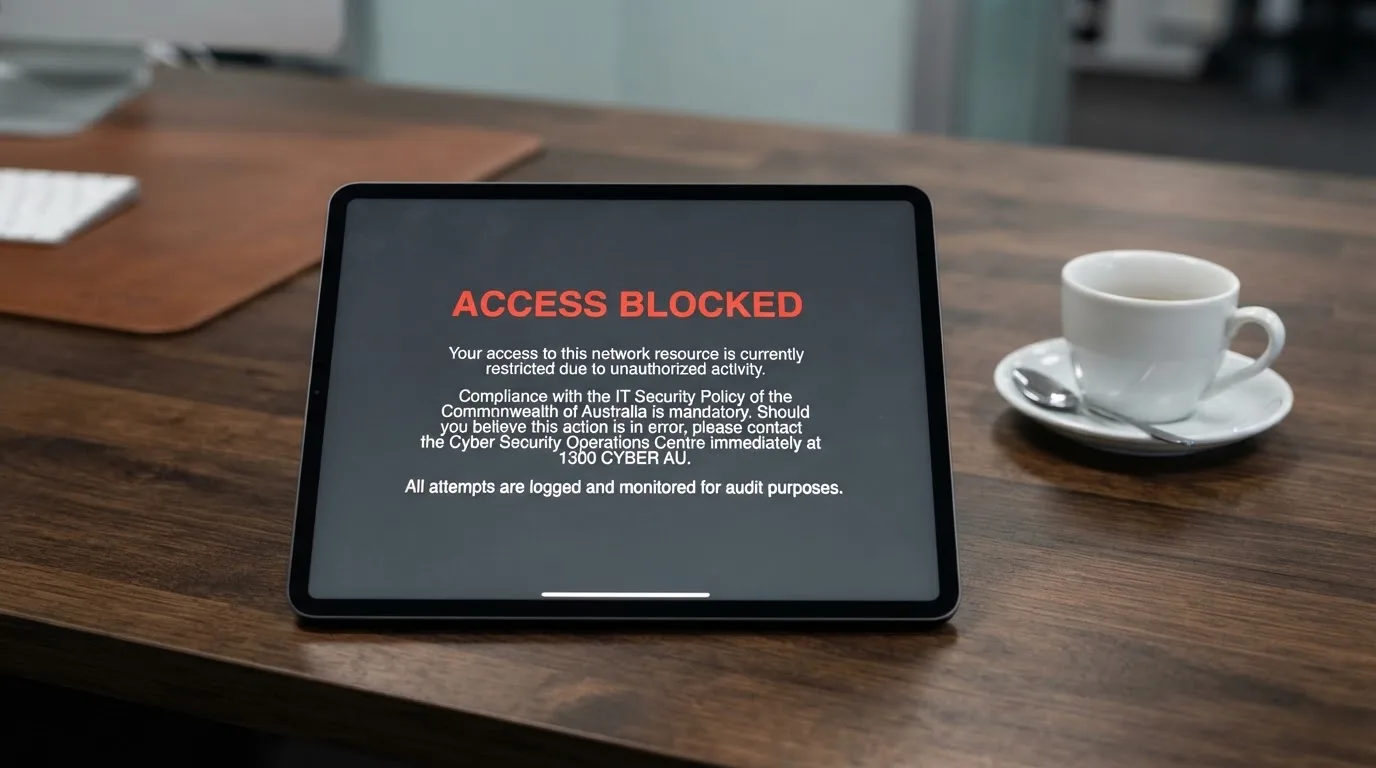
The Interactive Gambling Act 2001 (the IGA), strengthened by the Interactive Gambling Amendment Act 2017, makes it an offence to provide online casino games, online pokies and in-play betting to a person in Australia. No state or territory issues a licence for these services. The licensable products are wagering on races and sport placed before the event, lotteries and keno — the side of the market supervised, in practice, by the Northern Territory Racing and Wagering Commission (the NTRWC).
The NTRWC supervises fifty-two online bookmakers — Sportsbet, Bet365, Ladbrokes and the rest — under Northern Territory licences taken out for tax reasons. The commission has no full-time staff and meets once a month in Darwin. That fact, reported by the ABC in April 2026 in the context of an NT bill to reform the regulator, is the structural reality behind the licensed side: the body that authorises wagering services is small, the licensed operators are large, and offshore casino services sit entirely outside the licensing perimeter.
What the IGA targets
The IGA targets the provider, not the individual player. An Australian who opens an offshore account, deposits and plays is not committing an offence under the Act. The offshore operator, however, is committing an offence by providing the service to a person in Australia, and the ACMA’s enforcement is on the provider. The consequence for the player is not prosecution; the consequence is the absence of every protection a licensed side offers, listed in the section above, plus the risk of a balance that becomes inaccessible when the regulator blocks the operator’s domain.
Minimum age and state-by-state regulation of land-based machines
The minimum age for any form of legal gambling in Australia is 18. Land-based “pokies” — the term Australians use for electronic gaming machines — are regulated state by state, with each jurisdiction setting its own minimum return-to-player and venue rules. The licensed pokies in a Sydney club, a Melbourne pub, a Brisbane RSL and a Perth casino are all different products under different regulators, and the offshore app on the reader’s phone is not a digital version of any of them.
The 2026 reform that has not yet commenced
The Interactive Gambling Amendment (Gambling Reform) Bill 2026 passed Parliament on 19 August 2026. Its advertising and inducement measures commence on 1 January 2027. As of the date this page is published, the Bill is law with a future start date — not yet in force on the ground. The reader who has seen advertising-reform coverage in the press is reading about a measure that will take effect in the next calendar year, not a measure that changes the operator list above today.
State-level minimum returns the licensed pokies must clear
For comparison with what an offshore app typically offers, the licensed side is bound by minimum return-to-player figures set by each state and territory. NSW, the Northern Territory, Queensland and most of Victoria set the floor at 85 per cent (Crown Melbourne is at 87 per cent). The Australian Capital Territory and Tasmania set it at 87 per cent, South Australia at 87.5 per cent, and Western Australia at 90 per cent. Western Australia banned poker machines in pubs and clubs entirely when Crown Perth opened in 1985; Crown Perth’s own machine count has since grown from about 200 in 1985 to roughly 2,500, all approved by the state’s Gaming and Wagering Commission. Tasmania held a state monopoly on poker machines through the Federal Group from 1968; legislation passed in November 2021 ended the monopoly and moved oversight to the Tasmanian Liquor and Gaming Commission, with mandatory pre-commitment cards originally planned as nation-leading but delayed until late 2025.
These figures are the licensed baseline. An offshore app is not bound by them. The licensed machine in a NSW club returns at least 85 cents in the dollar over its design life; an offshore app can be configured to return any figure its operator chooses to publish, and the regulator on the licensed side is not in the room.
Land-Based Pokies: The Numbers Behind the App’s Pitch
The pitch for a real-money app often starts with a comparison to land-based pokies — the queue at the club, the coins, the closing time. The licensed land-based market is genuinely large, and the reader who knows its size is better placed to read what the offshore app is competing against.
In 2020–21, Australians bet almost A$150 billion through gaming machines and lost A$12.18 billion on them. Australia has roughly three per cent of the world’s pub and club poker machines with 0.3 per cent of the global population. New South Wales alone had 87,298 gaming machines outside casinos across 2,195 venues in June 2023, with player losses of A$8.18 billion in 2022–23. Queensland had 21,122 machines in 351 venues in October 2023; Victoria had 26,380 outside Crown Casino in 488 venues under a 30,000-machine statewide cap in 2021–22.
The licensed machines are the machines the reader is being told the app replaces. The scale above is what the licensed side is already absorbing — and the apps, the ACMA’s blocking record suggests, are competing for a slice of that A$12.18 billion a year that the offshore operators estimate at around A$3.9 billion.
The H2 Estimate of Offshore Losses
H2 Gambling Capital’s 2025 report estimates that Australians lose about A$3.9 billion a year to illegal gambling sites, and that the share of gambling going through legal channels fell from 74 per cent in 2021 to 64 per cent in the most recent reading. The fall is the gap the offshore side has carved out of the licensed market over five years. The A$3.9 billion is roughly the same order of magnitude as the cumulative cost of a year of pokies losses in one Australian state, redirected into operators the ACMA has named.
This is the comparison that makes the page’s angle land. The cost of the offshore side is not abstract. It is the licensed side’s lost share, the ACMA’s enforcement budget, and a per-player loss figure that, distributed across the user base these apps claim, places the average session in the same bracket as the licensed machine the reader is being told to leave at home.
Calculation: What a Session of Real-Money Play Costs
The calculation the page owes the reader is the one that turns “real money” into a number. The framework is standard and the inputs are limited to what the licensed pokies market already publishes. The reader can run the same arithmetic on the app’s own advertised RTP to get their own estimate.
The framework
Expected loss = spins × stake-per-spin × (1 − RTP).
The framework is a statistical estimate. It is the average over many spins under the stated assumption that only the spin stake is wagered; it is not a forecast of any single session.
A worked example
A pokies app advertising a 95 per cent return-to-player, played at A$0.20 per spin across 500 spins in an evening, gives an expected loss of:
500 × A$0.20 × (1 − 0.95) = A$5.00.
The same 500 spins at A$1 per spin at 95 per cent RTP give an expected loss of A$25. At A$2 per spin over the same session, A$50. The arithmetic is linear in stake, which is why the licensed side’s deposit limits and the NTRWC’s reporting exist: the cost scales with the player, not with the game’s design.
The condition the estimate carries
The estimate assumes only the stake is wagered — no bonus funds, no second-deposit offers, no reinvestment of winnings. A session that uses bonus funds, that reinvests a win, or that stretches beyond the 500-spin evening into a multi-day period will produce a different number, almost always larger. The reader who wants a conservative ceiling should halve the RTP the app advertises before running the arithmetic: marketing rates are set at the top of the operator’s range, not at the realised return across the player base.
The cost side the marketing does not show
The expected loss is the visible cost. The invisible costs are the verification step the operator introduces on a withdrawal over a threshold the player was not told about, the bonus term that voids the win because the player used a payment method the operator later decided to disqualify, the seven-day processing window that becomes a fourteen-day hold while the operator reviews, and the absence of any Australian body to complain to when the hold becomes indefinite. The arithmetic on the front is honest; the arithmetic on the back is where the operator earns.
What the Offshore App Takes From the Player, in Concrete Terms
Every brand on the table above offers the player a product the ACMA has decided is prohibited. The product is offered offshore, under a licence the ACMA does not recognise. The cost the player pays for going offshore is not the wager itself — that cost exists on the licensed side too — it is the bundle of consumer protections the player leaves behind.
Dispute resolution
A licensed bookmaker is bound by Australian dispute resolution arrangements, by the BetStop self-exclusion register, and by the regulator that licensed them. An offshore operator is bound by none of those. A refusal to pay out, an unexplained voiding of a bonus, a closure of the account while a balance sits on it — all are disputes the player has no Australian body to escalate.
Self-exclusion that actually works
A BetStop registration is honoured across every Australian-licensed wagering service. An exclusion registered through an offshore site’s own responsible-gambling tools is honoured only by that site, only until the operator decides to retire the brand, and only against the URL the operator is on this week. The Australian register is the binding one.
Payment-method recourse
A debit-card chargeback on a licensed operator has the regulator’s framework behind it. A chargeback against an offshore casino routed through a payment service the operator selected has the bank’s anti-fraud team on one side and the operator’s terms on the other; the player is the third party. The legal deposit routes for the licensed side — debit card, bank transfer, PayID/Osko, BPAY — exist because the regulator required them and the operator chose to be bound. An app that takes only crypto, only credit cards, or only an offshore e-wallet is taking the channels the Australian framework has restricted.
Recourse if the operator vanishes
The most expensive case is the one where the operator disappears with the player’s balance. The ACMA’s blocking record is, in part, a record of operator exits — 230+ services have left the Australian market since the 2017 strengthening of the IGA. The exits are sometimes orderly, sometimes not. The player who held a balance during an exit has no Australian body to claim against; the offshore regulator that did license the operator is, in practice, unreachable from Australia.
The Reader’s Decision
This page is not written to tell the reader what to do with the app on their phone. The decision is the reader’s, and the sections above are what the decision should be made on. The four points that survive the page are straightforward:
The product is prohibited. No state or territory licenses online casino games for Australian players. Every brand named above has been formally warned by the ACMA for offering the service. The marketing pitch on the app’s home screen does not change what the ACMA’s register records.
The protection set is missing. Self-exclusion through BetStop does not bind these apps. Credit cards and crypto are not legal deposit methods on the licensed side because the Australian framework has restricted them. There is no Australian body to complain to if a withdrawal stalls. The cost of playing offshore is the cost of having no recourse when something goes wrong.
The blocking rate is not slowing. Across the period from November 2019 to the most recent published round in June 2026, the ACMA has asked ISPs to block about 1,750 sites. The brand an Australian reader is offered today is most likely one of those 1,750, or one of the 230+ services that have already withdrawn, or the next brand the ACMA names.
The arithmetic is the arithmetic. Whatever the app’s RTP, the expected loss per spin is stake times (1 − RTP). That figure scales linearly with the deposit, and the deposit is the only number the player controls.
The licensable side is the licensed wagering side: the bookmakers, lotteries and keno products the NTRWC supervises. The connected self-exclusion register is BetStop. The free, twenty-four-hour help line is 1800 858 858. The offshore app on an Android phone is none of these, and that is the whole point of the ACMA’s enforcement.
Frequently Asked Questions
Are real-money pokies apps available through Google Play in Australia?
No. Google Play does not allow real-money casino apps to be distributed to Australian Google Play accounts, so any real-money pokies app that reaches an Australian Android phone arrives as an APK downloaded from the operator’s own site or from an affiliate, sideloaded with the user’s permission, and bypassing Google Play’s review. Free-play pokies apps do appear on Google Play and are not covered by the same restriction, which is why “free Aristocrat pokies for Android” is a different search from “real money pokies app for Android.”
Is sideloading a pokies APK on an Android phone legal for an Australian?
The Interactive Gambling Act 2001 targets the provider of the prohibited service, not the player who installs the app. An Australian who sideloads an APK is not committing an offence under the Act. The legal exposure sits with the operator offering the service. The practical exposure is the absence of every Australian consumer protection — BetStop, dispute resolution, payment-method recourse — that a licensed wagering service would provide.
How does a free Aristocrat-style pokies app differ from a real-money one?
A free Aristocrat-style pokies app runs a demonstration balance the player cannot cash out. It typically asks for fewer Android permissions — storage and network, not contacts or location — and it does not require identification or a payment method. A real-money app requires account creation, identity verification, and a deposit before the first spin. The two look identical on the screen; the difference is whether a win is a screen credit or a balance the operator will release.
What permissions does a real-money pokies app typically request?
A real-money pokies app commonly asks for storage access (to save account state), network state (to keep the session connected) and notifications (to push bonus offers). Some request device ID, location, and contacts. None of these are required to spin a reel; the permission list is a practical signal a player can read before installing. An app asking for microphone or camera access in a category where neither is needed is signalling something the marketing page does not. See also Real Money Pokies Apps in Australia .
Why do operators advertise “download for Android” rather than a browser option?
Apps are advertised as downloads because the operator wants the player’s home-screen icon, the notification permission, and the install path that survives Google Play’s restrictions on real-money casino apps in Australia. A browser tab does not survive a session close, cannot send push notifications, and is filtered out of Google’s discovery channels for this product category. The pitch is to the operator’s control of the install, not to a benefit the player can measure.
What should a reader check before trusting an app’s claim to pay real money on Android?
The reader should check three things, in this order. First, whether the operator holds an Australian licence — none of the brands on this page do, because no state or territory licenses online casino games. Second, whether the operator has been formally warned by the ACMA — the eleven brands in the table above have. Third, whether the deposit method on offer is one the Australian framework permits for licensed wagering — debit card, bank transfer, PayID/Osko or BPAY. An app failing any of the three should be read as offshore, unlicensed and outside the Australian consumer-protection perimeter, regardless of what the marketing claims.