
The True Cost of an Online Pokies No-Deposit Bonus in Australia (2026)
Online pokies no-deposit bonus offers promise a way to test a casino before risking a cent. The mechanics are simple on paper: register, accept the credit, spin, withdraw what is left after the small print. The cost is not. No state or territory in Australia licenses an online casino offering online pokies, so every site running such a promotion sits outside Australian consumer law, outside the Australian self-exclusion register, and outside the credit-card ban that took effect on 11 June 2024. What follows is the reckoning an Australian reader who searches this term actually faces — what claiming one of these bonuses really costs in time, in money and in recourse when something goes wrong, with the eleven operators the ACMA has already named for offering them. The True Cost of an Online Pokies No-Deposit Bonus in Australia (2026) — More on this topic at casino ratings .

Current as of 28 October 2026 — verified against the Australian Communications and Media Authority’s interactive gambling register and the Interactive Gambling Act 2001.
Responsible Gambling Support Comes First
Every offshore no-deposit pokies bonus on the market sits outside the country’s harm-minimisation infrastructure. That is the first number to put on the cost ledger, before any spin and before any small print.
The main plank Australians rely on for protection is BetStop, the National Self-Exclusion Register, which has been live since August 2023. A player who registers with BetStop is barred, for the period they choose, from every Australian-licensed online and phone wagering service. The catch is the word “licensed”: BetStop’s coverage extends only to operators the ACMA and the state and territory regulators can compel. An offshore casino offering a no-deposit pokies bonus is not on that list, does not check it, and is not bound by it. Self-exclusion through BetStop does not stop a player reaching an offshore site; it stops a player reaching an Australian-licensed one. The offshore site remains open for business to the same player, on the same device, on the same afternoon.
Offshore sites typically offer their own self-exclusion, often presented as equivalent. It is not. The typical offshore version applies only to the single account at the single site, does not extend to sister brands, and can be lifted on request — sometimes after a brief cooling-off period, sometimes within minutes. There is no registry on the Australian side that sees it. A player moving between three offshore no-deposit casinos has self-excluded three times and remained reachable across all three.
For readers who feel their play moving beyond what they intended, the direct supports are not blocked behind any operator’s terms:
- National Gambling Helpline — 1800 858 858, free, 24 hours a day, every day.
- Gambling Help Online — the chat and counselling service operated by the same network.
- Gamban and BetBlocker — device-level blocking software that stops a phone, tablet or computer from reaching gambling sites, offshore or otherwise, for a fixed period.
These are run by the state and territory counselling services and by independent software vendors, not by the offshore casino. The helpline will give advice on debt, on blocking software, on telling a bank to refuse gambling transactions, and on the legal status of any specific site. Banks, for their part, can be asked to apply a gambling block at the transaction level — a request many of the major Australian banks now accept through their apps, and which stops debit-card gambling transactions before they reach the merchant. None of this, again, reaches the offshore site.
The deeper cost is the absence of a complaint body. An Australian player with a refused withdrawal at a BetStop-bound, locally licensed operator has the regulator, the bank’s chargeback procedure, and external dispute resolution to turn to. The same player at an offshore no-deposit casino has, in practice, the casino itself. If the casino declines to pay, the only realistic paths are a chargeback (which most offshore sites specifically exclude in their terms, especially after a no-deposit bonus), a complaint to the licence jurisdiction shown on the site (Curaçao, Anjouan, Kahnawake — none of which has a working Australian-facing channel), and the ACMA’s referral list, which can name the operator but cannot compel a payout.
The minimum age of 18 is the other standing guardrail, and the offshore site typically does not enforce it. Age verification at the Australian-licensed end is tied to identity checks against Australian documents. At the offshore end, a date of birth typed into a registration form is the entire check. The legal minimum is 18; the operational minimum on an offshore no-deposit pokies bonus is whatever the player types.
The arc, then, is the opposite of what the marketing presents. The “no deposit” removes the entry friction; it does not add a safety net. The closest Australian safety net — BetStop — does not extend to the offer. The phone line, the chat service, the device-level blocker and the bank’s transaction block all remain open regardless, and using them is free.
Settlement Routes and Payout Speeds
PayID, Osko and BPAY are the rails Australians already use for everyday banking, and they are also the legal deposit routes for any Australian-licensed wagering. For a no-deposit pokies bonus the deposit rail is moot at the moment of credit — by definition, no money has been deposited — but the same rails govern the eventual withdrawal. That is where the marketing claim and the bank reality tend to part company.
The legal frame for payment at Australian-licensed wagering has narrowed since 11 June 2024, when the credit-card and digital-currency ban took effect. From that date, an Australian-licensed wagering operator cannot accept a credit card, a credit-related product, or any form of digital currency — Bitcoin, Ethereum, stablecoins, the rest — as payment. Penalties for the operator run up to A$247,500. What is allowed is debit card, bank transfer, PayID/Osko and BPAY. An Australian-licensed no-deposit pokies bonus is, by definition, an offer that does not require a deposit, but the rail on which any eventual withdrawal would travel is one of those four.
Offshore no-deposit pokies sites operate outside that rule. The marketing around them leans heavily on “instant” — instant withdrawals, instant PayID, instant PayID payouts — and the deck of payment methods listed at the cashier usually includes Visa, Mastercard, and a stack of crypto options the licensed Australian market cannot use. The presence of those methods on the cashier is itself the signal that the platform is sitting outside Australian regulation, not a feature. It is also a feature the player carries the cost of: a deposit or a withdrawal settled through a credit card is a transaction the bank can recall, the merchant can refuse, and the ACMA can list.
The “instant” claim is the one to read most carefully. Two distinct things are usually being sold under that word, and they are not the same. The first is the time between the player clicking “withdraw” and the funds leaving the casino’s wallet — a processing step the casino controls and which on a licensed Australian platform can be near-immediate during business hours. The second is the time between the funds leaving the wallet and landing in the player’s bank account — a step that depends on the receiving rail. PayID and Osko settle in near-real time inside Australian banking hours. BPAY is same-day or next-day. A bank transfer outside PayID can be one to three business days. None of this is controlled by the offshore casino; all of it is what the receiving rail does. The marketing claim of “instant” is, in honest accounting, the casino’s processing time dressed up as the end-to-end time.
The free nature of the credit changes the payment math in one specific way. A player who has funded an account with their own money and then plays a deposit bonus has skin in the game from the deposit side: a debit-card refund, a chargeback, a complaint to the bank — each has leverage because real money has moved. A player who has accepted a no-deposit bonus and won something has, in the casino’s accounting, played with the house’s money. The casino’s instinct on a no-deposit bonus dispute is therefore weighted toward the retention of the winnings, and the player’s recourse shrinks accordingly: no deposit trail means no automatic bank-side interest in the dispute, and the bonus terms — drafted by the casino — set the rules the player agreed to.
The settlement picture that emerges is lopsided. Inside the Australian rails, the receiving time is genuinely fast for PayID and Osko. Outside them, on a credit card, on crypto, or on a non-Australian transfer rail, the picture is the merchant’s promise layered onto a settlement system the player cannot audit. Where the rails meet the ACMA’s enforcement reach, an offshore site can also be blocked with a balance still in the player’s account — a real and recorded outcome, not a theoretical one. The 12 sites referred for blocking on 26 June 2026 included several that processed withdrawals through the rails an Australian-licensed operator would not be allowed to use.
PayID itself, for the record, is a payment addressing service that lets a player send money to a PayID (an email address, phone number or ABN) instead of a BSB and account number. It is real-time, runs on the New Payments Platform, and is offered by every major Australian bank. Whether it can be used to withdraw from an offshore casino depends on whether that casino has an Australian-domiciled merchant account willing to receive the funds — which is, again, the operator’s choice, not the rail’s. A reader seeing “PayID withdrawal” advertised on an offshore no-deposit pokies site should read it as a marketing claim that depends on a downstream merchant relationship the casino may or may not maintain, and that may end the moment a block or a warning lands.
The cost, then, of accepting a no-deposit pokies bonus at an offshore site is paid in three currencies. The first is the speed of the eventual withdrawal, which the player has no Australian-side lever to influence. The second is the payment rail, which the offshore cashier sets and which will often include methods banned for licensed Australian operators. The third is the recourse if the withdrawal does not arrive: the bank, in the case of a debit-card transaction, can sometimes intervene; in the case of a credit-card or crypto transaction it almost cannot. For a no-deposit bonus specifically, the bank side is further constrained: a credit-card transaction that funded no stake in the first place is a transaction the bank has even less standing to recall.
Eleven Brands the ACMA Has Acted Against
The eleven brands below are not a ranking, not a recommendation, and not a shortlist of “good” offshore casinos. Each is a brand the ACMA has issued a formal warning over for offering prohibited online casino services to people in Australia. The warnings are public, they are published on the ACMA’s website, and they each name an operating company. The table gathers them side by side; the eleven brand writeups walk through each one in turn. The job here is to show the spread, not to pick a winner — and the spread itself is a clear picture of the regulatory landscape for these services.
Two caveats before the table. First, the “Pokies support” column describes whether an external listing visibly associates the brand with no-deposit pokies bonus offers. The cells are mostly empty because no such association was found in the public sources examined, and a small number of cells name a listing that mentioned the brand in passing. The presence of a no-deposit pokies bonus offer is not, in any case, a finding the ACMA’s formal warning turns on. Second, none of these brands is licensed for Australian players. An Australian-facing licence held by an offshore operator in Curaçao, Anjouan or Kahnawake does not, under the Interactive Gambling Act 2001, license the brand to provide online casino games or online pokies to a person physically in Australia.
The ACMA’s formal-warning process precedes a blocking referral, and the warnings in this table are public records of contraventions under the Interactive Gambling Act 2001. Reading them in chronological order shows a steady accumulation rather than a one-off correction: May 2022, September 2022, February 2025, March 2025, April 2025, May 2025, July 2025 (three warnings at once), March 2026, April 2026. The set covers four years of regulator correspondence; the brand writeups cover the same ground one operator at a time.
| Brand | ACMA warning | Operator | Pokies support |
|---|---|---|---|
| RocketPlay | March 2026 (and May 2022) | Pulsup Ltd (and Dama N.V.) | — |
| Level Up Casino | May 2022 | Dama N.V. | listings only (BGaming) |
| Woo Casino | March 2025 | Dama N.V. | — |
| Spirit Casino | May 2025 | Dama N.V. | — |
| National Casino | July 2025 | Consolutetish S.R.L. | listings only (Wikipedia) |
| Bizzo Casino | July 2025; earlier 2022 | Consolutetish S.R.L.; earlier TechSolutions | — |
| Ignition Casino | July 2025 | Bamboo Media | — |
| Instant Casino | February 2025 | EOD Code SRL | — |
| Jackbit | April 2026 | Ryker B.V. | — |
| Casino Intense | April 2025 | Sterplay Holding Ltd | listings only |
| Sky Crown | September 2022 | Hollycorn N.V. | — |
Three readings stand out from the table. The first is operator clustering: four of the eleven brands — RocketPlay, Level Up Casino, Woo Casino and Spirit Casino — share the Dama N.V. operator on at least one of their formal warnings. National Casino and Bizzo Casino share Consolutetish S.R.L. Hollycorn N.V. covers Sky Crown (and named Blue Leo in the same warning). A reader moving from one Dama N.V. brand to another is, in the ACMA’s record, moving between siblings — same operator, same cluster, same pattern of regulator correspondence.
The second is the timing distribution. The eleven formal warnings are spread across 2022, 2025 and 2026, with the densest cluster in 2025 (Instant, Woo, Casino Intense, Spirit, National, Bizzo, Ignition — seven warnings across twelve months). The pace has not been one warning and done; it has been an accumulating record, with new entries added each year and older brands re-warned when the operating company changed. RocketPlay and Bizzo are the two cases where a brand has been named twice.
The third reading is the right-hand column. Of the eleven brands, three have any external listing visibly associating them with the subject of this comparison — Level Up (BGaming), National Casino (Wikipedia) and Casino Intense (mentioned in passing by ABC News, the ACMA, and Crown Melbourne). The other eight rows carry an em dash. That is what the public record looks like when the offer exists in marketing and not in listings. The em dash is not a statement that no no-deposit pokies bonus exists at the brand; it is a statement that the listings examined did not surface one. The reader who has arrived at a brand from a “no-deposit pokies” search has arrived at a brand whose presence on the ACMA’s record is clearer than the brand’s presence on a public listing.
The eleven brand writeups that follow take each operator one at a time.
RocketPlay — freshest ACMA action, March 2026
RocketPlay holds the most recent ACMA action in this set: a formal warning to Pulsup Ltd in March 2026, naming Rocketplay.com.au — the Australian-facing landing page. The brand is not new to the regulator’s notice. In May 2022 the ACMA issued a formal warning to Dama N.V. covering six brands at once, Rocketplay among them, alongside Bambet, Dazard, Level Up, Wild Tornado and Cobra Casinos. The 2026 warning sits on top of that prior record, with a different corporate vehicle in the operator seat.
The history is the entry. Two formal warnings, two different operators, one brand name — the regulator’s record reads less like a one-off mistake and more like a continuity of supply behind a changing corporate wrapper. The licence displayed in the site’s footer, in either warning’s wake, is not an Australian licence; no state or territory issues one for online casino games or online pokies. What an Australian reader is looking at, in both warnings, is the regulator naming the same prohibited service twice.
The shelf life of the offer is the question the 2026 warning sharpens. The brand has now been in the ACMA’s formal-warning column under two operators in four years; the next round of enforcement — whether a further blocking referral, a fresh warning, or both — is the regulator’s call, not the brand’s. An Australian weighing a RocketPlay no-deposit pokies bonus offer is weighing a free credit on a service whose legal status in Australia the ACMA has restated, in writing, twice.
Level Up Casino — original Dama N.V. warning of May 2022
Level Up Casino sits inside the cluster of six brands the ACMA named in its May 2022 formal warning to Dama N.V. The other five were Bambet, Dazard, Rocketplay, Wild Tornado and Cobra Casinos. The 2022 warning is the earliest formal action in this comparison set, and Level Up’s listing among the named brands ties the brand to the same operator as Woo Casino and Spirit Casino, which were warned later under the same Dama N.V. corporate umbrella.
The shape of the cluster matters. A single operator was running six brands simultaneously under the same Australian-facing offer. The shared game library, the shared bonus structure, and the near-identical look across the six follow from the shared operator. A reader moving from one of the six to another is, in regulatory terms, not switching suppliers; they are moving between sibling sites of the same parent.
Level Up’s standing in the public Pokies-support listings is narrow: BGaming lists the brand among operators using its software. That is a games-provider relationship, not a no-deposit-pokies-bonus confirmation. For a reader weighing the offer against the rest of the table, the most useful reading is the cluster Level Up opened — three more Dama N.V. brands warned through 2025 — and the trajectory the brand is part of, not the original 2022 action in isolation.
Woo Casino — second Dama N.V. action, March 2025
Woo Casino took its own ACMA formal warning in March 2025, addressed to Dama N.V. — the same operator the ACMA named in May 2022, three years earlier. The 2025 warning is a separate formal action; it names Woo specifically rather than a cluster.
The recurring operator is the through-line. The 2022 warning named six brands. The March 2025 warning names Woo. The May 2025 warning, separately, names Spirit Casino. Three separate formal warnings to the same operator, over a 36-month window, on different brands within the same cluster, describes an enforcement pattern rather than a one-off correction.
For a reader weighing the no-deposit pokies bonus offer at Woo Casino, the cost frame is unchanged from the rest of the table. The ACMA has now told the operator behind Woo, formally and twice, that offering online casino games to Australians is a contravention of the Interactive Gambling Act 2001. The offer remains live on the site. The Australian legal position remains what it was before either warning: an offshore site providing online pokies to a person in Australia is supplying a prohibited interactive gambling service. An Australian weighing Woo is weighing one brand on a list of three that share an operator; the legal analysis does not change between them, and neither does the absent consumer protection.
Spirit Casino — third Dama N.V. action, May 2025
Spirit Casino took its own ACMA formal warning in May 2025, two months after Woo Casino, with Dama N.V. again named as the operator. The Dama N.V. cluster is now split across three separate ACMA formal warnings — May 2022 (the original six-brand cluster), March 2025 (Woo) and May 2025 (Spirit) — all from the same regulator, all under the Interactive Gambling Act 2001, all naming the same operator on different brands within the cluster.
The same observation applies as to Woo: this is an enforcement pattern, not a single incident. The Australian legal status of an online casino offered to Australians has not changed between any of the three warnings. The operator’s licence in Curaçao or elsewhere does not change the IGA analysis, because the IGA targets the provision of the service to a person in Australia, regardless of where the operator is licensed.
For a reader weighing Spirit Casino, the relevant comparison is the share of the cluster still un-named in a formal warning, not the specifics of Spirit’s marketing. The brand sits inside a thread — three warnings, four Dama N.V. brands — and the thread’s pace of expansion is the unit of measure. Spirit’s standing is the third 2025 Dama N.V. action; the offer and the warning apply identically to the other two 2025 names.
National Casino — Consolutetish S.R.L. brand, July 2025
National Casino was named in an ACMA formal warning to Consolutetish S.R.L. in July 2025. The same July 2025 warning also named Bizzo Casino, and Consolutetish S.R.L. is the operator the ACMA recorded for both. The shared operator across the two brands is the relevant fact: National Casino and Bizzo Casino are not separate offshore suppliers; they are sibling brands under one corporate entity.
The July 2025 warning is National’s first formal action; the operator’s history with the regulator is not limited to National’s record, because Consolutetish S.R.L. was named for Bizzo on the same day. National’s Wikipedia presence is the only public Pokies-support listing for the brand — and that listing does not establish a no-deposit pokies bonus offer, only a brand page.
For a reader weighing either brand against the other, the cost frame is the same: no Australian licence for the service, no Australian consumer protection on the withdrawal, the offer itself on the ACMA’s published record. The choice between National and Bizzo is between sibling exposures, not between distinct ones. An Australian weighing National Casino is weighing an offer under the same operator as Bizzo Casino, with a sibling in the ACMA’s record by the same formal warning.
Bizzo Casino — the only brand warned twice
Bizzo Casino is the only brand in the comparison set to have been named in two separate ACMA formal warnings. The first was in 2022, addressed to TechSolutions (CY) Group Limited and TechSolutions Group N.V. The second was in July 2025, addressed to Consolutetish S.R.L. — which is also the operator the ACMA recorded for National Casino on the same day.
The pattern is the closest the ACMA’s record comes to a brand-specific escalation. Two warnings, three years apart, two different operators, the same prohibited service. The 2025 warning sits in a cluster with National Casino; the 2022 warning stands alone. The casino’s offer to Australians — and the no-deposit pokies bonus specifically — has been the subject of regulator correspondence on both occasions.
For an Australian reader, the practical cost of the offer is paid twice over. First, the offer is made; second, the regulator has twice confirmed that making it to Australians is a contravention. The legal exposure under the IGA runs to the operator, not the player, but the absence of Australian consumer protection on the withdrawal does not change with the number of warnings. Bizzo’s standing is the only repeat in the set; the cost of the offer to the player is the regulator’s twice-published view of it.
Ignition Casino — sole Bamboo Media brand in the set
Ignition Casino was named in an ACMA formal warning to Bamboo Media in July 2025. The Bamboo Media action stands alone in this comparison set; no other brand here shares the operator. Ignition is the only one of the eleven whose operator appears in the ACMA’s record just once, and the only one whose operator does not appear elsewhere in the eleven.
The single warning is still a formal warning. The ACMA’s process is to publish a warning before escalating to a blocking referral, and the publication of the warning is itself the regulator’s public statement that the named service has been offered in contravention of the Interactive Gambling Act 2001 to persons in Australia. The next step, if the offer continues, is the step the ACMA decides on; the warning does not lock it in.
For a reader weighing the offer, Ignition’s record is shallow — one formal warning, one operator, one offer. Whether that shallower record reads as less proven risk or as less proven track record depends on what the reader is weighing. The legal status of the service is unchanged. Ignition’s standing is the sole Bamboo Media entry in the set; that single warning is the regulator’s published view of the offer, nothing more.
Instant Casino — front of the 2025 wave
Instant Casino was named in an ACMA formal warning to EOD Code SRL in February 2025 — the first 2025 formal warning in this set. The order of the 2025 cluster is Instant (February), Woo (March), Casino Intense (April), Spirit (May), then the July batch (National, Bizzo, Ignition). EOD Code SRL appears in this set only for Instant Casino; the operator has no other brand in the eleven, and Instant has no second warning.
The brand’s regulatory history is therefore a single published action, at the front of the 2025 enforcement wave. The legal analysis is unchanged from the rest of the table: an offshore site offering the service to a person in Australia is supplying a prohibited interactive gambling service under the Interactive Gambling Act 2001.
For a no-deposit pokies bonus reader weighing Instant Casino, the standing is the same as every other brand in the set — unlicensed for Australians, outside the Australian consumer frame, with the ACMA’s record stating the position. The single warning does not soften that. An Australian weighing Instant Casino is weighing the first of the 2025 formal warnings, with EOD Code SRL the operator named and the offer the same prohibited service under a different corporate wrapper.
Jackbit — paired with CasinOK, April 2026
Jackbit was named in an ACMA formal warning to Ryker B.V. in April 2026, alongside CasinOK. The pairing is the relevant fact: the ACMA named both brands in the same action, addressed to the same operator, on the same date.
April 2026 sits at the front end of the most recent enforcement wave — two months before the 26 June 2026 blocking round that referred the dozen sites named on that day. The Jackbit/CasinOK warning preceded the round by two months, which suggests the warning was the regulator’s first move on these brands, with a blocking referral still available if the offer continued.
For an Australian reader weighing the no-deposit pokies bonus offer at Jackbit, the cost frame is the one that applies across the comparison: no Australian licence, no Australian consumer protection, the offer itself on the ACMA’s published record. The pairing with CasinOK is what makes Jackbit distinctive — readers who land on Jackbit from a no-deposit pokies search are reading against an offer the ACMA has explicitly named alongside a sibling, in the same formal warning, on the same date, to the same operator.
Casino Intense — Sterplay Holding brand, April 2025
Casino Intense was named in an ACMA formal warning to Sterplay Holding Ltd in April 2025. Sterplay Holding Ltd appears in this comparison set only for Casino Intense; the brand shares no operator with any of the other ten.
April 2025 sits in the middle of the 2025 enforcement wave — after Instant Casino (February 2025) and Woo Casino (March 2025), before Spirit Casino (May 2025) and the July 2025 round. Casino Intense’s single published action is part of a contiguous run of formal warnings that year.
The brand’s public Pokies-support signal is the weakest of the eleven: ABC News, the ACMA’s records, and Crown Melbourne each mention Casino Intense in passing — none of those references describe a no-deposit pokies bonus offer. For an Australian weighing the offer, the cost ledger is the same as the rest of the set. Casino Intense’s standing is its place in the April 2025 wave; the offer is the same prohibited service under a different operator.
Sky Crown — oldest ACMA action in the set
Sky Crown holds the oldest formal warning in this comparison set. It was issued to Hollycorn N.V. and is published in the ACMA’s records as covering Sky Crown and Blue Leo. The September 2022 date places it close to the May 2022 Dama N.V. cluster, in the early formal-warning period before the bulk of the 2025 wave.
Hollycorn N.V. is the operator the ACMA named. It does not appear elsewhere in this comparison set; Sky Crown’s record is the only one against Hollycorn in the eleven. The brand has therefore carried a published ACMA formal warning for more than four years — the longest tail in the set.
For a no-deposit pokies bonus reader, Sky Crown’s standing combines two facts pointing in opposite directions. On one side, the offer is the longest-published contravention on the ACMA’s record in this set. On the other, the brand has survived four years of regulator naming without, on the public record, escalating to a blocking referral. The legal status of the offer is unchanged by either fact; the offer remains outside Australian consumer law. Longevity on the ACMA’s record is not a counter-indicator of risk.
Fundamentals of the No-Deposit Pokies Bonus
A no-deposit pokies bonus is a free credit or bundle of free spins offered to a new player account, intended to be played on online pokies — the online version of the slot machines Australians call “pokies” in the pub and club. The offer is structured to be redeemed without a deposit from the player. The structure of the cost is what the small print sets out.

The mechanics are standard across the offer type, even where the marketing varies. The player opens an account, often with an email address and a mobile number, and the bonus is credited — either as a small cash credit (think tens of dollars) or as a bundle of free spins on a named game. The player uses the credit on the eligible pokies, and any winnings accumulate in the bonus balance. To turn the bonus balance into withdrawable cash, the player must clear a playthrough requirement — sometimes called a wagering requirement — which is typically a number of times the bonus amount that must be staked before the winnings are eligible for withdrawal. The playthrough is the single most expensive figure in the offer; on no-deposit bonuses it typically runs higher than on deposit bonuses, often in the range that would be unusual on a matched deposit. After the playthrough is met, the winnings are usually capped — a maximum-cashout limit, which on no-deposit offers is the rule rather than the exception.
Three pieces of small print govern almost every no-deposit pokies bonus in the market. The first is the eligible games: the playthrough often counts only a fraction of stakes on table games, and on pokies the contribution is sometimes reduced for high-RTP titles. The second is the max-bet rule during playthrough, which caps the size of a single spin while the bonus is being cleared — A$5 or A$10 is a common ceiling. The third is the expiry, which can be as short as 24 hours from credit and rarely longer than 30 days. All three are written in the offer terms; none of them are visible on the marketing page.
The “pokies” word itself carries an Australian footprint. Land-based poker machines — the original “pokies” — operate in every Australian state and territory under separate regulation. Each jurisdiction sets its own minimum return-to-player (RTP) for the machines it licenses: 85% in New South Wales, the Northern Territory, Queensland and (generally) Victoria, 87% at Crown Melbourne, 87% in the Australian Capital Territory and Tasmania, 87.5% in South Australia, and 90% in Western Australia, where pokies are otherwise banned outside the casino. Australia has about 3% of the world’s pub and club poker machines with 0.3% of the global population. In 2020–21 alone, Australians bet almost A$150 billion through gaming machines and lost A$12.18 billion on them. Registered clubs operated the first legal poker machines from 1956, in New South Wales; Western Australia banned them in pubs and clubs when Crown Perth opened in 1985, and the Federal Group held Tasmania’s monopoly from 1968 until legislation ended it in November 2021. The licensed land-based market is the legitimate home of the term; the offshore online version borrows it.
The offshore online version sits outside that licensed frame. There is no Australian-jurisdiction RTP floor for an offshore no-deposit pokies bonus, because there is no Australian jurisdiction licensing the underlying service. The game’s RTP is whatever the offshore operator publishes, on whatever the offshore regulator approves (or does not), and the actual long-run payout is whatever the maths of the game produces. The free credit does not change that maths. A 96% RTP pokie returns A$96 on every A$100 wagered, in the long run, before any bonus adjustment; the bonus is a free trial of a game whose house edge is built in.
The marketing presents the bonus as the free thing. The small print presents it as a conditional credit, with a playthrough, a max cashout, an eligible-game list, a max-bet cap and an expiry. The reader’s task is to read the second before clicking the first.
The deeper cost is structural. The offer is structured to introduce the player to the platform — to give the casino a chance to convert the player into a depositing customer. The conversion path is the casino’s design, not the player’s. A free bonus that ends with the player closing the account has done the casino no good; a free bonus that ends with the player’s first deposit has done exactly what the structure was built to do. The cost of the offer is therefore not just the playthrough, the cap and the bet ceiling — it is the position of the offer in the casino’s funnel, and the funnel’s whole purpose is to spend money after the free credit is gone.
Prohibition Under the IGA
The legal picture for an Australian reading about an online pokies no-deposit bonus is the same picture as for any other online casino offer: there is no state or territory licence for the service, the Interactive Gambling Act 2001 prohibits it, and any offshore site offering it sits outside Australian consumer law.
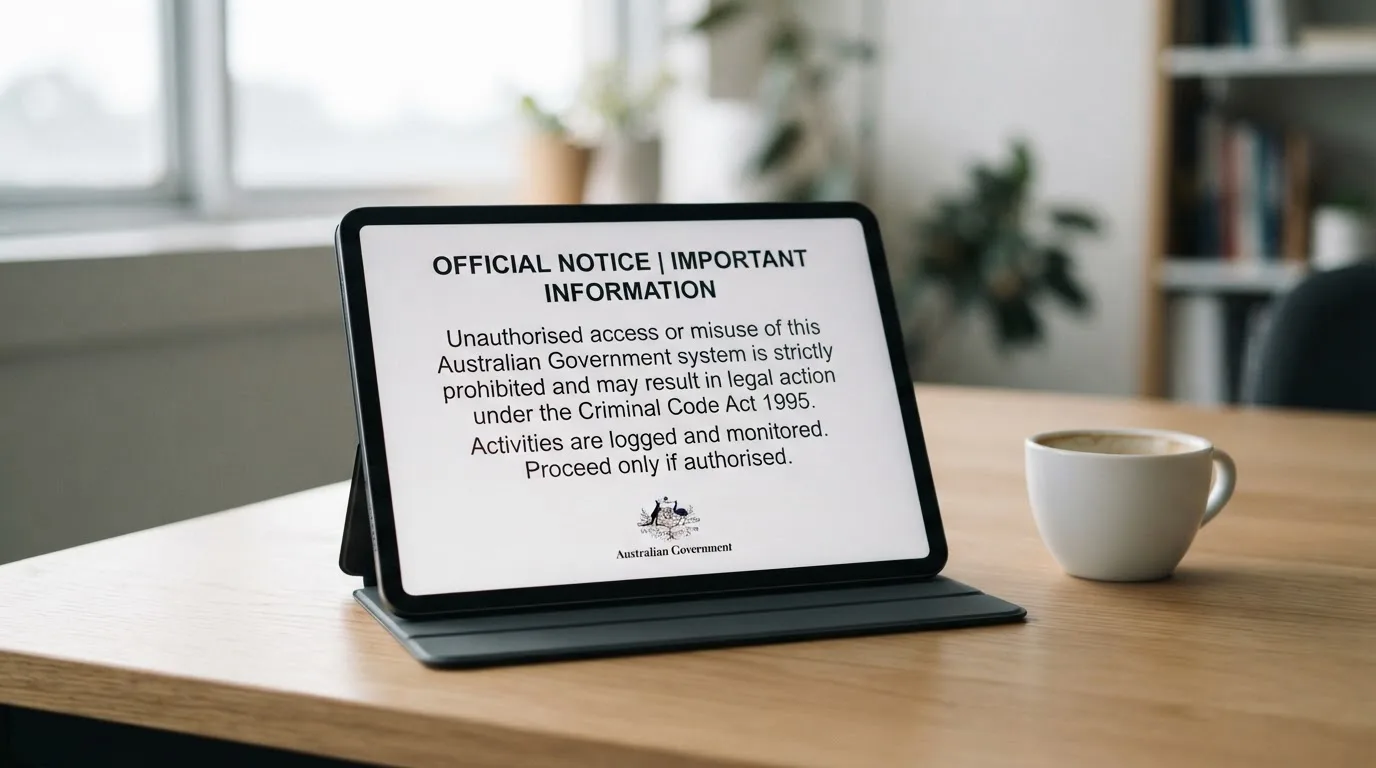
The Interactive Gambling Act 2001 — the IGA — is the Commonwealth statute that governs the supply of interactive gambling services to Australians. It was strengthened by the Interactive Gambling Amendment Act 2017, which extended the prohibitions and gave the Australian Communications and Media Authority the blocking powers the regulator now uses routinely. The result, in plain terms, is that providing an online casino game — including an online pokie — to a person physically in Australia is an offence under the IGA. The prohibition is on the supplier, not the player; an Australian who plays at an offshore site is not prosecuted. The Australian who plays at the offshore site does, however, accept the consequences of being outside the consumer-protection system the IGA was paired with.
What the IGA does not prohibit is the supply of wagering services on races and sporting events, lotteries and keno — all licensable, and in practice licensed in volume by the Northern Territory Racing and Wagering Commission, which regulates 52 of Australia’s online bookmakers (including Sportsbet, Bet365 and Ladbrokes) for tax reasons. The NTRWC runs on a part-time footing: no full-time staff, monthly meetings in Darwin. The land-based pokies Australians play in pubs and clubs are licensed and regulated state by state, with each state and territory setting its own design, return-to-player and operating rules; they are not affected by the IGA, because they are not interactive gambling services in the Act’s sense.
The enforcement pattern is the ACMA’s daily work. The regulator investigates complaints, issues formal warnings to operators it can identify, and asks Australian internet service providers to block illegal sites. The published cumulative figure as of 26 June 2026 was 1,751 illegal gambling and affiliate websites referred for blocking since the first such request in November 2019; the same ACMA record counts more than 230 unlicensed gambling services that have left the Australian market since 2017 enforcement was strengthened. The blocking is not theoretical: on 26 June 2026 alone, the ACMA asked ISPs to block a further 12 sites (7Signs, ChromaBet, Donbet, Duospin, Freshbet, Slots Gem, Jacks Club, Lucky Start, Pointsbetz.com, Spinrise, Vinyl Casino and Wildsino). The pace of blocking — about 22 sites a month on average across the 79 months since November 2019 — describes a steady enforcement rhythm, not an accelerating one. Industry estimates put Australians’ annual losses to illegal gambling sites at about A$3.9 billion, with the share of gambling going through legal channels falling from 74% in 2021 to 64% — the offshore supply is taking a measurable slice of the spend.
The 2026 reform wave is in motion but not yet binding. The Interactive Gambling Amendment (Gambling Reform) Bill 2026 passed Parliament on 19 August 2026, and its advertising and inducement measures commence on 1 January 2027. The Bill is law with a start date, not law in force on a 2026 page. The shape of the inducement prohibition — what counts as an inducement to open an account or to keep playing — is the area where the no-deposit pokies bonus marketing is most exposed once the new measures commence. Until 1 January 2027, the existing IGA framework applies.
Tax treatment is the other side of the offer an Australian reader should understand. Recreational gambling winnings are not assessable income (section 6-5 of the Income Tax Assessment Act 1997), and losses are not deductible against other income, unless the person carries on a business of gambling — which an offshore no-deposit-bonus player is not doing. The model is consistent across the market: “check with the ATO” is the standing instruction, and the standard answer is that a casual player’s spin at an offshore site does not produce a taxable event on the win and produces no deduction on the loss.
The cost picture, drawn together, is not that the Australian player is breaking the law. It is that the player is paying for the absence of Australian law: no licence to void, no regulator to complain to, no BetStop connection, no local ADR, no guaranteed withdrawal, and a service whose existence the regulator has, in most cases in the comparison table, already publicly stated is a contravention. The legal prohibition is on the supplier. The cost is paid by the player who treats the offer as if the supplier were licensed.
The Australian-licensed alternative, for the reader who wants the same game in a regulated frame, is the land-based pokie: licensed by the relevant state or territory, with its own RTP floor, its own complaint body, and its own connection to BetStop. Online pokies, as the online versions of these machines, are not the licensed alternative. They are the unlicensed one.
Calculating the ACMA Blocking Rate
The arithmetic behind the enforcement rhythm the prohibition section describes is small but worth showing, because it turns a stack of press-release figures into a single pace a reader can hold in mind.
The two inputs are the ACMA’s own cumulative totals. The first is the running total of illegal gambling and affiliate marketing websites referred to Australian ISPs for blocking: 1,751, as published on 26 June 2026. The second is the date of the first blocking request under the strengthened regime: November 2019. The condition that fixes the calculation is that both figures are ACMA-published, and that the elapsed time between the first blocking request and the 26 June 2026 cumulative figure is the window the rate is averaged across — not the calendar year, and not any single round.
The result, stated as a band with its condition: roughly 22 sites blocked per month on average across the 79-month enforcement window since November 2019, with the natural monthly variation that single rounds can be as small as a handful of sites and as large as a dozen or more (the 26 June 2026 round was 12). Annualised, the band sits between roughly 240 and 290 sites a year, centred around 265. The “average” qualifier is what fixes the band: it is the running pace, not the current pace, and the running pace flatters the regulator’s enforcement year if the early years were slower.
The reading that follows is not “the regulator is winning” or “the regulator is losing”. It is the steady monthly rhythm that comes out of an enforcement pipeline built on identifying operators, naming them in formal warnings, and then escalating to blocking referrals — sometimes one at a time, sometimes in batches. The blocking total is the laggard measure of supply: a site blocked in 2026 is a site the ACMA identified some time before. The new warnings in 2026 (Jackbit and CasinOK, April 2026; Rocketplay.com.au, March 2026) are the leading indicator of the next batch of blocking referrals.
The cost frame for a reader is the one the number quietly underlines. A monthly pipeline of referrals means an offshore no-deposit pokies site can be online and running today, blocked next month, with the brand migrating to a new domain shortly after. The pipeline does not produce a permanent blocklist; it produces a moving one. The Australian player at the receiving end of the pipeline is the player who finds the site gone one morning and the balance still on it. The arithmetic above describes how often that outcome is, on average, being delivered.
Frequently Asked Questions
What does the headline number on a typical no-deposit pokies bonus actually amount to once the small print applies?
The headline figure is usually a modest sum — a few dollars in bonus cash or a small bundle of free spins on a single game. Once playthrough, max-cashout, eligible-games and expiry are layered on, the apparent free credit compresses into a chance at a small capped withdrawal.
Is a PayID-tagged no-deposit pokies bonus structurally different from any other no-deposit pokies bonus, or is the rail the only thing that changes?
PayID is an Australian real-time payment rail, not a bonus category. The free credit is the same regardless of the rail named in the marketing. The practical difference is at withdrawal, where PayID depends on the offshore casino holding an Australian-domiciled merchant account — the operator’s choice, not the rail’s guarantee.
Are Australians who accept a no-deposit pokies bonus from an offshore site on the right side of the law?
The Interactive Gambling Act 2001 targets the supplier, not the player. Australians are not prosecuted for opening an account or accepting a bonus at an offshore site. The cost paid is the absence of Australian consumer protection — no local regulator, no complaint body, no BetStop connection, no guaranteed payout if a dispute arises. See also What Australians Are Actually Being Offered When They Search for… .
How much wagering does the player usually have to put through before a no-deposit pokies bonus win can be cashed out?
The playthrough on a no-deposit pokies bonus is usually a multiple of the bonus amount — and almost always higher than the equivalent on a deposit bonus. Pokies contribute at full weight; table games and high-RTP titles often contribute partially or not at all. A max-bet rule and an expiry window apply alongside.
What is the typical withdrawal ceiling on winnings from a no-deposit pokies bonus?
Most no-deposit pokies bonuses include a maximum-cashout clause that caps what is actually withdrawable from bonus-derived winnings, irrespective of how much the playthrough is met. The cap is usually a small multiple of the bonus credit — often in the tens to low hundreds of dollars. Anything over the cap is forfeit on withdrawal.