
Fast payout online casinos in Australia — what the marketing doesn’t say and what an Australian reader can actually do
Data current as of 28 October 2026 and checked against the Australian Communications and Media Authority (ACMA) formal-warning register and the Interactive Gambling Act 2001 (IGA). Fast payout online casinos in Australia — More on this topic at casino ratings .
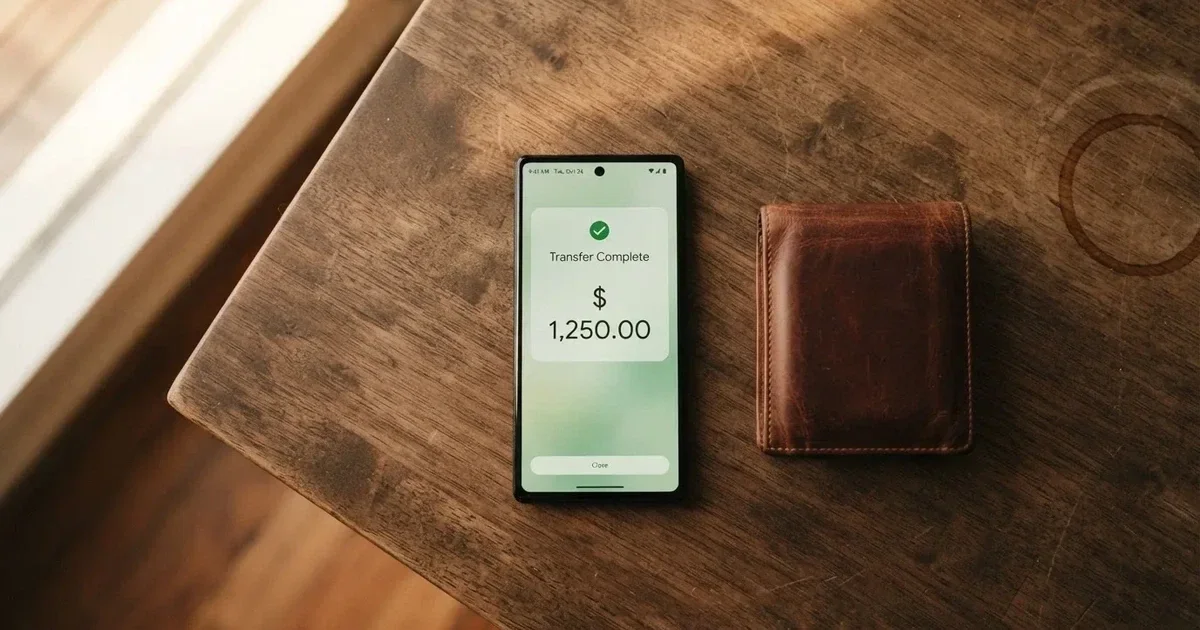
The phrase “fast payout casino” promises a player that money comes back fast. In Australia, that promise is layered over a market where the product itself is prohibited, and where every brand that markets a fast payout is, by definition, on the wrong side of the regulator’s file. What follows is a working shortlist of eleven such brands — all named by the ACMA — alongside the legal frame, the payment rails and the player-safety tools that actually hold up on Australian soil.
The page is laid out so a reader can move between three things. The first is the legal frame and the ACMA’s record, because that decides whether any online casino is a real option for an Australian. The second is the payment system that “fast payout” relies on — Osko, PayID, BPAY and the digital wallets — and what each one actually delivers in settlement time. The third is a single shortlist of brands the ACMA has acted against, with the formal-warning detail that makes each brand what it is. An Australian reading this page sits inside a market the Interactive Gambling Act 2001 closes to online casinos; the shortlist below documents that fact rather than offering an escape from it.
Table of Contents
- Where fast-payout online casinos actually stand in Australia in 2026
- The player’s frame — responsible gambling tools an Australian can actually use
- Crypto and the fast-payout pitch — what bitcoin and “instant” actually mean
- The payment rails behind “fast payout” — what each one delivers in Australia
- The shortlist — eleven brands the ACMA has warned
- The arithmetic behind the ACMA’s record
- Where an Australian reader actually stands in 2026
- FAQ
Where fast-payout online casinos actually stand in Australia in 2026
Online casino games — slots, roulette, blackjack, live dealer tables, “online pokies” — are prohibited interactive gambling services under the IGA. The prohibition is on the provider, not on the individual player, but the practical consequence for a reader looking for a fast-payout casino is that every brand in this category operates outside Australian law. The Northern Territory Racing and Wagering Commission (NTRWC) regulates 52 online bookmakers, including Sportsbet, Bet365 and Ladbrokes, but it does so for sports and race wagering, not for casino games. The NTRWC runs without full-time staff and meets monthly in Darwin; it is not a casino regulator, and there is no Australian counterpart for casino products.
The ACMA’s enforcement record is what a reader can check. A total of 1,751 illegal gambling and affiliate marketing websites had been blocked since the first blocking request in November 2019, and more than 230 unlicensed gambling services had left the Australian market since enforcement was strengthened in 2017. In a single round reported on 26 June 2026 the ACMA asked Australian internet service providers to block 12 more: 7Signs, ChromaBet, Donbet, Duospin, Freshbet, Slots Gem, Jacks Club, Lucky Start, Pointsbetz, Spinrise, Vinyl Casino and Wildsino. H2 Gambling Capital’s 2025 report estimates Australians lose about A$3.9 billion a year to illegal sites, and the share of gambling going through legal channels fell from 74% in 2021 to 64%.
That is the market a “fast payout” claim is sold into. The promise of speed sits inside a market where the operator is being blocked, the consumer has no Australian complaints body and the balance on the account can disappear behind a firewall.
ACMA formal warnings — what the regulator has named, and when
The shortlist on this page is built from formal warnings the ACMA itself has issued. A formal warning is the regulator’s first public step under section 7A of the IGA; it names the provider and the brand, gives the provider a chance to stop, and is followed by a blocking request if the provider does not comply. The formal warning date is the date a brand becomes part of the official record, not the date the brand started accepting Australian players.
Eleven brands sit on that record on this page. RocketPlay was warned twice: Pulsup Ltd over Rocketplay in March 2026, and earlier under Dama N.V. in May 2022. Level Up Casino came under the same May 2022 warning to Dama N.V. Woo Casino and Spirit Casino are both Dama N.V. brands warned in March 2025 and May 2025 respectively. National Casino and Bizzo Casino were warned through Consolutetish S.R.L. in July 2025; Bizzo had already been the subject of an earlier 2022 warning to TechSolutions. Ignition Casino was warned through Bamboo Media in July 2025. Instant Casino was warned through EOD Code SRL in February 2025. Jackbit and CasinOK were warned through Ryker B.V. in April 2026. Casino Intense was warned through Sterplay Holding Ltd in April 2025. Sky Crown and Blue Leo were warned through Hollycorn N.V. in September 2022. Two of those operators — Dama N.V. and Consolutetish S.R.L. — appear more than once because the same corporate group runs multiple brands and the ACMA names the corporate group, not just the brand.
A reader looking for “a fast payout online casino” should read the dates as fresh intelligence rather than history. The most recent entries (March 2026, April 2026) are operators the ACMA is actively engaging with; older entries (2022) are operators the ACMA has warned twice, with no Australian licence available to either of them.
Legal and enforcement frame — the IGA, the 2017 amendments, the 2026 reform
The IGA as amended in 2017 made it an offence to provide a prohibited interactive gambling service to a person physically in Australia. The 2023 amendments added the credit-card ban that took effect on 11 June 2024: Australian-licensed online wagering services cannot accept payment by credit card or any credit-related product, with penalties up to $247,500 per breach. The Interactive Gambling Amendment (Gambling Reform) Bill 2026 passed Parliament on 19 August 2026; its advertising and inducement measures commence 1 January 2027, so a page read in 2026 sits inside law that has been passed but not yet commenced. Minimum age is 18.
The legal status of each individual brand in the shortlist is the same: offering online casino games to Australians is a prohibited service, regardless of the licence the brand displays on its footer. A Curaçao e-gaming licence, a Kahnawake licence or any other offshore authorisation does not turn the product into a permitted one for Australians. The brand may be licensed for the markets it serves; it is not licensed for Australia, because no such licence exists.
The player’s frame — responsible gambling tools an Australian can actually use
A reader asking about a “trusted fast payout casino” is usually asking two things at once: which brand settles quickly, and which brand can be trusted. In Australia the second question has a clean answer that the offshore brands cannot meet. BetStop, the National Self-Exclusion Register, has been live since August 2023. It binds Australian-licensed online and phone wagering services; an offshore casino is not connected to it. BetStop does not block offshore sites, and signing up for BetStop does not stop an offshore casino from accepting deposits. A reader who wants self-exclusion that actually bites against a brand in the shortlist below has to use the bank-level gambling blocks the major banks offer, because those operate at card-network level rather than at operator level.
Westpac’s gambling block works at card level: it refuses authorisation of transactions registered under the merchant category code “Betting/Casino Gambling” on eligible personal credit and debit cards. ANZ’s gambling transaction block, activated in the ANZ app, also blocks gambling transactions made through a digital wallet such as Apple Pay on an eligible card. Commonwealth Bank’s gambling lock operates the same way through the CommBank app, with the bank stating it cannot guarantee all gambling-related purchases will be stopped. ANZ adds two practical limits: once the block is on, removing it requires a 48-hour waiting period, and the bank warns that not all gambling transactions will be blocked and some non-gambling transactions might be blocked in error.
The card-level blocks are the closest a reader gets to a working tool against offshore brands. Where BetStop stops an Australian-licensed bookmaker from accepting a deposit, a card block stops the deposit at the issuing bank — which is what actually closes the route from a Commonwealth, ANZ or Westpac account into the shortlist on this page.
The National Gambling Helpline is 1800 858 858, free, 24/7, with chat at Gambling Help Online. A reader who has already deposited into one of the brands below and wants to stop has both an Australian helpline and the bank-level tools; an offshore brand has no consumer-protection obligation to either.
Crypto and the fast-payout pitch — what bitcoin and “instant” actually mean
Crypto-marketed fast payout casinos lean on three claims: that bitcoin settles fast, that crypto gives privacy, and that the offshore brand cannot be blocked. Each claim has a sharper reality behind it.
Bitcoin settles in roughly ten minutes for a single confirmation and longer for a brand that waits for more. That is faster than a SWIFT bank wire but slower than Osko, the Australian instant-payment rail run by Australian Payments Plus (AP+), where a transfer between participating Australian banks arrives in under a minute, 24/7 including weekends. The “fast” comparison is tilted by the rail a brand uses on the way out — a brand that pays out via Osko to an Australian bank account is faster than a brand that pays out in bitcoin and asks the player to convert it themselves.
The privacy claim runs into the IGA’s debit-only deposit rule for licensed wagering: credit cards, credit-related products and digital currency are not legal deposits for Australian-licensed wagering, with the credit-card rule effective from 11 June 2024. A site asking an Australian for a bitcoin deposit is, by definition, operating outside the Australian rules, and the consumer protections those rules anchor do not apply. The same offshore brand that markets “fast crypto payouts” is also the brand that does not connect to BetStop, has no Australian complaints body and can be blocked with a balance on the account. The “blockable” claim is real: the ACMA had blocked 1,751 illegal sites by mid-2026 and was actively issuing new blocking requests.
The net effect is that the crypto pitch does not give an Australian anything the local rails do not give faster. Osko is faster than a bitcoin confirmation for an Australian bank account, PayID shows the account-holder name before the transfer is sent, and AP+ warns that being asked to transfer money to a PayID on an illegal gambling site almost certainly means a scam site. PayID-based instant transfers are available at over 100 Australian financial institutions and more than 25 million PayID identifiers had been registered on Australia’s New Payments Platform by April 2025.
The payment rails behind “fast payout” — what each one delivers in Australia
The fastest legitimate settlement into an Australian bank account is Osko, with transfers arriving in under a minute between participating banks and remaining in service on weekends. PayID sits on top of the same rail: a transfer addressed to a PayID (a phone number, an email or an ABN) routes through Osko and the recipient’s name is shown before the money is sent. The two rails are owned and operated by AP+, the merged entity that took in NPP Australia, BPAY and eftpos after the ACCC authorised the merger in September 2021.
BPAY is a bill-payment service rather than a payout rail: the payer enters a Biller Code and a Customer Reference Number (CRN) printed on the bill. BPAY has operated in Australia since 1997 — launched on 18 November 1997 — and is available in the online banking of over 140 banks and financial institutions and offered by over 95,000 businesses. It is owned equally, via parent company Cardlink Services Limited, by Australia’s four major banks. For an Australian player receiving a casino payout, BPAY is what gets used for a refund or a withdrawal in some contexts; it is not what an offshore brand usually pays out through, because the brand does not have an Australian BPAY biller relationship.
The New Payments Platform (NPP) went live on 13 February 2018 and is owned by New Payments Platform Australia Ltd, a non-profit whose 13 shareholders include the Reserve Bank of Australia and the major banks. Participants must keep monthly outages to no more than two minutes — a constraint that explains why Osko has been reliable enough to bank a payout claim on.
Card rails are slower and increasingly contested. American Express, which launched its first charge card on 1 October 1958, runs a three-party scheme rather than the four-party model Visa and Mastercard use, and the Reserve Bank of Australia’s July 2025 review proposes removing surcharges only on eftpos, Mastercard and Visa card transactions — explicitly leaving American Express outside the scope of the proposed surcharge ban. For an Australian player, that means an Amex deposit carries whatever surcharge the merchant chooses to pass on, while a Visa or Mastercard deposit is moving toward a no-surcharge outcome.
Digital wallets — Apple Pay, Google Pay and Samsung Pay — collectively accounted for around 45% of all card payments in Australia by number by the end of 2025. Apple does not charge fees to consumers for using Apple Pay in stores, online or in apps; any surcharge comes from the merchant’s own card-processing fees, not from Apple. Transaction limits and PIN requirements are set by the card issuer or merchant, not by Apple. The practical point for a casino payout is that the wallet is a front end over the underlying card: the gambling-block rules of the issuing bank still apply. ANZ’s gambling block, for instance, blocks gambling transactions made through Apple Pay on an eligible card, not just on the physical card.
The crypto rails settle in tens of minutes at best, sit outside the IGA’s debit-only rule for licensed wagering and offer no consumer-protection layer. For an Australian bank account, the local rail beats the offshore one on speed and on recourse.
The shortlist — eleven brands the ACMA has warned
The eleven brands below are not a ranking and not a recommendation. Each is on the ACMA’s formal-warning register for offering prohibited interactive gambling services to Australians, and each runs on the IGA’s wrong side. The operator behind each brand and the date the warning was published are what makes each brand what it is.
| Brand | ACMA action and date | Operator named by the ACMA | Subject support |
|---|---|---|---|
| RocketPlay | March 2026 formal warning; earlier May 2022 warning to same operator group | Pulsup Ltd (RocketPlay); earlier Dama N.V. | listings-only |
| Level Up Casino | May 2022 formal warning | Dama N.V. | listings-only |
| Woo Casino | March 2025 formal warning | Dama N.V. | — |
| Spirit Casino | May 2025 formal warning | Dama N.V. | — |
| National Casino | July 2025 formal warning | Consolutetish S.R.L. | listings-only |
| Bizzo Casino | July 2025 formal warning; earlier 2022 warning | Consolutetish S.R.L.; earlier TechSolutions | listings-only |
| Ignition Casino | July 2025 formal warning | Bamboo Media | — |
| Instant Casino | February 2025 formal warning | EOD Code SRL | listings-only |
| Jackbit | April 2026 formal warning | Ryker B.V. | — |
| Casino Intense | April 2025 formal warning | Sterplay Holding Ltd | listings-only |
| Sky Crown | September 2022 formal warning | Hollycorn N.V. | — |
The pattern in the operator column is corporate-group repetition: Dama N.V. accounts for four entries on this page, Consolutetish S.R.L. for two, and the rest are single-brand appearances by a single corporate group. The repeated appearances are not noise; they are the ACMA naming a corporate group once and then naming it again as that group opens new brands. A reader who sees a brand in 2026 should also check whether the operator behind it has already been warned under a sister brand.
Settleme: what the fast-payout marketing turns out to mean
The ACMA issued further formal warnings in March 2025 over Woo Casino and in May 2025 over Spirit Casino, both operated by Dama N.V. — a corporate group that has now been warned three times across three years (May 2022, March 2025, May 2025) and that has changed brands rather than changed behaviour.
A “fast payout” pitch in this set is the marketing translating one of two things into a number. Either the brand pays out via Osko to an Australian bank account — in which case the speed comes from AP+ rather than from the brand, and the same speed is available from any brand on the same rail — or the brand pays out in bitcoin or another crypto, in which case the speed is roughly ten minutes per confirmation and the recipient still has to convert to AUD and bank it. The brand’s own contribution is usually a “processing time” — the gap between the player requesting the withdrawal and the brand releasing the funds. That interval is what varies across brands, and it is also what the brand controls and can extend at any time.
For an Australian reader, the practical takeaway is that the speed of a payout depends on three things in order: the rail the brand pays out on, the brand’s own processing window, and the receiving bank’s posting time. The rail is the biggest factor and the one the reader has the most information about; the processing window is the smallest and the one the brand has the most discretion over. A reader comparing brands on “fast payout” should be comparing processing windows on the same rail, not headlines that quote different rails.
Fundamenta: the legal floor under the marketing
In July 2025 the ACMA warned Bamboo Media over Ignition Casino and Consolutetish S.R.L. over National Casino and Bizzo Casino, the latter first warned back in 2022.

What sits beneath every brand in this shortlist is the IGA’s prohibition on providing online casino games to Australians. A licence from Curaçao, from the Kahnawake Gaming Commission or from any other offshore jurisdiction does not authorise the brand to take Australian play; no Australian state or territory issues such a licence because the IGA does not permit it. The brands display offshore licences in their footers for the same reason — to give the appearance of regulation — and the ACMA’s formal warnings are the regulator’s answer to that appearance.
For a reader, the practical question is what recourse they have if a withdrawal stalls or is refused. On an Australian-licensed bookmaker the consumer can complain to the relevant state regulator or to the Australian Financial Complaints Authority on payment issues; on an offshore brand the only recourse is the brand’s own complaints process and, beyond that, the licence issuer’s own complaints process in its own jurisdiction. Neither of those is Australian, and neither of those gives an Australian consumer the protection Australian consumer law would normally provide. The offshore brand can also be blocked by an Australian ISP under an ACMA direction, which means a balance held with the brand can be cut off from access at any time.
Prohibiti: the blocking pipeline behind the warnings
In February 2025 the ACMA issued a formal warning to EOD Code SRL over Instant Casino — one of three formal-warning categories the ACMA uses alongside issuing infringement notices and asking ISPs to block illegal sites.
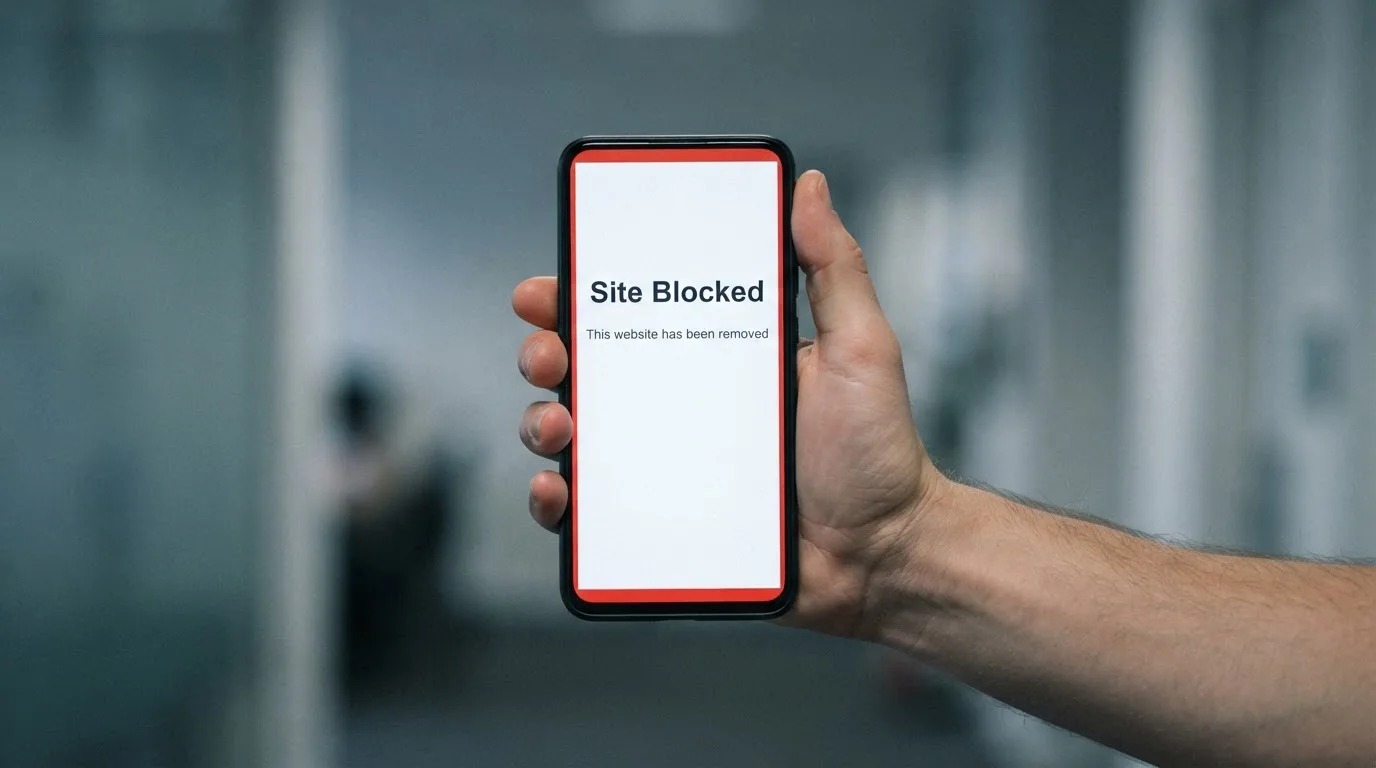
The blocking pipeline is what gives the formal warnings teeth. The ACMA’s enforcement record since 2017 is a sequence of formal warnings followed by blocking requests, and the ACMA had blocked 1,751 illegal gambling and affiliate marketing websites by mid-2026. The arithmetic on that record is the calculation this page is built around.
Between November 2019 — the date of the first blocking request — and the 26 June 2026 reporting round, the ACMA had asked ISPs to block a running total of 1,751 illegal gambling and affiliate marketing websites. Spread over that period, the rate works out to a band of roughly 250 to 280 websites blocked per year — a figure that depends on the exact span counted and that the regulator reports only as cumulative. The condition that holds it together is the formal-warning-then-block sequence: every brand on this page is a candidate for the next blocking request, and several of them are already there.
For an Australian reader the arithmetic is not a statistic to admire; it is the pace at which the marketing pages a player is reading today become inaccessible tomorrow. A balance held with a brand that gets blocked is a balance the player can no longer reach through the Australian ISP they are using.
Jackbit and the post-2024 enforcement shape
Jackbit was warned through Ryker B.V. in April 2026, the same corporate-group warning that covered CasinOK. April 2026 sits inside the credit-card ban (effective 11 June 2024) and inside the broader post-2017 enforcement record.
The Jackbit case is worth reading closely because it shows what enforcement looks like after the credit-card ban and after the 2023 amendments. A brand that wants Australian players has to either decline credit-card deposits or work around the rule; a brand that accepts crypto deposits is outside the IGA’s payment rules because those rules apply to licensed wagering. The ACMA’s response is the same: a formal warning, then a blocking request if the warning is ignored. The April 2026 warning is the ACMA’s first formal step; what follows depends on whether Ryker B.V. complies.
For an Australian reader, the post-2024 picture is consistent. The credit-card rule and the broader prohibition close more of the deposit routes a brand used to take, and the ACMA’s enforcement pace is the regulator’s answer to brands that route around those closures. The shortlist gets longer, not shorter, because the closed routes do not end the demand.
Casino Intense and the older end of the register
Casino Intense was warned through Sterplay Holding Ltd in April 2025, and Sky Crown and Blue Leo were warned through Hollycorn N.V. in September 2022. Both warnings predate the credit-card ban but are still live on the ACMA’s register.
The older end of the register shows what enforcement looks like over time. A formal warning issued in September 2022 is still on the register four years later; the brand has not been issued a new Australian licence because none exists. The brand may have changed its deposit routes, its domain or its corporate group, but the warning persists in the public record. A reader checking the ACMA’s register will find both Sterplay Holding Ltd and Hollycorn N.V. on the same list as the more recent Ryker B.V. and Pulsup Ltd.
The older warnings also show what is missing from the offshore proposition: there is no Australian regulator for the brand to answer to, and there is no Australian complaints body. A reader with a balance on Casino Intense or Sky Crown has the same limited recourse a reader with a balance on RocketPlay has. The age of the warning does not change that.
RocketPlay, Level Up, Bizzo — repeat offenders on the same corporate groups
RocketPlay appears under two operators: Pulsup Ltd in March 2026 and Dama N.V. in May 2022. Bizzo appears under Consolutetish S.R.L. in July 2025 and under TechSolutions in 2022. Level Up is Dama N.V.’s May 2022 entry.
The repeat pattern is the ACMA naming a corporate group rather than a brand. Dama N.V. has been named four times on this page (Bambet, Dazard, Level Up, Rocketplay, Wild Tornado and Cobra Casinos in May 2022, plus Woo Casino in March 2025 and Spirit Casino in May 2025), Consolutetish S.R.L. twice (National Casino and Bizzo Casino in July 2025), and TechSolutions once for Bizzo in 2022. The pattern is not a coincidence: the ACMA names the operator because the operator is the entity the IGA prohibits, and the operator’s brands are the channel through which the prohibition is breached.
For an Australian reader, the corporate-group layer changes what a “brand check” looks like. A reader checking only the brand they were about to deposit with would miss the corporate-group history. The ACMA’s register gives the operator name alongside the brand name, and a reader who is willing to spend a minute on the register gets a sharper picture than the brand’s own marketing gives.
The eleven brands side by side — what the table leaves out
The table above names brand, ACMA action and date, operator and the subject-support evidence the research could confirm. It does not name payout speed, payout rail, RTP, volatility, deposit method or bonus terms — none of which research was able to confirm from a non-affiliate source for these specific brands. The cells where research had no figure carry an em dash, and that dash is what protects the table from becoming a marketing surface for the brands on it. A reader looking for a fast payout claim should understand that the figure behind that claim, on any of these eleven brands, comes from the brand’s own marketing or from an affiliate marketing page; it is not a figure on this page.
The table also makes a structural point that the prose around it should not have to repeat: every row is the same legal category. Eleven different brands, eleven different operator names, eleven different warning dates, and the same outcome on the IGA. The differences between rows are differences of corporate group and timing, not differences of legality. A reader comparing rows should be comparing who has been warned most recently and which operator group keeps changing brand names; they should not be comparing rows on payout speed, because the table has no payout speed to compare.
The arithmetic behind the ACMA’s record
The page’s calculation is the rate at which the ACMA has blocked illegal gambling and affiliate marketing websites since the first blocking request in November 2019. The two inputs are the cumulative total of 1,751 blocked websites by the 26 June 2026 reporting round and the date of the first blocking request in November 2019. The result is the number of blocked sites per year across that span.
Between November 2019 and June 2026, the elapsed time is roughly six and a half years. Dividing 1,751 by 6.5 gives a band of roughly 250 to 280 blocked websites per year — the actual figure depends on the exact start and end dates counted, which is why this page gives it as a band rather than a single number. The condition that holds the band together is the ACMA’s enforcement sequence: every brand on the shortlist above is a candidate for the next blocking request, and the rate above is the rate at which the regulator turns candidates into blocked sites.
The calculation is a statistical estimate, not a prediction. It is the rate at which the regulator has worked through the pipeline over the past six and a half years; it is not a promise about the next year. A reader who reads it as a forecast is reading past what the figure can support.
Where an Australian reader actually stands in 2026
The legal frame, the ACMA’s record and the shortlist above all point the same way. An Australian reader looking for a fast-payout online casino is looking for a product the IGA prohibits, and the brands that market that product are the brands the ACMA has acted against.
What is licensable in Australia is wagering on races and sport placed before the event, lotteries and keno — in practice licensed by the Northern Territory for the wagering side. The 52 online bookmakers the NTRWC regulates (Sportsbet, Bet365, Ladbrokes and 49 others) are wagering operators, not casino operators, and the commission itself has no full-time staff. An Australian who wants to play casino games legally does so at a licensed pokies venue or a land-based casino, not online.
What is also available is the player-safety layer that does not extend to the offshore brands: BetStop, the National Gambling Helpline (1800 858 858, 24/7), the card-level gambling blocks at Westpac, ANZ and Commonwealth Bank, and the AP+ payment rails (Osko, PayID, BPAY) that settle into Australian bank accounts in under a minute. Each of those tools does something the offshore brands cannot match: BetStop because it binds Australian-licensed operators, the card blocks because they operate at the issuing bank rather than at the operator, and the AP+ rails because they are Australian-owned and Australian-regulated.
The Interactive Gambling Amendment (Gambling Reform) Bill 2026, passed on 19 August 2026 with advertising and inducement measures commencing 1 January 2027, is the next tightening of the frame. A reader on this page in 2026 is inside law that has been passed and is not yet in force, and inside enforcement that has been running since 2017 and is still active.
FAQ
What counts as a fast payout time for a casino transaction?
A fast payout is whatever the rail and the brand can deliver into the player’s account faster than a standard bank wire. On Osko and PayID the rail itself settles in under a minute between Australian banks, 24/7, so the brand’s contribution is the gap between the player requesting the withdrawal and the brand releasing the funds. Bitcoin settles in roughly ten minutes per confirmation and still has to be converted to AUD. The phrase is a marketing gloss over whichever rail the brand uses.
How quickly does an Osko bank transfer arrive between Australian banks?
Osko settles in under a minute between participating Australian banks, including on weekends and outside banking hours. The rail is operated by Australian Payments Plus, the merged entity that took in NPP Australia, BPAY and eftpos after the ACCC authorised the merger in September 2021. Participants must keep monthly outages to no more than two minutes, which is why the rail is reliable enough to bank a payout claim on.
Is it legal for an online casino to offer fast payouts to players in Australia?
No. The Interactive Gambling Act 2001 prohibits offering online casino games — including slots, table games and online pokies — to anyone physically in Australia, and no state or territory licenses them. What is licensed is wagering on races and sport, lotteries and keno. A brand that markets fast payouts to Australians is offering a prohibited interactive gambling service regardless of any offshore licence it displays.
Do faster payout claims make an offshore casino any safer to use?
No. A faster payout is a faster payment from an operator that has no Australian consumer-protection obligation, no Australian complaints body and no recourse if the balance is later disputed. BetStop, the National Self-Exclusion Register, binds Australian-licensed wagering services; an offshore casino is not connected to it. The card-level gambling blocks at Westpac, ANZ and Commonwealth Bank operate at issuing-bank level and will stop deposits to an offshore brand; the offshore brand’s payout speed does not change what happens if the brand is blocked with a balance on the account. See also The Instant Payout Promise, Read Against the Australian Market .
What payment method typically settles quickest into an Australian bank account?
Osko, addressed either to a BSB and account number or to a PayID, settles in under a minute between participating Australian banks and is available at over 100 financial institutions. PayID-based instant transfers are available through the same rail and show the recipient’s name before the transfer is sent, which is also a defence against being asked to pay a PayID on an illegal gambling site. Card rails (Visa, Mastercard, American Express) are slower and surcharged by the merchant; BPAY is a bill-payment service rather than a payout rail.