
The instant withdrawal casino market in Australia, and why the comparison it promises cannot be made
A reader searching for “instant withdrawal casinos” wants a shortlist. In Australia that shortlist is the wrong shape of answer, because online casino games cannot be licensed here. The Interactive Gambling Act 2001 makes it an offence to provide them to a person in Australia, and no state or territory issues a licence for the product. What can be compared honestly is the gap: what offshore sites claim, what the Australian regulator has done about it, and where money actually moves quickly inside Australian payments. The instant withdrawal casino market in Australia, and why the… — More on this topic at casino ratings .
Data current as of 28 October 2026 and verified against the ACMA’s published blocking list and formal warnings register.
Table of Contents
- The shape of the shortlist the market cannot supply
- Why “instant” describes the rail, not the casino
- What the law actually prohibits
- What the ACMA has actually done, in numbers
- What the formal warnings say about each brand
- Where the cards end
- What an Australian can use that is licensed
- What responsible play looks like inside the licensed frame
- The credit-card ban and what closes around it
- Crypto and the rail that names itself
- What an honest payout comparison would have to compare
- Payments, in summary
- What to do with this page
- Frequently asked questions
The shape of the shortlist the market cannot supply
The page most readers came here looking for would rank eleven offshore casinos by payout speed, document the verification threshold, and weigh crypto against bank transfer. That page would flatter a market the law does not recognise. Australian Communications and Media Authority (ACMA) enforcement has produced a different and more honest list: eleven brands the regulator has already named in formal warnings, with the operator behind each and the date the warning was issued. Naming them is not a recommendation; it is the regulator’s own record of the brands most actively marketed at Australians.

That record is the spine of this page. The comparison runs through it rather than around it, because comparing casino offers is the comparison, and the thing the offers have in common is the prohibition that frames them.
| Brand | ACMA action and date | Operator named by the ACMA | Subject support |
|---|---|---|---|
| RocketPlay | Formal warning, March 2026 | Pulsup Ltd | listings-only |
| Level Up Casino | Formal warning, May 2022 | Dama N.V. | listings-only |
| Woo Casino | Formal warning, March 2025 | Dama N.V. | no-data |
| Spirit Casino | Formal warning, May 2025 | Dama N.V. | no-data |
| National Casino | Formal warning, July 2025 | Consolutetish S.R.L. | listings-only |
| Bizzo Casino | Formal warning, July 2025 (earlier 2022 to TechSolutions) | Consolutetish S.R.L. | listings-only |
| Ignition Casino | Formal warning, July 2025 | Bamboo Media | no-data |
| Instant Casino | Formal warning, February 2025 | EOD Code SRL | listings-only |
| Jackbit | Formal warning, April 2026 | Ryker B.V. | no-data |
| Casino Intense | Formal warning, April 2025 | Sterplay Holding Ltd | listings-only |
| Sky Crown | Formal warning, September 2022 | Hollycorn N.V. | no-data |
A column here describes whether the regulator names the operator only (“listings-only”) or whether the supporting listings carry a directly relevant fact for an instant-withdrawal or crypto context. “No-data” means the regulator’s record is the only honest anchor we can use for the brand in this market.
Eleven warnings is a market sample, not a recommendation set. The brands share a legal position; they do not share a payout speed, a verification policy or a settlement guarantee that an Australian reader could enforce.
Why “instant” describes the rail, not the casino
The phrase “instant withdrawal casino” puts the timing on the operator. The timing actually sits on the payment rail. Australian bank transfers between participating banks on Osko settle in under a minute, around the clock, including weekends, whether the payment is addressed to a BSB and account number or to a PayID. The same Osko/PayID network covers more than 100 Australian financial institutions and had more than 25 million PayID identifiers registered on the New Payments Platform by April 2025. The New Payments Platform went live on 13 February 2018 and is run today by Australian Payments Plus, the merged entity that also runs BPAY and eftpos.
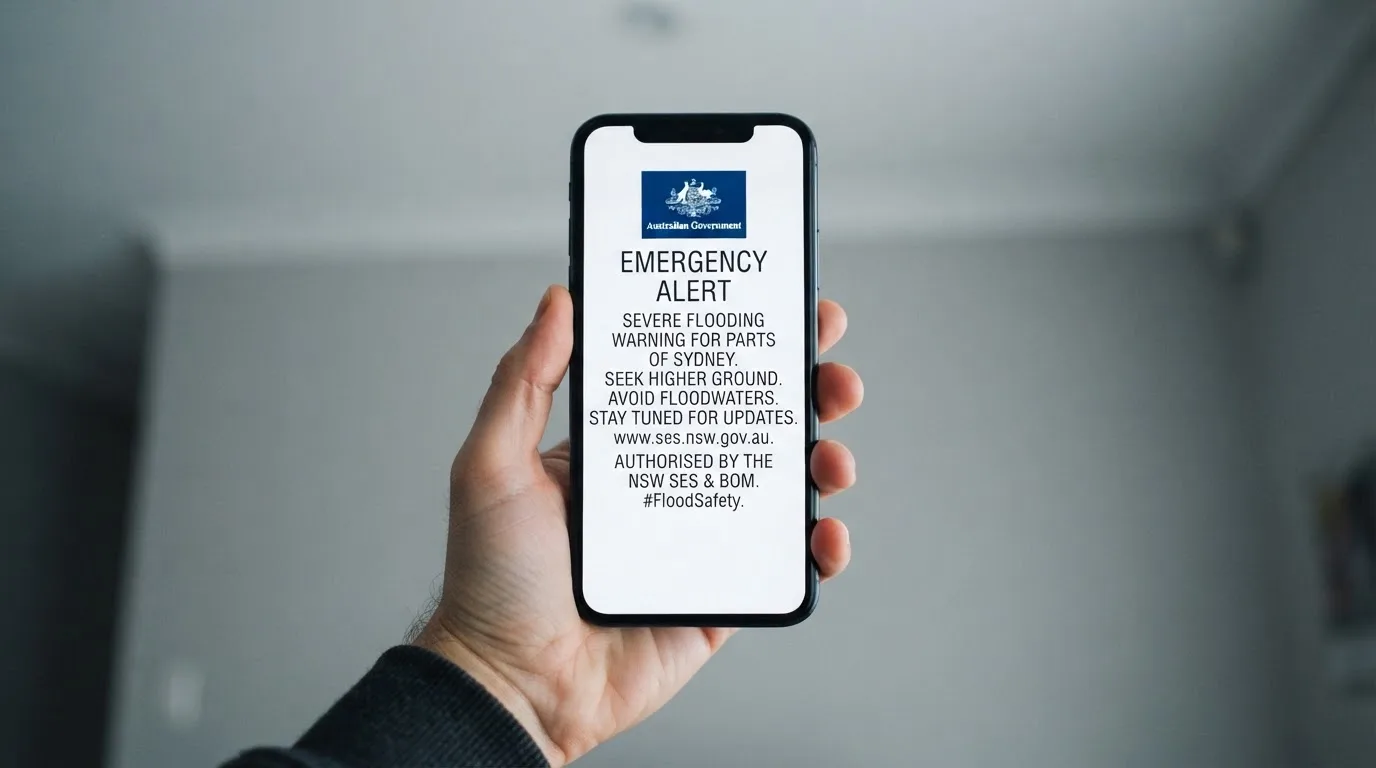
What that means for a reader: any withdrawal that arrives in minutes inside Australia is on this rail. A casino claiming to be “instant” is therefore not selling speed — it is selling willingness to release funds on demand onto a rail that is already that fast. The bottleneck, where one exists, is the casino’s own processing window and its identity checks, not the transfer itself.
PayID also has a built-in safety that few readers use. Paying to a PayID shows the name of the account holder before the transfer is sent. Australian Payments Plus warns that being asked to transfer money to a PayID on an illegal gambling site almost certainly means a scam site. A name mismatch between the operator and the PayID is therefore a refusal signal, not a quirk of the system.
What the law actually prohibits
The Interactive Gambling Act 2001, strengthened by the Interactive Gambling Amendment Act 2017, makes it an offence to provide online casino games, online pokies or in-play betting to a person in Australia. Wagering on races and sport placed before the event is licensable, lotteries and keno are licensable, online casino games are not. The Northern Territory Racing and Wagering Commission (NTRWC) regulates 52 of Australia’s online bookmakers — Sportsbet, Bet365 and Ladbrokes among them — licensed in the Territory for tax reasons; the commission has no full-time staff and meets once a month in Darwin. That setup is the licensed wagering side of the line. Casino games are on the other side.
The player is not the target. The Act targets the provider. The practical consequence for a player is the absence of protection, not the presence of a charge: an offshore site offers no Australian consumer protection, no complaints body and no recourse if a withdrawal is refused, and the site can be blocked by an internet service provider with a balance still sitting on it.
Minimum age is 18. Winnings of a recreational player are not assessable income and losses are not deductible, unless the person carries on a business of gambling. The ATO is the place to confirm the edge cases.
What the ACMA has actually done, in numbers
The enforcement record is what an instant-withdrawal comparison in this market would have to pretend wasn’t there. As reported in June 2026, the ACMA had asked Australian internet service providers to block 1,751 illegal gambling and affiliate marketing websites since the first blocking request in November 2019, and more than 230 unlicensed gambling services had left the Australian market since enforcement was strengthened in 2017. The blocking rate is what the prescribed calculation on this page derives, because the speed of enforcement is the metric a comparison like this can honestly produce.
Inputs: 1,751 blocked sites, first blocking request in November 2019, snapshot in June 2026.
The arithmetic: 1,751 sites divided by the roughly six and a half years from November 2019 to June 2026 — about 79 months — works out to a long-run rate of roughly 22 blocked sites a month. Reported against the snapshot, that average runs as a band of roughly 20 to 25 blocked sites per month, with the rate higher in the early enforcement years and lower as the pool of unblocked sites has thinned. The honest statement is the band, with the condition that it averages across years when enforcement intensity varied. State the result that way and the conclusion holds: the ACMA has not paused and has not paused often, and a brand not yet on the list is one round away from it.
H2 Gambling Capital’s 2025 report estimates that Australians lose about A$3.9 billion a year to illegal gambling sites, and that the share of gambling going through legal channels fell from 74% in 2021 to 64%. The volume is the demand the prohibition has not closed; the falling legal share is the channel shift away from licensed wagering into evidence the ACMA is spending real budget to keep in check.
The June 2026 round itself asked ISPs to block 12 more illegal gambling websites: 7Signs, ChromaBet, Donbet, Duospin, Freshbet, Slots Gem, Jacks Club, Lucky Start, Pointsbetz, Spinrise, Vinyl Casino and Wildsino. That is the current shape of the list. A reader can verify each entry on the ACMA register.
What the formal warnings say about each brand
The operator cards on this page describe what the ACMA has already published. A warning is not a prosecution; it is the regulator naming the company behind a brand and the date of the action, which is enough to settle who runs the site and when the regulator decided the site was offering prohibited services to Australians. Eleven brands have been through it. Each is named here, with the operator behind it and the date, and with one judgement sentence that closes the block without recommending the brand.
RocketPlay
ACMA action and operator: formal warning, March 2026, to Pulsup Ltd over Rocketplay. An earlier May 2022 warning covered Dama N.V. over the same brand among six others.
Subject support: listings-only.
A brand that has been warned twice, three years and three operators apart. The current operator (Pulsup Ltd) is a different legal entity from the earlier one (Dama N.V.), and the ACMA has logged the change in between. There is no Australian licence this can be reconciled against, and there is no consumer protection the regulator would apply if a withdrawal was refused. The card is honest only as a regulator entry; it is not a recommendation.
Level Up Casino
ACMA action and operator: formal warning, May 2022, to Dama N.V. covering six casino brands including Level Up Casino.
Subject support: listings-only.
A Dama N.V. brand from the first wave of warnings. Dama N.V. has been a recurring name across this list — Level Up, Woo, Spirit, and earlier Rocketplay all carry that operator. The May 2022 action is now four years old and the brand has continued to be marketed at Australian payment paths since, which is the part the warning did not close. There is no licensed Australian version to compare this against.
Woo Casino
ACMA action and operator: formal warning, March 2025, to Dama N.V.
Subject support: no-data.
The ACMA has not been quiet about Dama N.V. The March 2025 warning over Woo Casino came after the May 2022 wave, and a May 2025 warning over Spirit Casino followed within two months. Three Dama N.V. warnings in three years is not the kind of record a comparison can paper over. This entry reflects the regulator’s formal action, not a data point on transfer times.
Spirit Casino
ACMA action and operator: formal warning, May 2025, to Dama N.V.
Subject support: no-data.
The second of two Dama N.V. warnings in 2025. The brand is on the list because the regulator named it; the absence of subject data is the honest summary of what this page can say about its payout claims. There is no Australian licence to compare it against.
National Casino
ACMA action and operator: formal warning, July 2025, to Consolutetish S.R.L.
Subject support: listings-only.
A Consolutetish S.R.L. brand from the July 2025 warning round. The same round also covered Bizzo Casino, which had already been the subject of a 2022 warning to a different operator (TechSolutions). A brand can change hands and the regulator can warn both owners; that is what this record shows. We document the warning itself as the defining fact for this entry.
Bizzo Casino
ACMA action and operator: formal warning, July 2025, to Consolutetish S.R.L.; earlier formal warning to TechSolutions (CY) Group Limited and TechSolutions Group N.V. in 2022.
Subject support: listings-only.
Two operators, two warnings, the same brand. The 2022 warning predates the change in operator; the 2025 warning names the current one. A reader who tries to settle the brand’s standing by asking which company runs it has to be told that the ACMA has, at different times, warned two of them.
Ignition Casino
ACMA action and operator: formal warning, July 2025, to Bamboo Media.
Subject support: no-data.
Named in the July 2025 round alongside National Casino and Bizzo Casino, with a different operator behind it (Bamboo Media, not Consolutetish S.R.L.). The entry appears solely because the ACMA published the warning; beyond that, no subject-specific payout data exists.
Instant Casino
ACMA action and operator: formal warning, February 2025, to EOD Code SRL.
Subject support: listings-only.
The brand reads as a marketing line (“instant”) that names a payment attribute. The ACMA named the operator in February 2025; the brand’s promise and the regulator’s position have not converged. The card belongs on this page because the regulator put it here.
Jackbit
ACMA action and operator: formal warning, April 2026, to Ryker B.V. over Jackbit and CasinOK.
Subject support: no-data.
The freshest warning on this list. We include it because the ACMA published the formal notice, and because the proximity of the date (April 2026) to the snapshot (June 2026) underscores how active the regulator remains.
Casino Intense
ACMA action and operator: formal warning, April 2025, to Sterplay Holding Ltd.
Subject support: listings-only.
Named by the regulator in April 2025. This record stands as a formal notification; we draw on the supporting listings to frame the context without inventing a payout guarantee that does not exist.
Sky Crown
ACMA action and operator: formal warning, September 2022, to Hollycorn N.V., over Sky Crown and Blue Leo.
Subject support: no-data.
The oldest warning on this list. The regulator named the operator in 2022 and has not, on this page’s evidence, retracted the position. The card is here because the ACMA published the warning, and because the brand has been on the regulator’s record for the longest time of any in this set.
Where the cards end
The cards share a structural fact: each is here because the regulator named it, and the regulator’s record is what gives the comparison honest content. A reader looking for an instant-withdrawal ranking finds, at the close of eleven cards, the same legal position written eleven times — that online casino games cannot be licensed in Australia, whatever licence a site’s footer shows. That is the comparison the page can honestly make, and it is the answer the shortlist the reader came for would have concealed.
What an Australian can use that is licensed
Wagering on races and sport placed before the event is licensed under Australian law and is the only online gambling product an Australian consumer can lawfully transact with through an Australian-regulated bookmaker. Online lottery and keno are licensed. Online casino games and online pokies are not. The Northern Territory Racing and Wagering Commission regulates the largest group of licensed online bookmakers (52 at the last published count, including Sportsbet, Bet365 and Ladbrokes), licensed in the Territory for tax reasons rather than for product breadth.
Land-based play is licensed state by state. Crown Melbourne, The Star Sydney, The Star Gold Coast, Crown Perth, Crown Adelaide, Casino Canberra and the Sky City Darwin complex operate under state and territory casino licences, with responsible gambling oversight from the relevant state regulator. Pokies venues operate under state-level licensing regimes (different in New South Wales, Victoria, Queensland and so on), and “pokies” as a category is licensed only on a physical machine in a physical venue. None of this substitutes for an offshore casino, and none of it carries the marketing language of instant withdrawal, because the payout is cash at the cashier.
What responsible play looks like inside the licensed frame
The responsible gambling tools that bind to them are what the licensed frame actually offers an Australian reader. BetStop — the National Self-Exclusion Register, live since August 2023 — is the federal register that lets a person exclude themselves from every Australian-licensed online and phone wagering service at once. An offshore casino is not connected to BetStop; a BetStop registration does not reach a site the ACMA has already named in a formal warning.
The National Gambling Helpline is 1800 858 858, free and 24/7, with chat at Gambling Help Online. These are the lines that an Australian reader can actually call. A reader who has been playing offshore and who is thinking about stopping is a reader these services were set up to take seriously.
A second line of protection sits with the Australian banks. Westpac’s gambling block works at the card level: it refuses authorisation of transactions registered under the merchant category code ‘Betting/Casino Gambling’ on eligible personal credit and debit cards. ANZ’s gambling block, activated in the ANZ app, also blocks gambling transactions made through a digital wallet such as Apple Pay on an eligible card, not just the physical card. Commonwealth Bank lets customers apply a gambling lock to eligible cards via the CommBank app, which automatically blocks most gambling transactions. Each bank warns that it cannot guarantee all gambling-related purchases will be stopped; the block is best read as a partial safeguard, not a hard boundary.
ANZ’s block has an additional design: once a customer turns it on, removing it again requires a 48-hour waiting period. The 48-hour window is the bank’s way of forcing a second decision. A reader who has set up a block and is now looking for the brand that circumvents it is on the wrong side of that design.
The credit-card ban and what closes around it
Under the Interactive Gambling Act 2001 as amended in 2023, Australian-licensed online wagering services cannot accept payment by credit card or other credit-related products. The ban took effect on 11 June 2024, with penalties up to A$247,500 for operators. The rule extends to digital wallets linked to credit facilities: paying through Apple Pay on a credit card to a licensed Australian bookmaker is a closed path. Apple Pay itself charges no consumer fee, and any surcharge comes from the merchant’s card-processing fees rather than from Apple; the closure is by product type, not by fee.
The legal deposit routes for licensed wagering are debit card, bank transfer, PayID/Osko and BPAY. A site asking an Australian for a credit card, or for a crypto deposit, is operating outside the Australian rules. The Reserve Bank of Australia’s July 2025 review proposes removing surcharges only on eftpos, Mastercard and Visa card transactions, explicitly leaving American Express outside the scope of the proposed surcharge ban — a relevant detail for any reader whose only plastic is an Amex charge card.
Crypto and the rail that names itself
The crypto shelf is the one this page’s reader is most likely to be searching for. Crypto withdrawals on offshore casinos do arrive quickly. They do not arrive inside the Australian consumer protection frame, and they do not reach a BetStop registration. By the end of 2025, Apple Pay, Google Pay and Samsung Pay transactions collectively accounted for around 45% of all card payments in Australia by number. A crypto withdrawal on an offshore site reaches a wallet the Australian banks do not see, and a wallet the ACMA cannot ask an Australian ISP to block by name.
That is the trade in plain language. Crypto transfers are fast and outside the frame; bank transfers on Osko are also fast and reach PayID accounts at over 100 Australian financial institutions in under a minute, 24/7. The first is faster across borders; the second reaches an account that an Australian bank will actually service. A reader who chooses the first for speed is choosing to be outside the frame.
The crypto shelf also overlaps with the no-verification shelf. A crypto withdrawal may, in practice, skip a passport check, because the casino’s customer-onboarding step happens before the wallet funding, not at the withdrawal rail. An Australian reader who is using an offshore site because it does not check identity is using a site the ACMA has already named as offering a prohibited product.
What an honest payout comparison would have to compare
An honest payout comparison inside the prohibited frame would compare time-to-block against time-to-withdrawal, because that is the comparison the regulator’s record actually supports. The H2 Gambling Capital estimate is that Australians lose about A$3.9 billion a year to illegal gambling sites, and that the legal-channel share has fallen from 74% in 2021 to 64%. That is a market losing A$1 billion or so of legitimate channel share into channels that the ACMA is then spending real budget to block. The opportunity cost is the licensed market that did not receive those customers, and that pattern is the comparison the data actually runs.
The fair test, for any reader using this page, is to ask how a casino that markets instant withdrawal behaves on a day the ACMA asks the ISP to block it. The June 2026 round blocked 12 sites in one ask. A balance on the blocked side of an Osko transfer is a balance on a rail that may still settle for a minute after the block is published, and then not settle at all because the operator’s domain is gone. The “instant” in that sentence is a window of hours, not a guarantee of hours.
Payments, in summary
Three rails cover what an Australian reader can actually use. Osko by BSB and account or by PayID, available 24/7 at over 100 financial institutions, settlement under a minute. BPAY, bill-payment through online banking using a Biller Code and Customer Reference Number, owned via Cardlink Services Limited equally by ANZ, Commonwealth Bank, National Australia Bank and Westpac, available in the online banking of more than 140 banks and financial institutions and used by over 95,000 businesses since 1997. Debit card on a licensed Australian wagering site, with the credit-card and credit-digital-wallet closure to remember. Apple Pay, Google Pay and Samsung Pay reached around 45% of Australian card payments by number by the end of 2025; the rail exists, the legal frame closes it for credit-funded gambling.
AUSTRAC’s threshold-transaction-report rule, which requires reporting of transfers of A$10,000 or more, applies only to physical cash; ordinary electronic bank transfers are not subject to that per-transaction reporting requirement, regardless of the amount sent. The reporting trigger is therefore not a budget constraint on the transfer itself. Participants in Australia’s New Payments Platform must keep the platform’s monthly outages to no more than two minutes; in 2021 the ACCC authorised merging NPP Australia with BPAY and eftpos into a single company, Australian Payments Plus. The infrastructure of fast Australian payments is real, settled, and is the comparison the regulator’s record actually supports.
What to do with this page
Three closing moves for a reader who arrived looking for an offshore ranking.
The first is to recognise the gap the page makes explicit: the eleven brands on the ACMA’s warning list are the visible part of an offshore market that markets instant withdrawal at Australians, and the gap is not a feature of this page’s research but a feature of the law. The honest comparison is the regulator’s record, and the regulator’s record is a rolling publication that a reader can check at any time.
The second is to read the responsible-gambling tools as part of the same page. BetStop binds only Australian-licensed services. Westpac’s gambling block refuses authorisation of transactions registered under the merchant category code ‘Betting/Casino Gambling’ on eligible cards. ANZ’s gambling block reaches Apple Pay on an eligible card and adds a 48-hour cooling-off period for removal. Commonwealth Bank’s gambling lock sits behind the CommBank app. Each is partial; taken together they are the frame the law actually offers.
The third is to call the National Gambling Helpline on 1800 858 858 or to open a chat at Gambling Help Online if any of the above reads like a description of a problem the reader is inside. The line is free, 24/7 and Australian. That is what the licensed frame makes possible.
Frequently asked questions
What is the difference between a payout and a withdrawal request?
A payout is what the operator approves and releases onto a payment rail. A withdrawal request is the player-side instruction that asks for one. The speed that matters is the time between the request and the rail’s settlement, because the rail itself does most of the work after that.
Why might a casino require identity verification before an instant withdrawal?
Because the operator is binding the player’s identity to the payout. The verification step is where the operator decides the payout is to the same person who deposited, and the moment the operator stops being able to decide that, the instant part of the offer turns into a queued one. The rail is not what is slow; the operator’s check is.
Is it legal for an online casino to process withdrawals for players in Australia?
No. Under the Interactive Gambling Act 2001 it is an offence to provide online casino games to a person in Australia. No state or territory issues a licence for the product. The individual player is not prosecuted; the operator is. An offshore site offers no Australian consumer protection and can be blocked by an ISP with a balance still on it.
Can a bank transfer withdrawal arrive within minutes in Australia?
Yes. With Osko, a bank transfer between participating Australian banks arrives in under a minute, 24/7 including weekends, by BSB and account number or by PayID. More than 100 Australian financial institutions are on the network and more than 25 million PayID identifiers had been registered on the New Payments Platform by April 2025. The speed is the rail’s; the operator’s check before it is the variable.
Does a crypto withdrawal skip identity checks entirely?
Not necessarily, and not in the way the marketing implies. The customer-onboarding check usually happens before the wallet is funded, and many offshore casinos run that check at withdrawal regardless of rail. A crypto withdrawal may reach a wallet faster than a bank transfer, but it also reaches a wallet outside the Australian consumer protection frame, outside BetStop, and outside the ACMA’s blocking-by-ISP reach. See also Best paying online pokies in Australia .
What red flags suggest an instant withdrawal claim is not genuine?
Four of them. The operator is not licensed in Australia and the licence it shows is from an offshore register with no Australian consumer-protection role. The withdrawal is gated by a verification step that the marketing does not name in the headline offer. The PayID or account name on the payout does not match the operator name the player deposited with. The site asks for a credit card or a crypto deposit on a page marketed at Australians. Each is the kind of detail that turns the headline number into a window of hours.