
Instant Withdrawal Pokies: The Gap Between Marketing and Reality
An offshore pokies site that flashes “instant withdrawal” on its landing page is selling a sensation, not a contract. The sensation is a tap, a confirmation, a balance gone from the casino and back in the player’s account. The contract, when it sits beside an Australian punter’s name, is something else entirely: a service the Interactive Gambling Act 2001 makes it an offence to provide, run by an operator the ACMA has already named in a formal warning, paid through a rail the same Act now partly forbids for licensed wagering. This page walks through what “instant” actually means in practice, where the legal line sits, what the regulator has already done, and where a reader who is struggling with the maths of their own play can pick up the phone. Instant Withdrawal Pokies — More on this topic at casino ratings .

Data current as of 28 October 2026, verified against ACMA formal-warning publications and the regulator’s blocking notices.
Table of Contents
- What an “Instant Withdrawal” Claim Is Doing on the Page
- The Settleme of an Offshore Pokies Site
- Cluster 3 — Responsible Gaming: The Cost Behind the Marketing
- The Hard Floor: No Australian Licence Exists for This Product
- What “Instant” Costs the Reader
- Cluster 4 — Payments & Payout Speed: What “Instant” Means at the Rail
- The Eleven Brands the ACMA Has Already Named
- The Prescribed Calculation: A Band, Not a Number
- Cluster 1 — Overview: What the Page Is Actually About
- Cluster 2 — Legality & Regulation: What the IGA Actually Says
- What the Prohibiti Page Looks Like to a Reader
- Reading the Operator Cards
- A Practical Reader’s Frame
- Where the Reader Can Get Help
- What the Reform Bill Changes for 2026
- A Note on Tax
- A Final Word on the Marketing Word
- Frequently Asked Questions
What an “Instant Withdrawal” Claim Is Doing on the Page
The word “instant” does a lot of work in a small space. It moves the reader’s attention from the boring middle of an offer — the wagering multiple, the bonus buy-out rules, the daily cap on cashouts — to the one moment that feels like winning: the transfer landing. Every “instant withdrawal pokies Australia” ad is a compressed promise that three things happen at once. The casino approves the payout without a queue. The payment rail settles inside minutes. The money arrives in an account the player can actually spend.

None of those three is the same thing, and almost no ad separates them. A PayID rail can settle in under a minute once the receiving bank accepts it; the casino’s internal approval can take the full day it claims an “instant” marketing line is replacing; the bank account may or may not be open when the player tries to use the funds. The headline says “instant”. The lived experience has three clocks and each runs on its own.
A reader searching for online pokies instant withdrawal in Australia is, in practice, asking one of three questions. They want to know whether the claim is real. They want to know whether it is legal. They want to know which operator to pick if they have already decided to play. The page answers them in that order, because the second depends on the first and the third only matters at all inside a frame the second sets.
The Settleme of an Offshore Pokies Site
The picture in this section was taken before any of the following names were on the ACMA’s list. Since then, the regulator has acted against every brand this page names, and the names are not the brands a casual reader might pick from a fresh search.
Australia’s online casino market is not a market at all, in the ordinary sense. There is no competition between licensed operators for the online pokies dollar, because no operator is licensed to take it. The competition that exists is between unlicensed operators for the Australian punter who has already decided to play offshore, and the regulator’s job is to shrink that competition by blocking, naming and warning.
The numbers make the size of that unofficial market plain. In 2020–21 Australians bet almost A$150 billion through gaming machines and lost A$12.18 billion on them; Australia has about 3% of the world’s pub and club poker machines with 0.3% of the global population. Those figures describe the legal side of the trade — pubs, clubs and the two big casinos — and they sit on top of a parallel offshore flow that runs in the opposite direction of every consumer protection the legal side offers.
H2 Gambling Capital’s 2025 report estimates that Australians lose about A$3.9 billion a year to illegal gambling sites, and that the share of gambling going through legal channels fell from 74% in 2021 to 64%. The legal channel still takes the larger share, but the illegal channel is now more than a third of the total, and the gap between the two is closing.
Cluster 3 — Responsible Gaming: The Cost Behind the Marketing
The first shelf on this page is the one most readers skip. That is the shape of the harm it covers: a person who is already past the point of weighing it. The gambling product an “instant withdrawal” ad sells is the product an Australian player with a gambling problem is most likely to be drawn to, because it removes the friction between losing and trying to win the money back.
The National Gambling Helpline is 1800 858 858, free, 24/7. Chat is available at Gambling Help Online. Both are free, both are Australian, neither asks the caller to give their name. They are the first call a person who has decided to keep playing should make, because the alternative is the call the regulator has been making for years to the operators instead.
BetStop, the National Self-Exclusion Register, has been live since August 2023. It binds every Australian-licensed online and phone wagering service — the bookmakers licensed in the Northern Territory, the lotteries, the keno services. An offshore pokies site is not connected to it. Self-excluding from BetStop removes the licensed rails; the unlicensed ones keep taking deposits, and the marketing word “instant” is the one the registered player is most likely to meet on the way back in.
What that costs is not a fee. The cost is the absence of the only mechanism that worked on the licensed side. A punter who has registered with BetStop has told every licensed operator to refuse their wager. An offshore site has not been told anything, because there is no register it consults. The punter’s own commitment is the only thing standing between their next deposit and the page that says “instant” at the top.
The Hard Floor: No Australian Licence Exists for This Product
The single sentence that frames everything on this page: online casino games and online pokies cannot be licensed anywhere in Australia. Whatever licence a site displays on its footer is a licence issued somewhere else — Curaçao, Anjouan, the Kahnawake territory — and it authorises the operator to take bets from people in some other country. It does not authorise the operator to take bets from a person in Australia, because that activity is prohibited here by the Interactive Gambling Act 2001 as tightened in 2017.
The IGA targets the provider, not the player. The individual punter is not prosecuted for opening an account, depositing or playing. The site is prosecuted for offering the game, and the ACMA is the body that does the prosecuting — through formal warnings, through blocking requests to Australian internet service providers, and through civil penalty proceedings that can run into the hundreds of thousands of dollars.
A player who reads the IGA as a rule that does not affect them is reading it correctly. A player who reads the IGA as a rule that protects them is reading it wrong. The protection is the absence of a regulator the player can complain to. The offshore licence is a contract with an offshore body about an offshore activity; the player is a third party to it, with the standing of one.
The licensable product, in practice, is wagering on races and sport placed before the event, lotteries and keno. Those are licensed by the Northern Territory Racing and Wagering Commission, which regulates 52 of Australia’s online bookmakers — including Sportsbet, Bet365 and Ladbrokes — for tax reasons; the commission has no full-time staff and meets once a month in Darwin. The same body does not, and cannot, license an online pokies operator, because the IGA does not permit one.
What “Instant” Costs the Reader
The reader is the one paying the bill the marketing word hides. Three costs sit under an instant-withdrawal claim, and none of them is the time the transfer takes.
The first is recourse. A withdrawal that goes wrong at a licensed operator can be escalated to the regulator, to an external dispute resolution body, and ultimately to a court. A withdrawal that goes wrong at an offshore site goes wrong inside a corporate structure whose directors are in a different jurisdiction, whose bank accounts are in a third, and whose only obligation to the player is whatever the site’s terms of service say. The terms of service are written by the site’s lawyers, in the site’s interest, and they can be changed.
The second is balance. The ACMA’s blocking programme does not ask an internet service provider to confirm a player’s balance before pulling a site’s DNS record. A punter with funds still on the blocked site has the funds in an account they can no longer reach from Australia. The regulator’s job is to enforce the IGA; getting the player’s money back is not part of it.
The third is the marketing. The word “instant” is the same word the same operators use in every other market they serve, where the rules are different, where the licence means something, where the rail actually settles inside the time the ad claims. The Australian reader sees the same word and assumes it means the same thing. It does not, because the legal frame around it is missing.
Cluster 4 — Payments & Payout Speed: What “Instant” Means at the Rail
The shelf on payout speed is where the marketing word gets its closest look. Three payment mechanisms sit under the “instant” claim when an Australian reader looks at it: PayID, the standard Osko overlay on the New Payments Platform, and BPAY. PayID and Osko settle near-instantly between participating banks; BPAY settles the next business day. None of them is the slow part of the withdrawal.
The slow part is the casino. An offshore operator’s “instant” claim covers the period between the player tapping Withdraw and the casino’s payment system releasing the funds. That period has two phases. The first is a verification phase, in which the casino confirms the player’s identity, the deposit route and any bonus terms the player triggered. The second is an approval phase, in which a human, or an automated system with rules written by a human, signs off on the release. The first phase can be drawn out across days; the second can be paused for a manual review if the system flags something.
A player who has already passed Know Your Customer at a site is, in theory, past the verification phase on every subsequent withdrawal. In practice, the casino can re-run it at any time, especially for a withdrawal that looks larger than usual. A player who has not passed it is past nothing, and the “instant” claim applies to a queue that begins the day they signed up.
PayID/Osko do not change the casino’s queue. They change what happens after the queue releases the funds, and what they change is small: an Osko transfer between participating banks lands in seconds; the same transfer to a non-participating bank takes the time an ordinary transfer takes. The marketing line “instant via PayID” is a half-truth about the rail and a non-statement about the casino.
What a reader can check, if they are past the legal question, is whether the rail itself does what it says. PayID moves money between accounts at participating banks in seconds, using a mobile number, an email address or an ABN as the identifier. Osko is the same rail under a different brand. Neither is a payment method in the way a Visa card is; both are addressing systems that ride on top of Australia’s New Payments Platform. The technology works. The marketing line about it is selling the technology and borrowing the trust the player places in it; the trust belongs to the rail, not to the casino that named it on the landing page.
The Eleven Brands the ACMA Has Already Named
The ranking of the eleven brands below is one the law makes uncomfortable. There is no clean way to rank eleven brands that all offer a product Australia prohibits. The list below ranks them by the order the ACMA’s own formal-warning register gives them, not by any quality an operator brings to the table, because quality is not what the register measures.
| Order | Brand | ACMA action and date | Operator named by the ACMA |
|---|---|---|---|
| 1 | RocketPlay | Formal warning, March 2026 | Pulsup Ltd |
| 2 | Level Up Casino | Formal warning, May 2022 | Dama N.V. |
| 3 | Woo Casino | Formal warning, March 2025 | Dama N.V. |
| 4 | Spirit Casino | Formal warning, May 2025 | Dama N.V. |
| 5 | National Casino | Formal warning, July 2025 | Consolutetish S.R.L. |
| 6 | Bizzo Casino | Formal warning, July 2025; earlier 2022 | Consolutetish S.R.L.; earlier TechSolutions |
| 7 | Ignition Casino | Formal warning, July 2025 | Bamboo Media |
| 8 | Instant Casino | Formal warning, February 2025 | EOD Code SRL |
| 9 | Jackbit | Formal warning, April 2026 | Ryker B.V. |
| 10 | Casino Intense | Formal warning, April 2025 | Sterplay Holding Ltd |
| 11 | Sky Crown | Formal warning, September 2022 | Hollycorn N.V. |
The names on the right are the operators the ACMA identified in its formal warnings, not the marketing names on the sites’ footers. RocketPlay is run by Pulsup Ltd in one warning and by Dama N.V. in another. Bizzo Casino has been warned twice, in 2022 under TechSolutions and in 2025 under Consolutetish S.R.L. The brand keeps trading under the same name; the corporate shell behind it does not. That is one of the things the marketing page does not show.
The Fundamenta of what an ACMA blocking round actually does is mechanical. The regulator publishes a list of domains and asks Australian internet service providers to block them at the DNS level. A blocked domain stops resolving for most Australian customers; a smaller share of customers with technical workarounds can still reach the site. The block does not remove the site from the internet. It removes the easy path to it for an Australian on a default home connection.
The ACMA’s running totals, reported in June 2026, are that 1,751 illegal gambling and affiliate marketing websites have been blocked since the first blocking request in November 2019, and more than 230 unlicensed gambling services have left the Australian market since enforcement was strengthened in 2017. The latest round, also reported in June 2026, added 12 names to the block list: 7Signs, ChromaBet, Donbet, Duospin, Freshbet, Slots Gem, Jacks Club, Lucky Start, Pointsbetz, Spinrise, Vinyl Casino and Wildsino. None of those twelve is on this page’s top eleven; all twelve are on the same legal footing as the eleven.
The Prescribed Calculation: A Band, Not a Number
The regulator’s blocking-rate calculation measures how quickly it is shrinking the visible market for the prohibited product, and the answer it gives is a band rather than a point. The first blocking request went out in November 2019; the running total of blocked sites reached 1,751 by June 2026, which is roughly 80 months of enforcement. 1,751 divided by 80 is about 21.9 sites blocked per month across the lifetime of the programme, but that rate is not steady. The first blocking round asked for a handful of sites at a time; later rounds have asked for more. A reader who treats the running total as a forecast of the next month’s pace is forecasting a recent month — June 2026 alone saw 12 sites blocked — against a base rate that smooths out the early slow years.
The honest statement is a band. In the years since 2019 the ACMA has blocked sites at an average pace of roughly 22 per month across the whole programme, with the most recent rounds trending toward 10 to 15 per blocking action and several actions per year. The condition on the band is that a single blocking action can include any number of sites from one to the high teens; the average hides that variability, and a single round is not the same as a trend. The reader who wants a number is asking for a forecast the regulator itself does not publish, and the answer to that request is that the rate is consistent with a sustained enforcement programme rather than a one-off crackdown, and it is faster in 2025 and 2026 than it was in 2019 and 2020.
Cluster 1 — Overview: What the Page Is Actually About
The overview shelf is where the page sits the reader down and explains what they have been searching for. Online pokies are the online version of Australia’s electronic gaming machines — the “pokies” that operate in pubs, clubs and casinos in every jurisdiction except Western Australia outside Crown Perth. They are the most-played gambling product in the country by handle, by losses, and by the number of venues that host them.
New South Wales had 87,298 gaming machines outside casinos across 2,195 venues as of June 2023, with player losses of A$8.18 billion in 2022–23. Queensland had 21,122 gaming machines operating in 351 venues in October 2023. Victoria had 26,380 outside Crown Casino in 488 venues in 2021–22, under a 30,000 statewide limit. These figures describe the legal, land-based product. They sit behind a paywall of opening hours, dress codes, smoking rules and a regulator that walks the floor.
Online pokies sit behind no such paywall. They open in a browser tab, accept deposits from the player’s debit card or e-wallet, run on a screen the player carries in their pocket, and offer the same sound and the same near-miss design the legal machines offer, on demand, at three in the morning. The convenience is the marketing word “instant” is built on. The legal status of the product does not change the convenience. The legal status of the product changes what the convenience costs the player who acts on it.
The minimum return-to-player for the legal machines varies by state: 85% in New South Wales, the Northern Territory, Queensland and (generally) Victoria (87% at Crown Melbourne), 87% in the Australian Capital Territory and Tasmania, 87.5% in South Australia, and 90% in Western Australia. Those numbers are the floor, not the typical game: a venue can run machines above the floor, and most do. The offshore product does not publish its own floor; it publishes the return-to-player of the individual games on its catalogue, which are software products licensed from game studios, not state-level minimums. The legal and the offshore products are regulated by different bodies, on different principles, in different jurisdictions, and the reader who treats the offshore return-to-player number as a guarantee is reading it as the legal minimum, which it is not.
Cluster 2 — Legality & Regulation: What the IGA Actually Says
The Interactive Gambling Act 2001 makes it an offence to provide certain interactive gambling services to a person in Australia. The Interactive Gambling Amendment Act 2017 strengthened the prohibition by adding online casino games, online pokies and in-play betting to the list of services that cannot be supplied. The 2026 reform, the Interactive Gambling Amendment (Gambling Reform) Bill 2026, passed Parliament on 19 August 2026 and extends the prohibition to advertising and inducements around the prohibited services. That advertising reform commences on 1 January 2027, which means the law exists on this page but is not yet in force on it.
The enforcement mechanism is the ACMA. The regulator investigates complaints, issues formal warnings, and can direct Australian internet service providers to block illegal sites at the DNS level. The blocking programme began in November 2019 with a handful of sites per round; by June 2026 the running total of blocked sites had reached 1,751. The ACMA also publishes the formal warnings it has issued, and the list of operators and brands behind those warnings is what this page’s top eleven is built from.
A formal warning is not a penalty. It is a written notice that the ACMA considers the service to be in breach of the IGA, that further enforcement action may follow, and that the operator has 30 days to respond. Some warnings have been followed by blocking requests. Some have not. The list the ACMA publishes is the regulator’s own index of the operators it has put on notice, and an operator’s absence from the list is not a clearance — it is an absence of action.
The player-facing consequences of the IGA are not criminal. A punter who opens an account, deposits, plays, and tries to withdraw is not prosecuted for any of those acts. The site they played at is the entity the Act addresses. The consequence for the player is the consequence the player feels when the site does not pay out: they have no Australian regulator to complain to, no external dispute resolution body, no statutory warranty, and no court that will hear the case under Australian consumer law. The offshore licence the site displays is a contract with an offshore body about an offshore activity; the player is not a party to it.
BetStop, the National Self-Exclusion Register, is the player-facing mechanism that does exist. It binds every Australian-licensed online and phone wagering service. An offshore site is not connected to it. A punter who has registered with BetStop can still open an account at an offshore site, deposit and play, because the offshore site has no obligation to consult the register. The mechanism that worked on the licensed side does not work on the offshore side, and the marketing word “instant” is the word the registered player is most likely to meet on the way back in.
What the Prohibiti Page Looks Like to a Reader
The tablet picture in this section shows what an Australian punter sees when the regulator’s block has fired. A plain government-style warning notice, a coffee cup beside it, no marketing, no “instant” claim, no logo. The block is not a punishment of the punter; it is the regulator’s notice that the site the punter was reaching is one the IGA says should not be reached from Australia. The coffee cup is the morning the punter is having. The two pictures sit beside each other.
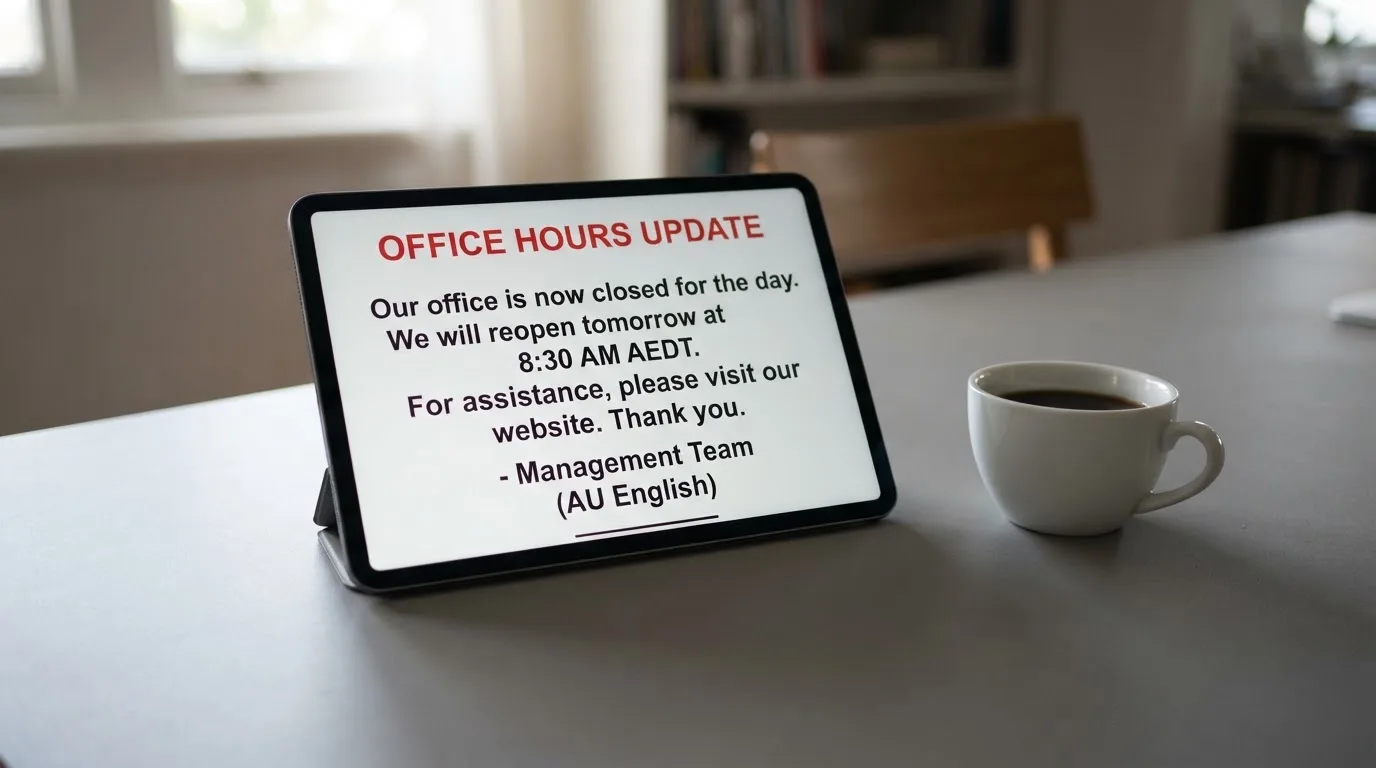
The ACMA’s June 2026 blocking round brought fresh formal warnings as well as fresh blocks. The formal warnings to Woo Casino in March 2025 and Spirit Casino in May 2025, both naming Dama N.V. as the operator, sit in the same register as the blocking requests that add a domain to the ISPs’ block lists. The register is the regulator’s running inventory of the operators it has had to tell, and the inventory has grown every year since 2017. It is not a list of operators Australia has shut down; it is a list of operators the regulator has had to address more than once, or address recently, or address at the level of a corporate shell rather than a brand name.
Dama N.V. is the operator named in three of the eleven formal warnings on this page: Level Up Casino in May 2022, Woo Casino in March 2025, and Spirit Casino in May 2025. The same corporate entity, the same regulator, the same Act, three different brand names over four years. The reader who notices that pattern is reading the offshore market correctly: the brands are the marketing, the operator is the entity, and the regulator’s record is on the operator, not on the brand.
Reading the Operator Cards
Each card below describes a brand the ACMA has named in a formal warning under the Interactive Gambling Act 2001. The cards describe the regulator’s record and the product the brand offers; they do not recommend the brand as a place to play, because the law does not permit a place for the brand to be played from Australia. The card structure is the same in every case: ACMA action, operator name, date, and what the page knows about how the brand presents itself offshore.
RocketPlay
The ACMA issued a formal warning over RocketPlay to Pulsup Ltd in March 2026. An earlier formal warning to Dama N.V. in May 2022 covered RocketPlay among six brands. The site operates under an offshore corporate structure that the regulator has named twice, four years apart, on different shells. The marketing word “instant” is on the landing page; the legal status of the product is unchanged.
Level Up Casino
Level Up Casino was named in the May 2022 formal warning to Dama N.V. alongside five other brands. The regulator’s record is older than the record on the next four brands in this list, but no less current: the warning is still on the ACMA’s register, the operator is still the operator named, and the legal status is the same.
Woo Casino
Woo Casino was named in a formal warning to Dama N.V. in March 2025. The same operator was warned in 2022 over different brands. The marketing word “instant” is the marketing word the landing page uses; the formal warning is what the regulator has done about it.
Spirit Casino
Spirit Casino was named in a formal warning to Dama N.V. in May 2025. The operator is the same operator that was warned in 2022 and in March 2025, and the formal warning is what the regulator has done about this brand in particular.
National Casino
National Casino was named in a formal warning to Consolutetish S.R.L. in July 2025. The site had not been on the ACMA’s register under that operator before. The operator name is the legal entity the regulator identified, not the brand the player sees on the page.
Bizzo Casino
Bizzo Casino has been named twice. The earlier formal warning went to TechSolutions (CY) Group Limited and TechSolutions Group N.V. in 2022; the later one went to Consolutetish S.R.L. in July 2025. The brand has kept trading under the same name across two operators and two sets of warnings; the corporate shell behind it has not.
Ignition Casino
Ignition Casino was named in a formal warning to Bamboo Media in July 2025. The brand shares its name with the Ignition Casino poker site that operated from the Kahnawake territory and shut down to Australian customers in 2023, but the ACMA’s formal warning names Bamboo Media as the operator, not the older Kahnawake-licensed entity.
Instant Casino
Instant Casino was named in a formal warning to EOD Code SRL in February 2025. The brand name contains the marketing word the search involves; the formal warning is the regulator’s record on the brand.
Jackbit
Jackbit was named in a formal warning to Ryker B.V. in April 2026, alongside CasinOK. The operator is the entity the regulator identified; the brand is what the player sees on the page.
Casino Intense
Casino Intense was named in a formal warning to Sterplay Holding Ltd in April 2025. The ACMA published the formal warning and the operator’s name; the offshore licence the site displays is not an Australian one and does not authorise the service the site offers to Australians.
Sky Crown
Sky Crown was named in a formal warning to Hollycorn N.V., along with Blue Leo. The warning was published as a PDF on the ACMA’s site in September 2022. Hollycorn N.V. is the operator the regulator named; the brand is the marketing layer the player sees.
A Practical Reader’s Frame
A reader who has read this far and is still going to play offshore has decided something the page cannot undo. What the page can do is give that reader three checks to run before they deposit.
The first check is the regulator’s register. The ACMA publishes its formal warnings, its blocking requests, and its civil penalty proceedings. A reader can search the register for the brand name and the URL. A match is not a clearance; it is the regulator’s record on the operator, which is information the operator’s own site does not publish.
The second check is the payment rail. Credit cards, credit-related products and digital currency are banned as payment for licensed online wagering since 11 June 2024, with penalties up to A$247,500 for operators. A site asking an Australian for a credit card or a crypto deposit is operating outside the Australian rules; the rail itself tells the reader something about the operator.
The third check is the bonus terms. Bonus offers at offshore sites carry wagering multiples, max-cashout caps, game-weighting rules and bonus-buy exclusions that the marketing page does not summarise. The “instant” word on the landing page is the word the operator uses to draw the reader in; the terms of service are the document the operator relies on when the reader asks for their money back. Both belong on the page that decides whether to deposit.
Where the Reader Can Get Help
The page’s responsibility to the reader does not end with the marketing word. A reader who has decided to play, who has deposited, who has tried to withdraw and been refused, who has self-excluded and relapsed, or who has begun to wonder whether the next deposit is the one they cannot afford: that reader needs a number, not a paragraph.
The National Gambling Helpline is 1800 858 858, free, 24/7. Chat is available at Gambling Help Online. Both are Australian, both are free, both are confidential, neither requires the caller to give their name. They are the first call a reader who has noticed the cost of the marketing word should make.
BetStop, the National Self-Exclusion Register, binds every Australian-licensed online and phone wagering service. An offshore site is not connected to it. A punter who has registered with BetStop has closed the licensed rails; the unlicensed ones keep taking deposits, and the marketing word “instant” is the one the registered player is most likely to meet on the way back in. The mechanism that worked on the licensed side does not work on the offshore side.
What the Reform Bill Changes for 2026
The Interactive Gambling Amendment (Gambling Reform) Bill 2026 passed Parliament on 19 August 2026. Its advertising and inducement measures commence on 1 January 2027. The Bill extends the prohibition in the IGA to cover advertising and inducements around the prohibited services — the marketing word “instant” is the kind of inducement the Bill addresses.
A law with a commencement date is law on the page but not in force on it. The page is read in 2026, the Bill’s advertising measures are not in force until 2026+1. The reader who sees an “instant withdrawal” ad in 2026 is seeing an ad the new law will reach, not an ad the new law has already reached. The regulator’s record on the operators is the record the regulator has built under the existing law; the new law is a tightening the regulator will use once it is in force.
A Note on Tax
Gambling winnings of a recreational player are not assessable income under section 6-5 of the Income Tax Assessment Act 1997, and losses are not deductible. The exception is a person who carries on a business of gambling, which is a different category of taxpayer and a different set of records. The model on this page is the recreational player, and the tax treatment is “not assessable, not deductible”. The reader who is in the business category should check with the ATO; the recreational player does not need to.
A Final Word on the Marketing Word
The word “instant” on an offshore pokies site is doing the same job as the word “instant” on any other piece of marketing: it compresses a complicated offer into a single feeling the reader wants to have. The complicated offer, in this case, is a payment rail that can settle in seconds, a casino approval queue that can take the day the marketing line is replacing, a verification process that can re-run at any time, a regulatory status that makes the entire offer one the reader cannot enforce under Australian consumer law, and a marketing word the ACMA has now put on notice under a Bill that commences in 2026+1.
A reader who has decided to play has decided something the page cannot undo. What the page can do is tell the reader what the word is worth, and what the word is worth is the time the rail actually settles, not the time the marketing line says it does.
Frequently Asked Questions
What does “instant withdrawal” actually mean when a pokies site advertises it — same second, or same day?
“Instant” in the marketing line covers the period between the player tapping Withdraw and the casino’s payment system releasing the funds; the rail that moves the funds afterwards can settle in seconds via PayID or Osko. The slow part is the casino’s own approval queue, which can run across a full day. The lived experience has three clocks and each runs on its own.
Does a PayID withdrawal claim from a pokies site move any faster than an ordinary bank transfer would?
PayID and Osko settle near-instantly between participating banks, while an ordinary transfer takes the time an ordinary transfer takes. Neither changes the casino’s approval queue, which is the slow part. The PayID claim is a half-truth about the rail and a non-statement about the casino.
Is an instant-withdrawal claim from an offshore pokies site something Australians can rely on legally?
No. The Interactive Gambling Act 2001, as strengthened in 2017, makes it an offence to provide online casino games and online pokies to a person in Australia. The IGA targets the provider, not the player, but the player has no Australian regulator to complain to and no recourse if a withdrawal is refused. The offshore licence the site displays does not authorise the service for Australians.
Why do some sites specifically pair a PayID withdrawal claim with an “instant” claim in their ads?
PayID is the fastest retail rail in Australia for funds that have already been released. Pairing the two words compresses a complicated offer — a fast rail plus a slow casino queue plus a verification step — into a single feeling the reader wants to have. The marketing borrows the trust the player places in the rail and applies it to the casino that named the rail on the landing page.
What verification step, if any, typically happens before a withdrawal gets processed, instant or not?
Every legitimate offshore operator runs Know Your Customer checks before releasing funds, and most re-run those checks for withdrawals that look larger than usual or that trigger a rule in the bonus terms. A player who has already passed verification is, in theory, past the queue on every subsequent withdrawal; in practice, the casino can re-run the check at any time, especially for a withdrawal that looks larger than usual or that triggers a rule in the bonus terms. See also What quick withdrawal casino Australia really offers .
How does an instant-withdrawal claim differ between a small win and a large one?
A small win that fits inside a routine approval rule is the withdrawal the marketing line is built around; it tends to release inside the day the line promises. A withdrawal that looks larger than usual is the withdrawal that triggers the manual review, the bonus-term re-check, and the re-run of Know Your Customer. The marketing line does not change between the two; the casino’s queue does. The reader who wants to know what “instant” means for their own withdrawal is reading the operator’s terms of service, not the landing page.