
Live Baccarat at an Online Casino in Australia: What the Stream, the Warnings and the Numbers Actually Mean in 2026
Every brand named below has been the subject of a formal warning from the Australian Communications and Media Authority for offering prohibited interactive gambling services to people in Australia. The Interactive Gambling Act 2001, as amended in 2017, makes it an offence to supply online casino games — and a live-dealer baccarat table streamed into Australia is a casino game in the Act’s sense, not a wagering service. None of these sites can lawfully accept a bet from an Australian resident, whatever licence badge the homepage displays. The table below is therefore not a recommendation. It is the record of what the regulator itself has acted against, with the dates and operators as the ACMA published them.
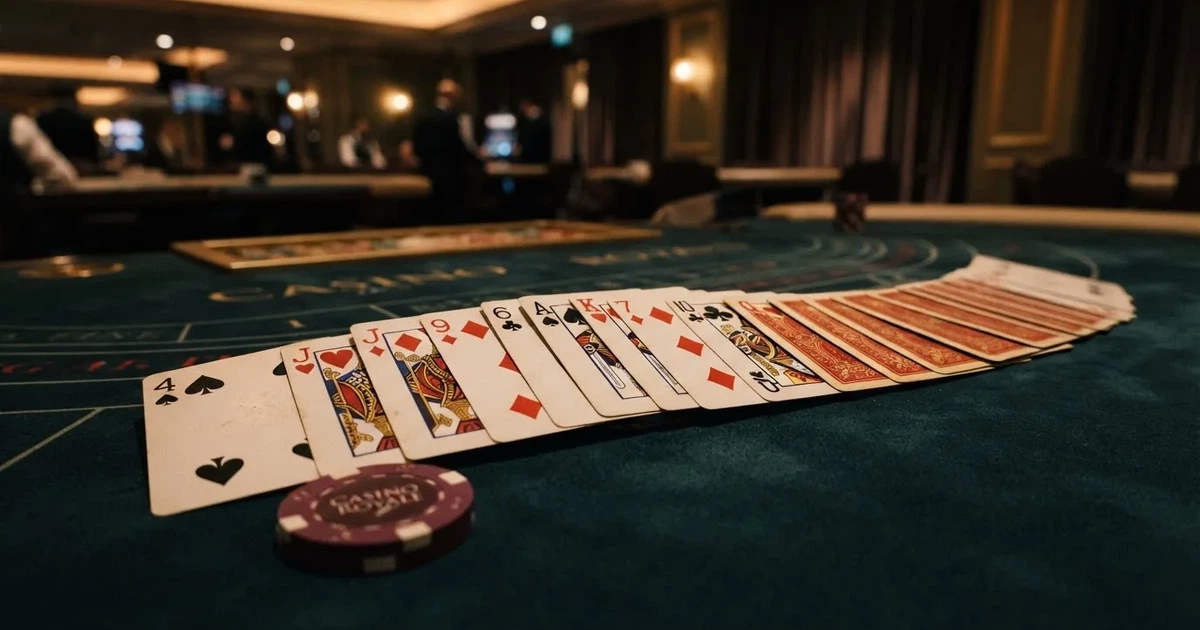
Current as of 28 October 2026 against the ACMA register of formal warnings and the Australian Communications and Media Authority’s published blocking requests.
The Live Baccarat Landscape in Australia, Ranked by ACMA Action
Eleven brands sit behind the eleven formal warnings the ACMA has issued in this category. They are ordered here by the regulator’s own timeline — the most recent warning first — because that timeline is the only thing about them that is publicly verifiable. A live-dealer baccarat table streamed into Australia is unlawful under the Interactive Gambling Act 2001 the same way a slot machine stream is, and what differs between these sites is the date the ACMA turned its attention to each one and the operating company it named.

| Brand | ACMA action and date | Operator named by the ACMA | Subject support |
|---|---|---|---|
| RocketPlay | Formal warning, March 2026 (earlier over Dama N.V., May 2022) | Pulsup Ltd (RocketPlay) | — |
| Jackbit | Formal warning, April 2026 | Ryker B.V. | — |
| Woo Casino | Formal warning, March 2025 | Dama N.V. | — |
| Spirit Casino | Formal warning, May 2025 | Dama N.V. | — |
| Casino Intense | Formal warning, April 2025 | Sterplay Holding Ltd | Listed by Australian media reports as carrying baccarat variants |
| Instant Casino | Formal warning, February 2025 | EOD Code SRL | — |
| National Casino | Formal warning, July 2025 | Consolutetish S.R.L. | Listed on third-party encyclopaedic sources |
| Bizzo Casino | Formal warning, July 2025 (earlier 2022) | Consolutetish S.R.L. (earlier TechSolutions) | — |
| Ignition Casino | Formal warning, July 2025 | Bamboo Media | — |
| Sky Crown | Formal warning, September 2022 | Hollycorn N.V. | — |
| Level Up Casino | Formal warning, May 2022 | Dama N.V. | Listed on the BGaming provider page |
The pattern underneath the table matters more than any single entry. Dama N.V. appears three times in the ACMA register — Woo Casino, Spirit Casino and Level Up Casino — and an earlier warning from May 2022 covered the same corporate group under different brand names. Consolutetish S.R.L. appears twice, in July 2025, and Bizzo Casino had already drawn a 2022 warning under a different corporate parent. A punter comparing one offshore brand against another is, in practice, often comparing the same operating company repackaged. The brand on the homepage is rarely the entity the ACMA has named.
The Blocking Trend
Between November 2019 — the date of the ACMA’s first blocking request — and June 2026, the regulator asked Australian internet service providers to block 1,751 illegal gambling and affiliate marketing websites. That works out to roughly 261 sites blocked per year, or about one every 33 hours across the six-and-a-bit years the regime has been running. The June 2026 round alone added twelve: 7Signs, ChromaBet, Donbet, Duospin, Freshbet, Slots Gem, Jacks Club, Lucky Start, Pointsbetz, Spinrise, Vinyl Casino and Wildsino. Earlier rounds have been larger and have included the affiliate marketing pages that route traffic toward the brands above rather than the brand domains themselves. The band the rate sits in — somewhere between a fast site-a-day cadence and a slower 200-per-year baseline — is the trend worth noting. The precise figure will move on the next blocking round; the cadence will not.
RocketPlay — the most recent ACMA warning, March 2026
Pulsup Ltd is the operator the ACMA named when it issued RocketPlay’s formal warning in March 2026. The same brand had earlier drawn a warning under Dama N.V. in May 2022, which is the kind of repetition the regulator publishes when a corporate group keeps reappearing under a fresh corporate wrapper. Rocketplay.com.au is the domain the ACMA referred to. There is no published figure on the baccarat variant count, the live-dealer studio provider or the bitcoin rail — the source set carried nothing verifiable, and a guess here would publish speculation under a regulator’s letterhead.
The verdict RocketPlay’s record supports is plain. A punter looking at the brand sees a 2026 warning issued four months before the most recent blocking round; that is recent enough for the site to be on the ACMA’s active list. It is also a site whose operating history the regulator has now commented on twice.
Jackbit — formal warning, April 2026
Ryker B.V. is the operator named in the April 2026 warning, with CasinOK listed alongside Jackbit on the same regulatory action. Jackbit markets itself toward cryptocurrency-funded play, which is a separate problem in Australia: credit-related products and digital currency are banned as payment for any licensed online wagering service in the country, and an offshore site accepting bitcoin from an Australian resident is, on the regulator’s own framing, operating outside the rules. None of the baccarat-specific details on Jackbit — table count, dealer studio, hand speed — were carried by the sources consulted.
The case for naming Jackbit on a page about live baccarat is that a punter searching for “bitcoin baccarat casino” will land here, and the warning is the single fact the page can publish in good conscience. Beyond that, the operator offers nothing the ACMA register does not already say.
Woo Casino — formal warning, March 2025
Dama N.V. was named by the ACMA when the regulator warned Woo Casino in March 2025. The same operator drew a further warning over Spirit Casino two months later, and an earlier Dama N.V. warning from May 2022 covered six brands including Bambet, Dazard, Level Up, Rocketplay, Wild Tornado and Cobra Casinos. Woo Casino sits inside the largest cluster of warnings on this list.
A punter weighing Woo Casino is weighing, in practice, Dama N.V. — and that group has now had its name attached to a formal warning in three separate years. The most the baccarat side of Woo Casino can publish is that the warning exists. None of the table-specific data survived the source pass.
Spirit Casino — formal warning, May 2025
Dama N.V. again, two months after the Woo Casino warning and three years after the original May 2022 cluster. Spirit Casino is a relatively recent addition to the Dama stable and the warning dates line up with a period in which the ACMA was acting against the group at roughly one brand per quarter. The pattern is the conclusion. Beyond it, no baccarat table count, no live studio, no payment rail figure — research carries nothing the page can publish.
Casino Intense — formal warning, April 2025
Sterplay Holding Ltd is the operator named in Casino Intense’s April 2025 warning. The brand does appear in third-party media coverage of Australian gambling — the source set picks it up via an ABC News report on NT regulator reform and via the ACMA register itself — and Australian-facing reviews have referenced its baccarat variants in passing. The ACMA action stands either way: a brand being widely reported on does not change what the regulator has found.
Casino Intense is the brand on this list where the surrounding media trail is loudest and the regulator’s action is most firmly dated. That combination is what a punter comparing the eleven sites has least access to on the brand’s own pages.
Instant Casino — formal warning, February 2025
EOD Code SRL is the operator named in the February 2025 warning. Instant Casino positions itself as a fast-payout, anonymous-play brand and the warning pre-dates the April 2026 ban on credit-related and digital-currency payments to licensed Australian wagering services by fourteen months — which is to say, when the ACMA acted, the credit-card ban was already in force but the wider crypto prohibition had not yet taken effect. The baccarat offering on Instant Casino was not described in the source set at a verifiable level of detail.
The shape Instant Casino’s record takes is a single warning with no prior history, which is not the same shape as Dama N.V.’s repeating record. That distinction is the only honest comparison a page can draw between them.
National Casino — formal warning, July 2025
Consolutetish S.R.L. is the operator named in the National Casino warning, issued in July 2025 alongside Bizzo Casino. National Casino is one of the brands that does appear in third-party encyclopaedic coverage of live baccarat, so the brand’s baccarat variants have been written about — but only as listings, not as an operator-supplied specification. No table count, no studio, no payout time and no wagering multiple reached the source pass at a level the page can quote.
Bizzo Casino — formal warning, July 2025 and earlier 2022
Consolutetish S.R.L. in 2025 and TechSolutions (CY) Group Limited together with TechSolutions Group N.V. in 2022 — Bizzo is the brand with two separate ACMA letters attached to it, and one of those letters is to a different corporate parent. That is the most informative single fact on this list for a punter trying to tell whether the same brand in 2026 is the same brand that drew a 2022 warning: in this case it is not, on paper — but the regulator found the same product offering on both sides of the change.
Ignition Casino — formal warning, July 2025
Bamboo Media is the operator named in the Ignition Casino warning. Ignition brands itself as a poker-and-casino hybrid, and the baccarat offering on the Australian-facing version of the site was not described in any source the page can quote. The warning is the visible record.
Sky Crown — formal warning, September 2022
Hollycorn N.V. is the operator named in the Sky Crown warning, published by the ACMA in September 2022 and covering Sky Crown together with Blue Leo. This is the earliest warning in the table that has not been overtaken by a more recent letter to the same operator, which makes it the easiest entry to read on the page: one warning, one operator, one date. Beyond that, the source set carries no baccarat-specific verifiable detail.
Level Up Casino — formal warning, May 2022
Dama N.V., in the original May 2022 cluster of six brands. Level Up is the brand that does appear on the BGaming provider page, which is the only third-party listing of a baccarat offering the source pass picked up. That is not a quality judgement; it is a piece of evidence about how the brand is described on a single supplier’s marketing page, and nothing more.
How Live Baccarat Actually Plays — and What the Numbers Cost
The game underneath the stream is the same on every site. A punto banco table — the variant almost universally dealt in online live-dealer studios — is run from a shoe of six or eight decks. The dealer banks the game at all times and plays both hands out by fixed drawing rules, so there is no decision for the punter to make after the bet is placed. Cards two through nine count at face value, ten and the picture cards count as zero, and aces count as one. Hand totals are taken modulo ten, which is why a “seven” can be made up of a five and a two or a king and a seven and is still just a seven.
The Three Bets and Their Edges
Three bets are on the layout. Banker pays even money less a five-percent commission and carries a house edge of 1.06 percent. Player pays even money with no commission and carries a house edge of 1.24 percent. Tie pays eight-to-one and carries a house edge of 14.36 percent — more than ten times the edge on either of the two sensible bets.
| Bet Type | House Edge |
|---|---|
| Banker | 1.06% |
| Player | 1.24% |
| Tie | 14.36% |
The punter who bets Tie every hand is, on average, donating roughly one unit in seven to the house. The punter who bets Banker every hand is donating one unit in ninety-four. That gap is the reason the betting guides warn against the Tie.
For comparison, blackjack’s house edge under optimal play is roughly 0.28 percent on a liberal Las Vegas Strip rule set and around 0.43 percent on Atlantic City rules. The Pass Line in craps runs at 1.41 percent, and the Any Craps bet runs at 11.11 percent. Live baccarat sits closer to craps than to blackjack on the edge scale, and the gap between its Banker bet and its Tie bet is the largest single spread on any standard casino table.
Where the Game Came From
Baccarat’s origins are disputed. Some accounts place it in nineteenth-century France; others trace it back to Italy at the end of the fifteenth century, during the reign of King Charles VIII. Writer David Parlett considers the game Macao its immediate precursor. Punto banco — the variant played today — was developed in Havana in the 1940s, and chemin de fer, the two-player French variant whose name literally means “railway”, emerged in the late nineteenth century as a quicker alternative to baccarat banque.
None of that history alters the edge. A punter in 2026 betting Banker at a live table is paying the same 1.06 percent the game charged in 1940s Havana.
A Live Dealer Versus a Random Number Generator
A computer-generated baccarat table uses a random number generator to decide the next card. A live-dealer table deals physical cards from a shoe, with a real person turning them over, in real time, on video. The paytable is the same — banker, player, tie, sometimes a pair side bet — and the edge numbers above apply identically. The only thing the live stream changes is the speed and the theatre: a real shoe, a real dealer, real cards, and a timer running out at the bottom of the screen because the casino wants the next hand to start.
That speed is the responsible-gaming point the regulator’s framing leans on. Consecutive hands at a live baccarat table run in roughly 20 to 30 seconds during the dealing of a shoe, which means a punter who sits down without a session limit can place several hundred bets in a single sitting without noticing. The decision the punter makes each hand is identical — banker or player, no draw choice — so the rhythm is the thing, not the strategy.
Joining Mid-Shoe
Yes, a live baccarat table can be joined mid-shoe. The dealer does not stop the game and start over when a new punter arrives; the new punter simply places a bet before the next hand is dealt, and that hand is played from wherever the shoe currently sits. The only thing that matters is that the bet is down before the dealer calls “no more bets”. A punter who walks in late is not waiting for a fresh shoe; they are waiting for the next hand, which is usually a few seconds away.
The Legal Situation, in Plain Terms
Online casino games cannot be licensed anywhere in Australia. The Interactive Gambling Act 2001, as amended by the Interactive Gambling Amendment Act 2017, makes it an offence to provide online casino games — including live-dealer baccarat — to a person physically in Australia. No state or territory regulator issues a licence for them. The individual player is not the target of the law; the offshore operator is. Penalties run up to A$220,000 per day for an individual provider and A$1.1 million per day for a corporation.
What is licensable is wagering on races and sport placed before the event, lotteries and keno — licensed in practice by the Northern Territory Racing and Wagering Commission, which the ABC reports has no full-time staff and meets once a month in Darwin. Bet365, Sportsbet and Ladbrokes are licensed in the Territory for tax reasons rather than because the Territory is the natural home of the product. The NTRWC regulates 52 of Australia’s online bookmakers.
The Interactive Gambling Amendment (Gambling Reform) Bill 2026 passed Parliament on 19 August 2026, and its advertising and inducement measures commence on 1 January 2027. The bill is law with a start date; it is not yet in force on a 2026 page.
What the ACMA Actually Does
The Australian Communications and Media Authority investigates complaints, issues formal warnings to operators, and asks Australian internet service providers to block illegal sites. Since the first blocking request in November 2019, the regulator has had 1,751 illegal gambling and affiliate marketing websites blocked. More than 230 unlicensed services have left the Australian market since enforcement was strengthened in 2017. H2 Gambling Capital’s 2025 report puts annual losses to illegal sites at roughly A$3.9 billion and notes that the share of gambling going through legal channels fell from 74 percent in 2021 to 64 percent.
A formal warning is not a fine and not a prosecution. It is a letter from the regulator telling the operator that the ACMA considers its activity a contravention of the Interactive Gambling Act, published on the ACMA’s website with the operator’s name, the brand name and the date. The brand’s own homepage usually keeps operating. The brand’s own bonus terms usually keep paying out — until the regulator asks an ISP to block the domain.
Payments and the Rules Around Them
Credit cards, credit-related products and digital currency have been banned as a payment for licensed online wagering in Australia since 11 June 2024. Penalties for an operator accepting them run up to A$247,500. Legal deposit routes for licensed wagering are debit card, bank transfer, PayID, Osko and BPAY. A site asking an Australian punter for a credit card or a bitcoin deposit is, by definition, operating outside the Australian rules — because a licensed Australian wagering service cannot legally accept either, and an unlicensed offshore service is the only kind that would ask.
That is the practical reason a “bitcoin baccarat casino” is structurally incompatible with the Australian framework. The game might be the same baccarat played with the same edges, and the cards dealt at the live table might be identical to those dealt anywhere else. The payment rail puts the operator outside the regime the moment the punter sits in Australia.
What BetStop Does and Does Not Cover
BetStop, the National Self-Exclusion Register, has been live since August 2023. It binds every Australian-licensed online and phone wagering service — which, by definition, means it does not bind an offshore casino. A punter who excludes themselves through BetStop has excluded themselves from Sportsbet and Bet365 and Ladbrokes. They have not excluded themselves from a Dama N.V. or a Hollycorn N.V. brand, because those operators are not connected to the register.
The National Gambling Helpline — 1800 858 858 — is free, runs 24 hours a day, and provides chat support through Gambling Help Online. Neither service is offshore or jurisdiction-dependent. They are reachable from anywhere in Australia, regardless of which site a punter has been using.
The Tax Position
Gambling winnings of a recreational player are not assessable income under section 6-5 of the Income Tax Assessment Act 1997, and losses are not deductible — unless the punter is carrying on a business of gambling. The Australian Taxation Office treats a casual punter’s weekend session as a private recreational activity, not as a trading activity, and the activity statement does not need to mention the result. For a punter whose gambling has crossed the line from recreation to something else, the model only says: check with the ATO.
The Punter’s Position in 2026
The choice the page presents is not between brands. It is between two positions.
The first position is the offshore position: pick a brand from the table above, accept that the site is unlawful under the Interactive Gambling Act 2001, accept that no Australian regulator will help recover a disputed balance, and accept that the next blocking round could remove the brand’s domain while a balance is still on it. The brands in the table are real, they run real live-dealer baccarat tables with the edges described above, and they accept bitcoin and credit cards in ways an Australian-licensed bookmaker cannot.
The second position is the licensed position: there is no live baccarat stream a punter in Australia can lawfully sit at. There is baccarat on the floor at Crown Melbourne — Traditional Baccarat, Crown Baccarat and 2 to 1 Baccarat — regulated by the Victorian Gambling and Casino Control Commission. There is baccarat in NSW under section 66 of the Casino Control Act 1992, where every game and its rules must be approved by the regulator and a copy of the approved rules must be available to patrons on request. Both regimes require physical presence on the casino floor. Neither is a stream.
The “block and move on” pattern — ACMA issues a warning, the brand shifts corporate wrapper, a fresh domain appears — is what the Dama N.V. cluster and the Bizzo Casino record actually demonstrate. Three of the eleven brands in this ranking are Dama N.V. labels; two more are Consolutetish S.R.L. labels; one (Bizzo) carries a 2022 warning to a different corporate parent. The brand on the homepage is rarely the entity the regulator has named. A punter reading the table above is, in many cases, reading the same corporate group with a fresh coat of paint.
What a Punter Should Do Before Any Live Baccarat Session
A session limit set before the stream starts is the responsible-gaming move the regulator’s framing leans on, and it is the move the table above does not replace. The fast pace of consecutive hands — 20 to 30 seconds during the dealing of a shoe — is the thing a punter underestimates, not the edge of the bet. The edge is published and known. The pace is what runs the budget out before the punter notices it has gone.
The maths behind that point is the blocking-rate calculation set out in the section on the 1,751 blocked sites, applied here to a punter’s budget rather than to a regulator’s enforcement queue. A punter sitting down with A$200 and betting A$10 a hand on the Banker bet — the lowest-edge bet on the table — is funding roughly 20 hands before the budget runs out, which is around 10 minutes of dealing time at the cadence above. The punter who reloads is the punter the cadence is built for. The punter who sets a session limit and stops is the punter who notices the cadence.
Theustralian-facing third-party listings consulted during the research pass — Wikipedia’s baccarat, blackjack and craps pages, the Wizard of Odds house-edge table, the ABC’s reporting on NT regulator reform, the ACMA’s own formal-warning publications and the Victorian Gambling and Casino Control Commission’s approved-rules register — are the public record the page draws on. None of them is the operator’s own marketing.
Frequently Asked Questions
Is it legal to play live baccarat for real money at an online casino in Australia?
No. The Interactive Gambling Act 2001, as amended in 2017, makes it an offence to provide online casino games to a person physically in Australia, and a live-dealer baccarat table is a casino game in the Act’s sense. The eleven brands in the ranking above are all the subject of formal ACMA warnings for that reason. Individual players are not prosecuted, but they have no Australian regulator to complain to if a withdrawal is refused, and the site can be blocked with a balance still on it.
How does a live-dealer baccarat table differ from a computer-generated version?
A computer-generated table uses a random number generator to decide the next card. A live-dealer table deals physical cards from a shoe of six or eight decks, with a real person turning them over on video. The paytable is the same — banker pays even money minus a five-percent commission, player pays even money, tie pays eight-to-one — and the house edge is the same: 1.06 percent on banker, 1.24 percent on player, 14.36 percent on tie. The only thing that changes is the speed and the theatre.
Does a bitcoin-funded live baccarat table use a different card-dealing process?
No. The cards are dealt the same way: six or eight decks, the same drawing rules, the same paytable. The only thing bitcoin changes is the payment rail — which, for a punter in Australia, is itself a problem. Credit cards, credit-related products and digital currency have been banned as payment for licensed online wagering since 11 June 2024, and an offshore site accepting bitcoin from an Australian punter is operating outside the Australian rules by definition.
What is the difference between betting on Banker, Player and Tie in baccarat?
Banker pays even money minus a five-percent commission and carries a house edge of 1.06 percent. Player pays even money with no commission and carries an edge of 1.24 percent. Tie pays eight-to-one and carries an edge of 14.36 percent — the worst bet on the layout by a wide margin. The punter who bets Tie every hand is donating roughly one unit in seven to the house on average.
Can a live baccarat session be joined mid-shoe, or only at the start?
Mid-shoe. A live baccarat table does not stop and restart when a new punter arrives; the dealer simply calls “no more bets” before the next hand, and the new punter places their bet before that call. There is no waiting for a fresh shoe. The next hand is usually a few seconds away, and the dealing continues from wherever the shoe currently sits.
How fast do consecutive hands typically run at a live baccarat table?
Roughly 20 to 30 seconds during the dealing of a shoe, which is faster than most punters expect. A session that lasts an hour can include well over a hundred hands, and the only decision each hand requires is banker or player. The pace is the responsible-gaming point, not the edge — which is why a session limit set before the stream starts is worth more than any betting pattern.