
Live dealer blackjack in Australia: what the streaming table is, and why none of it is licensed here
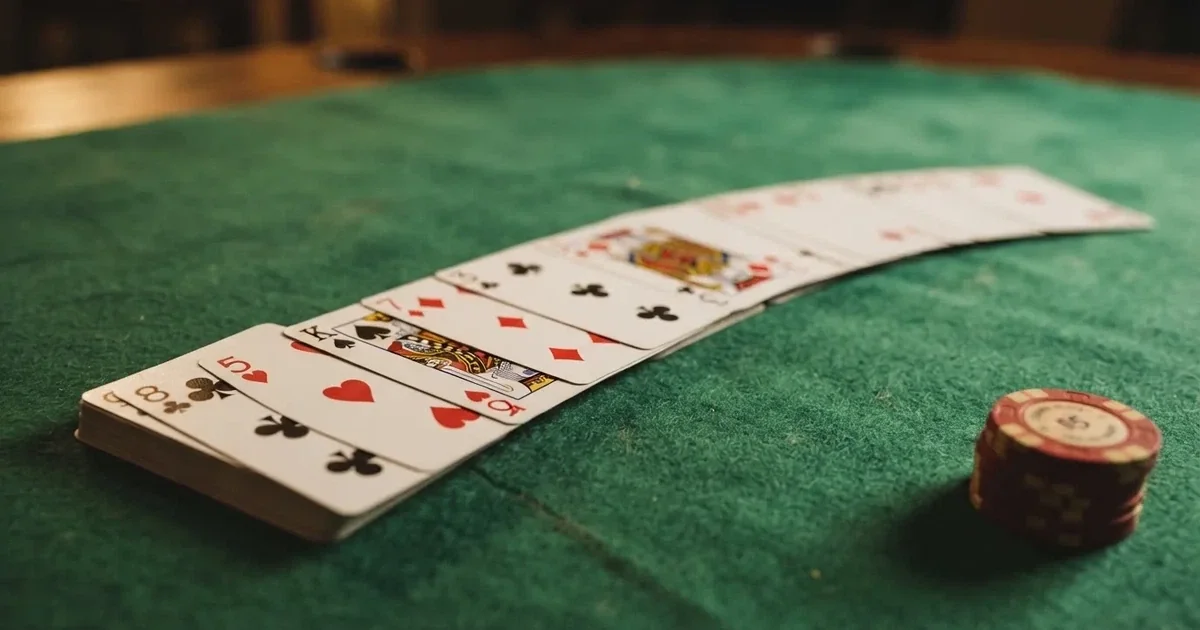
A live blackjack table streams a real dealer, real cards and a real shoe from a studio or a casino floor to a player’s phone or laptop. Australians searching for one today almost always reach an offshore site the ACMA has already acted against. That is the frame for everything that follows: the game itself is well understood, the streaming technology is competent, and the legal status of every site an Australian can actually open is the same. The page below walks the game’s fundamentals first, then lays out the enforcement record, the payment channels, the bonus mechanics and the comparison shelf, in that order.
Data current as of 28 October 2026; verified against the Australian Communications and Media Authority (ACMA) register of formal warnings and blocking actions.
Table of Contents
- Legality and regulation in Australia
- Responsible play: where the bankroll conversation belongs
- Crypto and anonymity at the live table
- Payments and payout speed
- Bonuses and free spins at a blackjack table
- The live blackjack game itself
- The ACMA enforcement shelf: brands the regulator has named
- Comparison: what an Australian player actually compares
- Overview: what a reader leaves with
- Frequently asked questions
Legality and regulation in Australia
Australia’s online gambling market is one of the more unusual ones in the world, because the federal parliament decided long ago which products it would license and which it would not. The Interactive Gambling Act 2001, sharpened by a 2017 amendment, makes it an offence to provide an “interactive gambling service” — online casino games, online pokies and in-play betting — to a person physically in Australia. Live dealer blackjack is an interactive gambling service. So is the computer-generated version. The streaming technology does not change the legal classification.
What is licensed is narrower than the marketing of overseas sites suggests. Australians can place wagers on horse racing, harness racing, greyhound racing and sporting events before the event begins, and they can buy lotteries and keno tickets. That is the lot. The Northern Territory Racing and Wagering Commission (NTRWC) regulates fifty-two of the country’s online bookmakers — Sportsbet, Bet365 and Ladbrokes among them — and the commission itself has no full-time staff and meets once a month in Darwin, a fact that tells you something about the scale of what gets regulated versus what does not.
The penalty scale is severe on paper and falls on the provider, not the player. Penalties run up to A$220,000 a day for individuals and up to A$1.1 million a day for corporations. The practical effect is that the enforcement arm of the regime — the ACMA — investigates, issues formal warnings, and asks Australian internet service providers to block offending sites. Players are not prosecuted. What they lose when they play offshore is the consumer protection a domestic licence would attach: no Australian complaints body, no recourse if a withdrawal is refused, no guarantee the site will still be reachable tomorrow. The site can be blocked with a balance still sitting on it.
A useful way to think about the regime: it does not try to stop Australians from reaching offshore products. It tries to make reaching them costly, slow and risky. By June 2026 the ACMA had asked ISPs to block 1,751 illegal gambling and affiliate marketing websites since the first blocking request in November 2019, and more than 230 unlicensed gambling services had left the Australian market since enforcement was strengthened in 2017.
What the ACMA does, in plain steps
The ACMA’s enforcement sequence is the same whether the target is a live-dealer blackjack studio or a pokies app. It starts with an investigation, moves to a formal warning if the evidence supports one, then escalates to civil action, financial penalties or a request to ISPs to block the site at the DNS layer. The blocking round reported on 26 June 2026 named twelve new sites — 7Signs, ChromaBet, Donbet, Duospin, Freshbet, Slots Gem, Jacks Club, Lucky Start, Pointsbetz, Spinrise, Vinyl Casino and Wildsino — and is illustrative rather than exceptional. Roughly two rounds of warnings a year have become the steady state, and several offshore operators have been warned more than once under different corporate names.
The 2026 reform and what it does not yet do
Parliament passed the Interactive Gambling Amendment (Gambling Reform) Bill 2026 on 19 August 2026. Its advertising and inducement measures commence 1 January 2027. As of 2026 this is law passed and dated, not law in force. A reader looking at the page today is still under the regime as it stood before the reform bill: same prohibition, same enforcement arm, same offshore exposure for anyone playing on a non-Australian site.
Responsible play: where the bankroll conversation belongs
Live blackjack is one of the faster-paced table games a streaming platform offers. A continuous shoe is reshuffled only when the running count of cards reaches a cut card, and hands at a full table of seven seats deal in roughly fifteen to twenty seconds. A two-hour session at A$10 a hand is one hundred and twenty hands, and the bankroll that needs to sit behind those hands is not the A$1,200 nominal exposure — it is whatever a player is willing to lose if every hand goes against them.
Setting a deposit limit before opening a live table matters more than any in-game prompt the studio will show. The standard responsible-gaming toolkit on offshore sites — a reality check, a session timer, a self-exclusion button — is built on the operator’s own terms and on the jurisdiction that issued the operator’s licence, not on Australian consumer law. A site that promises Australian-friendly responsible gambling tools is making a marketing claim, not a regulatory one.
For players who want their limits enforced by an Australian body, BetStop — the National Self-Exclusion Register, live since August 2023 — is the mechanism. It binds Australian-licensed online and phone wagering services. It does not bind offshore live dealer studios, because those studios are not Australian licensees and are not connected to BetStop. Anyone who has registered with BetStop and then opened an offshore live blackjack table has not used the exclusion the register offers. The National Gambling Helpline, 1800 858 858, is free and runs around the clock, with chat through Gambling Help Online — useful before, during or after a session, and the one Australian-funded line whose advice does not depend on which site a player is on.
Crypto and anonymity at the live table
Bitcoin, Ethereum and Litecoin deposits to offshore live dealer studios are advertised heavily, and the marketing draws on the language of privacy. The mechanics underneath are unromantic. The casino receives a coin transfer, credits the player’s account at a rate set by the casino, and the player bets from a balance denominated in the casino’s own currency — usually US dollars or euros — rather than in coin. The live table itself has no idea which payment method funded the balance, and neither do the cards.
That distinction matters more than the marketing suggests. A crypto-funded account at an offshore live dealer studio is still an account at an offshore live dealer studio, and the ACMA’s enforcement arm does not sort accounts by deposit method. The studio’s licence is Curaçao or Anjouan, the studio’s consumer law is whatever that licence requires, and the studio’s recourse if a withdrawal is refused is the same dispute path a fiat-funded account has. The coin changes the rail; it does not change the regulator on the other end.
There is a second point worth holding. The Australian regime bans credit cards, credit-related products and digital currency as a payment method for licensed online wagering from 11 June 2024 onward, with penalties up to A$247,500 for operators that take them. A licensed Australian bookmaker will not accept a Bitcoin deposit. An offshore live dealer studio will, and the studio’s acceptance is a marker that the studio is operating outside the Australian rules rather than a special accommodation for Australian players. The crypto angle is better read as a fingerprint of the offshore category than as a feature of any individual brand.
Payments and payout speed
A live blackjack payout, like any other casino withdrawal, waits on the same review pipeline as a slots payout. What differs between sites is the queue time before the review starts, the length of the review itself, and the rail the funds ride out on.
For Australians, PayID and Osko — the instant payment rail that connects bank accounts through BSB and account number or a phone-linked identifier — are the fastest legal path for any withdrawal that a licensed operator will process. Most offshore live dealer studios will accept a PayID deposit but will not necessarily pay out through PayID, and the deposit speed is not the payout speed. A PayID deposit clears in seconds; a PayID payout depends on whether the operator supports it as a withdrawal method and on the operator’s own review queue.
The general pattern across offshore sites is: e-wallet withdrawals are fastest (Skrill, Neteller, MiFinity, often within twenty-four to forty-eight hours once approved), bank transfers take three to seven business days, and Bitcoin withdrawals sit between the two depending on network congestion and the operator’s confirmation policy. None of this changes the legal exposure of the player, and a quick payout from an offshore site still leaves the player on an offshore site.
No-deposit bonus offers — small credits added to an account on signup, with wagering attached — are a separate mechanism and a separate trap. They look like free money, they are not, and the wagering requirements that come with them are the same as those attached to a deposit bonus, applied to the no-deposit amount. A player who opens an account for the no-deposit bonus is also opening an account at an offshore site the ACMA has acted against or will.
Bonuses and free spins at a blackjack table
Blackjack bonuses are a different product from slots bonuses, and the difference is in the wagering weight. A standard deposit bonus at an offshore casino might carry 35x wagering on the bonus amount, with slots contributing 100% toward the requirement and table games like blackjack contributing somewhere between 5% and 20%. The same A$200 bonus that requires A$7,000 of slots turnover requires A$35,000 to A$140,000 of blackjack turnover to clear, and a blackjack hand is over in seconds rather than the three to five seconds a slot spin takes, so the wall-clock time to clear is dramatically longer.
The other blackjack-specific trap is the max-cashout cap that attaches to no-deposit bonuses and free-spin winnings. A no-deposit bonus that pays out a maximum of A$100 or 5x the bonus amount, whichever is lower, turns the bonus from a free try into a free try at a capped payout. A player who runs a no-deposit bonus up to A$1,000 and then sees the withdrawal capped at A$100 has spent the evening clearing a bonus for nothing.
The running total of 1,751 illegal gambling and affiliate websites the ACMA had asked ISPs to block as of the round reported on 26 June 2026, against the date of the first blocking request in November 2019, shows the scale of the regime’s reach. That is roughly 1,751 sites removed from reach over a span of about six and a half years, or about 270 sites a year on average, with the rate accelerating in the most recent reporting period as the ACMA moved from individual warnings to multi-site blocking rounds. The blocking rate is the visible part of the regime’s reach; the formal-warning rate (sometimes two rounds a year, sometimes more) is the upstream step that produces it. The two move together: more warnings upstream produces more blocks downstream, with a lag measured in months.
What the rate tells a reader is that the regime is not static and that the operator a player found six months ago may be on the next blocking list. The site’s licence — Curaçao, Anjouan, Malta — is real, and the consumer protection it offers is the consumer protection that jurisdiction requires. None of those jurisdictions is Australia.
The live blackjack game itself
The fundamentals of the game are well established and worth knowing before any reader opens a live dealer studio, because the marketing of the studios tends to undersell what the rules cost the player.
A standard live blackjack table deals from a shoe of six or eight decks. Cards two through nine count at face value, tens and the face cards count as ten, and an ace counts as one or eleven depending on which value helps the hand. A two-card total of twenty-one on the opening deal — an ace with a ten-value card — is a “blackjack” or a “natural” and pays the better of the available odds, typically 3:2 on a standard table. The dealer must keep drawing until reaching a total of seventeen or higher, and the player’s job is to make a total higher than the dealer’s without going over twenty-one.
House edge and what changes it
The house edge in blackjack is unusually sensitive to the rules on the table, which is one reason the marketing is so hard to read at a glance. Under liberal Las Vegas Strip rules — dealer stands on soft 17, double down on any two cards, double after split, resplit aces, late surrender — the house edge with optimal play is about 0.28%. Under more common Atlantic City rules, with a few restrictions in place, it sits around 0.43%. Both figures assume the player is using optimal basic strategy on every hand; a player who deviates from strategy gives the house a multiple of that edge back.
The dealer rule that moves the edge the most is the soft-seventeen decision. A table where the dealer must hit on a soft 17 (an ace counted as eleven with a six, for a total of seventeen) shifts the edge toward the house by roughly 0.20% compared with a stand-on-soft-17 table. A live dealer studio that publishes its rules in the lobby is doing more for the player than one that does not, and a player who treats the rule sheet as part of the offer is reading the offer correctly.
Side bets and how they read
Side bets at a live blackjack table — Perfect Pairs, 21+3, the variant side bets individual studios invent — are not part of the house edge conversation. They are separate wagers with house edges that often run from 2% to 8% or higher, depending on the bet. A player who pairs a A$10 main bet with a A$5 side bet is doubling the stake and adding an average expected loss on the side bet that dwarfs the main hand’s edge. Side bets are where the table makes its money; the main hand is the concession.
Variants the studios run
Live dealer studios run several blackjack variants alongside the standard game. The most common are:
- Blackjack Party, a low-stakes variant with two dealers and chat-forward presentation, intended for casual players and small bankrolls.
- Infinite Blackjack, where an unlimited number of players bet on the same hand and individual players decide their own draw after the initial deal.
- VIP Blackjack, with higher table limits and a single seat per table, aimed at high-roller players.
- Speed Blackjack, where the fastest player to act on each hand gets the next card first, compressing the wall-clock time per hand by roughly a third.
A Victorian reader sitting in Melbourne has a separate set of variants to compare, because the Victorian Gambling and Casino Control Commission (VGCCC) — which replaced the VCGLR as Victoria’s casino regulator on 1 July 2022 — must approve any rules for table games, including blackjack, before they are introduced at Crown Melbourne. The VGCCC’s public log includes the renaming of the “Perfect Pairs” side bet to “Crown Pairs” on 23 December 2024 and the introduction of a “Free Bet” option with a new “Pot of Gold” side bet on 25 March 2024. None of those variants are available on a stream.
A short history of the game
The game’s lineage is older than the live dealer format by several centuries. Blackjack’s immediate predecessor was the English game vingt-un; a related game called veintiuno appears in Miguel de Cervantes’ Rinconete y Cortadillo, written around 1601-1602, and formal rules were published in Britain in 1800. The modern name dates to around 1899, when prospectors during the Klondike Gold Rush of 1896-99 are credited with giving the game its current handle. The card historian Thierry Depaulis tracks the rename, and the American casinos adopted it within a few years of the Gold Rush.
The streaming format is newer than the game by more than a century. The first commercial live dealer studios opened in the mid-2000s, and the format expanded through the 2010s as broadband caught up. What a player sees today — multiple camera angles, chat with the dealer, side bet layouts, an unlimited-seat “infinite” game — is the result of fifteen years of studio iteration, not a reinvention of the underlying game.
Comparison with baccarat and craps at a live table
Live dealer studios run baccarat and craps alongside blackjack, and the three games are useful to compare because they target different player profiles. Baccarat’s house edge on the Banker bet is 1.06%, on the Player bet is 1.24%, and on the Tie bet is 14.36%. Punto banco — the variant most played today — was developed in Havana during the 1940s and runs from a shoe of six or eight decks. Chemin de fer, the two-player French variant that emerged from baccarat banque in the late 19th century, is rarely seen on streaming platforms because the format depends on players choosing to draw or stand.
Craps is the odd one out for live dealer studios, because the game depends on a group of players around a single shooter. The Pass/Come bet carries a house edge of 1.41%, the Don’t Pass/Don’t Come bet 1.36%, and the free odds bet taken behind either line 0% — paid at true odds, unlike any other bet on the table. The Field bet carries 5.56% and the Any 7 bet carries 16.67%, making Any 7 one of the worst bets on a casino floor.
For a player who wants the lowest house edge at a live table and is comfortable with a faster pace, blackjack under liberal rules and with optimal strategy is the strongest option. For a player who wants a slower pace and simpler decisions, baccarat on the Banker bet is the next best. Craps is the game for a player who wants to play the social structure of a table rather than the cards themselves.
The ACMA enforcement shelf: brands the regulator has named
The brand shelf below is unusual for a comparison page. It is not a ranking and it is not a recommendation. Each brand appears because the ACMA has issued a formal warning over it for offering prohibited services to Australians, and the warning is a public record. The page does not pick winners; it lays out what the regulator has done and lets the reader draw the obvious conclusion.
| Brand | ACMA action and date | Operator named by the ACMA | Subject support |
|---|---|---|---|
| RocketPlay | Formal warning, March 2026 (also May 2022 under Dama N.V.) | Pulsup Ltd | — |
| Level Up Casino | Formal warning, May 2022 | Dama N.V. | Listings report live tables (Bgaming.com) |
| Woo Casino | Formal warning, March 2025 | Dama N.V. | — |
| Spirit Casino | Formal warning, May 2025 | Dama N.V. | — |
| National Casino | Formal warning, July 2025 | Consolutetish S.R.L. | Listings report (en.wikipedia.org) |
| Bizzo Casino | Formal warning, July 2025 (also 2022 under TechSolutions) | Consolutetish S.R.L. | — |
| Ignition Casino | Formal warning, July 2025 | Bamboo Media | — |
| Instant Casino | Formal warning, February 2025 | EOD Code SRL | — |
| Jackbit | Formal warning, April 2026 | Ryker B.V. | — |
| Casino Intense | Formal warning, April 2025 | Sterplay Holding Ltd | Listings report (Abc.net.au, acma.gov.au, Crownmelbourne.com.au) |
| Sky Crown | Formal warning (publication on ACMA register) | Hollycorn N.V. | — |
The shelf reads cleanly in one direction: every brand listed is one the ACMA has named, and the date column shows how the regulator has caught up with each operator. The operator column shows that the same offshore parent has appeared under different names — Dama N.V. alone has been warned over at least seven brands between May 2022 and the present. The subject-support column carries what the listings report and nothing more; the brands sit in their own category because each one is unlawful for an Australian player, and that is the only category that matters.
Reading the shelf as a player
A reader scanning the table should note the dates. A formal warning is not the end of the regulator’s interest — it is the beginning. The next step in the ACMA’s sequence is civil action, financial penalties or a request to ISPs to block the site. Several of the brands above were warned once, then warned again, and may yet face a third round. A reader who opened an account at one of them in 2024 is, by 2026, playing on a site the regulator has had in its sights for at least a year.
Reading the shelf as a comparison
There is no genuine comparison to be made between brands that the ACMA has warned against offering prohibited services to Australians. The brands differ in payment methods, in bonus terms, in studio software and in the number of live tables they run, and none of those differences changes the underlying fact. The site that offers the cleanest bonus terms and the site that offers the worst bonus terms are equally unlawful for an Australian resident. The shelf is a record of the regulator’s work, not a buyer’s guide.
Comparison: what an Australian player actually compares
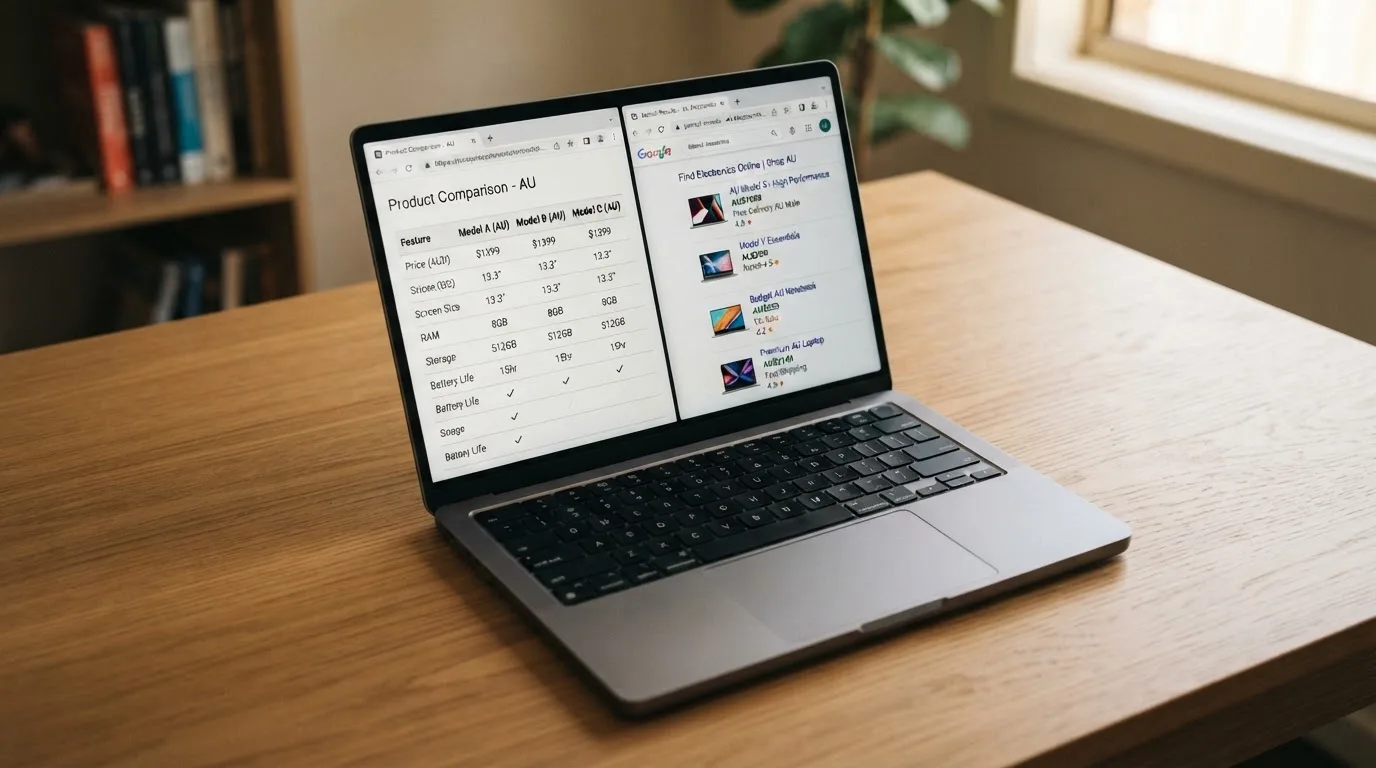
There is no meaningful product comparison for a product that is unlawful to supply to the buyer. The comparison that does have meaning is the comparison between what an Australian resident can legally do and what an offshore live dealer studio offers. That comparison runs along a few axes:
- Licensing. A domestic product (a licensed Australian bookmaker for racing and sport) sits under the NTRWC or a state regulator. An offshore live dealer studio sits under Curaçao, Anjouan or Malta. The consumer protection regimes are different, and the offshore regime gives the Australian player no domestic recourse.
- Game catalogue. A licensed Australian bookmaker does not offer live dealer blackjack, online pokies or online casino games, because the IGA prohibits the supply. An offshore studio offers all three. The catalogue difference is the legal exposure difference.
- Payments. A licensed Australian bookmaker accepts debit card, bank transfer, PayID/Osko and BPAY. Credit cards, credit-related products and digital currency are banned as payment methods since 11 June 2024. An offshore studio accepts credit cards and crypto by default. The payment difference is a marker of which side of the regime the operator is on.
- Recourse. A licensed Australian bookmaker is connected to an Australian complaints body and to BetStop. An offshore studio is connected to neither, and a withdrawal dispute is settled in the studio’s home jurisdiction or not at all.
- Reach. A licensed Australian bookmaker is reachable tomorrow. An offshore studio is reachable today and may be on the next ACMA blocking list. The blocking round of 26 June 2026 added twelve new sites; the previous rounds added similar numbers.
A reader weighing the two sides of that comparison has the information needed to make the call. The offshore live dealer studio offers a product the Australian regime has decided Australian residents should not be sold. The licensed bookmaker offers a narrower product set that the regime has decided is permissible. The page is written for readers who want to know the difference before they choose, not for readers who want a brand to pick for them.
Overview: what a reader leaves with
The live blackjack game is a real game with a real history, a low house edge under the right rules, and a streaming format that has matured over fifteen years of studio iteration. The Australian legal regime treats it as a prohibited interactive gambling service, and the ACMA’s enforcement record against offshore operators offering it to Australians is long and active. The page walks through the game’s fundamentals, the regime’s enforcement mechanics, the responsible-play tools that actually apply, the crypto angle that is marketing rather than substance, the payment mechanics that follow from the legal category, and the bonus economics that apply to blackjack specifically rather than to slots.
The data current as of 28 October 2026, verified against the ACMA register, gives a picture that is stable in shape and changing in detail. The shape — the IGA prohibition, the ACMA enforcement, the offshore exposure — has been the picture since 2017. The detail — the named operators, the blocking rounds, the reform bill passed in August 2026 — shifts from year to year. A reader who comes back to the page in twelve months will see new names in the brand shelf and a longer blocking count, and will not see a different legal shape.
The page does not recommend an offshore brand, because recommending one would recommend an unlawful supply. It also does not recommend a domestic brand for live dealer blackjack, because no domestic brand offers it. The recommendation the page can make is the recommendation that follows from the data: an Australian resident who wants to play live dealer blackjack is choosing between an unlawful offshore supply and not playing at all, and the choice is theirs to make with the data above on the page.
Frequently asked questions
Is it legal to play live blackjack for real money at an online casino in Australia?
No. The Interactive Gambling Act 2001 makes it an offence to supply an interactive gambling service — including a live dealer blackjack table — to a person in Australia. The penalty falls on the provider, not the player, but the player gets no Australian consumer protection, no complaints body, and no guarantee the site will still be reachable tomorrow. The ACMA can block the site with a balance still on it.
How does a live dealer blackjack table differ from a computer-generated one?
The cards, the shoe and the dealer are real. A studio camera streams the deal in real time, and a chat function lets players talk to the dealer and to each other. The game itself — the rules, the payouts, the house edge — is the same as the computer-generated version. The streaming technology changes the presentation; it does not change the legal classification under the IGA.
What dealer rule most affects the house edge in blackjack?
The soft-seventeen decision. A table where the dealer must hit on a soft 17 (an ace counted as eleven with a six, for a total of seventeen) shifts the house edge by roughly 0.20% compared with a stand-on-soft-17 table. Under liberal Las Vegas Strip rules with optimal play, the house edge is about 0.28%; under more common Atlantic City rules it is about 0.43%. Both figures assume basic strategy on every hand.
Does a blackjack bonus offer usually count table game bets the same as slot bets?
No. A standard offshore deposit bonus might carry 35x wagering on the bonus amount, with slots contributing 100% toward the requirement and blackjack contributing between 5% and 20%. The same A$200 bonus that requires A$7,000 of slots turnover requires A$35,000 to A$140,000 of blackjack turnover to clear, and a blackjack hand is over in seconds rather than the three to five seconds a slot spin takes, so the wall-clock time to clear is dramatically longer.
Is a live blackjack app a separate product from a site’s browser-based table?
Usually not. Most offshore live dealer studios run the same game engine in the browser and in the app, with the app adding push notifications and a tighter mobile layout. The legal category is the same in both — an interactive gambling service offered to a person in Australia, prohibited under the IGA. The app is a wrapper around the same unlawful supply.