
Live roulette with English-speaking dealers in Australia: what sits behind the streaming window
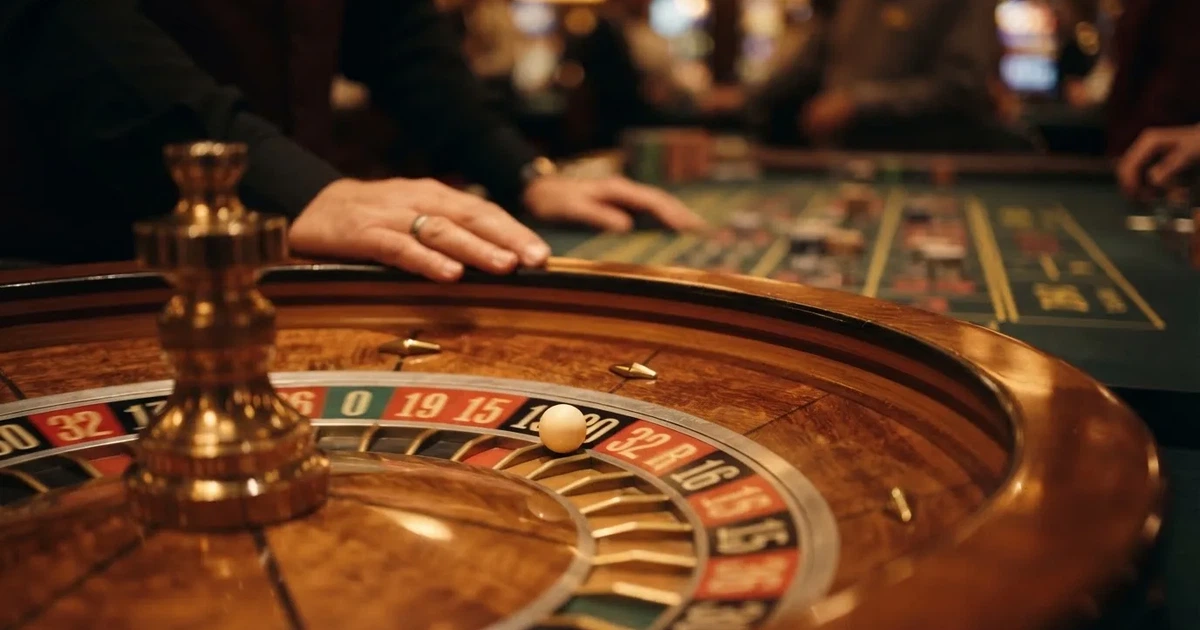
The live-dealer roulette pitch is built around reassurance. A real person spins a real wheel, announces results in clear English, deals in Australian dollars, and chats back when you type. The marketing sells the feeling of being at a real table. The law in Australia treats that stream exactly the same way it treats the computer-generated version: as a prohibited interactive gambling service that no operator is licensed to provide. This page works through what the offer actually is, what the ACMA has done about the brands running it, and what the math on the wheel does to a bankroll over time. The currency stamp line below tells a reader which date and which register the figures were checked against, because a comparison that cannot be dated cannot be used.
Current as of 28 October 2026, with licence claims and ACMA actions cross-checked against the Australian Communications and Media Authority’s formal-warning register and blocking-list announcements.
Table of Contents
- Crypto, anonymity and what actually changes when the deposit is bitcoin
- PayID, payout speed and the queue behind the cashier
- The wheel itself: single-zero, double-zero, and the third zero nobody warns you about
- The eleven brands the ACMA has acted against
- What the ACMA has actually done: the blocking arithmetic
- The legal frame and what it actually prohibits
- Responsible gambling when the table is streaming into your lounge room
- What sits behind the streaming window
- The bottom line for the punter at the keyboard
- Frequently asked questions
Crypto, anonymity and what actually changes when the deposit is bitcoin
The pitch around bitcoin-funded live roulette hinges on a clean separation between the payment rail and the table. A bitcoin deposit arrives through a different channel than a card deposit, settles in a different timeframe, and is harder for an Australian bank to see on a statement. The roulette wheel does not notice. A live table streamed from a studio in Latvia or Costa Rica is the same physical wheel regardless of which currency funded the chip stack at the front of the session. Crypto changes the front door; it does not change the game on the other side of it.
What crypto does change is the regulatory frame. Since 11 June 2024, digital currency has been a banned payment method for any Australian-licensed online wagering service, with penalties of up to A$247,500 for operators who accept it. That rule binds licensed wagering — sportsbooks and bookmakers licensed in the Northern Territory under the NTRWC. It does not bind an offshore casino, because an offshore casino is not part of the Australian system at all. The practical reading: a bitcoin deposit only flows into an offshore brand, which is the category the Interactive Gambling Act 2001 already prohibits. The deposit method is not the gap that makes the offer available; it is the gap that marks the offer as illegal to begin with.
The anonymity claim needs separating from the anonymity reality. A bitcoin transaction is pseudonymous on a public ledger — every transfer sits in the blockchain record forever, tied to a wallet address that a chain-analysis firm can trace with effort. What bitcoin removes is the named-bank-account leg of the trail, not the trail itself. A punter who funds a live roulette table from a card leaves a transaction description that names the casino’s payment processor; one who funds it from a wallet leaves a wallet address that links to every prior and future transaction on that chain. From the ACMA’s perspective, the second trail is actually harder to wipe. The advantage the marketing sells is mostly psychological. The math on the wheel is the same either way: 2.70% on a single-zero layout, 5.26% on a double-zero layout, paid out in chips the punter has to convert back into something spendable, with a withdrawal review that takes the same number of hours regardless of which direction the deposit came from.
PayID, payout speed and the queue behind the cashier
PayID sits in a different register. It is an Australian fast-settlement rail that uses a phone number, email or ABN as a proxy for a BSB-and-account-number, and the transfer clears through the Osko network in seconds. It is the deposit method most Australian-facing marketing copy leans on, because it sounds local and instant. For an Australian-licensed wagering service it is one of the four legal deposit rails — debit card, bank transfer, PayID/Osko, and BPAY — alongside the things banned under the 2024 credit-and-crypto prohibition.
For an offshore live-roulette brand, PayID is more interesting than it looks. The rail itself does not know what it is funding. A PayID transfer to “The Good Casino Pty Ltd” lands in a real Australian bank account within seconds; a PayID transfer to a personal account belonging to a payment-processor representative lands in the same seconds, but on the other side of a chain that has nothing to do with a licensed wagering provider. The marketing leans on the speed because the speed is the visible part. The reader does not see the queue behind the cashier on the way back out.
A live-roulette payout, requested via PayID or otherwise, still waits on the same review process as any other casino withdrawal: identity re-check, source-of-funds check, anti-money-laundering sweep, and a manual approval step for any amount above the operator’s auto-approval ceiling. That ceiling is set per brand and rarely published. Where research looked for it across the brands in the ACMA’s recent enforcement rounds, none of them publish a PayID-specific payout timeframe, and several publish no payout timeframe at all. The honest reading: a deposit via PayID is genuinely fast, and a withdrawal via PayID is as fast or as slow as the brand’s queue, which the reader cannot see until they have funded the account and tried to leave it.
The no-deposit bonus pitch attaches to the same confusion. A “live roulette no-deposit bonus” sounds like a way to test the table without committing funds. In practice a no-deposit bonus on roulette is almost always constrained to slots-eligible games, carries a withdrawal ceiling well below the bonus amount, and gates the eventual cashout behind an identity check that would have been run on a normal deposit anyway. The marketing sells a way to test the table; the terms sell a way to find out whether the punter’s documents clear.
The wheel itself: single-zero, double-zero, and the third zero nobody warns you about
The roulette table the punter sits down at is the only thing on the page where the math is fully knowable in advance. Single-zero (European) roulette carries a house edge of 2.70% on every bet, including the inside bets and the outside bets. Double-zero (American) roulette carries 5.26%, because the extra zero pocket takes the same even-money bite as the first one. A third variant, less common in live studios but increasingly visible on streaming platforms operating outside Australian licensing, runs a triple-zero wheel with 39 pockets (0, 00, 000 and the numbers 1 to 36) and a house edge of 7.69%. The triples pay the same as on any other layout, so the extra zeros are pure house take.
A few European studios run an en prison or la partage rule on the even-money outside bets. Under en prison, a stake that loses to a single zero is held over for one more spin rather than forfeited; under la partage, half is returned immediately. Either rule halves the effective house edge on red/black, odd/even and high/low to roughly 1.35%. Most live studios run the standard single-zero wheel without the rule, and the marketing copy rarely says which version is on offer. The punter has to read the rules panel inside the table lobby before placing the first chip, and most players don’t.
The game’s history does not change the math but is worth keeping in one sentence: roulette likely developed from the Italian game Biribi and the modern layout emerged in eighteenth-century France, with documented play in Paris from 1796. Blaise Pascal’s involvement is the kind of trivia that surfaces in marketing copy; it does not move the edge. The edge is set by the pockets, not by the story.
Side bets complicate the picture further. Some live tables offer racetrack and neighbour bets at the same 2.70% as the standard layout, because they are still inside-bet combinations on a single-zero wheel. Others offer “French bets” or “announced bets” with the same math. A handful of studio offerings — particularly the American double-zero streams — add a five-number bet (0, 00, 1, 2, 3) at a 7.89% edge, the worst standard wager on any roulette layout. The punter who sits down without reading the bet panel is the punter who plays that bet by accident.
The baccarat, blackjack and craps tables share the same streaming window on most live platforms. Their house edges are different in ways worth knowing: baccarat’s Banker bet is 1.06%, Player is 1.24%, and the Tie bet is 14.36% — the worst single wager on a standard live floor. Blackjack with optimal play is around 0.28% to 0.43% depending on the rule set. Craps Pass/Come is 1.41%, Don’t Pass/Don’t Come 1.36%, and Any Craps 11.11%. Compared with the 2.70% on a single-zero roulette wheel, baccarat and craps are cheaper to play, and blackjack is cheaper still. The marketing material almost never mentions this. The roulette wheel is the loudest table on the floor and the punter’s third-cheapest way to lose money, behind slots and the baccarat Tie.
The eleven brands the ACMA has acted against
The eleven brands below are not a ranking. They are a record of which operators the ACMA has issued formal warnings over for offering prohibited interactive gambling services to Australians. No state or territory licenses online casino games, online pokies or in-play betting; whatever licence a site displays on its footer, the offer of a live roulette stream to a person in Australia is unlawful under the Interactive Gambling Act 2001. What follows is the ACMA’s own record, in the order the warnings appear in research, with the operator the ACMA named and the month and year the warning was published.
RocketPlay
The ACMA issued a formal warning to Pulsup Ltd over Rocketplay.com.au in March 2026. An earlier formal warning covering Rocketplay, alongside Bambet, Dazard, Level Up, Wild Tornado and Cobra Casinos, was issued to Dama N.V. in May 2022. The brand has cycled through two operators in four years, which is the part of the picture the footer licence does not show. The IGA does not require an Australian consumer to be able to identify the operator behind a brand — only the ACMA’s enforcement record does. The Rocketplay outcome is what an offshore brand looks like when the warning has already been issued and the operator simply moves the licence plate.
Level Up Casino
The ACMA’s May 2022 warning to Dama N.V. covered six brands, of which Level Up was one. The Dama group re-emerged across the ACMA’s later enforcement rounds under different brand names — Woo Casino in March 2025, Spirit Casino in May 2025 — which is how the same corporate footprint ends up with multiple formal warnings across a three-year window. The product offering on the streaming side was standard for the cluster: live roulette, live blackjack, live baccarat, slots.
Woo Casino
Dama N.V. picked up a second ACMA warning in March 2025, this time specifically over Woo Casino. The first round was a sweeping one across six brands in 2022; the second round is a tighter one on a single brand, and the gap between the two is the pattern worth flagging — Dama N.V. was told once, in writing, and the ACMA came back to the same operator two years later. That is what enforcement looks like when the operator chooses to keep offering the prohibited service.
Spirit Casino
The May 2025 ACMA warning to Dama N.V. covered Spirit Casino, the third Dama-group brand in the ACMA’s recent record. Three warnings to one operator across a thirty-six-month window is the cleanest data point on the page for what an offshore operator does with a formal warning — keeps operating under a different brand name, then catches up with the ACMA again. The product offering is the same live-roulette cluster as the other Dama brands.
National Casino
In July 2025 the ACMA issued a formal warning to Consolutetish S.R.L. covering both National Casino and Bizzo Casino. Two brands under one warning under one operator name on one date — the ACMA’s enforcement pattern increasingly groups brands under their operating entity rather than warning them one by one. National Casino had not been the subject of a prior ACMA warning in the research record; Bizzo had, under a previous operator in 2022.
Bizzo Casino
Consolutetish S.R.L. picked up the July 2025 warning covering both National Casino and Bizzo Casino. Bizzo had already been the subject of a 2022 formal warning to TechSolutions Group, which is the second operator footprint the same brand has carried. The brand has cycled through two named operators across three years, and the IGA does not require any consumer notification when the operator behind a brand changes.
Ignition Casino
In July 2025 the ACMA issued a formal warning to Bamboo Media over Ignition Casino. Ignition’s footprint in the research record sits apart from the Dama and Consolutetish groups — a different operator name, a different cluster of brands, the same prohibited product. The Australian-licensed alternatives (sports and racing only) do not include any Ignition-style casino offering, because no such offering is licensed.
Instant Casino
In February 2025 the ACMA issued a formal warning to EOD Code SRL over Instant Casino. Instant Casino sits earlier in 2025 than the Dama and Consolutetish warnings, and is one of the first formal warnings the ACMA published in that year — the ACMA’s enforcement tempo picked up across 2025 in a way the count of warnings shows but the individual brand pages do not.
Jackbit
In April 2026 the ACMA issued a formal warning to Ryker B.V. over Jackbit and CasinOK. Two brands under one operator on one date — the same grouping pattern the Consolutetish warning used. Jackbit has marketed itself with a heavy crypto angle; that pitch lands on an Australian reader who funds via bitcoin, which is the payment method banned for licensed wagering and which marks the offering as offshore regardless. The withdrawal review is the same queue regardless of which side of the rail the deposit came from.
Casino Intense
In April 2025 the ACMA issued a formal warning to Sterplay Holding Ltd over Casino Intense. Casino Intense sits in the middle of the 2025 enforcement cluster — the Dama warnings in March and May 2025, the EOD Code warning in February 2025, the Sterplay warning in April 2025, and the Consolutetish and Bamboo Media warnings in July 2025. Five operators across six months, all offering the same product, all warned under the same statute.
Sky Crown
The ACMA issued a formal warning to Hollycorn N.V. over its Sky Crown and Blue Leo casino services. Hollycorn is one of the longer-running operators in the cluster, with the formal warning pre-dating the 2025 enforcement wave by some years. The pattern is the same as the newer operators: an offshore live-roulette offering, a formal warning, a brand that may continue under the same operator name or may move to a new one.
What the eleven have in common
Eleven brands, eight distinct operating companies, two re-warning operators (Dama N.V. twice across three years and TechSolutions to Consolutetish for Bizzo), and a single statute cited on every warning. The product on offer is the same across all of them: live dealer casino games, including live roulette, streamed from studios outside Australia. None of them has an Australian licence for the offering because no such licence exists. The footer licence a punter sees is a Curaçao or Anjouan licence issued for the offshore corporate vehicle, not a permit to take Australian residents.
What the ACMA has actually done: the blocking arithmetic
The blocking list is the cleanest number on the page. According to the ACMA as reported in June 2026, a total of 1,751 illegal gambling and affiliate marketing websites had been blocked since the first blocking request in November 2019. That is the running total across roughly six and a half years of enforcement — an average of about 269 sites blocked per year, with the figure skewed higher in the years since the 2017 strengthening of the Interactive Gambling Act.
The blocking arithmetic is straightforward: 1,751 blocked sites divided by the time elapsed between the first blocking request in November 2019 and the latest published count in June 2026 gives an average pace of roughly 269 sites per year, but that pace is not constant. The 12-site round reported on 26 June 2026 — 7Signs, ChromaBet, Donbet, Duospin, Freshbet, Slots Gem, Jacks Club, Lucky Start, Pointsbetz.com, Spinrise, Vinyl Casino and Wildsino — sits well below the early rounds in 2020 and 2021, when the ACMA was clearing the long tail of established offshore brands. The arithmetic shows what enforcement looks like when the obvious targets have already been removed: smaller rounds, more affiliate-marketing sites, more recent brand creations. The pace has slowed because the queue has thinned, not because the demand has.
More than 230 unlicensed gambling services have left the Australian market since 2017, on the ACMA’s own count. The exit numbers and the blocking numbers tell different stories. The exits are mostly quiet — an operator decides the cost of staying is too high and stops accepting Australian sign-ups. The blocks are loud — a directive to Australian ISPs that takes effect within days and that the operator can usually route around by changing domain, which is why the totals add up faster than the population of distinct operators.
H2 Gambling Capital’s 2025 report estimates that Australians lose about A$3.9 billion a year to illegal gambling sites, and that the share of gambling going through legal channels fell from 74% in 2021 to 64%. That is a ten-percentage-point shift in four years, in a market of roughly A$25 billion in total gambling spend. The legal share is still the majority, but the trajectory is the data point that matters — illegal channels are growing faster than legal ones, in spite of the enforcement tempo.
The legal frame and what it actually prohibits
The Interactive Gambling Act 2001 (IGA), strengthened by the Interactive Gambling Amendment Act 2017, makes it an offence to provide online casino games, online pokies or in-play betting to a person physically in Australia. No state or territory issues licences for those products. The licensable offering in Australia is wagering on races and sport placed before the event, lotteries, and keno — the products licensed in practice by the Northern Territory Racing and Wagering Commission, which regulates 52 of Australia’s online bookmakers (Sportsbet, Bet365 and Ladbrokes among them) under the NTRWC. The NTRWC is a part-time body with no full-time staff, meeting once a month in Darwin — the regulator is small because the regulated population is small, because the only products in scope are sports and racing.
The IGA targets the provider, not the player. An Australian punter who signs up to an offshore live-roulette site is not committing an offence under the IGA; the operator is. What the punter loses is consumer protection — no Australian complaints body, no recourse through the Australian Financial Complaints Authority, no path through the courts that does not involve litigating in the operator’s home jurisdiction. If the operator refuses a withdrawal, the punter’s recourse is whatever the operator’s own terms say, enforced wherever the operator’s licence requires.
The Interactive Gambling Amendment (Gambling Reform) Bill 2026 passed Parliament on 19 August 2026 and commences its advertising and inducement measures on 1 January 2027. This is a law with a start date that has not yet arrived on a 2026 page. The reforms include tighter rules on affiliate marketing and inducements — the kind of marketing copy that leads a punter to a brand the ACMA has already warned. The reform is part of the picture; it is not yet enforced.
Player protection that is binding runs through BetStop, the National Self-Exclusion Register, live since August 2023. BetStop binds Australian-licensed online and phone wagering services. An offshore live-roulette site is not connected to BetStop and is not bound by an exclusion registered there. The National Gambling Helpline 1800 858 858 is free, 24/7, with chat at Gambling Help Online, and is the channel for anyone whose own gambling has moved past the point of choice. Both are Australian services; neither requires the punter to be playing on an Australian-licensed site to use them.
Payment is the other side of the prohibition. Since 11 June 2024, credit cards, credit-related products and digital currency are banned as payment methods for licensed online wagering, with penalties of up to A$247,500 for operators. The legal deposit routes for licensed wagering are debit card, bank transfer, PayID/Osko and BPAY. An offshore live-roulette site asking an Australian for a credit card or a crypto deposit is operating outside the Australian rules by definition — there is no licensed Australian operator in the same product category to be inside the rules with.
The tax frame is the one part of the law the punter can ignore without consequence. Gambling winnings of a recreational player are not assessable income under section 6-5 of the ITAA 1997, and losses are not deductible. A punter whose gambling amounts to a business is in a different category, and the ATO’s own guidance is the place to check. For the typical reader of a page like this, the tax frame does not change the decision.
Responsible gambling when the table is streaming into your lounge room
Live roulette is one of the harder formats to play with a fixed loss limit, because the visual feedback is continuous. The wheel spins every forty seconds or so, the dealer announces the result, the screen updates, and the next spin is one click away. There is no shuffling, no dealing, no break between hands the way a blackjack shoe produces. The session is denser than the equivalent slot session and the win/loss feedback is faster.
The illusion of a pattern forming is the trap the format is built around. Each spin is independent — the wheel has no memory of the last result, and the dealer’s rhythm does not change the probability. A streak of reds does not make black more likely; a streak of zeros does not make another zero due. The gambler’s fallacy is named after this exact misreading. Betting systems — Martingale, Fibonacci, Labouchere — produce orderly progressions of stake sizes but do not change the underlying edge. The edge on a single-zero wheel is 2.70% on every spin regardless of what the last spin did. The system is what the punter brings to the table; the house edge is what the table brings back.
The fixed loss limit is the single most useful tool, and it matters more on a live table than on a slot machine. A punter who decides in advance to stop after losing A$200 of a A$500 bankroll and actually stops is the punter who walks away from the 2.70% edge with most of the bankroll intact. A punter who decides mid-session to “win back” the loss is the punter who hands the rest of the bankroll to the wheel. The first decision needs to be made before the table loads, because the table’s pace does not leave time to make it once the spinning starts.
The National Gambling Helpline 1800 858 858 is the contact point for anyone who has stopped making the decision they said they would make. The line is free, 24/7, and the chat at Gambling Help Online is the equivalent for anyone who would rather type. Both are Australian services; neither requires the punter to be playing on an Australian-licensed site to be worth calling.
What sits behind the streaming window
The streaming window a punter watches is the visible part of an offshore operation. The less visible parts are the studio operator, the software platform, the payment processor, the KYC vendor, and the corporate entity behind the brand the punter sees on the footer. Each of those is a separate business, often in a separate jurisdiction, and the ACMA’s enforcement record names the corporate entity rather than the studio or the software platform. Dama N.V. is the operator; the studio is somewhere else; the games come from a third party; the payment processor is a fourth. The punter sees only the front of that chain.
The chain is what an offshore brand moves when enforcement catches up. The 2022 Dama warning and the 2025 Dama warnings were issued to the same corporate entity, but the brands caught up in those warnings are partly different — Rocketplay appears in both rounds, but Woo Casino and Spirit Casino are new in the 2025 round. The same operator, the same prohibited product, fresh brand names. The punter who chooses a brand on the assumption that “no warning yet” means “offshore but not yet caught” is reading a queue that the ACMA has not yet processed.
The English-speaking dealer is the part of the offer most easily replicated. Live studios in Malta, Latvia, the Philippines and Costa Rica all run English-language tables, and the dealer nationality is a marketing detail rather than a regulatory one. A table streamed with an Australian-accented dealer from a Curaçao-licensed brand is no closer to being lawful under the IGA than the same table with a European-accented dealer. The accent is comfort; the licence is law.
The bottom line for the punter at the keyboard
The math on the wheel does not change when the dealer speaks English. A single-zero layout pays the house 2.70% on every spin; a double-zero layout pays 5.26%; a triple-zero layout pays 7.69%. A punter who sits down for a hundred spins on a single-zero layout at A$5 a spin has staked A$500 and can expect to lose about A$13.50 of it to the house edge before variance takes the rest of the ride. The expected loss is an average, not a forecast for any one session — variance on a hundred spins is wide enough that the result could land anywhere from a small win to a full A$500 wipe, and the wider the session, the closer the actual loss drifts to A$13.50.
The legality of the table does not change when the dealer speaks English either. The IGA prohibits the offering of online casino games to a person in Australia; a live stream is an online casino game for the purposes of the statute. The punter is not committing an offence by playing, but is also not protected by any Australian framework if the operator refuses a withdrawal. BetStop does not bind the operator; the Australian Financial Complaints Authority does not cover the brand; the ACMA does not arbitrate disputes.
The block-rate arithmetic — 1,751 blocked sites across roughly six and a half years — is what enforcement looks like when the offending party keeps reappearing under a new brand name. The punter who recognises the pattern will read the ACMA’s record as a forecast: every brand the ACMA has warned about is a brand that the ACMA has already determined to be offering a prohibited service. The block-list additions are the ACMA catching up. The next block-list round will include brands the punter has not yet heard of, and the warnings on those brands will look exactly like the warnings on the eleven above.
The English-speaking dealer is the comfort the marketing sells. The wheel is the thing the punter is actually paying for, and the wheel is set against the punter from the first spin.
Frequently asked questions
Is it legal to play live roulette for real money at an online casino in Australia?
No online casino games — including live dealer roulette — can be licensed for an Australian resident under the Interactive Gambling Act 2001. The law targets the provider, not the player, but an offshore brand offers no Australian consumer protection, no AFCA recourse, and no BetStop binding. A punter playing on an offshore live-roulette site is not committing an offence but has no Australian backstop if a withdrawal is refused.
What is the practical difference between a single-zero and a double-zero roulette wheel?
A single-zero (European) wheel has 37 pockets and a house edge of 2.70% on every bet. A double-zero (American) wheel has 38 pockets and a 5.26% edge because the extra zero takes the same bite on every wager. The payouts are the same on both layouts; the difference is in how many pockets the house wins from. Triple-zero wheels exist at 7.69% and are the worst standard layout.
Why might a live roulette table specifically advertise English-speaking dealers?
English-speaking dealers are a comfort feature, not a regulatory one. Live studios in Malta, Latvia, the Philippines and Costa Rica all run English tables. The dealer language does not change the IGA status of the offering, does not change the licence the operator holds, and does not change the house edge on the wheel. The English-language pitch is marketing; the underlying offering remains an offshore interactive gambling service.
Does a bitcoin-funded live roulette table use a different wheel to a card-funded one?
No. The wheel is the same physical wheel regardless of the deposit method. What changes is the regulatory frame: bitcoin is a banned payment method for any Australian-licensed wagering service since 11 June 2024, which means a bitcoin deposit only flows into an offshore brand. The offshore status is the legal problem; the bitcoin is the rail that lands the punter on an offshore site.
Can betting patterns based on previous spins improve the odds on a live roulette table?
No. Each spin is independent — the wheel has no memory of the last result and the dealer’s rhythm does not change the probability. Betting systems like Martingale or Fibonacci produce orderly stake progressions but do not change the underlying 2.70% edge on a single-zero wheel. A streak of reds does not make black more likely; a streak of zeros does not make another zero due. The gambler’s fallacy is the misreading the format is built to encourage.
How is a live roulette payout processed compared with a slot machine payout?
Both go through the same withdrawal queue: identity re-check, source-of-funds check, anti-money-laundering sweep, and a manual approval step above the operator’s auto-approval ceiling. The wall-clock time depends on the brand’s review process and the payment rail, not on the game the punter was playing. PayID, bank transfer and card payouts sit on the same review step regardless of whether the session was roulette, blackjack or slots.