
Casino sites that accept American Express in Australia: the ACMA warning list and what a same-day transfer costs a punter
The credit card a punter is holding when an offshore casino site’s cashier loads is the wrong thing to focus on. American Express, Visa and Mastercard are processed the same way at the merchant terminal. The thing that matters is whether the merchant is allowed to take Australian money at all — and for online casino games and online pokies, the answer is no, under the Interactive Gambling Act 2001. Every brand on the ACMA’s warning list operates on the wrong side of that line, no matter which card logo is on the deposit form. What follows is the ACMA’s record on those brands, why their deposit methods are a smaller story than they look, and where the same card and the same phone end up at a regulated Australian wagering service.

Current as of 28 October 2026 · verified against the Australian Communications and Media Authority register.
Table of Contents
- Why the brand accepting the card is the actual question
- The ACMA warning shelf for offshore casino brands
- Reading the ACMA’s record as a blocking-rate
- What a same-day Australian bank transfer looks like instead
- Responsible-gambling support inside and outside the regulated frame
- The licensing record behind the warning shelf
- What the comparison actually settles
- Frequently asked questions
Why the brand accepting the card is the actual question
A player comparing offshore casino sites on the basis of which cards their cashier accepts is sorting on the wrong column. The card issuer’s merchant-category code — the four-digit tag that lets a bank know what kind of business is asking for the money — is the same for every casino deposit: 7995, the code for betting and casino gambling. It does not change between American Express, Visa or Mastercard, because the merchant is the same business in each case. The card scheme is different; the legal status of the merchant is identical.
That single line of reasoning collapses much of what offshore marketing pages sell. A “Visa-only” casino is not safer than an “Amex-friendly” casino — both target an Australian consumer for a product the Interactive Gambling Act 2001 prohibits from being supplied to anyone in Australia. The 2017 amendments to the IGA gave the ACMA its present enforcement powers; the 2023 amendments tightened what counts as a credit-related product at the cashier. What sits behind either logo is the same unauthorised service, the same absence of Australian consumer protection, and the same exposure to a blocking request if the regulator escalates from warning to action.

This page works through the ACMA’s actual record of formal warnings over offshore casino brands, what each warning named and who runs the site behind it. It then covers what a same-day Australian bank transfer looks like instead — for the punter who wants to keep their activity inside the regulated wagering system — and where responsible-gambling support sits for someone using any of these payment methods.
The ACMA warning shelf for offshore casino brands
The Australian Communications and Media Authority publishes a register of formal warnings it has issued under the Interactive Gambling Act 2001. A formal warning is one step on a chain that ends, for some brands, with the ACMA asking Australian internet service providers to block the site. The first blocking request went out in November 2019. By the report dated 26 June 2026, 1,751 illegal gambling and affiliate-marketing websites had been blocked, and more than 230 unlicensed services had left the Australian market since enforcement was strengthened in 2017. In the 26 June 2026 round alone, the ACMA asked ISPs to block twelve more: 7Signs, ChromaBet, Donbet, Duospin, Freshbet, Slots Gem, Jacks Club, Lucky Start, Pointsbetz, Spinrise, Vinyl Casino and Wildsino.
The brands below are the operators the ACMA itself has warned, listed in the order research gives them. The ACMA’s action is the only criterion: a brand is on this list because the regulator named it, not because any review has scored it. The dates and the operator company names are taken from the ACMA’s published register. Every one of these brands offers online casino games or online pokies to Australians — a prohibited interactive gambling service under the IGA — so the warnings do not depend on which card brand the cashier accepts.
| Brand | ACMA action and date | Operator named by the ACMA | Subject support |
|---|---|---|---|
| RocketPlay | March 2026 / May 2022 | Pulsup Ltd / Dama N.V. | No-data |
| Level Up Casino | May 2022 | Dama N.V. | Listings-only |
| Woo Casino | March 2025 | Dama N.V. | No-data |
| Spirit Casino | May 2025 | Dama N.V. | No-data |
| National Casino | July 2025 | Consolutetish S.R.L. | Listings-only |
| Bizzo Casino | July 2025 / 2022 | Consolutetish S.R.L. / TechSolutions | No-data |
| Ignition Casino | July 2025 | Bamboo Media | No-data |
| Instant Casino | February 2025 | EOD Code SRL | Listings-only |
| Jackbit | April 2026 | Ryker B.V. | No-data |
| Casino Intense | April 2025 | Sterplay Holding Ltd | Listings-only |
| Sky Crown | September 2022 | Hollycorn N.V. | No-data |
RocketPlay
Pulsup Ltd was warned by the ACMA in March 2026 over Rocketplay. An earlier warning in May 2022 had gone to Dama N.V. covering this and five other casino brands, including Dazard, Level Up, Wild Tornado, Cobra Casinos and Bambet — a roster that gives a sense of how a single operator-company wraps a string of skins around the same product. The site accepts card deposits; the ACMA does not record a deposit-method breakdown in its register. The point of the warning is the offering, not the deposit rail. For a punter comparing options on the basis of how fast money moves, RocketPlay sits inside the same legal envelope as every other brand on this shelf: the money may arrive instantly, and the winnings may never leave.
Level Up Casino
Dama N.V. was warned by the ACMA in May 2022 over six casino brands, with Level Up Casino named alongside Bambet, Dazard, Rocketplay, Wild Tornado and Cobra Casinos. Westpac’s gambling-block page lists betting and casino gambling under the merchant category codes it refuses to authorise at the card level — a relevant detail for a player whose bank card is the deposit instrument of last resort. The match on the card-issuer side and the warning on the regulator side point in the same direction: an Australian player funding Level Up Casino is paying a prohibited interactive gambling service, and the warning predates the 2024 credit-card ban on licensed wagering by two years.
Woo Casino
Dama N.V. was warned again by the ACMA in March 2025, this time over Woo Casino, and then in May 2025 over Spirit Casino. Two warnings to the same operator-company in three months describes an enforcement posture that has moved past the cautionary stage. Woo’s cashier, like every other brand in this set, accepts card deposits without distinguishing on a card-scheme basis whether the card is Australian-issued. The match holds: a deposit is a deposit, and the underlying service is a prohibited one.
Spirit Casino
The May 2025 ACMA warning to Dama N.V. named Spirit Casino directly. Spirit operates alongside Woo Casino and the older Dama N.V. roster — Bambet, Dazard, Level Up, Rocketplay, Wild Tornado, Cobra Casinos — under the same corporate wrapper. That clustering is what makes the ACMA’s behaviour here worth noting: warnings to one operator-company inside a single quarter suggest the regulator treats the umbrella, not the brand, as the unit of enforcement. For a player, the practical reading is that switching between Dama N.V.’s brands does not move them out of the regulator’s line of sight.
National Casino
Consolutetish S.R.L. was warned by the ACMA in July 2025 over National Casino and Bizzo Casino. The AUSTRAC threshold-transaction-report rule, which requires reporting of transfers of A$10,000 or more, applies only to physical cash; ordinary electronic bank transfers — including those a punter might make to fund a regulated wagering account — fall outside that per-transaction reporting requirement. That is a separate point from the legality of National Casino, but it is the kind of context the cashier at a regulated bookmaker lives in, and it underlines how different the rails are once a player steps off the prohibited list. National Casino’s own cashier does not sit inside that framework.
Bizzo Casino
Consolutetish S.R.L. was warned by the ACMA in July 2025 over Bizzo Casino. The same brand had already been the subject of a 2022 formal warning to TechSolutions (CY) Group Limited and TechSolutions Group N.V. Two warnings to two different operator-companies over the same brand surface the standard offshore pattern: a brand changes hands and the licence on the footer changes with it, while the cashier and the games library carry on. The regulator follows the operator-company rather than the brand, and that is what determines whether a player can rely on any continuity in the regulatory record.
Ignition Casino
Bamboo Media was warned by the ACMA in July 2025 over Ignition Casino. Ignition sits in the poker-and-casino segment that targets Australian players from Curaçao-licensed operations, the same offshore umbrella the regulator’s enforcement is calibrated to. The warning is to the operator-company that runs the brand from offshore; the brand itself is a marketing wrapper on the same prohibited product. American Express, Visa or Mastercard at the cashier — the card-scheme is the irrelevant variable.
Instant Casino
EOD Code SRL was warned by the ACMA in February 2025 over Instant Casino. EcoPayz and PayID are deposit options research lists against this brand. PayID is worth a note on its own: an instant transfer to a PayID shows the name of the account holder before the payment is sent, which is precisely the kind of friction an offshore operator’s cashier is built to avoid. A PayID deposit to an Australian account holder whose PayID matches a known wagering provider is consistent with regulated wagering; the same PayID going to an account holder whose name does not match anything recognisable is the red flag Australian Payments Plus itself warns about.
Jackbit
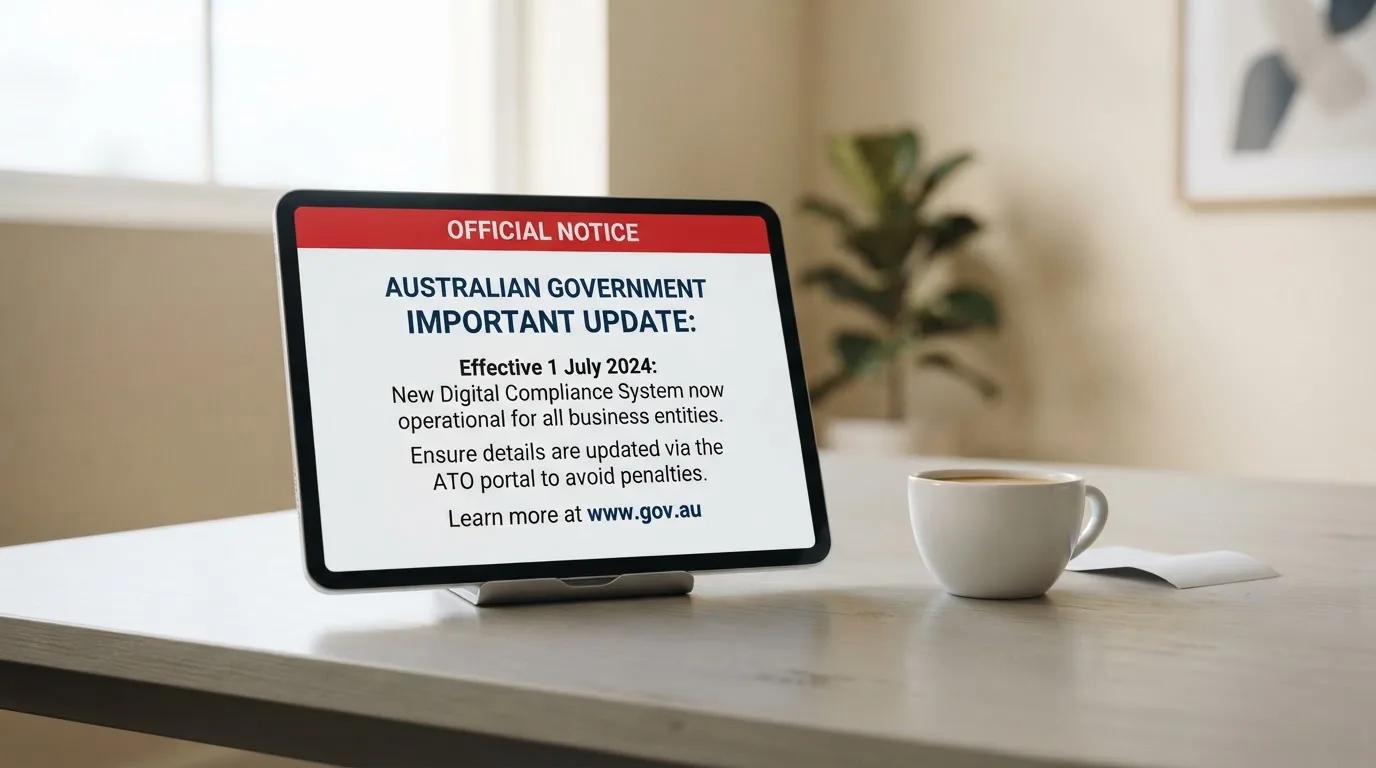
Ryker B.V. was warned by the ACMA in April 2026 over Jackbit and CasinOK. Two brands under the same operator-company in a single warning reflects the same umbrella pattern the regulator has shown across Dama N.V., Consolutetish S.R.L. and TechSolutions. The April 2026 warning is recent enough to be one a player checking the ACMA’s register this year will see at the top of the list — and it is the warning research pairs with the image of an official regulator notice on a desk.
Casino Intense
Sterplay Holding Ltd was warned by the ACMA in April 2025 over Casino Intense. AUSTRAC’s threshold-transaction-report rule applies only to physical cash; an iTnews report and a National Australia Bank page also appear in the source list for this brand. None of that changes the underlying point: Casino Intense is a prohibited interactive gambling service offered to Australians, and the operator-company running it has been named in a formal ACMA warning.
Sky Crown
Hollycorn N.V. was warned by the ACMA over its Sky Crown and Blue Leo casino services, with the formal warning published in September 2022. Sky Crown predates the bulk of the warnings on this list; it has sat on the ACMA’s record for years without the regulator escalating to a blocking request specifically against this brand, but without the regulator’s view of the offering changing either. The card-accepting cashier is, again, the same cashier as at every other brand here, and the merchant-category code is 7995 across the lot.
Reading the ACMA’s record as a blocking-rate
The blocking-rate calculation is a simple ratio: the running total of blocked sites divided by the time elapsed since the first blocking request. Research gives the numerator — 1,751 blocked sites as at 26 June 2026 — and the denominator — the first blocking request in November 2019. Between November 2019 and June 2026 is roughly six and a half years. Divided through, that gives a long-run rate of around 270 blocked sites per year, or about twenty-two per month, with the 26 June 2026 round alone adding twelve more in a single action.
That figure is best read as a band rather than a single number, because the ACMA’s enforcement cadence has accelerated over the period. The early years were a dozen or two dozen per year; the rounds in 2025 and 2026 have moved into the dozens per quarter. A reader weighing the practical risk of opening an account at any brand on this list is not comparing two cards at a cashier — they are comparing an account at a regulated Australian wagering service with an account at a brand whose operator-company is in the regulator’s published register. The blocking rate is the regulator’s enforcement pulse, and over the last two reporting years it has been visibly faster than the long-run average.
The earlier years, by contrast, are dominated by the regulator building the warning register rather than asking ISPs to act. The 2022 warning to Dama N.V. over six brands was part of that record-building phase; the 2025 warnings to Dama N.V. over Woo Casino and Spirit Casino, and to Consolutetish S.R.L. over National Casino and Bizzo Casino, are part of the enforcement-escalation phase that followed. Reading the register chronologically is reading the regulator’s posture, and the posture has tightened.
What a same-day Australian bank transfer looks like instead
A punter who decides to keep their activity inside the regulated wagering system is using Australian rails, and the rails have moved a long way since the offshore cashier was last the obvious answer. Osko, the instant-transfer service on the New Payments Platform, settles a bank-to-bank transfer between participating Australian banks in under a minute, twenty-four hours a day, seven days a week — including weekends, and whether the transfer is addressed by BSB and account number or by PayID. PayID registrations passed twenty-five million identifiers by April 2025, and PayID transfers are available at over a hundred Australian financial institutions. The New Payments Platform itself opened to the public on 13 February 2018 and is owned by New Payments Platform Australia Ltd, a non-profit whose thirteen shareholders include the Reserve Bank of Australia and the major banks.
That infrastructure is what sits behind a regulated wagering deposit. A PayID transfer shows the name of the account holder before the payment is sent — a piece of friction an offshore cashier is built to avoid, and a piece of confidence a regulated wagering service is built to provide. Australian Payments Plus, the operator of PayID and Osko and the merged entity that brought together BPAY Group, eftpos and NPP Australia under ACCC authorisation in September 2021, runs the platform with monthly outages capped at two minutes. The same rails do not run an offshore casino’s cashier, because the offshore casino does not hold an Australian bank account against which a PayID could be registered in the first place.
BPAY, the bill-payment service available in the online banking of over 140 Australian financial institutions and accepted by over 95,000 businesses, has been operating since 1997. It is owned equally, via parent company Cardlink Services Limited, by ANZ, Commonwealth Bank, National Australia Bank and Westpac. A regulated wagering service can accept a BPAY payment using a Biller Code and a Customer Reference Number on a deposit instruction, and the four major banks are the parties on either side of the transaction. None of that infrastructure is what an offshore cashier is connected to.
The card picture, in this regulated frame, is different from the offshore one. Credit cards and credit-related products have been banned as a payment method for Australian-licensed online wagering services since 11 June 2024, with penalties of up to A$247,500 for operators that take them. The RBA’s July 2025 review of merchant card payment costs and surcharging proposes removing surcharges only on eftpos, Mastercard and Visa — explicitly leaving American Express outside the scope of the proposed surcharge ban. That is the position American Express occupies in the Australian payments stack: a three-party scheme that the regulator has not bundled in with the four-party networks. The merchant-category code on the card is still 7995, and an Australian bank’s gambling block — Westpac’s, ANZ’s, Commonwealth Bank’s — refuses authorisation at the card level on that basis.
Apple Pay, Google Pay and Samsung Pay together accounted for around 45% of all card payments in Australia by number at the end of 2025. Apple does not charge consumer fees for using Apple Pay in stores, online or in apps, and any surcharge is the merchant’s own card-processing fees, not Apple’s. Transaction limits and PIN requirements are set by the card issuer or the merchant, not by Apple. ANZ’s gambling block, once turned on in the ANZ app, blocks gambling transactions made through a digital wallet such as Apple Pay on an eligible card, not just the physical card — and removing the block requires a 48-hour waiting period. Westpac’s gambling block works on the same merchant-category-code basis. Commonwealth Bank lets customers apply a gambling lock to eligible cards via the CommBank app, with the same caveat that not every gambling-related transaction is guaranteed to be stopped.
The banking-side gambling blocks are the cleanest single signal a player can read. They are not the only signal — the credit-card ban, the Interactive Gambling Act 2001, the ACMA’s warning register and the blocking-rate calculation above all read in the same direction — but they are the signal that operates at the moment of payment, on the card the player is actually holding.
Responsible-gambling support inside and outside the regulated frame
The National Self-Exclusion Register, BetStop, has been live since August 2023 and binds Australian-licensed online and phone wagering services. An offshore casino is not connected to it. A punter who self-excludes through BetStop is closing off the regulated wagering services — Sportsbet, Bet365, Ladbrokes and the other bookmakers the Northern Territory Racing and Wagering Commission regulates, fifty-two in total — and leaving the offshore casino’s cashier untouched. The two systems run in parallel, and the offshore system does not see what the Australian one records.
The National Gambling Helpline on 1800 858 858 is free, available twenty-four hours a day and offers chat through Gambling Help Online. It is the single piece of support that works regardless of which side of the regulated frame a punter is on. For a player who has used an offshore casino’s cashier and is now considering their position, the helpline is the next step that does not depend on the cashier accepting it as a payment.
The responsible-gambling supports a player can attach to a payment method are largely Australian-bank-side tools. Westpac’s gambling block, ANZ’s gambling block and Commonwealth Bank’s gambling lock all work at the card level on the merchant-category-code basis — 7995 for betting and casino gambling — and refuse authorisation regardless of whether the cardholder is funding a regulated wagering service or an offshore casino. ANZ’s block, once on, requires a 48-hour waiting period to remove. Commonwealth Bank’s lock is applied through the CommBank app. Westpac’s block applies to eligible personal credit and debit cards.
For someone using Apple Pay on top of an ANZ-issued card, the ANZ gambling block covers the digital wallet path as well as the physical card. Commonwealth Bank’s block applies to eligible cards; the bank’s own documentation is explicit that not every gambling-related transaction is guaranteed to be stopped, which means a player relying on the lock as their only safeguard is relying on a probabilistic protection. The same caveat applies to ANZ and to Westpac. None of these tools are a substitute for self-exclusion through BetStop; they are a separate layer that operates at the payment-method level rather than the service level.
The licensing record behind the warning shelf
The Northern Territory Racing and Wagering Commission regulates fifty-two of Australia’s online bookmakers, including Sportsbet, Bet365 and Ladbrokes, licensed in the Territory for tax reasons. The commission has no full-time staff and meets once a month in Darwin. That is the Australian licensing structure for what is actually licensable — wagering on races and sport placed before the event, lotteries and keno. Online casino games and online pokies are not licensable anywhere in Australia.
The H2 Gambling Capital 2025 report estimates that Australians lose about A$3.9 billion a year to illegal gambling sites, and that the share of gambling going through legal channels fell from 74% in 2021 to 64%. The fall is not the kind of figure an offshore-marketing page will quote. It is the kind of figure that describes the volume of money sitting in cashier systems that are not connected to the Australian rails described above, and it is the figure that puts a weight on the ACMA’s enforcement record.
The Interactive Gambling Amendment (Gambling Reform) Bill 2026 passed Parliament on 19 August 2026. Its advertising and inducement measures commence on 1 January 2027 — law with a start date, not yet in force on a 2026 page. That is the next regulatory move in the same direction the ACMA’s warning register has been moving. The legislative timetable sits ahead of the enforcement record, and the enforcement record sits ahead of the cashier comparison a punter is being invited to make.
What the comparison actually settles
A player comparing casino sites on the basis of which cards the cashier accepts is not making a comparison that the ACMA’s record has anything to say to. The card scheme — American Express, Visa, Mastercard — is not the variable on the regulator’s register. The variable is the operator-company, the brand, the prohibited interactive gambling service, and the date of the warning. Eleven brands sit on the shelf above. None of them are licensable in Australia for what they are selling, and none of them are protected by the consumer-protection framework that runs through the Northern Territory Racing and Wagering Commission, BetStop, the National Gambling Helpline or the Australian bank’s gambling block.
The rails described in the section on same-day Australian bank transfers are what the regulated wagering system is built on. Osko settles in under a minute, PayID shows the account-holder name before the transfer is sent, BPAY has been running since 1997 and is owned by the four major banks. The credit-card ban on licensed wagering since 11 June 2024 closes off the card-rail path inside the regulated frame and forces a regulated punter onto the instant-transfer rails. American Express sits outside the RBA’s July 2025 surcharge-ban proposal, which is a separate matter from legality — it is the position of a three-party scheme the regulator has chosen not to bundle with the four-party networks — but it is the position a punter holding an Amex card will end up at when the cashier is a regulated wagering service.
For a player at the cashier of any brand on this page’s warning shelf, the practical reading is that the card-acceptance comparison has already been made for them, and the regulator’s view of the service is the only reading that matters. The blocking-rate calculation — twenty-two blocked sites per month over the long run, with a recent quarterly cadence — is the regulator’s enforcement pulse. The responsible-gambling supports are split between the Australian bank side, where the gambling blocks work on the merchant-category-code basis, and the regulator side, where BetStop binds only Australian-licensed wagering. The gambling helpline on 1800 858 858 is the one piece that covers both.
Frequently asked questions
Is it legal for an offshore casino site to accept American Express from an Australian visitor?
No. The Interactive Gambling Act 2001 prohibits the supply of online casino games and online pokies to people in Australia. The card scheme is irrelevant — Amex, Visa or Mastercard at the cashier all fund the same prohibited service, and the ACMA’s formal-warning register is built on the offering, not on the deposit rail. The punter is not the party the IGA targets; the operator is.
How quickly does an American Express transaction typically settle?
A card transaction settles at the merchant terminal almost immediately for the player, but settlement between the card issuer and the merchant is a separate timeline. The relevant comparison is not card versus card — it is card versus instant bank transfer. Osko settles a bank-to-bank transfer between participating Australian banks in under a minute, twenty-four hours a day, including weekends, with PayID registrations past twenty-five million by April 2025.
Does using American Express offer any buyer protection if an offshore site refuses to pay out?
No. Buyer-protection schemes on a credit card do not extend to proceeds of a prohibited interactive gambling service. An offshore casino gives no Australian consumer protection, no complaints body and no recourse if a withdrawal is refused, and the ACMA’s blocking power can take the site offline with a balance still on it. The card brand is not a safeguard.
Can American Express be used to fund a licensed, land-based venue in Australia the same way it’s used online?
The legality splits. A licensed Australian wagering service — Sportsbet, Bet365, Ladbrokes and the other fifty-two operators the Northern Territory Racing and Wagering Commission regulates — cannot accept credit cards or credit-related products as payment since 11 June 2024. A land-based venue at a licensed club or hotel takes cash and eftpos, with American Express treated on its own three-party-network basis outside the RBA’s July 2025 surcharge-ban proposal.
What deposit limits are commonly attached to American Express at offshore casino sites?
The offshore cashier sets its own limits, and research does not record a standard figure across the warning-shelf brands. The relevant ceiling is on the regulated side: the card-issuer’s own transaction limits and PIN requirements, plus the gambling-block tools Westpac, ANZ and Commonwealth Bank offer at the merchant-category-code level — 7995 for betting and casino gambling. None of these tools are a substitute for BetStop self-exclusion.
Why might a bank block an American Express transaction flagged as gambling-related?
Westpac’s gambling block refuses authorisation at the merchant-category-code level — 7995 — on eligible personal credit and debit cards. ANZ’s gambling block, once turned on in the ANZ app, covers Apple Pay and other digital-wallet paths on an eligible card, and removing the block requires a 48-hour waiting period. Commonwealth Bank’s gambling lock works through the CommBank app, with the same caveat that not every gambling-related transaction is guaranteed to be stopped. The block is at the card-issuer level, not the card-scheme level.