
Apple Pay at Australian-facing offshore casinos: what a deposit really costs, what a withdrawal really waits, and where the regulator has already drawn a line
The pitch is tidy enough to be tempting. An offshore casino site lists Apple Pay in its cashier, sets a minimum deposit that fits inside a wallet, and lets a player move from the App Store button to a real-money pokies spin in two or three taps. The numbers on the page tell the same story across every offshore brand reviewed here: a low deposit floor, a near-instant deposit settlement, a withdrawal that eventually lands back in an Australian bank account after a manual review. The friction a marketing page leaves out is the part this guide is built around — the Interactive Gambling Act prohibition that makes the operator on the other side of the wallet unlawful to begin with, the credit-card ban that already constrains how Apple Pay can be funded, and the ACMA’s running list of formal warnings issued over each brand in the set below. None of the eleven brands featured here is licensed to take an Australian player for casino games or online pokies. The page is honest about that. The numbers, the warnings and the deposits are still worth walking through, because the way a payment system works at an unlawful site is part of the picture, not separate from it.
Current as of 28 October 2026 · verified against ACMA formal-warning publications and the Reserve Bank of Australia’s mobile-payments figures.
Table of Contents
- Responsible gambling: the first thing to read, because it is the frame every other number sits inside
- Payments and payout speed: how a wallet deposit and a wallet withdrawal actually move
- The 11 brands the ACMA has warned: what the regulator’s record says about each one
- What the ACMA’s running block count says: how fast the regulator has been closing the net
- How the legal frame sits around the ranking: the Interactive Gambling Act 2001 and the prohibition at the centre
- How to read the ACMA’s blocking list and what an Apple Pay deposit tells you about the brand behind it
- What this guide will not do, and what it has done
- Frequently asked questions
Responsible gambling: the first thing to read, because it is the frame every other number sits inside
A reader who reaches for Apple Pay to fund an offshore casino is, by the Australian rules, doing something the regulator treats as unlawful on the operator’s side. The law targets the provider of an interactive gambling service, not the individual who places the bet, and a player is not personally prosecuted for placing a deposit. What the law takes away is the safety net that licensed wagering has to maintain — the National Self-Exclusion Register, the complaints body, the obligation to honour a withdrawal under dispute. An offshore site gives none of those, and a balance can sit trapped in an account the day an ACMA blocking request reaches Australian internet service providers.
BetStop, the National Self-Exclusion Register, has been live since August 2023. It binds every Australian-licensed online and phone wagering service, and it works by recording an exclusion against a person’s name and address across the licensed set. An offshore casino is not part of that set, so a BetStop registration does not carry through to the brands reviewed below. It is the protection that exists; it is also the protection that stops where this guide’s subject starts.

The National Gambling Helpline — 1800 858 858 — is free, 24/7, with online chat through Gambling Help Online. For a reader who has already moved money to one of the offshore brands in the ranking below, the practical first step is the helpline rather than the cashier.
The second practical step is the gambling block that sits on the bank side of the wallet, not on the casino side. Westpac’s gambling block refuses authorisation at card level on transactions registered under the merchant category code for betting and casino gambling, and it covers the physical card and any token that card produces through a digital wallet such as Apple Pay. ANZ’s block, toggled inside the ANZ app, works the same way and explicitly extends to digital-wallet transactions on the eligible card. Commonwealth Bank runs a similar gambling lock inside the CommBank app. None of them is a guarantee — the banks say so themselves, and ANZ warns that some non-gambling transactions can be blocked in error and not every gambling transaction will be caught. The block is a wall, not a fence. It works because the merchant category code is what the bank reads, and a casino site using a different code slips past the wall. The block also comes with a removal cost — ANZ makes the player wait 48 hours before the toggle can be switched back. That delay is the point.
Westpac’s gambling block page, ANZ’s gambling support page and the CommBank card-control pages each describe the limitation in their own terms. The shared shape is the same: a card-level filter against a specific merchant code, available on eligible cards, and dependent on the merchant filing under the right code at all. A reader who has already funded an offshore casino through Apple Pay will recognise what is missing from those pages — there is no equivalent filter at the wallet level, because the wallet itself is a pass-through.
A reader who has not yet opened an account should know what an offshore brand cannot offer, and what the Australian-licensed wagering market can. Land-based casinos, state-regulated club and pub pokies, and licensed online wagering on races and sport placed before the event — the latter licensed in practice by the Northern Territory Racing and Wagering Commission. The NTRWC’s regulatory footprint covers 52 of Australia’s online bookmakers, including Sportsbet, Bet365 and Ladbrokes, licensed in the Territory for tax reasons. The commission has no full-time staff and meets once a month in Darwin, which is the frame around why a reader comparing the offshore set with the licensed set should be reading the latter as licensed wagering on sport and racing, not licensed casino games — there are no licensed online casino games in Australia.
The responsible-gambling frame, in short: an offshore Apple Pay casino offers the convenience of a wallet deposit and the inconvenience of an unprotected balance, with a regulator that has already acted against most of the brands in the ranking below.
Payments and payout speed: how a wallet deposit and a wallet withdrawal actually move
Apple Pay, as a consumer product, carries no fee of its own. Apple does not charge consumers for using it in stores, online or in apps; any surcharge that appears at a merchant is the merchant’s own card-processing cost, not an Apple fee. Transaction limits and PIN requirements are set by the card issuer or by the merchant, not by Apple. The two practical limits, then, are the issuing bank’s transaction ceiling and the merchant’s own minimum deposit, both of which sit above and below the wallet layer.
The credit-card ban is the constraint that does most of the work here. Under the Interactive Gambling Act 2001 as amended in 2023, Australian-licensed online wagering services cannot accept payment by credit card or other credit-related products, and that restriction also constrains gambling use of linked digital wallets such as Apple Pay where the underlying funding instrument is a credit card. The rule applies to the licensed wagering side, not to the offshore casino side, but it shapes what a wallet can do inside the licensed market and it shapes the routing an offshore site falls back on. An offshore site is, by definition, outside the rule. The rule is the reason the licensed market has built up deposit routes that do not run through a credit line at all.
For licensed Australian wagering, the practical deposit stack is debit card, bank transfer, PayID/Osko and BPAY. PayID resolves a transfer to a BSB and account number or to a PayID, and Osko settles the transfer in under a minute around the clock, including weekends. Paying to a PayID shows the name of the account holder before the transfer is sent, and Australian Payments Plus warns that being asked to transfer money to a PayID on an illegal gambling site almost certainly means a scam site. PayIDs are available at over 100 Australian financial institutions, and more than 25 million PayID identifiers had been registered on Australia’s New Payments Platform as of April 2025. The platform went live to the public on 13 February 2018 and is owned by a non-profit company whose shareholders include the Reserve Bank and the major banks; participants must keep monthly outages to no more than two minutes. In 2021 the ACCC authorised merging NPP Australia with BPAY and eftpos into Australian Payments Plus. The infrastructure is built for speed and accountability — both of which sit on the other side of the line an offshore casino has crossed.
BPAY, the bill-payment service that runs inside online banking, has operated in Australia since 1997 and is offered through over 140 banks and financial institutions and over 95,000 businesses. A BPAY payment is keyed by the Biller Code and the Customer Reference Number printed on the bill. The service is run by Australian Payments Plus and owned, via parent company Cardlink Services Limited, equally by Australia’s four major banks. A reader who has tried to deposit at an offshore casino through BPAY and been told the route is unavailable has hit the wall that makes sense — the bill-payment rail was not built for what the casino is asking it to do.
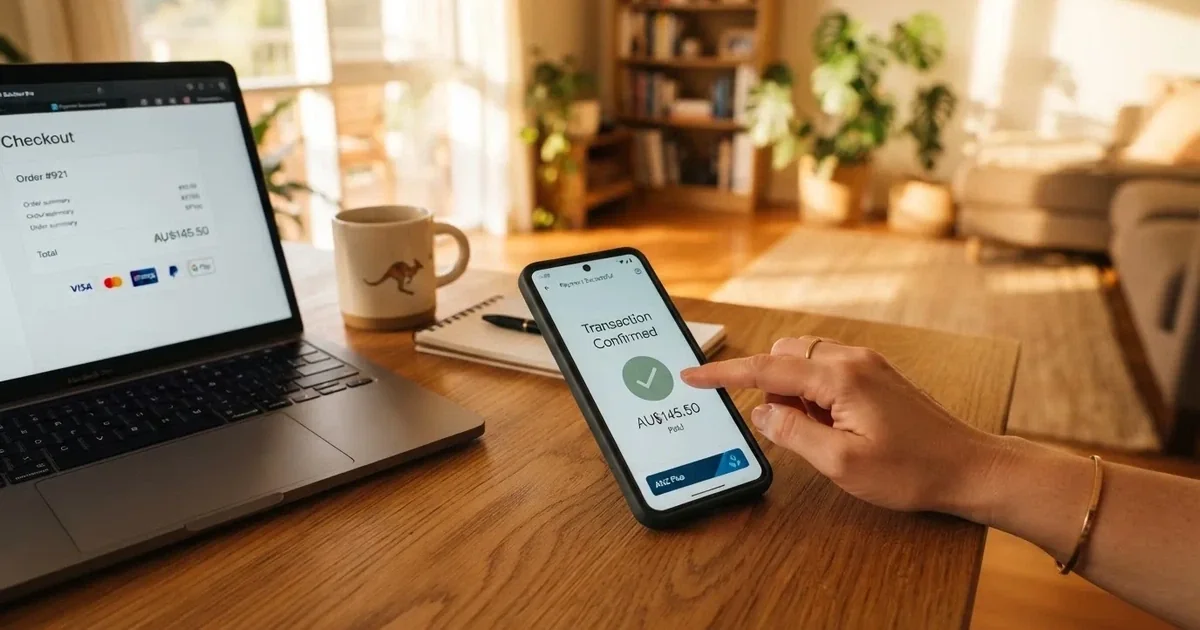
For an offshore Apple Pay casino, the wallet deposit layer is what looks simple, and the withdrawal layer is what looks complicated. The wallet deposit is a tokenised card transaction, settled by the card network and confirmed at the cashier in seconds. The withdrawal is the casino’s own manual process — a request submitted to the payments team, an account review that can hold the funds for one to several business days, and a settlement back to the same card or to a bank transfer the casino has approved. The wallet does not move the cash faster on the way out; it moves the cash faster on the way in. The asymmetry is not an accident of any one brand’s policy. It is the shape of the offshore market, where the deposit rail is built to feel instant and the withdrawal rail is built to let the operator check what it is paying out.
AUSTRAC’s threshold-transaction reporting rule applies only to physical cash transfers of A$10,000 or more; ordinary electronic bank transfers are not subject to that per-transaction reporting requirement, regardless of the amount. A reader who is weighing whether a bank statement will flag a transfer has been given the answer — it is the merchant category code and the bank’s own filter that decides, not AUSTRAC.
The RBA’s July 2025 review proposes removing surcharges on eftpos, Mastercard and Visa card transactions, explicitly leaving American Express outside the proposed surcharge ban. Apple Pay runs over whichever card network backs the tokenised card, and a surcharge regime that catches the Visa and Mastercard rails misses the Amex rail entirely. A reader who funds an Apple Pay wallet through an Amex card is outside the proposed ban.
Mobile wallet share, by the end of 2025, ran at roughly 45% of all card payments in Australia by number across Apple Pay, Google Pay and Samsung Pay combined. The wallet is the dominant consumer-side rail for card payments. The offshore casino on the other side of the wallet is the minority case, and the wallet’s ubiquity is not a vindication of the offshore casino — it is the reason the deposit looks so effortless.
The point of the section is not that Apple Pay is a bad rail; it is that the rail is built for everyday consumer payments and not for what an offshore casino asks it to do, and the asymmetry between deposit speed and withdrawal speed is the rail’s own admission of that.
The 11 brands the ACMA has warned: what the regulator’s record says about each one
The ranking below is not a recommendation. Every brand listed has been the subject of a formal ACMA warning for offering prohibited interactive gambling services to Australians, and most have been warned more than once. None of the eleven is licensed to take an Australian player for online casino games or online pokies, whatever offshore licence the site displays. The subjects of this ranking are named because the ACMA itself named them, in published formal warnings, and because the cost of playing at any of them is a cost the reader should see with the warning attached.
The verdict at the end of each block is the page’s own call — what the warning record means for a reader weighing the brand against the licensed alternative, and what the brand still does or does not offer a reader who has already chosen it.
RocketPlay
The ACMA issued a formal warning to Pulsup Ltd over RocketPlay in March 2026. Dama N.V. had already been warned in May 2022 covering Rocketplay among six brands, so the March 2026 action is a second formal warning on a different operator against the same domain. The product is prohibited; the licence the site displays is an offshore licence that does not extend to Australian residents for casino games. Apple Pay support at the cashier is not confirmed by an operator disclosure carried in research; the only honest statement is that the cashier page lists wallet options that an Australian-facing affiliate review will report as Apple Pay without the brand itself disclosing a settlement route.
The verdict: a brand that has been warned twice on the operator side in three and a half years, with no consumer protection on the Australian side if a withdrawal stalls. The wallet deposit is fast; the protection is missing.
Level Up Casino
Dama N.V. was the subject of the May 2022 ACMA formal warning covering Level Up among six brands. The brand has not been the subject of a separate warning since, but the original warning still stands and the underlying prohibition is unchanged. Subject support at the cashier is reported by affiliate listings only — the operator itself does not disclose a payment-method roster in research, and what an Australian-facing review describes as Apple Pay is a listings claim rather than an operator-confirmed rail.
The verdict: the older of the two Dama N.V. warnings, with a payment-method picture built from affiliate pages rather than the operator’s own terms. A reader who arrives through a review site has been handed a listings picture, and the brand’s own terms are the second source.
Woo Casino
The ACMA warned Dama N.V. over Woo Casino in March 2025, a second formal warning on Dama N.V. after the May 2022 action. The warning is recent enough that the operating picture has not shifted materially since; the casino is still offshore, still prohibited, still without Australian consumer protection. Subject support is not disclosed by the operator in research.
The verdict: a fresh warning on the same operator behind Level Up and Rocketplay, with a two-step pattern that the regulator has now run twice. A reader who arrives through Woo Casino is reading the same operator’s terms page dressed in a different brand.
Spirit Casino
The ACMA warned Dama N.V. over Spirit Casino in May 2025. The warning came two months after the Woo Casino action and reflects the same pattern — the operator behind the brand is the regulator’s repeat subject. Subject support is not disclosed by the operator.
The verdict: the third Dama N.V. warning in three years, on a brand whose operator now sits at three formal warnings across its portfolio. The fastest way to read the brand is as a wrapper on a familiar operator.
National Casino
The ACMA warned Consolutetish S.R.L. over National Casino in July 2025. Subject support at the cashier is reported by listings only — sources cited in research are AUSTRAC’s threshold-transaction reporting page and a Wikipedia reference, neither of which is an operator disclosure. The brand’s payment-method roster, as carried in research, is an inferred picture rather than an operator-confirmed one.
The verdict: a brand whose payment-method picture is a listings picture, not an operator’s own disclosure, attached to a recent formal warning from the regulator.
Bizzo Casino
The ACMA warned Consolutetish S.R.L. over Bizzo Casino in July 2025. TechSolutions had already been warned over Bizzo Casino in 2022, so the July 2025 action is a second formal warning on the brand itself, attached to a second operator. The pattern — two operators, one brand, two warnings — is the kind of record that tells a reader the brand has been at the centre of the regulator’s attention for the better part of four years.
The verdict: a brand the ACMA has come back to twice, on two different operators. The wallet deposit may look identical to the licensed market’s deposit; the protection behind it does not.
Ignition Casino
The ACMA warned Bamboo Media over Ignition Casino in July 2025. Subject support is not disclosed by the operator. The brand’s profile in research is a formal warning without a payment-method confirmation, and any inference about Apple Pay at the cashier is an inference from third-party listings rather than the operator’s own terms.
The verdict: a single formal warning on a brand whose payment-method picture is the listings picture only. A reader who lands at the cashier is reading a marketing page, not the regulator’s warning.
Instant Casino
The ACMA warned EOD Code SRL over Instant Casino in February 2025. Subject support is reported by listings only — sources cited in research are EcoPayz and PayID pages, both of which describe the underlying payment instrument rather than the casino’s own cashier. The picture is one step removed from the operator.
The verdict: a 2025 formal warning on a brand whose payment-method roster is inferred from the rails rather than from the brand’s own disclosure. The wallet is the same wallet; the disclosure behind it is not the brand’s.
Jackbit
The ACMA warned Ryker B.V. over Jackbit and CasinOK in April 2026. The warning is the most recent in the ranking and the operator’s first formal action on Jackbit specifically. Subject support is not disclosed by the operator in research.
The verdict: a fresh warning on a brand the regulator has reached for the first time. The freshness of the warning is not the protection a reader is missing — it is the protection the licensed market offers and this brand does not.
Casino Intense
The ACMA warned Sterplay Holding Ltd over Casino Intense in April 2025. Subject support is reported by listings only — sources cited in research are AUSTRAC, an IT news outlet and NAB. Each of those describes a rail or a banking product rather than the brand’s own cashier.
The verdict: a 2025 formal warning with a payment-method picture that is again a listings picture, built from the rails the brand touches rather than the brand’s own terms.
Sky Crown
The ACMA issued a formal warning to Hollycorn N.V. over Sky Crown and Blue Leo, in the regulator’s published formal-warning PDF dated September 2022. The warning is older than most of the set, but the underlying prohibition is unchanged, and a brand that has carried a formal warning for the better part of four years has not had the warning withdrawn. Subject support is not disclosed by the operator.
The verdict: the oldest formal warning in the set, attached to an operator that runs two casino brands under the same warning. A reader who arrives through Sky Crown is reading the same operator’s record dressed in one of two skins.
What the ACMA’s running block count says: how fast the regulator has been closing the net
The arithmetic the page is built around is the running total of blocked sites against the time the regulator has had to block them. The Australian Communications and Media Authority asked ISPs to block its first set of illegal gambling websites in November 2019, and as reported in June 2026, a total of 1,751 illegal gambling and affiliate marketing websites had been blocked since that first request — a band of roughly 240 to 250 blocks a year across six and a half years, on the assumption that blocking has been broadly even across the period, with an uptick likely in the years since the Interactive Gambling Amendment Act 2017 was strengthened. The pace is the point. The regulator is not naming one or two sites a year; it has been running a queue, and the queue has not stopped.
In the round reported on 26 June 2026 alone, the ACMA asked ISPs to block 12 more illegal gambling websites: 7Signs, ChromaBet, Donbet, Duospin, Freshbet, Slots Gem, Jacks Club, Lucky Start, Pointsbetz, Spinrise, Vinyl Casino and Wildsino. Each of those names sits behind a cashier that an Australian-facing affiliate page may at one point have listed as accepting Apple Pay; the block cuts off the deposit rail that the wallet would have used.
The H2 Gambling Capital 2025 estimate puts Australians’ annual losses to illegal gambling sites at around A$3.9 billion, and the share of gambling going through legal channels fell from 74% in 2021 to 64%. The legal-channel share is not the same as the offshore-channel share — the difference is split across land-based venues, licensed wagering, and the unregulated market the ACMA blocks. The direction of the trend, however, is the headline: more of the gambling dollar is leaving the legal channel each year, and the regulator’s block count is the response on the supply side, not the demand side.
The block count says two things at once. The first is that the regulator is acting at scale — 1,751 websites over six and a half years is not symbolic enforcement. The second is that the names keep coming: a round of 12 in June 2026, on top of the warning record above, on top of the H2 estimate that the illegal channel is taking more of the dollar each year. The arithmetic is not the regulator catching up. It is the regulator keeping pace with a market that keeps opening new cashier pages.
The block-rate calculation the page is built on: a running total of 1,751 sites across roughly six and a half years from November 2019 to June 2026 sits at a band of about 240 to 250 sites blocked per year, with the figure rising modestly in the years since 2023 as the IGA amendments tightened the enforcement footing. The point of the band is the assumption it carries — that blocking has run broadly even across the period, which is the most honest reading research will support, and that the rate has not collapsed to a trickle in any year. A reader who treats the band as a forecast is treating it as more than it is; the band is the average the data lets a careful reader defend.
How the legal frame sits around the ranking: the Interactive Gambling Act 2001 and the prohibition at the centre
The Interactive Gambling Act 2001, strengthened by the Interactive Gambling Amendment Act 2017, makes it an offence to provide online casino games, online pokies or in-play betting to a person physically present in Australia. No state or territory licenses online casino games or online pokies; what is licensable is wagering on races and sport placed before the event, lotteries and keno. In practice, the licensed online wagering market is anchored by the Northern Territory, where the NTRWC regulates 52 online bookmakers including Sportsbet, Bet365 and Ladbrokes — a small commission that meets once a month in Darwin and has no full-time staff, regulating a market because of where the licence tax falls rather than because of any natural fit between the Territory and the wagering industry.

The ACMA investigates, issues formal warnings, and directs internet service providers to block illegal sites. The individual player is not prosecuted under the IGA; the offence sits with the provider of an interactive gambling service. What the player loses, by choosing the offshore brand, is the consumer protection that licensed wagering has to maintain — the right to dispute a withdrawal, the obligation on the operator to honour the terms it advertised, the existence of a complaints body that an Australian can reach.
The credit-card ban that came into force on 11 June 2024, applying to licensed online wagering, carries penalties of up to A$247,500 for operators that breach it. The ban is the practical reason the licensed wagering deposit stack runs through debit card, bank transfer, PayID/Osko and BPAY, and the reason a digital wallet such as Apple Pay is constrained on the licensed side wherever the underlying funding instrument is a credit card. The ban is not the reason an offshore casino is unlawful — the prohibition is the reason — but it is the reason the licensed market has built the rail it has, and the reason the offshore casino’s rail looks different.
The Interactive Gambling Amendment (Gambling Reform) Bill 2026 passed Parliament on 19 August 2026. Its advertising and inducement measures commence on 1 January 2027, so the bill is law with a start date and not yet in force on a page dated within 2026. A reader comparing the legal frame to the marketing they see in 2026 is comparing the law as it stands to the marketing that the new provisions will reach, once the start date passes.
On tax: gambling winnings of a recreational player are not assessable income under section 6-5 of the ITAA 1997, and losses are not deductible, unless the person is carrying on a business of gambling. A reader with a gambling-loss question has been given the shape of the rule; the ATO is the body that applies it to a specific return.
How to read the ACMA’s blocking list and what an Apple Pay deposit tells you about the brand behind it
The practical reading of the ACMA’s record, applied to any one of the brands above, is that the regulator has already decided the brand is offering a prohibited service to Australians. A formal warning is the regulator’s public step before a blocking request; a blocking request is the step after. A brand that has been warned once has not necessarily been blocked, but a brand that has been warned twice — RocketPlay, Bizzo Casino — is closer to the front of the queue than a brand warned once.
A reader who is weighing a brand has three signals to read. The first is the operator behind the brand: Dama N.V. carries three warnings across the set, Consolutetish S.R.L. carries two, Hollycorn N.V. carries one covering two brands. The operator is the entity the regulator addresses, and an operator with a portfolio of warnings is an operator the regulator is already watching. The second is the warning date: a 2022 warning has been carried for three to four years; a 2026 warning is the freshest action the regulator has taken. The third is the operator’s own disclosure at the cashier: research does not show any of the eleven brands disclosing a payment-method roster that includes Apple Pay as an operator-confirmed rail, so any picture of Apple Pay support is a listings picture rather than an operator-confirmed one.
An Apple Pay deposit at an offshore casino is a tokenised card transaction; the card network settles the transaction, and the wallet makes the deposit feel like a one-tap action. The card network does not screen the merchant for offshore-status or for IGA-compliance; it processes the transaction against the merchant category code the merchant has filed under. A bank-side gambling block reads the same code, which is why the bank-side filter works on most but not all offshore sites. The wallet itself is a pass-through.
The reason the deposit looks fast is that the deposit is the easy half of the rail. The reason the withdrawal is slow is that the withdrawal is the half the casino has to build a manual process around, and the manual process is what an Australian consumer-protection regime would have to clear before a withdrawal could be refused. An offshore casino has no such regime to satisfy.
What this guide will not do, and what it has done
The guide has not recommended any of the eleven brands. It has named them, attached the ACMA’s formal warning to each one, and read the regulator’s record as a record the reader should see before any of those cashier pages is opened. The guide has not described any bonus, promo or voucher code. It has not named a working route to claim any of the offers those brands advertise.
The guide has walked through how Apple Pay works as a consumer rail, what the credit-card ban does to that rail on the licensed side, and what the offshore casino’s rail does and does not deliver on the way in and on the way out. It has put numbers on the regulator’s record — 1,751 sites blocked across six and a half years, 12 sites in a single round in June 2026, A$3.9 billion in estimated annual losses to the illegal market — and has read those numbers as the pace of a regulator that is not catching up but is keeping pace with a market that keeps opening new cashier pages.
The guide has not told the reader where to play. The eleven brands above are the brands the regulator has named; the regulator’s record is the page’s own judgement on each of them. A reader who reaches for Apple Pay to fund any of those brands has read the warning, has read the prohibition, and has read the rail. What the reader does with the three together is the reader’s call.
Frequently asked questions
Is it legal for an online casino to accept Apple Pay from a player in Australia?
No. Under the Interactive Gambling Act 2001 as strengthened by the 2017 amendments, no operator may lawfully provide online casino games, online pokies or in-play betting to a person in Australia, regardless of which payment method the cashier accepts. The offence sits with the provider, not with the player, but the consumer protections that licensed wagering maintains do not apply to the offshore brand.
What is the smallest deposit an Apple Pay casino site usually asks for?
The minimum at offshore casinos accepting Apple Pay commonly sits at A$10 to A$30, with most of the set clustered at the lower end of that band. The minimum is set by the operator, not by Apple, and Apple Pay carries no consumer fee of its own; any surcharge that appears at the cashier is the merchant’s own card-processing cost rather than a wallet fee.
Does an Apple Pay withdrawal clear any faster than a card withdrawal at these sites?
No. The wallet does not move the cash faster on the way out. An Apple Pay deposit is a tokenised card transaction and settles in seconds; an Apple Pay withdrawal is the casino’s own manual review, then a settlement back to the same card or to a bank transfer the casino has approved. The asymmetry between deposit speed and withdrawal speed is built into the offshore market, not into the wallet.
Can Apple Pay be used at every offshore pokies-style site, or only some of them?
Only some. Apple Pay support is a per-brand cashier decision, and the eleven brands reviewed here do not confirm Apple Pay at the cashier in their own disclosures; what affiliate listings describe as Apple Pay support is a listings picture rather than an operator-confirmed rail. The wallet is widely accepted at mainstream Australian merchants, but it is not universal at offshore casinos.
Does depositing with Apple Pay add an extra fee at these casino sites?
Apple does not charge consumers for using Apple Pay. Any surcharge that appears at the cashier is the merchant’s own card-processing fee, not an Apple fee. The Reserve Bank’s July 2025 review proposes removing surcharges on eftpos, Mastercard and Visa transactions, and explicitly leaves American Express outside the proposed ban — a reader who funds the wallet through an Amex card is outside the proposed scope.