
The true cost of instant bank transfers at offshore casinos
Current as of 28 October 2026 · verified against the ACMA’s formal warning register and the Reserve Bank / Australian Payments Plus public material
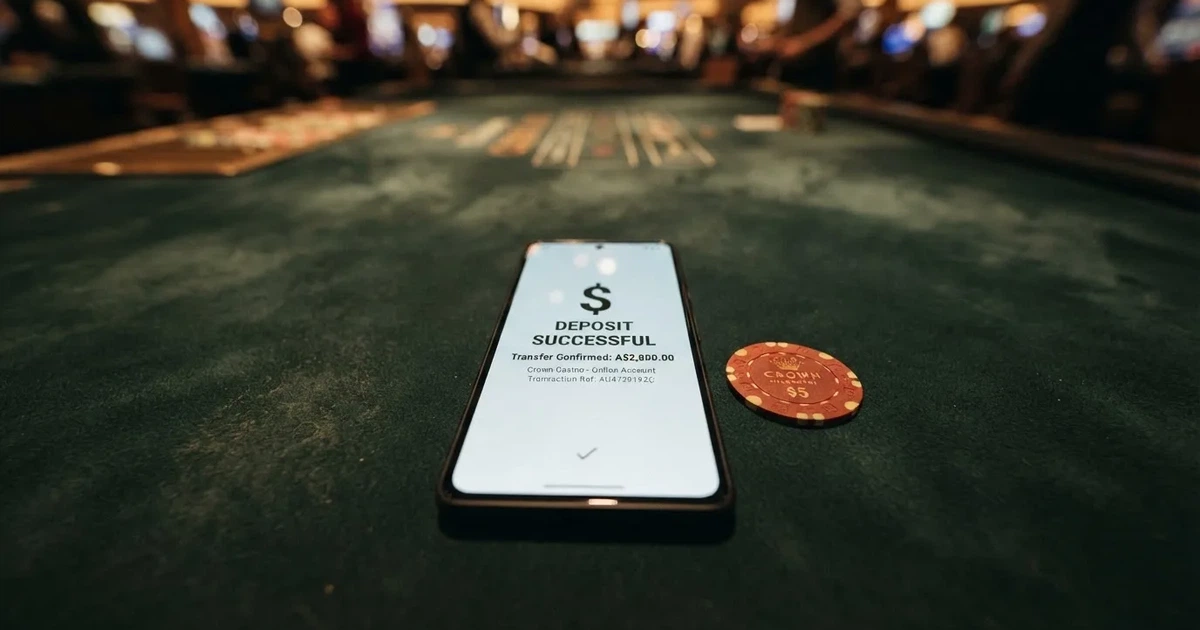
A bank transfer at an Australian bank genuinely does clear in under a minute — that part of the marketing is true. What the marketing does not say is that the receiving end of that transfer is, in most cases, a casino the ACMA has formally warned for offering prohibited services to Australians. The speed belongs to the New Payments Platform. The legal exposure belongs to the person holding the account.
This page is written from the standpoint of what a “fast deposit” actually costs the person who makes it: the speed, the paper trail, the bank-side friction, and the regulatory setting the transfer lands inside. Eleven brands the ACMA has named sit underneath the same prohibition. Their deposit rails vary; their product is the same, and the same law catches all of them.
Table of Contents
- Responsible gambling: why a paper trail is not a safety net on its own
- Payments and payout speed: how the rail works, and where it slows
- Eleven operators named by the ACMA under the same prohibition
- Overview: what a bank transfer casino actually is
- Legality: the regulatory frame around an offshore deposit
- Featured operators: the eleven ACMA-named brands
- The blocking rate: how fast the ACMA has been closing sites
- Banking rails: what an Australian player should know about the money path
- Where to get help
- Frequently asked questions
Responsible gambling: why a paper trail is not a safety net on its own
A direct bank transfer does leave a clearer audit trail than a card or e-wallet deposit. The bank’s own statement shows the recipient name, the BSB and account number or PayID, the timestamp and the value. For a player tracking what they spend across a year, that record is genuinely more useful than a card statement that aggregates gambling under a generic merchant code. The trail is real, and on its own terms it is a safeguard.
A paper trail is not, however, a limit. It logs what has happened. It does not stop the next transfer. The Australian settings that actually interrupt a player — BetStop, the gambling blocks run by Westpac, ANZ and Commonwealth Bank — work before the transfer is sent, not after. A statement in March cannot retrieve a balance an offshore site refuses to release in February.
BetStop, the National Self-Exclusion Register, has been live since August 2023. It binds every Australian-licensed online and phone wagering service. An offshore casino has no integration with BetStop and is under no obligation to honour an Australian’s self-exclusion. A player who has registered with BetStop and then opens an account at an offshore bank transfer casino has registered in one system and played in another, and the second system has never heard of the first.
The National Gambling Helpline — 1800 858 858 — is free, 24/7, and chat is available through Gambling Help Online. For someone whose bank statements show a pattern they want to interrupt, that line and the gambling blocks below it are the levers that actually move money.
The bank-side levers that are available to an Australian account holder
Three of the major banks run gambling blocks at card or transaction level, and the coverage is broader than the marketing lets on. Westpac’s gambling block refuses authorisation of transactions registered under the merchant category code “Betting/Casino Gambling” on eligible personal credit and debit cards. ANZ’s gambling transaction block, activated in the ANZ app, also blocks gambling transactions made through a digital wallet such as Apple Pay on an eligible card — the wallet sits on top of the card, and the bank’s rule reaches both layers. Commonwealth Bank lets a customer apply a gambling lock to eligible cards via the CommBank app, with the same disclaimer: most gambling transactions are blocked, the bank cannot guarantee all are stopped.
ANZ adds a second friction point: once the block is on, removing it requires a 48-hour waiting period. That delay is the design. It is built into the product precisely because an impulse to lift a limit is the moment a cooling-off window is most useful.
None of these blocks reach a direct bank transfer. Westpac, ANZ and Commonwealth Bank block at card level. A transfer initiated through Osko or PayID moves through the New Payments Platform under ordinary direct-debit authority, not under a card-present merchant code. The transfer is fast, the record is clean, and the bank’s gambling setting does not see it. A player who has set a block and then “tops up” via bank transfer has routed around the very control they just turned on.
Where the offshore operator sits in this picture
The offshore casino that accepts a bank transfer from an Australian account is not subject to Australian responsible-gambling conduct rules. It does not connect to BetStop. It does not run a debit-card block. Its own internal deposit limits — daily, weekly, monthly — are operator-set and operator-honoured, with no external review and no Australian complaints body behind them. The paper trail the bank transfer creates is in the player’s own banking app; the controls that act on that trail are entirely on the player’s side of the line.
This is the asymmetry an Australian player should understand before clicking deposit. The transfer is Australian-instant. The site is not Australian-regulated. The two facts are unrelated, and the speed of the first does not redeem the second.
Payments and payout speed: how the rail works, and where it slows
The “instant” in instant bank transfer is delivered by Osko and the New Payments Platform (NPP). Australia’s NPP became accessible to the public on 13 February 2018, and is owned by New Payments Platform Australia Ltd — a non-profit whose 13 shareholders include the Reserve Bank of Australia and the major banks. Osko is the consumer brand layered on top of the NPP: with it, a transfer between participating Australian banks arrives in under a minute, 24/7, including weekends, whether it is addressed to a BSB and account number or to a PayID.
By April 2025, more than 25 million PayID identifiers had been registered on the platform. PayID-based instant transfers are available at over 100 Australian financial institutions. Participants in the NPP are bound to keep monthly platform outages to no more than two minutes — the operational target is “always on”. In 2021 the ACCC authorised the merger of NPP Australia with BPAY and eftpos into a single company, Australian Payments Plus (AP+), which now runs all three.
PayID, Osko and the name that shows up before the transfer goes
PayID does more than shorten the deposit form. When a payer keys in a PayID — a phone number, an email, an ABN, or an organisation ID — the system displays the name of the account holder before the transfer is sent. That preview is a defence against misdirected payments and, in the gambling context, against scam sites. Australian Payments Plus warns explicitly that being asked to transfer money to a PayID on an illegal gambling site almost certainly means a scam site. A legitimate-looking casino cashier that asks for a PayID payment is asking for the payer to ignore that warning.
For an Australian player, the visible name on a PayID is also the first indication of where the money is actually going. A name that resolves to a corporate entity registered in Curaçao, Cyprus or another offshore jurisdiction is consistent with an offshore operator; it is also consistent with the operator the ACMA has already named in a formal warning.
How an offshore casino’s deposit process actually unfolds
The Australian-side speed is real but it is only the first half of the deposit. At the casino end, an inbound transfer must still be matched against the player’s account — usually manually for first deposits and automated after that — and credited to the cashier balance. That second step runs on the operator’s own review cycle. The casino’s “instant” deposit promise is a promise that the matching is fast, not that it is automatic on every deposit, and large or irregular transfers are flagged for additional review even after an account is established.
The same separation applies on the way out. A withdrawal from an offshore casino to an Australian bank account moves through ordinary international payment rails. The speed the deposit showed is not the speed the payout will show, because the casino’s internal approval queue sits in front of the bank transfer and is the usual bottleneck. A player reading a casino’s deposit times should not assume those times describe withdrawals.
BPAY, credit cards, and the rails the IGA touches
BPAY has been in Australian online banking since 1997, is available through the online banking of over 140 banks and financial institutions and is offered by over 95,000 businesses. A BPAY payment is made by entering the Biller Code and the Customer Reference Number (CRN) printed on the bill. For an Australian-licensed wagering service, BPAY is one of the lawful deposit routes alongside debit card, bank transfer and PayID/Osko.
Under the Interactive Gambling Act 2001 as amended in 2023, Australian-licensed online wagering services cannot accept payment by credit card or other credit-related products. That restriction also constrains gambling use of linked digital wallets like Apple Pay, because the underlying funding instrument is still a credit card. For an offshore casino, the prohibition does not bind — there is no Australian licence to lose — but the same bank that refuses the credit-card transaction will refuse it whether the merchant is licensed or not. A debit card from an Australian issuer will work; a credit card will not, because the issuer enforces the same rule.
The Reserve Bank of Australia’s July 2025 review proposes removing surcharges only on eftpos, Mastercard and Visa card transactions, explicitly leaving American Express outside the scope of the proposed surcharge ban. American Express’s network structure is a three-party scheme — issuer, acquirer and cardholder, with Amex issuing and processing itself — rather than Visa or Mastercard’s four-party structure. That detail does not change what an Australian player can pay with at an offshore casino, but it is the reason Amex sits outside the surcharge conversation.
Apple Pay, Google Pay, Samsung Pay and the new shape of the card payment
By the end of 2025, Apple Pay, Google Pay and Samsung Pay transactions collectively accounted for around 45 per cent of all card payments in Australia by number. The wallet sits on top of the underlying card. Apple does not charge consumer fees for using Apple Pay; any surcharge comes from the merchant’s own card-processing fees, not from Apple. Transaction limits and PIN requirements for Apple Pay purchases are set by the card issuer or merchant, not by Apple itself.
For gambling, what matters is the funding instrument behind the wallet. ANZ’s gambling block reaches Apple Pay transactions on an eligible ANZ card. A player who turns the block on is protected across both layers; a player who tries to deposit via Apple Pay at an offshore site that takes credit-card funding will find the transaction refused at the issuer side, not the merchant side.
What the player should notice in the cashier
The fastest way to read a casino cashier is to ask three questions. First, is the deposit rail named (Osko, PayID, BPAY, Visa Direct), or is it just labelled “instant bank transfer”? A rail name means the operator has integrated the Australian infrastructure; a generic label usually means the operator is relying on standard international wires and the speed is the casino’s manual handling, not the rail’s design. Second, does the operator display a recipient name or PayID that an Australian payer can preview before authorising? Third, does the same cashier describe the withdrawal rail with the same specificity? If the deposit page is detailed and the withdrawal page is vague, the answer to “how long will my payout take” is the withdrawal page, not the deposit page.
Eleven operators named by the ACMA under the same prohibition
Each brand in this list has received a formal warning from the Australian Communications and Media Authority for offering prohibited interactive gambling services to Australians. The order is chronological from the most recent ACMA action back; it is not a ranking of player value and it is not a recommendation. The single common fact about all eleven is that the product they offer — online casino games and online pokies to an Australian resident — is not licensable anywhere in Australia under the Interactive Gambling Act 2001. No licence the operator displays changes that, because no Australian licence exists for the product.

| Brand | ACMA action and date | Operator named by the ACMA | Subject support |
|---|---|---|---|
| RocketPlay | Formal warning, March 2026 | Pulsup Ltd | — |
| Jackbit | Formal warning, April 2026 | Ryker B.V. (Jackbit, CasinOK) | — |
| Woo Casino | Formal warning, March 2025 | Dama N.V. | — |
| Spirit Casino | Formal warning, May 2025 | Dama N.V. | — |
| National Casino | Formal warning, July 2025 | Consolutetish S.R.L. | — |
| Bizzo Casino | Formal warning, July 2025 | Consolutetish S.R.L. (earlier TechSolutions, 2022) | — |
| Ignition Casino | Formal warning, July 2025 | Bamboo Media | — |
| Instant Casino | Formal warning, February 2025 | EOD Code SRL | listings only |
| Casino Intense | Formal warning, April 2025 | Sterplay Holding Ltd | listings only |
| Sky Crown | Formal warning, September 2022 | Hollycorn N.V. | — |
| Level Up Casino | Formal warning, May 2022 | Dama N.V. | listings only |
Several operators recur across brands. Dama N.V. is named for four of them — RocketPlay (March 2026, after an earlier May 2022 action against the same operator), Level Up Casino (May 2022), Woo Casino (March 2025) and Spirit Casino (May 2025). Consolutetish S.R.L. is named for both National Casino and Bizzo Casino (July 2025), with Bizzo Casino already the subject of a 2022 formal warning to TechSolutions. The repeated appearances matter because they show the regulator returning to the same corporate vehicle after the first warning did not change the offering.
Two ACMA blocking rounds are especially relevant for understanding the speed at which this enforcement moves. The June 2026 round asked Australian ISPs to block 12 more illegal gambling websites — 7Signs, ChromaBet, Donbet, Duospin, Freshbet, Slots Gem, Jacks Club, Lucky Start, Pointsbetz.com, Spinrise, Vinyl Casino and Wildsino. None of those 12 are on the eleven-brand list above, because blocking is the heavier instrument the ACMA reserves for sites that did not respond to a formal warning. A player seeing any of those twelve names on a deposit page is looking at a site the ACMA has now told every major Australian ISP to make unreachable.
How the ACMA’s enforcement ladder works
The sequence matters, because it predicts what comes next for an operator on the list above. The first step is a formal warning — a public document, named operator, named brand, published on the ACMA’s website. The operator is given a window to stop offering the prohibited service to Australians. If the service continues, the second step is a civil penalty proceeding or an infringement notice. The third step is a request to Australian internet service providers to block the site. The fourth is referral to the Australian Federal Police for criminal investigation.
The June 2026 blocking round is the third step. The eleven brands above are, as of the most recent warning dates in the table, mostly at the first step — the formal warning — with several of them having moved up the ladder after the warning did not stop the offering. A player looking at a deposit page on any of them is looking at an operator the regulator has already addressed once.
Overview: what a bank transfer casino actually is
In the Australian search market, the phrase “instant bank transfer casino” refers to an offshore online casino that accepts deposits from Australian bank accounts via PayID, Osko or a standard direct transfer. The casino displays the deposit rail as a feature, and the marketing leans on the speed of the New Payments Platform to suggest a frictionless start.
The product underneath the rail is the standard offshore casino product: online pokies, table games, live dealer rooms, and — depending on the operator — a sportsbook or virtual sports on the side. None of those products can be licensed for Australian residents. The Interactive Gambling Act 2001, strengthened by the Interactive Gambling Amendment Act 2017, makes it an offence to provide online casino games, online pokies or in-play betting to a person physically in Australia. What is licensable is wagering on races and sport placed before the event, lotteries and keno.
The Northern Territory Racing and Wagering Commission (NTRWC) regulates 52 of Australia’s online bookmakers — including Sportsbet, Bet365 and Ladbrokes — which are licensed in the Territory for tax reasons. The commission has no full-time staff and meets once a month in Darwin. The bookmakers themselves hold wagering licences; the casino product is a separate matter, and no state or territory licence covers it.
Why the deposit rail is not the product
A PayID deposit at an offshore casino takes seconds. The game that the deposit unlocks is still a prohibited interactive gambling service as far as Australian law is concerned. The two facts live on different sides of a line the marketing is happy not to draw. A player who separates them — fast Australian rail on this end, prohibited product on the other — is reading the offer the way the regulator reads it.
The same separation matters on the way out. An Australian player funding a casino account with Osko and withdrawing back to the same Australian account has, on the Australian side, a fully domestic bank-transfer flow. On the operator’s side, the withdrawal sits inside a corporate vehicle registered offshore, with no Australian dispute resolution body behind it. A refused withdrawal is not a problem the bank can solve; the bank completed its leg. A slow payout is not a problem the bank can speed up; the bank is waiting on the operator’s approval queue.
What “instant” actually means, in operator time
The Australian rail’s promise — under a minute, 24/7, weekends included — is delivered by the New Payments Platform and Osko. The operator’s own processing is layered on top, and that layer is the one that varies. First deposits are usually reviewed manually to confirm the sender’s name matches the account holder; large or unusual transfers are flagged for additional checks even on established accounts; bonus-related deposits may be held until the bonus terms are confirmed. None of these delays are visible in the cashier’s marketing copy.
The same applies to the reverse direction. Withdrawals are typically held in a pending period of 24 to 96 hours at the operator’s end before the bank transfer is initiated. The “instant” in “instant bank transfer casino” describes only the deposit rail’s capability. It does not describe the operator’s withdrawal behaviour, and the deposit speed does not transfer to the payout.
Legality: the regulatory frame around an offshore deposit
Australia’s prohibition is enforced and recent. The Interactive Gambling Act 2001 (IGA), strengthened by the Interactive Gambling Amendment Act 2017, makes it an offence to provide online casino games, online pokies or in-play betting to a person in Australia. No state or territory issues licences for those products. The Northern Territory Racing and Wagering Commission regulates online bookmakers, not casinos. Lotteries and keno are regulated separately.
The ACMA is the regulator with the practical reach. It investigates complaints, issues formal warnings, and directs Australian internet service providers to block illegal sites under section 313 of the Telecommunications Act 1997. According to the ACMA as reported in June 2026, a total of 1,751 illegal gambling and affiliate marketing websites had been blocked since the first blocking request in November 2019, and more than 230 unlicensed gambling services had left the Australian market since enforcement was strengthened in 2017. The June 2026 round alone asked ISPs to block 12 more sites.
The estimated scale of illegal play
H2 Gambling Capital’s 2025 report estimates that Australians lose about A$3.9 billion a year to illegal gambling sites, and that the share of gambling going through legal channels fell from 74 per cent in 2021 to 64 per cent. The estimate is the most-cited figure for the offshore market and is consistent with the ACMA’s enforcement volume. A$3.9 billion is a number the regulator’s own activity presupposes.
What a player actually faces
The individual player is not prosecuted under the IGA — the Act targets the provider. The realistic exposure is operational. An offshore casino gives no Australian consumer protection, no complaints body and no recourse if a withdrawal is refused. If the site is blocked by ISPs — as the 1,751 in the ACMA’s running total have been — a balance remaining on the casino side becomes difficult to recover. The block affects inbound traffic from Australian IP addresses; it does not necessarily affect the operator’s ability to pay out, but it does make the player’s access to support, dispute resolution and even basic login materially harder.
The 2026 reform context is the Interactive Gambling Amendment (Gambling Reform) Bill 2026, which passed Parliament on 19 August 2026 and has advertising and inducement measures that commence on 1 January 2027. It is law with a start date, not yet in force, and its measures apply to licensed wagering providers; its effect on offshore operators, who are already operating outside the Australian framework, is more about inducement-side restrictions than product-side ones.
Payments: the lawful and the prohibited
For Australian-licensed online wagering, the lawful deposit routes are debit card, bank transfer, PayID/Osko and BPAY. Credit cards, credit-related products and digital currency have been banned as payment for licensed online wagering since 11 June 2024, with penalties up to A$247,500 for operators. An offshore casino asking an Australian for a credit card or a crypto deposit is asking the player to use a rail the licensed Australian market cannot use, and is doing so because it is outside the rule rather than within it.
AUSTRAC’s threshold-transaction-report rule, which requires reporting of transfers of A$10,000 or more, applies only to physical cash. Ordinary electronic bank transfers are not subject to that per-transaction reporting requirement, regardless of the amount sent. A player sending A$10,000 by Osko is not generating an automatic AUSTRAC report because the transfer is electronic, not physical cash. The reporting trigger for electronic transfers is the suspicious-matter reporting regime, which is engaged by indicators of money laundering or terrorism financing rather than by the transfer’s value.
Tax: recreational play is not assessable
Gambling winnings of a recreational player are not assessable income under section 6-5 of the Income Tax Assessment Act 1997, and losses are not deductible. The exception is a person who carries on a business of gambling — a professional punter — whose activity is assessable on the same basis as any other business. For the player whose bank statements show a pattern of deposits and withdrawals at an offshore casino, the tax treatment is clear: net winnings are not taxable, net losses are not refundable, and the activity is a personal expense.
Featured operators: the eleven ACMA-named brands
Each entry below is built from the ACMA’s own formal warning record. The product is prohibited for Australian residents regardless of the licence the operator displays; the offshore corporate vehicle varies; the Australian end of the deposit is the same NPP rail. No bonus terms are quoted, because the only sources for those terms were affiliate marketing pages, and the comparison a player needs is not the bonus but the regulatory standing.
RocketPlay
Pulsup Ltd received a formal warning from the ACMA in March 2026 over Rocketplay.com.au. The same brand was already on the regulator’s record — Dama N.V. was named in a May 2022 formal warning covering six casino brands, including RocketPlay. The 2026 action against Pulsup Ltd indicates the operator has changed corporate vehicle since the first warning but has not changed its Australian offering. A player looking at a RocketPlay deposit page today is looking at a brand the ACMA has now named twice, under two different corporate owners, for the same prohibited service. The bank transfer rail at the cashier is unchanged across the corporate change.
Jackbit
Ryker B.V. received a formal warning in April 2026 over Jackbit and CasinOK — the second operator in the formal warning covers two brands under the same vehicle. April 2026 is recent, and the formal warning has not yet been followed by a published blocking request as of the most recent ACMA round. A player looking at Jackbit is at the first step of the enforcement ladder, with the second and third steps a known pattern rather than a hypothetical. The deposit rail accepts direct bank transfer; the recipient is the offshore operator, and any blocked-site action from the ACMA would interrupt Australian access without necessarily affecting the operator’s payout capability.
Woo Casino
Dama N.V. received a formal warning in March 2025 over Woo Casino, then again in May 2025 over Spirit Casino. The pattern of repeat warnings to the same operator is the ACMA’s escalation signal. A player reading Woo Casino’s cashier should note that the operator has been warned, has continued, and is now on the regulator’s repeat-offender track. The bank transfer rail’s speed is independent of that track, but the track is the relevant risk to the player’s ability to access the site six months later.
Spirit Casino
Dama N.V. received a formal warning in May 2025 over Spirit Casino, in the same round that named Woo Casino in March 2025. Two warnings, two brands, same operator, two months apart. The deposit rail’s mechanics at Spirit Casino are the standard NPP integration; the regulatory standing is the same operator that has now been told twice in 2025 that the offering is prohibited. A formal warning followed by a continued offering is the pattern that escalates to blocking under the ACMA’s published process.
National Casino
Consolutetish S.R.L. received a formal warning in July 2025 over National Casino. The same warning round also named Bizzo Casino under the same operator and Ignition Casino under Bamboo Media. National Casino is the brand name most recognisable from the trio. The corporate structure behind it is a 2025 entity, suggesting the brand has been moved through vehicles — earlier rounds on similar brand names involved different corporate owners. The bank transfer deposit at National Casino moves through the same Australian rail; the recipient’s standing under Australian law is unchanged.
Bizzo Casino
Consolutetish S.R.L. received a formal warning in July 2025, with Bizzo Casino already the subject of a 2022 formal warning to TechSolutions (CY) Group Limited and TechSolutions Group N.V. That makes Bizzo Casino the clearest case in the table of a brand that has been warned, has continued, has changed corporate vehicle, and has been warned again. A player reading Bizzo Casino’s cashier today is reading a brand that has cycled through two operators and two warnings in three years. The bank transfer rail’s speed is the same; the regulator’s history with the brand is not.
Ignition Casino
Bamboo Media received a formal warning in July 2025 over Ignition Casino. The name overlaps with the US-facing poker brand; the Australian-facing casino product is separate. The deposit rail at Ignition Casino is the standard bank transfer offering; the recipient’s regulatory standing is that of an ACMA-warned operator on a brand that has been named once and may yet escalate. The same July 2025 round also named National Casino and Bizzo Casino, indicating a coordinated round against a cluster of operators the ACMA had been monitoring.
Instant Casino
EOD Code SRL received a formal warning in February 2025 over Instant Casino. The brand name is built around the speed claim that is the subject of this page, and the ACMA’s action against it predates the 2026 enforcement rounds that escalated elsewhere. A player reading “instant” in a brand name should read the same word in the ACMA’s formal warning register and notice that the regulator’s interest in the brand preceded the marketing’s use of the word as a brand.
Casino Intense
Sterplay Holding Ltd received a formal warning in April 2025 over Casino Intense. The April 2025 timing sits inside the same enforcement window as the EOD Code SRL action, and the brand has been on the register since. The deposit rail’s speed is independent of the warning date, but the warning date is a useful signal for how the operator’s offering has been received by the regulator.
Sky Crown
Hollycorn N.V. received a formal warning over Sky Crown and Blue Leo casino services, in a formal warning published by the ACMA in September 2022. Sky Crown is the older case in the table — the formal warning has been on the public register for longer than any other brand listed — and the fact that the brand continues to be searchable through Australian-facing marketing channels is itself a measure of how the offshore market responds to a warning.
Level Up Casino
Dama N.V. received a formal warning in May 2022 over six casino brands, including Level Up Casino. The May 2022 round was the same one that named RocketPlay under the same operator. Level Up Casino is the earliest action in the list and the longest-running; the brand’s persistence across years is consistent with the broader pattern of an operator that receives a warning, continues the offering, and cycles through the regulator’s enforcement ladder on its own timeline.
What the eleven brands share
Every brand on this list is on the ACMA’s formal warning register for offering prohibited interactive gambling services to Australians. Every brand accepts deposits via a bank transfer rail that, on the Australian side, is genuinely instant under NPP/Osko. Every brand is regulated by an offshore licensing authority whose permission does not extend to Australian residents for the product being offered. Every brand is exposed to the ACMA’s next enforcement step, which for several of them — RocketPlay, Jackbit, Bizzo Casino — has already begun.
The marketing layer on top of these shared facts varies. Some brands lean on speed, some on bonus size, some on game library. The legal layer underneath is the same. The comparison a player needs is the comparison the regulator has already made.
The blocking rate: how fast the ACMA has been closing sites
The total number of blocked sites as of June 2026 is 1,751, since the first blocking request in November 2019. The interval between those two dates is just over six and a half years. Dividing 1,751 sites by the months since November 2019 gives a rate that places the ACMA’s blocking activity firmly in the range of one to two sites per working day across the period.
The range is the honest answer. The first blocking requests in late 2019 and 2020 were smaller and slower; the 2023, 2024 and 2025 rounds escalated; the 2026 rounds have continued at scale. A reader who treats the rate as a single number understates the recent activity; a reader who treats it as a single number averaged across the whole period understates what enforcement looks like in 2026. The conditional statement is the one that survives both errors.
The practical implication is that any operator on the formal warning list is on a published escalation path, and the regulator’s demonstrated capacity to block sites at this rate is the reason the path is taken seriously by operators and ISPs. The blocking rate is the background rate against which a player’s deposit decision sits. It is not a forecast for any single operator; it is a measure of the regulator’s bandwidth.
Banking rails: what an Australian player should know about the money path
The bank transfer at an Australian bank is fast. PayID resolves the recipient’s name before the transfer is sent; Osko settles in under a minute, 24/7; BPAY has been available in Australian online banking since 1997 and runs through the same AP+ infrastructure. The deposit rail itself is a triumph of Australian payments infrastructure.
That infrastructure is what makes the offshore offer frictionless to enter and the regulator’s enforcement job harder. A PayID payment to an account the player’s own bank does not flag — because bank gambling blocks run at card level, not transfer level — completes in seconds. The ACMA’s job is then to interrupt the receiving end of that payment through ISP blocking, which works for new player acquisition but does not recover a balance already deposited.
For an Australian player who has decided to use one of the eleven brands above, the practical map is: the deposit rail is Australian-fast, the operator is offshore-prohibited, the regulator is ACMA-active, and the player’s recourse if anything goes wrong is the operator’s own complaints process. None of those facts changes because the deposit cleared in forty seconds.
The credit-card blind spot in the bank’s own block
A useful last note on the payments picture. The Interactive Gambling Act 2001 prohibition on credit-card funding for licensed wagering is enforced at the issuer side — the bank refuses the transaction. Westpac’s gambling block and ANZ’s gambling block both reach Apple Pay transactions on an eligible card, because the wallet sits on top of the card. A player who has turned on the block has protected the card layer; a direct bank transfer sits beneath that layer and is not caught by it. The protection the bank’s own product offers is narrower than the marketing suggests, and the bank transfer rail is exactly the rail that bypasses it.
Where to get help
For someone whose own bank statements show a pattern they want to interrupt, the levers that work before the transfer is sent are the ones that matter. The National Gambling Helpline is 1800 858 858, free and 24/7, with chat available at Gambling Help Online. BetStop, the National Self-Exclusion Register, binds Australian-licensed wagering services and is the strongest single instrument available; it does not bind offshore casinos, but it does interrupt the licensed side of a player’s activity and is a meaningful first step.
The bank’s own gambling block — at Westpac, ANZ or Commonwealth Bank — is the lever closest to the deposit itself. For a player who has not yet turned it on, that is the cheapest move available: it is a setting in the existing banking app, it is reversible only after a cooling-off period at ANZ, and it covers card and digital-wallet transactions at all three banks. The bank transfer rail is the one Australian deposit method that is not covered, which is the reason a player who has set the block and is still being drawn to deposit should treat the rail itself — not the block — as the next thing to change.
Frequently asked questions
Is it legal for an online casino to accept a direct bank transfer from a player in Australia?
No — not for online casino games or online pokies. The Interactive Gambling Act 2001 makes it an offence to provide those services to a person in Australia. The ACMA enforces by formal warning, blocking and civil penalty; the player is not prosecuted, but the receiving site is operating outside Australian law.
How does a bank transfer deposit at an offshore casino differ from a card deposit?
The Australian rail is the same NPP/Osko infrastructure either way, but a card transaction is screened by the card issuer’s gambling block (Westpac, ANZ, Commonwealth Bank) and by the credit-card prohibition under the IGA. A direct bank transfer is not screened at the issuer level, which is why the operator’s cashier can advertise it as instant — the issuer’s controls don’t see it.
Does a bank transfer leave a clearer paper trail than a card or e-wallet deposit?
Yes. The bank statement shows the recipient name, BSB and account number or PayID, the timestamp and the value. For a player tracking spend across a year, that record is more useful than a card statement that aggregates gambling under a generic merchant code. The trail logs what has happened; it does not stop the next transfer.
How long does an instant bank transfer usually take to actually clear at a casino site?
The Australian side settles in under a minute via Osko, 24/7. The casino side still has to match the transfer against the player’s account, especially on first deposits and on irregular amounts. The visible deposit time at the cashier describes the rail, not the operator’s matching step, which is the usual source of delay on first deposits.
Can a bank flag or block a transfer sent to an offshore casino site?
Not automatically. Westpac, ANZ and Commonwealth Bank’s gambling blocks run at card level, not at transfer level. A direct bank transfer initiated through Osko or PayID is not screened by the issuer’s gambling settings, and the AUSTRAC threshold-transaction-report rule applies to physical cash, not electronic transfers. The bank-side lever that reaches this rail does not exist yet.
What information does a casino site need to accept a direct bank transfer deposit?
Typically a BSB and account number or a PayID — phone, email, ABN or organisation ID. For PayID, the recipient’s name is shown to the payer before the transfer is sent; AP+ warns that being asked to PayID an illegal gambling site is almost certainly a scam signal. Beyond the rail, the operator also asks for the standard account-verification information — name, address, date of birth — to satisfy its own KYC process.