
Best RTP pokies in Australia: what the return-to-player figure does, and what it does not, buy you
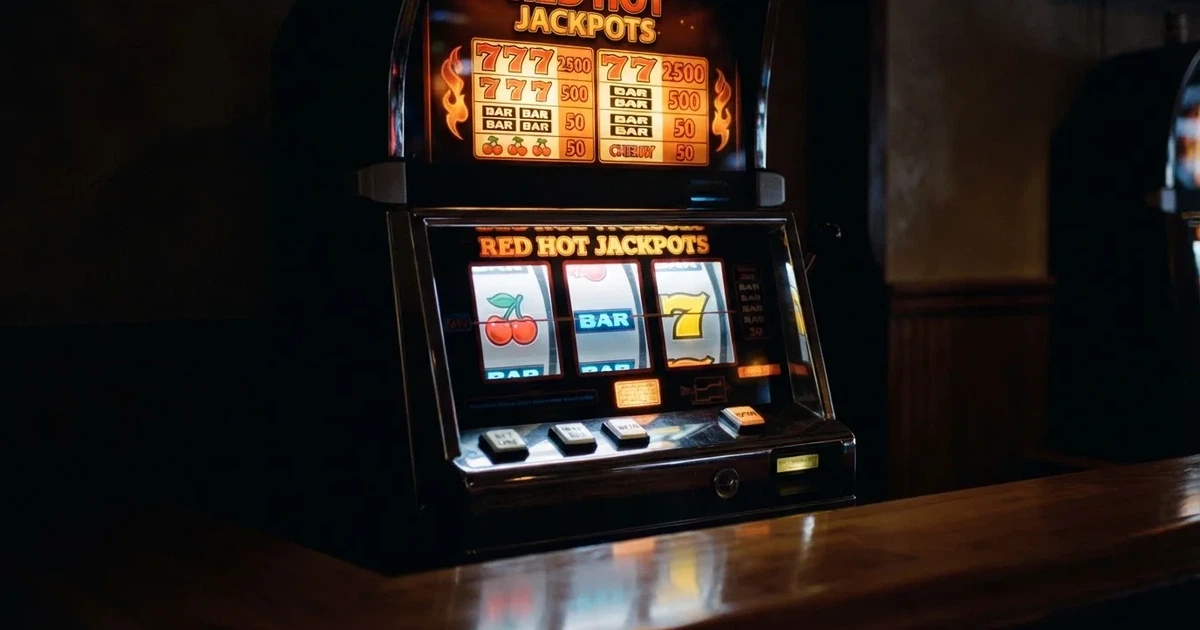
A theoretical return-to-player figure sits on every poker machine in Australia, licensed by the state, stamped on a printed card somewhere on the cabinet. The headline number — 87%, 90%, sometimes a touch higher — is the share of money a machine is set, over the long statistical run, to give back to players. What that figure does and what it does not tell a punter is the work of this page. The marketing around offshore online pokies likes to talk about the number as if it were a guarantee. It is not, and reading the Australian landscape honestly means reading the regulatory split at the same time.
Data current as of 28 October 2026 and checked against the Australian Communications and Media Authority (ACMA) register and state-level gambling regulators.
Table of Contents
- What RTP actually measures on an Australian machine
- Why the offshore “high RTP” pitch reads differently onshore
- Where the ACMA has actually moved
- The licensing line most pages skip
- How offshore sites handle payments, and what that tells the punter
- State-by-state: where the machines actually are
- How a shortlist of high-RTP machines is actually put together
- The operator set the ACMA has acted against
- The blocking rate, and what it tells a punter
- What a punter in Australia can actually do
- Frequently asked questions
What RTP actually measures on an Australian machine
Return-to-player is a long-run statistical average. A machine stamped 90% is set to return A$0.90 across every A$1.00 that flows through it — once enough spins have been played to make the figure meaningful. No single session, and no single evening at the pub, behaves like that average. A machine can pay out heavily for one punter and quietly bleed the next, and both outcomes sit inside a 90% RTP without contradicting it.
The figure is also a floor, not a ceiling. Each Australian state sets a legal minimum RTP below which no licensed venue may set a machine. New South Wales, the Northern Territory, Queensland and most of Victoria sit at 85%; Crown Melbourne at 87%; the Australian Capital Territory and Tasmania at 87%; South Australia at 87.5%; Western Australia at 90%. A venue in any of those states may run a machine above its minimum — Crown Perth, for instance, runs machines that comply with the 90% floor but are otherwise approved by the state’s Gaming and Wagering Commission.

Three things follow. First, two machines stamped at the same percentage do not behave the same way, because the figure is averaged across paylines, bonus rounds and jackpot structures that vary machine to machine. Second, the legal minimum is a ceiling the venue does not have to reach for — a venue may install a machine set to 87.5% inside an 85% jurisdiction. Third, RTP says nothing about volatility: a machine set to 90% with rare large wins and a machine set to 90% with steady small wins are not the same gambling experience.
Why the offshore “high RTP” pitch reads differently onshore
A pokies site registered abroad — Curaçao, Anjouan, Cyprus — will publish RTP figures for each of its games, often sitting at 96% or above. That figure is produced in a jurisdiction the ACMA cannot touch, on a site the IGA already makes it an offence to offer to a person in Australia. The number is real in the sense that it is what the game’s maths file says. It is not real in the sense that a player in Australia can rely on the regulator, the complaints body or the consumer protection that sits behind a New South Wales pub machine.
The contrast is the work of this page. A 90% machine in a Sydney club, governed by Liquor & Gaming NSW, sits inside a system that lets a punter read the paytable, complain to the regulator, and walk into a venue that must abide by the state’s responsible-gambling rules. A 96% game on an offshore site sits inside a system where the regulator is the ACMA for the purposes of blocking, and where the operator’s own licence — if any — is in a country whose consumer protection regime does not reach into Australian bank accounts. The RTP gap between those two machines is real. The protection gap is wider, and it points the other way.
Where the ACMA has actually moved
The Australian Communications and Media Authority does not regulate machines. It regulates the act of offering prohibited interactive gambling services to people in Australia. From November 2019 — when the first blocking request was sent to Australian internet service providers — through to mid-2026, the ACMA’s tally stands at 1,751 illegal gambling and affiliate marketing websites blocked, and more than 230 unlicensed services have left the Australian market since enforcement was strengthened in 2017.
A round reported on 26 June 2026 alone added twelve sites to the blocking list: 7Signs, ChromaBet, Donbet, Duospin, Freshbet, Slots Gem, Jacks Club, Lucky Start, Pointsbetz, Spinrise, Vinyl Casino and Wildsino. Each of those sites was offering online casino games — including online pokies — to Australians, in breach of the Interactive Gambling Act 2001. The ACMA’s tool is the formal warning first, the blocking instruction next; the individual player is not the target of prosecution, but a balance left at a blocked site is unrecoverable in practice.
The breadth of those enforcement actions shows how thin the offshore market is when read honestly. Dama N.V. alone has been the subject of multiple formal warnings — six of its brands in May 2022 (Bambet, Dazard, Level Up, Rocketplay, Wild Tornado and Cobra Casinos), then Woo Casino in March 2025 and Spirit Casino in May 2025. EOD Code SRL received a formal warning over Instant Casino in February 2025. Ryker B.V. was warned in April 2026 over Jackbit and CasinOK. Pulsup Ltd over Rocketplay.com.au in March 2026. Sterplay Holding Ltd over Casino Intense in April 2025. Consolutetish S.R.L. over National Casino and Bizzo Casino in July 2025; Bizzo Casino had already been the subject of a 2022 warning to TechSolutions. Bamboo Media over Ignition Casino in July 2025. Hollycorn N.V. over Sky Crown and Blue Leo in September 2022. Each warning is published by the ACMA and each stands as a public record that the named operator was, at that date, offering prohibited services to Australians.
The licensing line most pages skip
No Australian state or territory licenses an online casino product. What is licensed is wagering on races and sport placed before the event, lotteries and keno. In practice, online bookmakers — including Sportsbet, Bet365 and Ladbrokes — hold their wagering licence through the Northern Territory Racing and Wagering Commission, which regulates 52 online bookmakers from a Territory office with no full-time staff and a monthly meeting in Darwin.
That arrangement is the legal route by which Australians place a licensed online bet. It is not a route for online pokies. A pokies site licensed in Curaçao and showing a Curaçao seal in its footer is not licensed in Australia for casino games, no matter what the seal says. A pokies site that shows a Malta Gaming Authority seal is not licensed in Australia for casino games either. The seal describes the jurisdiction the operator chose to register in; it does not describe Australian approval, because there is no Australian approval to describe.
A separate point sits beside this. The BetStop national self-exclusion register, live since August 2023, binds only Australian-licensed online and phone wagering services. An offshore casino is not connected to it. A punter who registers with BetStop and then signs up to an offshore site the same evening has not self-excluded from the offshore site. The same gap applies to the National Gambling Helpline (1800 858 858) and Gambling Help Online — those supports are Australian services, freely available, and they work for anyone who calls, but the offshore site itself has no obligation to honour a self-exclusion request lodged with the helpline.
How offshore sites handle payments, and what that tells the punter
The credit-card ban that took effect on 11 June 2024 covers licensed Australian online wagering. Credit cards, credit-related products and digital currency are all off the table as a deposit route at a Sportsbet or a Ladbrokes account. The legal deposit routes for a licensed Australian wagering account are debit card, bank transfer, PayID/Osko and BPAY. Penalties for an Australian operator accepting a credit card reach A$247,500.
An offshore site has none of those restrictions. It will accept a credit card, it will accept crypto, it will accept an e-wallet funded from a credit card. The convenience is real, and so is what it tells the punter about which rules the operator is following. A site that asks for a credit card deposit from an Australian punter is operating outside the Australian payment rules, and that is one of the signals — alongside the absence of an Australian licence — that the ACMA has used to identify prohibited services. The credit card on the deposit page is a marker. It says the operator is not playing by Australian rules on this side of the transaction, and it raises the question of what it is doing on the other.
State-by-state: where the machines actually are
Electronic gaming machines operate in every Australian state and territory, but each jurisdiction regulates its own machine count, venue rules and design specifications. The split is wide, and it carries consequences for where a high-RTP machine is most often available.
New South Wales had 87,298 gaming machines outside casinos across 2,195 venues as of June 2023, with player losses of A$8.18 billion in 2022–23. Queensland had 21,122 machines across 351 venues in October 2023. Victoria ran 26,380 machines outside Crown Casino across 488 venues in 2021–22, under a 30,000-machine statewide limit. Western Australia banned poker machines in pubs and clubs when Crown Perth opened in 1985; Crown Perth’s own machine count has grown from roughly 200 in 1985 to roughly 2,500 today, all approved by the state’s Gaming and Wagering Commission.
The Australian numbers in global perspective are sharp. Australia has about 3% of the world’s pub and club poker machines with 0.3% of the global population. In 2020–21 Australians bet almost A$150 billion through gaming machines and lost A$12.18 billion on them. The country is the densest concentration of legal pokies machines per capita in the world, and that fact shapes everything about how a punter reads the RTP figure on a cabinet.
Tasmania is the reform case worth following. The Federal Group held a monopoly licence over all of Tasmania’s poker machines from 1968. Legislation passed in November 2021 ended that monopoly and moved oversight to the Tasmanian Liquor and Gaming Commission. Tasmania planned nation-leading mandatory pre-commitment cards for its poker machines, but implementation of the reform was delayed until late 2025. A punter who plays in Tasmania is sitting inside the only jurisdiction in Australia with mandatory pre-commitment cards on the way — every spin, on every machine, gated by a card that records the punter’s spending in real time.
How a shortlist of high-RTP machines is actually put together
A meaningful comparison of high-RTP pokies starts with the paytable, not the marketing. The paytable is the printed information card on the cabinet, and on licensed Australian machines it must be available to the punter before they sit down. A 90% machine with a small but frequent line-pay structure behaves differently from a 90% machine with a rare but large bonus round, and the paytable tells the punter which kind of machine they are at.
Three filters separate one option from another once the paytable is in hand. First, the legal floor — a Western Australian machine at 90% sits above the floor, while a New South Wales machine at 87% sits four points above its own floor. Second, volatility, which is not printed on the paytable but is implied by the prize structure. Third, the venue’s own rules — some venues operate loyalty programmes that return a small percentage of turnover, which compounds with the machine’s RTP rather than replacing it.
A shortlist built from those three filters is more useful than one built from operator marketing. The marketing-led comparison tends to rank by headline RTP and ignore that two machines stamped at 90% can sit at very different volatility profiles. The paytable-led comparison reads what is actually on the cabinet and asks which machine’s structure the punter’s bankroll can carry.
The operator set the ACMA has acted against
Each brand below is listed because the ACMA itself issued a formal warning over it for offering prohibited services to Australians. The list is not a recommendation and not a ranking. The product they were offering — online casino games, including online pokies — cannot be licensed anywhere in Australia, whatever licence the site displays in its footer.
RocketPlay
The ACMA issued a formal warning to Pulsup Ltd over Rocketplay.com.au in March 2026. An earlier warning had gone to Dama N.V. covering Rocketplay in May 2022, among five other brands. The site offers online casino games to Australians and has done so across two operators of record. A punter reading this is not choosing between RocketPlay and a licensed alternative — they are choosing between RocketPlay and the licensed alternative, and the latter is the only option inside the Australian rules. The verification process RocketPlay runs is also the verification process of an offshore operator outside the Australian consumer protection regime.
Level Up Casino
The ACMA issued a formal warning to Dama N.V. over Level Up Casino in May 2022, as part of the same warning that covered five other brands. Game listings on the wider Dama N.V. network place Level Up alongside titles from BGaming and other studios — the listings exist, but the operator has been on the ACMA’s record for years, and the product it offers remains prohibited under the Interactive Gambling Act 2001. The same reading applies as for RocketPlay: a site the ACMA has warned is not a site a punter in Australia should weigh against a licensed alternative.
Woo Casino
The ACMA issued a formal warning to Dama N.V. over Woo Casino in March 2025, three years after the operator’s first warning in May 2022. Two formal warnings on the same operator of record in three years is the pattern the ACMA’s enforcement has produced — the same operator of record rebranding, relabelling or running a fresh URL while the underlying corporate structure stays put. A punter weighing Woo Casino against a licensed alternative is not weighing like for like, because the licensed alternative has a regulator it answers to and Woo Casino does not.
Spirit Casino
The ACMA issued a formal warning to Dama N.V. over Spirit Casino in May 2025. The same operator of record, the same pattern: an earlier warning in May 2022 over five other brands, then a second warning in 2025 over a sixth. The site’s game catalogue is a marketing catalogue; the regulatory status is what the ACMA record says it is. Punters who want to look up Spirit Casino’s licence should look at the ACMA’s record, not the footer.
National Casino
The ACMA issued a formal warning to Consolutetish S.R.L. over National Casino in July 2025. The wider operator-of-record network has appeared on listings, and the formal warning itself is the regulator’s clearest public signal. Online casino games remain prohibited under the Interactive Gambling Act 2001 regardless of any licence the site displays, and National Casino is among the brands the ACMA has named in writing.
Bizzo Casino
The ACMA issued a formal warning to Consolutetish S.R.L. over Bizzo Casino in July 2025. Bizzo Casino had already been the subject of a 2022 formal warning to TechSolutions (CY) Group Limited and TechSolutions Group N.V., which means the ACMA has named the brand under two different operators of record across three years. Two warnings, two operators of record, one brand. The product is the same. The legal status is the same. The right comparator is not another offshore site — it is the licensed Australian alternatives, which do not include online pokies because that product is prohibited.
Ignition Casino
The ACMA issued a formal warning to Bamboo Media over Ignition Casino in July 2025. Ignition has been among the more recognisable offshore brands operating in the Australian market, and the formal warning puts a public regulator date on its offer to Australian customers. The product it offers is prohibited, the operator has been warned, and a punter reading this is being told what the ACMA’s record says.
Instant Casino
The ACMA issued a formal warning to EOD Code SRL over Instant Casino in February 2025. Instant Casino’s positioning in the offshore market is built around speed of withdrawal and a fast sign-up flow, both of which sit outside the Australian rules for licensed wagering and online casino. The ACMA’s warning in February 2025 places Instant Casino on the regulator’s record for offering prohibited services to Australians.
Jackbit
The ACMA issued a formal warning to Ryker B.V. over Jackbit in April 2026. The same warning covered CasinOK, which is the Ryker B.V. sister brand. Both sites offer online casino games — Jackbit also offers sports betting — to people in Australia. The April 2026 warning is recent, and the ACMA’s blocking tool sits behind the warning. A blocked site with a punter’s balance still on it is a balance the punter has limited practical recourse to recover.
Casino Intense
The ACMA issued a formal warning to Sterplay Holding Ltd over Casino Intense in April 2025. The wider record on Casino Intense also touches other Australian coverage, and the ACMA’s formal warning is the regulator’s clearest statement that the site has offered prohibited services to Australians. The product remains prohibited; the operator has been warned.
Sky Crown
The ACMA issued a formal warning to Hollycorn N.V. over Sky Crown and Blue Leo in September 2022. Sky Crown has been on the regulator’s record for nearly four years at this point, and the formal warning sits alongside the ACMA’s record of blocking actions against Hollycorn’s other properties. The site offers online casino games to Australians in breach of the Interactive Gambling Act 2001.
The blocking rate, and what it tells a punter
The arithmetic that belongs to this page is the blocking rate itself. The first ACMA blocking request was sent in November 2019. As of the round reported on 26 June 2026, a total of 1,751 illegal gambling and affiliate marketing websites had been blocked. That is the running total. The rate is the figure that carries information for the reader.
Doing the arithmetic over the elapsed time: roughly 80 months of blocking activity have produced 1,751 blocked sites, which works out to an average of around 22 blocked sites per month across the whole programme. The pace is uneven — the June 2026 round alone blocked twelve, and earlier rounds have blocked more or fewer depending on the ACMA’s enforcement priorities — but the long-run rate of around 22 blocked sites per month is the figure a punter can carry forward.
That rate is also a marker for the volume of the offshore market. If the ACMA is averaging 22 blocked sites per month and the offshore market keeps producing new URLs, new operators of record and new affiliate pages, the long-run rate is roughly what the ACMA can shut down per month — not a rate that will end the offshore market, and not a rate that will let it grow unchecked. The right reading is in the middle. The ACMA is removing a steady flow of prohibited offers. New ones keep appearing. The punter’s practical protection is what the regulator can keep up with, and the rate tells them what that is.
What a punter in Australia can actually do
Three routes sit inside the Australian rules, and only three. First, play land-based pokies at a licensed venue — a pub, club or casino under the relevant state or territory regulator, on machines stamped with a legal minimum RTP of 85%, 87%, 87.5% or 90% depending on the jurisdiction. Second, place a licensed wager on races or sport before the event through a Northern Territory-licensed bookmaker, paying by debit card, bank transfer, PayID/Osko or BPAY. Third, do neither, and read the page for what it tells a punter who is weighing the figures.
The offshore routes are not inside the rules. A site offering online pokies to Australians is offering a prohibited service; the ACMA has formal-warned dozens of them, blocked thousands, and the credit-card ban and crypto ban that apply to licensed Australian wagering have no parallel on the offshore side. The “high RTP” figure on the offshore site’s game card is one input. The regulatory status of the site offering it is the other input that matters more.
For a punter who has signed up with an offshore site and wants to stop, BetStop (live since August 2023) covers Australian-licensed wagering services and does not cover offshore casinos. The National Gambling Helpline (1800 858 858) is free, available 24/7, with chat at Gambling Help Online. State-level self-exclusion registers — Victoria, New South Wales, the Northern Territory — cover land-based venues and differ in scope. Tasmania’s mandatory pre-commitment cards are the most consequential reform in the country and are due for full implementation in late 2025.
Frequently asked questions
What counts as a ‘high’ RTP figure on an Australian pokies machine?
On licensed Australian machines the legal minimum RTP sits between 85% and 90% depending on the state, so anything stamped at or above 90% in Western Australia, or at the upper end of the 85%–87.5% range in other states, sits at or above its own jurisdiction’s floor. Offshore sites regularly publish 96% and above; those figures are real for the game’s maths file but the site itself sits outside the Australian regulatory frame.
Is RTP the same thing as the chance of winning on any single spin?
No. RTP is a long-run statistical average across many spins, not a per-spin probability. A machine stamped at 90% can pay out heavily on one session and bleed the next, and both outcomes are consistent with the figure. The published percentage only stabilises as the number of spins grows large.
Where is a pokies machine’s RTP figure legally required to be disclosed in Australia?
State regulators require licensed venues to make the paytable — and the RTP figure within it — available to the punter. The printed card on the cabinet is the standard disclosure. Where a venue operates loyalty programmes or progressive jackpots that change the effective RTP, those details sit in the venue’s own materials rather than on the cabinet itself.
Can a venue change a machine’s RTP setting after it’s installed?
A licensed venue operates inside the state’s regulator, and any change to a machine’s settings requires approval under the relevant state or territory rules. A venue cannot quietly move a machine from 87% to 85% to widen its margin; the regulator’s approval sits between the venue and the change. Offshore sites, by contrast, can and do change RTP settings without a comparable regulator in the loop.
Does a high RTP figure mean smaller or larger individual wins?
Not directly. RTP and volatility are different properties. A 90% machine with rare large wins behaves differently from a 90% machine with steady small wins, even though both return the same percentage in the long run. The paytable, not the RTP figure, tells the punter which kind of machine they are at.
How does the number of pokies machines vary between Australian states?
New South Wales runs the largest concentration outside casinos, with 87,298 machines across 2,195 venues as of June 2023. Victoria runs 26,380 machines outside Crown Casino under a 30,000 statewide limit. Queensland runs 21,122 machines across 351 venues as of October 2023. Western Australia runs them only at Crown Perth, with roughly 2,500 machines approved by the state’s Gaming and Wagering Commission.