
Big Red-style pokies in Australia: the licensed floor, the prohibition, and the offshore sites still chasing you
The first thing to settle is the one most pages on this subject fudge: no online casino or online pokie can be legally supplied to a person in Australia. That includes anything carrying the Big Red name or anything modelled on its outback theme. The machines themselves are everywhere on the licensed floor — pubs, clubs and the two casino resorts — and the regulator has spent the past several years actively blocking offshore sites that advertise an online version of the same theme. So the question this page answers is not where to play Big Red online; it is what the prohibition costs a punter who sees the ads, what the legal floor looks like, and which offshore brands have already attracted a formal warning from the ACMA for offering it.
Data current as of 28 October 2026, checked against the ACMA register and the public blocking record.
Table of Contents
- The cluster that matters first: keeping someone out of trouble while they read this
- The Aristocrat Big Red theme and what the page is actually about
- The legal frame: prohibition, enforcement, and the cost of an offshore account
- What the licensed floor looks like, and where the same theme sits
- How the offshore shortlist is actually built, and what it shows
- The blocking rate: how the campaign has actually moved
- The cluster that earns its place at the end: the live-dealer and table-game comparison
- The economic comparison that sits underneath the legal frame
- The verdict the page owes each reader
- Frequently asked questions
The cluster that matters first: keeping someone out of trouble while they read this
Responsible-gambling support is not an afterthought on this page — it sits at the front because the subject of this page, a prohibited online product actively advertised offshore, is exactly the one that lands hardest on people already playing too much. The cluster below is short, deliberate, and aimed at a punter who has come here because they saw a Big Red ad and wants to know whether to click it.

Gambling Help Online runs the National Gambling Helpline on 1800 858 858, free and twenty-four hours a day, with webchat at gamblinghelponline.org.au. It is the one number to remember; it covers counselling, financial counselling and self-exclusion support for any Australian, regardless of which state or territory they live in. BetStop, the National Self-Exclusion Register, has been live since August 2023 — it binds every Australian-licensed online and phone wagering service, which means a sports or racing account can be closed off in one step. It does not bind an offshore casino, because offshore casinos are not part of the Australian regime. If a player is using BetStop because they want to stop gambling and then opens an offshore account, the self-exclusion does not follow them across the border. That gap is the most consequential single fact on this page, and it is the reason the prohibition matters — a self-excluded Australian can still be marketed to, accepted and drained by a site that has no Australian licence.
State and territory self-exclusion registers add further protection on the licensed floor. New South Wales, Victoria, Queensland, South Australia, the Northern Territory, the ACT and Western Australia each run their own venue-based exclusion scheme, with bars that run from one venue’s gaming floor to every pub and club in the state. Tasmania’s scheme is being tightened further by the mandatory pre-commitment cards that were scheduled to begin in late 2025 — a punter sets a limit before they sit down at the machine, and the machine enforces it. The card exists because the harm that pre-commitment is meant to address is the same harm offshore sites exploit when they reach Australians with no limit at all.
The practical step for a reader who has landed here because an ad pulled them in is this: do not register with the offshore site, do not deposit, and if the appeal is driven by a streak of losses or a session that has already run longer than intended, call 1800 858 858 before doing anything else. The offshore site will not ask the question that an Australian venue operator is required to ask, and there is no Australian complaints body on the other end of a withdrawal dispute. The page that follows describes why.
The Aristocrat Big Red theme and what the page is actually about
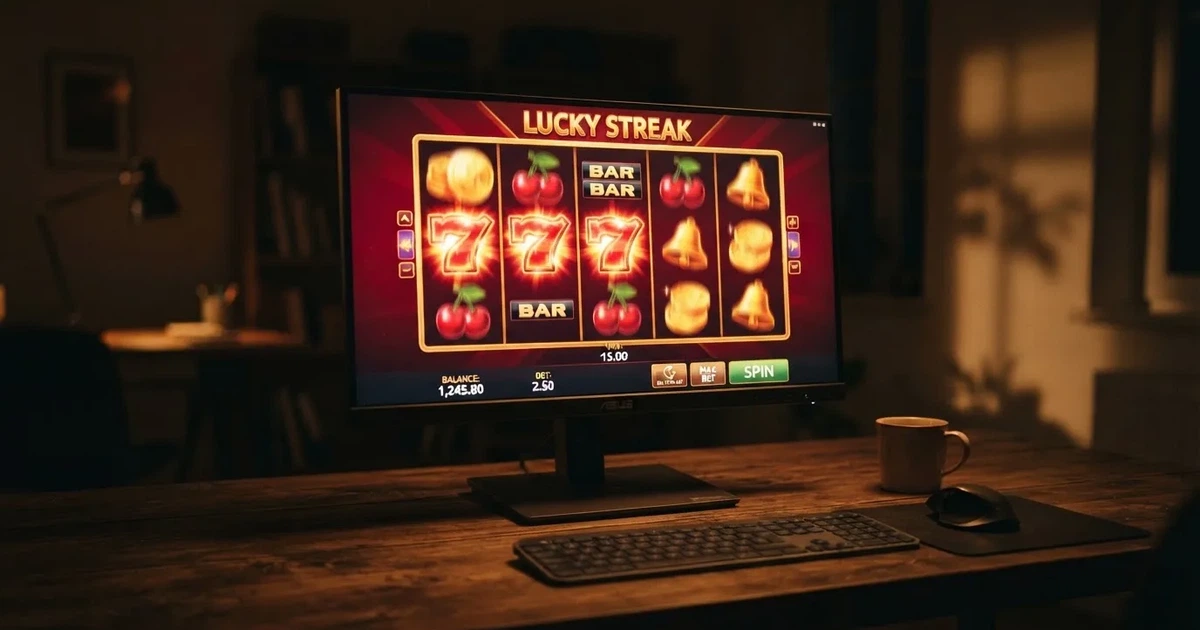
Big Red is the Aristocrat Leisure Limited pokie theme that sits in almost every Australian pub and club — the outback motif with kangaroos, dingoes, warthogs, the dog-sledding wild and the tree-scatter bonus, on a five-reel format. The page is about an online version of the same theme. The honest answer is that there is no online version lawfully on offer to an Australian player, and that the theme’s history is entirely onshore.
Aristocrat Leisure Limited is an Australian-listed gaming machine manufacturer whose products dominate the licensed pub, club and casino floor in Australia. Big Red itself dates from the late 1990s as one of a wave of regionally themed Aristocrat pokies that licensed venues adopted heavily, and the title remains a fixture on the floor of pubs and clubs from Cairns to Hobart. The reason the theme keeps showing up in offshore advertising is precisely the reason it keeps showing up in Australian pubs: Australians recognise it, and recognition sells spins, on a licensed floor or off it.
The mechanics of the Big Red theme are worth describing because they are what an offshore clone usually imitates, badly. The base game is a five-reel, three-row pokie with the standard Aristocrat payline structure; the kangaroo and dingo are the high-value animal symbols, the warthog and the pelican sit lower, and the acacia-tree scatter is the trigger for the free-spins feature. The dog on a sled is the wild. The free-spins round, which the acacia scatter unlocks, is where the bulk of the feature payout sits, and where the volatility of the game is concentrated. Players who only ever see the base game are seeing a different game from the one the paytable is built around.
The reason an online version is not legal in Australia is not a quirk of licensing — it is the central prohibition of the Interactive Gambling Act 2001, strengthened by the Interactive Gambling Amendment Act 2017. Online casino games and online pokies are prohibited interactive gambling services; the prohibition is on the provider, not the player, and no state or territory has been permitted to license what the federal statute prohibits. The licensed floor that Big Red sits on is regulated entirely at state and territory level, and that separation — federal prohibition online, state licensing offline — is the architecture the page is built around.
The legal frame: prohibition, enforcement, and the cost of an offshore account
The legal cluster carries the heaviest single point on the page, because every operator block further down turns on it. The cluster also carries the most weight on the reader, because the cost of an offshore account is rarely what an offshore site advertises.
The Interactive Gambling Act 2001 makes it an offence to provide a prohibited interactive gambling service to a person in Australia. The 2017 amendments sharpened that prohibition and gave the Australian Communications and Media Authority the enforcement tools that have shaped the offshore market since. What the IGA does not do is prosecute the player — the offence is the provider’s — and that detail matters for how this page reads. The reader is not at risk of criminal prosecution for opening an offshore account; the reader is at risk of every other harm that the prohibition exists to prevent, because the offshore site is not bound by any of the rules an Australian venue operator is bound by.
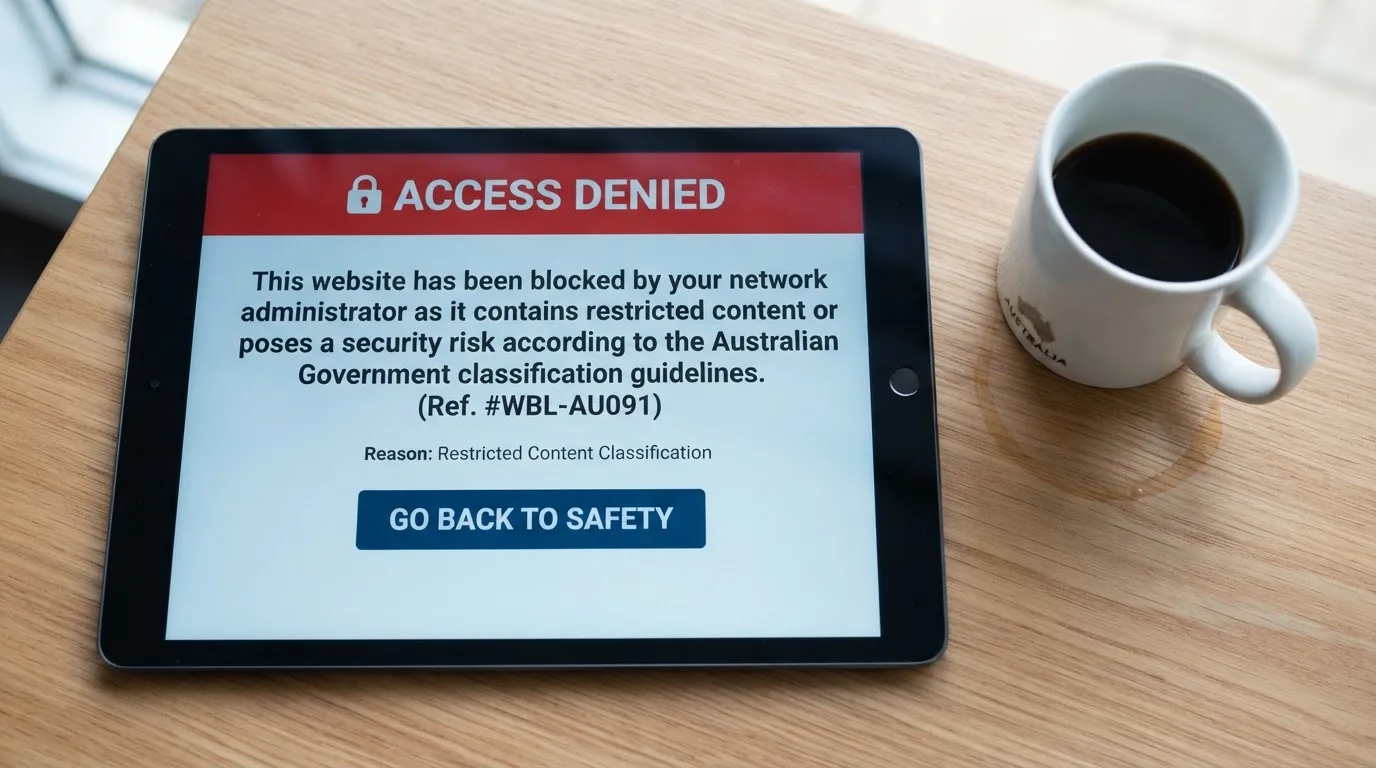
The ACMA’s enforcement work runs on three rails: formal warnings, which name the operator and the brand and put the brand on the public record; requests to Australian internet service providers to block access, which the ISPs implement at the DNS level; and referrals to international regulators, which sit behind the public action and rarely surface in the news. The blocking request is the action with the most visible cost to a punter — once a site is blocked, an Australian player cannot reach it through a normal Australian ISP, and a balance held with the site when the block lands can become effectively unrecoverable, because there is no Australian complaints body the punter can take the dispute to.
What the ACMA has actually done over the past few years is documented in its own formal-warning register. The brands further down this page are the ones the register names, and the register is the source for every date in every operator block. Each warning is a public record; each one names the company the ACMA believes is providing the service to Australians; and each one is followed, typically weeks or months later, by either a blocking request or a quiet departure of the brand from the Australian market. The register is the single most useful public document on this subject, because it is the document the offshore sites themselves do not link to.
The June 2026 blocking round is the most recent large action on the public record, reported on 26 June 2026: the ACMA asked Australian ISPs to block 12 more sites in a single batch, taking the running total of blocked illegal gambling and affiliate marketing websites to 1,751 since the first blocking request in November 2019. More than 230 unlicensed services have left the Australian market since enforcement was strengthened in 2017. Those are the figures to keep beside any individual brand warning: a single warning is one event in a sustained campaign, and the campaign has been running for nearly a decade.
The economic scale of what the prohibition is policing comes from H2 Gambling Capital’s 2025 estimate that Australians lose about A$3.9 billion a year to illegal gambling sites, with the share of gambling that goes through legal channels falling from 74% in 2021 to 64%. The shift is not because Australians are gambling less — the legal-channel figures elsewhere on this page show otherwise — it is because the offshore offer has grown faster than the enforcement response. The licensed floor takes the rest of the A$150 billion a year that moves through Australian gaming machines, and the bulk of the player losses on the licensed side are on the same kind of machine the offshore sites advertise.
What changes if a reader uses an offshore site anyway? The site has no Australian consumer protection, no Australian complaints body, and no obligation to pay out a winning spin. The credit-card ban that took effect on 11 June 2024 across all Australian-licensed wagering applies to debit cards, bank transfer, PayID, Osko and BPAY; an offshore site asking for a credit card or a crypto deposit is asking because it is operating outside the Australian rules, and the deposit itself is the moment the reader steps outside the protections the licensed system provides. The licensed floor has a complaints body in every state and territory, a venue exclusion scheme, and a regulator who can compel a payout; the offshore site has none of these, and the only Australian authority that can touch it is the ACMA, whose tool is to block it, not to arbitrate a dispute.
What the licensed floor looks like, and where the same theme sits
The licensed floor is the subject of the next cluster, because it is the only place in Australia a punter can actually sit down with a Big Red-style pokie. The page does not review specific licensed venues — there are too many, and the licensed floor is regulated state by state, not by a single national body — but the shape of it sets the comparison the rest of the page is built against.
Poker machines operate in every Australian state and territory, and each jurisdiction separately regulates their design, the maximum number per venue, the return-to-player floor, and the harm-minimisation settings. The federal layer does not run the floor; the federal layer prohibits the online version of it. The split is what makes a national comparison hard, and what makes a state-by-state table the right format.
New South Wales carries the largest concentration by a wide margin: 87,298 gaming machines outside casinos across 2,195 venues in June 2023, with player losses on those machines of A$8.18 billion in 2022–23. Queensland had 21,122 machines across 351 venues in October 2023. Victoria had 26,380 machines outside Crown Casino across 488 venues in 2021–22, under a 30,000-machine statewide cap. Western Australia banned poker machines in pubs and clubs when Crown Perth opened in 1985; the casino’s own machine count grew from about 200 in 1985 to roughly 2,500, all approved by the state’s Gaming and Wagering Commission. Tasmania ran a single-operator monopoly from 1968 until November 2021, when legislation moved oversight to the Tasmanian Liquor and Gaming Commission and opened the door to competing operators. Registered clubs operated Australia’s first legal poker machines from 1956, in New South Wales.
The minimum return-to-player for a poker machine varies by jurisdiction, and the variation matters because the offshore version of a Big Red-style game has no such floor. New South Wales, the Northern Territory, Queensland and (generally) Victoria set 85% as the minimum, with 87% at Crown Melbourne under concession. The ACT and Tasmania set 87%. South Australia sets 87.5%. Western Australia sets 90%. The licensed floor is not a single machine with a single RTP; it is eight different floors, each of which is a state government decision, and each of which constrains what the machines on that floor pay back over time. An offshore clone of Big Red sits above none of these floors.
The size of the licensed market is the second-order point that explains why offshore advertising works at all. In 2020–21 Australians bet almost A$150 billion through gaming machines and lost A$12.18 billion on them; Australia has about 3% of the world’s pub and club poker machines with 0.3% of the global population. The licensed market is concentrated, big, and well-known to offshore operators. The same scale is what makes the prohibition economically significant — A$3.9 billion a year to illegal sites is roughly a third of what the licensed floor takes on pokies alone, and the ACMA’s blocking record is the response to that scale.
How the offshore shortlist is actually built, and what it shows
The list of brands on this page is not a ranking. No bonus terms are reviewed and no brand is recommended, because the only sources for offer terms were affiliate marketing pages. What the list does is publish the ACMA’s own list of brands it has formally warned over offering prohibited online casino services to Australians, and let the reader compare what the regulator has done and when.
The eleven brands below all carry an ACMA formal warning under the Interactive Gambling Act 2001. The date and the operator name are the ACMA’s own, taken from the formal-warning register. Each block also names the kind of “Big Red” support the brand claims to carry, which is the only subject-specific fact that matters on a page about this theme — the subject of the page is whether the brand offers a Big Red-style online pokie, and the answer in every case is some version of “yes, listings say so” or “no public data” or “we cannot say because we did not find the listing”.
A landscape table of the eleven brands sits below the operator write-ups so the dates and the operator names can be read at a glance. The columns are the ones the spec names: brand, ACMA action and date, operator named by the ACMA, and the level of subject support the brand claims. The subject-support column carries the article-language marker for “no public data” where the research found nothing, and a clear “listings report” line where the research found a listing but no payment or live-deal data.
| Brand | ACMA action and date | Operator named by the ACMA | Subject support |
|---|---|---|---|
| RocketPlay | Formal warning, March 2026 (Pulsup Ltd); earlier Dama N.V. warning May 2022 | Pulsup Ltd | No public data |
| Level Up Casino | Formal warning, May 2022 | Dama N.V. | Listings report a Big Red-style pokie (Bgaming.com catalogue) |
| Woo Casino | Formal warning, March 2025 | Dama N.V. | No public data |
| Spirit Casino | Formal warning, May 2025 | Dama N.V. | No public data |
| National Casino | Formal warning, July 2025 | Consolutetish S.R.L. | Listings report a Big Red-style pokie |
| Bizzo Casino | Formal warning, July 2025; earlier 2022 warning to TechSolutions | Consolutetish S.R.L. | No public data |
| Ignition Casino | Formal warning, July 2025 | Bamboo Media | No public data |
| Instant Casino | Formal warning, February 2025 | EOD Code SRL | No public data |
| Jackbit | Formal warning, April 2026 | Ryker B.V. | No public data |
| Casino Intense | Formal warning, April 2025 | Sterplay Holding Ltd | Listings report a Big Red-style pokie |
| Sky Crown | Formal warning, September 2022 | Hollycorn N.V. | No public data |
The table is a record of action, not a comparison of merit. Two observations are worth drawing from it without going past what the table can support. First, the same operators recur: Dama N.V. carries four of the eleven warnings, under three different brand families, across four years. A warning to one Dama N.V. brand is, in practice, a warning to a stable of brands, and the formal-warning register treats each brand as a separate event. Second, the cadence is steady: there is at least one fresh ACMA formal warning in every one of the past five calendar years, and the most recent (Pulsup Ltd over Rocketplay, March 2026; Ryker B.V. over Jackbit and CasinOK, April 2026) lands within weeks of the June 2026 blocking round that took the running total of blocked sites to 1,751. The list grows because the behaviour continues, not because a single brand has been singled out.
The “Subject support” column is the one that needs a careful read. Three brands carry a line that says listings report a Big Red-style pokie; the other eight carry a “no public data” marker. The honest reading is that none of these listings can be verified against an Australian licence, because there is no Australian licence for what the listings describe. The column records what third-party catalogues and aggregator pages claim each brand offers, which is useful only as a signal that the brand is using the Big Red theme to attract Australian traffic. The column is not a green light to play.
RocketPlay
RocketPlay carries the freshest ACMA formal warning on this list. In March 2026 the ACMA warned Pulsup Ltd over Rocketplay.com.au, which is a separate operator entry from the earlier May 2022 warning to Dama N.V. — the ACMA’s register treats the two as distinct events, and they are listed as such in the table above. The site offers online casino games, which are a prohibited interactive gambling service for Australians under the IGA. Research did not surface a public listing confirming whether RocketPlay currently advertises a Big Red-style pokie, and the no-public-data marker is the honest line. The brand’s relevance on this page is the warning itself: an Australian reader looking at RocketPlay in 2026 is looking at a site the regulator has just named for doing exactly the thing this page is about. The site’s own claims of offshore licensing are not an answer to a formal warning — the IGA prohibits the supply, not the licence the supply sits under.
Level Up Casino
Level Up Casino is one of four Dama N.V. brands on the list and the earliest of the four. The May 2022 formal warning covered six Dama N.V. brands in a single notice — Bambet, Dazard, Level Up, Rocketplay, Wild Tornado and Cobra Casinos — and the table above names the date once and the brand on the relevant row. Level Up is the brand in the catalogue at Bgaming.com that is most often named in connection with an Aristocrat-style pokie line; the subject-support column reflects what those listings report, not what Level Up itself states. The Dama N.V. recurrence is the operational point: a single Curaçao-incorporated operator carrying multiple brand names is a common offshore structure, and the ACMA’s enforcement action takes the operator as the unit, with the brands as the surfaces the operator runs them on. A reader looking at Level Up in 2026 is looking at a brand whose operating company the ACMA named in 2022 and has continued to name in subsequent warnings.
Woo Casino
Woo Casino’s formal warning landed in March 2025 and was issued to Dama N.V. — the same operating company as Level Up, Spirit Casino and the earlier Rocketplay entry, and one of the most warned operators in the ACMA register over the past five years. The site carries online casino games and live-dealer tables to an international audience, and the warning is for offering them to Australians. Research did not surface a Big Red-specific listing for Woo Casino; see the table for a summary of subject support. The brand is on this page because the ACMA’s record is the record, and the reader can use the date in the table above to read the warning alongside the brand’s own marketing. The four-year gap between the May 2022 Dama N.V. warning and the March 2025 Woo Casino warning is the gap the ACMA’s blocking campaign sits inside.
Spirit Casino
Spirit Casino’s formal warning landed in May 2025, again to Dama N.V., two months after the Woo Casino warning. The two Dama N.V. warnings in 2025 — Woo Casino in March, Spirit Casino in May — are a single enforcement tempo against a single operating company, and the table above records them as two distinct events because the ACMA’s register records two distinct events. Research did not surface a Big Red-specific listing for Spirit Casino, and the no-public-data marker is the right line in the subject-support column. The brand’s relevance on this page is the cumulative weight of Dama N.V.’s record, which is now four formal warnings across four years, and the implication for a reader looking at any Dama N.V. brand in 2026.
National Casino
National Casino’s formal warning landed in July 2025 and was issued to Consolutetish S.R.L. — an operating company that also carries the Bizzo Casino warning from the same month, and that the ACMA’s register treats as distinct events for two distinct brands. The subject-support column for National Casino carries a listings-report line, because third-party aggregator pages place a Big Red-style pokie on the brand’s catalogue. The listing is what an Australian punter would see if they searched for the theme; the warning is what the ACMA has done about the brand offering it. Both facts sit on the same row.
Bizzo Casino
Bizzo Casino’s formal warning is the only one on the list that pairs a recent ACMA action with an earlier one to a different operator under the same brand. The July 2025 warning to Consolutetish S.R.L. over Bizzo Casino sits alongside a 2022 formal warning to TechSolutions (CY) Group Limited and TechSolutions Group N.V. over the same brand — the brand name carries two operators across the ACMA’s record, and the brand itself has been on the regulator’s list under two different corporate parents. The brand is one of the longer-running Big Red-style listings in offshore catalogues, which is the reason it is named alongside National Casino. Research did not surface a current listing that distinguishes the brand’s current operator cleanly; see the table for a summary of subject support.
Ignition Casino
Ignition Casino’s formal warning landed in July 2025 and was issued to Bamboo Media. The brand has a long offshore history, originally oriented toward the US market, and the ACMA’s action is for offering prohibited online casino games to Australians. Research did not surface a Big Red-specific listing for Ignition Casino, and the no-public-data marker is the right line. The brand is on this page because it carries a 2025 formal warning over an offering the page’s reader is likely to see if they search for an online version of any Aristocrat theme, not because the brand itself is the most relevant to a Big Red search.
Instant Casino
Instant Casino’s formal warning landed in February 2025 and was issued to EOD Code SRL. The brand has been heavily advertised through affiliate channels targeting European and Latin American audiences, and the ACMA’s action is for offering prohibited services to Australians. The subject-support column carries the no-public-data marker; research did not surface a current Big Red listing on Instant Casino’s catalogue. The brand’s role on this page is the speed of the ACMA’s response: the warning is one of the earlier entries in the 2025 enforcement round, and the operator (EOD Code SRL) is named once in the ACMA’s register.
Jackbit
Jackbit’s formal warning landed in April 2026 and was issued to Ryker B.V. The same April 2026 formal warning also covers CasinOK, another Ryker B.V. brand; the ACMA treats them as two entries. The April 2026 action is one of the most recent on the public record, and pairs with the March 2026 Pulsup Ltd warning over Rocketplay to make the early-2026 enforcement cadence visible on this page. The subject-support column carries the no-public-data marker. The brand is on this page because it is one of the freshest formal warnings an Australian reader will see if they look for a Big Red-style game through an offshore site.
Casino Intense
Casino Intense’s formal warning landed in April 2025 and was issued to Sterplay Holding Ltd. The brand’s catalogue includes Aristocrat-style pokie listings on third-party aggregator pages, which is what the subject-support column records. Casino Intense is the third of the three brands on this page whose catalogue is documented on aggregator pages as offering a Big Red-style pokie, alongside Level Up Casino and National Casino. The April 2025 date sits between the early-2025 EOD Code SRL warning and the mid-2025 Dama N.V. warnings, and is part of the same enforcement round.
Sky Crown
Sky Crown’s formal warning was issued to Hollycorn N.V., and is the longest-standing warning on this list — the ACMA’s PDF for the Sky Crown and Blue Leo warning dates to September 2022. Hollycorn N.V. is the operating company behind both Sky Crown and Blue Leo, both named in the same formal warning. The subject-support column carries the no-public-data marker. Sky Crown’s role on this page is the age of the warning: a 2022 warning still on the register in 2026, with no recorded withdrawal, is the most basic signal that the ACMA’s enforcement record outlasts the offshore marketing cycle.
The blocking rate: how the campaign has actually moved
The blocking rate is the only quantitative measure the ACMA’s own record supports, and it is the one number a reader can update against the next public round. The inputs are the running total of 1,751 blocked sites, the date of the first blocking request in November 2019, and the June 2026 reporting date. The rate is the page’s measure of how fast the prohibition has been enforced in practice, and the page carries it as a band rather than a single figure because the cadence has been uneven — quiet months, then a large batch.
Over the roughly 81 months between November 2019 and June 2026, 1,751 sites were blocked. That works out to an average of around 21 to 22 sites blocked per month across the full period, with the cadence varying sharply: the early years saw single-site blocking requests as the ACMA built the legal scaffolding, and the 2024–2026 rounds saw twelve-site batches landing in a single day. The band on the page is therefore around 20 sites per month on the long-run average, with the recent batch rate sitting much higher and the early-period rate sitting lower. The single figure to keep in mind is the long-run average; the recent cadence is the figure to watch for the next round.
The arithmetic belongs on this page because the blocking rate is the only quantitative measure the ACMA’s own record supports, and it is the one number a reader can update against the next public round. A reader looking at the eleven brands above can place each brand in the campaign’s timeline by the formal-warning date: the September 2022 Hollycorn warning sits in the early period of the campaign, the May 2022 Dama N.V. warning sits at the same point, and the March 2026 and April 2026 warnings sit at the most recent end. The blocking total is the cumulative sum of the campaign that the warnings sit inside.
The cluster that earns its place at the end: the live-dealer and table-game comparison
The fourth cluster the plan closes is the one most pages on this subject skip, because the live-dealer and table-game shelves feel irrelevant to a pokie-themed page. They are not irrelevant on this page, because the offshore sites that carry Big Red-style pokies carry live-dealer tables as well, and the table-game offer is the second surface an Australian punter will see if they click through. The cluster also lets the page close the baccarat and blackjack figures that the licensed floor is built around, without recommending play.
Live-dealer tables at offshore casinos are typically baccarat, blackjack and roulette, streamed from a studio, with a real dealer on camera and a digital interface for the bets. The game engines are not the licensed Australian floor; the cameras are not on the licensed Australian floor; the regulation is not the licensed Australian regulation. A punter who sits down at a live baccarat table on an offshore site is playing a game that is prohibited to be supplied to Australians under the IGA, and the rules the dealer works to are the studio’s own rules.
Baccarat’s house edge under punto banco rules — the variant most played today, developed in Havana during the 1940s and dealt from a shoe of six or eight decks — is 1.06% on the Banker bet, 1.24% on the Player bet, and 14.36% on the Tie. Cards two through nine count at face value, ten and the face cards count as zero, and aces count as one, with hand totals taken modulo 10. Crown Melbourne offers three baccarat variants — Traditional Baccarat, Crown Baccarat and 2 to 1 Baccarat — as approved table games regulated by the Victorian Gambling and Casino Control Commission, which replaced the VCGLR as Victoria’s casino regulator on 1 July 2022. Under section 66 of the NSW Casino Control Act 1992, a casino operator must not permit a game such as baccarat to be played unless the game and its rules are approved by the regulator, and the operator must make a copy of the approved rules available on request. The licensed floor’s rules are the rules the regulator has approved; the offshore studio’s rules are the studio’s own.
Blackjack’s optimal-play house edge is about 0.28% under liberal Las Vegas Strip rules — dealer stands on soft 17, double on any two cards, double after split, resplit aces, late surrender — and about 0.43% under Atlantic City rules. The game itself descends from the English vingt-un, with the Spanish veintiuno described in Cervantes’ Rinconete y Cortadillo around 1601–1602 and formal rules published in Britain in 1800; card historian Thierry Depaulis places the renaming to “blackjack” around 1899, with Klondike prospectors of 1896–99 credited with the modern name. The licensed Australian variants differ across states, but the offshore variants — Spanish 21 without the tens, Double Exposure with both dealer cards up, Blackjack Switch with the swap, Super Fun 21 with up to four splits — are not on the licensed floor at all.
The cluster earns its place on the page because it gives the reader a concrete alternative if what they actually want is a live table game rather than a pokie. The licensed floor offers baccarat and blackjack under regulator-approved rules, with a complaints body and a payout obligation. The offshore site offers the same game names under studio rules, with no Australian complaints body and no payout obligation. The mechanical differences are smaller than the regulatory differences, and the regulatory differences are what matter.
The economic comparison that sits underneath the legal frame
The licensed floor’s economic scale is the second figure to keep on the page. Australians bet almost A$150 billion through gaming machines in 2020–21 and lost A$12.18 billion on them; the A$3.9 billion a year lost to illegal sites is roughly a third of that licensed loss, and the shift from 74% of gambling going through legal channels in 2021 to 64% in 2025 is the change the ACMA’s blocking campaign is trying to reverse. The licensed floor is the bulk of the market, the offshore sites are the slice the prohibition is policing, and the comparison is the page’s measure of what the prohibition is doing.
New South Wales alone carries player losses of A$8.18 billion on poker machines in 2022–23 — about two-thirds of the national machine loss total. Queensland’s 21,122 machines across 351 venues, Victoria’s 26,380 machines outside Crown Casino across 488 venues, and Western Australia’s Crown Perth machine count of roughly 2,500 are the other large concentrations. The licensed floor is geographically uneven, regulatorily uneven, and economically dominant, and the offshore offer sits alongside it because the geographic and regulatory gaps are where the marketing finds room.
The licensed floor is not a perfect consumer experience — the harm-minimisation settings vary by jurisdiction, the mandatory pre-commitment cards in Tasmania are still being implemented, and the credit-card ban that took effect on 11 June 2024 across all licensed wagering is a sign the regime is tightening rather than loosening. But the licensed floor is the only Australian surface on which a player has a regulator, a complaints body, and a payout obligation, and that is the surface the offshore sites are competing against by circumventing the prohibition entirely.
The verdict the page owes each reader
The page closes with the verdict each operator’s write-up was set up to earn. None of the eleven brands above is a place an Australian should play. The reason is the same in every case, and the reason is the prohibition: no online casino game can be lawfully supplied to a person in Australia, whatever licence the site displays or what catalogue it offers. The brands on the list differ in the date of the ACMA warning, in the operating company the ACMA named, and in whether third-party catalogues currently list a Big Red-style pokie on the brand — but the prohibition is the prohibition in every row, and the reader’s verdict is the same in every row.
The reader who arrived at this page because an offshore ad pulled them in has the clearer verdict. The site they were about to click is, with overwhelming probability, on the ACMA’s formal-warning register, on its blocking list, or on both. The balance they were about to deposit would have been at risk the day the next blocking request landed, because there is no Australian complaints body to take a dispute to once the site is unreachable. The deposit method the site asked for would have been one the licensed system does not allow, because the licensed system has spent the past two years tightening exactly the deposit channels the offshore sites use.
The reader who arrived at this page because they wanted to know whether the Big Red theme is on a licensed venue floor has a different verdict. The theme is on the floor, in pubs and clubs in every state and territory except Western Australia’s pubs and clubs, and on the casino floor at Crown Melbourne and Crown Perth. The theme is the same theme the offshore sites imitate. The mechanism on the licensed floor sits inside the regulator-approved paytable; the mechanism on the offshore site sits inside a studio’s own paytable. The reader’s choice is between two products with the same name and very different protections, and this page is built around that choice.
The reader who arrived at this page because they are already playing too much has the third verdict. The offshore site is the worst place to keep playing, because the offshore site has no exclusion register to bind it, no pre-commitment card to limit the session, and no helpline prompt on the cashier page. The licensed floor has all of these in some form, and Gambling Help Online at 1800 858 858 is free, twenty-four hours a day, and outside any single jurisdiction. The reader’s verdict is to stop at the offshore site and to make the call before the next session.
Frequently asked questions
What style of pokies theme does “Big Red” usually refer to?
“Big Red” is the Aristocrat Leisure Limited outback-themed pokie: a five-reel game with kangaroos, dingoes and warthogs on the high pays, an acacia-tree scatter that triggers the free-spins round, and a dog-sledding wild. The theme has been on the licensed pub, club and casino floor in Australia for decades, and is one of the most recognised Aristocrat titles on the floor.
Can an online version of a Big Red-style pokie be legally played by someone in Australia?
No. Online casino games and online pokies are prohibited interactive gambling services under the Interactive Gambling Act 2001, and no state or territory has been permitted to license them. An offshore site offering an online version is offering a prohibited service, regardless of the offshore licence the site displays or the catalogue the site advertises.
Are classic Australian-themed pokies still on the licensed pub and club floor?
Yes, in every state and territory except Western Australia’s pubs and clubs. New South Wales carries 87,298 machines outside casinos across 2,195 venues; Queensland has 21,122 machines across 351 venues; Victoria has 26,380 machines outside Crown Casino across 488 venues under a 30,000-machine cap. The Big Red theme sits among them, on regulator-approved paytables.
Why do offshore sites keep advertising Big Red-style games to Australian visitors?
Because Australians recognise the theme and recognition sells spins, on the licensed floor or off it. The offshore sites exploit the recognition without holding an Australian licence, which is why the ACMA has issued formal warnings over the brands on this page and asked Australian ISPs to block access. The blocking round reported on 26 June 2026 took the total of blocked illegal sites to 1,751 since November 2019.
Does the volatility of a Big Red-style machine differ from newer video slot themes?
The Big Red theme concentrates its payout in the free-spins round, which makes the base game look lean and the bonus round look heavy. Newer video slot themes tend to spread the feature frequency more evenly across the base game, which reads as less volatile in session. The licensed paytable is regulator-approved; the offshore paytable is the studio’s own, and the volatility the reader sees is the studio’s choice.
How can someone confirm whether a specific pokies theme is on a licensed Australian venue’s floor?
Each state and territory publishes its own gaming machine register, with the venue name and the approved game titles. New South Wales, Victoria, Queensland, South Australia, Western Australia, Tasmania, the Northern Territory and the ACT each maintain their own register, and the venue itself can confirm the games on its floor. An offshore catalogue page is not a substitute for that check, because the offshore catalogue describes what the offshore site offers, not what is approved on any Australian floor.