
Dragon Link online pokies in Australia 2026: the cabinet format the regulator keeps chasing online
The Dragon Link linked jackpot format was built for the cabinet floor, not the browser tab. Every site that takes an Australian resident through the Dragon Link reels is doing so without an Australian licence, and the consequences of that gap surface long after the first deposit clears. They show up when a withdrawal takes longer than advertised, when the URL stops resolving in the next ACMA blocking round, or when the offshore operator simply does not answer the email. None of those outcomes is recoverable through an Australian complaints body, and none of them is hypothetical — the blocking round the regulator runs is the public evidence that the activity is still happening at scale.
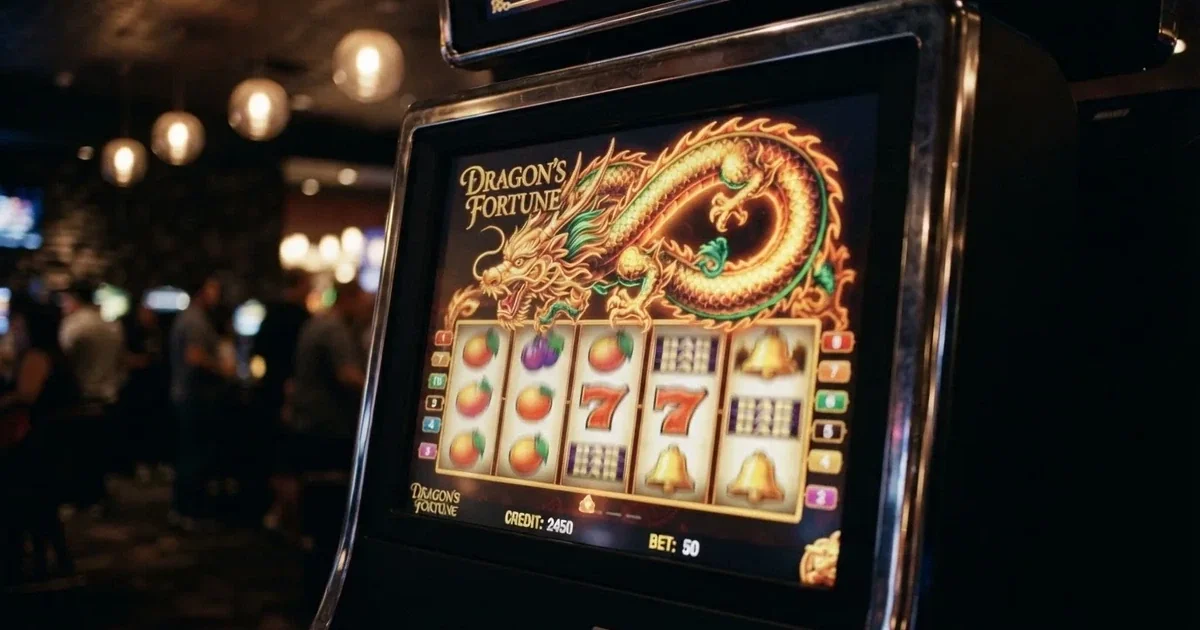
This page walks through how the Dragon Link format actually works, why no online version can lawfully serve someone physically in Australia, what the regulator has done about it since enforcement was strengthened in 2017, and which eleven brands the ACMA itself has named in formal warnings over online casino play that includes the Dragon Link format. The angle underneath the comparison is consequence: not which brand offers the biggest bonus, but what an Australian resident finds out, eventually, when they deposit at any of them.
Data current as of 28 October 2026 and verified against the ACMA’s published enforcement list.
Table of Contents
- The ACMA’s 2026 picture: 11 brands the regulator has named in formal warnings
- Dragon Link fundamentals: how the linked jackpot format works
- The Australian prohibition: the Interactive Gambling Act 2001 and how the ACMA enforces it
- Where Dragon Link is licensed: the cabinet floor, state by state
- Playing within limits: responsible play under the prohibition
- Dragon Link on a phone: the app question
- The Dragon Link paytable families: what sets the reel formats apart
- Frequently Asked Questions
The ACMA’s 2026 picture: 11 brands the regulator has named in formal warnings
An ordinary casino ranking lines up the best places to play. This one does not, because no Australian-licensed place plays Dragon Link online. The comparison this section carries is therefore not an offer comparison: the eleven brands below are the brands the Australian Communications and Media Authority has itself named in formal warnings under the Interactive Gambling Act 2001, ordered by the order each warning was published on the ACMA’s page. Each of them is, by definition, offering something the regulator says it should not be offering to Australians. The comparison is the regulator’s, not a marketing shortlist, and the angle underneath the whole exercise is consequence.
An Australian who clicks through to any of these sites deposits at a brand whose operating company has been named by Australia’s communications regulator in a formal warning about offering prohibited interactive gambling services. The deposit is not recoverable through any Australian-licensed body if the operator refuses the withdrawal. The site can be blocked in the next ACMA round with a balance still on it. The offshore operator is not connected to BetStop, the National Self-Exclusion Register — an Australian who has signed up to BetStop in good faith can still open an account with any of these brands, because the brands are not part of the licensed frame BetStop binds. The table is followed by a block on each brand, and the verdict underneath each block closes on a different consequence: the timing of the warning, the operating company’s track record, or what the brand’s footprint outside the regulator’s file actually contains.
Minimum return-to-player (RTP) by jurisdiction
| Jurisdiction | Minimum RTP |
|---|---|
| New South Wales, Northern Territory, Queensland, Victoria | 85% |
| Australian Capital Territory, Tasmania | 87% |
| South Australia | 87.5% |
| Western Australia | 90% |
| Brand | ACMA action, month and year | Operating company the ACMA named | Third-party subject coverage |
|---|---|---|---|
| RocketPlay | March 2026; earlier May 2022 | Pulsup Ltd; earlier Dama N.V. | — |
| Level Up Casino | May 2022 | Dama N.V. | BGaming partner list |
| Woo Casino | March 2025 | Dama N.V. | — |
| Spirit Casino | May 2025 | Dama N.V. | — |
| National Casino | July 2025; earlier 2022 | Consolutetish S.R.L.; earlier TechSolutions | Wikipedia, Gambling in Australia |
| Bizzo Casino | July 2025; earlier 2022 | Consolutetish S.R.L.; earlier TechSolutions | — |
| Ignition Casino | July 2025 | Bamboo Media | — |
| Instant Casino | February 2025 | EOD Code SRL | — |
| Jackbit | April 2026 | Ryker B.V. | — |
| Casino Intense | April 2025 | Sterplay Holding Ltd | ABC News, ACMA, Crown Melbourne |
| Sky Crown | September 2022 | Hollycorn N.V. | — |
RocketPlay — warned twice, by two different operators, in four years
The ACMA’s most recent RocketPlay warning was issued in March 2026 and names Pulsup Ltd as the operating company. The brand was already on the ACMA’s record in May 2022, when Dama N.V. was the operator. The intervening four years are the material part of the warning: the URL survived the change of operating company and kept offering the same product to the same market, and the regulator’s interest in the brand now spans two operators rather than one. No Australian-facing licence has appeared at either stage, and the offshore licence RocketPlay displays on its compliance page is not the kind of licence that satisfies the IGA.
The brand sits with Pulsup Ltd today; the Dama N.V. file is closed on that operator, but it stays open on the brand itself. An Australian who walks into RocketPlay in 2026 is walking into a brand whose front door has outlasted two named owners, and the next operator change will not generate a new warning — it will inherit the one already on file. The regulator’s flag follows the operating company, not the URL.
Level Up Casino — part of the May 2022 Dama N.V. six-brand sweep
Level Up Casino surfaced in the ACMA’s archive in May 2022, named alongside five other Dama N.V. brands in a single formal warning: Bambet, Dazard, Level Up, Rocketplay, Wild Tornado and Cobra Casinos. The single document is the whole story here — Level Up is not a one-off offender in the regulator’s file, it is a member of a group, and the consequence of that structure is that an Australian signing up to Level Up is not signing up to a brand the regulator has acted against once. They are signing up to an operating company the regulator acted against six times in the same sitting.
Five of those six brands are still listed by name in the May 2022 document. An Australian who tries Level Up, finds it unavailable in an Australian browser, and switches to one of its siblings has not switched to a safer site — they have switched to another brand in the same ACMA file. Level Up’s risk sits inside the operator’s portfolio, with no safe exit within it.
Woo Casino — Dama N.V. warned again in March 2025
The ACMA’s Woo Casino warning is dated March 2025, with Dama N.V. once again the named operator. By 2025, Dama N.V. had already been on the regulator’s record for almost three years, and the Woo Casino file was the second Dama N.V.-specific warning the ACMA had opened on a single brand. Three years separate the operator’s first warning from the Woo Casino one, and the brand was being marketed to Australians through that whole window.
The deposits Australians placed between the 2022 file and the 2025 one are not reversed. A 2025 warning on a brand still being marketed to Australians means the regulator reached the brand later than it reached the operator, and what the warning narrows is what happens next time the site asks for a deposit — not the deposits already made. The Woo file shows a three-year gap between the operator’s first warning and this brand’s.
Spirit Casino — Dama N.V.’s May 2025 follow-up to Woo
Spirit Casino carries a May 2025 ACMA warning, with Dama N.V. as the named operator once again. Two months after the Woo Casino file opened, the ACMA opened another one against the same operator under a different brand name. Spirit Casino and Woo Casino are, regulatorily, sibling documents: they describe the same corporate actor and the same prohibited service, addressed to different URLs and different brand names.
An Australian who arrived at Spirit Casino via an affiliate link has arrived at the same operator Woo’s visitors did, and the brand distinction does not insulate the player from the operator’s record. Two Dama N.V. warnings in two months — that is the operator’s signature, and the regulator is reading it that way.
National Casino — a 2022 TechSolutions file reopened under Consolutetish S.R.L.
National Casino was first named by the ACMA in 2022, with TechSolutions (CY) Group Limited and TechSolutions Group N.V. as the operating companies. In July 2025 the ACMA opened a fresh file on National Casino, this time naming Consolutetish S.R.L. as the operator. The brand survived the operator change; the regulator’s interest in the brand did not. The 2022 warning is still on the ACMA’s archive, and the 2025 one sits beside it on the same regulator page.
The brand has been online through two named operators in three years, and an Australian who clicks a National Casino link today is clicking the same brand front door that was open to them in 2022 — same product, same prohibition, different corporate letterhead. The brand has outlasted both of those operators in the regulator’s frame. That is what the URL has done.
Bizzo Casino — the same brand, two operators, three years apart
Bizzo Casino’s warning sits next to National Casino’s on the ACMA’s July 2025 page: Consolutetish S.R.L. is the operator named in 2025, and TechSolutions is the operator named in 2022. The pairing is not a coincidence — both brands are run by the same operator and were named in the same warning document, so what is true of National Casino is true of Bizzo in almost every respect.
The regulator is acting against the operating company, and the brand reattaches to whichever operating company is currently running it. An Australian signing up to Bizzo in 2026 has the same operator-level exposure as one signing up to National Casino; they are sister sites in every sense the regulator’s file supports. Depositing at one is depositing at the other, regulatorily speaking.
Ignition Casino — Bamboo Media’s July 2025 entry in the ACMA register
Ignition Casino was named by the ACMA in July 2025, with Bamboo Media as the operating company. Bamboo Media had not previously appeared in the regulator’s archive, and Ignition Casino had no earlier Australian footprint in the data the ACMA has published. The brand is a clean entry rather than a re-entry, and the document that named it was published alongside warnings against National Casino, Bizzo Casino and other operators caught in the same July 2025 sweep.
Bamboo Media joins Dama N.V., Consolutetish S.R.L., EOD Code SRL, Sterplay Holding Ltd, Hollycorn N.V., Ryker B.V. and Pulsup Ltd on the ACMA’s list of named operators, and an Australian who deposits at Ignition is depositing with an operating company that did not exist in the regulator’s file until July 2025. First-time offender status is not protective in the regulator’s archive — the only Australian-facing record on the brand is the warning itself.
Instant Casino — EOD Code SRL’s February 2025 warning
Instant Casino carries an ACMA warning dated February 2025, with EOD Code SRL as the operating company. EOD Code SRL is a smaller name than Dama N.V. or Hollycorn N.V., and Instant Casino does not appear in any of the larger media roundups of Australian-facing brands. The warning itself is the regulator’s only public record of the operator.
A smaller operator’s warning produces less coverage than a Dama N.V. or Hollycorn N.V. one, so an Australian walking into Instant Casino via an affiliate link may never have read the warning that bears its name. The consequence surfaces at withdrawal: the offshore operator stops answering, and the player finds out about EOD Code SRL’s name on the ACMA’s page only after the balance has stopped moving. Visibility is the gap that defines this case.
Jackbit — Ryker B.V.’s April 2026 warning, alongside CasinOK
Jackbit carries an ACMA warning dated April 2026, with Ryker B.V. as the operating company. The same document names CasinOK, which sits outside this page’s eleven-brand set. April 2026 is the most recent ACMA warning in the table at the start of this section, and Ryker B.V. had not previously appeared in the regulator’s published archive.
The April 2026 warning is not a retrospective — it is the regulator’s most recent action on a brand the regulator had not previously named, and an Australian who reaches Jackbit today is reaching a brand whose ACMA file is the most current one in the table. The pace at which new names are still being added is the consequence underneath the rest of the entries, and the file is still open. Jackbit is the most recent entry, not the last.
Casino Intense — Sterplay Holding Ltd’s April 2025 entry
Casino Intense carries an ACMA warning dated April 2025, with Sterplay Holding Ltd as the named operator. The brand has limited public footprint outside the regulator’s file: ABC News has referenced Casino Intense in passing during reporting on offshore operators, the ACMA’s own publication is the formal record, and Crown Melbourne’s gaming pages reference Australian-facing casino activity in general. None of those references establishes a Dragon Link tie to Casino Intense specifically.
The brand’s Australian-facing profile outside the ACMA’s own warning is thin, and an Australian who arrives there has few outside sources to consult beyond the regulator’s page. The consequence is that the player’s source of truth about whether the brand is licensed in Australia is the regulator’s own formal warning — the same document that says it should not be offering the product at all. Absence is what defines Casino Intense’s regulator profile.
Sky Crown — Hollycorn N.V., alongside Blue Leo, in the regulator’s archive
Sky Crown sits in the ACMA’s archive under a September 2022 formal warning to Hollycorn N.V., the same document that named Blue Leo. Sky Crown and Blue Leo are unrelated as brands, but they share an operating company, and the warning treats them as a single filing rather than as two separate cases. The formal warning was published by the ACMA in September 2022.
The Hollycorn N.V. file covers more than one brand, and the consequence for an Australian signing up to Sky Crown in 2026 is that they are signing up to an operating company that has already absorbed one ACMA warning on its own and is named in another alongside Blue Leo. The regulator’s file on Hollycorn N.V. is not a Sky Crown-specific record, and any player walking in to Sky Crown is walking in to the operator’s full portfolio — not just the one URL they typed. On Sky Crown, the regulator’s verdict is the operator’s, not the brand’s.
Dragon Link fundamentals: how the linked jackpot format works
Dragon Link is Aristocrat’s linked jackpot format, designed for the cabinet floor in clubs, hotels and casinos across most Australian states. The format runs on a five-by-three reel window with multiple paylines, and the centerpiece the player recognises is the hold-and-respin bonus round. A defined number of scattered orb symbols landing anywhere on the reels triggers it, the orbs lock in place, and the player is granted a fixed number of respins in which every new orb resets the counter to its starting value. The round ends when the respins run out without a new orb, and the locked orbs then reveal either a cash value or one of the format’s four progressive jackpot tiers.

The four progressive tiers run across every cabinet in the linked network: Mini, Minor, Major and Grand. The Mini and Minor tiers reset to a fixed seed value paid for by the individual machine; the Major and Grand are pooled across every Dragon Link cabinet on the venue’s network, which is what makes their displayed values climb faster than the standalone tiers reset from. A Grand hit is the headline the cabinet floor builds the format’s reputation around, and the climbing displayed value is what keeps a player watching the cabinet during a session where the base game is not paying.
The art direction across the format is broadly Asian-themed: dragons, golden ingots, ornamental scripts, with each reel set running a different background art and a different orb-distribution pattern on the reels. The reel sets share the hold-and-respin mechanic, the four progressive tiers and the broad visual language, but each carries its own paytable and its own themed presentation. The format’s recognition across the cabinet floor comes from that consistency — a player who has learned the bonus round on one Dragon Link reel set moves to another without re-learning the mechanic.
A few specifics carry into the rest of this page. The hold-and-respin mechanic is licensed to Aristocrat under its gaming machine approval and operates on cabinets that are state-by-state approved for use in clubs, hotels and casinos. The visual elements — the reel images, the orb symbols, the four-tier jackpot display — can be replicated on a server outside Australia, and offshore sites that take Australian residents do replicate them. What cannot be replicated is the regulatory frame underneath: the cabinet-level approval, the venue’s authorisation, the network pooling agreement that produces the displayed Major and Grand values, and the legal minimum return-to-player that every Australian state and territory enforces. The format’s appearance on a website is a copy of the visual layer. The licensed cabinet is the layer that produces the format’s actual economics.
The volatility profile of Dragon Link is consistent with most linked jackpot formats: a base game that pays modestly on line combinations, punctuated by the bonus round where the bulk of the format’s payout happens. The displayed Major and Grand values are designed to suggest a near-miss dynamic — a player watches the displayed pool climb, choosing to keep playing because the next spin could trigger the bonus round. That design is built into the cabinet, and it is one of the reasons the format is associated with long session times. The mechanics that follow from that — fixed time limits, deposit caps independent of the operator’s own setting, recognition of the visual cues that signal a session is running longer than planned — are part of what the responsible-play section later in this page addresses.
The relevant point for this page is the simple structural fact that Dragon Link is built for a cabinet, licensed for a cabinet, and run on a cabinet-level approval that does not transfer to an offshore domain. Everything that makes the format what it is on a licensed Australian floor — the regulator’s approval, the pooling network, the venue’s licence to operate the cabinet, the legal minimum return-to-player — is what an offshore site cannot replicate. The reel images travel; the licensed frame does not.
The Australian prohibition: the Interactive Gambling Act 2001 and how the ACMA enforces it
The Interactive Gambling Act 2001, strengthened by the Interactive Gambling Amendment Act 2017, is the federal prohibition that defines what an Australian-facing online casino can and cannot lawfully do. It makes it an offence for a provider — anywhere in the world — to offer online casino games, online pokies or in-play betting to a person physically in Australia. No state or territory issues licences for online casino games or online pokies. What is licensable is wagering on racing and sporting events placed before the event, lotteries and keno — in practice licensed by the Northern Territory Racing and Wagering Commission, which regulates fifty-two of Australia’s online bookmakers and meets once a month in Darwin with no full-time staff of its own.
The ACMA’s primary enforcement mechanism is a blocking order under section 313 of the Telecommunications Act 1997: the regulator asks Australian internet service providers to block specific domains at the DNS level, and Australian residents can no longer reach the URL. The blocking is the most public, repeatable step the regulator takes, and the cumulative count is published. As of June 2026, 1,751 illegal gambling and affiliate marketing websites had been blocked since the first blocking request in November 2019, and more than 230 unlicensed gambling services had left the Australian market since enforcement was strengthened in 2017.
The cumulative total is the headline number; the pace is the more useful figure. Across the six years and seven months between November 2019 and June 2026, the ACMA’s blocking rounds amount to a rate somewhere between 250 and 275 websites per year, or roughly 22 each month, averaged across the whole period. That band is the regulator’s demonstrated pace: not a smooth monthly count, but a sustained tempo of enforcement rounds that bunch around particular pushes and thin out between them, without dropping to zero for any extended period. A brand that opens this year with no Australian-facing footprint should expect at least one blocking round to land within its first twelve months if it persists, on the regulator’s demonstrated pace.
The most recent blocking round reported, dated 26 June 2026, asked Australian ISPs to block twelve more domains: 7Signs, ChromaBet, Donbet, Duospin, Freshbet, Slots Gem, Jacks Club, Lucky Start, Pointsbetz, Spinrise, Vinyl Casino and Wildsino. None of those twelve names appear in the table earlier in this page — the eleven brands in the comparison section are the ones the ACMA has put on a different track, the formal warning rather than the blocking round. Both tracks target the same conduct: an offshore operator offering online casino games or online pokies to a person in Australia.
The formal-warning track is slower than the blocking round but more visible. Each formal warning is published on the ACMA’s website, names the operating company the regulator considers responsible for the breach, and is the document that produces the table at the start of the comparison section. A formal warning is not a penalty under the IGA — the ACMA’s civil penalty provisions require separate Federal Court action — but it is the public record the regulator relies on when an operator’s conduct escalates.
The individual player is not prosecuted under the IGA; the Act targets the provider, not the customer. The consequences for the player are what make the prohibition matter in practice. An offshore casino gives no Australian consumer protection, no complaints body and no recourse if a withdrawal is refused. The site can be blocked in a future ACMA round with a balance still on it, and the player has no Australian-licence holder to chase. The 2025 H2 Gambling Capital estimate puts Australian losses to illegal offshore sites at around A$3.9 billion a year, with the share of gambling going through legal channels falling from 74% in 2021 to 64%. The licensed space is not absorbing the demand the offshore market is meeting, and the regulator’s blocking pace is one way to read that gap.
A further federal reform passed Parliament on 19 August 2026: the Interactive Gambling Amendment (Gambling Reform) Bill 2026 extends advertising and inducement restrictions on offshore operators. Those measures commence on 1 January 2027 — law with a start date, not yet in force on a 2026 page. The reform does not legalise online casino games; it narrows what licensed Australian outlets and unlicensed offshore operators can each do by way of advertising.
The payment frame for licensed wagering is narrow. Credit cards, credit-related products and digital currency have been banned as payment methods for licensed online wagering since 11 June 2024, with penalties of up to A$234,750 per offence for operators. Legal deposit routes for a licensed Australian wagering account are debit card, bank transfer, PayID and Osko, and BPAY. An offshore casino asking an Australian for a credit card or a crypto deposit is operating outside the Australian rules — that signal alone is enough to identify a brand that is not part of the licensed frame.
The tax position for a recreational player is unchanged regardless of where the wager was placed: gambling winnings are not assessable income under section 6-5 of the ITAA 1997, and losses are not deductible unless the person is carrying on a business of gambling. The Australian Taxation Office’s published position is to treat most recreational gamblers as outside the income tax net on their wagering activity, and that holds at both the licensed and the offshore end. Tax is not a reason to choose one over the other; the prohibition is.
Where Dragon Link is licensed: the cabinet floor, state by state
What the prohibition cuts off is the online offering. What it does not cut off is the cabinet itself. Electronic gaming machines — pokies — operate in every Australian state and territory except Western Australia’s pubs and clubs, and each jurisdiction separately regulates their design and operation. Registered clubs in New South Wales began operating Australia’s first legal poker machines from 1956 onwards, and the regulatory framework has expanded state by state since.
The scale of the cabinet market is hard to overstate. In 2020–21 Australians bet almost A$150 billion through gaming machines and lost A$12.18 billion on them. Australia has about 3% of the world’s pub and club poker machines and 0.3% of the global population — a disproportionate share by population, and the source of the comparison the hero image on this page carries. New South Wales alone had 87,298 gaming machines outside casinos across 2,195 venues in June 2023, with player losses of A$8.18 billion in 2022–23. Queensland had 21,122 gaming machines in 351 venues in October 2023. Victoria had 26,380 machines outside Crown Casino in 488 venues in 2021–22, under a 30,000-machine statewide cap.
Western Australia’s history is the inversion. The state banned poker machines in pubs and clubs when Crown Perth opened in 1985; Crown Perth’s own machine count has since grown from about 200 in 1985 to roughly 2,500, all approved by the state’s Gaming and Wagering Commission. Tasmania’s history is its own. Federal Group held a monopoly licence over all of Tasmania’s poker machines from 1968; legislation passed in November 2021 ended that monopoly and moved oversight of the machines to the Tasmanian Liquor and Gaming Commission. Tasmania also planned nation-leading mandatory pre-commitment cards for its poker machines, but implementation of the reform was delayed until late 2025.
The minimum return-to-player on a poker machine varies by jurisdiction, and that variation is one of the few numbers a player can compare across the country. New South Wales, the Northern Territory, Queensland and (generally) Victoria stand at 85%, with Crown Melbourne set at 87%. The Australian Capital Territory and Tasmania stand at 87%, South Australia at 87.5%, and Western Australia at 90%. That figure is the floor: anything below it is not a legal Australian cabinet, regardless of where the cabinet sits.
The point for this page is that Dragon Link — the format itself — runs in licensed Australian venues under state-by-state regulation. A punter in Sydney, Melbourne or Brisbane can sit down at a Dragon Link cabinet on a licensed club floor, with the linked jackpot pooling across the venue’s Dragon Link cabinets, with the legal minimum return-to-player enforced on every spin, with the venue’s licence depending on that compliance. What the prohibition prevents is reaching the same format through a browser tab pointed at an offshore domain. The cabinet is licensed. The website is not.
Playing within limits: responsible play under the prohibition
The Australian responsible-gambling framework is built for licensed operators, and the offshore market sits outside most of it. BetStop, the National Self-Exclusion Register, has been live since August 2023 and binds every Australian-licensed online and phone wagering service; a player who registers with BetStop cannot open a new account with any of them, and existing accounts are closed within a defined period. BetStop does not bind offshore casinos. An Australian who excludes themselves from BetStop is still able to deposit at any of the eleven brands on the ACMA’s warning list, because those brands are not Australian-licensed and have no obligation to consult the register.
That gap is the reason fixed time limits matter more than in-game prompts for a Dragon Link format specifically. A linked jackpot feature is built to keep a player watching the reels: the displayed Major and Grand values climb continuously, the orb bonus round is designed around a near-miss rhythm where the next spin can extend the round or trigger it, and the cabinet’s visual signals are tuned to maintain attention across a long session. None of that incentive is mitigated by an offshore operator’s deposit cap, because the offshore operator does not have an Australian-licensed deposit cap to set. The only limit that holds is the one the player sets before the session starts.
The Australian-licensed recourse for someone whose gambling has stopped being manageable is the National Gambling Helpline on 1800 858 858 — free, twenty-four hours a day, with online chat at Gambling Help Online. The helpline and the chat service are the only Australian-government-funded support channels for problem gambling that an Australian can reach whether they have been playing at a licensed venue or at an offshore site. They do not move the offshore activity inside the IGA. They do give the player a single Australian number to ring when the offshore operator stops answering.
The other Australian-licensed safeguard that does not apply offshore is the credit card and crypto ban. Since 11 June 2024, a player cannot fund a licensed wagering account with a credit card or digital currency, with penalties of up to A$234,750 per offence for operators. The cheapest fast route to chase losses is closed at the licensed end. An offshore brand will accept both — credit card and crypto — which is part of why the H2 Gambling Capital 2025 estimate puts annual losses to illegal offshore sites at A$3.9 billion, and why the legal-channel share of Australian gambling has fallen from 74% in 2021 to 64%.
Tasmania’s pre-commitment card reform is the next step in the responsible-gambling frame. Implementation was delayed until late 2025, but when in place it will require a player to set a time and money limit before sitting down at a machine in a Tasmanian venue — a structural limit, set by the player before the session begins, that the cabinet enforces. Other states are watching the rollout. None of those reforms applies to an offshore Dragon Link site. The framework, on the responsible-gambling side, is built for licensed cabinets and licensed wagering, and the offshore activity is the part the framework does not cover.
The practical consequence for an Australian playing Dragon Link online is that the responsible-gambling safeguards the regulator has built do not reach them. BetStop does not bind. The credit card ban does not apply. The pre-commitment cards do not enforce. The only safeguard that follows them across the offshore boundary is the helpline, and the helpline is a support service rather than a prevention tool. The prevention is the player’s own decision about a time limit, set before the session begins.
Dragon Link on a phone: the app question
A Dragon Link app on a phone is the same product the desktop site offers, served to the same offshore operator without an Australian licence. The convenience of a phone screen does not move the activity inside the Interactive Gambling Act; the IGA targets the provider’s offer, not the device the offer is delivered to. An app downloaded from a third-party Android store, sideloaded onto a phone, or installed through a workaround is no closer to being licensed in Australia than the URL an Australian types into a browser. There is no Australian-licensed Dragon Link app.
What an Australian phone does offer, in the licensed space, is wagering apps for racing and sport: Sportsbet, Bet365, Ladbrokes and the others regulated by the Northern Territory Racing and Wagering Commission. Those apps do not carry Dragon Link pokies, and they cannot: no Australian-licensed wagering provider offers online casino games. The search terms that surface Dragon Link app results in Australian stores — “dragon link pokies app”, “dragon link casino app”, “dragon link slot app” — point to the same offshore operators the desktop sites point to.
The operational distinction an app makes is small, and not in the player’s favour. App-based play tends to shorten the time between impulse and deposit, because the deposit flow is built into the phone’s interface rather than reached through a browser. The fixed time-limit guidance in the responsible-play section applies with extra force on a phone: the offshore operator’s app does not consult BetStop, the deposit cap (where one exists) is the operator’s own cap, and the credit card ban does not apply.
The shortest version: an app is a delivery mechanism, not a licence. The same prohibition covers both, and the same consequence — no Australian recourse if a withdrawal is refused, no BetStop binding, no credit card ban enforcement — applies on the phone as on the desktop. The player who reaches Dragon Link through an app has reached it through the same unlicensed operator the regulator has named in the table earlier in this page.
The Dragon Link paytable families: what sets the reel formats apart
The Dragon Link format is not a single game — it is a family of linked reel sets, each with its own paytable, art and theme, sharing the same cabinet hardware and the same four-tier linked jackpot. The reel sets run on the same five-by-three reel window with the same hold-and-respin bonus round, but each carries its own paytable and its own themed background art. The format’s recognition across a venue’s cabinet floor comes from the consistency of the hold-and-respin mechanic paired with visually distinct reel sets — a player who has learned the bonus on one Dragon Link reel set can move to another without re-learning the mechanic.
The four progressive tiers are the format’s central commercial hook. The Mini and Minor tiers reset to fixed seed values paid for by the individual machine, so the displayed pool for those two tiers does not change much between hits. The Major and Grand are pooled across every Dragon Link cabinet on the venue’s network — that is what “linked jackpot” means in the format’s name — and it is what makes their displayed values climb faster than the standalone tiers reset from. A Grand hit is the headline a venue uses to draw attention across the room, and the climbing displayed pool is what keeps a player watching during a session where the base game is not paying.
The “linked” piece is the part that does not survive a move to an offshore website. The pooling across cabinets is a physical network: each cabinet contributes a small percentage of every wager to the Major and Grand pools, and the displayed values are the live totals of that network. An offshore site can render the same four-tier display with arbitrary numbers — that part is just art on a webpage — but there is no cabinet network on the other side of the screen, and no defined pool behind the displayed figure. The displayed Major and Grand are decorative on an offshore site. On a licensed cabinet, they are a contract with the player.
Each reel set has its own paytable, and the differences between reel sets sit in the base game: which line combinations pay, how the orb symbol is distributed across the reels, and how the bonus-trigger threshold is set. The hold-and-respin mechanic is identical across the family — orbs lock in place, a fixed number of respins is granted, each new orb resets the counter, and the round ends when the respins run out — but the visual presentation, the theme and the base-game line payouts differ between reel sets.
The art direction across the format is broadly consistent — dragon motifs, gold and red palettes, an instantly recognisable orb symbol — and that visual consistency is what makes Dragon Link recognisable across a venue’s cabinet floor. The reel sets within the family are the variations on that visual frame, and the format’s licensed-cabinet identity comes from the consistency of the mechanic paired with the variation in art and paytable.
The practical consequence is what the prohibition section established: a licensed cabinet is licensed because the regulator has signed off on the cabinet, the paytable, the pooling network and the machine-level return-to-player. None of those approvals transfer when the same reel images appear on an offshore domain, and the pooling network is the part that cannot be replicated at all. The four-tier display is decorative on an offshore site. The four-tier display is a contract with the player on a licensed cabinet.
Frequently Asked Questions
Can an Australian legally play Dragon Link online pokies for real money?
No. The Interactive Gambling Act 2001, strengthened by the 2017 amendment, makes it an offence to offer online casino games or online pokies to a person in Australia. The player is not prosecuted, but no Australian-licensed site offers Dragon Link online, and an offshore site gives no Australian recourse for a refused withdrawal.
How does the Dragon Link bonus round start?
The bonus round triggers on a defined number of scattered orb symbols landing on the reels. The orbs lock in place and the player gets a fixed number of respins, each new orb resetting the counter. When the respins run out, the locked orbs reveal cash values or one of the four progressive jackpot tiers.
Where can an Australian play Dragon Link pokies legally?
In licensed Australian clubs, hotels and casinos under state and territory regulation. New South Wales, Queensland, Victoria, the ACT, Tasmania, South Australia and the Northern Territory each host the cabinets on licensed floors; Western Australia does not, apart from Crown Perth. The format is licensed for the cabinet floor, not online.
What is a linked jackpot, and how is it different from a standalone one?
A standalone jackpot on a single machine resets from a fixed value paid by that machine alone; a linked jackpot pools contribution from every cabinet in the network, climbing faster. Dragon Link’s Mini and Minor are standalone; Major and Grand are linked across the venue’s Dragon Link cabinet network.
Does playing Dragon Link on a phone change the legal position?
No. A Dragon Link app on a phone is the same product the desktop site offers, served to the same offshore operator without an Australian licence. The app is a delivery mechanism, not a separate licence. No Australian-licensed Dragon Link app exists, and BetStop does not bind the offshore app either.
What should I do if a site refuses my withdrawal?
Since these offshore brands operate without an Australian licence, they are not regulated by the ACMA or state gaming commissions. You have no recourse through Australian consumer protection bodies. If a withdrawal is refused, the only Australian support is the National Gambling Helpline (1800 858 858), which provides support, not enforcement.