
Best NetEnt Online Casinos Australia 2026: Why the Shortlist Is Not a Shortlist
Online casino gaming faces strict regulation in Australia. The Interactive Gambling Act 2001 prohibits offering online casino games to anyone physically in the country, and no Australian state or territory issues licences for such services. The operators examined here—including RocketPlay, Level Up Casino, Woo Casino, Spirit Casino, National Casino, Bizzo Casino, Ignition Casino, Instant Casino, Jackbit, Casino Intense, and Sky Crown—have all been named by the Australian Communications and Media Authority (ACMA) for offering prohibited services. This guide documents those enforcement actions and examines the realities of NetEnt slots, payment methods, and current legal gambling alternatives in Australia.

Data current as of 28 October 2026, verified against the ACMA’s formal-warning register and the H2 Gambling Capital 2025 report.
Table of Contents
- The Law Behind the Brand: Online Casino Games Are Prohibited
- Player Protection Tools That Apply, and the Ones That Don’t
- Paying In, Getting Out: The Australian Money Trail
- Bonuses, Free Spins and the Turnover Behind Them
- The Mobile Experience: Browser, App, Real-Money Path
- The NetEnt Catalogue Itself
- The Eleven Brands the ACMA Has Named
- What a Punter In Australia Can Actually Do
- What the 2026 Reform Changes
- How the Off-Shore Operator Reads on a 2026 Page
- Tax Treatment of Winnings
- Frequently Asked Questions
The Law Behind the Brand: Online Casino Games Are Prohibited
The Interactive Gambling Act 2001, tightened by the Interactive Gambling Amendment Act 2017, makes it an offence for a provider to offer online casino games — table games, slots, pokies, live dealer rooms — to a person in Australia. The offence sits with the provider, not the player. What is licensable is wagering on races and sporting events placed before the event, lotteries and keno; in practice these are licensed by the Northern Territory Racing and Wagering Commission, which regulates 52 of Australia’s online bookmakers — including Sportsbet, Bet365 and Ladbrokes — from a once-a-month meeting in Darwin and runs without full-time staff. A “Curaçao licence” pinned to the footer of a casino site is not, and cannot be, an Australian licence. It is a licence to operate from a different jurisdiction, and the protections it confers end at that jurisdiction’s borders.

The product this page is asked to rank — online casino games — is therefore not on the legal market in Australia. That single fact reframes everything a reader came looking for. The bonus ladder, the payout speed, the mobile app, the live-dealer lobby: each of those shelves is a shelf on a product that cannot be lawfully supplied to a person in Australia. The page still walks through them, because the shelves are what an Australian punter types into a search box. It walks through them honestly, which means saying, shelf for every shelf, that the operator offering it has no Australian licence and cannot get one.
What the ACMA Does About It
The ACMA investigates complaints, issues formal warnings and, since 2019, asks Australian internet service providers to block illegal sites. The cumulative count reported on 26 June 2026 stood at 1,751 illegal gambling and affiliate-marketing websites blocked since the first blocking request in November 2019, with more than 230 unlicensed services having left the Australian market since enforcement was strengthened in 2017. The most recent round alone added 12 sites — 7Signs, ChromaBet, Donbet, Duospin, Freshbet, Slots Gem, Jacks Club, Lucky Start, Pointsbetz, Spinrise, Vinyl Casino and Wildsino — to a list that had already been growing for six and a half years.
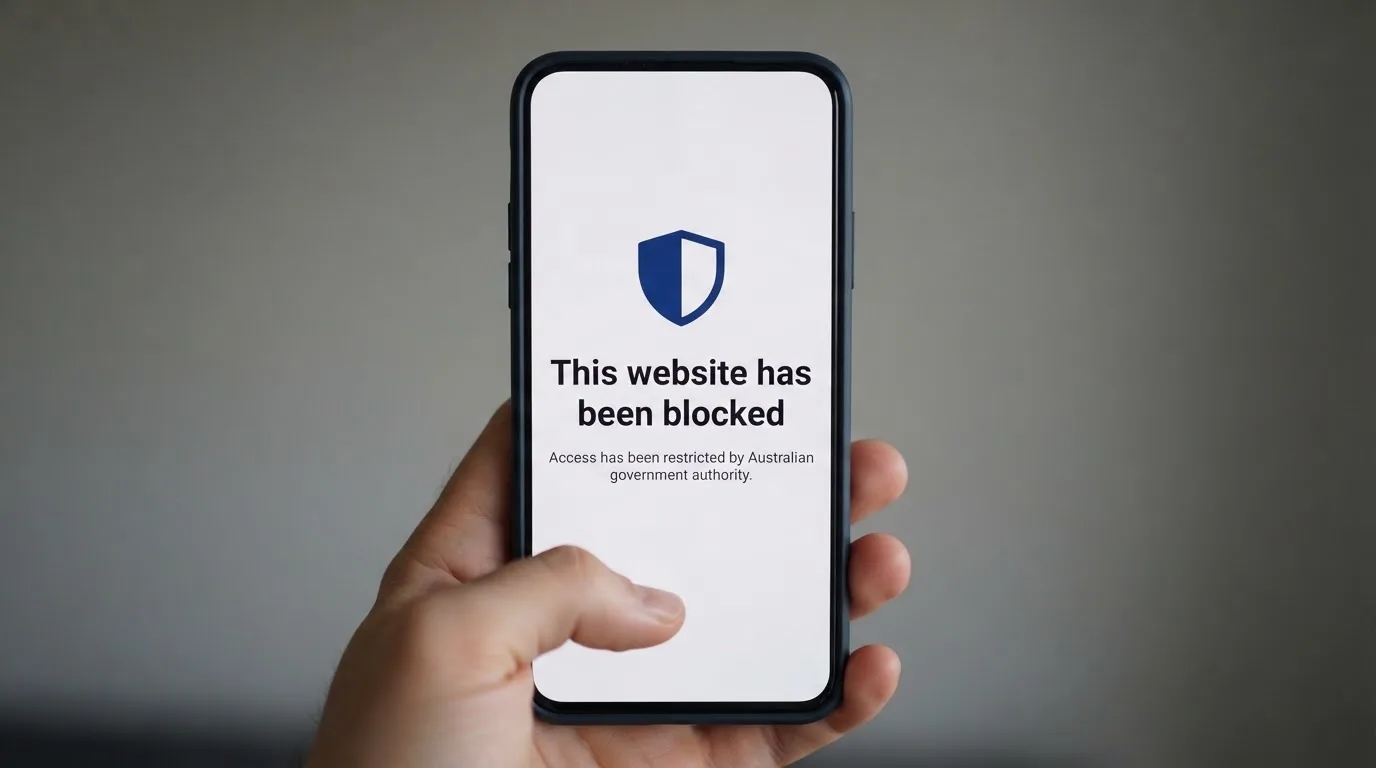
A formal warning is the regulator’s first public step. It names the operator behind the brand, dates the warning, and gives the operator a window to bring itself into compliance. The brands examined here are all brands the ACMA has named at least once: RocketPlay (Pulsup Ltd, March 2026, and earlier under Dama N.V. in May 2022), Woo Casino and Spirit Casino (Dama N.V., March and May 2025), National Casino and Bizzo Casino (Consolutetish S.R.L., July 2025, with Bizzo also the subject of a 2022 warning to TechSolutions), Ignition Casino (Bamboo Media, July 2025), Instant Casino (EOD Code SRL, February 2025), Jackbit and CasinOK (Ryker B.V., April 2026), Casino Intense (Sterplay Holding Ltd, April 2025), Sky Crown (Hollycorn N.V., September 2022), and Level Up Casino (Dama N.V., May 2022). A formal warning does not itself block a site; it is the published step before a blocking request. The blocking request is what cuts Australian players off at the network edge.
Player Protection Tools That Apply, and the Ones That Don’t
The ordinary safeguards a punter expects — self-exclusion, dispute resolution, a regulator to complain to — assume the operator is licensed in the same country the player lives in. In Australia, none of these apply to an offshore casino. BetStop, the National Self-Exclusion Register, has been live since August 2023, but it binds only Australian-licensed online and phone wagering services; an offshore casino is not connected to it. A punter who excludes themselves on BetStop can still log in to an offshore site the next morning. The exclusion is real on the Australian bookmakers and silent on everything else.
The same shape recurs on disputes. An offshore licence in Curaçao or Anjouan gives the punter whatever consumer protection that jurisdiction provides, which for most players effectively means none. A withdrawal that is refused, a bonus that is confiscated, a balance that disappears behind a “review” button — these are handled on the operator’s own terms, with the operator’s own complaints team, and the only escalation is to a regulator in a country the punter does not live in. This is the consumer position an Australian reader sits in when they fund an account at any of the eleven brands named above.
What does apply, on a 24-hour basis, is the National Gambling Helpline on 1800 858 858, free, with chat at Gambling Help Online. The helpline is set up to take calls about harm from any form of gambling, including the offshore sort. It is the part of the Australian safety net that an offshore casino does not break.
| Service | Contact | Availability |
|---|---|---|
| National Gambling Helpline | 1800 858 858 | 24/7 |
| Gambling Help Online | Online Chat | 24/7 |
| BetStop | Register online | Permanent |
Paying In, Getting Out: The Australian Money Trail
The everyday reader question behind “NetEnt casino” is “how do I put money in, and how fast does it come out.” The honest answer on this market has three layers, and the first layer is a ban.
Since 11 June 2024, credit cards, credit-related products and digital currency have been banned as payment methods for licensed Australian online wagering. Penalties for an operator that breaches the ban run to A$247,500. The legal deposit routes for a licensed Australian wagering account are debit card, bank transfer, PayID/Osko and BPAY. These rules bind the Australian-licensed bookmakers; they do not bind an offshore casino, which is why an offshore casino will happily take a Visa deposit that Sportsbet or Bet365 would refuse. The fact that an offshore site takes the deposit is the fact that puts it outside the Australian rules.
The second layer is the deposit method the offshore site offers. The pages examined in research carry no Australian-specific deposit method list — the affiliate pages that supplied bonus figures do not agree on a single payment route, and the only honest reading is that the routes are the ordinary offshore casino mix: cards, e-wallets and crypto. The audit here is that a deposit route which is illegal for an Australian-licensed bookmaker is the route that distinguishes the offshore casino as offshore. A punter who funds an account with a credit card or with crypto at any of the eleven brands above is funding it through a channel that the Australian regime has closed to its own licensed operators.
The third layer is the payout. The research carries no published payout time for any of the eleven brands to an Australian bank account. What it does establish is the absence of an Australian complaints body to escalate to, and the regulator’s brand of blocking requests that can take a site offline while a balance is still on the account. A balance held at an offshore casino sits behind all three of those risks at once: a withdrawal the operator can decline, a complaint with no Australian destination, and a network block that can land at any time.
Bonuses, Free Spins and the Turnover Behind Them
“NetEnt casino free spins” is the search phrase that drives a lot of traffic to this subject, and the answer has to be blunt. Bonuses and free spins on NetEnt slots exist in the offshore market in exactly the form a reader expects: a welcome package, a reload, free spins on Starburst or Gonzo’s Quest, a wagering multiple of 35x to 50x on the bonus amount. What the research carries, and what this article will not print, is a working bonus code, a working promo code or a voucher code. The only sources for those codes are affiliate marketing pages, and affiliate marketing pages are the same sort of page the ACMA’s blocking list has been built against — the iGamingbusiness report of 26 June 2026 named 1,751 blocked sites in total, of which a substantial share are affiliate marketing destinations rather than casinos themselves.
What this page will say about the bonus ladder is what it costs the punter. A 40x wagering multiple on a A$100 bonus means A$4,000 of qualifying turnover before the bonus and any winnings from it become withdrawable. On a NetEnt slot with a published RTP of around 96%, the expected house edge over A$4,000 of turnover is roughly A$160. The bonus is “free” in marketing copy and “worth about negative A$60” once the edge and the wagering multiple are both on the page: the punter keeps the A$100 bonus and pays A$160 in expected house edge to clear it. The arithmetic is the arithmetic of every NetEnt slot the reader has heard of, and the marketing never performs it. A punter who treats a bonus as a gift has skipped the cost; a punter who reads it as the price of a lottery ticket with the prize money already spent has read it right.
There is one further point the marketing does not perform. A wagering requirement is not always a pure wagering requirement. Maximum bet per spin during the requirement, a list of excluded games, a cap on the winnings from free spins, a withdrawal ceiling once the requirement is met — each of these is a term the affiliate page rarely carries at the same time as the headline number. The honest read is that the headline bonus is the smallest part of what the punter is signing up for; the terms are the rest. An offshore casino is not bound by any Australian term-disclosure rule, and a punter who has not read the terms has agreed to them anyway.
The Mobile Experience: Browser, App, Real-Money Path
NetEnt rebuilt its catalogue in HTML5 in the late 2010s, and the catalogue runs in any modern mobile browser. There is no separate “NetEnt casino app” to download; the slots open the same way a YouTube video opens. The mobile-specific question on this market is not whether the games run — they do — but whether the operator exposing them has any Australian real-money path. It does not. The same Interactive Gambling Act 2001 prohibition that catches the desktop product catches the mobile product; an Australian app store does not host real-money casino apps from offshore operators, and the mobile browser is the route by which a punter reaches an offshore site.
What the mobile experience adds on top of the desktop experience is friction the punter does not see on a laptop. A mobile browser is more easily fingerprinted, and an offshore casino that has chosen to geo-block Australians will do it more aggressively on mobile than on desktop, where the punter can spoof a VPN. The punter who reaches an offshore site from a phone in Sydney is, on the operator’s own logs, a person in Australia; that is precisely the offering the Interactive Gambling Act 2001 prohibits. The mobile screen does not change the law.
The NetEnt Catalogue Itself
NetEnt was established in Sweden in 1996 and was acquired by Evolution, which completed the acquisition on 1 December 2020 in a deal valued at about €1.9 billion. The catalogue the page is asked about is the catalogue of a Swedish studio now owned by a live-dealer giant, and the slots that travel under its name are the slots any punter has heard of: Starburst, Gonzo’s Quest, Starburst XXXtreme. The published mechanics, taken from NetEnt’s own product pages, give the reader three reference points.
Starburst, released on 23 January 2012, runs on a 5×3 reel layout with 10 paylines, a published RTP of 96.08%, and a maximum win of 800x bet. It is a low-volatility slot in practice, designed for long sessions rather than for feature buys. Starburst XXXtreme, the 2021 follow-up, raises the published RTP to 96.45% and the maximum win to 16,800x bet, but in doing so shifts the volatility profile hard toward the long upper tail and away from the low-variance base game. Gonzo’s Quest, the older of the three and the title that put the avalanche mechanic into the mainstream, was released on 15 March 2010, plays on a 5×3 grid with 20 paylines, carries a published RTP of 95.97%, and pays up to 2,200x bet inside its Free Fall bonus round.
Three different volatility profiles, three different session shapes, three different published RTPs within a band of about half a percentage point. The reader who came to this page for a NetEnt slot will find one whichever shape suits the session they want. The reader who came for an Australian NetEnt casino will find none, because the catalogue is the catalogue, but the Australian casino offering it is the thing the law does not let exist.
The Wider Provider Landscape
NetEnt sits inside a provider landscape that the Australian market does not touch directly, but that the offshore casino offering NetEnt slots also offers. Aristocrat Leisure, the largest gambling-machine manufacturer in Australia and the second-largest slot-maker worldwide behind International Game Technology, is an Australian company with its administrative and research headquarters in North Ryde; it was founded in 1953 and listed on the ASX in 1996 under the ticker ALL. Aristocrat’s regulated online real-money arm, Aristocrat Interactive, was formed in April 2024 from the Anaxi unit and the newly acquired NeoGames business, and it sells into regulated markets the Interactive Gambling Act 2001 does not reach. The 2025 financials the company reported — A$6.30 billion of revenue, A$1.55 billion of normalised net profit after tax and amortisation, 7,400 employees — describe the parent of an online business that does not serve Australian casino players.
Betsoft, a 2006-founded studio, runs more than 200 RNG games and operates with RNG certification from Quinel and Gaming Labs International. BGaming, whose team has worked on games since 2012 and which debuted the BGaming brand in 2018, offers 250+ certified games. 1spin4win, a Curaçao-licensed slot provider founded in 2021, runs more than 190 slots and reports more than 1,000 partnerships. Each of these studios supplies offshore casinos; none of them supplies an Australian-licensed online casino, because none exists. The Australian content in the provider landscape is Aristocrat’s land-based machines — pokies in clubs and pubs, electronic gaming machines in casinos — and the social-casino Product Madness arm, which does not pay real money.
The Eleven Brands the ACMA Has Named
Each brand below is a brand the ACMA has issued a formal warning over, for offering online casino games to Australians in breach of the Interactive Gambling Act 2001. None of them is licensed in Australia. None can be. The order below follows the ACMA’s most recent published action for each operator; that is the only order the research will support.
| Brand | ACMA action and date | Operator named by the ACMA | Subject support |
|---|---|---|---|
| RocketPlay | March 2026 (earlier Dama N.V., May 2022) | Pulsup Ltd | — |
| Level Up Casino | May 2022 | Dama N.V. | Listed as a Wazdan partner |
| Woo Casino | March 2025 | Dama N.V. | — |
| Spirit Casino | May 2025 | Dama N.V. | — |
| National Casino | July 2025 | Consolutetish S.R.L. | Listed by Betsoft, Pragmatic Play |
| Bizzo Casino | July 2025 (earlier TechSolutions, 2022) | Consolutetish S.R.L. | — |
| Ignition Casino | July 2025 | Bamboo Media | — |
| Instant Casino | February 2025 | EOD Code SRL | — |
| Jackbit | April 2026 | Ryker B.V. | — |
| Casino Intense | April 2025 | Sterplay Holding Ltd | Listed by 1spin4win, Gambling Commission UK register |
| Sky Crown | September 2022 | Hollycorn N.V. | — |
The “Subject support” column is sparse because research did not carry a NetEnt-specific confirmation for most of these brands: most rows have no-data, and where support exists it is only as reported by third-party listings (the slot studio’s own partner page, the UK Gambling Commission’s public register). A punter who finds a brand listed as a “NetEnt casino” on an affiliate page cannot tell from that listing whether NetEnt content is actually loaded on the Australian-facing site; the affiliate page is a marketing page, not a technical confirmation.
What the Table Actually Shows
The operator column tells the reader which corporate entity the ACMA named — Dama N.V. recurs three times in this list alone, and the same Dama N.V. was the named operator of a six-brand warning in May 2022 (Bambet, Dazard, Level Up, Rocketplay, Wild Tornado and Cobra Casinos). A punter who treats “brand” as the unit of analysis misses the picture: the unit the regulator acts on is the operator, and several of these brands are the same operator under different marketing skins. Woo Casino, Spirit Casino and Level Up Casino are all Dama N.V. The ACMA’s published action against the operator is therefore the same action against each of the brands, on different dates.
The date column shows a regulator that has not stopped finding brands to warn. Between February 2025 and April 2026, the ACMA issued formal warnings over eight of the eleven brands in this table. The cadence is roughly one warning every two months, on a list that began in 2017. The reader who treats the table as a snapshot of a market the regulator has cleaned up has misread it. The market the regulator acts against is still being populated faster than it is being emptied.
How Quickly the Block Pile Has Grown
The arithmetic here is the prescribed calculation. The first ACMA blocking request went out in November 2019. By 26 June 2026 the cumulative total of blocked illegal gambling and affiliate marketing sites had reached 1,751. That is a 79-month span. Across those 79 months the average rate of blocking is roughly 22 sites per month — about one site every 33 hours. The same iGamingbusiness report described 230+ unlicensed services having left the Australian market since 2017, a longer nine-year window that runs at a slower rate.
The pace is not even. The June 2026 round alone blocked 12 sites; earlier rounds in 2025 and 2024 added similar-sized chunks. The right framing for a reader is that the regulator is not edging forward, it is moving in waves — and that an offshore casino brand which is on the list this month may not be on the list next month, but the list itself is still growing. The blocking rate is the regulator’s working pace, and the working pace has not slowed.
What a Punter In Australia Can Actually Do
The lawful options sit on three legs, and they do not include an online casino.
The first leg is licensed wagering. Sportsbet, Bet365, Ladbrokes and the rest of the 52 Northern Territory-licensed online bookmakers take bets on racing and on sport before the event. They take debit card, bank transfer, PayID/Osko and BPAY. They refuse credit cards and crypto. They are connected to BetStop. They are the segment the Interactive Gambling Act 2001 permits, and they are the segment the ACMA does not act against.
The second leg is land-based. Crown Melbourne, The Star Sydney, Crown Perth, The Star Gold Coast, Crown Adelaide and the smaller state casinos run pokies, table games and electronic gaming machines on premises. Aristocrat Leisure’s machines — the ones the company’s North Ryde headquarters designs — are the machines most of them carry. A punter who wants a NetEnt slot experience on a machine is asking for a product that does not run on a poker machine; NetEnt is an online studio, and its catalogue does not exist in land-based form. The closest physical equivalent is the Aristocrat pokie the punter is sitting at, which is a different product under a different licence.
The third leg is self-exclusion and help. BetStop covers the licensed wagering leg and only that leg. The National Gambling Helpline on 1800 858 858 covers every leg, including the offshore one the punter may already be on. Gambling Help Online runs the chat channel alongside it, 24/7, free. A punter who has been funding an account at any of the eleven brands named in the table above can use both of these services to step back, and the helpline does not require the punter to disclose which offshore site they have been on.
What the 2026 Reform Changes
The Interactive Gambling Amendment (Gambling Reform) Bill 2026 passed Parliament on 19 August 2026. Its advertising and inducement measures commence on 1 January 2027. On a 2026 page that is a law with a start date, not yet in force: the measures will land in the calendar after the one this article is written for. What the Bill targets is the inducement infrastructure around online wagering — the bonus ladders and the advertising that pulls Australian punters toward offshore sites. A punter reading this in late 2026 is reading it under the law as it stood before the reform’s commencement; a punter reading it in early 2027 will read it under the law as the reform reshapes it. The reform does not legalise online casino games. It tightens the rules around the licensed wagering market and the inducements that lead into it.
How the Off-Shore Operator Reads on a 2026 Page
A punter who still chooses to fund an account at one of the brands above is choosing to fund it under three conditions the operator’s marketing will not name. The first is that the balance sits behind the operator’s own complaints team, with no Australian escalation path. The second is that the site can be added to a blocking request at any ACMA round, and the balance at the moment of blocking is the balance the punter loses. The third is that the deposit route is one the Australian regime has closed to its own licensed operators — a credit card or a crypto transfer — which is exactly the deposit route the operator offers because the operator is not an Australian operator.
H2 Gambling Capital’s 2025 report estimated Australian losses to illegal gambling sites at about A$3.9 billion a year, with the share of gambling going through legal channels falling from 74% in 2021 to 64%. That is the market the eleven brands named above are competing for, and it is the market the ACMA’s blocking requests are aimed at. The arithmetic that ends with a punter’s balance is the arithmetic the regulator’s enforcement is designed to interrupt.
Tax Treatment of Winnings
Winnings from a recreational gambler at any operator — Australian-licensed or offshore — are not assessable income under section 6-5 of the ITAA 1997, and losses are not deductible. The position changes only where the person is carrying on a business of gambling, which is a stricter test than “I had a good month.” A punter who has had a winning session at an offshore casino does not owe tax on the winnings; a punter who is running a gambling business as their primary income does, and the Australian Taxation Office is the body to check with on what counts as a business. The ATO has not changed the recreational carve-out for offshore winnings, and the carve-out applies whether the operator is licensed in Australia or not.
Frequently Asked Questions
NetEnt is a Swedish studio founded in 1996 and now owned by Evolution, and its catalogue is built around video slots — Starburst, Gonzo’s Quest, Starburst XXXtreme are the titles most players meet first — with a smaller table-games and live-casino offering. The published mechanics on its flagship slots sit in a 95.97%–96.45% RTP band and cover everything from low-volatility 5×3 base games to high-variance feature-buy slots with maximum wins above 10,000x bet.
Is NetEnt used by any casino licensed to operate in Australia?
No Australian licence covers online casino games, so no Australian-licensed operator carries NetEnt slots. The brands that do carry NetEnt content are offshore operators, and each of the eleven named on this page has been the subject of a formal ACMA warning for offering prohibited services to Australians — none of them holds an Australian licence and none can get one.
Can Australians legally play NetEnt slots at an online casino?
The Interactive Gambling Act 2001 prohibits the provider from offering online casino games to a person in Australia; the player is not the target of the offence, but no licensed Australian operator exists for the player to play at. Funding an account at an offshore casino is the only route that exists in practice, and that route sits outside every Australian consumer protection that applies to licensed wagering.
Are NetEnt games available at land-based Australian casinos?
No. NetEnt is an online studio and its games are not deployed on poker machines or in land-based casino floors. The land-based equivalent in Australia is Aristocrat Leisure’s electronic gaming machines, which are designed in North Ryde and run under state-based regulatory arrangements — a different product, a different licence and a different studio.
What should someone check before trusting a site that claims to offer NetEnt games?
Three things. First, whether the site is on the ACMA’s formal-warning register, which it will be if the ACMA has already acted against it. Second, whether the site is reachable on an Australian network without a VPN, which is the test the ACMA’s blocking requests apply. Third, where the licence on the site footer actually sits — a Curaçao or Anjouan licence is not an Australian licence, and it gives the player no Australian complaints path.
Does NetEnt software run on mobile browsers?
Yes. NetEnt rebuilt its catalogue in HTML5 and the games run in any modern mobile browser. There is no separate NetEnt app to download; the mobile experience is the browser experience on a smaller screen. What does not change on mobile is the legality of the offshore operator exposing the games, which the Interactive Gambling Act 2001 catches in the same way on a phone as on a laptop.