
Platipus, the offshore marketing of its games in Australia, and the legal ceiling on both
The data below was checked against the Australian Communications and Media Authority’s register of formal warnings and blocking actions as of 28 October 2026.
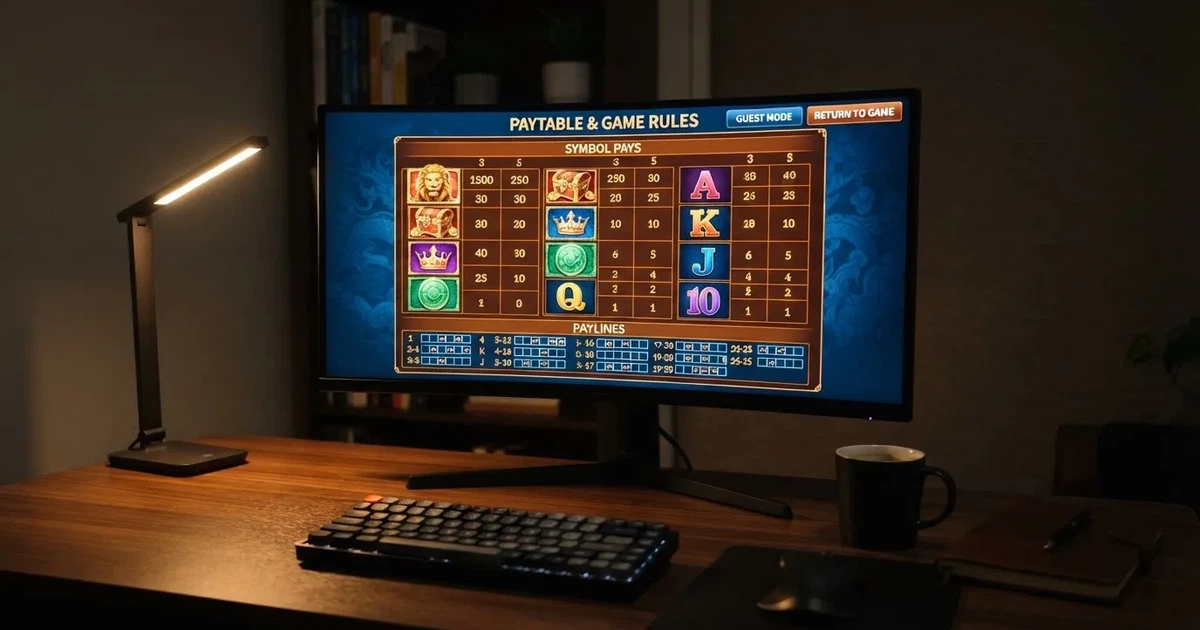
An Australian who searches for a “Platipus online casino” is searching for something the Interactive Gambling Act 2001 forbids an Australian-facing operator to provide. Platipus Gaming is a real slot studio: an EU-based supplier of HTML5 slots and table games, RNG-certified by iTech Labs for regulated markets including the UK, Italy, Malta, Sweden and Romania, with more than 500 operator customers on its own description. None of that licensing extends to Australian residents. Every site that markets Platipus titles to a person in Australia is offering a prohibited interactive gambling service, and the ACMA has spent the last several years writing letters, blocking domains and naming names. The right way to read this page is the legal ceiling first, the offshore marketing second, and the practical consequences for any reader who has already been approached — or thinks they are about to be.
Table of Contents
- The legal ceiling: why no online casino can lawfully serve Platipus titles in Australia
- Where the ACMA stands on these sites in 2026
- Responsible gambling: what an Australian who has already been approached can actually use
- Payments and payout speed: how the offshore brands move money in and out
- Bonuses and free spins: the cost behind the marketing
- Mobile and apps: how Platipus titles actually behave on a phone
- Specific games, providers and what is actually inside a Platipus title
- How any shortlist of these brands gets assembled — and why this page does not rank them
- RocketPlay — the Dama N.V. lineage and the 2026 fresh action
- Level Up Casino — the Dama N.V. cohort
- Woo Casino — the second Dama N.V. warning
- Spirit Casino — the third Dama N.V. warning
- National Casino — the Consolutetish cohort
- Bizzo Casino — the second Consolutetish brand, with a 2022 predecessor
- Ignition Casino — the Bamboo Media warning
- Instant Casino — the February 2025 warning
- Jackbit — the most recent ACMA action on this page
- Casino Intense — the April 2025 warning
- Sky Crown — the Hollycorn N.V. portfolio
- The arithmetic the offshore market actually runs on
- What an Australian who has not yet deposited should read first
- Tax and the small print that does not change the legal picture
- Frequently asked questions
The legal ceiling: why no online casino can lawfully serve Platipus titles in Australia
The Interactive Gambling Act 2001, tightened by the Interactive Gambling Amendment Act 2017, makes it an offence to provide online casino games, online pokies or in-play betting to a person physically in Australia. No state or territory issues licences for online casinos, so the Curaçao or Anjouan seal some of these sites display does not bring them inside the Australian regime; it sits alongside it. What is licensable is wagering on races and sport placed before the event, lotteries and keno — in practice overseen by the Northern Territory Racing and Wagering Commission, which regulates 52 of Australia’s online bookmakers including Sportsbet, Bet365 and Ladbrokes, and which has no full-time staff and meets once a month in Darwin.

The prohibition is on the provider, not on the player. An Australian punter who opens an account at an offshore casino is not personally prosecuted under the IGA; the law targets the operator that solicits, accepts and pays out. The harder consequence is consumer-side: an offshore site gives no Australian recourse if a withdrawal stalls, no complaints body, and no guarantee the brand survives long enough to pay. The site can also be blocked while a balance is still sitting on it, because the ACMA’s blocking actions are not preceded by a wind-down notice to players.
The 2026 reform layer sits on top of that frame. The Interactive Gambling Amendment (Gambling Reform) Bill 2026 passed Parliament on 19 August 2026, and its advertising and inducement measures commence on 1 January 2027 — law with a future start date, not yet in force on a page read in 2026. By the time that commencement date passes, the marketing around Platipus titles — bonus emails, free-spin offers, affiliate pages that still rank for the search terms in this page’s headline — moves from contested to clearly out-of-bounds.
A second change landed closer to the player. From 11 June 2024, credit cards, credit-related products and digital currency were banned as payment for licensed online wagering, with penalties up to A$247,500 for operators that accept them. Legal deposit routes for the Australian-licensed wagering side are debit card, bank transfer, PayID/Osko and BPAY. A casino asking an Australian for a credit card or a Bitcoin wallet is operating outside the Australian rules in two directions at once — illegal product, illegal payment rail.
What that leaves on the ground is a clear three-part picture. The product category — online casino games — is prohibited. The payment category for that product — credit, crypto — is prohibited. The promotional category — inducements to Australian players — is prohibited from 1 January 2027. Each of those prohibitions is enforceable, and the ACMA is the body doing the enforcing.
Where the ACMA stands on these sites in 2026
The Australian Communications and Media Authority’s enforcement works through three tools: formal warnings published on its register, blocking requests to Australian internet service providers, and removals where the operator pulls out of the market voluntarily. The numbers in the June 2026 round set the scale. According to the ACMA as reported in June 2026, a total of 1,751 illegal gambling and affiliate marketing websites had been blocked since the first blocking request in November 2019, and more than 230 unlicensed gambling services had left the Australian market since enforcement was strengthened in 2017. In the round reported on 26 June 2026 alone, the ACMA asked ISPs to block 12 more: 7Signs, ChromaBet, Donbet, Duospin, Freshbet, Slots Gem, Jacks Club, Lucky Start, Pointsbetz, Spinrise, Vinyl Casino and Wildsino.
The arithmetic the ACMA itself hands a reader is the blocking rate — and it is the prescribed calculation on this page. From the first blocking request in November 2019 to the cumulative total of 1,751 blocked sites by June 2026 is roughly 79 months, which gives a band of roughly 22 blocked domains per month on average, with a real rate that runs faster in active quarters and slower in quiet ones. The condition that bounds that band is straightforward: it counts every blocked URL the ACMA has asked ISPs to block since November 2019, including affiliate marketing pages and mirror domains, not unique operator brands. A reader who wants to know how fast the regulator is moving should read the band as “the ACMA adds blocked destinations at a pace that runs to roughly two dozen a month, with quarterly variation.” The headline figure a single number would have offered is the one thing the figure is not — the count is dominated by the 26 June 2026 round and several earlier ones, and any single-month average glosses over that lumpy shape.
The market context underneath those numbers is what makes them land. H2 Gambling Capital’s 2025 report estimates that Australians lose about A$3.9 billion a year to illegal gambling sites, and that the share of gambling going through legal channels fell from 74% in 2021 to 64%. The leak is real, and the regulator’s response is partly a numbers game: block enough sites, the marketing acquisition costs for the next cohort of offshore brands rise until the category stops paying for itself.
The formal warnings section of the ACMA register is where the named brands live, and that is the register this page reads against. What follows is the working ledger of the offshore brands the ACMA has acted against for offering Platipus and other prohibited casino games to Australians — eleven of them, in the order the register and the research places them, with the ACMA’s own wording on operator name, brand name and date.
| Brand | ACMA action and date | Operator named by the ACMA | Subject support |
|---|---|---|---|
| RocketPlay | Formal warning, March 2026 (earlier May 2022) | Pulsup Ltd; earlier Dama N.V. | — |
| Level Up Casino | Formal warning, May 2022 | Dama N.V. | listings only |
| Woo Casino | Formal warning, March 2025 | Dama N.V. | — |
| Spirit Casino | Formal warning, May 2025 | Dama N.V. | — |
| National Casino | Formal warning, July 2025 | Consolutetish S.R.L. | listings only |
| Bizzo Casino | Formal warning, July 2025 (earlier 2022) | Consolutetish S.R.L.; earlier TechSolutions | — |
| Ignition Casino | Formal warning, July 2025 | Bamboo Media | — |
| Instant Casino | Formal warning, February 2025 | EOD Code SRL | — |
| Jackbit | Formal warning, April 2026 | Ryker B.V. | — |
| Casino Intense | Formal warning, April 2025 | Sterplay Holding Ltd | listings only |
| Sky Crown | Formal warning (per ACMA register) | Hollycorn N.V. | — |
Two readings the table is built to support. First, the operator companies reappear across brands more often than the brand names do — Dama N.V. shows up four times, Consolutetish S.R.L. twice, TechSolutions twice. That is the offshore pattern: the registered entity changes when a regulator writes to it, but the marketing playbook recycles. Second, the “subject support” column is mostly an em dash on purpose. The research checked the operator directories of the studios mentioned here — Platipus’s own, plus BGaming, Betsoft, 1spin4win, Pragmatic Play and Wazdan — and most of the eleven brands do not surface there at all. Where they do, the listing is just a directory entry, not a partnership statement, and the column says so.
Responsible gambling: what an Australian who has already been approached can actually use
The Australian player-protection frame was built for Australian-licensed wagering services. That is what makes it relevant and that is also what limits it.
BetStop, the National Self-Exclusion Register, has been live since August 2023. It binds every Australian-licensed online and phone wagering service — the 52 NTRWC-licensed bookmakers and their equivalents in other states. It does not bind an offshore casino. A person who excludes themselves through BetStop can still open an account at an offshore brand, deposit, and play. The mechanism works; the address space it covers is narrower than the marketing an Australian sees.
Gambling Help Online, run by the Australian state and territory counselling services, is free, confidential, and reachable on 1800 858 858 around the clock, with webchat on the same site. The line takes calls about offshore gambling too. The counsellors will not stop a person playing, but they will work through the budget, the debt, and the practical steps to keep a balance from being handed to a brand that has no obligation to return it. For anyone reading this page who has already deposited at one of the offshore brands below, the first practical step is not a casino review — it is that phone call or chat.
State and territory self-exclusion registers sit alongside BetStop for the land-based venues: the various pub, club and casino schemes in New South Wales, Victoria, Queensland and Western Australia each have their own venue-exclusion mechanisms. A reader who is also playing electronic gaming machines at a pub or club in Australia, and who wants a physical-world block to match the online one, needs to enrol separately in those schemes. BetStop will not do that work.
A second thing the responsible-gambling frame does not do: it does not refund money already deposited offshore. The ACMA’s blocking actions take the site offline; they do not unwind completed transactions. Any money that has gone through to an offshore brand is, for Australian consumer-protection purposes, outside the Australian system from the moment it is paid. That is the harder edge of the prohibition, and it is the one an Australian punter is most likely to meet first.
Payments and payout speed: how the offshore brands move money in and out
The offshore brands that market Platipus titles to Australians run on payment rails the Australian rules do not recognise. Crypto deposits — Bitcoin, Ethereum, stablecoins — are the standard rail for the cohort of brands this page covers, because they clear without an Australian bank ever sitting in the middle. Credit-card deposits also appear on some of these brands, despite the 11 June 2024 prohibition on credit-funded wagering in the licensed side; an offshore brand is not subject to that prohibition, and the credit-card-versus-debit-card distinction is one an Australian player cannot read off the deposit page.
The settlement side is what an Australian notices next. Crypto payouts can clear in minutes when the blockchain is quiet and in hours when it is not, but the time-to-clear is not the part of the withdrawal that decides whether the player gets the money. Two practical tests sit ahead of it. First, the KYC (“know your customer”) checkpoint: an offshore brand can demand payslips, proof of address and source-of-funds documents before releasing a payout, and the documents the brand asks for can be different from what the player first signed up with. Second, the bonus-term checkpoint: if the player has taken a deposit bonus, the brand typically requires the bonus amount to be wagered a fixed multiple of times before any withdrawal is processed. A request that looked like a two-minute crypto transfer at the time of audit can turn into a two-week document chase with the casino’s compliance team once a player requests a payout of any size.
The third rail these brands use is the one that explains how they reach Australian customers in the first place: the affiliate-marketing site. Affiliate pages carry the bonus and “review” content; the actual transaction happens at the offshore brand itself. The ACMA’s blocking count covers both: the 1,751 cumulative blocked destinations include affiliate pages alongside the brands. An Australian who clicks through an affiliate link to one of the eleven brands in the table above is one click away from a site the ACMA has already written to, and the affiliate page that took them there is more likely than not to be blocked already in a future round.
A payout speed comparison among offshore brands does not work the way it works in a UK or Malta-licensed market. The licensed market has a regulatory expectation: same-day or next-business-day payouts are the floor. The offshore market has no such expectation, and the “instant withdrawal” claim on a brand’s marketing page is an aspiration rather than a guarantee. A reader who wants to compare brands on payout speed is being invited to compare marketing pages, and the ACMA’s enforcement record is the more reliable signal.
Bonuses and free spins: the cost behind the marketing
Every offshore brand in the ACMA register runs a bonus programme. Deposit-match offers, free-spin bundles, “no deposit” credits for new sign-ups, reload bonuses on subsequent deposits, and weekend free-spin drops for existing players are standard. The marketing language around them is what a reader sees first; the terms behind them are what determines whether the bonus is real money or a way to keep a balance on the brand’s side of the ledger.
Three structures recur. A deposit-match bonus credits the player’s account with extra funds equal to a percentage of the deposit — 100% on the first deposit is the most common shape — and requires that bonus amount to be wagered a multiple of times, often 35x to 45x the bonus, before any withdrawal is permitted. A free-spin bundle gives a fixed number of spins at a fixed stake value on a named slot, and the winnings are paid as bonus funds subject to the same wagering requirement; sometimes the winnings are also subject to a maximum cashout cap, which turns a “you won A$200 on free spins” notification into a “you can withdraw A$50 of that” outcome once the wagering clears. A “no deposit” bonus is the most constrained: a small credit issued for opening an account, with a high wagering multiple, a maximum cashout cap, and sometimes a 90-day qualification period before withdrawal is even possible.
The arithmetic that decides whether any of these is worth claiming is simple: required turnover is the bonus amount multiplied by the wagering factor, and the player’s expected loss on that turnover at any given RTP is the turnover multiplied by one minus the RTP. On a 100%-match bonus of A$100 at a 35x wagering factor, the player has to turn over A$3,500 before withdrawal; at a 96% RTP on a typical slot, the expected loss on the playthrough is A$140. The bonus is worth less than the deposit it required once the wagering clears at an average outcome. A free-spin bundle pays worse again, because the RTP on a slot is calculated against the player’s stake, and a free spin at A$0.10 stake that returns A$10 still has to clear 35x its winnings before withdrawal. The “free” word is doing marketing work, not arithmetic work.
The offshore venue, in addition, sits outside the 1 January 2027 inducement prohibition. Until that date the marketing is contested; from that date it is plainly illegal. A bonus email to an Australian in 2026 is on the wrong side of the ACMA’s formal-warnings register; a bonus email to an Australian from 1 January 2027 is on the wrong side of the statute.
Mobile and apps: how Platipus titles actually behave on a phone
Platipus’s catalogue is HTML5, which means the games run in a mobile browser without a download. Load times on a modern phone over 4G are typically under five seconds; over a patchy regional 4G signal in parts of regional Australia, the load time stretches, and the game can be unplayable mid-spin. There is no Platipus app; the studio is a supplier, not a venue, and the venue is the brand.
The brands themselves mostly do not publish a native iOS or Android app either — Apple’s Australian App Store policy since 2023 has blocked real-money casino apps, and Google Play has run a parallel restriction. What the brands offer instead is a mobile browser version of the desktop site, sometimes wrapped in a “progressive web app” shortcut that adds a home-screen icon but is still browser-based. Functionally, the browser version is the same game: same RNG, same paytable, same RTP. A reader who is worried about a phone-side compromise is worrying about the network, not the game itself.
Where the mobile experience diverges from the desktop one is in the second-order features. Deposit flows are faster on mobile because the payment methods are pre-filled; KYC document uploads are easier on a phone camera than on a desktop upload. Both of those moves an Australian player closer to the brand, not further from it. The friction the offshore brands struggle to replicate on mobile is the live-dealer studio, which is the one piece of the casino product that genuinely needs a stable connection and a screen big enough to read the table — and which is also the one piece that Platipus’s own catalogue does not include. Platipus is slots and table games; live-dealer studios are run by other suppliers.
Specific games, providers and what is actually inside a Platipus title
Platipus Gaming was founded in 2014 and describes itself as an EU-based studio with more than 174 HTML5 slots and table games, available in all major fiat and crypto currencies and 20 languages. Its RNG certification is from iTech Labs for regulated markets including the UK, Italy, the AGCC, Denmark, the Isle of Man, Malta, Gibraltar, Sweden and Romania. The studio’s own site describes more than 500 operator customers, 24/7 technical support across all time zones, and a recent development focus on Asian-oriented games. None of those certifications is Australian; none of them reaches an Australian resident.
The other providers the research checked for context are relevant for what they show about the offshore ecosystem more broadly. BGaming’s team has worked on games since 2012; the brand itself debuted in 2018 and now offers 250+ certified games across video slots, video poker, lottery, card, scratch, crash and casual games. Betsoft was founded in 2006, runs a catalogue of more than 200 RNG games spanning slots, table games, video poker and specialty titles, and describes compliance with Italy’s ADM, RNG certification from Quinel and GLI, and partnerships with more than 500 operators in regulated markets in Europe, Scandinavia, Latin America and Africa. 1spin4win, founded in 2021, holds a Curaçao gaming licence, lists more than 190 online slots, reports more than 1,000 partnerships with online casinos and aggregators, and saw its total bet sum grow 46% in the first half of 2025 against the first half of 2024. The licensed providers in this cluster are real, regulated businesses in their own jurisdictions; the thing that is illegal is the offshore brand using their games to take Australian money, not the games themselves.
The Australian onshore counterpart sits in a different shape. Aristocrat Leisure Limited is the largest gambling-machine manufacturer in Australia and the second-largest slot-machine manufacturer worldwide behind International Game Technology. Its administrative and research headquarters sit in the Sydney suburb of North Ryde, with offices in South Africa, Russia and the United States; the company was founded in 1953 and listed on the ASX in 1996 under the ticker ALL. Aristocrat’s 2025 revenue was A$6.30 billion, normalised net profit after tax and amortisation A$1.55 billion, and the company employs 7,400 people. Its online arms are Product Madness (social casino games) and Aristocrat Interactive, formed in April 2024 by combining the Anaxi unit with the NeoGames group, which includes Aspire Global, BtoBet and Pariplay. Aristocrat’s US$3.7 billion bid to acquire Playtech was rejected by Playtech shareholders in 2021; the US$1 billion NeoGames acquisition completed in April 2024. These are the machines that sit in Australian pubs and clubs, with state-by-state regulation that varies on maximum stake, jackpot structures and venue opening hours. The electronic gaming machine an Australian plays at a licensed venue is the product that the state and territory regulators actually oversee. The Platipus slot on an offshore site is not.
The mechanics inside a Platipus slot, where the research carries them, are not exotic. The studio builds standard video slots on 5-reel layouts with paylines that range from 20 to 30 on its published titles; volatility ratings vary by title; published RTPs sit in the 95% to 96.5% range that the HTML5 supplier market treats as standard. The mechanic that varies more than the numbers is the bonus feature: free-spin rounds triggered by scatter symbols, expanding wilds on specific reels, and a hold-and-win style respin feature on a subset of the catalogue. None of those features changes the house edge; the house edge is set by the RTP and the game’s volatility profile, and the feature layer is a presentation choice on top of it.
How any shortlist of these brands gets assembled — and why this page does not rank them
A standard casino guide for a licensed market ranks brands on the merits: payout speed, bonus value, game depth, customer-service quality, mobile polish. The page is then a recommendation — “we rate Brand X highest for these reasons.” This page cannot do that work. Every brand in the table above is on the ACMA’s formal-warnings register for offering a prohibited interactive gambling service to Australians. Ranking them by payout speed or bonus generosity would be ranking them on how well they perform the illegal act they have been warned about, and the page refuses the comparison on those grounds.
What the table can do is what it does: lay out which operator the ACMA named, what date the warning was published, and whether the brand appears in the supplier directories the research checked. That is enough for a reader to see the pattern — the same operator company reappearing across brand names, the formal-warning dates clustering between 2022 and 2026, the subject-support column mostly empty. The information is comparative without being a recommendation. A reader can pick a row to look at, follow the operator name back to the ACMA’s own register, and read the warning in the ACMA’s own words.
Two caveats follow from that choice. First, an absence from this page is not a clean bill of health. The ACMA register lists more brands than this page names; the eleven here are the ones the research has formally confirmed. A brand not in the table is either unconfirmed, not yet acted against, or not marketed to Australians in the research period. Second, an operator company reappearing across brands is doing what the offshore market does — when one warning lands, the marketing moves to a fresh domain under a related entity. Dama N.V. and Consolutetish S.R.L. are the clearest examples on this page; Hollycorn N.V. has the same shape across its own portfolio.
RocketPlay — the Dama N.V. lineage and the 2026 fresh action
The ACMA’s most recent action against this brand is dated March 2026 and names Pulsup Ltd as the operator of Rocketplay. The earlier May 2022 warning named Dama N.V., which suggests the brand has moved its operating entity at least once since the first formal warning landed. Subject support: the research did not confirm Platipus as a listed supplier for this brand. The brand sits on the ACMA register, the ACMA’s wording is the wording this page uses, and that is the available record. The marketing-side cycle — warning, rebrand under a new entity, fresh marketing push — is the shape the offshore market runs in, and this brand has been on both sides of it.
Level Up Casino — the Dama N.V. cohort
Dama N.V. was named by the ACMA in May 2022 across six casino brands — Bambet, Dazard, Level Up, Rocketplay, Wild Tornado and Cobra Casinos — and the same operator company reappeared for Woo Casino (March 2025) and Spirit Casino (May 2025). Level Up is one of the original six. Subject support: the brand appears as a listing on Wazdan’s operator directory; that is the depth of the supplier-side signal, and it is a directory record rather than a partnership statement.
Woo Casino — the second Dama N.V. warning
Woo Casino is the second Dama N.V. brand to receive a fresh warning after the May 2022 cohort, with the ACMA naming the operator company in March 2025. The pattern repeats what it did with Rocketplay: a 2022 cohort warning, then a brand-specific warning two to three years later, presumably after the operator moved the marketing under the same entity. Subject support: no such listing found in the research.
Spirit Casino — the third Dama N.V. warning
Spirit Casino is the third Dama N.V. brand to attract a fresh ACMA warning, dated May 2025. Three warnings across three brands from the same operator company in a three-year window is a strong signal of the operator’s appetite for the Australian market despite the legal ceiling. As above, no such listing appears in the research.
National Casino — the Consolutetish cohort
Consolutetish S.R.L. was named by the ACMA in July 2025 across two brands: National Casino and Bizzo Casino. The supplier-side signal is the more visible here — the brand appears as a listing on Betsoft and en.wikipedia.org’s gambling operator index, plus Pragmatic Play. The ACMA’s wording on operator name and date is the wording the table uses.
Bizzo Casino — the second Consolutetish brand, with a 2022 predecessor
Bizzo Casino was named in the July 2025 Consolutetish S.R.L. warning alongside National Casino, and had already attracted a 2022 formal warning addressed to TechSolutions (CY) Group Limited and TechSolutions Group N.V. The earlier warning and the later one are both on the ACMA register; the operator company changed between them. As above, no such listing appears in the research.
Ignition Casino — the Bamboo Media warning
Bamboo Media was named by the ACMA in July 2025 as the operator of Ignition Casino. Ignition is one of the better-known offshore brands among Australian-facing poker players, and the brand’s name does not appear in the supplier directories the research checked. The ACMA’s wording stands.
Instant Casino — the February 2025 warning
EOD Code SRL was named by the ACMA in February 2025 as the operator of Instant Casino. The “Instant” word in the brand name is doing the marketing work the offshore market runs on — instant withdrawals, instant verification, instant access — and the ACMA’s response is a formal warning naming the operating company. The research does not list the brand.
Jackbit — the most recent ACMA action on this page
Ryker B.V. was named by the ACMA in April 2026 as the operator of Jackbit and CasinOK. Jackbit sits at the recent end of the ACMA’s timeline on this page, and the “Ryker B.V.” entity does not appear elsewhere in the research’s operator set. The research does not list the brand.
Casino Intense — the April 2025 warning
Sterplay Holding Ltd was named by the ACMA in April 2025 as the operator of Casino Intense. Subject support: the brand appears as a listing on 1spin4win’s operator directory and on en.wikipedia.org’s gambling operator index, with gamblingcommission.gov.uk carrying a parallel reference. That is the deepest supplier-side signal in the table outside National Casino.
Sky Crown — the Hollycorn N.V. portfolio
The ACMA’s formal warning over Sky Crown and Blue Leo was issued to Hollycorn N.V., with the warning PDF on the ACMA site dating to September 2022. The Hollycorn N.V. entity has run a portfolio of offshore brands across several jurisdictions, and Sky Crown is one of the brands the ACMA has named in writing. As above, no such listing appears in the research.
The arithmetic the offshore market actually runs on
Interest in “best Platipus online casino” exists because the offshore marketing funnel is working. Affiliate pages rank for the term; the affiliate links route to one of the eleven brands above or to a sibling brand on the ACMA register; the brand collects a deposit; the player either wins and goes through the withdrawal process, or loses and tops up. The funnel is paid for by affiliate commission, the affiliate is paid by the operator, the operator is paid by the player’s losses. Each step has a cost; the player bears all of them.
A reader who has already deposited at one of the eleven brands above is in the position the ACMA’s blocking actions do not unwind. The balance can be in crypto, on a platform with no Australian complaints body, and recoverable only through the brand’s own KYC and bonus-procedure gates. The first practical step is the responsible-gambling line — 1800 858 858 or Gambling Help Online — not a casino review, not a withdrawal request. The second practical step is the question of whether further deposits are sensible at all, on which the ACMA’s enforcement record is the clearest signal the regulator gives.
What an Australian who has not yet deposited should read first
Three things, in order. The legal status: online casino games cannot be licensed for Australian residents, and any site marketing Platipus titles to Australians is on the wrong side of the IGA. The payment status: from 11 June 2024, credit cards and crypto are not legal payment for licensed wagering, so a credit-card or crypto deposit is itself a signal the site is offshore. The enforcement status: the ACMA’s blocking list has grown to 1,751 sites since November 2019 at roughly two dozen per month on average, and the formal-warnings register is published on the ACMA’s own site with operator names and dates. Each of those three is publicly checkable, and the page that sits at the top of the search results for “Platipus online casino” is more likely than not to be one of the affiliate pages the ACMA has blocked or is preparing to block.
Tax and the small print that does not change the legal picture
Gambling winnings of a recreational Australian player are not assessable income under section 6-5 of the ITAA 1997, and losses are not deductible. The model applies only to a person who is carrying on a business of gambling, which the ATO treats as a high bar; a recreational player who has had a winning session and is wondering whether to declare it does not need to. A reader who wants confirmation should check the ATO’s own guidance, not an offshore brand’s “we handle the tax for you” claim — which is itself a marketing pitch, not a service.
Frequently asked questions
Is Platipus legally available to players in Australia?
No. The Interactive Gambling Act 2001 prohibits the supply of online casino games — including slots like Platipus’s — to people in Australia, and no state or territory issues licences for online casinos. Any site offering Platipus titles to Australians is offering a prohibited interactive gambling service, and the ACMA has published formal warnings to that effect.
What kinds of games does Platipus make?
Platipus Gaming builds HTML5 video slots and table games, with more than 174 titles on its own count. The slots run on standard 5-reel layouts, with published RTPs in the typical 95%–96.5% range and volatility profiles that vary by title. The studio does not run live-dealer tables, and the games are RNG-certified by iTech Labs for regulated markets including the UK, Italy, Malta, Sweden and Romania — none of which include Australia.
Are Platipus games offered at land-based venues in Australia?
No, not under the Platipus name. Platipus is an EU-based online supplier, and its titles are HTML5 only. Australian land-based venues run electronic gaming machines supplied by Aristocrat Leisure and International Game Technology, which is a different category of product under different state-by-state regulation. The “pokies” at a pub or club in Australia are not Platipus titles, and the offshore brands cannot lawfully replicate that product online for Australian residents.
How can Australians check whether a Platipus title is fair before considering play?
For titles that are available in a regulated jurisdiction (UK, Malta, Sweden, Italy, others), the relevant regulator’s site will list the operator and the game’s certification. For an Australian-facing offshore brand, the relevant check is the ACMA’s register of formal warnings and the list of blocked websites, both of which are publicly searchable on the ACMA site. A brand on either list is not one an Australian should be depositing with, and the registration details on the brand’s own “About” page do not change that.
Why do offshore sites keep advertising Platipus games to Australian visitors?
The offshore affiliate funnel pays the affiliate for each player routed through; the brand pays the affiliate; the player pays the brand. Each link in that chain has an incentive to keep the marketing running regardless of the legal status. The ACMA’s blocking actions raise the cost of running that funnel, but until the 1 January 2027 inducement prohibitions commence, the marketing is contested rather than illegal in the narrow statutory sense the ACMA can enforce. That is the gap the affiliate pages occupy.
What should an Australian do if they see a Platipus game promoted by an unlicensed site?
Treat the marketing as a sign the brand is operating outside the Australian regime, and check the brand against the ACMA’s formal-warnings register before any deposit. If a deposit has been made, the practical first step is Gambling Help Online on 1800 858 858 — free, confidential and 24/7 — for advice on next steps, including budgeting around any balance that may be difficult to withdraw. The ACMA does not refund deposits, and BetStop does not bind offshore brands, so the support line is the front door for any reader who has already been approached.