
What offshore casinos targeting Australian players really are in 2026
The phrase “best offshore casinos for Australian players” promises something the Australian legal system does not let exist. No state or territory licenses online casino games, online pokies or in-play betting for people in Australia. Every operator marketed under that label is, by definition, offshore — registered in Curaçao, Anjouan or a similar jurisdiction — and every one of them has been the subject of formal warnings from the Australian Communications and Media Authority. This page lays out the gap between the marketing and the law, names the brands the ACMA has acted against, and points to what is actually open to an Australian who wants to gamble.
Current as of 28 October 2026. The ACMA’s published formal-warning register and blocking-request record were the reference points used to verify each operator named below.
Table of Contents
- The law behind every offshore casino targeting Australians
- Responsible gambling tools that an offshore casino does not connect to
- Offshore casino sites the ACMA has warned: the working shortlist
- Why every name on that list is the same kind of product
- What to do instead of chasing a new offshore casino
- The verification line under the table
- Frequently asked questions
The law behind every offshore casino targeting Australians
The Interactive Gambling Act 2001, tightened by the Interactive Gambling Amendment Act 2017, makes it an offence to provide online casino games, online pokies or in-play wagering to anyone physically in Australia. The offence sits with the provider, not the player — an individual Australian punter is not prosecuted for placing a bet. What the law does is deny those providers any Australian licence, any Australian corporate presence and any of the consumer protections that come with an Australian licence. The Interactive Gambling Amendment (Gambling Reform) Bill 2026 passed Parliament on 19 August 2026; its advertising and inducement measures commence 1 January 2027 — a law with a start date, not yet in force on a 2026 page.

What is licensed is wagering on races and sport placed before the event, lotteries and keno. In practice, most online bookmakers — Sportsbet, Bet365, Ladbrokes among them — are licensed by the Northern Territory Racing and Wagering Commission, which regulates 52 bookmakers but operates with no full-time staff and meets once a month in Darwin. Online casino is the gap, and the offshore industry is what fills it.
How enforcement has actually played out
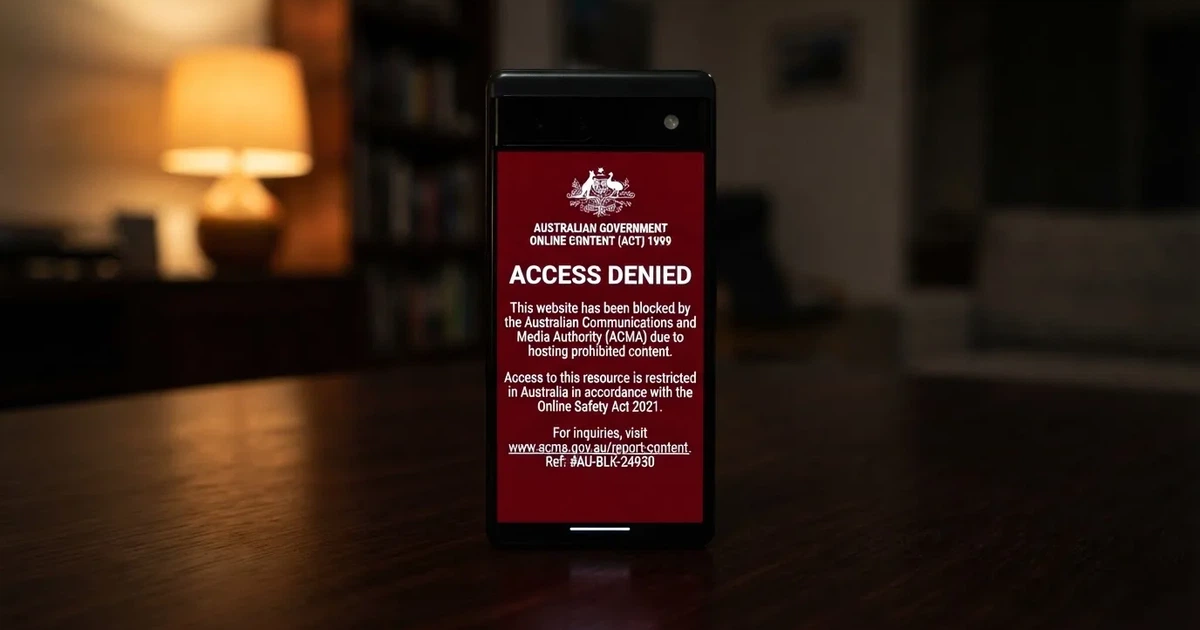
The ACMA’s job is to investigate, issue formal warnings and direct Australian internet service providers to block illegal sites. By June 2026 the ACMA had asked ISPs to block 1,751 illegal gambling and affiliate marketing websites since the first blocking request in November 2019, and more than 230 unlicensed gambling services had left the Australian market since enforcement was strengthened in 2017. A round reported on 26 June 2026 alone added twelve more to the block list: 7Signs, ChromaBet, Donbet, Duospin, Freshbet, Slots Gem, Jacks Club, Lucky Start, Pointsbetz, Spinrise, Vinyl Casino and Wildsino.

A blocking-rate calculation sits behind that running total. With 1,751 sites blocked across roughly 79 months from November 2019 to June 2026, the ACMA has averaged around 22 blocked sites a month — but the rate is anything but steady. The bulk of the action came after the 2017 amendments and again after the 2023 strengthening; some months add a dozen sites, others add none. A reader who treats the block list as a guide should understand it as a band, not a line: a slowing of new additions tells you nothing about whether enforcement has eased, only that the latest cohort of operators has shifted platforms or affiliate fronts.
H2 Gambling Capital’s 2025 estimate puts Australian losses to illegal offshore sites at about A$3.9 billion a year, and tracks the legal share of total gambling spend falling from 74% in 2021 to 64%. The money is real; the protection is not.
What the formal warnings actually cover
A formal warning under the Interactive Gambling Act is the ACMA’s instrument of first resort. It is published on the ACMA’s website, names the operator company and the brands involved, and signals that further action — including civil penalties and a request to ISPs to block the site — will follow if the service does not withdraw from the Australian market. The warnings in the public register since 2022 cover almost every brand a casual reader of offshore-casino review pages will recognise: Rocketplay (Pulsup Ltd, March 2026; earlier Dama N.V., May 2022), Woo Casino (Dama N.V., March 2025), Spirit Casino (Dama N.V., May 2025), National Casino and Bizzo Casino (Consolutetish S.R.L., July 2025, with Bizzo already warned in 2022 under TechSolutions), Ignition Casino (Bamboo Media, July 2025), Instant Casino (EOD Code SRL, February 2025), Jackbit and CasinOK (Ryker B.V., April 2026), Casino Intense (Sterplay Holding Ltd, April 2025), and Sky Crown and Blue Leo (Hollycorn N.V., September 2022). The pattern is consistent: the same handful of Curaçao-registered holding companies keeps reappearing under different brand names.
Responsible gambling tools that an offshore casino does not connect to
The Australian player-protection layer is built around licensed wagering and does not reach offshore casino sites. Knowing what it covers and what it does not is the difference between a tool that works and a tool that gives a false sense of having acted.
What BetStop does and what it does not do
BetStop, the National Self-Exclusion Register, has been live since August 2023. Registration is free and can be done online or by phone. Once a person is on the register, every Australian-licensed online and phone wagering service is required to refuse their account, refuse their bets and refuse to send them marketing for the duration of the exclusion — minimum three months, up to a permanent exclusion.
What BetStop does not do is bind offshore operators. A Curaçao-licensed casino has no technical or legal obligation to consult the register, no integration with it, and no Australian complaints body to answer to if it ignores an exclusion. A punter who has registered with BetStop and then opens an account at an offshore site is, in practice, relying entirely on the offshore site’s own voluntary checks — and on those operators’ own willingness to refuse service to an excluded Australian. Most will not. BetStop is therefore a working safeguard against licensed Australian wagering, and a partial safeguard at best against the offshore market.
Helplines and what they cost the caller
The National Gambling Helpline is 1800 858 858 — free, 24/7, with web chat at Gambling Help Online. State and territory helplines run alongside it. The services are confidential, staffed by counsellors, and connect to financial-counselling and self-exclusion support. They are not a regulatory backstop, and they do not retrieve money from an offshore operator that has refused a withdrawal — but they are the only Australian point of contact that exists for someone whose gambling has gone wrong on an offshore site.
Bank- and card-level gambling blocks
Australian banks have built their own layer of friction on top of the law. Westpac’s gambling block works at card level and refuses authorisation of transactions registered under the merchant category code for betting and casino gambling on eligible personal credit and debit cards. ANZ’s equivalent, activated in the ANZ app, also blocks gambling transactions made through a digital wallet such as Apple Pay on an eligible card — not just the physical card. Once ANZ’s block is on, removing it requires a 48-hour waiting period; the bank warns that not all gambling transactions will be blocked and some non-gambling transactions might be blocked in error. Commonwealth Bank offers a similar gambling lock through the CommBank app, with the same caveat that it cannot guarantee a full stop.
These tools are blunt: they stop a transaction at the card network, not at the casino, and they sometimes block things that are not gambling. They are also one of the few Australian controls that reach an offshore site at all, because the operator never sees a card it cannot accept — the transaction simply does not arrive.
What an offshore casino refuses to give an Australian
An Australian licence for casino games does not exist, and the things that come with it — a regulator to complain to, a dispute resolution body, a duty of care, audited game fairness, mandatory segregation of player funds — are not available to an Australian who plays offshore. If a withdrawal is refused, there is no Australian body to escalate to. If a bonus term is changed retroactively, there is no ombudsman. If the operator simply stops paying out, the only recourse is the regulator in the jurisdiction where the operator is registered — Curaçao, Anjouan or similar — and the practical chance of a recovery from there is small.
Offshore casino sites the ACMA has warned: the working shortlist
A shortlist built from the ACMA’s own formal-warning register looks different from one built from affiliate review pages, because every brand on it has been the subject of an Australian regulator’s action. The table below sets each brand against its public ACMA record. The point is not to recommend any of them — none can be lawfully offered to an Australian — but to give a reader who is going to encounter the names anyway a clear picture of where each one sits in the enforcement record.
| Brand | ACMA action and date | Operator named by the ACMA | Subject support |
|---|---|---|---|
| RocketPlay | Formal warning — Pulsup Ltd, March 2026; earlier Dama N.V., May 2022 | Pulsup Ltd | — |
| Level Up Casino | Formal warning — Dama N.V., May 2022 | Dama N.V. | — |
| Woo Casino | Formal warning — Dama N.V., March 2025 | Dama N.V. | — |
| Spirit Casino | Formal warning — Dama N.V., May 2025 | Dama N.V. | — |
| National Casino | Formal warning — Consolutetish S.R.L., July 2025 | Consolutetish S.R.L. | — |
| Bizzo Casino | Formal warning — Consolutetish S.R.L., July 2025; earlier TechSolutions, 2022 | Consolutetish S.R.L. | — |
| Ignition Casino | Formal warning — Bamboo Media, July 2025 | Bamboo Media | — |
| Instant Casino | Formal warning — EOD Code SRL, February 2025 | EOD Code SRL | — |
| Jackbit | Formal warning — Ryker B.V., April 2026 | Ryker B.V. | — |
| Casino Intense | Formal warning — Sterplay Holding Ltd, April 2025 | Sterplay Holding Ltd | — |
| Sky Crown | Formal warning — Hollycorn N.V., September 2022 | Hollycorn N.V. | — |
A handful of names recur across the operator column — Dama N.V. alone accounts for four entries on this list — and that is itself the pattern. The brands change, the holding companies rotate, the ACMA’s enforcement target stays the same set of Curaçao-registered shelf companies. The Subject support column is empty because the listed Australian sources (the ACMA register itself, AUSTRAC, BetStop, Westpac, the PayID register, the Gamblinginsider.com listings) do not record these brands as licensed Australian wagering or payment counterparties. They are not licensed to serve Australian casino players, because no Australian licence exists for that.
RocketPlay
Two formal warnings sit behind the RocketPlay brand: the original Dama N.V. action in May 2022 covering six Dama brands, and a fresh warning to Pulsup Ltd in March 2026 over Rocketplay.com.au specifically. The holding company has changed and the brand has been re-registered under a new operator name, but the ACMA’s view of the underlying offering has not. A punter who has come across RocketPlay in an affiliate review should understand they are looking at the same product the regulator warned twice.
Level Up Casino
One of the six Dama N.V. brands caught in the May 2022 warning. The brand still trades; the formal warning is still on the ACMA’s register. Nothing in the operator’s marketing, and nothing in any licence the site displays, changes the fact that the ACMA has named the operator company publicly.
Woo Casino
Dama N.V. picked up a separate formal warning in March 2025 for Woo Casino, on top of the 2022 action. That is two ACMA publications against the same holding company for two different brands in three years — the kind of record that tells a reader the regulator’s view of Dama N.V. has not softened.
Spirit Casino
The May 2025 warning over Spirit Casino is the most recent Dama N.V. action in the register. Same operator company, different brand, same legal position under the Interactive Gambling Act 2001.
National Casino
Consolutetish S.R.L. was warned in July 2025 over both National Casino and Bizzo Casino. National Casino is the newer of the two entries for that operator company in the ACMA register.
Bizzo Casino
Consolutetish S.R.L. took a July 2025 warning for Bizzo Casino, but Bizzo had already been warned in 2022 under TechSolutions (CY) Group Limited and TechSolutions Group N.V. — a name change at the holding level, the same brand continuing to offer prohibited services to Australians.
Ignition Casino
Bamboo Media was warned in July 2025 over Ignition Casino. The Ignition brand is one of the better-known names in the offshore space targeting Australian poker and casino players, which makes the ACMA action a useful check on any review page that still describes the brand as a fresh option.
Instant Casino
EOD Code SRL was warned in February 2025 over Instant Casino. The brand advertises aggressively through affiliate networks in the Australian market; the ACMA record predates most of that advertising by a year.
Jackbit
Ryker B.V. was warned in April 2026 over Jackbit and CasinOK. Both brands trade as crypto-friendly offshore casinos; both are now on the ACMA’s register alongside one another.
Casino Intense
Sterplay Holding Ltd was warned in April 2025 over Casino Intense. The brand is a smaller presence in affiliate marketing compared to the Dama N.V. cluster but sits in the same legal position.
Sky Crown
Hollycorn N.V. was the subject of an ACMA formal warning in September 2022 over its Sky Crown and Blue Leo casino services. The warning is older than most on this list, but it has not been withdrawn, and Sky Crown continues to be marketed to Australian players.
Why every name on that list is the same kind of product
The page’s own angle is straightforward: a reader asking for the “best” of something that is unlawful in Australia is not really asking which is best — they are asking which is least bad, and the honest answer is that the regulator’s view does not vary from one operator to another. Online casino games cannot be licensed anywhere in Australia, whatever licence the offshore site displays. A Curaçao sub-licence, an Anjouan registration or a Costa Rica corporate presence is not an Australian licence, and an Australian who plays at any of these operators has none of the protections that an Australian licence would carry.
What an Australian player is actually choosing between
Three paths are open in practice. The first is to play at an offshore casino, accepting that the operator is unregulated in Australia, that winnings can be withheld without recourse and that the site can be blocked with a balance on it. The second is to play at licensed Australian wagering — sports and race betting, lotteries, keno — where the Interactive Gambling Act does not prohibit the offering and where the operator is bound by Australian consumer-protection rules. The third is not to play at all, and to use BetStop and the bank-level gambling blocks if the urge is hard to manage. The first path is the one this page describes; the second is the lawful alternative for someone who wants to bet on sport; the third is the safeguard layer when gambling has gone wrong.
How payments shape the choice
The 2023 amendments to the Interactive Gambling Act banned credit cards and credit-related products as payment for licensed online wagering from 11 June 2024, with penalties of up to A$247,500 for operators. That ban also constrains gambling use of linked digital wallets: an Apple Pay wallet linked to a credit card cannot be used to fund a licensed Australian wagering account, even though Apple Pay itself does not charge the consumer any fee and sets no transaction limits of its own — those are set by the card issuer or merchant. The Reserve Bank’s July 2025 review of merchant surcharging proposes removing surcharges only on eftpos, Mastercard and Visa, leaving American Express outside the proposed ban. By the end of 2025, Apple Pay, Google Pay and Samsung Pay transactions collectively accounted for around 45% of all card payments in Australia by number — so the wallet layer is now the ordinary way Australians pay, and the gambling-credit ban cuts across it.
For an Australian punter at an offshore casino, the payment picture is different. The offshore operator is not bound by the credit-card ban, will often accept crypto, and may not refuse a credit-card deposit the way a licensed bookmaker must. That sounds like an advantage and is not: it is the absence of an Australian safeguard, not the presence of a feature.
What PayID, Osko and BPAY do and do not do for an offshore player
PayID and Osko, both run on the New Payments Platform, move money between participating Australian banks in under a minute, 24/7 including weekends, whether addressed by BSB and account number or by PayID. Paying to a PayID shows the account-holder name before the transfer is sent; AP+ warns that being asked to transfer to a PayID on an illegal gambling site is almost certainly a scam. BPAY is a separate bill-payment service — the payer enters a Biller Code and a Customer Reference Number from the bill — and is the wrong mechanism for funding a casino account. The 100-plus Australian financial institutions on the New Payments Platform and the more than 25 million PayIDs registered by April 2025 mean an Australian’s own bank is fast and traceable; the offshore casino is none of those things.
What the AUSTRAC threshold-transaction rule does not catch
AUSTRAC’s threshold-transaction-report rule requires reporting of cash transactions of A$10,000 or more; it does not apply to ordinary electronic bank transfers, regardless of amount. That asymmetry matters: an Australian can move tens of thousands of dollars to an offshore casino by PayID or direct transfer without triggering any per-transaction report, and AUSTRAC’s reporting only catches the cash end of the market.
What to do instead of chasing a new offshore casino
A punter who has had a bad experience at one offshore casino and is looking for another is, in most cases, looking for a way to keep doing what the ACMA has already said cannot lawfully be offered to them. The lawful alternatives are narrow but they exist.
Licensed Australian wagering
Sports and race betting with a Northern Territory-licensed bookmaker is the lawful online wagering channel. The product is narrower than an offshore casino — no slots, no live dealer, no in-play on most sports — but the operator is bound by Australian consumer law, dispute resolution and player-protection duties. The credit-card ban applies; debit card, bank transfer, PayID/Osko and BPAY are the legal deposit routes.
Land-based casinos and licensed pokies venues
Every state and territory licenses physical casinos and licensed pokies venues (clubs, hotels). The offering is the same casino product set under Australian regulation, with consumer-protection rules in place. Online, the equivalent does not exist.
Self-exclusion and bank-level blocks
BetStop, the bank gambling blocks and the National Gambling Helpline are the safeguard layer when gambling has gone wrong. BetStop’s reach stops at licensed Australian wagering; the bank blocks reach further because they sit at the card network. Together they are the most effective practical brake on further spend, and they cost nothing to set up.
The verification line under the table
Every operator named above carries a formal warning from the ACMA. None is licensed in any Australian jurisdiction, because no Australian jurisdiction licenses online casino games. A reader who wants to verify any entry on the table can do so against the ACMA’s formal-warning register on acma.gov.au; the dates and operator names in the table are the public record the regulator has published, and they have not been moved or simplified for this page. Where a brand has been the subject of more than one warning — RocketPlay, Bizzo Casino — both warnings are shown, because the ACMA’s record is the ACMA’s record, not a cleaned-up single line.
The 1,751 sites blocked since November 2019 is a running total reported in June 2026; the round of twelve added on 26 June 2026 is one update inside that running total. The A$3.9 billion loss figure is an estimate by H2 Gambling Capital in 2025; the 74%-to-64% fall in the legal share of gambling spend is the same source. The bank-block mechanics come from the published support pages of Westpac, ANZ and Commonwealth Bank; the PayID and Osko mechanics come from Australian Payments Plus. Every number on this page carries its source; every operator carries its ACMA record.
Frequently asked questions
What actually makes a casino “offshore” rather than Australian-licensed?
An offshore casino is one registered and licensed outside Australia — typically in Curaçao, Anjouan or Costa Rica. Australian-licensed operators are limited to wagering on sport and races before the event, lotteries and keno; online casino games, online pokies and in-play betting cannot be licensed in any Australian state or territory. Any site offering casino games to an Australian from an overseas registration is, by definition, offshore.
Does the ACMA actually block offshore casino websites for Australian users?
Yes. By June 2026 the ACMA had asked Australian internet service providers to block 1,751 illegal gambling and affiliate marketing websites since the first blocking request in November 2019. A single round on 26 June 2026 added twelve more, including 7Signs, Donbet, Freshbet, Vinyl Casino and Wildsino. Blocking is enforced at the ISP level, so an Australian trying to reach a blocked site normally sees a stop page rather than the casino.
Is it legal for an offshore casino to accept Australian players?
The Interactive Gambling Act 2001 prohibits the provider, not the player. An Australian individual is not prosecuted for placing a bet; the offshore operator is the one committing the offence by offering the service. What that means in practice is that the operator gives the Australian no Australian consumer protection, no complaints body and no enforceable right to a withdrawal — because the operator is outside Australian jurisdiction and the ACMA has already acted against them.
What enforcement has the ACMA taken against offshore operators?
The ACMA’s enforcement record runs from formal warnings through to ISP blocking requests. The public register lists warnings over Dama N.V. (May 2022, March 2025, May 2025), Hollycorn N.V. (September 2022), Bamboo Media (July 2025), Consolutetish S.R.L. (July 2025), EOD Code SRL (February 2025), Sterplay Holding Ltd (April 2025), Pulsup Ltd (March 2026) and Ryker B.V. (April 2026), among others. Blocking requests are separate from the warning register and have reached 1,751 sites as of June 2026.
Why does BetStop not cover offshore casino sites?
BetStop is the National Self-Exclusion Register under the Interactive Gambling Act 2001. The Act binds Australian-licensed wagering services, and offshore casino sites are not Australian-licensed. BetStop therefore requires Australian operators to refuse an excluded person’s accounts and bets; offshore operators have no obligation to consult the register and, in practice, most do not. Bank-level gambling blocks at Westpac, ANZ and Commonwealth Bank reach further, because they refuse the transaction at the card network rather than at the casino.
What should someone do instead of chasing a new offshore casino after a bad experience?
The first move is to stop funding it — by registering with BetStop, turning on a bank or card gambling block, and using the National Gambling Helpline on 1800 858 858 (free, 24/7, with chat at Gambling Help Online). The second is to switch to what is actually lawful in Australia: licensed wagering on sport and races, lotteries, keno, or land-based casinos and licensed pokies venues. Chasing a new offshore brand to recover losses usually means funding an unregulated operator again, with the same gap in consumer protection.